

Nature Field Guide
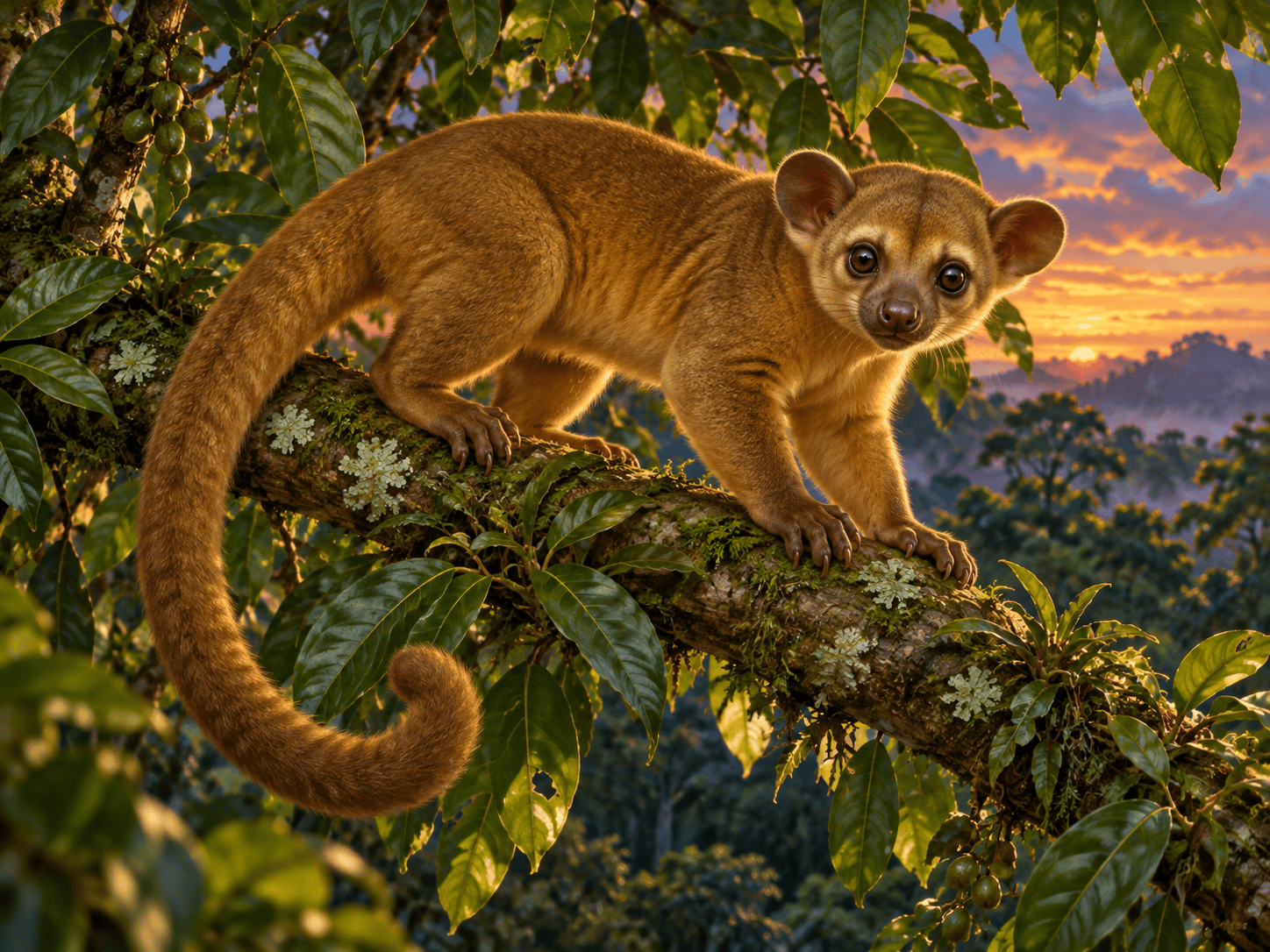
Kinkajou
- Spanish name
- Martilla / Mico de noche
- Scientific name
- Potos flavus
What Do Pico & Tati Think?
Pico: “It looks a little like a monkey!”
Tati: “It is actually related to coatis and raccoons.”
What does Least Concern mean?
In the linked conservation assessment, this species does not qualify as threatened or near threatened with extinction. It still needs care: local populations and habitats can face problems even when the species has a lower extinction risk overall.
This label describes conservation status. It does not tell us whether a plant is safe for children or pets. Select the status button to read the assessment.
Species overview
About the Kinkajou
The Kinkajou is a golden-brown tree-dwelling mammal with a long grasping tail. Although its climbing and appearance may suggest a monkey, it belongs to the raccoon family. Flexible movements and a strong tail help it balance and reach food among branches.
Kinkajous are mainly nocturnal, resting in sheltered tree places during the day. Fruit and nectar form much of their diet, and pollen can move between flowers on their faces as they feed. Connected branches provide travel routes above the ground. Preserving treetop links and keeping dogs away from wildlife helps support an animal whose forest life is usually hidden from daytime visitors.
Identification
Key Features of the Kinkajou
Golden-brown coat and rounded ears.
Long grasping tail without a raccoon’s bold rings.
Tree-dwelling mammal, not a monkey.
Habitat & range
Wooded South Pacific landscapes; a documented wildlife rescue occurred beside the Río Abrojo near Abrojo.
Local observations
Costa Rica’s Public Security Ministry recorded a Kinkajou rescue in Abrojo in August 2015 after reported dog bites. This is a historical rescue record, not evidence of visitor-ready abundance.
When to observe
Mainly nocturnal. Use a permitted guided route if nighttime observation is available; never disturb a daytime resting place.
Conservation & care
Keep a respectful distance and leave an open route for the animal. Stay on authorized paths, secure food and rubbish, and observe without feeding, touching, baiting or chasing.
Threats & pressures
Forest gaps can interrupt treetop travel. A Costa Rican rescue record also documents injuries associated with dogs.
Protection & recovery
Costa Rica’s government wildlife guide explicitly identifies this species as protected nationally. This legal designation is separate from its global IUCN category.
Conservation assessment
Global IUCN category as reported by the linked source, checked 7 October 2026. The source does not give an assessment year here. National legal protection and local abundance are separate questions.
Observation activity
Sketch three features from a safe viewing point. Note the habitat and what the animal actually does; keep “seen”, “heard” and “possible tracks” as separate observations.
Explore by location
Northern Plains · South Pacific · Heredia · Puntarenas · Abrojo