

Nature Field Guide
Coyote
- Spanish name
- Coyote
- Scientific name
- Canis latrans
What Do Pico & Tati Think?
Pico: “Its ears and bushy tail look different from a fox!”
Tati: “A wild animal should keep finding its own food.”
Species overview
About the Coyote
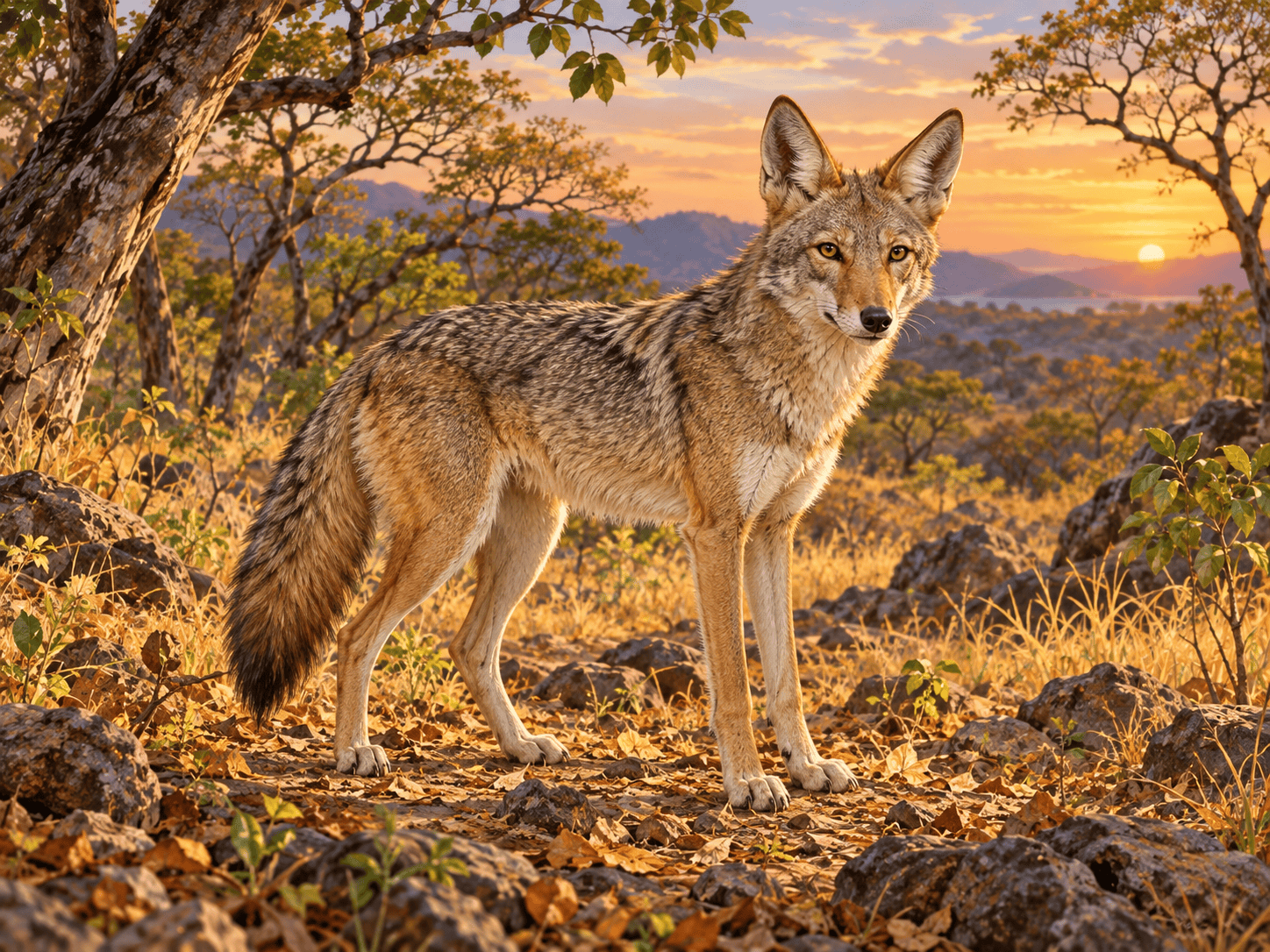
The Coyote is a medium-sized canid with a pointed muzzle, upright ears and a thick tail usually carried low. Gray, brown and warmer tones mix in its coat, while the underside is paler. Several features together distinguish it from a fox or domestic dog.
Coyotes eat small animals, fruit, eggs and carrion. Their flexible diet helps them use wooded savanna, forest edges and altered landscapes. They may travel alone, in pairs or in family groups, with activity by day or night. Adaptability explains part of their expanding use of human-shaped environments; it does not justify feeding them or approaching den sites. Natural food and room to move support safer coexistence.
Identification
Key Features of the Coyote
Pointed muzzle and large upright ears.
Mixed gray-brown coat with paler underside.
Bushy tail usually carried low.
Habitat & range
Sierra Zapote’s forest-edge landscape in Las Juntas, Abangares, and other Guanacaste lowlands.
Local observations
The Sierra Zapote camera-trap study records Coyote. ACG also describes its use of Guanacaste lowland woodland and open areas.
When to observe
Observe from authorized routes with a local guide. Activity, weather and food availability change encounters; a documented location is not a promise of a sighting.
Conservation & care
Keep a respectful distance and leave an open route for the animal. Stay on authorized paths, secure food and rubbish, and observe without feeding, touching, baiting or chasing.
Observation activity
From a distant observation or photograph, compare ear size and tail posture with a Gray Fox. Never investigate a possible den.
Explore by location
Central Highlands · Guanacaste · Northern Plains · Guanacaste · Heredia · Las Juntas