

Nature Field Guide
Cassava / Yuca
- Spanish name
- Yuca
- Scientific name
- Manihot esculenta
What Do Pico & Tati Think?
Pico: “Where is the yuca hiding?”
Tati: “Its storage roots grow beneath the soil.”
Species overview
About the Cassava / Yuca
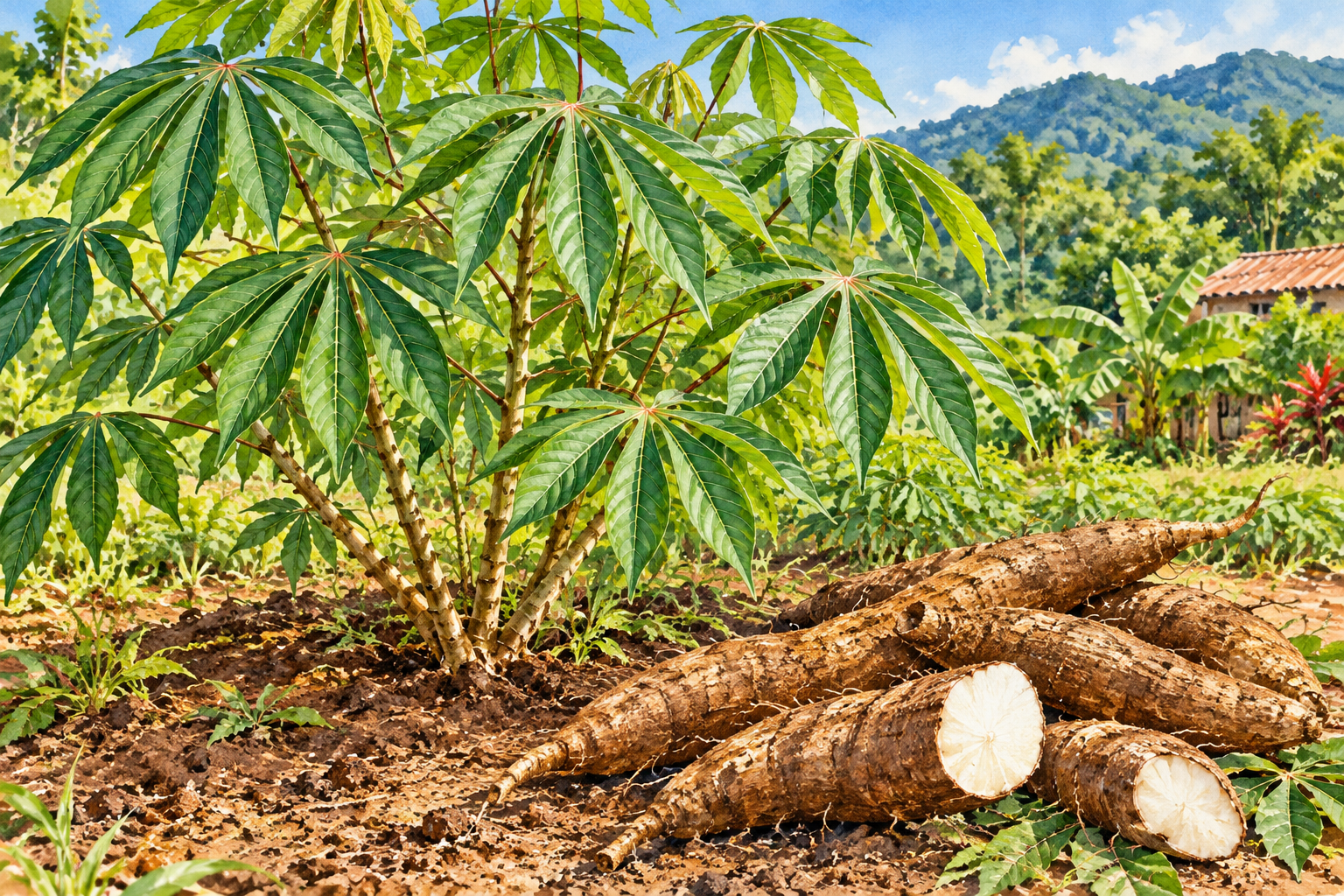
Cassava, called yuca in Costa Rica, is a shrub with leaves divided into fingerlike lobes. Its starchy storage roots develop below the soil.
The harvested root has a brown outer covering and pale flesh. Properly prepared yuca is used in cooked dishes. Identifying a food crop does not make it safe to taste straight from the field: raw cassava requires appropriate processing.
Identification
Key Features of the Cassava / Yuca
Leaves divided into several narrow lobes
Shrubby stems above the soil
Thick elongated storage roots below ground
Harvested roots have brown skin and pale flesh
Habitat & range
Cultivated farms in the Northern Plains, with documented production in the Caribbean and South Pacific.
Local observations
MAG identifies Huetar Norte as a major yuca-producing region and also records cultivation in Huetar Atlántica and Brunca. These regional tags refer to cultivation.
When to observe
The roots remain underground while the plant grows. Use a host's harvested sample rather than digging up a plant.
Conservation & care
Do not taste raw yuca or its leaves. Preparation must be handled by a knowledgeable adult using appropriate food-processing guidance. Do not pull up farm plants.
Visit farms only with permission and follow the host's instructions. Stay clear of machinery, chemical applications and working areas. Do not pick or taste plants without a responsible adult and the host's approval.
Observation activity
Draw the above-ground leaves and a separate harvested root. Identify which part stores the food we eat.