

Nature Field Guide
Black Guan
- Spanish name
- Pava negra
- Scientific name
- Chamaepetes unicolor
What Do Pico & Tati Think?
Pico: “A big bird is moving through the branches!”
Tati: “Look for its face and legs as well as its feathers.”
What does Least Concern mean?
In the linked conservation assessment, this species does not qualify as threatened or near threatened with extinction. It still needs care: local populations and habitats can face problems even when the species has a lower extinction risk overall.
This label describes conservation status. It does not tell us whether a plant is safe for children or pets. Select the status button to read the assessment.
Species overview
About the Black Guan
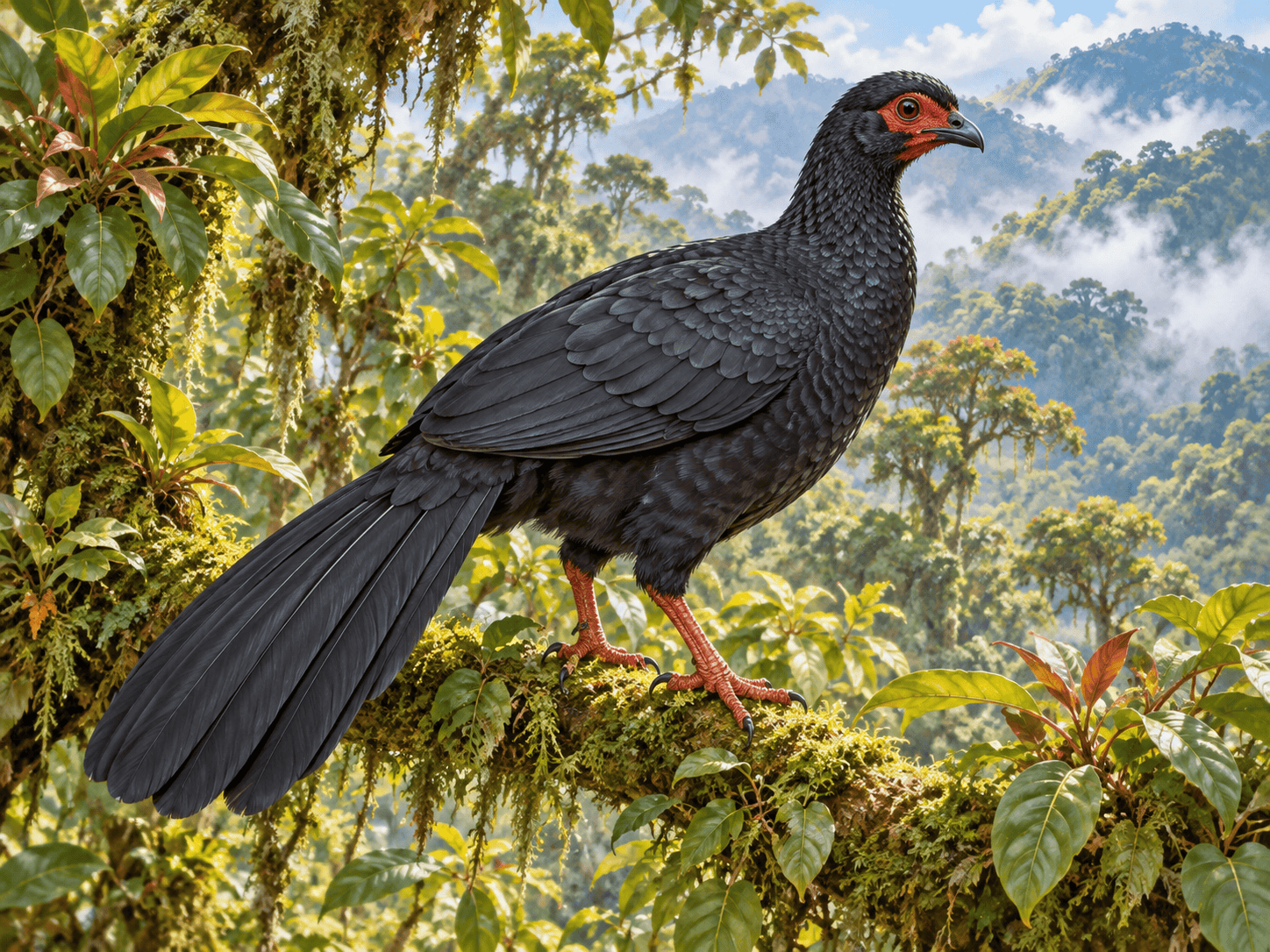
The Black Guan is a large, mainly black bird of the Costa Rican and western Panamanian highlands. Bare blue facial skin, a red eye and reddish legs distinguish it from other dark forest birds. Individuals forage in trees and sometimes on the ground, alone, in pairs or in small groups.
Fruit forms most of its diet. This dependence links the guan to healthy forest and to the timing of fruit production. Although classified globally as Least Concern, it depends strongly on wooded habitat and avoids open, disturbed areas. A resident species still needs protection: staying in a country all year does not mean being equally visible in every forest patch.
Identification
Key Features of the Black Guan
Black body without a curassow’s curled crest.
Blue bare skin around a red eye.
Reddish legs.
Habitat & range
Montane forest, generally from about 1000 m to the upper forest limit. South Pacific refers to high Talamanca slopes, not coastal lowlands.
Local observations
BirdLife documents Monteverde habitat; SINAC lists the species at La Amistad. The Biolley tag refers to park access, not a surveyed bird within the town.
When to observe
Plan a quiet observation with a local guide. Weather, food availability and the chosen habitat affect what you may see; a location record does not guarantee a sighting.
Seasonal Calendar
Resident presence
Costa Rica; suitable highland forest
Year-round
Resident nationally; presence and detectability vary among local sites.
Event source ↗Conservation & care
Stay on authorized trails or viewing routes. Give birds space, keep voices low and leave nests undisturbed. Observe without bait, feeding or recorded calls.
Threats & pressures
Dependence on forest makes clearing and fragmentation relevant pressures despite the global Least Concern category.
Conservation assessment
BirdLife gives Least Concern, last assessment 2021. Source checked 7 October 2026. This is a global species category, not a count of birds in the tagged towns.
Observation activity
Record three features you actually observe: shape, movement and habitat. Draw the bird from a respectful distance and compare your notes with a field guide.
Explore by location
Central Highlands · South Pacific · Puntarenas · Biolley · Monteverde