

Nature Field Guide
Wood’s Anole
- Spanish name
- Anolis de Wood
- Scientific name
- Anolis woodi
What Do Pico & Tati Think?
Pico: “What helps this reptile fit into its habitat?”
Tati: “Let’s look at its shape, colors and surroundings while giving it plenty of space.”
Species overview
About the Wood’s Anole
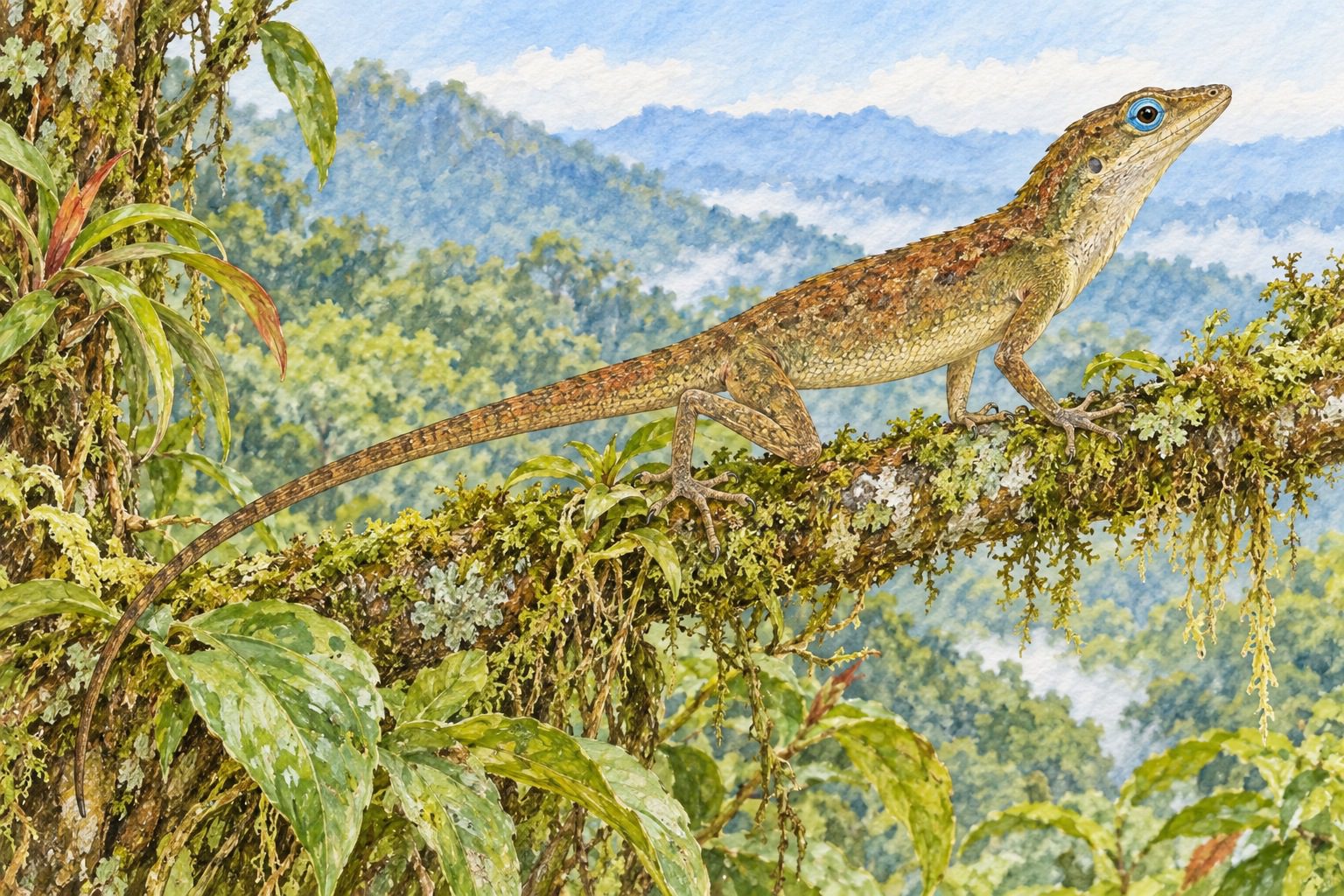
Wood’s anole is a relatively large anole with long legs and a slender tail. Its back can appear olive or brown, sometimes with a reddish tint. The eyes may show a striking bluish color.
It lives in premontane and montane forest. This is a good reminder that Costa Rica’s reptiles are not all animals of hot, dry places: some depend on the cool and wet conditions of mountain forests. Notice the moss, shade and vegetation around a perch without reaching toward the lizard.
Identification
Key Features of the Wood’s Anole
Long legs and a narrow tail
Olive-to-brown body
Bluish eyes can be a useful supporting clue
Habitat & range
Humid mountain forests of the central volcanic range and Talamanca, including the Poás area and the San Vito/Las Cruces region in southern Puntarenas.
Local observations
Native species recorded in Costa Rica. Sightings depend on suitable habitat and locality.
When to observe
Observe on a suitable guided outing. Activity varies with weather, season and locality; do not disturb a resting or hidden animal.
Conservation & care
Observe with an adult from permitted paths. Do not touch, chase, catch or feed reptiles. Leave bark, logs, stones and leaf litter in place. Keep pets away and allow an open escape route.
Threats & pressures
Protect connected habitat and natural shelters. Avoid collection, unnecessary clearing and deliberate killing. Leave wildlife in place and support responsible observation.
Observation activity
Draw a mountain-forest perch and label three things that help keep it cool and humid.
Explore by location
Central Highlands · Central Valley · South Pacific · Alajuela · Cartago · Heredia · Puntarenas · San José · San Vito