

Nature Field Guide
Banana
- Spanish name
- Banano
- Scientific name
- Musa spp. (dessert banana cultivars)
What Do Pico & Tati Think?
Pico: “That banana plant looks like a tree!”
Tati: “Its stem is made from layers of leaf bases.”
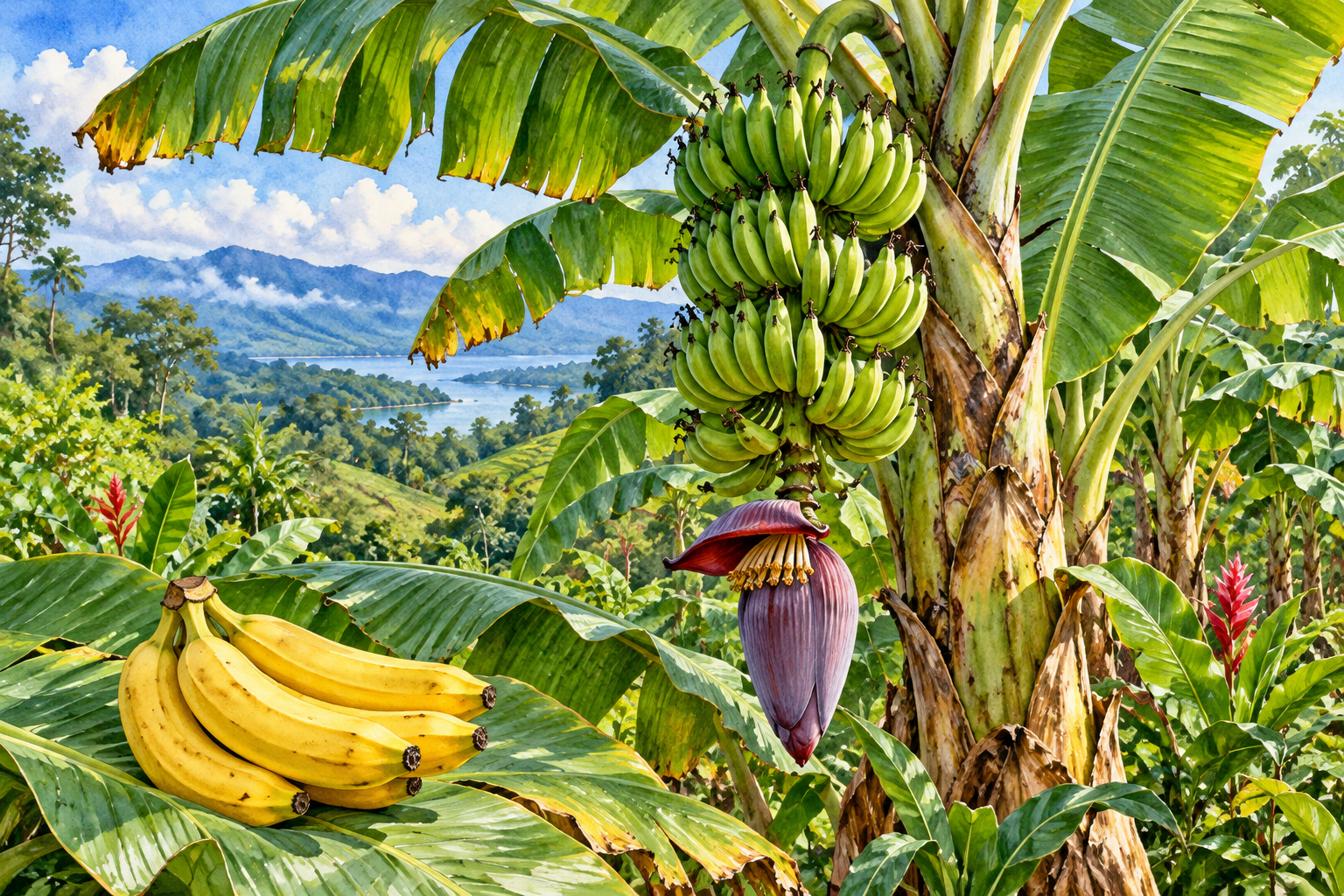
Species overview
About the Banana
A banana plant looks like a tree, but it is a giant herb. Its apparent trunk is made from tightly packed leaf bases. Fruit develops in bunches, with new shoots continuing the plant's growth after a fruiting stem finishes.
Dessert bananas are commonly eaten ripe. Cultivars differ, so compare the entire plant and fruit rather than using yellow skin alone as an identification clue.
Identification
Key Features of the Banana
Very broad elongated leaves
A thick pseudostem made from leaf bases
Fruit arranged in hands within a hanging bunch
New shoots near the base
Habitat & range
Humid cultivated lowlands. CORBANA documents farms in the Caribbean, Sarapiquí and Parrita; these correspond to Caribbean, Northern Plains and Central Pacific tags.
Local observations
This is a crop-group card for dessert banana cultivars, not a single wild species. The regional examples are supported by CORBANA's production reporting.
When to observe
Different plants may be at different growth stages on a managed farm. Ask permission before entering any growing or packing area.
Conservation & care
Visit farms only with permission and follow the host's instructions. Stay clear of machinery, chemical applications and working areas. Do not pick or taste plants without a responsible adult and the host's approval.
Observation activity
Compare a banana pseudostem with the woody trunk of a nearby tree. Sketch the leaves and count the visible hands of fruit.