

Nature Field Guide
Tropical Almond
- Spanish name
- Almendro de playa
- Scientific name
- Terminalia catappa
What Do Pico & Tati Think?
Pico wants to sketch the tree’s silhouette. Tati suggests looking for three clues before guessing its name. What would you notice first?
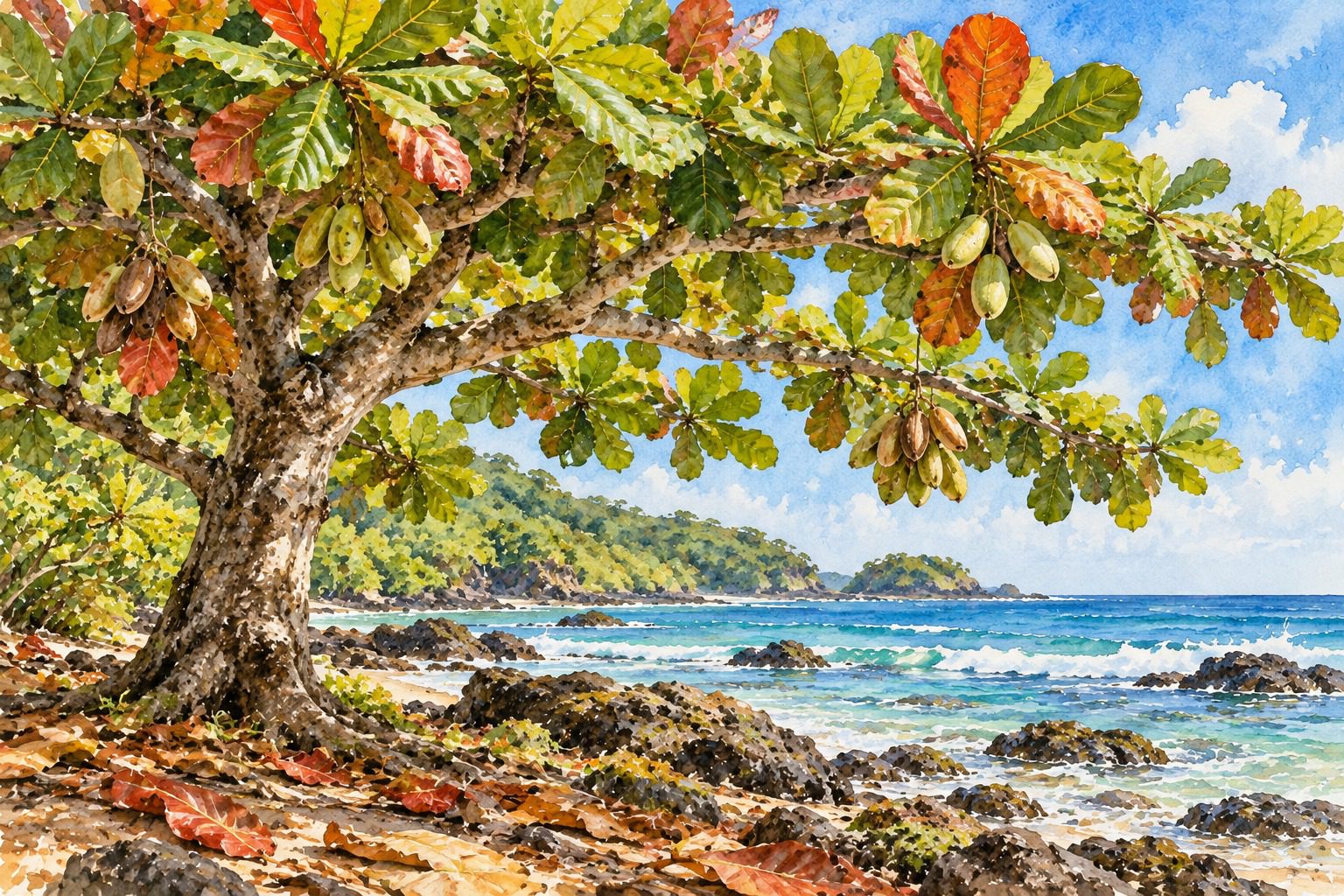
Species overview
About the Tropical Almond
Tropical almond is introduced to Costa Rica and is now familiar along many beaches. Its branches spread in horizontal tiers. Large broad leaves may turn yellow or red before falling, and the fruits contain a single seed inside a hard covering.
Identification
Key Features of the Tropical Almond
Tiered horizontal branches
Large broad leaves narrowing toward the base
Flattened oval fruits
Habitat & range
Coastal strands and planted shade areas.
Local observations
Research documents Central and South Pacific coasts and Tivives near the Gulf of Nicoya; the National Museum records Cahuita. Regional tags are evidence-based connections, not a guarantee at every location or an exhaustive range.
When to observe
Visit in daylight and compare leaves, flowers and fruits. Flowering and fruiting vary by place, weather and individual plant; a plant may not be in bloom during your visit.
Conservation & care
Observe from paths and leave leaves, bark, flowers and fruits attached. Do not taste wild plants or offer them to pets. Ask a knowledgeable guide to confirm the species.
Observation activity
Draw one leaf and one other feature without picking anything. Compare your sketch with the illustration and record whether you saw flowers, fruits or neither.
Explore by location
Caribbean · Central Pacific · Puntarenas & the Gulf Islands · South Pacific