

Nature Field Guide
Jabiru
- Spanish name
- Jabirú / Galán sin ventura
- Scientific name
- Jabiru mycteria
What Do Pico & Tati Think?
Pico: “That bird is standing so tall in the wetland!”
Tati: “Its shape tells us more than size alone.”
Species overview
About the Jabiru
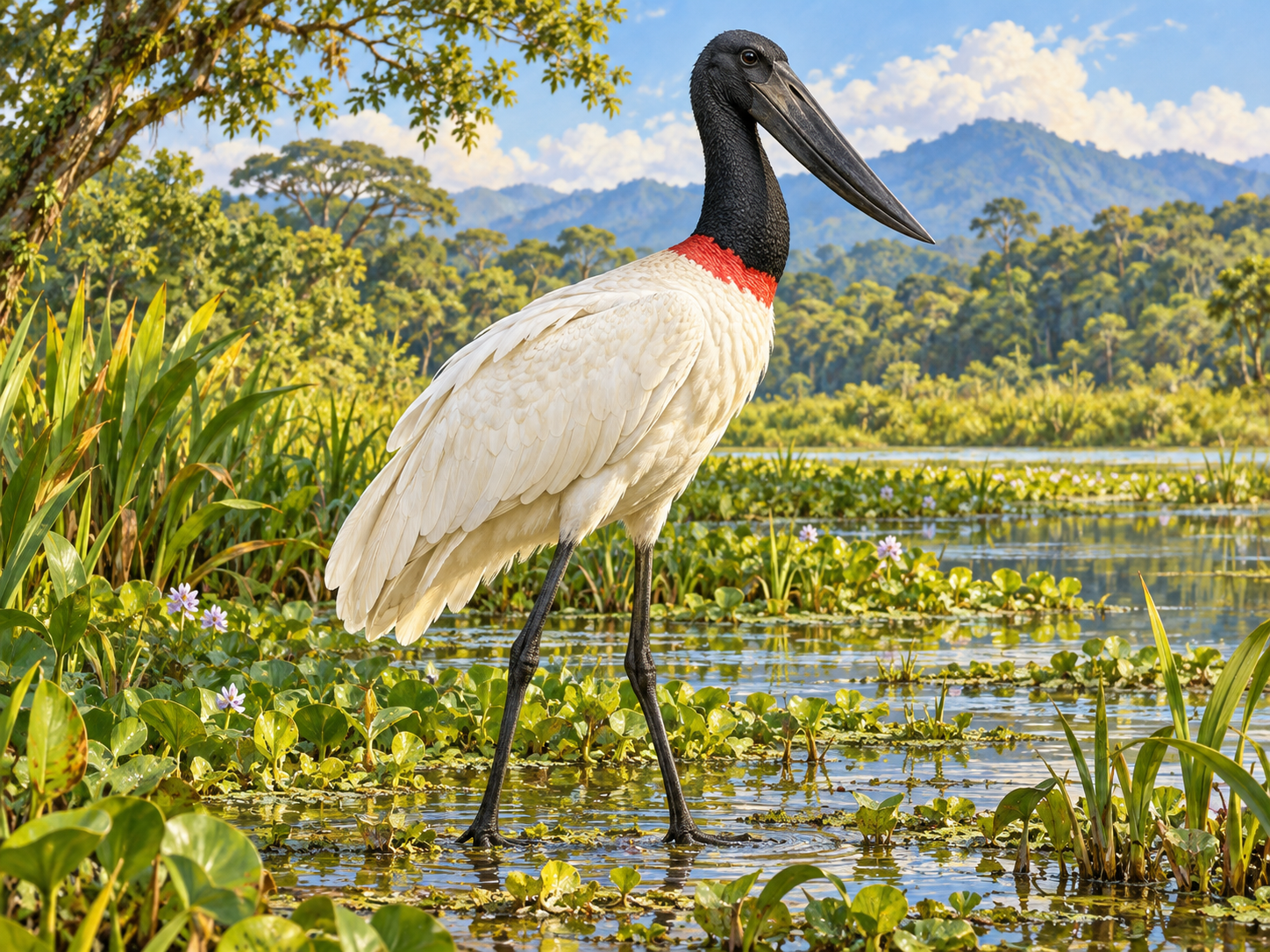
The Jabiru is a very large stork with a white body, bare dark head and neck, and a red band low on the neck. Its broad dark bill is an especially useful identification feature. Long legs allow it to use shallow wetland areas.
Jabirus occur near rivers, ponds, freshwater marshes and flooded open country. Tall trees provide nest sites, linking the bird’s wetland life to nearby woodland. In Costa Rica, Palo Verde’s river-and-marsh landscape is a documented area. A quiet distant observation can reveal feeding or flight behavior without pushing a bird away from the resources it needs.
Identification
Key Features of the Jabiru
Large white body with black bare head and neck.
Red band at the lower neck.
Massive dark bill and very long legs.
Habitat & range
The Tempisque basin is the principal nesting landscape. Cano Negro and Rio Frio receive seasonal visitors; not all wetlands in either region support Jabirus.
Local observations
SINAC names Jabiru at Palo Verde. Bagaces is the gateway town/canton association; no exact active nest location is provided.
When to observe
Plan a quiet observation with a local guide. Weather, food availability and the chosen habitat affect what you may see; a location record does not guarantee a sighting.
Conservation & care
Stay on authorized trails or viewing routes. Give birds space, keep voices low and leave nests undisturbed. Observe without bait, feeding or recorded calls.
Observation activity
Compare the shape of the Jabiru’s bill and neck with another wetland bird you can actually see. Sketch the differences from a viewing point.