

Nature Field Guide
Cocos Island Anole
- Spanish name
- Anolis de la Isla del Coco
- Scientific name
- Anolis townsendi
What Do Pico & Tati Think?
Pico: “What can we learn from this reptile’s shape?”
Tati: “Let’s notice its markings and habitat while leaving it plenty of space.”
Species overview
About the Cocos Island Anole
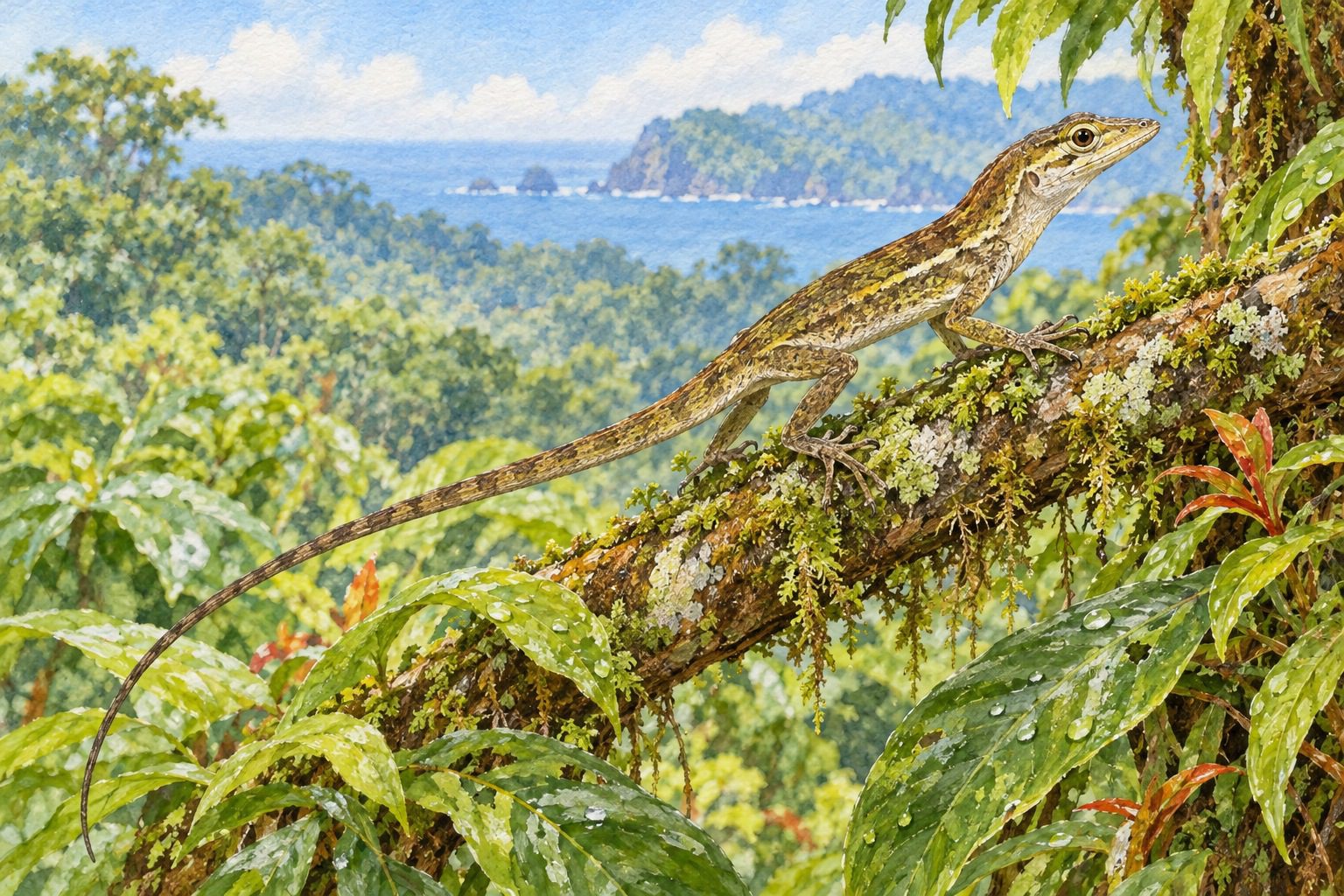
The Cocos Island anole is a small, long-tailed lizard of wet island vegetation. Brown and olive tones can blend with the branches and leaves of its forest home. Its most important identification clue is also a geography lesson: its natural range is Isla del Coco.
An endemic species occurs naturally in a limited place. This anole is not a mainland Tamarindo or Guanacaste species. Protecting an island means caring for its forests and preventing harmful introductions. Follow park rules and leave every animal, egg and plant material where it belongs.
Identification
Key Features of the Cocos Island Anole
Small anole with a long tail
Brown-to-olive camouflage
Naturally restricted to Isla del Coco
Habitat & range
Isla del Coco, an offshore island administratively within Puntarenas province. It is separate from the Gulf of Nicoya islands and mainland regions.
Local observations
Endemic to Isla del Coco, Costa Rica; not a mainland species.
When to observe
Observe on permitted paths with an adult or qualified guide. Activity varies by species, place and weather; never disturb a hiding or resting animal.
Conservation & care
Observe from permitted paths with an adult. Do not touch, chase, catch or feed reptiles. Leave bark, stones, logs and leaf litter in place. Keep pets away and give animals an open escape route.
Threats & pressures
Protect natural shelters and connected habitat. Avoid collection, unnecessary clearing and deliberate killing. Leave wildlife in its habitat and support responsible observation.
Observation activity
Find Isla del Coco on a map. Explain how an animal can belong to Costa Rica without living on the mainland.