

Nature Field Guide
Yellow-spotted Night Lizard
- Spanish name
- Lagartija nocturna de manchas amarillas
- Scientific name
- Lepidophyma flavimaculatum
What Do Pico & Tati Think?
Pico: “What clues help us recognize this reptile?”
Tati: “Let’s notice its shape, markings and habitat from a respectful distance.”
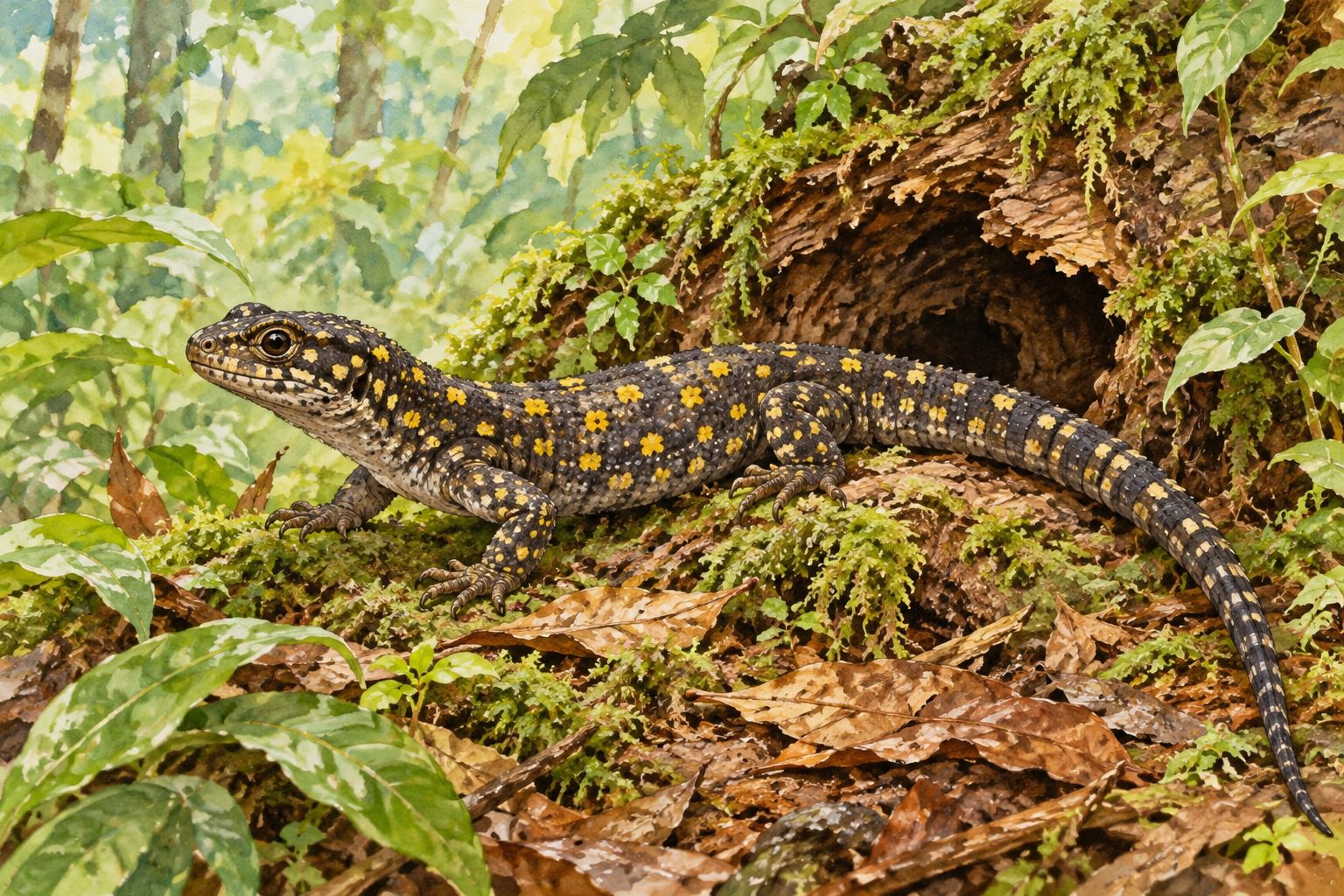
Species overview
About the Yellow-spotted Night Lizard
This lizard has a dark body marked with pale to yellow spots and a broad head. Its rough-looking scales and sturdy shape differ from the delicate outline of an anole. The name night lizard should not be treated as a promise about when you will see one.
It uses sheltered places in humid Caribbean-slope forest. Logs and debris are part of its habitat, so do not turn them over to search. A guide’s existing photograph is often a better way to study a secretive species.
Identification
Key Features of the Yellow-spotted Night Lizard
Dark body with yellowish spots
Broad head
Rough-looking scales and long tail
Habitat & range
Humid Caribbean-slope lowlands, including northern Costa Rica and the Upala area.
Local observations
Native reptile recorded in Costa Rica. Presence varies with suitable habitat and locality.
When to observe
Visibility varies with weather, habitat and the animal’s activity. Observe on an appropriate guided outing; never disturb a hiding animal to obtain a sighting.
Conservation & care
Observe with an adult from permitted paths. Do not catch, chase, touch or feed reptiles. Leave bark, logs, rocks and leaf litter in place. Keep pets away and allow animals an open escape route.
Threats & pressures
Protect habitat connections and natural shelters. Avoid road mortality, collection and deliberate killing. Leave reptiles in their habitat rather than keeping or relocating them.
Observation activity
Make a spotted camouflage pattern on paper and explain why you should leave a real shelter undisturbed.
Explore by location
Caribbean · Northern Plains · Alajuela · Heredia · Limón