

Nature Field Guide
Plantain
- Spanish name
- Plátano
- Scientific name
- Musa spp. (plantain cultivars)
What Do Pico & Tati Think?
Pico: “These fruits look like big bananas!”
Tati: “Let's ask how plantains are used in the kitchen.”
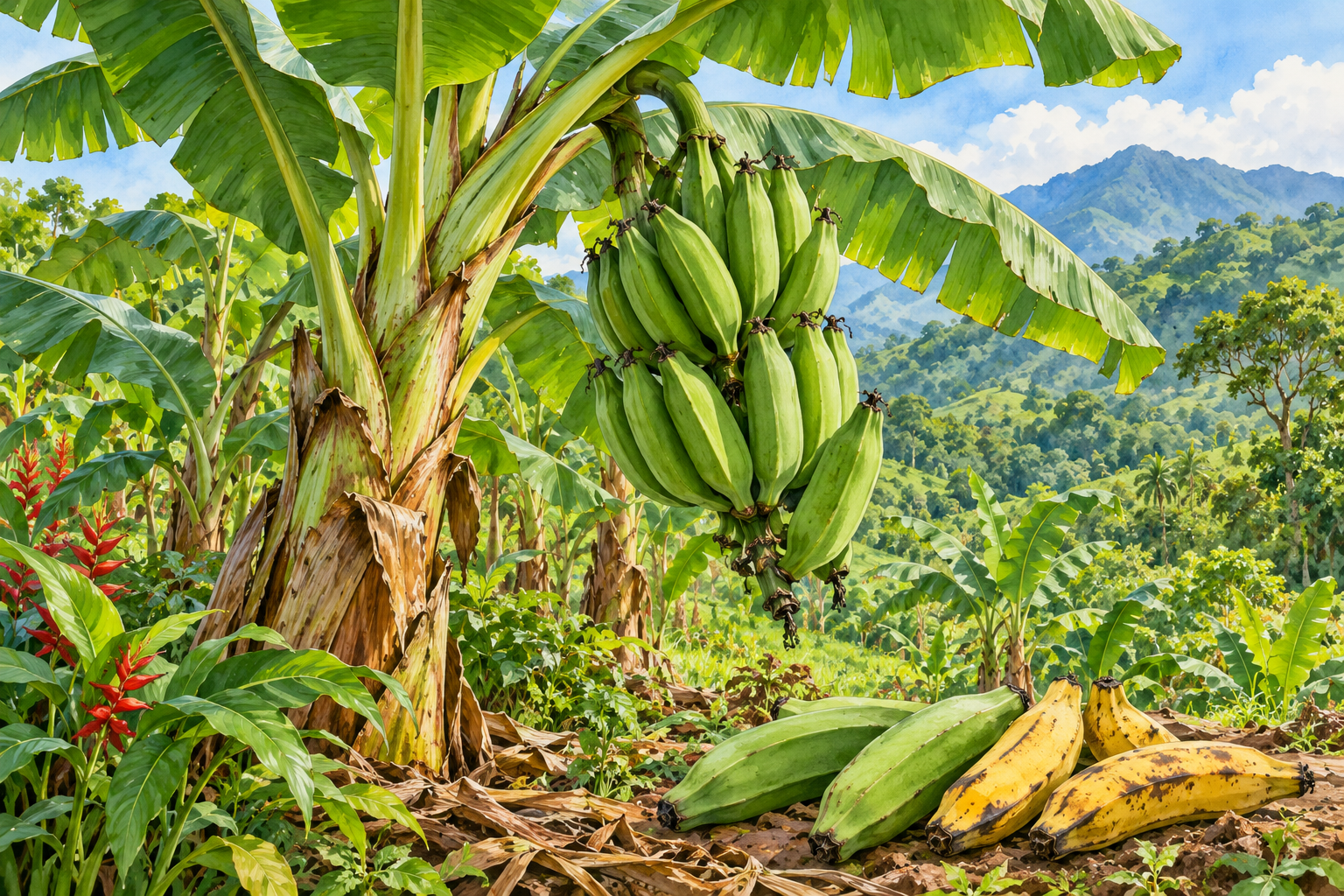
Species overview
About the Plantain
Plantains are cultivated Musa plants closely related to dessert bananas. They are also giant herbs with broad leaves and layered pseudostems.
Their fruit is commonly prepared by cooking, whether green or ripe. In Costa Rican meals, plantains can become patacones or sweet cooked maduros. Fruit size and shape vary, so ask a grower which cultivar you are observing.
Identification
Key Features of the Plantain
Broad elongated leaves
Layered pseudostem rather than a woody trunk
Large fruits grouped in hands
Green and ripe fruits look different
Habitat & range
Warm cultivated areas in the Caribbean, Northern Plains, South Pacific and Central Pacific.
Local observations
MAG crop material records plantain cultivation in Huetar Atlántica, Huetar Norte and Brunca; SEPSA also provides a Central Pacific production model. Cultivar appearance and abundance vary.
When to observe
Observe a permitted farm's current growing stage. Harvest and ripening are separate steps and are not fixed to one national visitor season.
Conservation & care
Visit farms only with permission and follow the host's instructions. Stay clear of machinery, chemical applications and working areas. Do not pick or taste plants without a responsible adult and the host's approval.
Observation activity
With a host's samples, compare a dessert banana and a plantain. Record shape, size and how each is usually prepared.
Explore by location
Caribbean · Central Pacific · Northern Plains · South Pacific