

Nature Field Guide
Jaguar
- Spanish name
- Jaguar / Tigre
- Scientific name
- Panthera onca
What Do Pico & Tati Think?
Pico: “A forest can hide a very large cat!”
Tati: “A camera-trap record helps us learn without approaching it.”
Species overview
About the Jaguar
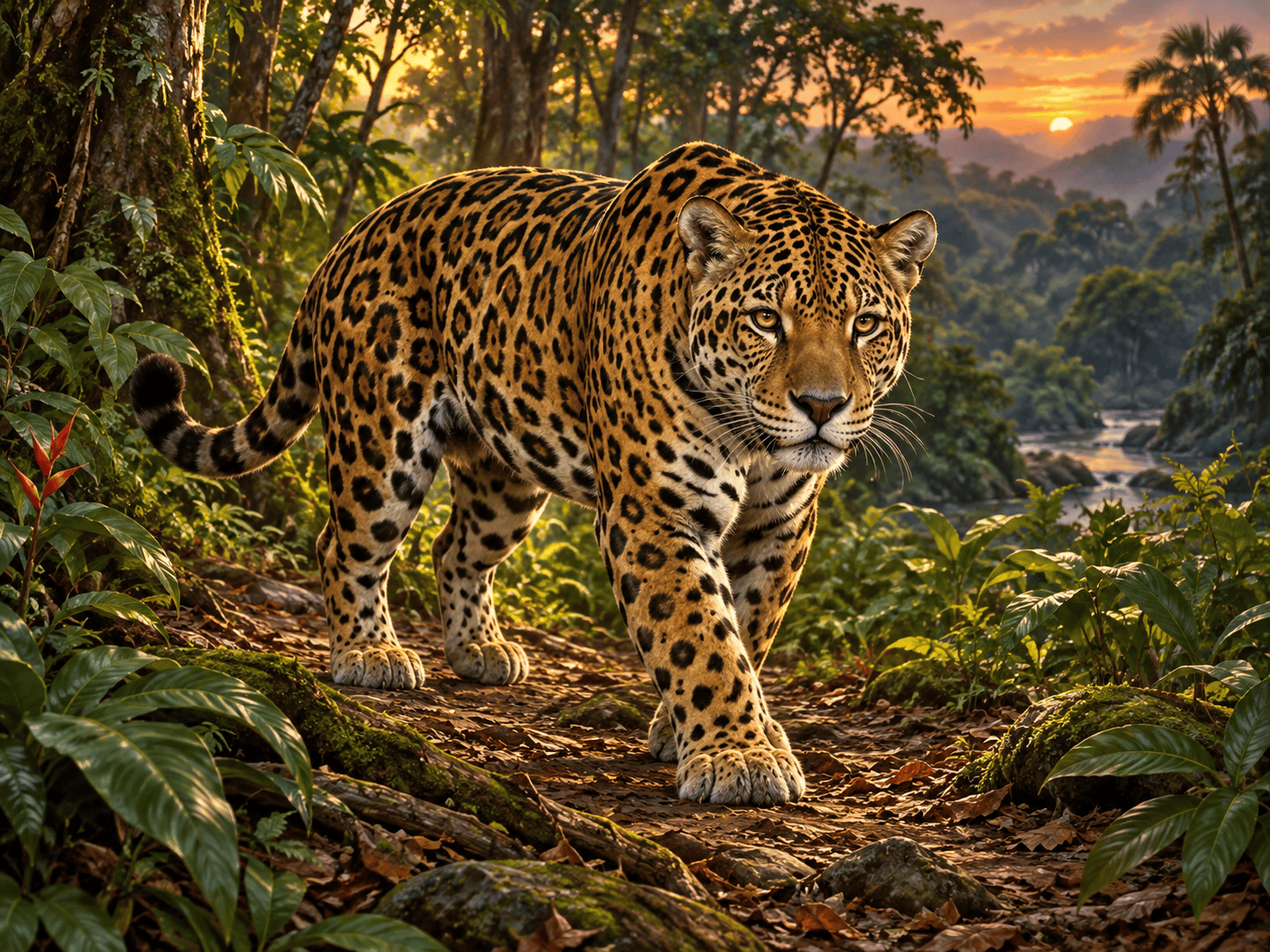
The Jaguar is Costa Rica’s largest wild cat. A broad head, muscular body and dark rosettes distinguish it from smaller spotted cats. Its compact, powerful build suits hunting on the ground and swimming through water as well as moving in dense forest.
Jaguars eat a variety of animals and rely on adequate prey and space. A camera trap can document a visit without turning a rare encounter into a close approach. Maintaining forest connections helps animals move between protected areas. Global conservation status and national legal protection describe different scales: a species can have a broad global range while facing serious local pressures.
Identification
Key Features of the Jaguar
Broad head and muscular body.
Rosettes often contain smaller dark spots.
Relatively thick limbs and shorter tail than a puma.
Habitat & range
Tortuguero National Park’s protected forest landscape; ACG camera traps also document the species in Pitilla.
Local observations
SINAC’s Tortuguero conservation area documents Jaguar research and records in the national park. ACG publishes dated Jaguar camera-trap records at Quica, Pitilla. Neither is a promise of a visitor sighting.
When to observe
Observe from authorized routes with a local guide. Activity, weather and food availability change encounters; a documented location is not a promise of a sighting.
Conservation & care
Keep a respectful distance and leave an open route for the animal. Stay on authorized paths, secure food and rubbish, and observe without feeding, touching, baiting or chasing.
Threats & pressures
Forest loss, hunting of prey and retaliatory killing after livestock conflict are documented pressures.
Protection & recovery
Costa Rica’s government wildlife guide explicitly identifies this species as protected nationally. This legal designation is separate from its global IUCN category.
Conservation assessment
Global IUCN category as reported by the linked source, checked 7 October 2026. The source does not give an assessment year here. National legal protection and local abundance are separate questions.
Observation activity
Study an existing park camera-trap photograph and compare rosettes with an ocelot image. Do not seek out or follow a wild cat.
Explore by location
Caribbean · Central Highlands · Guanacaste · Northern Plains · South Pacific · Guanacaste · Heredia · Limón · Tortuguero