

Nature Field Guide
Bare-necked Umbrellabird
- Spanish name
- Pájaro sombrilla
- Scientific name
- Cephalopterus glabricollis
What Do Pico & Tati Think?
Pico: “That crest makes such an unusual shape!”
Tati: “We can learn about a shy bird without following it.”
Species overview
About the Bare-necked Umbrellabird
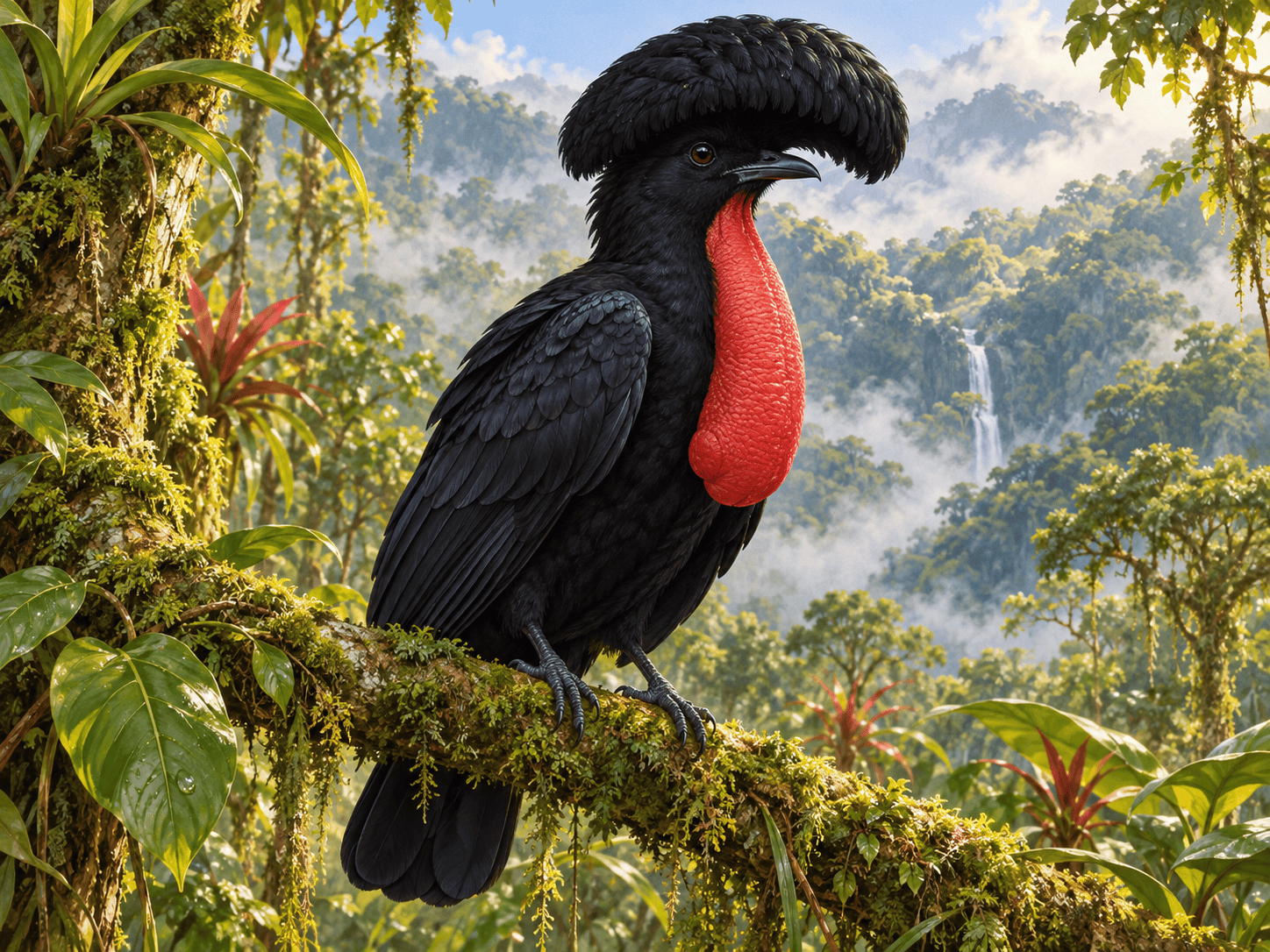
The Bare-necked Umbrellabird is a large, dark forest bird. Its heavy crest and short tail create a distinctive silhouette. Females are smaller than males and lack the male’s well-developed vocal sac, so identification should consider more than a single dramatic feature.
Adults eat large fruits and regurgitate seeds, helping maintain forest diversity. They also take insects and small animals, particularly when feeding a chick. Researchers studying females have found how easily these quiet birds disappear in dense vegetation. Forest connections between elevations matter for their movements, and sensitive breeding habitat deserves space rather than close pursuit.
Identification
Key Features of the Bare-necked Umbrellabird
Large dark bird with a heavy crest.
Short, square tail.
Male and female throat structures differ.
Habitat & range
Humid Caribbean-facing foothills and adjacent lowlands, with seasonal movement into montane breeding forest. Guanacaste refers to humid mountain slopes, not its dry coastal plain.
Local observations
UCAN describes research near Santa Elena / Monteverde. San Ramón’s municipal birdwatching route also lists the species.
When to observe
Plan a quiet observation with a local guide. Weather, food availability and the chosen habitat affect what you may see; a location record does not guarantee a sighting.
Conservation & care
Stay on authorized trails or viewing routes. Give birds space, keep voices low and leave nests undisturbed. Observe without bait, feeding or recorded calls.
Threats & pressures
UCAN identifies forest fragmentation and climate pressures on seasonal fruit availability as conservation concerns.
Conservation assessment
UCAN identifies the species as Endangered. Source checked 7 October 2026. This is a global species category, not a count of birds in the tagged towns.
Observation activity
Record three features you actually observe: shape, movement and habitat. Draw the bird from a respectful distance and compare your notes with a field guide.
Explore by location
Caribbean · Central Highlands · Guanacaste · Northern Plains · Alajuela · Puntarenas · Monteverde · San Ramón