

Nature Field Guide
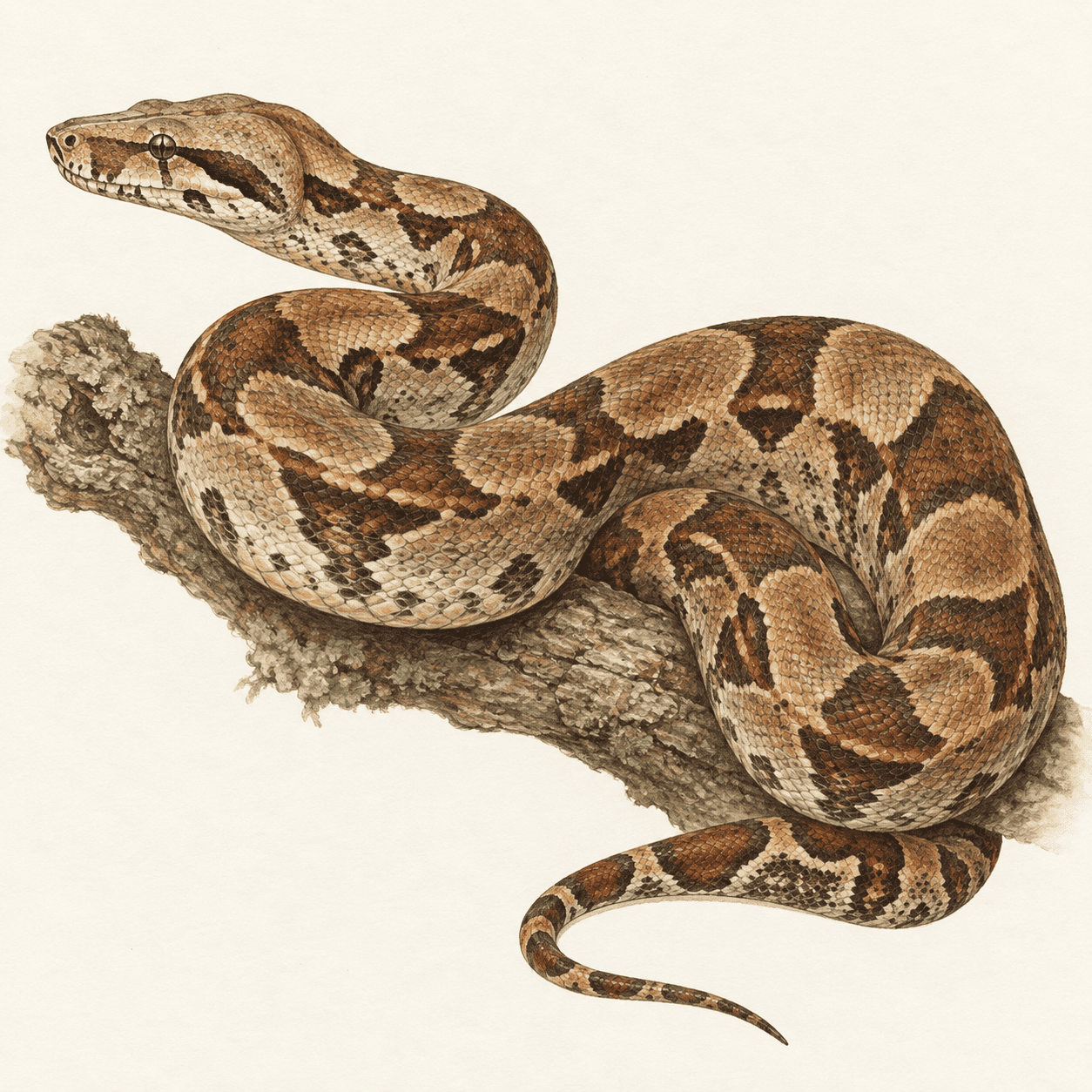
Central American Boa
- Spanish name
- Boa o béquer
- Scientific name
- Boa imperator
What Do Pico & Tati Think?
Pico and Tati invite you to learn about the central american boa. Using a photograph, draw three saddle-shaped markings and explain how patterns can blend with a background.
Species overview
About the Central American Boa
A muscular snake with broad saddle-like markings. Boas subdue prey by constriction rather than venom, but they are strong wild animals and must never be approached or handled.
Identification
Key Features of the Central American Boa
Heavy body with large brown saddle-like markings.
Broad head and a tapering tail.
Color and pattern vary between individuals.
Habitat & range
Forests, forest edges and other suitable habitats across Costa Rica.
Local observations
Recorded in Costa Rica. This profile describes suitable habitat, not a confirmed Tamarindo sighting or a guaranteed viewing location.
When to observe
May be active at different times; use guide-led observation rather than actively searching.
Conservation & care
Never approach, touch, catch or try to move any snake, even if it appears harmless or dead. Keep children and pets away, step back calmly and tell an adult or guide. Do not use colors, head shape or this card to judge safety.
Observation activity
Using a photograph, draw three saddle-shaped markings and explain how patterns can blend with a background.
Explore by location
Caribbean · Central Pacific · Guanacaste · Northern Plains · Puntarenas & the Gulf Islands · South Pacific