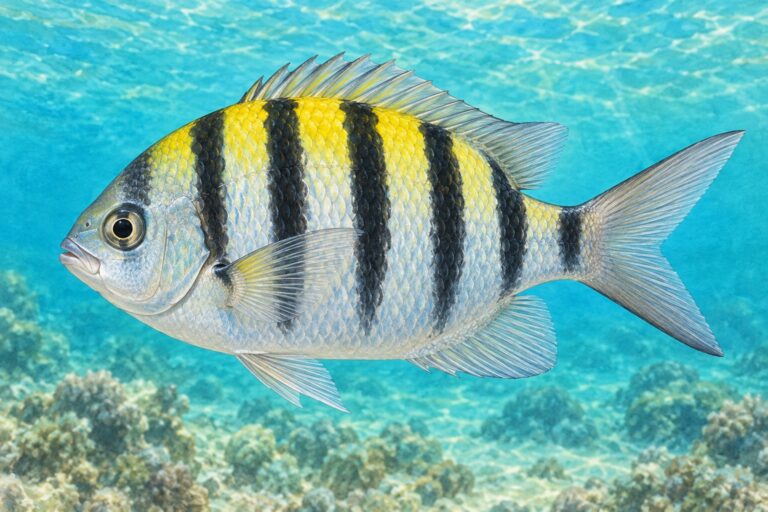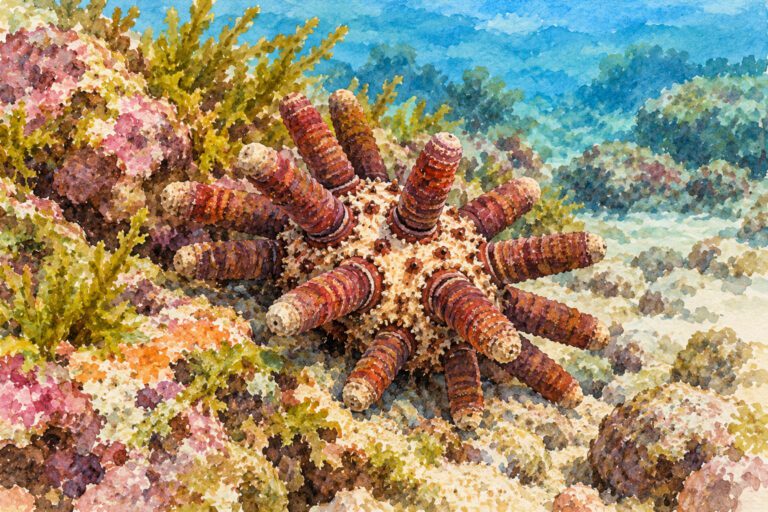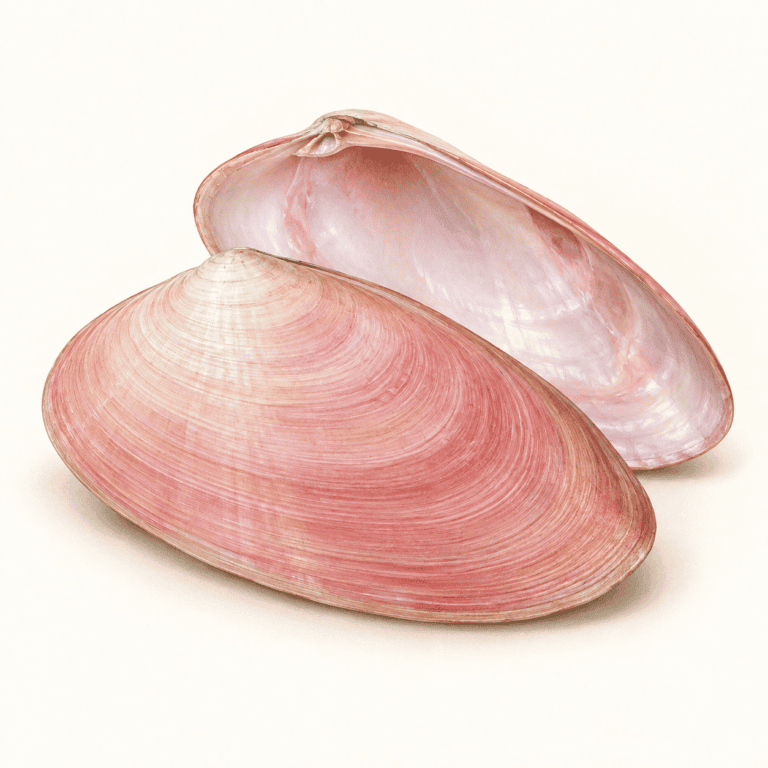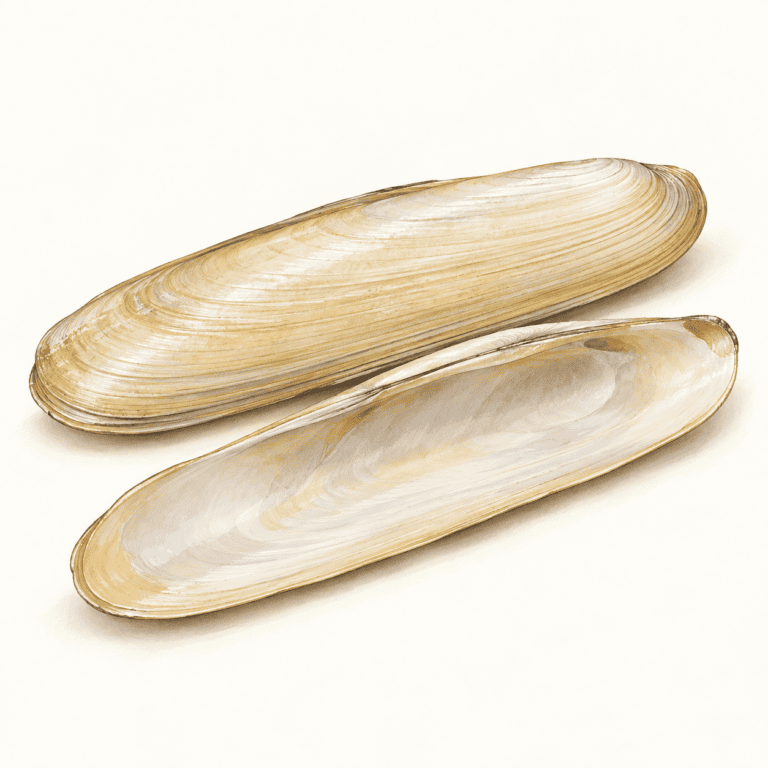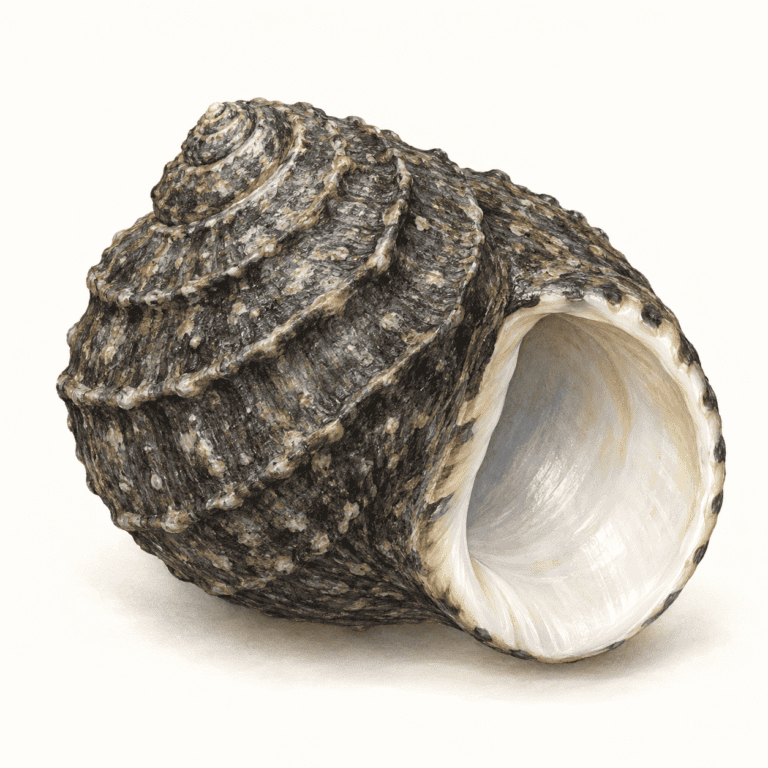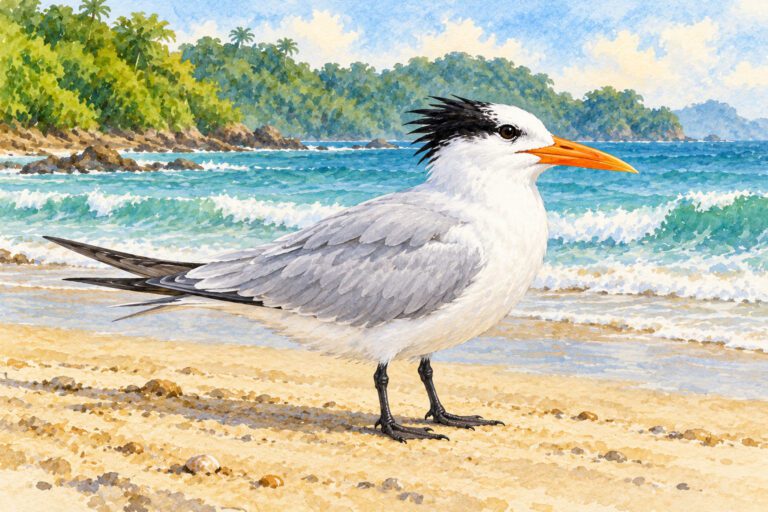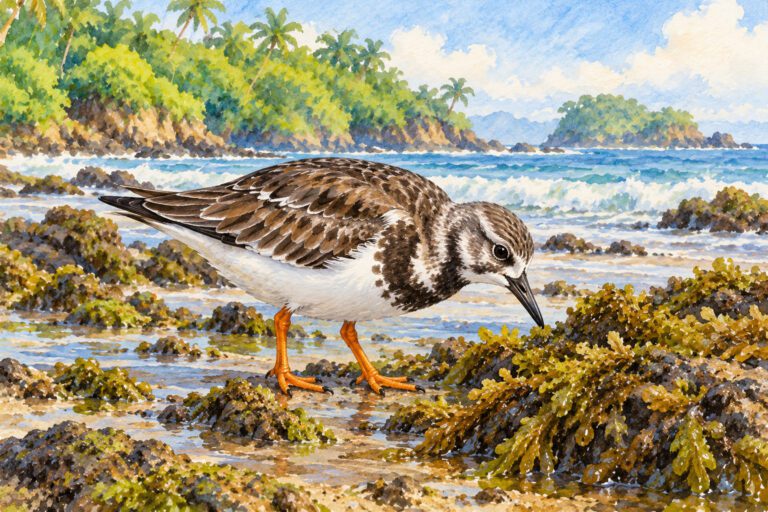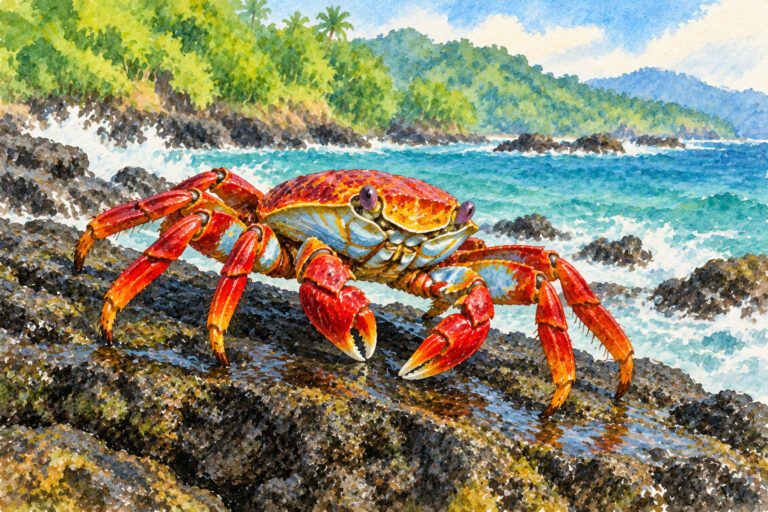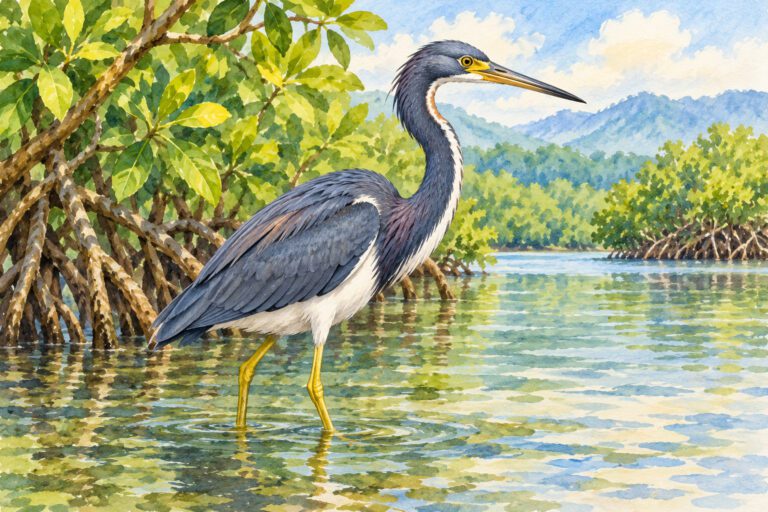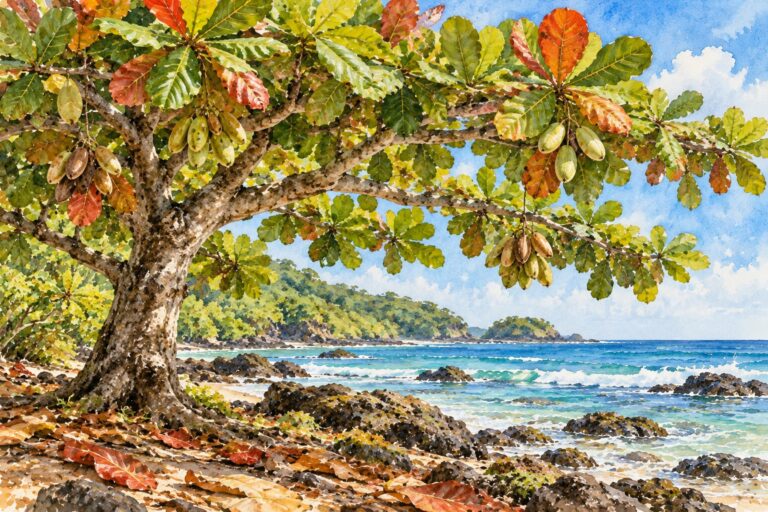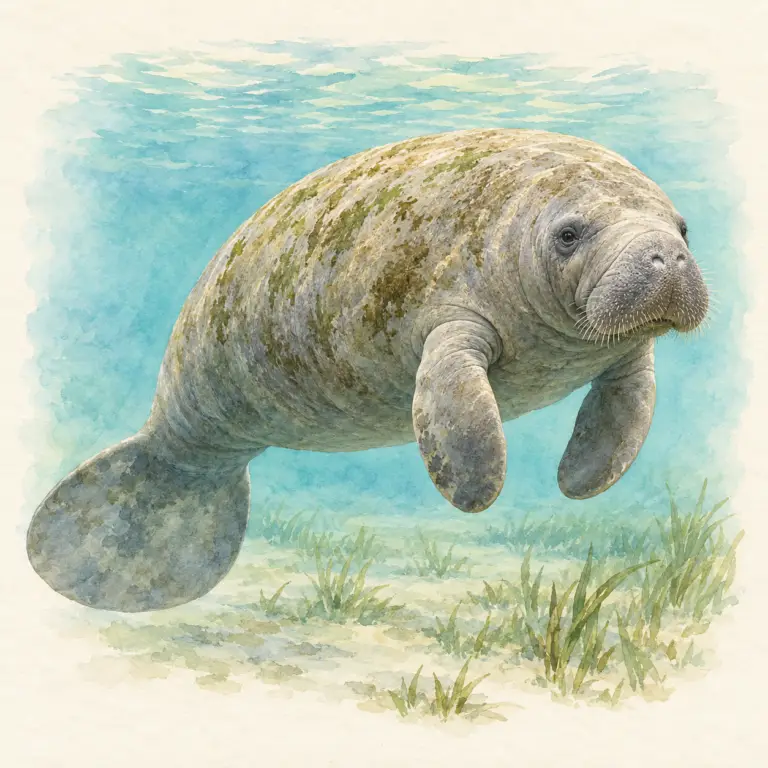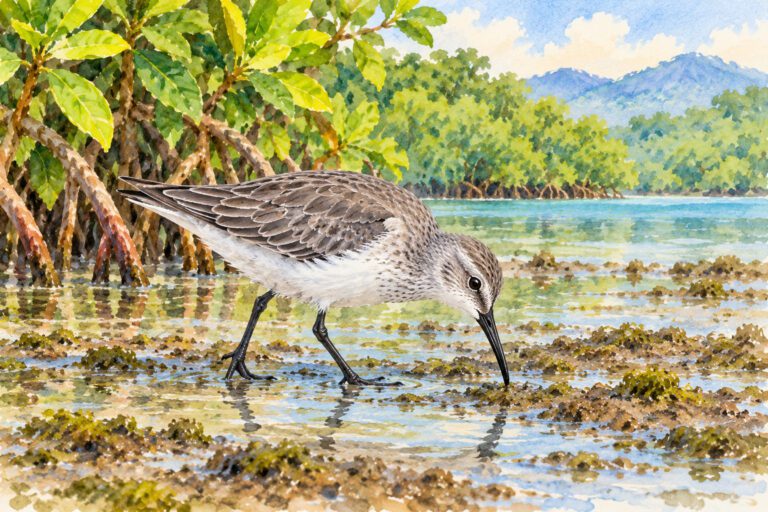
Tico Explorers

explore the shoreline Discover Life Where Land Meets Sea.

Meet the animals and plants that make coastal habitats their home. Explore their identification clues, learn where they occur and discover how each connects with the world around it.
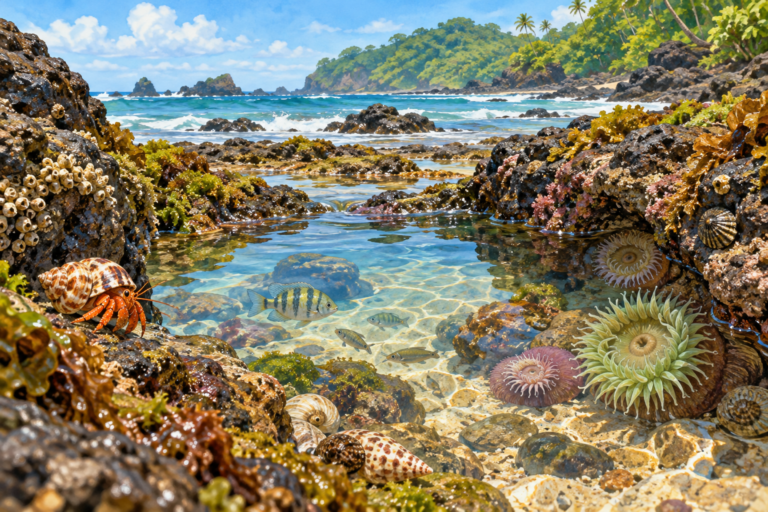
Explore Rocky Tide Pools

Look closely for tiny fish, crabs and other creatures in shallow pools. Explore with an adult when conditions are safe. Leave rocks and animals where they belong.

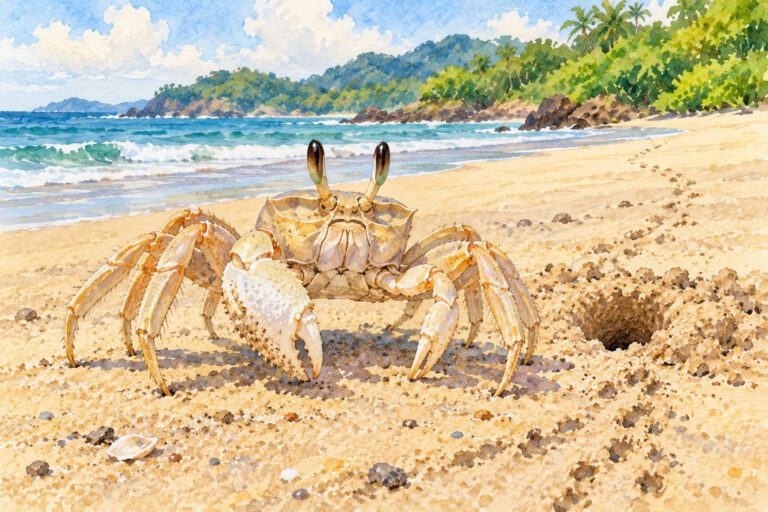
Notice Life Along the Sand

Watch for shorebirds, crab burrows and tracks near the water’s edge. What clues can you find? Keep your distance from wildlife and leave nests undisturbed.

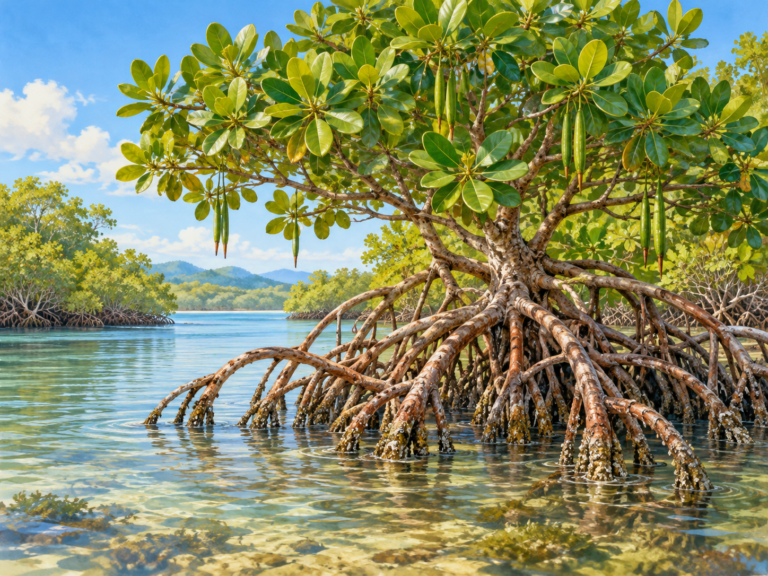
Discover the Mangroves

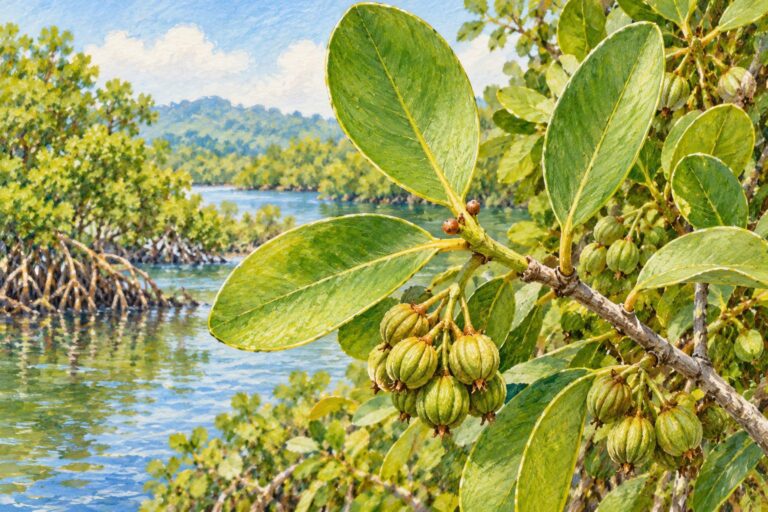
Notice tangled roots where coastal trees meet the water. These sheltered habitats connect land and sea. Explore from designated paths or with a local guide.

Listen to the Coast

Pause and listen to waves, rustling palms and calling seabirds. How do the sounds change as you move along the shore? Let the coast tell its story.

Follow the Changing Tide

Watch how the water reveals and covers parts of the shoreline. Explore with an adult who checks tide and wave conditions. Keep a safe route back to dry land.

Care for Every Coastal Creature

Give wildlife room to rest, feed and move freely. Avoid touching, feeding or chasing animals. Take your litter home and leave shells, plants and other discoveries in place.

the peopleMeet the People Who Help Protect Our Coasts

Lifeguards and coast guard crews help care for people along the shore and out at sea. From watching beach conditions to responding to emergencies, their work reminds us to respect the ocean and listen to those who know it well.

Join Pico and Tati in learning about these coastal helpers. Discover why paying attention to warnings, following local guidance and making thoughtful choices are part of every responsible ocean adventure.

Nature Field Guide

Discover Ocean & Coastal Life

Explore wildlife, plants and trees. Learn what to look for and where to find them.

140 profiles
Nature Field Guide

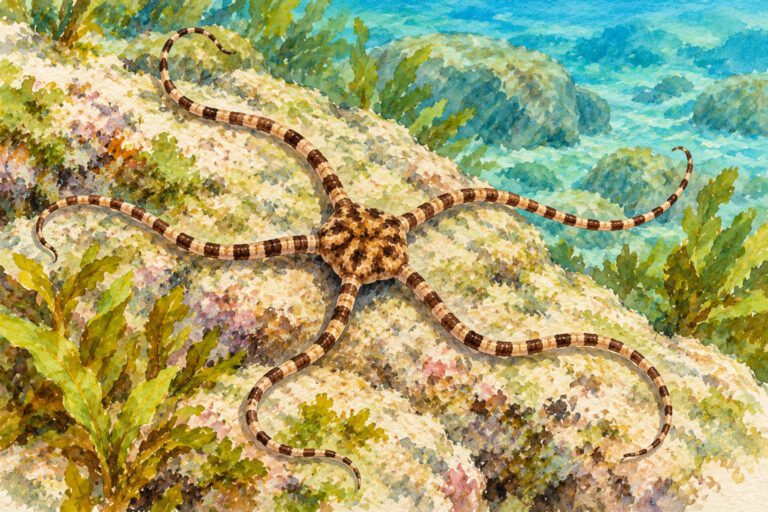
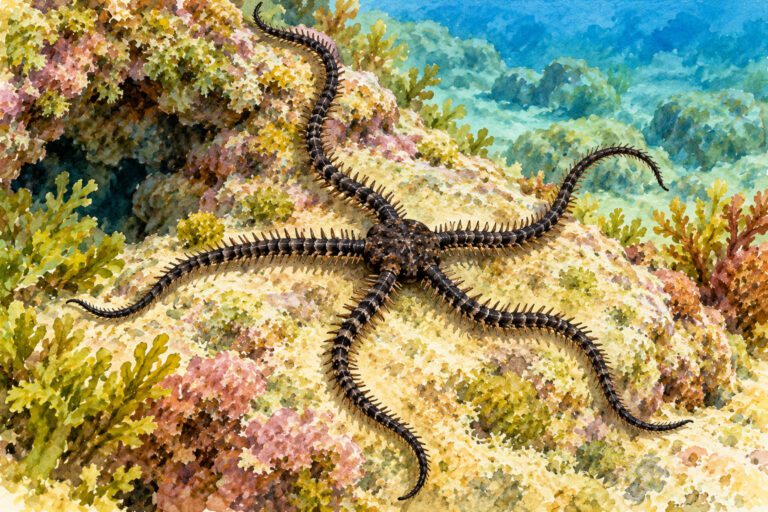
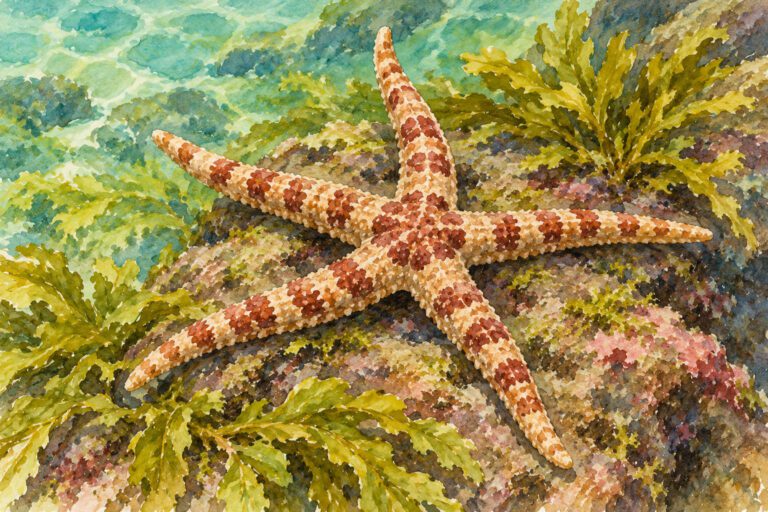
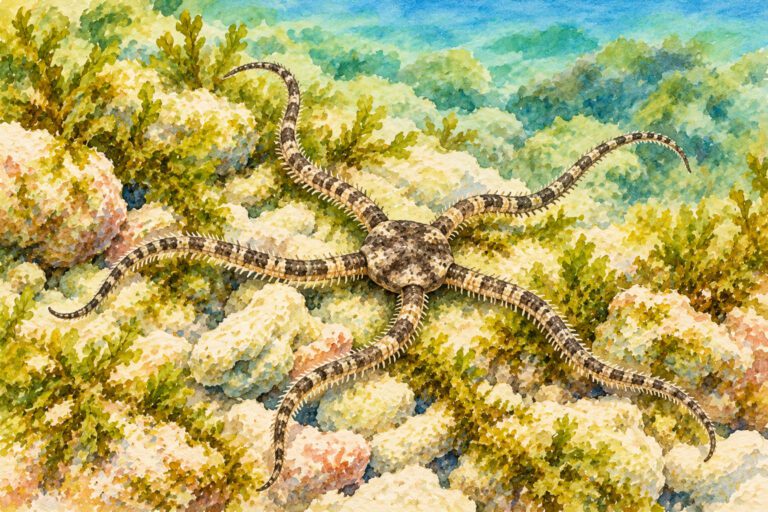
Alexander’s Spiny Brittle Star

Spanish name
Ofiura espinosa de Alexander
Scientific name
Ophiocomella alexandri

What Do Pico & Tati Think?

Pico and Tati discover that a brittle star’s scientific name can change as scientists learn more about its relatives.

Identification

Key Features of the Alexander’s Spiny Brittle Star

  • A clearly defined central disc

  • Long flexible arms

  • Check both current and older scientific names when reading a reference

Habitat & range

Suitable underwater coastal habitat. Use a permitted guided snorkeling or viewing activity appropriate to your family; do not enter the sea just to find this animal.

Conservation & care

Watch without touching, lifting, feeding or collecting. Keep fingers and equipment away from spines and other surface structures. Leave the animal submerged and its habitat undisturbed.

View full profile →

Nature Field Guide

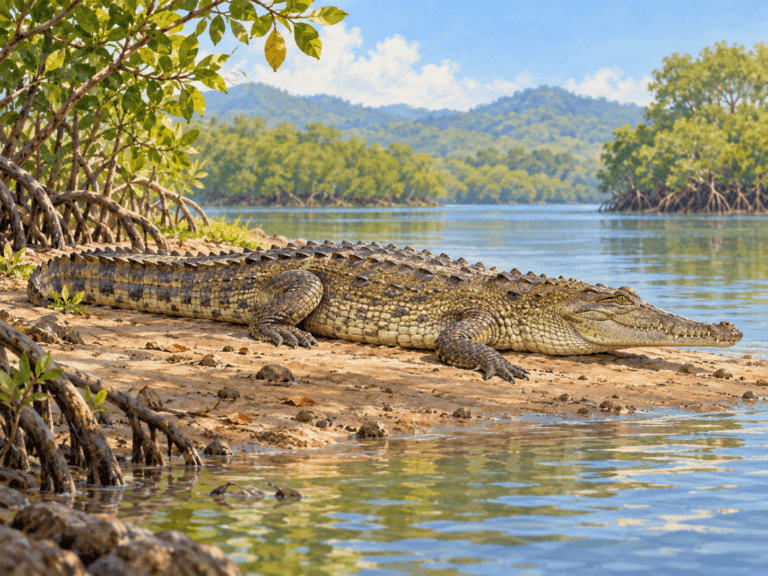
American Crocodile

Spanish name
Cocodrilo americano
Scientific name
Crocodylus acutus

What Do Pico & Tati Think?

Pico: “It blends into the riverbank so well.”

Tati: “We can observe from here with our guide. We don’t need to move closer.”

Identification

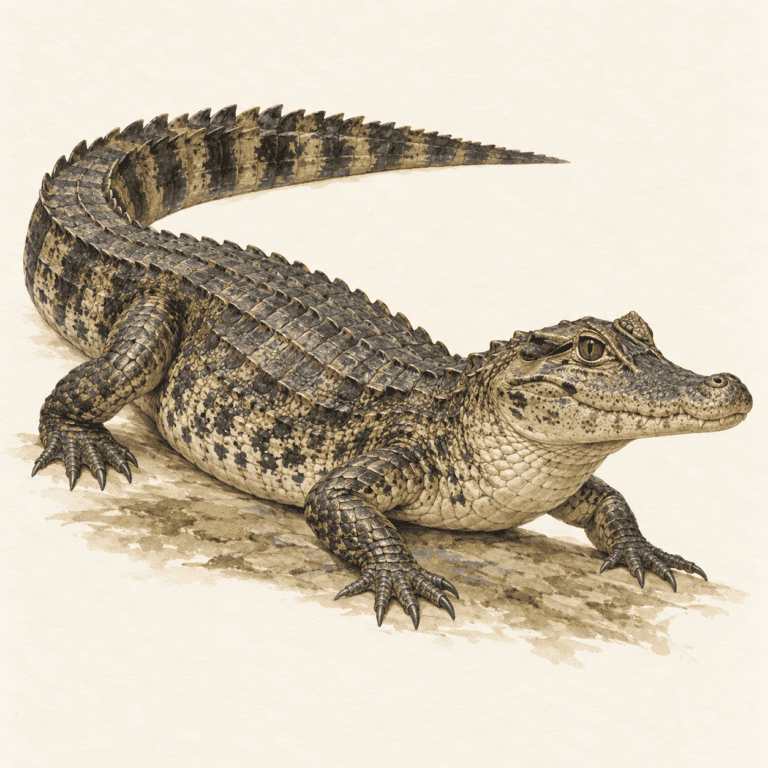
Key Features of the American Crocodile

  • A long snout and narrow head.

  • An olive-brown adult body with a long, strong tail.

  • Much of the body may be concealed in water or beside a bank.

Habitat & range

Rivers, estuaries, mangrove channels and other aquatic habitats. Observe only from a guide-approved boat or designated viewing place.

Seasonal Calendar

Egg-laying

General species biology; local schedule unverified

Apr, May

General species reference: April–May egg-laying and about 9–10 weeks of incubation. Tamarindo-specific nesting dates have not been verified. Never approach nests.

Event source ↗

Conservation & care

Never feed, approach or provoke crocodiles. Stay in the boat, keep hands inside, and follow local signs and guide instructions. Keep children and pets away from water edges.

View full profile →

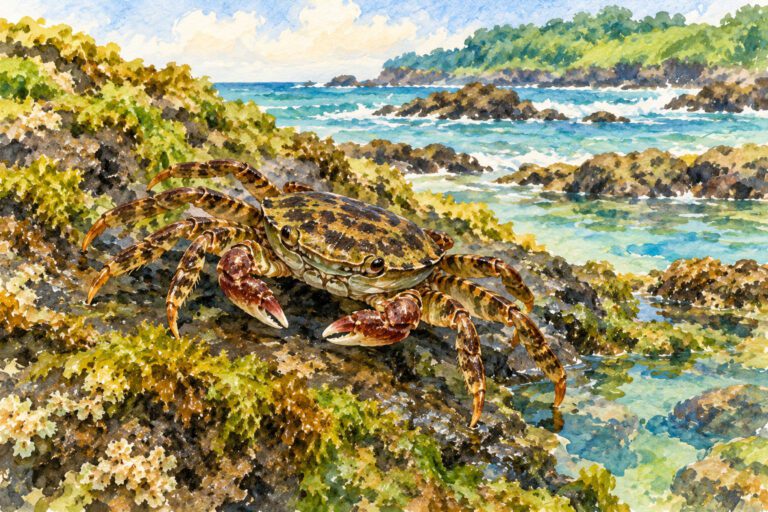
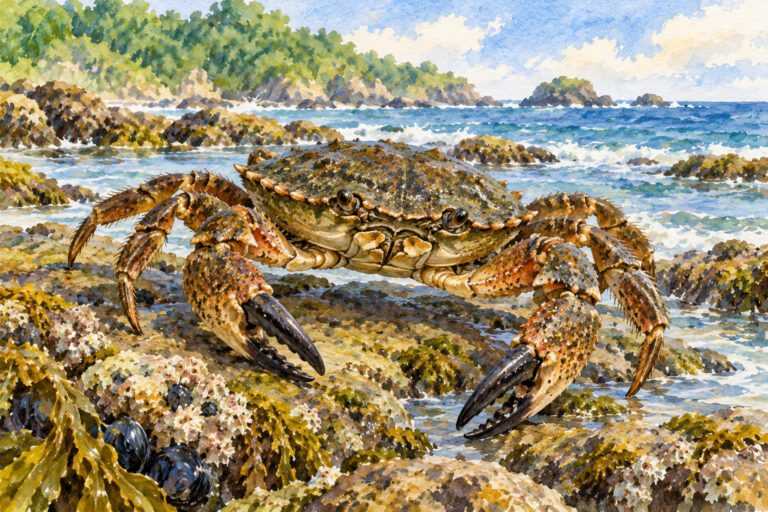
Nature Field Guide

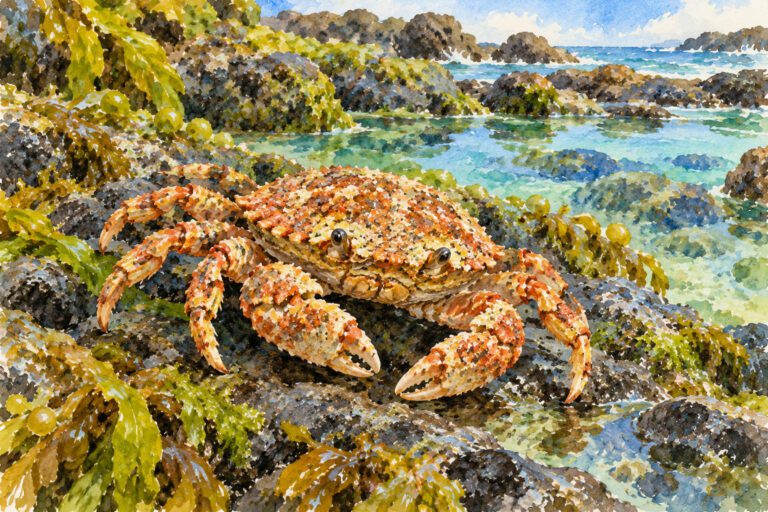
American Pebble Crab

Spanish name
Cangrejo piedra americano
Scientific name
Daira americana

What Do Pico & Tati Think?

A crab can blend into a rocky neighborhood. Pico watches patiently while Tati compares the outline with the stones around it.

Identification

Key Features of the American Pebble Crab

  • A compact crab body

  • A textured carapace

  • Confirm the identification from a detailed photograph

Habitat & range

Rocky shore and naturally visible tidal habitat. Choose a permitted observation point with an adult; do not turn rocks or reach into holes.

Conservation & care

Give claws and burrow entrances space. Do not handle, feed, chase or collect crabs. Leave rocks and shells where they are, and follow your adult’s route and local signs.

View full profile →

Nature Field Guide

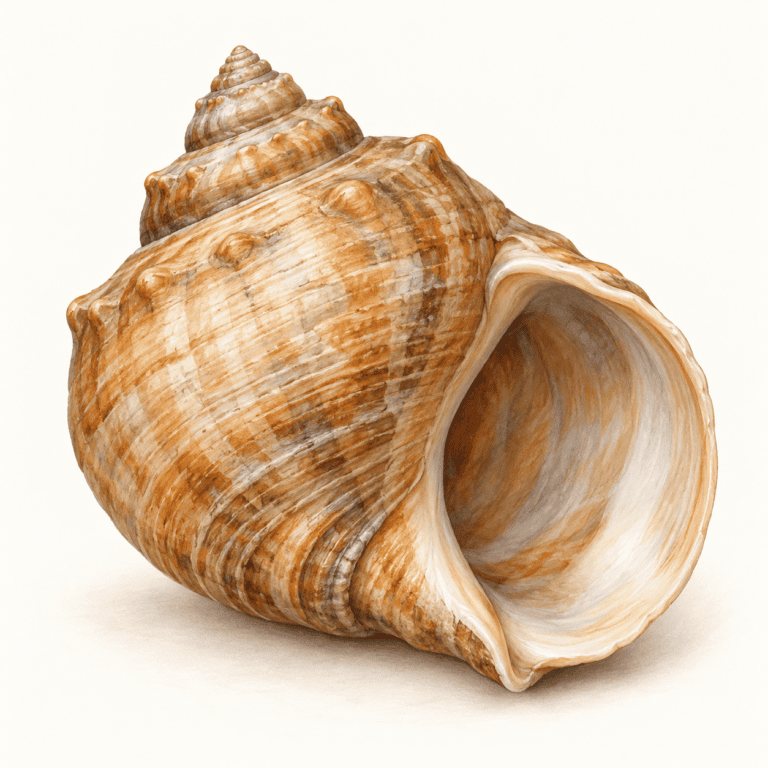
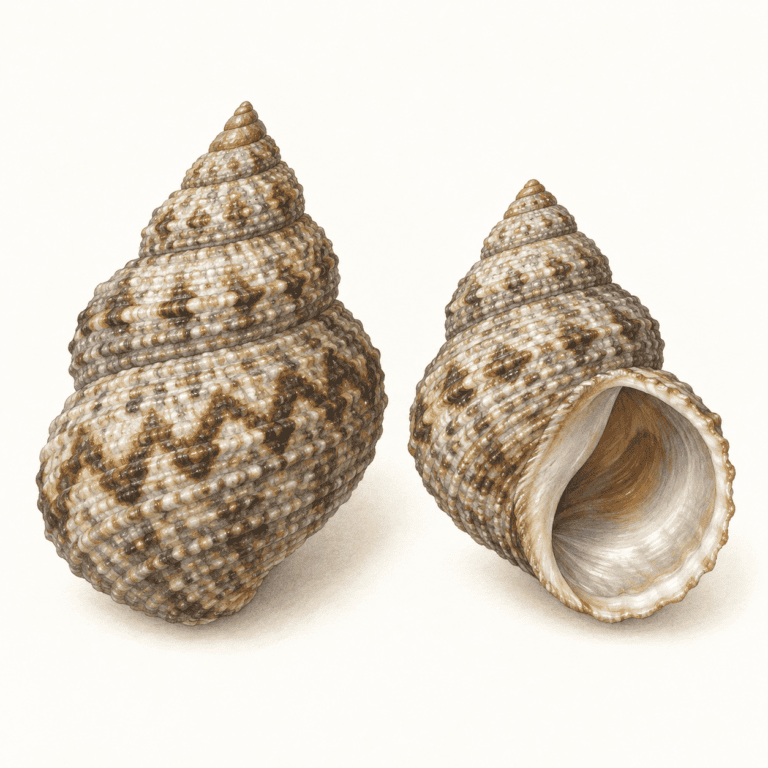
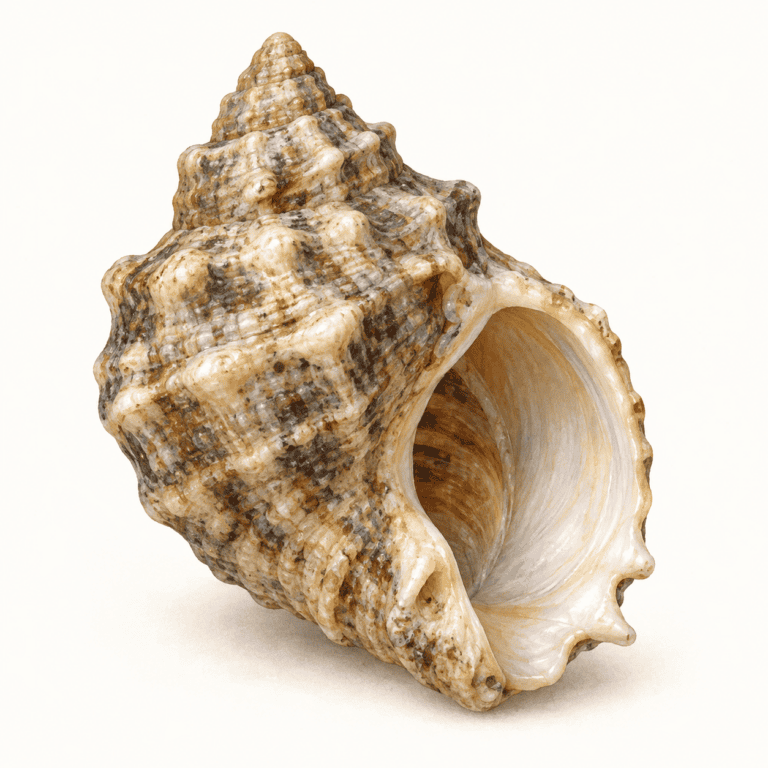
Apple Rocksnail

Spanish name
Caracol de roca
Scientific name
Vasula melones

What Do Pico & Tati Think?

An apple rocksnail lives among the rocks of the lower shore.

Identification

Key Features of the Apple Rocksnail

  • Coiled rocksnail shell.

  • Compare its broad outline, spire and opening with an identified reference.

  • Older labels may use the name Thais melones.

Habitat & range

Lower rocky intertidal zone.

Conservation & care

Observe and photograph shells where they are. Leave living animals, occupied shells and empty shells in place. Do not pry animals from rocks, dig in mangroves or put fingers into shell openings. Explore with an adult or guide, follow site rules and stay clear of surf and slippery rocks.

View full profile →

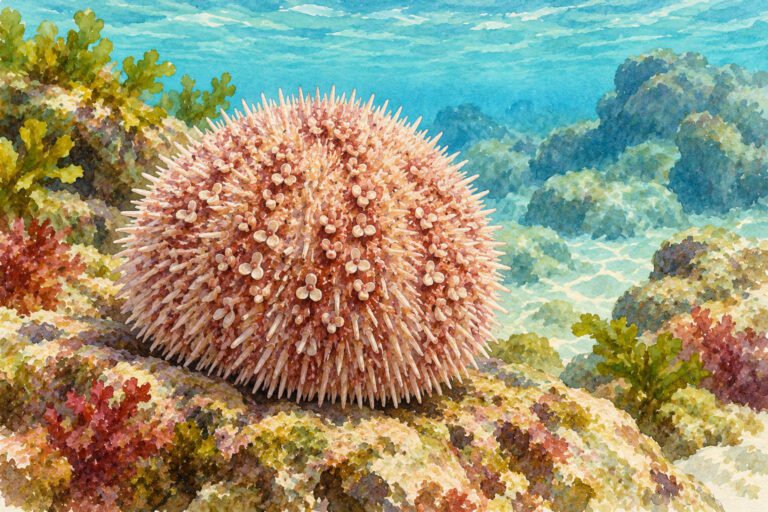
Nature Field Guide

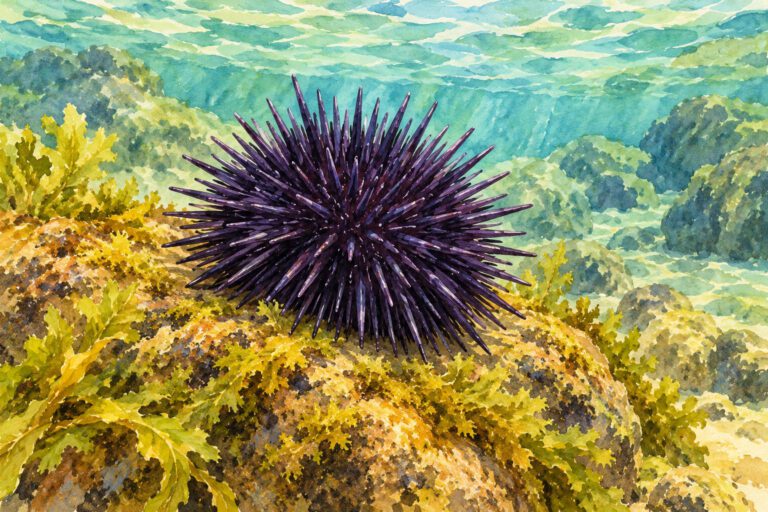
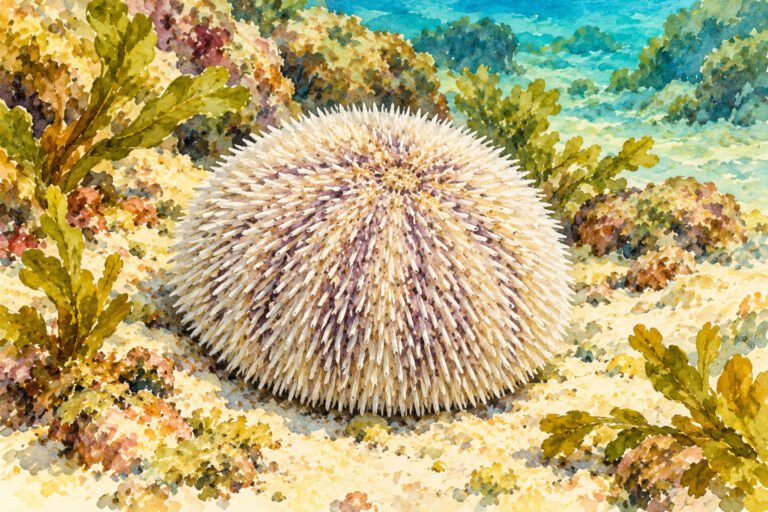
Arbacia Sea Urchin

Spanish name
Erizo Arbacia
Scientific name
Arbacia stellata

What Do Pico & Tati Think?

Pico sees a spiny shape. Tati asks how many different kinds of urchin might share a coast.

Identification

Key Features of the Arbacia Sea Urchin

  • A rounded body covered with spines

  • Observe the proportions of the body and spines

  • Use a species reference to compare similar urchins

Habitat & range

Suitable underwater coastal habitat. Use a permitted guided snorkeling or viewing activity appropriate to your family; do not enter the sea just to find this animal.

Conservation & care

Watch without touching, lifting, feeding or collecting. Keep fingers and equipment away from spines and other surface structures. Leave the animal submerged and its habitat undisturbed.

View full profile →

Nature Field Guide

Banded Serpent Brittle Star

Spanish name
Ofiura de brazos anillados
Scientific name
Ophionereis annulata

What Do Pico & Tati Think?

Patterns help Tati remember a discovery. Pico sketches the bands he can see along a slender arm.

Identification

Key Features of the Banded Serpent Brittle Star

  • A small central disc

  • Long flexible arms

  • Darker bands along the arms

Habitat & range

Suitable underwater coastal habitat. Use a permitted guided snorkeling or viewing activity appropriate to your family; do not enter the sea just to find this animal.

Conservation & care

Watch without touching, lifting, feeding or collecting. Keep fingers and equipment away from spines and other surface structures. Leave the animal submerged and its habitat undisturbed.

View full profile →

Nature Field Guide

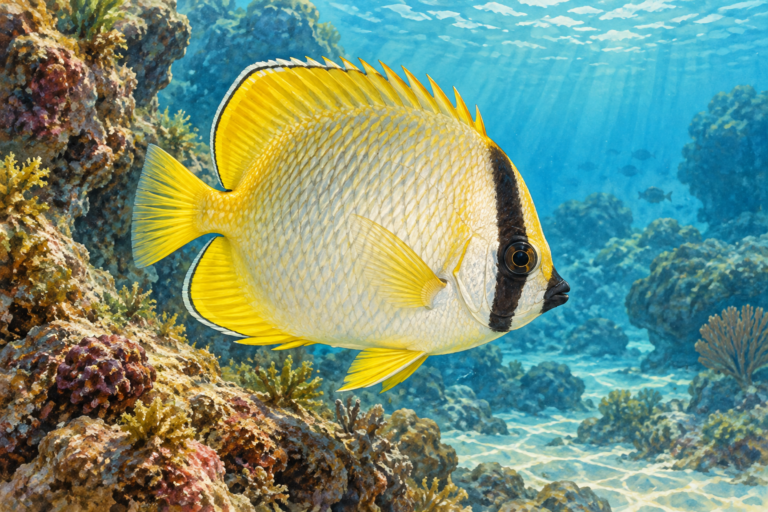
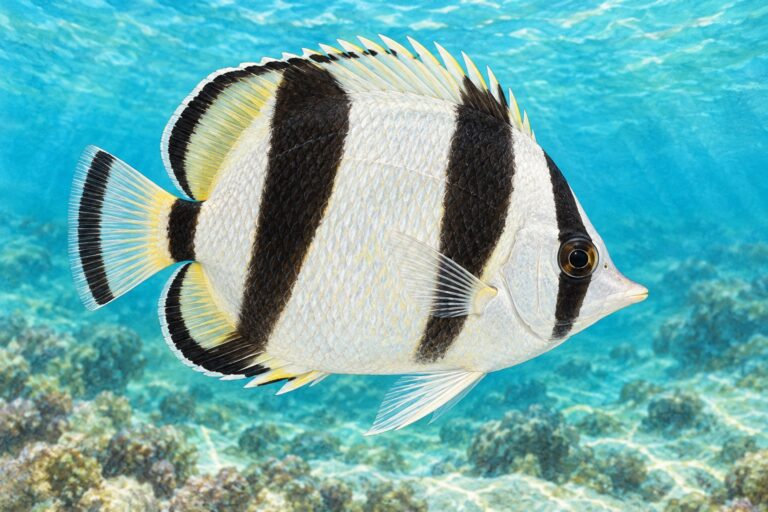
Barberfish

Spanish name
Mariposa barbero
Scientific name
Johnrandallia nigrirostris

What Do Pico & Tati Think?

Pico: “It looks like a little yellow disc.”

Tati: “The black markings and the small pointed mouth give us more clues.”

Identification

Key Features of the Barberfish

  • A flattened, oval, disc-like body.

  • A yellow body and fins with contrasting dark head markings.

  • A small mouth at the end of a short pointed snout.

Habitat & range

Reef-associated settings in the eastern Pacific, with documented occurrence at Isla del Coco.

Conservation & care

Follow park rules and qualified guides. Do not feed, touch, chase or collect marine wildlife. Maintain distance and avoid contact with reef habitat.

View full profile →

Nature Field Guide

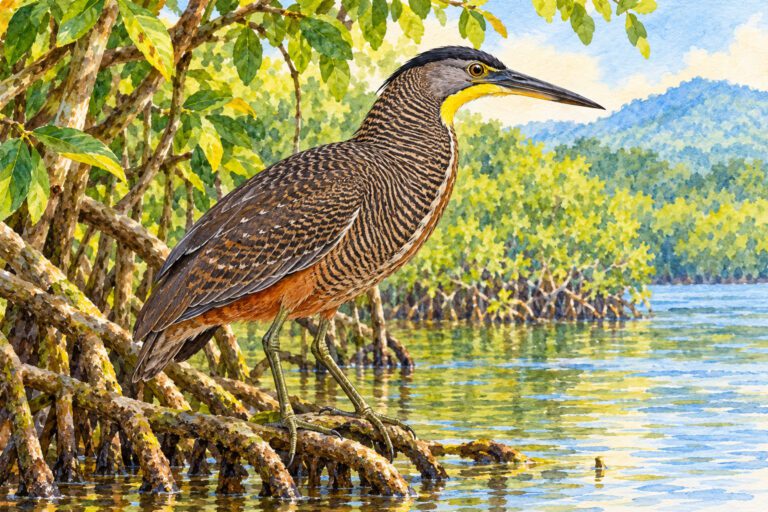
Bare-throated Tiger-Heron

Spanish name
Garza tigre cuellinuda
Scientific name
Tigrisoma mexicanum

What Do Pico & Tati Think?

Pico wonders where the tiger is hiding. Tati points to the fine patterns on a very watchful heron.

Identification

Key Features of the Bare-throated Tiger-Heron

  • Bare yellow throat patch

  • Adult finely barred neck and body

  • Gray cheeks and greenish legs

  • Young birds have bold brown bands

Habitat & range

Scan shallow water, quiet mangrove channels and vegetated wetland margins from an established viewpoint. Follow a local guide’s directions around estuaries.

Conservation & care

Give feeding and resting birds space. If a bird stops feeding, repeatedly looks at you or moves away, increase your distance. Keep dogs away from flocks, avoid playback and feeding, and leave nests and natural shoreline debris undisturbed.

View full profile →

Nature Field Guide

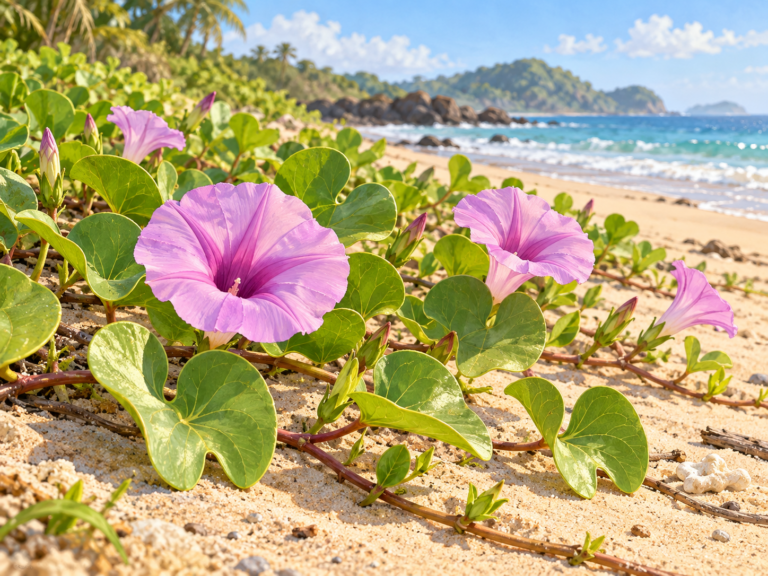
Beach Morning Glory

Spanish name
Churristate de playa / Pudre oreja
Scientific name
Ipomoea pes-caprae

What Do Pico & Tati Think?

Pico: “These flowers grow right across the sand!”

Tati: “Let’s look at the shape of the leaves without stepping on the vine.”

Identification

Key Features of the Beach Morning Glory

  • Creeping stems extending across beach sand.

  • Simple leaves with a notch giving a goat’s-hoof appearance.

  • Pink-purple flowers with a joined, funnel-like corolla.

Habitat & range

Upper sandy beaches in tropical coastal habitats. Observe vegetation from established access routes rather than stepping across vines.

Seasonal Calendar

Main flowering window

Costa Rican coastal populations

Jul, Aug, Sep, Oct, Nov

ACG reports abundant flowers July–November and seed maturation December–April on Costa Rican coasts. Typical seasonal windows, not exact dates.

Event source ↗

Seed maturation

Costa Rican coastal populations

Jan, Feb, Mar, Apr, Dec

ACG reports abundant flowers July–November and seed maturation December–April on Costa Rican coasts. Typical seasonal windows, not exact dates.

Event source ↗

Conservation & care

Do not uproot vines, pick flowers or taste plant parts. Use existing beach paths and avoid trampling coastal vegetation.

View full profile →

Nature Field Guide

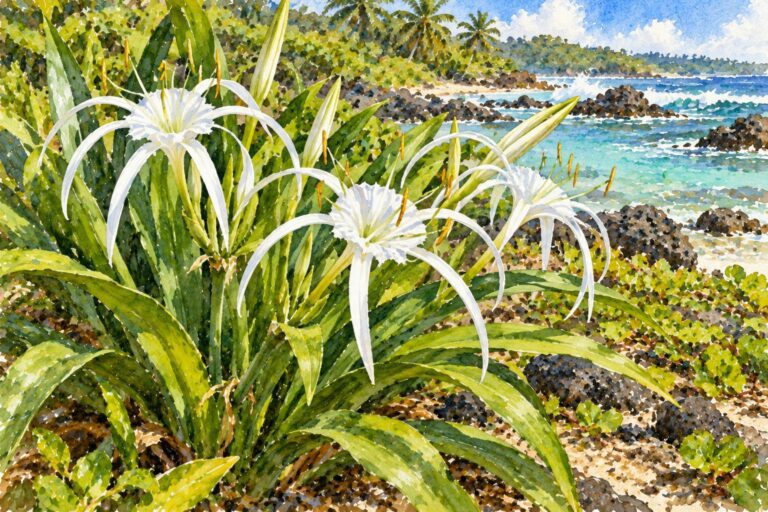
Beach Spider Lily

Spanish name
Lirio araña
Scientific name
Hymenocallis littoralis

What Do Pico & Tati Think?

Pico wants to sketch the plant’s shapes. Tati suggests looking for three clues before guessing its name. What would you notice first?

Identification

Key Features of the Beach Spider Lily

  • Long strap-shaped leaves

  • Six narrow spreading white flower segments

  • A white central cup

Habitat & range

Coastal vegetation and planted gardens.

Conservation & care

Observe from paths and leave leaves, bark, flowers and fruits attached. Do not taste wild plants or offer them to pets. Ask a knowledgeable guide to confirm the species.

View full profile →

Nature Field Guide

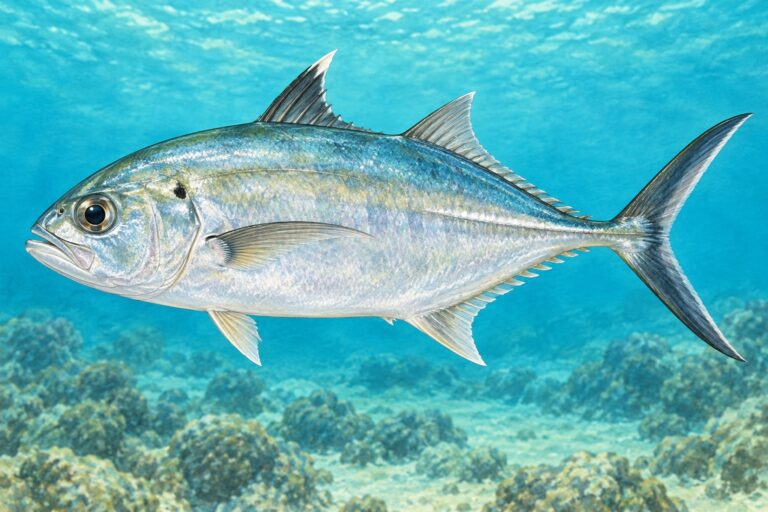
Bigeye Trevally

Spanish name
Jurel ojón
Scientific name
Caranx sexfasciatus

What Do Pico & Tati Think?

Pico: “Its eye looks extra big!”

Tati: “Check the small dark gill-cover spot too.”

Identification

Key Features of the Bigeye Trevally

  • Large dark eye

  • Small dark upper gill-cover spot

  • Forked tail

Habitat & range

Pacific rocky reefs and nearby coastal marine habitats. Check the linked species reference for its wider range.

Conservation & care

Observe with a qualified guide. Do not feed, chase or handle fish. Keep fins off the reef and take all litter home.

Threats & pressures

Habitat damage and degraded water quality are pressures to prevent in coastal fish habitats. This profile does not quantify a local decline.

View full profile →

Nature Field Guide

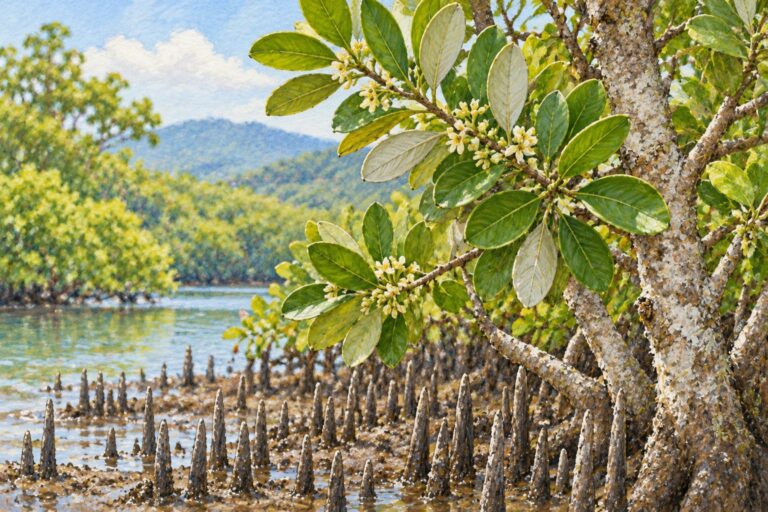
Black Mangrove

Spanish name
Mangle negro / Palo de sal
Scientific name
Avicennia germinans

What Do Pico & Tati Think?

Pico: “Pencil-shaped breathing roots rise from the mud around this mangrove.”

Tati: “Let’s notice the leaves, flowers and habitat without disturbing the plant.”

Identification

Key Features of the Black Mangrove

  • Opposite oval leaves with pale undersides

  • Upright pencil-shaped roots

  • Small pale flowers

Habitat & range

Coastal mangroves; Pacific documentation includes Guanacaste and Tivives near the Gulf of Nicoya. Gandoca provides a documented Caribbean example.

Conservation & care

Explore mangroves only with an adult on permitted paths or a guided route. Do not step on roots, collect seedlings or enter mud and tidal channels. Leave leaves and wildlife undisturbed.

Threats & pressures

Protect suitable habitat, mature trees and natural regeneration. Avoid trampling, unauthorized clearing and collection.

View full profile →

Nature Field Guide

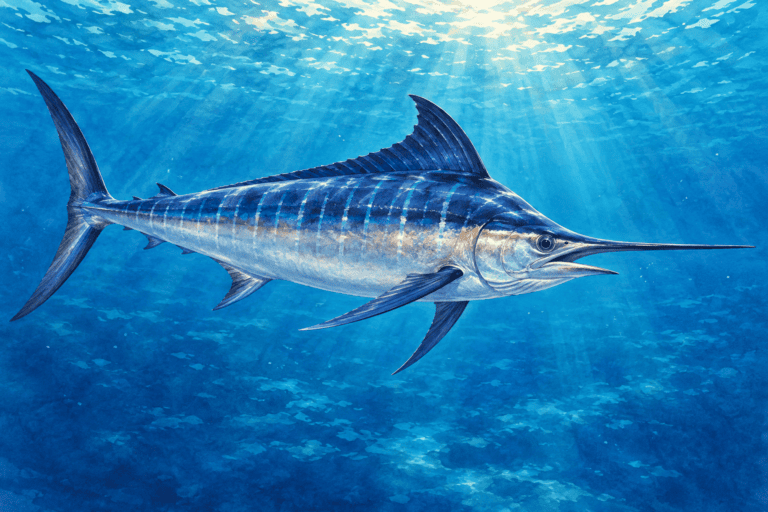
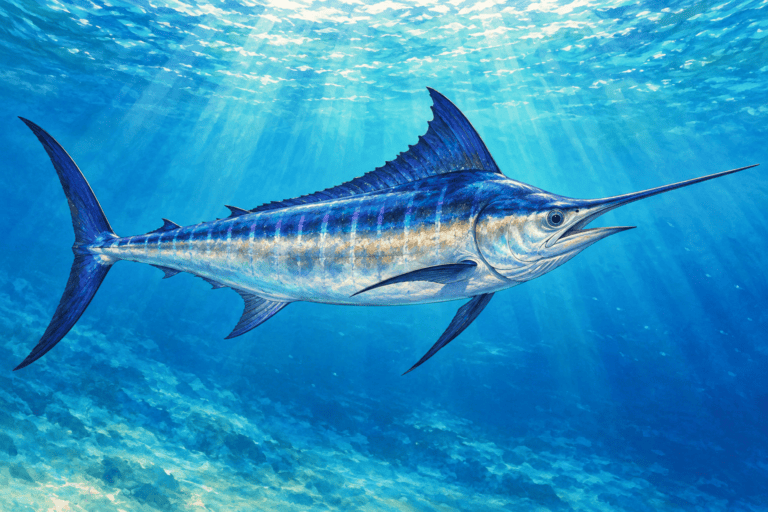
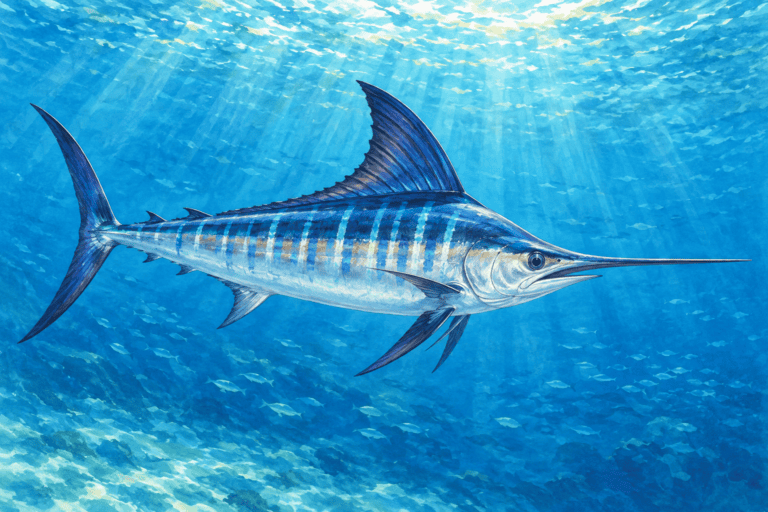
Black Marlin

Spanish name
Marlín negro
Scientific name
Istiompax indica

What Do Pico & Tati Think?

Pico: “How can we tell this marlin apart?”

Tati: “Its stiff side fins are a useful clue.”

Identification

Key Features of the Black Marlin

  • Rigid pectoral fins that do not fold flat against the body.

  • A substantial head and comparatively stout bill.

  • A powerful streamlined body.

Habitat & range

Offshore Pacific waters.

Conservation & care

Observe marine wildlife without feeding, touching or chasing it. Keep litter and discarded fishing line out of waterways. Follow qualified guides and current local rules.

Threats & pressures

Fishing capture is a conservation concern for billfish. Tracking catches and releases helps assess pressures across a migratory range.

View full profile →

Nature Field Guide

Black Spiny Brittle Star

Spanish name
Ofiura negra espinosa
Scientific name
Ophiocoma aethiops

What Do Pico & Tati Think?

A thin arm at the edge of a shelter can be an entire discovery. Pico waits quietly; Tati draws only what is visible.

Identification

Key Features of the Black Spiny Brittle Star

  • A central disc distinct from the arms

  • Long slender arms with visible spines

  • Only part of the animal may be visible naturally

Habitat & range

Suitable underwater coastal habitat. Use a permitted guided snorkeling or viewing activity appropriate to your family; do not enter the sea just to find this animal.

Conservation & care

Watch without touching, lifting, feeding or collecting. Keep fingers and equipment away from spines and other surface structures. Leave the animal submerged and its habitat undisturbed.

View full profile →

Nature Field Guide

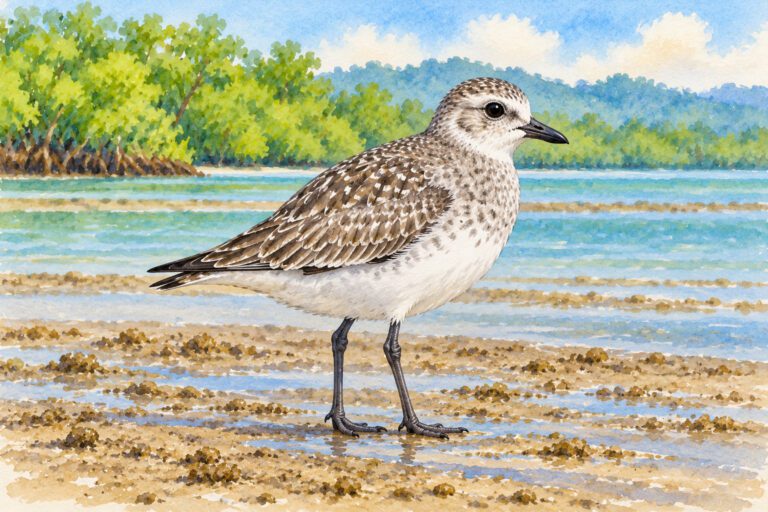
Black-bellied Plover

Spanish name
Chorlito gris
Scientific name
Pluvialis squatarola

What Do Pico & Tati Think?

Pico expects a black belly. Tati’s winter bird has a pale belly and a very different outfit.

Identification

Key Features of the Black-bellied Plover

  • Large round-headed plover

  • Short stout dark bill

  • Gray upperparts and pale nonbreeding belly

  • Dark armpit patch visible in natural flight

Habitat & range

Scan exposed shoreline feeding areas and nearby resting places with binoculars. The tide changes which flats are available; remain on a safe established route.

Conservation & care

Give feeding and resting birds space. If a bird stops feeding, repeatedly looks at you or moves away, increase your distance. Keep dogs away from flocks, avoid playback and feeding, and leave nests and natural shoreline debris undisturbed.

View full profile →

Nature Field Guide

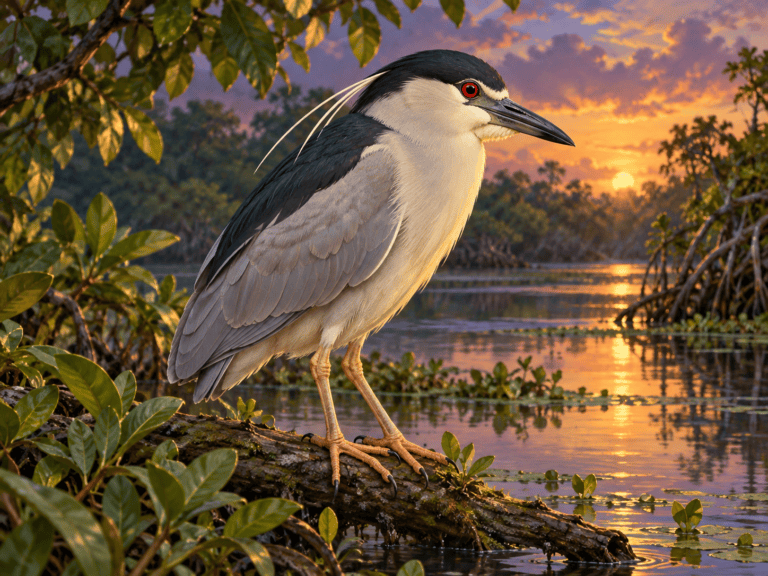
Black-crowned Night-Heron

Spanish name
Martinete coroninegro
Scientific name
Nycticorax nycticorax

What Do Pico & Tati Think?

Pico: “This heron looks shorter and rounder than the others!”

Tati: “It may be resting now and feeding later.”

Identification

Key Features of the Black-crowned Night-Heron

  • Stocky body and short-looking neck.

  • Adult: black crown and back, gray wings.

  • Young: brown plumage with pale spots.

Habitat & range

Wetland and mangrove populations include the Tempisque and Gulf of Nicoya landscape and local Caribbean lowlands. Resident birds and seasonal visitors both occur.

Conservation & care

Stay on authorized trails or viewing routes. Give birds space, keep voices low and leave nests undisturbed. Observe without bait, feeding or recorded calls.

Threats & pressures

Wetland drainage, development and contaminated runoff can degrade habitat and water quality.

View full profile →

Nature Field Guide

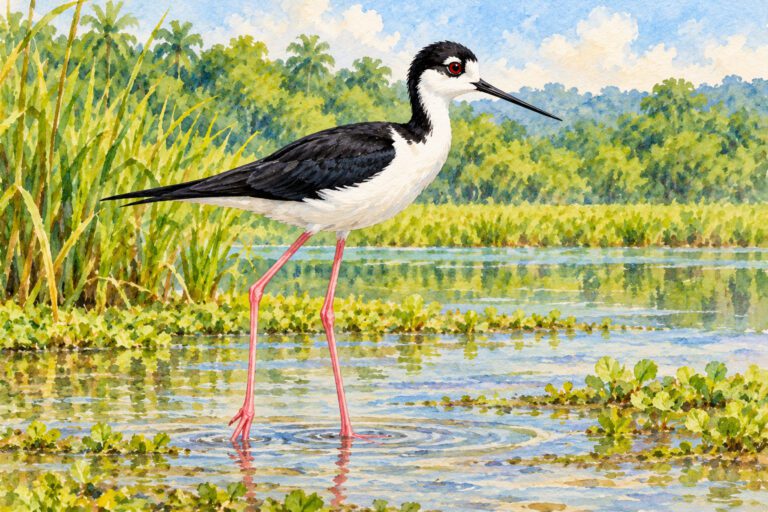
Black-necked Stilt

Spanish name
Cigüeñuela cuellinegra
Scientific name
Himantopus mexicanus

What Do Pico & Tati Think?

Those pink legs look almost too long for Pico’s page. Tati turns the journal upright to draw the whole bird.

Identification

Key Features of the Black-necked Stilt

  • Very long pink legs

  • Thin straight black bill

  • White underparts with dark back and hindneck

Habitat & range

Scan exposed shoreline feeding areas and nearby resting places with binoculars. The tide changes which flats are available; remain on a safe established route.

Conservation & care

Give feeding and resting birds space. If a bird stops feeding, repeatedly looks at you or moves away, increase your distance. Keep dogs away from flocks, avoid playback and feeding, and leave nests and natural shoreline debris undisturbed.

View full profile →

Nature Field Guide

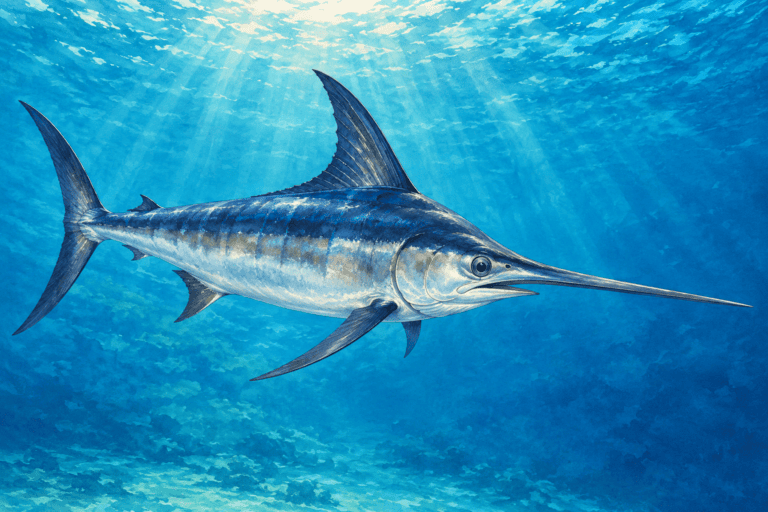
Blue Marlin

Spanish name
Marlín azul
Scientific name
Makaira nigricans

What Do Pico & Tati Think?

Pico: “Its back is such a deep blue!”

Tati: “Let’s compare its fin and bill with the other marlin.”

Identification

Key Features of the Blue Marlin

  • A long spear-shaped bill.

  • A cobalt-blue back and silvery underside.

  • A pronounced front dorsal fin and crescent-shaped tail.

Habitat & range

Warm tropical and subtropical open water.

Seasonal Calendar

Regional presence

Costa Rican Pacific waters

Year-round

FECOP reports year-round Costa Rican Pacific presence and a historical May–September Guanacaste fishing peak. Catch patterns are not exact migration or breeding dates.

Event source ↗

Reported fishing peak

Guanacaste offshore waters

May, Jun, Jul, Aug, Sep

FECOP reports year-round Costa Rican Pacific presence and a historical May–September Guanacaste fishing peak. Catch patterns are not exact migration or breeding dates.

Event source ↗

Conservation & care

Observe marine wildlife without feeding, touching or chasing it. Keep litter and discarded fishing line out of waterways. Follow qualified guides and current local rules.

Threats & pressures

Blue marlin can be caught incidentally in longline fisheries targeting tuna and swordfish. Fishing pressure needs monitoring across its migratory range.

View full profile →

Nature Field Guide

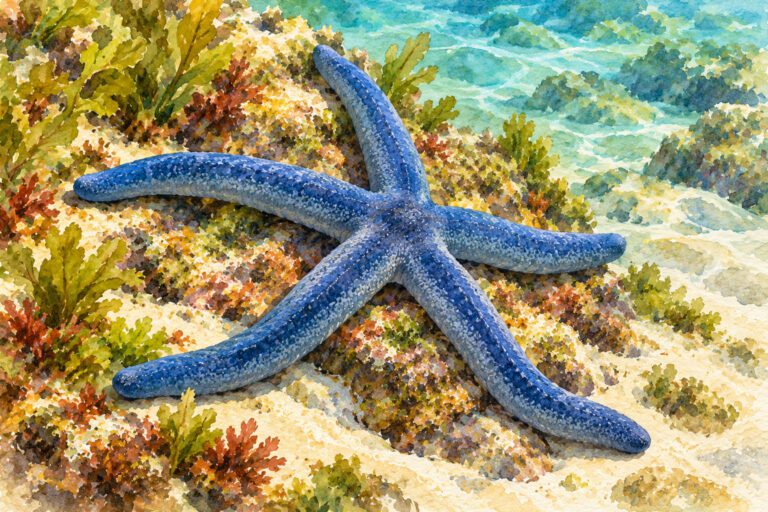
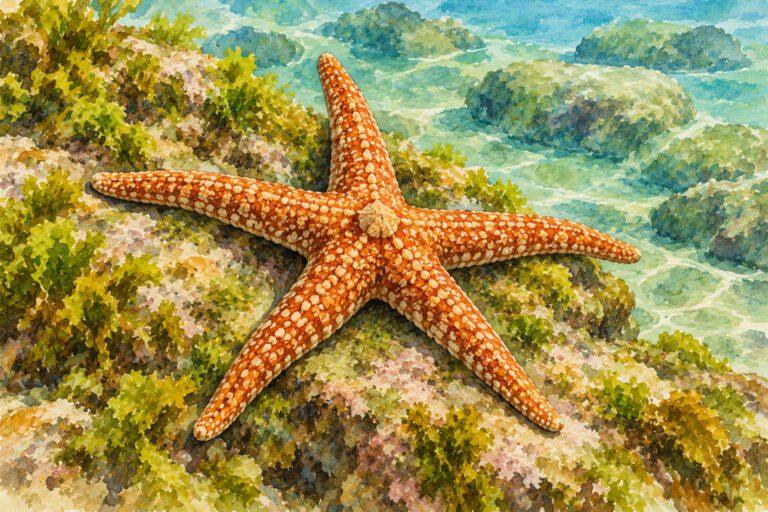
Blue Sea Star

Spanish name
Estrella azul
Scientific name
Phataria unifascialis

What Do Pico & Tati Think?

An ocean star can turn a quiet look underwater into a new question. What details would help you recognize it again?

Identification

Key Features of the Blue Sea Star

  • A central body with spreading arms

  • Record the visible color and pattern

  • Confirm the species using several features together

Habitat & range

Suitable underwater coastal habitat. Use a permitted guided snorkeling or viewing activity appropriate to your family; do not enter the sea just to find this animal.

Conservation & care

Watch without touching, lifting, feeding or collecting. Keep fingers and equipment away from spines and other surface structures. Leave the animal submerged and its habitat undisturbed.

View full profile →

Nature Field Guide

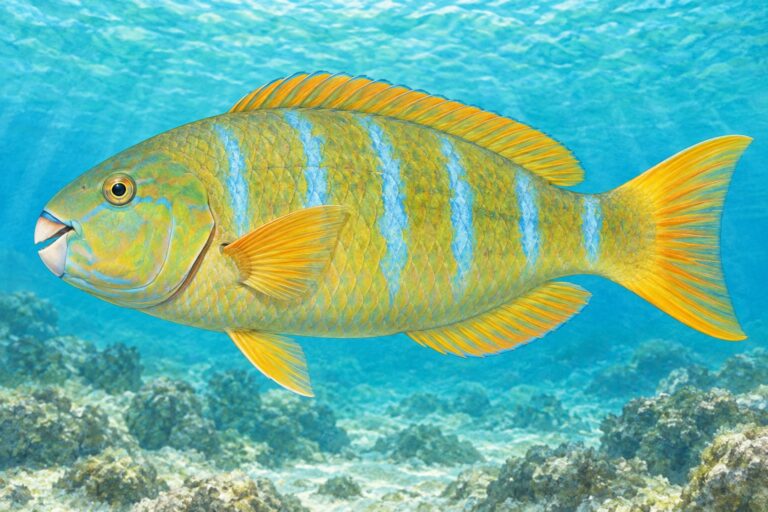
Bluebarred Parrotfish

Spanish name
Loro de bandas azules
Scientific name
Scarus ghobban

What Do Pico & Tati Think?

Pico: “Why is it called a parrotfish?”

Tati: “Its teeth join into plates that look like a beak.”

Identification

Key Features of the Bluebarred Parrotfish

  • Parrot-like dental beak

  • Blue bars in initial phase

  • Large visible scales

Habitat & range

Pacific rocky reefs and nearby coastal marine habitats. Check the linked species reference for its wider range.

Conservation & care

Observe with a qualified guide. Do not feed, chase or handle fish. Keep fins off the reef and take all litter home.

Threats & pressures

Habitat damage and degraded water quality are pressures to prevent in coastal fish habitats. This profile does not quantify a local decline.

View full profile →

Nature Field Guide

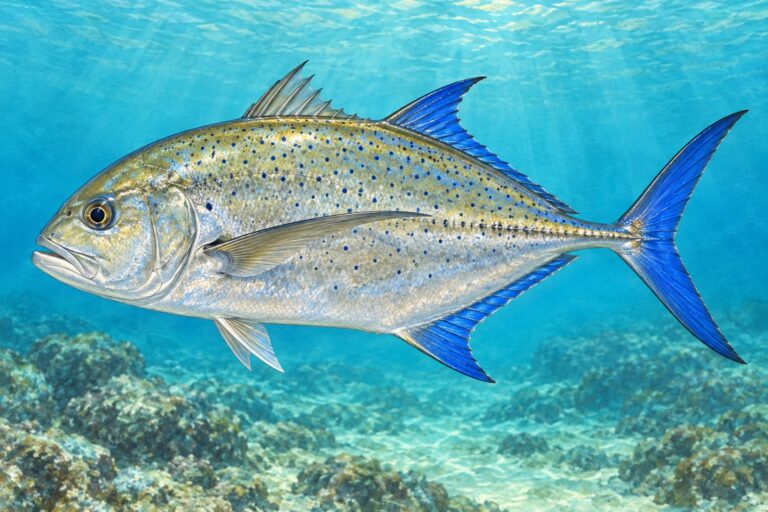
Bluefin Trevally

Spanish name
Jurel aleta azul
Scientific name
Caranx melampygus

What Do Pico & Tati Think?

Pico: “Those blue fins really stand out!”

Tati: “The tiny blue-black spots are another clue in adults.”

Identification

Key Features of the Bluefin Trevally

  • Electric blue fins

  • Blue-black body spots in adults

  • Deeply forked tail

Habitat & range

Pacific rocky reefs and nearby coastal marine habitats. Check the linked species reference for its wider range.

Conservation & care

Observe with a qualified guide. Do not feed, chase or handle fish. Keep fins off the reef and take all litter home.

Threats & pressures

Habitat damage and degraded water quality are pressures to prevent in coastal fish habitats. This profile does not quantify a local decline.

View full profile →

Nature Field Guide

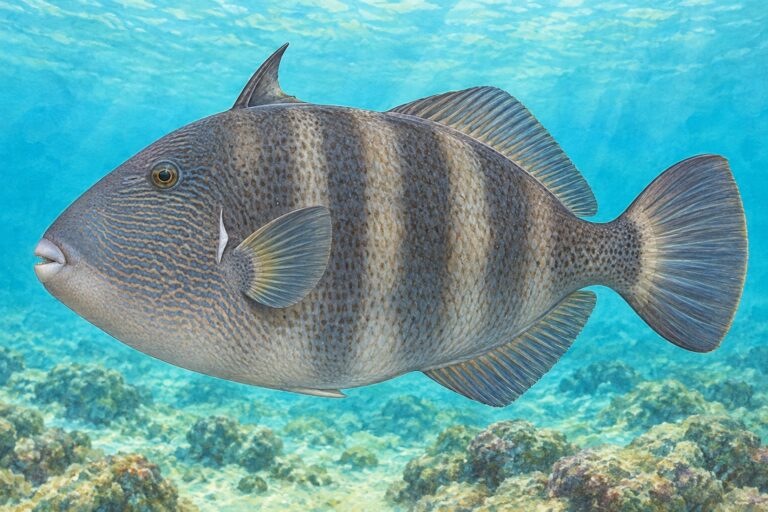
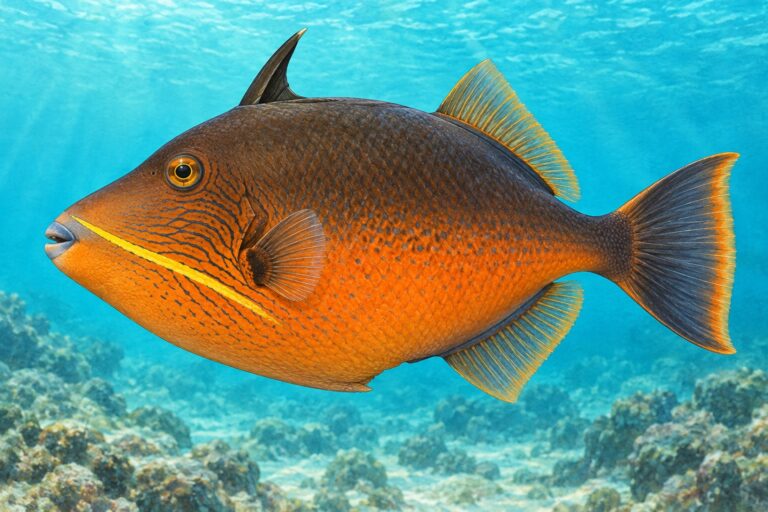
Blunthead Triggerfish

Spanish name
Chancho fisgón
Scientific name
Pseudobalistes naufragium

What Do Pico & Tati Think?

Pico: “Can you see the little white gill opening?”

Tati: “Yes. That and its blunt head are useful clues.”

Identification

Key Features of the Blunthead Triggerfish

  • Thick gray body

  • Pale white gill slit

  • Faint bars and blunt head

Habitat & range

Pacific rocky reefs and nearby coastal marine habitats. Check the linked species reference for its wider range.

Conservation & care

Keep clear of tail-base structures and strong jaws. Observe with a qualified guide. Do not feed, chase or handle fish. Keep fins off the reef and take all litter home.

Threats & pressures

Habitat damage and degraded water quality are pressures to prevent in coastal fish habitats. This profile does not quantify a local decline.

View full profile →

Nature Field Guide

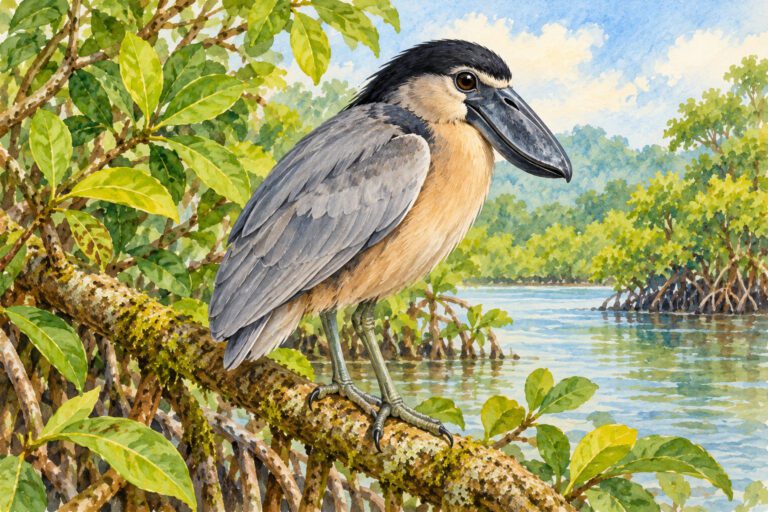
Boat-billed Heron

Spanish name
Chocuaco o picocuchara
Scientific name
Cochlearius cochlearius

What Do Pico & Tati Think?

That broad bill looks unlike the pointed bills Pico has drawn. Tati adds a new shape to the explorer journal.

Identification

Key Features of the Boat-billed Heron

  • Very broad boat-shaped bill

  • Large dark eyes and black crown

  • Stocky body with gray back

Habitat & range

Scan shallow water, quiet mangrove channels and vegetated wetland margins from an established viewpoint. Follow a local guide’s directions around estuaries.

Conservation & care

Give feeding and resting birds space. If a bird stops feeding, repeatedly looks at you or moves away, increase your distance. Keep dogs away from flocks, avoid playback and feeding, and leave nests and natural shoreline debris undisturbed.

View full profile →

Nature Field Guide

Bradley’s Sea Star

Spanish name
Estrella de mar de Bradley
Scientific name
Mithrodia bradleyi

What Do Pico & Tati Think?

A sea star can look still while its place in the reef is full of life. Pico wants to sketch its outline; Tati wants to compare its arms.

Identification

Key Features of the Bradley’s Sea Star

  • Arms radiating from a central body

  • A textured upper surface

  • Compare the whole outline with a verified species photograph

Habitat & range

Suitable underwater coastal habitat. Use a permitted guided snorkeling or viewing activity appropriate to your family; do not enter the sea just to find this animal.

Conservation & care

Watch without touching, lifting, feeding or collecting. Keep fingers and equipment away from spines and other surface structures. Leave the animal submerged and its habitat undisturbed.

View full profile →

Nature Field Guide

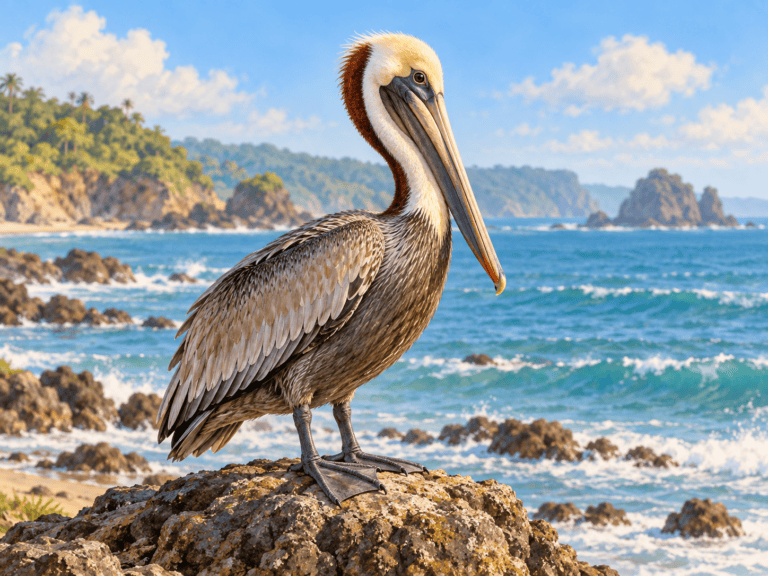
Brown Pelican

Spanish name
Pelícano pardo
Scientific name
Pelecanus occidentalis

What Do Pico & Tati Think?

Pico: “Look at that enormous bill!”

Tati: “Let’s compare its shape with the other birds by the water.”

Identification

Key Features of the Brown Pelican

  • A long bill with a pouch beneath the lower jaw.

  • A large gray-brown body and broad wings.

  • Head and neck colors change with age and breeding condition.

Habitat & range

Coastal waters along the Pacific, with less frequent nonbreeding visitors on the Caribbean coast. Regional tags refer to coastal habitat, not inland towns.

Seasonal Calendar

Resident presence

Isla San Lucas, Costa Rica

Year-round

SINAC lists Brown Pelican as a resident at Isla San Lucas on Costa Rica’s Pacific coast. This regional pattern does not guarantee a Tamarindo sighting or establish a local breeding calendar.

Event source ↗

Conservation & care

Do not feed birds or approach resting groups. Dispose of fishing line responsibly and leave nests undisturbed.

View full profile →

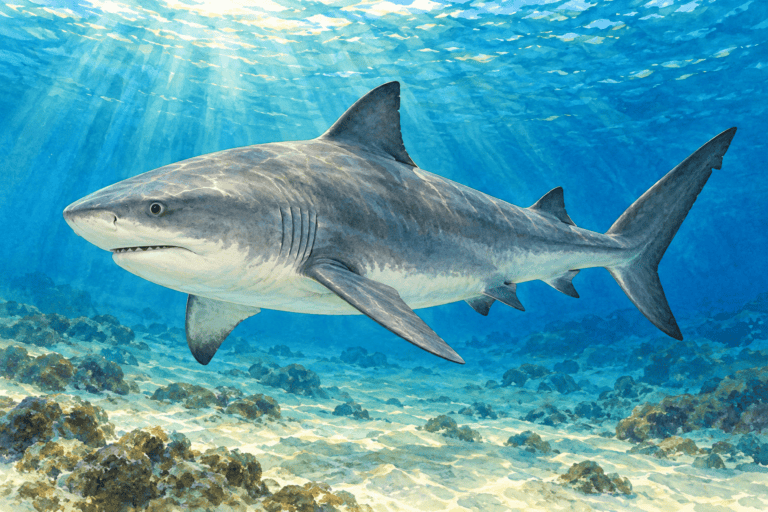
Nature Field Guide

Bull Shark

Spanish name
Tiburón toro
Scientific name
Carcharhinus leucas

What Do Pico & Tati Think?

Pico: “That shark looks strong and stocky!”

Tati: “It can move between salt water and fresh water.”

Identification

Key Features of the Bull Shark

  • A stocky gray body with a pale belly.

  • A short, broad rounded snout and small eyes.

  • A large triangular first dorsal fin.

Habitat & range

Tropical and subtropical coastal waters, estuaries and some freshwater systems.

Conservation & care

Observe marine wildlife without feeding, touching or chasing it. Keep litter and discarded fishing line out of waterways. Follow qualified guides and current local rules.

Threats & pressures

Capture in fisheries affects bull sharks. Coastal development and damage to estuarine nursery habitats can put young animals under additional pressure.

View full profile →

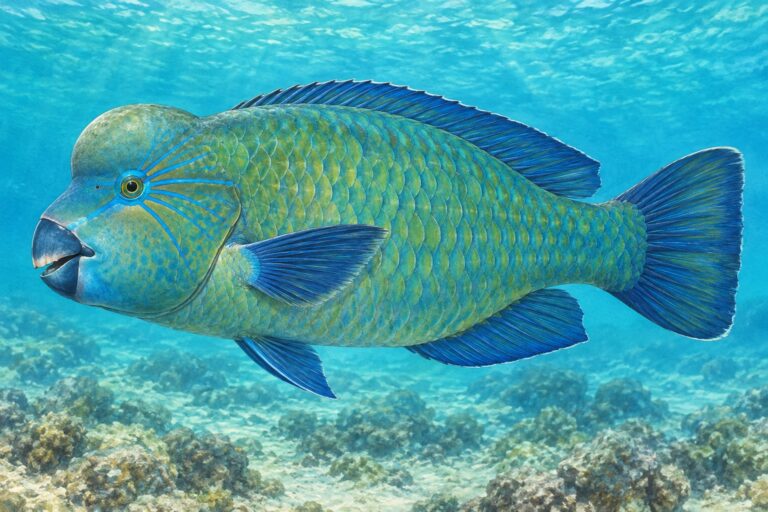
Nature Field Guide

Bumphead Parrotfish

Spanish name
Loro jorobado
Scientific name
Scarus perrico

What Do Pico & Tati Think?

Pico: “Does every fish have that forehead bump?”

Tati: “The hump becomes clearer in large individuals of this species.”

Identification

Key Features of the Bumphead Parrotfish

  • Blue beak

  • Green body and darker fins

  • Forehead hump in large fish

Habitat & range

Pacific rocky reefs and nearby coastal marine habitats. Check the linked species reference for its wider range.

Conservation & care

Observe with a qualified guide. Do not feed, chase or handle fish. Keep fins off the reef and take all litter home.

Threats & pressures

Habitat damage and degraded water quality are pressures to prevent in coastal fish habitats. This profile does not quantify a local decline.

View full profile →

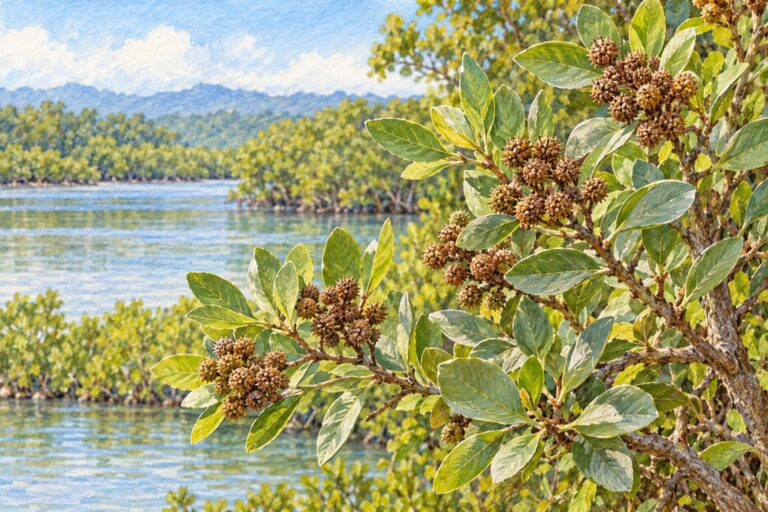
Nature Field Guide

Buttonwood

Spanish name
Mangle botoncillo / Botoncillo
Scientific name
Conocarpus erectus

What Do Pico & Tati Think?

Pico: “Small buttonlike fruit heads help identify this coastal tree or shrub.”

Tati: “Let’s notice the leaves, flowers and habitat without disturbing the plant.”

Identification

Key Features of the Buttonwood

  • Simple alternate leaves

  • Round buttonlike fruit heads

  • Often at the landward mangrove edge

Habitat & range

Coastal margins, including documented mangrove-edge habitat at Tivives and the North Pacific. Gandoca provides a documented Caribbean example.

Conservation & care

Explore with an adult on permitted paths. Observe and photograph without picking leaves, flowers or fruits. Do not taste plants or let pets chew them. Avoid climbing trees and disturbing roots, seedlings or visiting wildlife.

Threats & pressures

Protect suitable habitat, mature trees and natural regeneration. Avoid trampling, unauthorized clearing and collection.

View full profile →

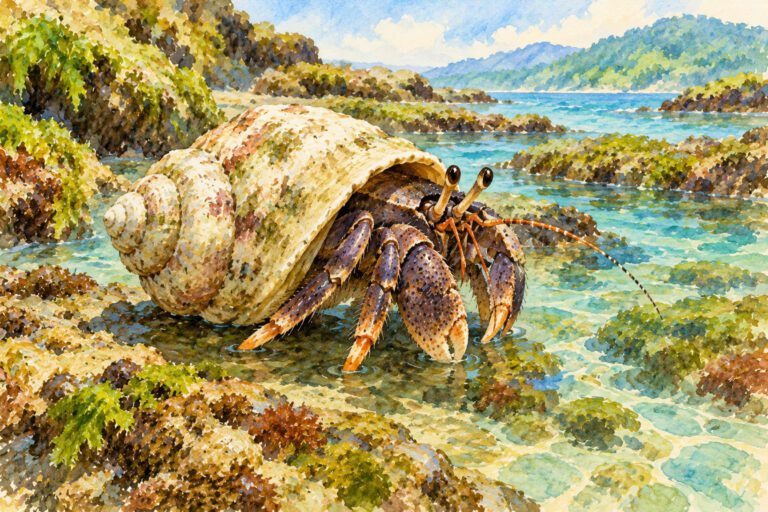
Nature Field Guide

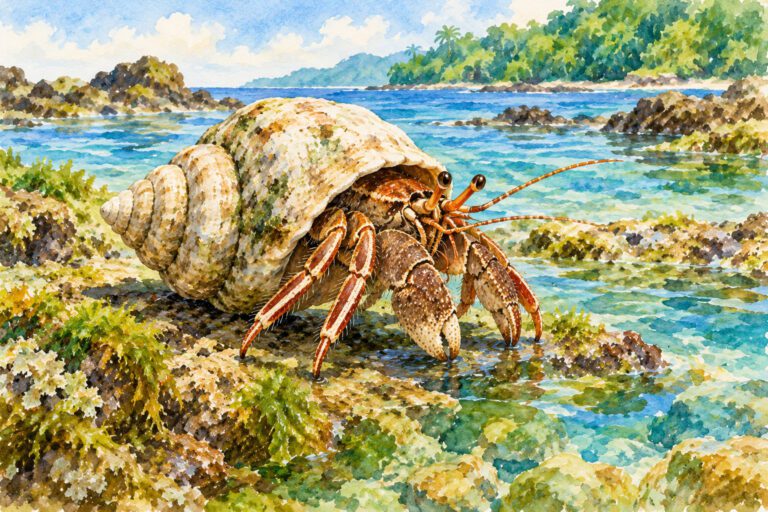
Calcinus Hermit Crab

Spanish name
Cangrejo ermitaño Calcinus
Scientific name
Calcinus obscurus

What Do Pico & Tati Think?

Pico thinks a shell has moved. Tati waits until a small leg appears before writing down what she has seen.

Identification

Key Features of the Calcinus Hermit Crab

  • A marine hermit crab in a borrowed shell

  • Visible legs and claws at the shell opening

  • The shell species and crab species are separate identifications

Habitat & range

Rocky shore and naturally visible tidal habitat. Choose a permitted observation point with an adult; do not turn rocks or reach into holes.

Conservation & care

Give claws and burrow entrances space. Do not handle, feed, chase or collect crabs. Leave rocks and shells where they are, and follow your adult’s route and local signs.

View full profile →

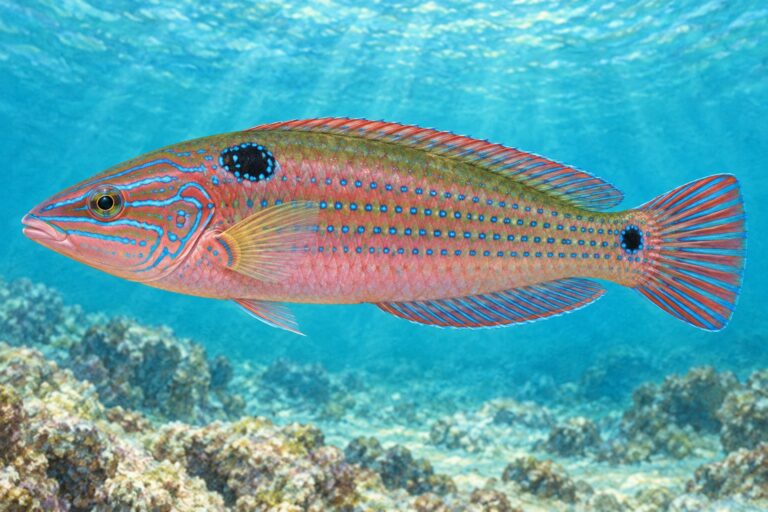
Nature Field Guide

Chameleon Wrasse

Spanish name
Señorita camaleón
Scientific name
Halichoeres dispilus

What Do Pico & Tati Think?

Pico: “This wrasse has so many colors!”

Tati: “Start with the shoulder blotch, then check its other markings.”

Identification

Key Features of the Chameleon Wrasse

  • Slender wrasse body

  • Dark shoulder blotch

  • Blue markings in colorful adults

Habitat & range

Pacific rocky reefs and nearby coastal marine habitats. Check the linked species reference for its wider range.

Conservation & care

Observe with a qualified guide. Do not feed, chase or handle fish. Keep fins off the reef and take all litter home.

Threats & pressures

Habitat damage and degraded water quality are pressures to prevent in coastal fish habitats. This profile does not quantify a local decline.

View full profile →

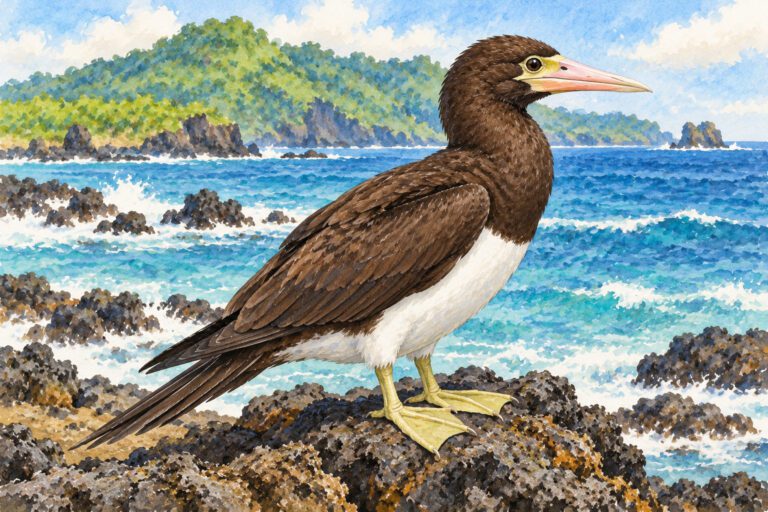
Nature Field Guide

Cocos Booby

Spanish name
Piquero de Cocos
Scientific name
Sula brewsteri

What Do Pico & Tati Think?

Pico meets a familiar-looking seabird with a newer name. Tati keeps the scientific name beside the illustration.

Identification

Key Features of the Cocos Booby

  • Brown adult upperparts and white belly

  • Strong pointed pale bill

  • Short legs and broad webbed feet

  • Identification may require close expert comparison

Habitat & range

Scan Pacific coastal waters and offshore rocks from a safe viewpoint or responsible boat trip. Do not approach seabird colonies or land on nesting islands.

Conservation & care

Give feeding and resting birds space. If a bird stops feeding, repeatedly looks at you or moves away, increase your distance. Keep dogs away from flocks, avoid playback and feeding, and leave nests and natural shoreline debris undisturbed.

View full profile →

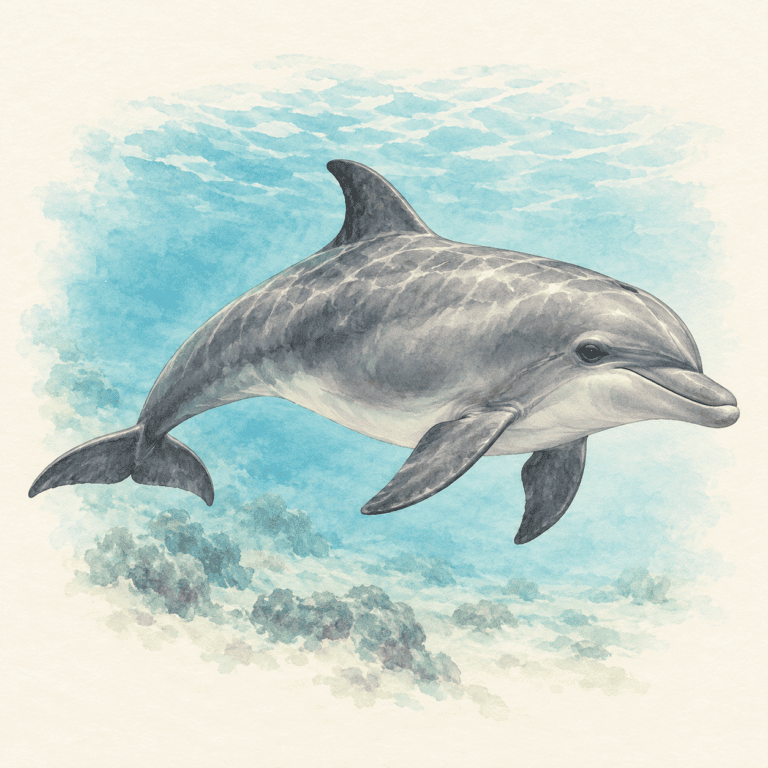
Nature Field Guide

Common Bottlenose Dolphin

Spanish name
Delfín nariz de botella
Scientific name
Tursiops truncatus

What Do Pico & Tati Think?

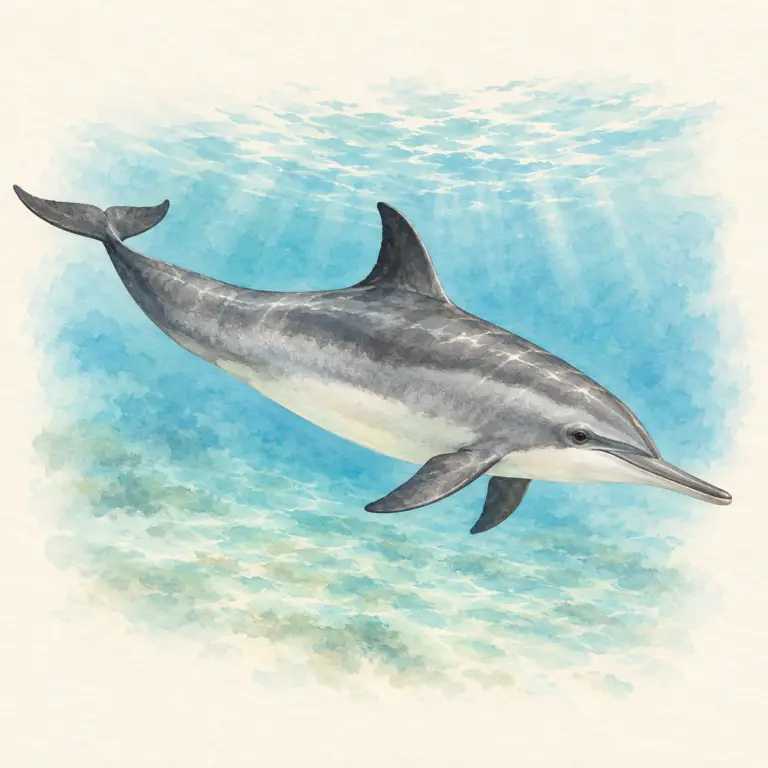
The common bottlenose dolphin has a short thick beak and a generally gray body.

Identification

Key Features of the Common Bottlenose Dolphin

  • Short thick beak and robust gray body.

  • Curved dorsal fin and paler underside.

  • Horizontal tail flukes; other dolphin species require careful comparison.

Habitat & range

Suitable Costa Rican coastal and offshore waters.

Conservation & care

Use a responsible local wildlife operator and follow site rules. Give aquatic mammals room to feed, rest and travel. Do not feed, touch, chase or enter the water to approach them. Keep waste and fishing line out of waterways.

View full profile →

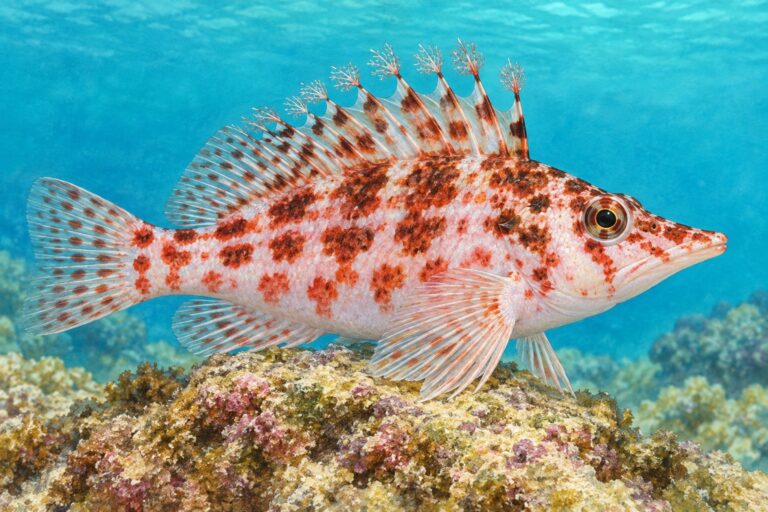
Nature Field Guide

Coral Hawkfish

Spanish name
Halcón de coral
Scientific name
Cirrhitichthys oxycephalus

What Do Pico & Tati Think?

Pico: “It looks like it is keeping watch!”

Tati: “Let’s find the blotches and tiny tufts on its dorsal spines.”

Identification

Key Features of the Coral Hawkfish

  • Red-brown blotches on pale body

  • Pointed snout

  • Tufts on dorsal spine tips

Habitat & range

Pacific rocky reefs and nearby coastal marine habitats. Check the linked species reference for its wider range.

Conservation & care

Observe with a qualified guide. Do not feed, chase or handle fish. Keep fins off the reef and take all litter home.

Threats & pressures

Habitat damage and degraded water quality are pressures to prevent in coastal fish habitats. This profile does not quantify a local decline.

View full profile →

Nature Field Guide

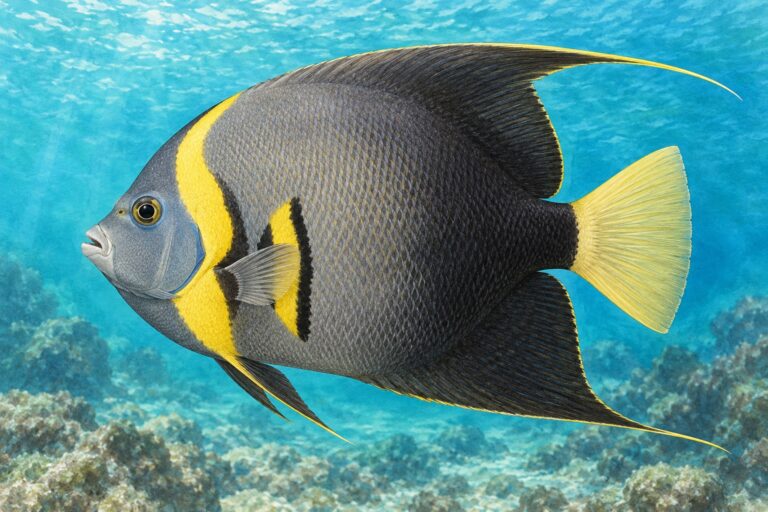
Cortez Angelfish

Spanish name
Ángel de Cortés
Scientific name
Pomacanthus zonipectus

What Do Pico & Tati Think?

Pico: “The young angelfish looks completely different!”

Tati: “The tall body and small mouth are clues in both life stages.”

Identification

Key Features of the Cortez Angelfish

  • Tall flattened body

  • Yellow bands and tail in adults

  • Curved yellow and blue juvenile bars

Habitat & range

Pacific rocky reefs and nearby coastal marine habitats. Check the linked species reference for its wider range.

Conservation & care

Observe with a qualified guide. Do not feed, chase or handle fish. Keep fins off the reef and take all litter home.

Threats & pressures

Habitat damage and degraded water quality are pressures to prevent in coastal fish habitats. This profile does not quantify a local decline.

View full profile →

Nature Field Guide

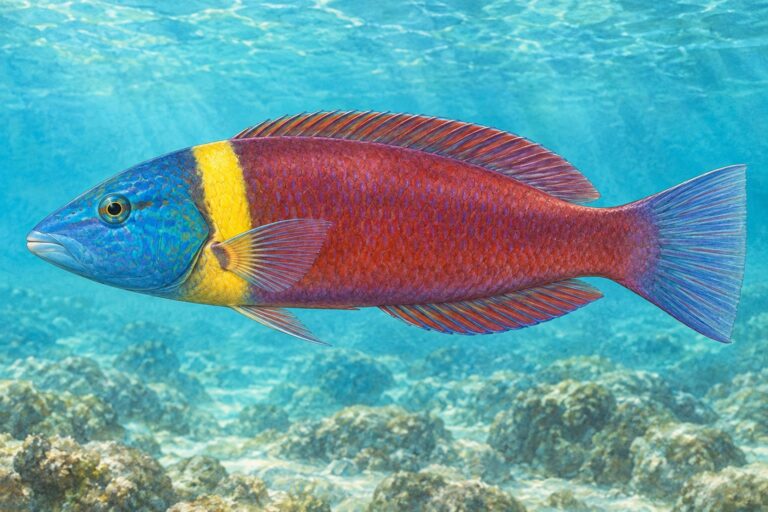
Cortez Rainbow Wrasse

Spanish name
Viejita arco iris
Scientific name
Thalassoma lucasanum

What Do Pico & Tati Think?

Pico: “How can these two wrasses look so different?”

Tati: “Their colors can change with life phase. Let’s compare more than one picture.”

Identification

Key Features of the Cortez Rainbow Wrasse

  • Slender wrasse shape

  • Striped initial phase

  • Blue head and yellow shoulder bar in terminal phase

Habitat & range

Pacific rocky reefs and nearby coastal marine habitats. Check the linked species reference for its wider range.

Conservation & care

Observe with a qualified guide. Do not feed, chase or handle fish. Keep fins off the reef and take all litter home.

Threats & pressures

Habitat damage and degraded water quality are pressures to prevent in coastal fish habitats. This profile does not quantify a local decline.

View full profile →

Nature Field Guide

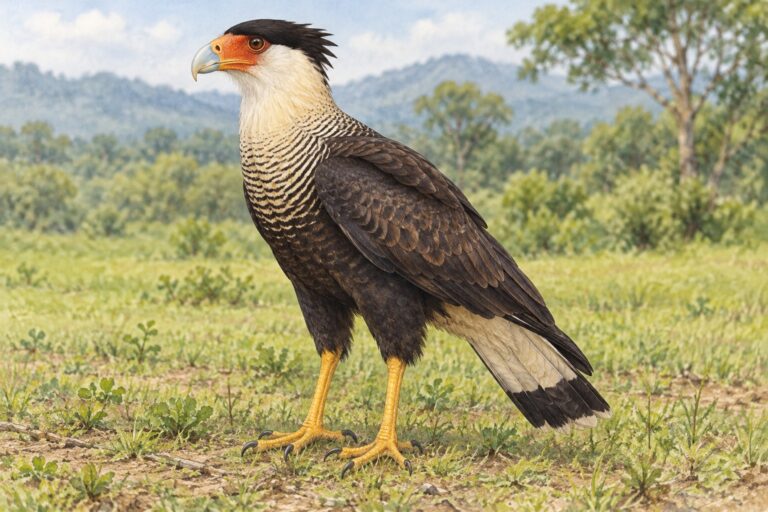
Crested Caracara

Spanish name
Caracara cargahuesos
Scientific name
Caracara plancus

What Do Pico & Tati Think?

Pico: “That bird of prey is walking!”

Tati: “Caracaras often search on foot. Look at those long legs.”

Identification

Key Features of the Crested Caracara

  • Dark cap and pale neck

  • Orange-red bare face

  • Long legs and hooked bill

Habitat & range

Open northwestern landscapes, pasture, farmland and beaches, with local occurrence around Rio Frio and occasional movement into San Carlos. This conservative set omits occasional Central Valley wanderers.

Conservation & care

Observe quietly from trails or established viewing areas. Give nests, roosts and feeding birds space. Do not handle, chase or lure birds with playback. Keep pets away from wildlife.

Threats & pressures

Protect native vegetation, reduce collision hazards around glass and keep cats away from birds. These are practical prevention priorities, not a claim of a measured decline at a specific Costa Rican site.

View full profile →

Nature Field Guide

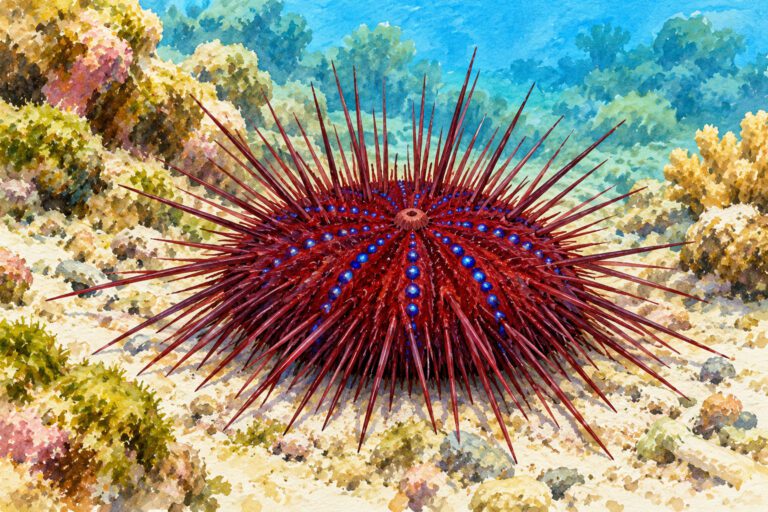
Crown Sea Urchin

Spanish name
Erizo corona
Scientific name
Astropyga pulvinata

What Do Pico & Tati Think?

One spiny animal is interesting. A gathering of them raises even more questions. Pico and Tati watch without moving closer.

Identification

Key Features of the Crown Sea Urchin

  • Long slender spines

  • Small bright blue body spots may be visible

  • Observe without approaching the spines

Habitat & range

Suitable underwater coastal habitat. Use a permitted guided snorkeling or viewing activity appropriate to your family; do not enter the sea just to find this animal.

Conservation & care

Watch without touching, lifting, feeding or collecting. Keep fingers and equipment away from spines and other surface structures. Leave the animal submerged and its habitat undisturbed.

View full profile →

Nature Field Guide

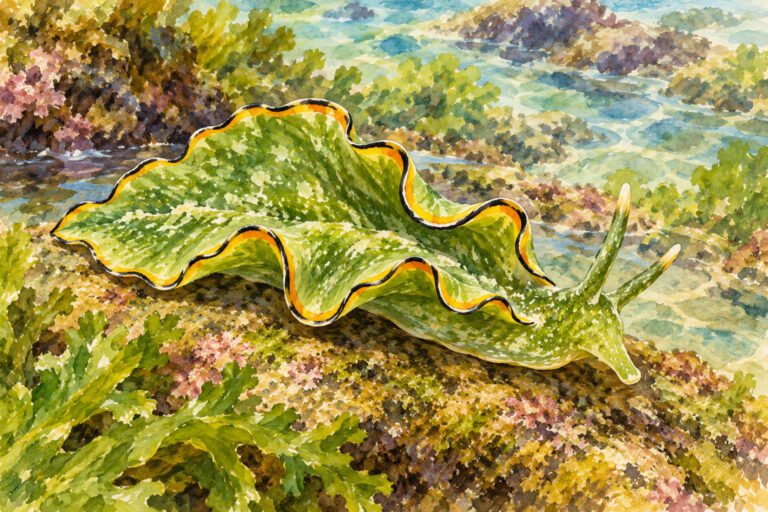
Diomedea Leaf Sea Slug

Spanish name
Babosa marina de hoja
Scientific name
Elysia diomedea

What Do Pico & Tati Think?

Pico spots a leafy-looking shape. Tati asks how an animal can blend into the algae around it.

Identification

Key Features of the Diomedea Leaf Sea Slug

  • A small soft body with folded sides

  • Greenish coloring with contrasting lines

  • Tentacle-like rhinophores on the head

Habitat & range

Suitable underwater coastal habitat. Use a permitted guided snorkeling or viewing activity appropriate to your family; do not enter the sea just to find this animal.

Conservation & care

Watch without touching, lifting, feeding or collecting. Keep fingers and equipment away from spines and other surface structures. Leave the animal submerged and its habitat undisturbed.

View full profile →

Nature Field Guide

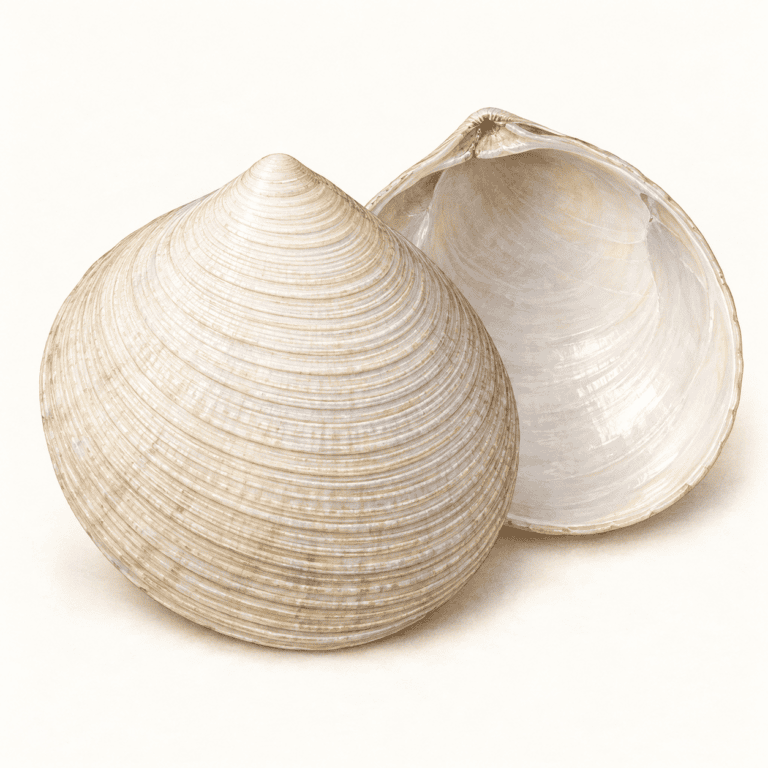
Dunker’s Dosinia

Spanish name
Almeja Dosinia
Scientific name
Dosinia dunkeri

What Do Pico & Tati Think?

A rounded clam shell rewards a closer look at fine surface lines.

Identification

Key Features of the Dunker’s Dosinia

  • Rounded, pale valves.

  • Fine concentric lines curve around the raised area near the hinge.

  • Confirm with hinge details and an identified reference.

Habitat & range

Coastal sand-mud habitat.

Conservation & care

Observe and photograph shells where they are. Leave living animals, occupied shells and empty shells in place. Do not pry animals from rocks, dig in mangroves or put fingers into shell openings. Explore with an adult or guide, follow site rules and stay clear of surf and slippery rocks.

View full profile →

Nature Field Guide

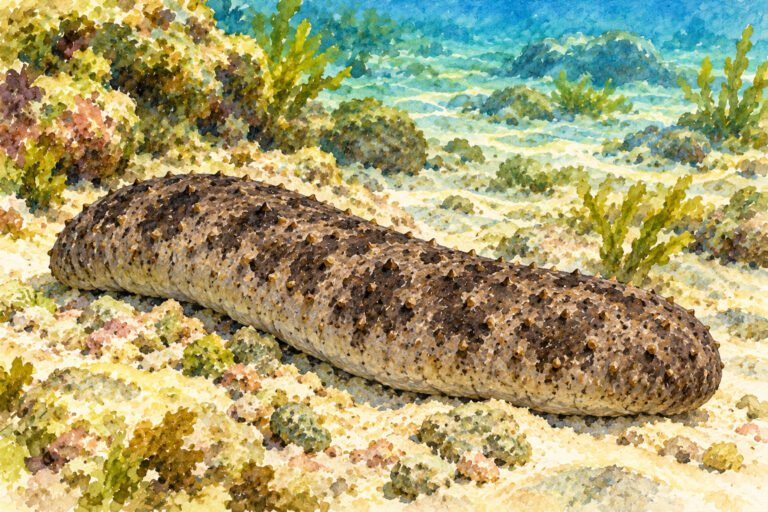
Dusky Sea Cucumber

Spanish name
Pepino de mar
Scientific name
Holothuria fuscocinerea

What Do Pico & Tati Think?

It does not need a star-shaped outline to be related to sea stars. Pico and Tati meet a different kind of echinoderm.

Identification

Key Features of the Dusky Sea Cucumber

  • An elongated body resting on the seabed

  • No radiating arms like a sea star

  • Photograph the animal in place for expert comparison

Habitat & range

Suitable underwater coastal habitat. Use a permitted guided snorkeling or viewing activity appropriate to your family; do not enter the sea just to find this animal.

Conservation & care

Watch without touching, lifting, feeding or collecting. Keep fingers and equipment away from spines and other surface structures. Leave the animal submerged and its habitat undisturbed.

View full profile →

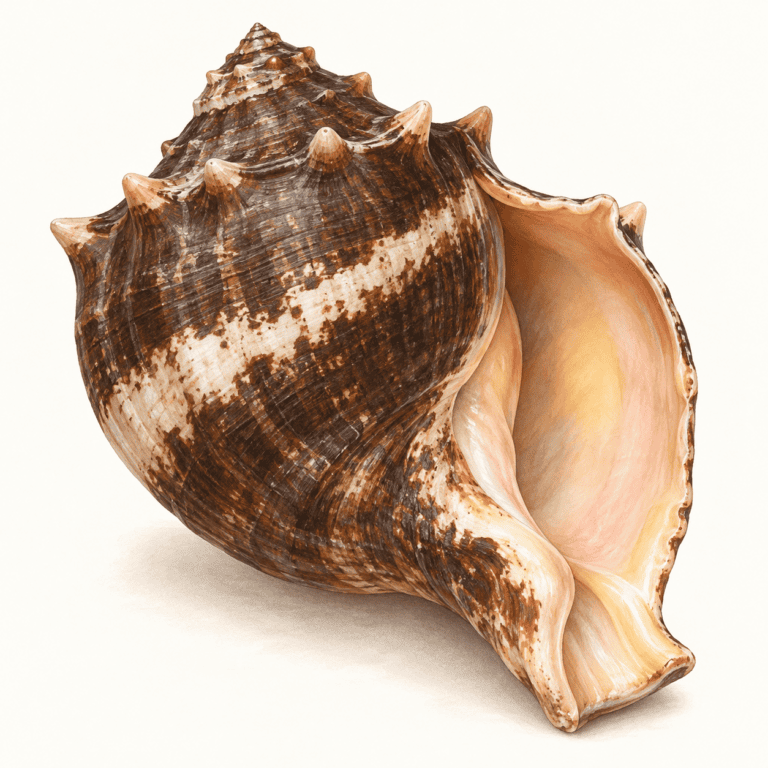
Nature Field Guide

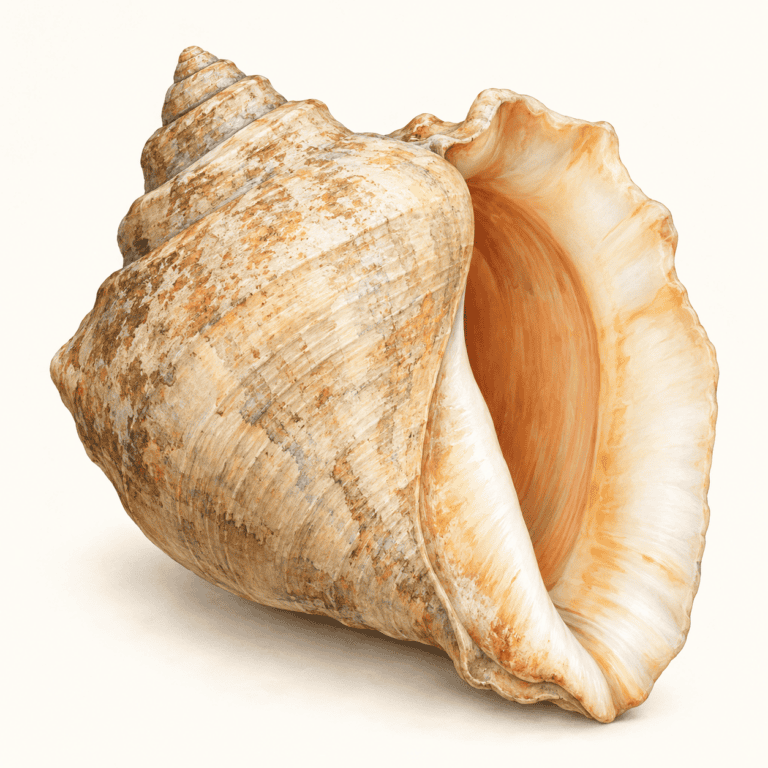
Eastern Pacific Giant Conch

Spanish name
Cambute del Pacífico
Scientific name
Titanostrombus galeatus

What Do Pico & Tati Think?

A large conch connects marine nature with Costa Rica’s cultural history.

Identification

Key Features of the Eastern Pacific Giant Conch

  • Large, thick shell.

  • Adult shells have an expanded outer lip and a short spire.

  • Look for older scientific names when comparing historical references.

Habitat & range

Pacific coastal marine habitat; local encounters require confirmation.

Conservation & care

Observe and photograph shells where they are. Leave living animals, occupied shells and empty shells in place. Do not pry animals from rocks, dig in mangroves or put fingers into shell openings. Explore with an adult or guide, follow site rules and stay clear of surf and slippery rocks.

View full profile →

Nature Field Guide

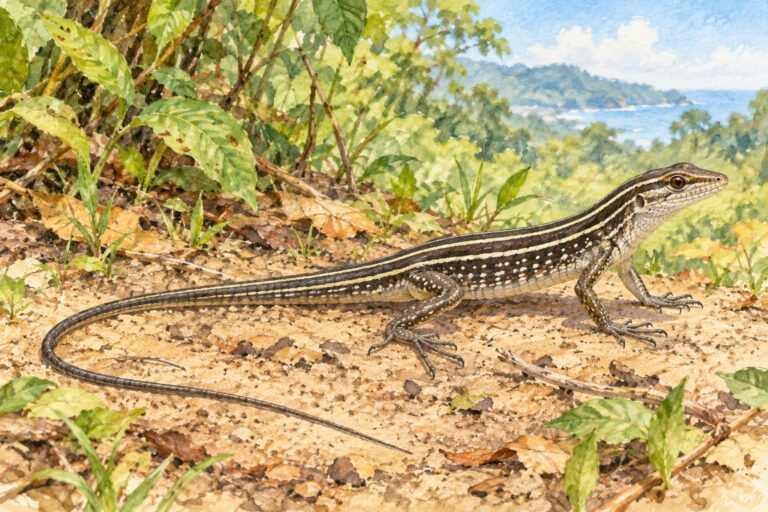
Four-lined Ameiva

Spanish name
Ameiva de cuatro líneas
Scientific name
Holcosus quadrilineatus

What Do Pico & Tati Think?

Pico: “What clues help us recognize this reptile?”

Tati: “Let’s notice its shape, markings and habitat from a respectful distance.”

Identification

Key Features of the Four-lined Ameiva

  • Four pale longitudinal body stripes

  • Long slender tail

  • Small contrasting flank markings

Habitat & range

Humid Caribbean lowlands and suitable Pacific lowlands and edges; a field study documents Cocles, Limón.

Conservation & care

Observe with an adult from permitted paths. Do not catch, chase, touch or feed reptiles. Leave bark, logs, rocks and leaf litter in place. Keep pets away and allow animals an open escape route.

Threats & pressures

Protect habitat connections and natural shelters. Avoid road mortality, collection and deliberate killing. Leave reptiles in their habitat rather than keeping or relocating them.

View full profile →

Nature Field Guide

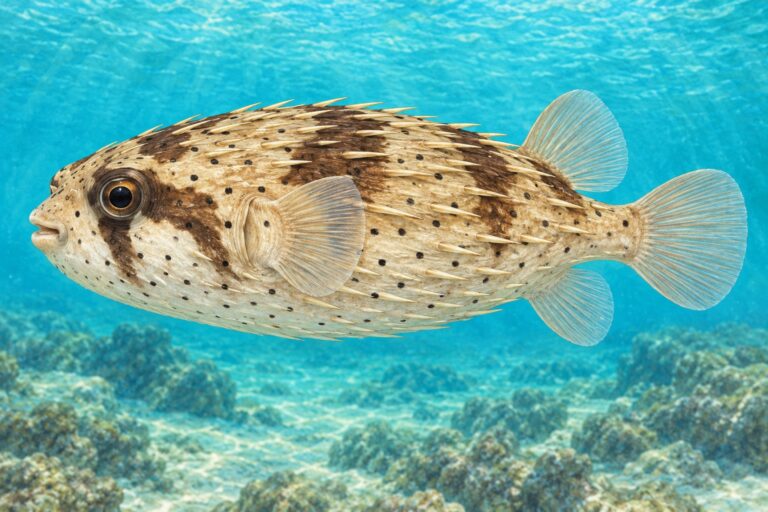
Freckled Porcupinefish

Spanish name
Pez erizo
Scientific name
Diodon holocanthus

What Do Pico & Tati Think?

Pico: “Are those little spines?”

Tati: “Yes. We can study them in a photograph without disturbing the fish.”

Identification

Key Features of the Freckled Porcupinefish

  • Long movable body spines

  • Dark blotches and eye band

  • Pale unspotted fins

Habitat & range

Pacific rocky reefs and nearby coastal marine habitats. Check the linked species reference for its wider range.

Conservation & care

Never touch, collect, eat or deliberately inflate puffers or porcupinefish. Observe with a qualified guide. Do not feed, chase or handle fish. Keep fins off the reef and take all litter home.

Threats & pressures

Habitat damage and degraded water quality are pressures to prevent in coastal fish habitats. This profile does not quantify a local decline.

View full profile →

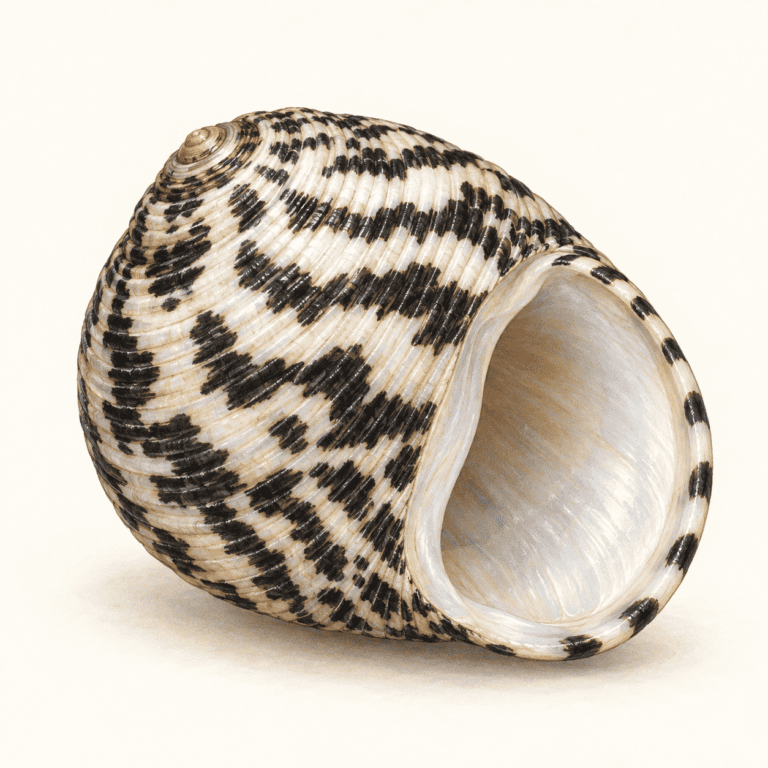
Nature Field Guide

Funiculate Nerite

Spanish name
Nerita
Scientific name
Nerita funiculata

What Do Pico & Tati Think?

A small, rounded nerite invites a close look at its shell pattern.

Identification

Key Features of the Funiculate Nerite

  • Small rounded shell.

  • Very low spire and a broad, D-shaped opening.

  • Fine ridges and dark-and-pale patterns may be visible.

Habitat & range

Rocky intertidal shore.

Conservation & care

Observe and photograph shells where they are. Leave living animals, occupied shells and empty shells in place. Do not pry animals from rocks, dig in mangroves or put fingers into shell openings. Explore with an adult or guide, follow site rules and stay clear of surf and slippery rocks.

View full profile →

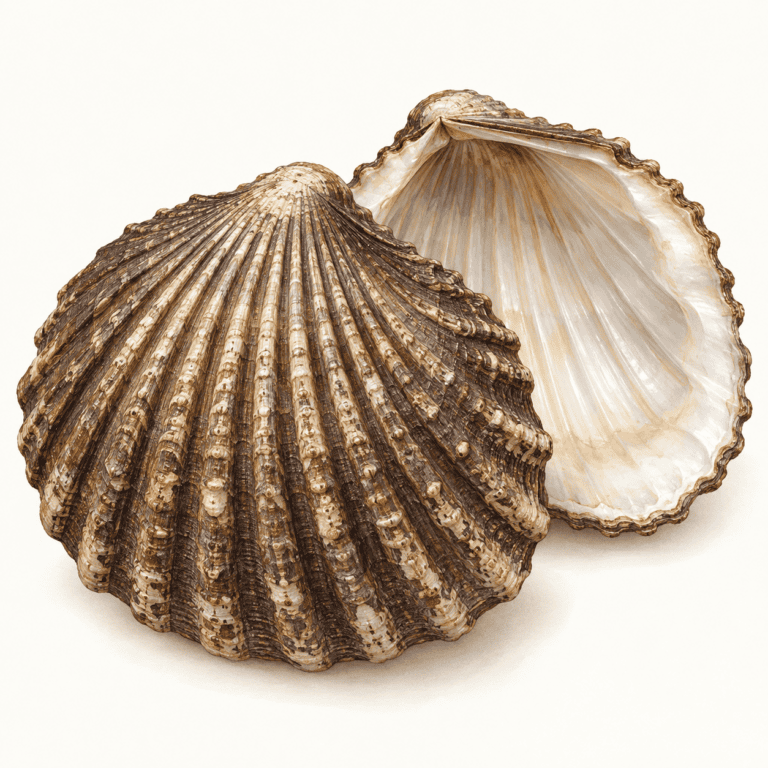
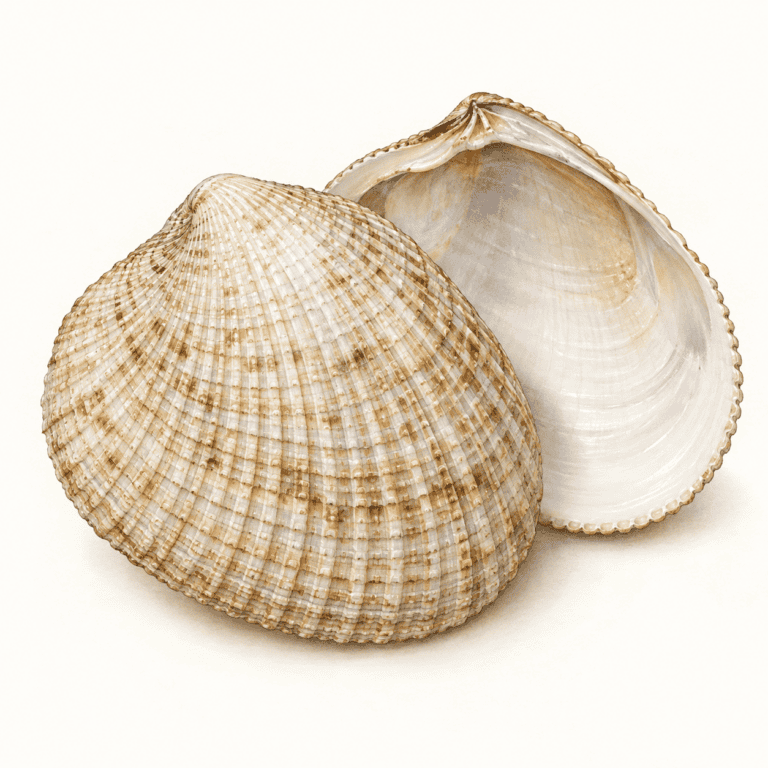
Nature Field Guide

Giant Ark Clam

Spanish name
Chucheca
Scientific name
Larkinia grandis

What Do Pico & Tati Think?

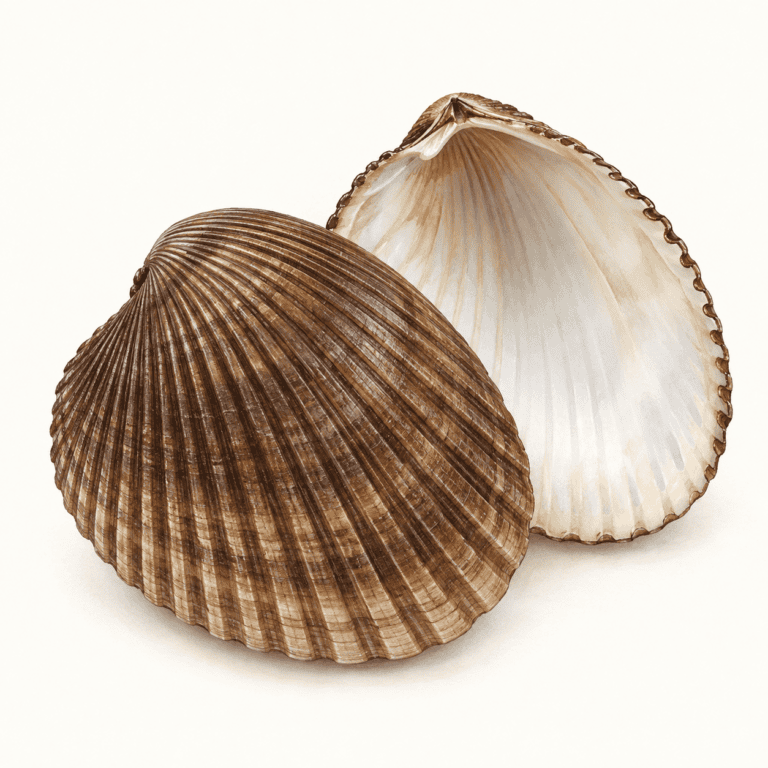
A large ark shell has deep spaces between its strong ribs.

Identification

Key Features of the Giant Ark Clam

  • Broad, nearly square outline.

  • Strong ribs separated by deep grooves.

  • Prominent raised area near the hinge.

Habitat & range

Pacific estuarine and mangrove-associated coastal habitat.

Conservation & care

Observe and photograph shells where they are. Leave living animals, occupied shells and empty shells in place. Do not pry animals from rocks, dig in mangroves or put fingers into shell openings. Explore with an adult or guide, follow site rules and stay clear of surf and slippery rocks.

View full profile →

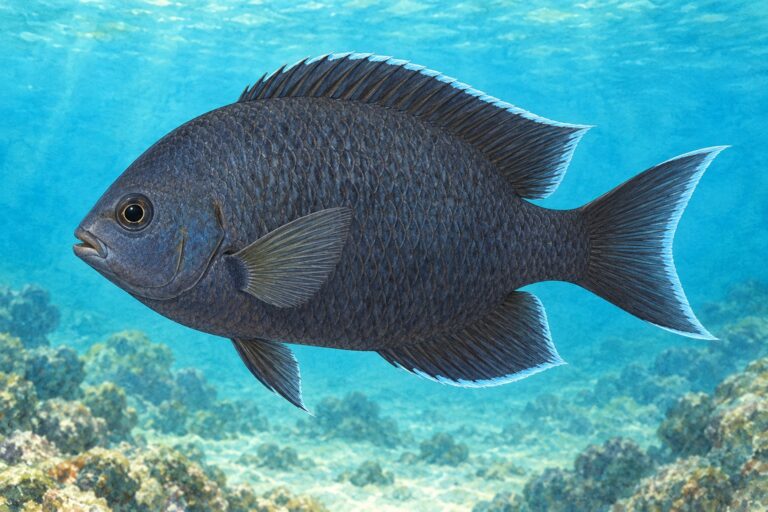
Nature Field Guide

Giant Damselfish

Spanish name
Damisela gigante
Scientific name
Microspathodon dorsalis

What Do Pico & Tati Think?

Pico: “This damselfish looks almost black!”

Tati: “Adults and young can look different. Let’s compare their fin edges.”

Identification

Key Features of the Giant Damselfish

  • Deep dark blue-gray body

  • Narrow pale fin edges

  • No pronounced forehead hump

Habitat & range

Pacific rocky reefs and nearby coastal marine habitats. Check the linked species reference for its wider range.

Conservation & care

Observe with a qualified guide. Do not feed, chase or handle fish. Keep fins off the reef and take all litter home.

Threats & pressures

Habitat damage and degraded water quality are pressures to prevent in coastal fish habitats. This profile does not quantify a local decline.

View full profile →

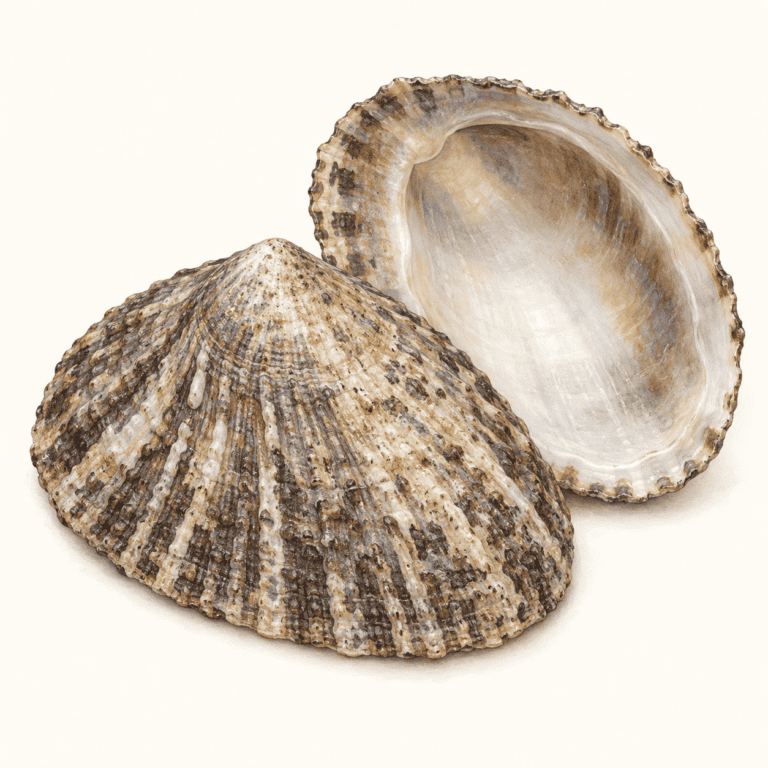
Nature Field Guide

Giant False Limpet

Spanish name
Lapa
Scientific name
Siphonaria gigas

What Do Pico & Tati Think?

A cap-shaped shell shelters a snail on the rocky shore.

Identification

Key Features of the Giant False Limpet

  • Single cap-shaped shell rather than two hinged halves.

  • Look at the shell outline and raised top.

  • Compare with a keyhole limpet; a top opening is an important difference.

Habitat & range

Rocky intertidal habitat.

Conservation & care

Observe and photograph shells where they are. Leave living animals, occupied shells and empty shells in place. Do not pry animals from rocks, dig in mangroves or put fingers into shell openings. Explore with an adult or guide, follow site rules and stay clear of surf and slippery rocks.

View full profile →

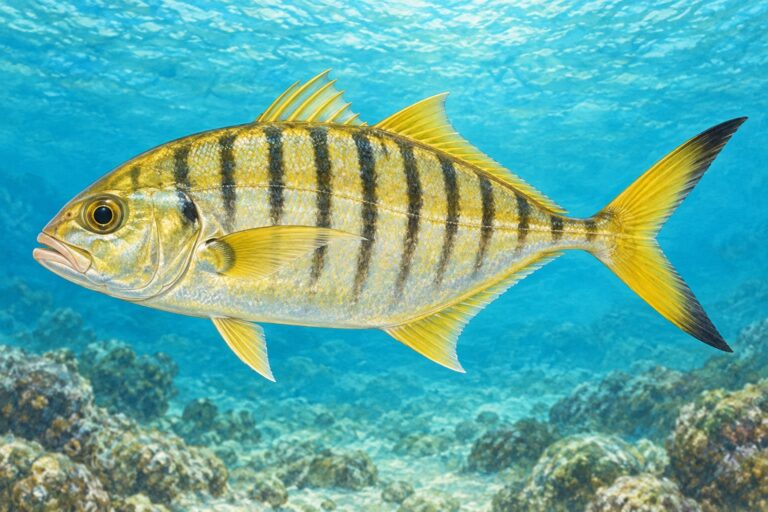
Nature Field Guide

Golden Trevally

Spanish name
Jurel dorado
Scientific name
Gnathanodon speciosus

What Do Pico & Tati Think?

Pico: “This little jack looks golden!”

Tati: “Older fish look more silver. The yellow fins are a useful clue.”

Identification

Key Features of the Golden Trevally

  • Thick fleshy lips

  • Yellow fins

  • Dark bars strongest in young fish

Habitat & range

Pacific coastal waters over sandy and other soft bottoms near reef areas.

Conservation & care

Observe with a qualified guide. Do not feed, chase or handle fish. Keep fins off the reef and take all litter home.

Threats & pressures

Habitat damage and degraded water quality are pressures to prevent in coastal fish habitats. This profile does not quantify a local decline.

View full profile →

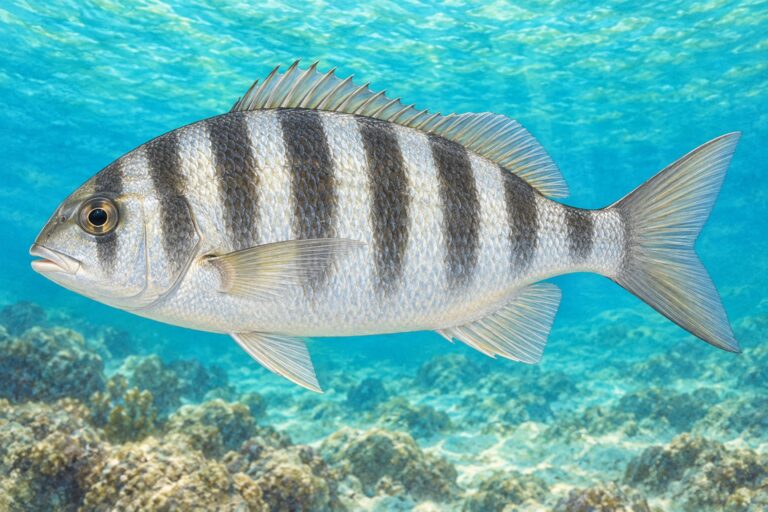
Nature Field Guide

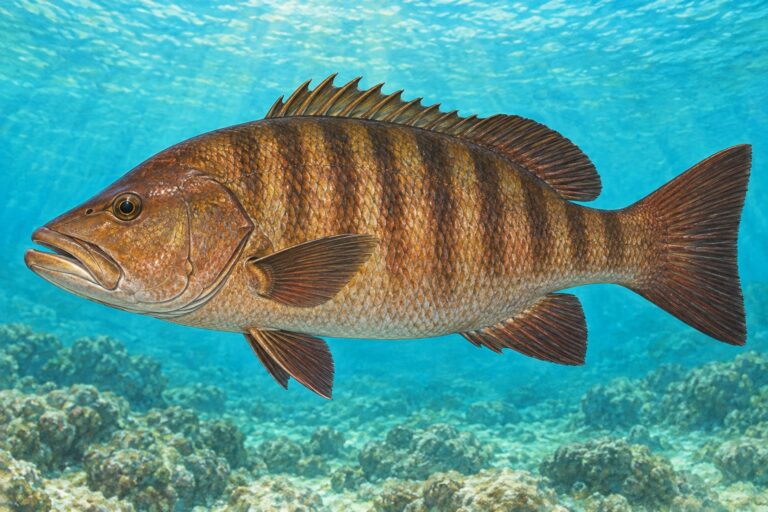
Graybar Grunt

Spanish name
Roncador almejero
Scientific name
Haemulon sexfasciatum

What Do Pico & Tati Think?

Pico: “Are those bars or stripes?”

Tati: “The adult has broad bars. Young fish can show lengthwise stripes.”

Identification

Key Features of the Graybar Grunt

  • About five or six broad bars

  • Silver-white body

  • Forked tail and low mouth

Habitat & range

Pacific rocky reefs and nearby coastal marine habitats. Check the linked species reference for its wider range.

Conservation & care

Observe with a qualified guide. Do not feed, chase or handle fish. Keep fins off the reef and take all litter home.

Threats & pressures

Habitat damage and degraded water quality are pressures to prevent in coastal fish habitats. This profile does not quantify a local decline.

View full profile →

Nature Field Guide

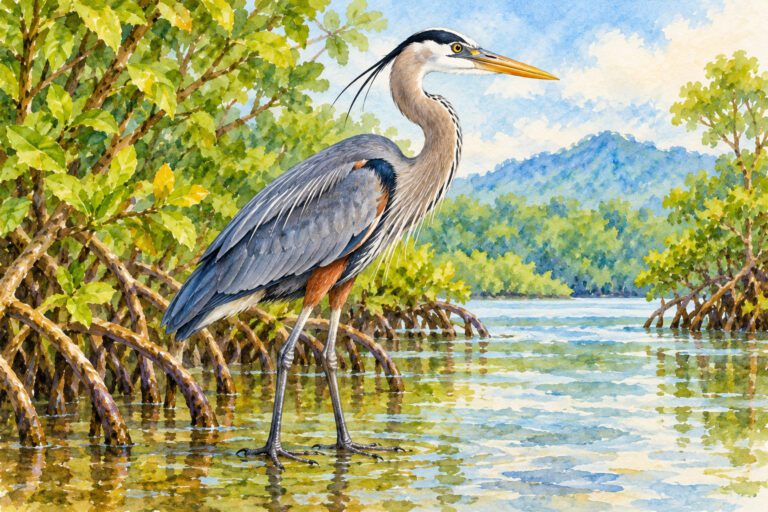
Great Blue Heron

Spanish name
Garzón azulado
Scientific name
Ardea herodias

What Do Pico & Tati Think?

A tall, patient hunter can make the whole shoreline feel still. Pico counts its slow steps while Tati watches its folded neck.

Identification

Key Features of the Great Blue Heron

  • Large blue-gray body

  • Long legs and a heavy yellowish bill

  • Pale head with a dark stripe above the eye

Habitat & range

Scan shallow water, quiet mangrove channels and vegetated wetland margins from an established viewpoint. Follow a local guide’s directions around estuaries.

Conservation & care

Give feeding and resting birds space. If a bird stops feeding, repeatedly looks at you or moves away, increase your distance. Keep dogs away from flocks, avoid playback and feeding, and leave nests and natural shoreline debris undisturbed.

View full profile →

Nature Field Guide

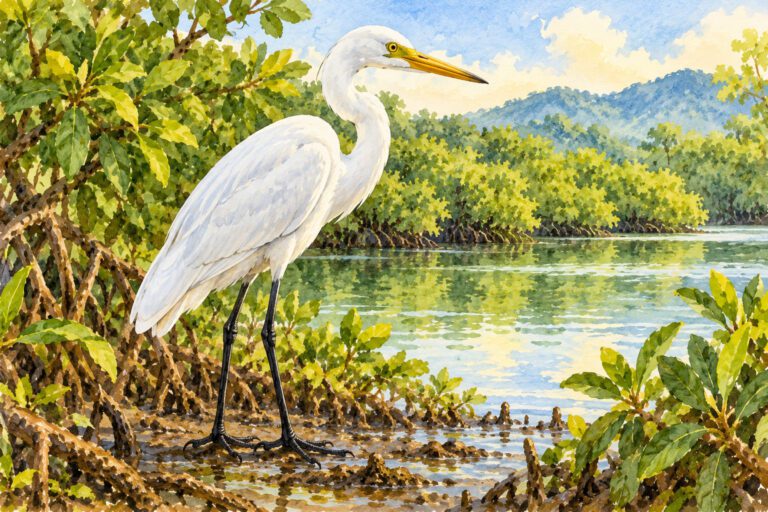
Great Egret

Spanish name
Garceta grande
Scientific name
Ardea alba

What Do Pico & Tati Think?

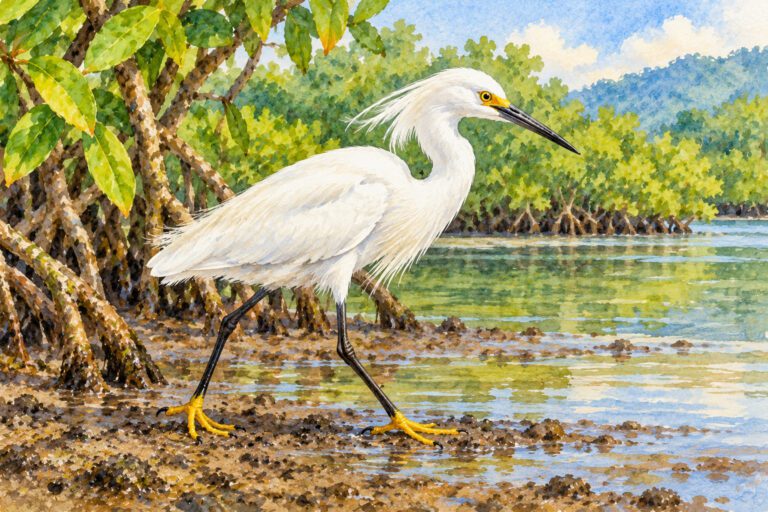
Pico calls it a bright white shape in the green. Tati checks the bill and feet before giving it a name.

Identification

Key Features of the Great Egret

  • White plumage and long slender neck

  • Yellow bill

  • Black legs and dark feet

Habitat & range

Scan shallow water, quiet mangrove channels and vegetated wetland margins from an established viewpoint. Follow a local guide’s directions around estuaries.

Conservation & care

Give feeding and resting birds space. If a bird stops feeding, repeatedly looks at you or moves away, increase your distance. Keep dogs away from flocks, avoid playback and feeding, and leave nests and natural shoreline debris undisturbed.

View full profile →

Nature Field Guide

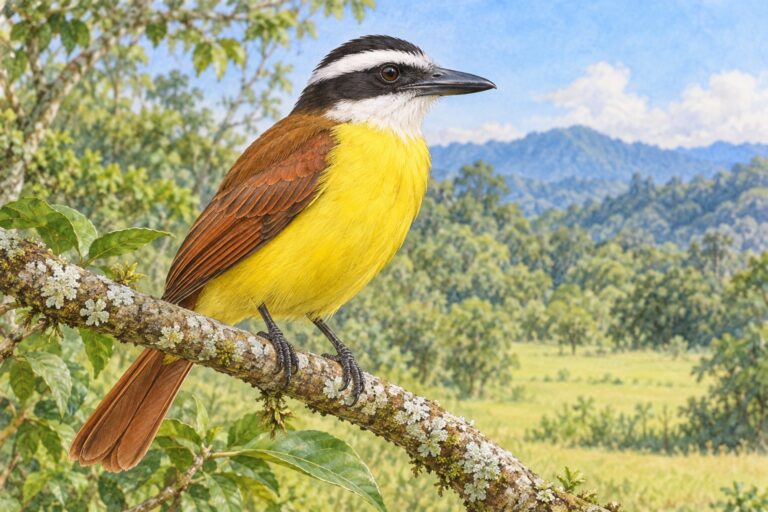
Great Kiskadee

Spanish name
Bienteveo grande
Scientific name
Pitangus sulphuratus

What Do Pico & Tati Think?

Pico: “It sounds like it is calling its own name!”

Tati: “Let’s also check its bold eyebrow and strong bill.”

Identification

Key Features of the Great Kiskadee

  • Black-and-white head pattern

  • Bright yellow belly

  • Heavy bill and reddish-brown wings

Habitat & range

Open wooded country and settled areas, often near water, on both slopes, mainly below about 1500 m. Less frequent in some southern Pacific areas; not a high-mountain specialist.

Conservation & care

Observe quietly from trails or established viewing areas. Give nests, roosts and feeding birds space. Do not handle, chase or lure birds with playback. Keep pets away from wildlife.

Threats & pressures

Protect native vegetation, reduce collision hazards around glass and keep cats away from birds. These are practical prevention priorities, not a claim of a measured decline at a specific Costa Rican site.

View full profile →

Nature Field Guide

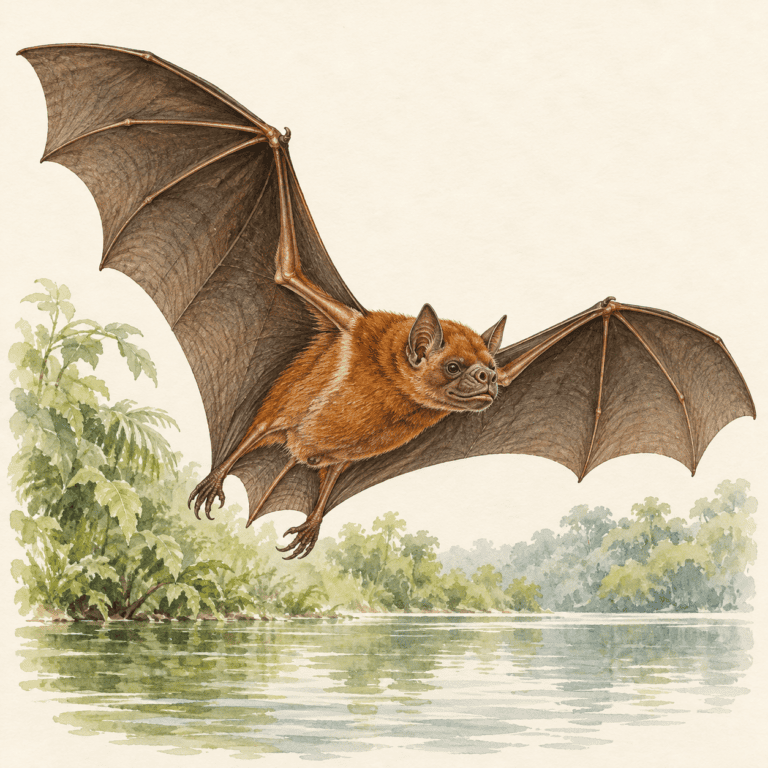
Greater Bulldog Bat

Spanish name
Murciélago pescador mayor
Scientific name
Noctilio leporinus

What Do Pico & Tati Think?

The greater bulldog bat is one of the bats that regularly catches fish.

Identification

Key Features of the Greater Bulldog Bat

  • Prominent folded lips and pointed ears.

  • Large clawed hind feet adapted for fishing.

  • Short fur that can be reddish, brown or grayish.

Habitat & range

Rivers, ponds and suitable coastal waters near roosting habitat.

Conservation & care

Observe bats from a distance with an adult or guide. Do not touch, feed or handle any bat, including one found on the ground. Leave roosts undisturbed, avoid direct flash and ask local wildlife professionals for help if an animal appears injured.

View full profile →

Nature Field Guide

Green Heron

Spanish name
Garcilla verde
Scientific name
Butorides virescens

What Do Pico & Tati Think?

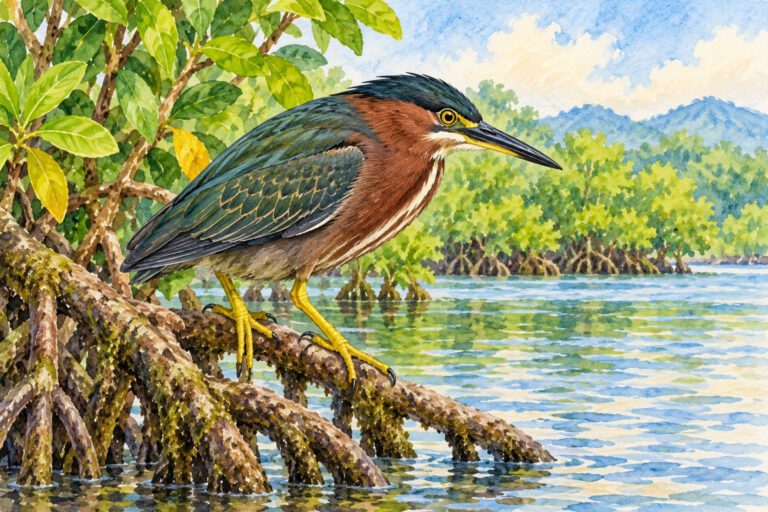
A small hunched shape almost disappears among the roots. Pico and Tati learn that patient looking beats noisy searching.

Identification

Key Features of the Green Heron

  • Small hunched silhouette

  • Greenish back and chestnut neck

  • Straight pointed bill and yellowish legs

Habitat & range

Scan shallow water, quiet mangrove channels and vegetated wetland margins from an established viewpoint. Follow a local guide’s directions around estuaries.

Conservation & care

Give feeding and resting birds space. If a bird stops feeding, repeatedly looks at you or moves away, increase your distance. Keep dogs away from flocks, avoid playback and feeding, and leave nests and natural shoreline debris undisturbed.

View full profile →

Nature Field Guide

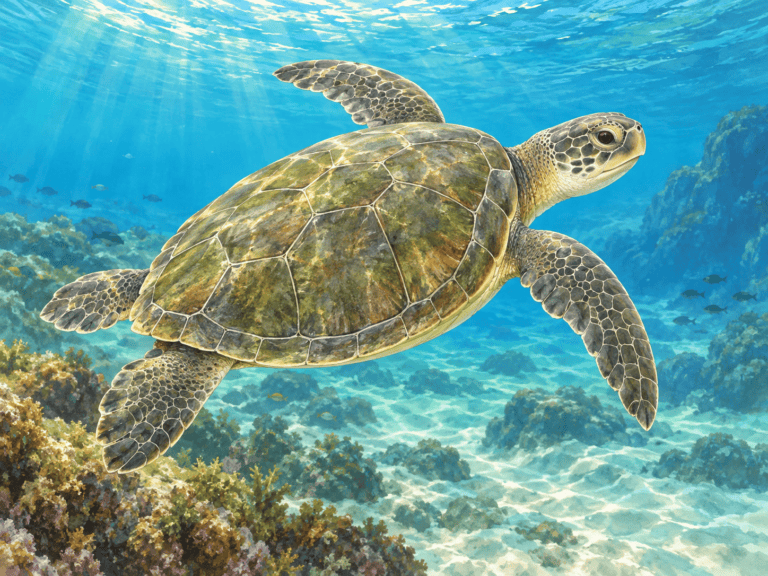
Green Sea Turtle

Spanish name
Tortuga verde / Tortuga negra
Scientific name
Chelonia mydas

What Do Pico & Tati Think?

Pico: “What clues help us recognize this reptile?”

Tati: “Let’s notice its shape, markings and habitat from a respectful distance.”

Identification

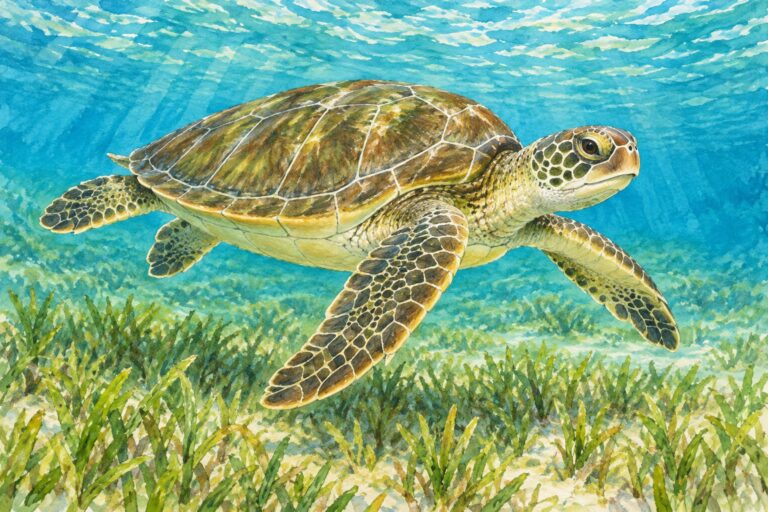
Key Features of the Green Sea Turtle

  • Smooth oval carapace

  • Rounded rather than sharply hooked head

  • Four pairs of lateral shell scutes

Habitat & range

Pacific and Caribbean coastal waters; Tortuguero and Cahuita are documented Caribbean examples.

Conservation & care

Never touch, chase, ride or feed a sea turtle. Keep clear of nesting females, eggs and hatchlings. Follow local beach rules and authorized guides; avoid lights and flash photography during nesting observations. Leave shells and wildlife products out of your purchases.

Threats & pressures

Protect nesting beaches and marine habitats. Reduce plastic waste, avoid disturbing wildlife and do not buy turtle products.

View full profile →

Nature Field Guide

Greenish Keyhole Limpet

Spanish name
Lapa de agujero
Scientific name
Fissurella virescens

What Do Pico & Tati Think?

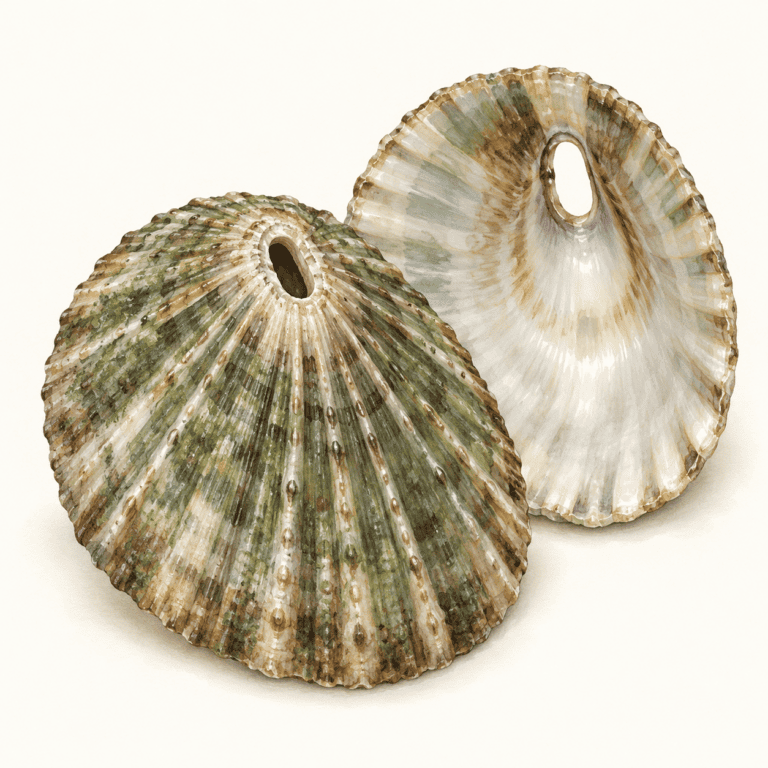
Look for the opening near the top of this cap-shaped shell.

Identification

Key Features of the Greenish Keyhole Limpet

  • Cap-shaped shell with an opening near the top.

  • Ribs radiate toward the edge.

  • An intact underside and species reference help with confirmation.

Habitat & range

Rocky coastal habitat.

Conservation & care

Observe and photograph shells where they are. Leave living animals, occupied shells and empty shells in place. Do not pry animals from rocks, dig in mangroves or put fingers into shell openings. Explore with an adult or guide, follow site rules and stay clear of surf and slippery rocks.

View full profile →

Nature Field Guide

Grinning Tun

Spanish name
Cambute de lodo
Scientific name
Malea ringens

What Do Pico & Tati Think?

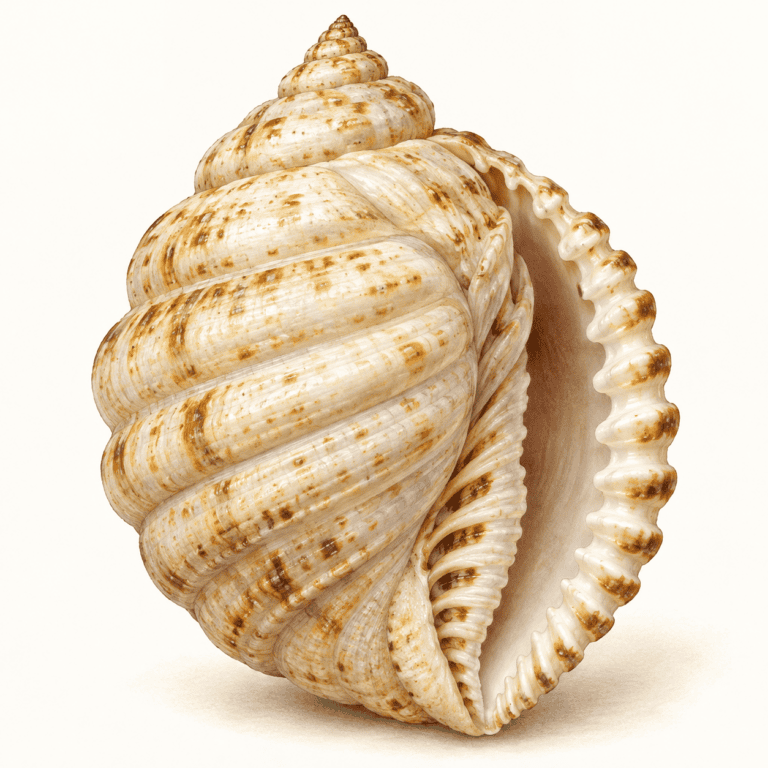
A rounded shell with a tooth-lined opening explains its memorable name.

Identification

Key Features of the Grinning Tun

  • Rounded, inflated shell.

  • Ribs run around the shell.

  • Strong ridges along the opening create a tooth-like appearance.

Habitat & range

Shallow coastal marine waters; a washed-up shell does not reveal its original depth.

Conservation & care

Observe and photograph shells where they are. Leave living animals, occupied shells and empty shells in place. Do not pry animals from rocks, dig in mangroves or put fingers into shell openings. Explore with an adult or guide, follow site rules and stay clear of surf and slippery rocks.

View full profile →

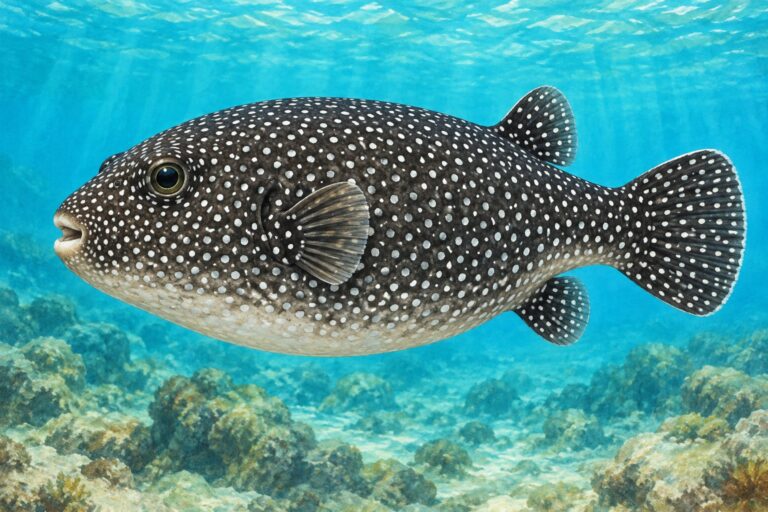
Nature Field Guide

Guineafowl Puffer

Spanish name
Tamboril negro
Scientific name
Arothron meleagris

What Do Pico & Tati Think?

Pico: “Is the yellow puffer a different kind?”

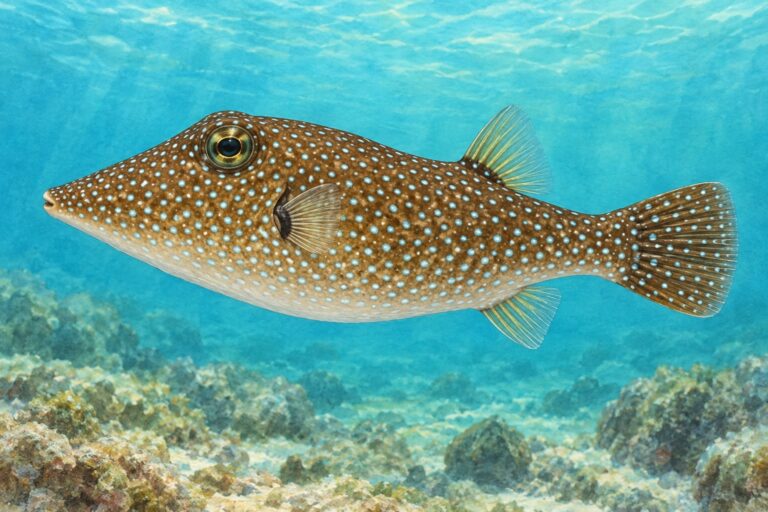
Tati: “This species has different color forms. Shape matters too.”

Identification

Key Features of the Guineafowl Puffer

  • Blunt head and heavy body

  • White dots on the dark form

  • Rounded tail and small rear fins

Habitat & range

Pacific rocky reefs and nearby coastal marine habitats. Check the linked species reference for its wider range.

Conservation & care

Never touch, collect, eat or deliberately inflate puffers or porcupinefish. Observe with a qualified guide. Do not feed, chase or handle fish. Keep fins off the reef and take all litter home.

Threats & pressures

Habitat damage and degraded water quality are pressures to prevent in coastal fish habitats. This profile does not quantify a local decline.

View full profile →

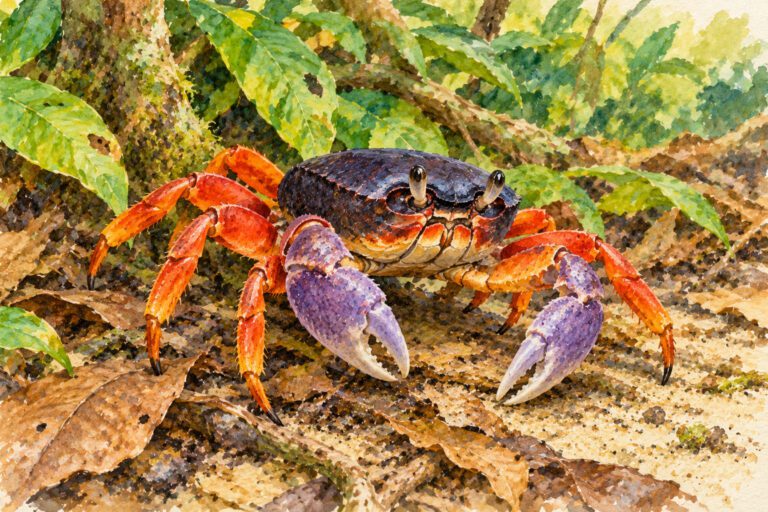
Nature Field Guide

Halloween Land Crab

Spanish name
Cangrejo arlequín
Scientific name
Gecarcinus quadratus

What Do Pico & Tati Think?

Not every coastal crab lives underwater. Pico and Tati look at the ground beside the path without leaving it.

Identification

Key Features of the Halloween Land Crab

  • A crab walking on land near coastal vegetation

  • Burrows may be present in suitable ground

  • Confirm the species from the whole animal, not a burrow alone

Habitat & range

Coastal vegetation and adjacent ground. Stay on established routes and do not search inside burrows.

Conservation & care

Give claws and burrow entrances space. Do not handle, feed, chase or collect crabs. Leave rocks and shells where they are, and follow your adult’s route and local signs.

View full profile →

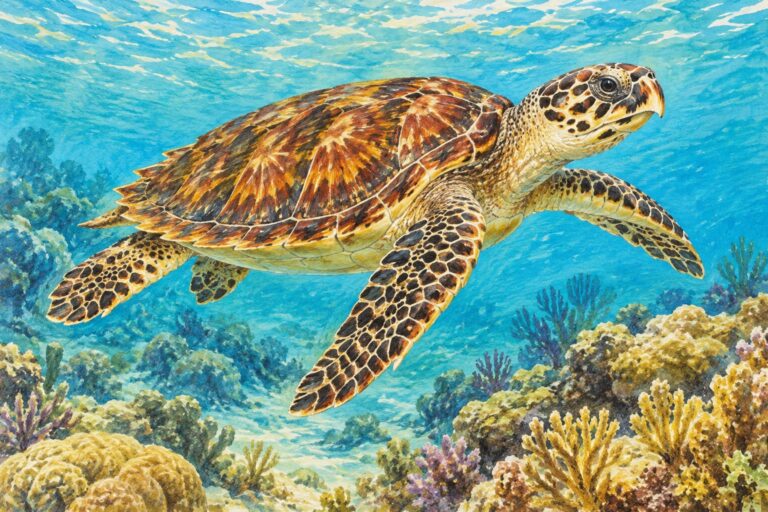
Nature Field Guide

Hawksbill Sea Turtle

Spanish name
Tortuga carey
Scientific name
Eretmochelys imbricata

What Do Pico & Tati Think?

Pico: “What clues help us recognize this reptile?”

Tati: “Let’s notice its shape, markings and habitat from a respectful distance.”

Identification

Key Features of the Hawksbill Sea Turtle

  • Narrow hooked beak

  • Overlapping patterned shell scutes

  • Often a serrated rear shell edge

Habitat & range

Pacific and Caribbean coastal waters and reefs; documented sites include Cahuita and Tortuguero.

Conservation & care

Never touch, chase, ride or feed a sea turtle. Keep clear of nesting females, eggs and hatchlings. Follow local beach rules and authorized guides; avoid lights and flash photography during nesting observations. Leave shells and wildlife products out of your purchases.

Threats & pressures

Protect nesting beaches and marine habitats. Reduce plastic waste, avoid disturbing wildlife and do not buy turtle products.

View full profile →

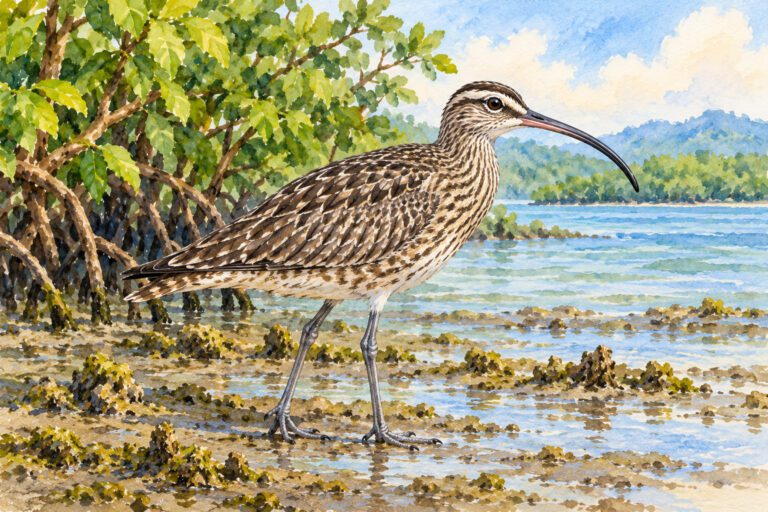
Nature Field Guide

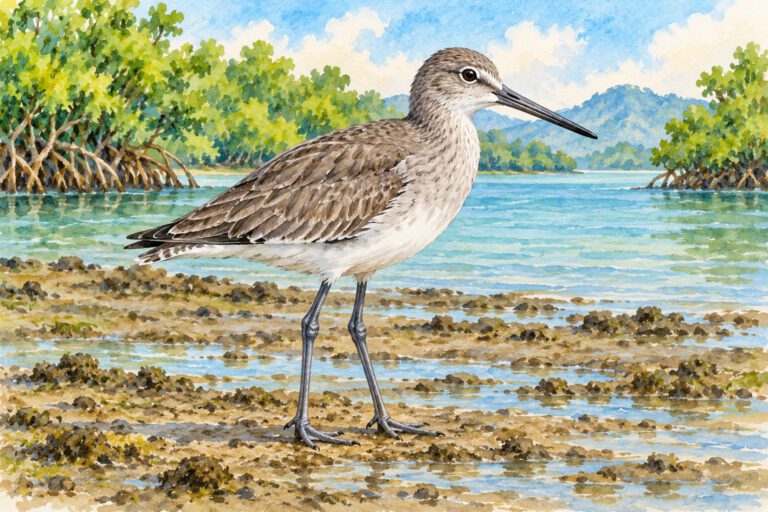
Hudsonian Whimbrel

Spanish name
Zarapito trinador
Scientific name
Numenius hudsonicus

What Do Pico & Tati Think?

Pico curves his pencil line to match the bill. Tati checks the striped head for another clue.

Identification

Key Features of the Hudsonian Whimbrel

  • Long downward-curved bill

  • Striped brown head with a pale central crown stripe

  • Brown patterned body and long legs

Habitat & range

Scan exposed shoreline feeding areas and nearby resting places with binoculars. The tide changes which flats are available; remain on a safe established route.

Conservation & care

Give feeding and resting birds space. If a bird stops feeding, repeatedly looks at you or moves away, increase your distance. Keep dogs away from flocks, avoid playback and feeding, and leave nests and natural shoreline debris undisturbed.

View full profile →

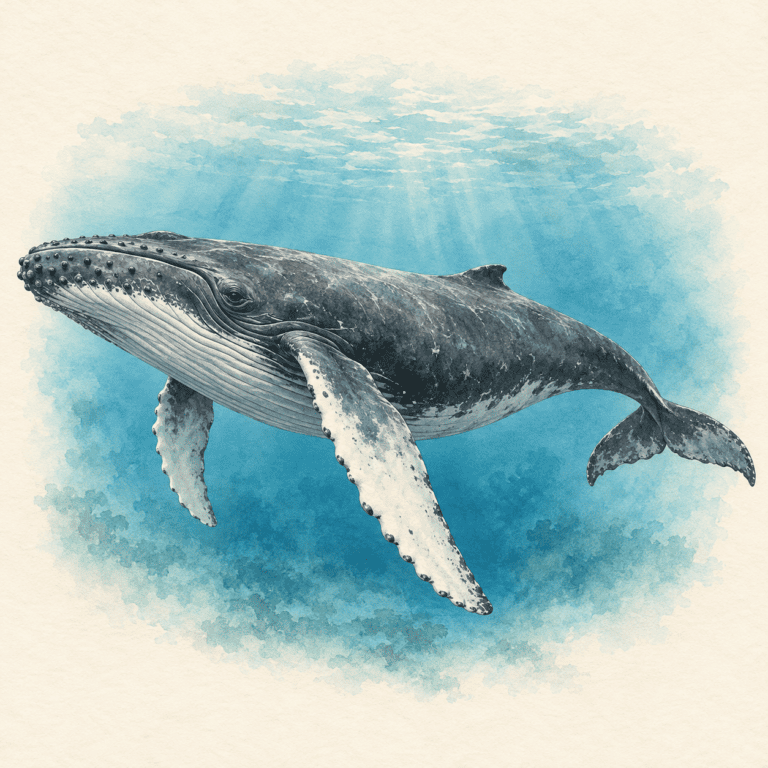
Nature Field Guide

Humpback Whale

Spanish name
Ballena jorobada
Scientific name
Megaptera novaeangliae

What Do Pico & Tati Think?

A humpback whale is a mammal that breathes air through blowholes and nurses its young with milk.

Identification

Key Features of the Humpback Whale

  • Very long pectoral flippers and bumps on the head.

  • Small dorsal fin on a raised hump.

  • Broad tail flukes with variable underside patterns.

Habitat & range

Costa Rican marine waters; arrange viewing with a responsible operator using current local knowledge.

Conservation & care

Use a responsible local wildlife operator and follow site rules. Give aquatic mammals room to feed, rest and travel. Do not feed, touch, chase or enter the water to approach them. Keep waste and fishing line out of waterways.

View full profile →

Nature Field Guide

King Angelfish

Spanish name
Ángel real / Ángel bandera
Scientific name
Holacanthus passer

What Do Pico & Tati Think?

Pico: “That fish has a bright stripe!”

Tati: “Let’s compare the adult pattern with a young fish before deciding what we see.”

Identification

Key Features of the King Angelfish

  • A deep, flattened body and small mouth.

  • Adults have a narrow white bar against a dark blue-gray body.

  • A yellow tail; juveniles have a different barred pattern.

Habitat & range

Reef-associated eastern Pacific marine habitats. Costa Rican records used here include Isla del Coco, the Salinas/Santa Elena area of Guanacaste, and Isla del Caño in the South Pacific. These are documented examples, not a complete range map.

Conservation & care

Follow park rules and qualified guides. Do not feed, touch, chase or collect marine wildlife. Maintain distance and avoid contact with reef habitat.

View full profile →

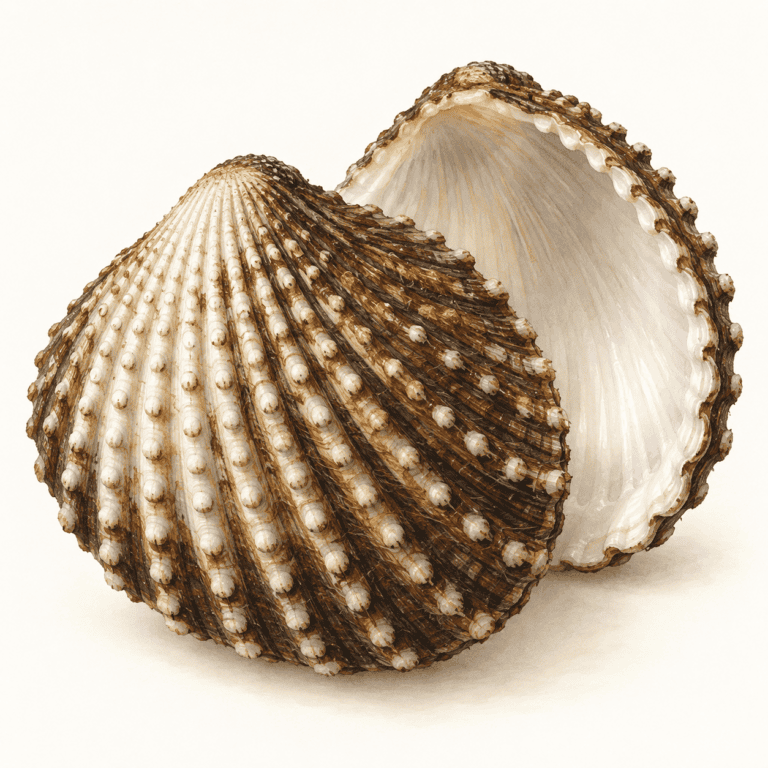
Nature Field Guide

Knobby Mangrove Cockle

Spanish name
Piangua
Scientific name
Anadara tuberculosa

What Do Pico & Tati Think?

A ribbed mangrove shell has small bumps that help explain its name.

Identification

Key Features of the Knobby Mangrove Cockle

  • Thick, oval valves with raised ribs.

  • Small nodules occur along the ribs.

  • A dark, sometimes bristly outer covering may remain on fresh shells.

Habitat & range

Mangrove-associated muddy habitat.

Conservation & care

Observe and photograph shells where they are. Leave living animals, occupied shells and empty shells in place. Do not pry animals from rocks, dig in mangroves or put fingers into shell openings. Explore with an adult or guide, follow site rules and stay clear of surf and slippery rocks.

View full profile →

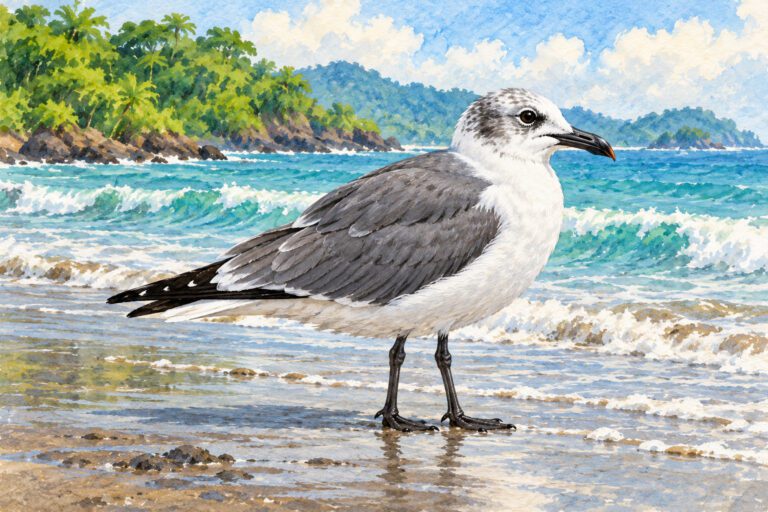
Nature Field Guide

Laughing Gull

Spanish name
Gaviota reidora
Scientific name
Leucophaeus atricilla

What Do Pico & Tati Think?

Pico hears a call that sounds like laughter. Tati checks the season before expecting a black hood.

Identification

Key Features of the Laughing Gull

  • Dark gray back and pale body

  • Blackish wingtips

  • Breeding adults have a dark hood

  • Winter head is paler with gray smudges

Habitat & range

Scan coastal waters and undisturbed shoreline resting places from a safe public viewpoint. Keep boats and people away from nesting or resting colonies.

Conservation & care

Give feeding and resting birds space. If a bird stops feeding, repeatedly looks at you or moves away, increase your distance. Keep dogs away from flocks, avoid playback and feeding, and leave nests and natural shoreline debris undisturbed.

View full profile →

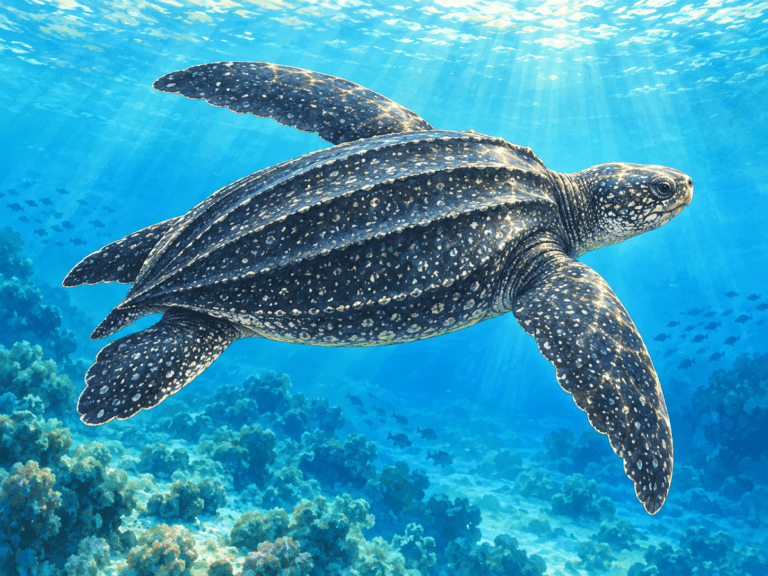
Nature Field Guide

Leatherback Sea Turtle

Spanish name
Tortuga baula
Scientific name
Dermochelys coriacea

What Do Pico & Tati Think?

Pico: “Those ridges make its back look so different.”

Tati: “Let’s find out how this turtle’s life connects the ocean with the beach.”

Identification

Key Features of the Leatherback Sea Turtle

  • A dark, leathery back rather than large hard shell plates.

  • Seven lengthwise ridges along the back.

  • Long front flippers on a very large sea turtle.

Habitat & range

Open ocean feeding habitats and nesting beaches. SINAC identifies Playa Grande, Ventanas and Langosta as nesting areas within Las Baulas.

Seasonal Calendar

Nesting

Las Baulas: Playa Grande, Ventanas and Langosta

Jan, Feb, Oct, Nov, Dec

SINAC lists October–February as the park’s nesting season. Eggs incubate approximately two months; hatching follows individual laying dates. Nesting is distinct from migration. Follow current park access rules; this is not a tour schedule.

Event source ↗

Conservation & care

Never touch a turtle, eggs or hatchlings. Respect beach closures and avoid lights near nesting habitat. Keep plastics and other litter out of the sea.

View full profile →

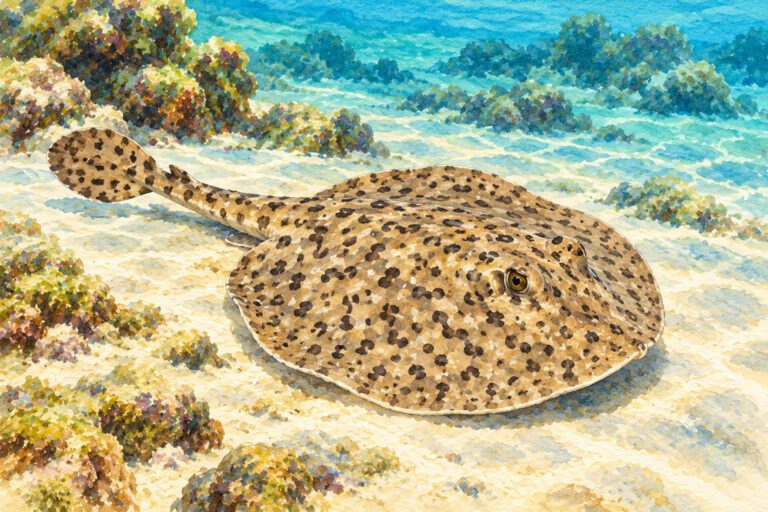
Nature Field Guide

Leopard Roundray

Spanish name
Raya redonda leopardo
Scientific name
Urobatis pardalis

What Do Pico & Tati Think?

A quiet shape on the seabed might be easy to miss. Pico and Tati give rays space and let a marine guide help them observe.

Identification

Key Features of the Leopard Roundray

  • A rounded disc

  • Small dark spots and short wavy markings on a pale brown upper surface

  • A relatively short tail with a rounded fin

Habitat & range

Suitable underwater coastal habitat. Use a permitted guided snorkeling or viewing activity appropriate to your family; do not enter the sea just to find this animal.

Conservation & care

Observe rays without approaching, touching, feeding, cornering or following them. Stay with a qualified local guide and follow their instructions about entering and moving in the water.

View full profile →

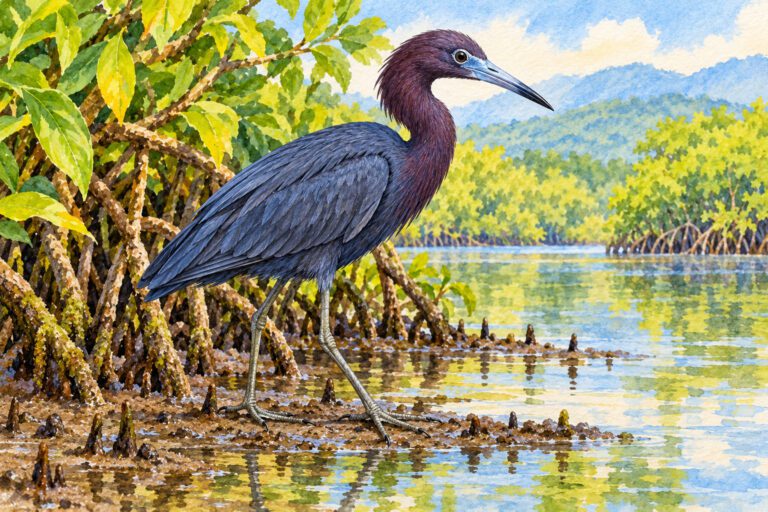
Nature Field Guide

Little Blue Heron

Spanish name
Garceta azul
Scientific name
Egretta caerulea

What Do Pico & Tati Think?

Pico expects every Little Blue Heron to be blue. Tati discovers that young birds tell a different color story.

Identification

Key Features of the Little Blue Heron

  • Adult slate-blue body and purplish neck

  • Two-toned bill with a dark tip

  • Juveniles are white, unlike the illustrated adult

Habitat & range

Scan shallow water, quiet mangrove channels and vegetated wetland margins from an established viewpoint. Follow a local guide’s directions around estuaries.

Conservation & care

Give feeding and resting birds space. If a bird stops feeding, repeatedly looks at you or moves away, increase your distance. Keep dogs away from flocks, avoid playback and feeding, and leave nests and natural shoreline debris undisturbed.

View full profile →

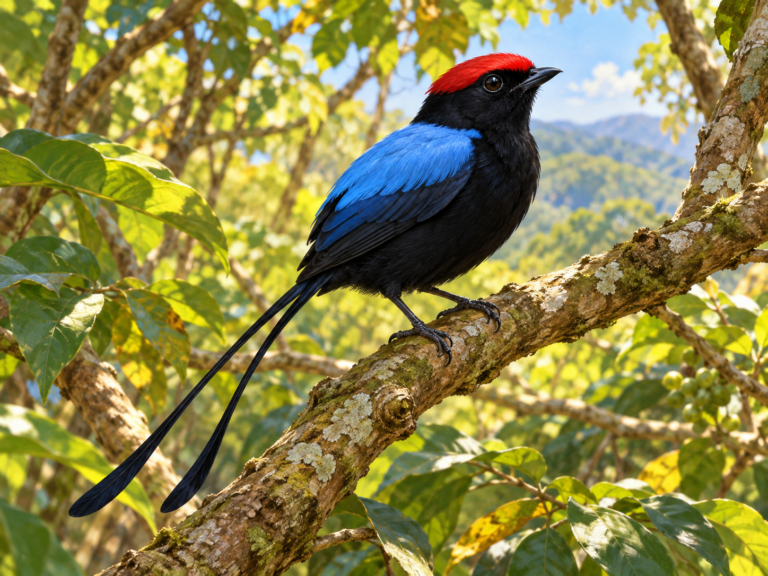
Nature Field Guide

Long-tailed Manakin

Spanish name
Saltarín toledo
Scientific name
Chiroxiphia linearis

What Do Pico & Tati Think?

Pico: “Two birds are moving together on the branches!”

Tati: “We can watch the rhythm without interrupting.”

Identification

Key Features of the Long-tailed Manakin

  • Adult male: black body, blue back and red crown.

  • Long central tail feathers in males.

  • Female: less conspicuous greenish plumage.

Habitat & range

Gallery forest, mature secondary woodland and mangrove edges in the northern Pacific, extending toward Carara, the Central Valley and suitable Dota slopes. Shaded woodland is essential.

Conservation & care

Stay on authorized trails or viewing routes. Give birds space, keep voices low and leave nests undisturbed. Observe without bait, feeding or recorded calls.

View full profile →

Nature Field Guide

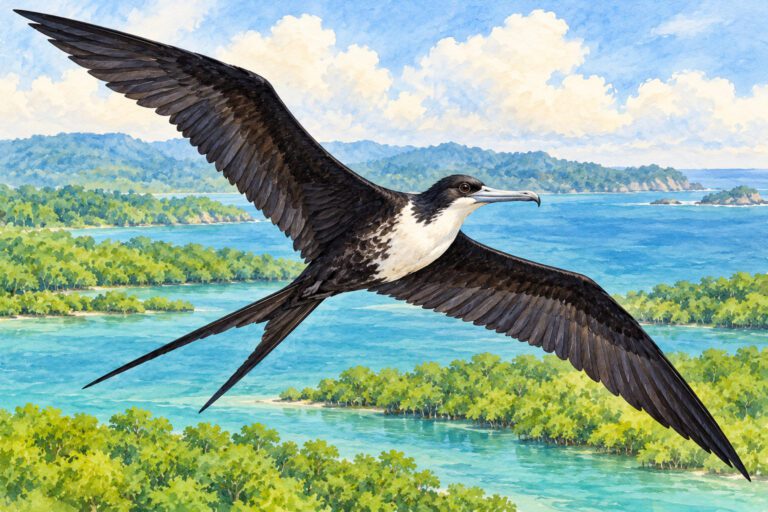
Magnificent Frigatebird

Spanish name
Rabihorcado magnífico
Scientific name
Fregata magnificens

What Do Pico & Tati Think?

Pico draws a bird that barely seems to flap. Tati adds a deeply forked tail to finish its sky silhouette.

Identification

Key Features of the Magnificent Frigatebird

  • Very long angular wings

  • Deeply forked tail

  • Adult male dark with red throat skin

  • Adult female has a white chest

Habitat & range

Scan coastal waters and undisturbed shoreline resting places from a safe public viewpoint. Keep boats and people away from nesting or resting colonies.

Conservation & care

Give feeding and resting birds space. If a bird stops feeding, repeatedly looks at you or moves away, increase your distance. Keep dogs away from flocks, avoid playback and feeding, and leave nests and natural shoreline debris undisturbed.

View full profile →

Nature Field Guide

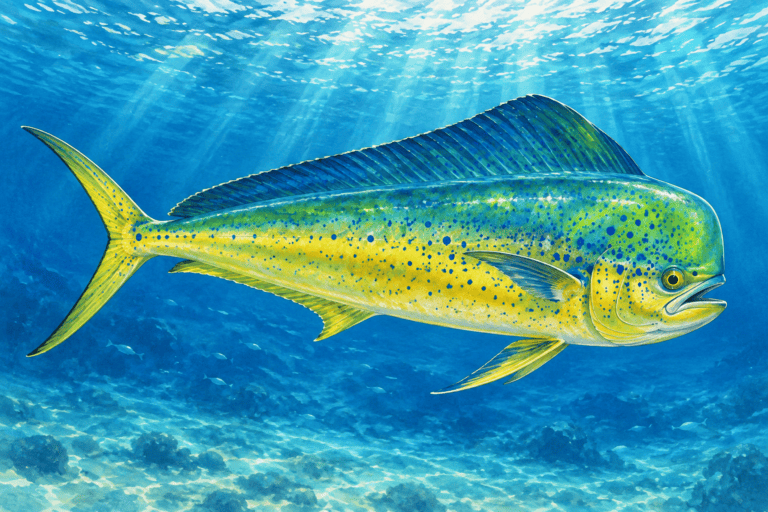
Mahi-mahi (Dorado)

Spanish name
Dorado
Scientific name
Coryphaena hippurus

What Do Pico & Tati Think?

Pico: “It looks green, blue and gold!”

Tati: “Dorado is another name for mahi-mahi—it is a fish, not a dolphin.”

Identification

Key Features of the Mahi-mahi (Dorado)

  • An electric green-blue back with golden sides.

  • A long continuous dorsal fin.

  • A deeply forked tail and spotted body.

Habitat & range

Tropical and subtropical surface waters offshore.

Seasonal Calendar

Regional presence

Costa Rican Pacific waters

Year-round

FECOP reports mahi-mahi throughout the year on Costa Rica’s Pacific coast. Regional presence does not imply constant abundance or guaranteed viewing.

Event source ↗

Conservation & care

Observe marine wildlife without feeding, touching or chasing it. Keep litter and discarded fishing line out of waterways. Follow qualified guides and current local rules.

Threats & pressures

Mahi-mahi are harvested directly and can also be caught incidentally in tuna and swordfish fisheries. Fast growth does not remove the need to monitor fishing pressure.

View full profile →

Nature Field Guide

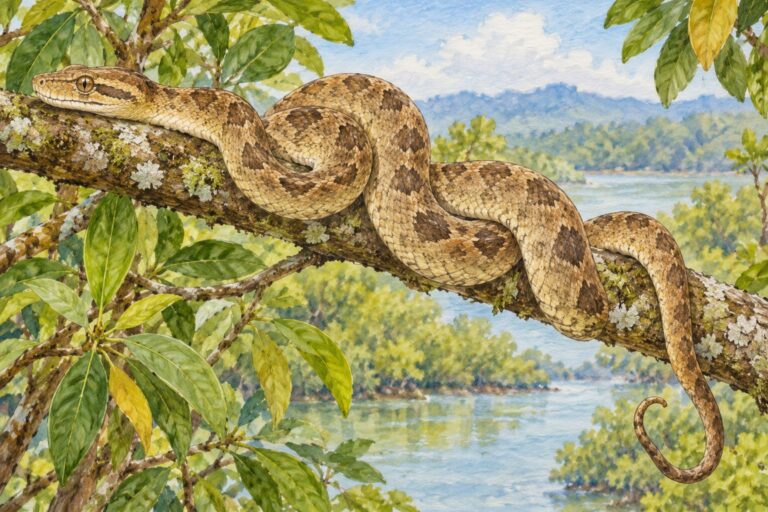
Mangrove Tree Boa

Spanish name
Boa arborícola del Pacífico
Scientific name
Corallus ruschenbergerii

What Do Pico & Tati Think?

Pico: “What helps this reptile fit into its habitat?”

Tati: “Let’s look at its shape, colors and surroundings while giving it plenty of space.”

Identification

Key Features of the Mangrove Tree Boa

  • Long branch-climbing body

  • Brown-to-tan camouflage

  • Gripping tail and a distinct head

Habitat & range

Southwestern Costa Rican forests and wooded coastal habitats, including the South Pacific.

Conservation & care

Observe from a distance with an adult or qualified guide. Do not touch, catch, corner, feed or move any snake. Keep children and pets away. Colors, head shape and pupil shape must never be used to decide a snake is safe.

Threats & pressures

Protect connected habitat and natural shelters. Avoid collection, unnecessary clearing and deliberate killing. Leave wildlife in place and support responsible observation.

View full profile →

Nature Field Guide

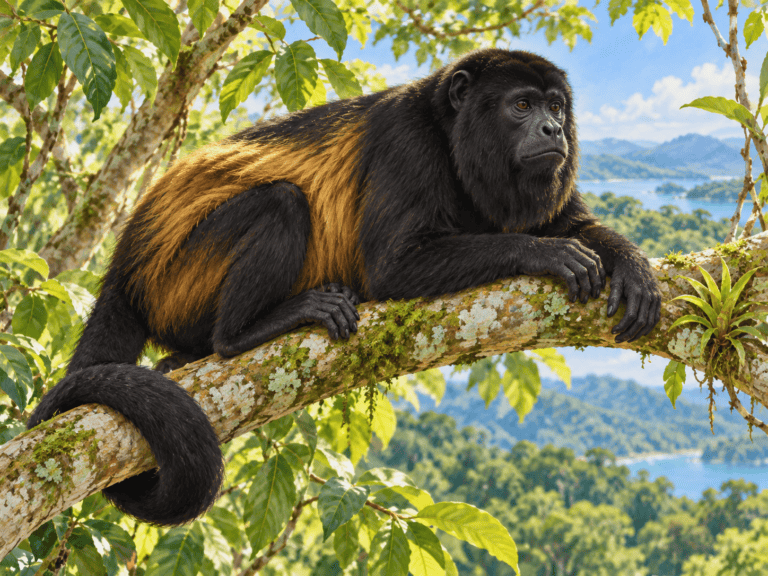
Mantled Howler Monkey

Spanish name
Mono congo / Mono aullador
Scientific name
Alouatta palliata

What Do Pico & Tati Think?

Pico: “We heard the monkeys before we could see them!”

Tati: “Let’s stay quiet and see what they’re doing in the branches.”

Identification

Key Features of the Mantled Howler Monkey

  • A mostly dark coat with a lighter mantle along the sides.

  • A long, grasping tail used while moving through trees.

  • Deep calls that may carry beyond the visible group.

Habitat & range

Tropical forest canopy and wooded corridors. Around the estuary, observe canopy habitat from a guided route rather than following animals into the forest.

Seasonal Calendar

Breeding

General species biology; local schedule unverified

Year-round

Mantled howlers breed throughout the year. Species-level biology, not a schedule of births in a particular troop.

Event source ↗

Conservation & care

Never offer food or try to touch a monkey. Avoid playback and shouting, and give groups space to move through the canopy.

View full profile →

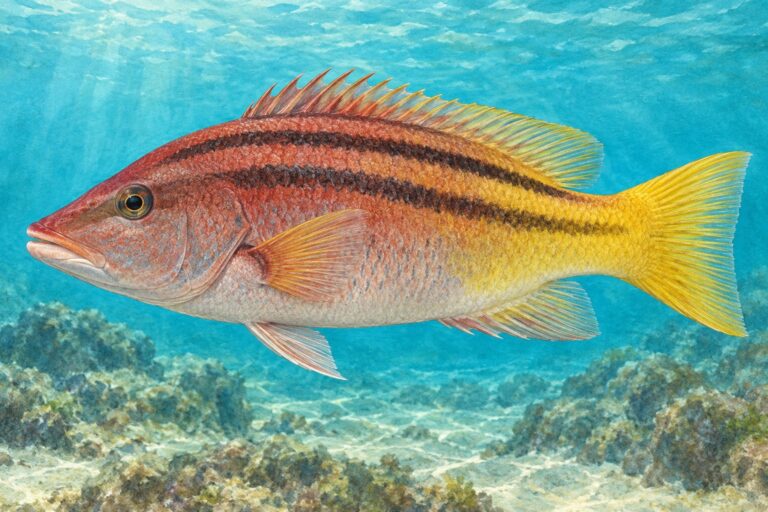
Nature Field Guide

Mexican Hogfish

Spanish name
Vieja mexicana
Scientific name
Bodianus diplotaenia

What Do Pico & Tati Think?

Pico: “Its tail looks dipped in yellow!”

Tati: “The stripes and sturdy body help us recognize this color phase.”

Identification

Key Features of the Mexican Hogfish

  • Robust wrasse body

  • Two dark stripes in initial phase

  • Yellow tail in initial phase

Habitat & range

Pacific rocky reefs and nearby coastal marine habitats. Check the linked species reference for its wider range.

Conservation & care

Observe with a qualified guide. Do not feed, chase or handle fish. Keep fins off the reef and take all litter home.

Threats & pressures

Habitat damage and degraded water quality are pressures to prevent in coastal fish habitats. This profile does not quantify a local decline.

View full profile →

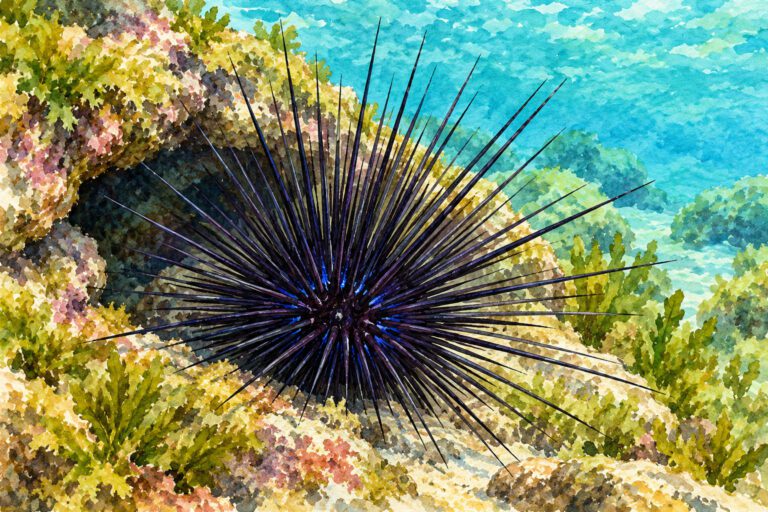
Nature Field Guide

Mexican Long-spined Sea Urchin

Spanish name
Erizo de espinas largas
Scientific name
Diadema mexicanum

What Do Pico & Tati Think?

Long spines make a striking silhouette. Pico draws the shape from a distance while Tati notices the shelter around it.

Identification

Key Features of the Mexican Long-spined Sea Urchin

  • Long thin spines extending beyond the body

  • A shelter or opening among rocks may be nearby

  • A silhouette is a clue, not a complete species identification

Habitat & range

Suitable underwater coastal habitat. Use a permitted guided snorkeling or viewing activity appropriate to your family; do not enter the sea just to find this animal.

Conservation & care

Watch without touching, lifting, feeding or collecting. Keep fingers and equipment away from spines and other surface structures. Leave the animal submerged and its habitat undisturbed.

View full profile →

Nature Field Guide

Mottled Shore Crab

Spanish name
Cangrejo costero moteado
Scientific name
Pachygrapsus transversus

What Do Pico & Tati Think?

Pico waits for a small movement between rocks. Tati records the difference between a hiding place and a feeding place.

Identification

Key Features of the Mottled Shore Crab

  • A small crab on rocky shore

  • Look for movement near existing crevices

  • Use a verified photograph to compare markings and body proportions

Habitat & range

Rocky shore and naturally visible tidal habitat. Choose a permitted observation point with an adult; do not turn rocks or reach into holes.

Conservation & care

Give claws and burrow entrances space. Do not handle, feed, chase or collect crabs. Leave rocks and shells where they are, and follow your adult’s route and local signs.

View full profile →

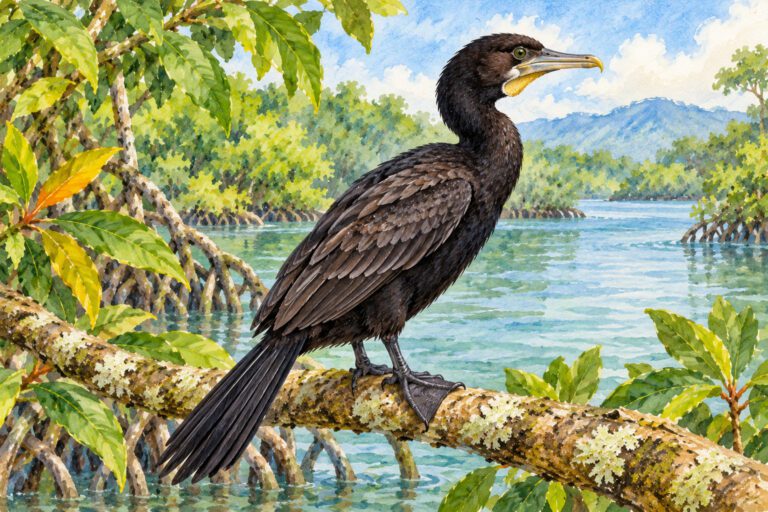
Nature Field Guide

Neotropic Cormorant

Spanish name
Cormorán neotropical
Scientific name
Nannopterum brasilianum

What Do Pico & Tati Think?

Pico watches a dark swimmer vanish below the surface. Tati looks for its hooked bill when it returns.

Identification

Key Features of the Neotropic Cormorant

  • Dark body and long tail

  • Slender neck

  • Bill with a hooked tip

  • Often dives from the water surface

Habitat & range

Look across sheltered wetlands, lagoons and river margins from permitted trails or a responsible guided boat trip.

Conservation & care

Give feeding and resting birds space. If a bird stops feeding, repeatedly looks at you or moves away, increase your distance. Keep dogs away from flocks, avoid playback and feeding, and leave nests and natural shoreline debris undisturbed.

View full profile →

Nature Field Guide

Olive Ridley Sea Turtle

Spanish name
Tortuga lora
Scientific name
Lepidochelys olivacea

What Do Pico & Tati Think?

Pico: “This turtle has plates on its shell.”

Tati: “Comparing different turtles helps us notice the features that tell them apart.”

Identification

Key Features of the Olive Ridley Sea Turtle

  • An olive or gray-green hard shell.

  • A heart-shaped upper shell with visible plates.

  • A relatively small sea turtle compared with a leatherback.

Habitat & range

Tropical ocean waters, coastal habitats and nesting beaches. The species is recorded by SINAC for Las Baulas.

Seasonal Calendar

Nesting events

Ostional National Wildlife Refuge

Year-round

Ostional reference, not a Tamarindo calendar: arribadas occur across the year, not continuously or on fixed dates. SINAC notes dry-season months may have none and rainy-season months may have multiple events. Confirm timing with the refuge.

Event source ↗

Conservation & care

Leave turtles, nests and hatchlings undisturbed. Respect closures and do not use lights in nesting habitat. Reduce plastic waste and report distressed wildlife to local authorities.

View full profile →

Nature Field Guide

Orangeside Triggerfish

Spanish name
Chancho de costado naranja
Scientific name
Sufflamen verres

What Do Pico & Tati Think?

Pico: “Its lower side is orange!”

Tati: “The yellow mark below the mouth helps us compare triggerfish.”

Identification

Key Features of the Orangeside Triggerfish

  • Brown back and orange lower side

  • Yellow diagonal lower-head mark

  • Deep triggerfish body

Habitat & range

Pacific rocky reefs and nearby coastal marine habitats. Check the linked species reference for its wider range.

Conservation & care

Keep clear of tail-base structures and strong jaws. Observe with a qualified guide. Do not feed, chase or handle fish. Keep fins off the reef and take all litter home.

Threats & pressures

Habitat damage and degraded water quality are pressures to prevent in coastal fish habitats. This profile does not quantify a local decline.

View full profile →

Nature Field Guide

Osprey

Spanish name
Águila pescadora
Scientific name
Pandion haliaetus

What Do Pico & Tati Think?

Pico sees a fish hunter high above the water. Tati follows its shape with binoculars while keeping both feet on the trail.

Identification

Key Features of the Osprey

  • White head with broad dark eye stripe

  • Brown back and pale underparts

  • Hooked bill and powerful feet

  • Long angled wings in flight

Habitat & range

Scan exposed branches and the sky above fish-bearing rivers, estuaries and coastal water. Watch from a safe shore viewpoint.

Conservation & care

Give feeding and resting birds space. If a bird stops feeding, repeatedly looks at you or moves away, increase your distance. Keep dogs away from flocks, avoid playback and feeding, and leave nests and natural shoreline debris undisturbed.

View full profile →

Nature Field Guide

Pacific Chocolate Chip Sea Star

Spanish name
Estrella chocolate del Pacífico
Scientific name
Nidorellia armata

What Do Pico & Tati Think?

Those bumps might remind Pico of chocolate chips, but this star is a living animal. Tati’s rule is simple: look closely and leave it in the water.

Identification

Key Features of the Pacific Chocolate Chip Sea Star

  • A broad star-shaped outline

  • Conspicuous raised knobs on the upper surface

  • Check Nidorellia armata rather than relying on the common name alone

Habitat & range

Suitable underwater coastal habitat. Use a permitted guided snorkeling or viewing activity appropriate to your family; do not enter the sea just to find this animal.

Conservation & care

Watch without touching, lifting, feeding or collecting. Keep fingers and equipment away from spines and other surface structures. Leave the animal submerged and its habitat undisturbed.

View full profile →

Nature Field Guide

Pacific Crown Conch

Spanish name
Cambute negro
Scientific name
Melongena patula

What Do Pico & Tati Think?

A heavy shell may carry a row of short shoulder spines.

Identification

Key Features of the Pacific Crown Conch

  • Large pear-like shell with a low spire.

  • Short shoulder spines may be present or absent.

  • Broad opening and a short channel at its lower end.

Habitat & range

Coastal marine bottom habitat; confirm the exact local site with a guide.

Conservation & care

Observe and photograph shells where they are. Leave living animals, occupied shells and empty shells in place. Do not pry animals from rocks, dig in mangroves or put fingers into shell openings. Explore with an adult or guide, follow site rules and stay clear of surf and slippery rocks.

View full profile →

Nature Field Guide

Pacific Cubera Snapper

Spanish name
Pargo dientón
Scientific name
Lutjanus novemfasciatus

What Do Pico & Tati Think?

Pico: “That snapper has such a strong head!”

Tati: “Let’s compare the body bars and tail with other snappers.”

Identification

Key Features of the Pacific Cubera Snapper

  • Large head and mouth

  • Olive or copper body

  • Dusky bars that may fade

Habitat & range

Pacific rocky reefs and nearby coastal marine habitats. Check the linked species reference for its wider range.

Conservation & care

Observe with a qualified guide. Do not feed, chase or handle fish. Keep fins off the reef and take all litter home.

Threats & pressures

Habitat damage and degraded water quality are pressures to prevent in coastal fish habitats. This profile does not quantify a local decline.

View full profile →

Nature Field Guide

Pacific Flower Sea Urchin

Spanish name
Erizo de flor del Pacífico
Scientific name
Toxopneustes roseus

What Do Pico & Tati Think?

A name can sound delicate even when an animal needs plenty of space. Pico and Tati admire this urchin without touching it.

Identification

Key Features of the Pacific Flower Sea Urchin

  • A rounded urchin body

  • Flower-like surface structures may be visible in a verified photograph

  • Observe the complete animal without contact

Habitat & range

Suitable underwater coastal habitat. Use a permitted guided snorkeling or viewing activity appropriate to your family; do not enter the sea just to find this animal.

Conservation & care

Watch without touching, lifting, feeding or collecting. Keep fingers and equipment away from spines and other surface structures. Leave the animal submerged and its habitat undisturbed.

View full profile →

Nature Field Guide

Pacific Ghost Crab

Spanish name
Cangrejo fantasma del Pacífico
Scientific name
Ocypode gaudichaudii

What Do Pico & Tati Think?

A tiny trail across the sand gives Pico a clue. Tati wonders whether the animal is nearby or hidden below.

Identification

Key Features of the Pacific Ghost Crab

  • A crab moving over beach sand

  • Eyes carried above the body on stalks

  • Tracks and burrows are clues but not proof of species

Habitat & range

Sandy beach above the wash of the waves. Observe tracks and any naturally visible crabs from a distance.

Conservation & care

Give claws and burrow entrances space. Do not handle, feed, chase or collect crabs. Leave rocks and shells where they are, and follow your adult’s route and local signs.

View full profile →

Nature Field Guide

Pacific Graysby

Spanish name
Cabrilla panameña
Scientific name
Cephalopholis panamensis

What Do Pico & Tati Think?

Pico: “I spotted a dark patch beside its eye!”

Tati: “Now let’s check the narrow bars and rounded tail.”

Identification

Key Features of the Pacific Graysby

  • Narrow dark vertical bars

  • Dark patch behind the eye

  • Rounded tail

Habitat & range

Pacific rocky reefs and nearby coastal marine habitats. Check the linked species reference for its wider range.

Conservation & care

Observe with a qualified guide. Do not feed, chase or handle fish. Keep fins off the reef and take all litter home.

Threats & pressures

Habitat damage and degraded water quality are pressures to prevent in coastal fish habitats. This profile does not quantify a local decline.

View full profile →

Nature Field Guide

Pacific Land Hermit Crab

Spanish name
Cangrejo ermitaño terrestre del Pacífico
Scientific name
Coenobita compressus

What Do Pico & Tati Think?

Pico calls it a traveling home. Tati remembers that an apparently empty shell may already belong to a crab.

Identification

Key Features of the Pacific Land Hermit Crab

  • A hermit crab walking on land

  • A shell carried over the abdomen

  • Visible legs and claws can retreat inside the opening

Habitat & range

Coastal vegetation and adjacent ground. Stay on established routes and do not search inside burrows.

Conservation & care

Adults are adapted to life on land. Do not place the crab in water, remove its shell, collect it or keep it as a pet. Leave coastal shelters undisturbed.

View full profile →

Nature Field Guide

Pacific Sailfish

Spanish name
Pez vela
Scientific name
Istiophorus platypterus

What Do Pico & Tati Think?

Pico: “Its fin looks like a sail!”

Tati: “That tall fin is our best first clue.”

Identification

Key Features of the Pacific Sailfish

  • A very tall sail-like first dorsal fin.

  • A long slender bill.

  • A slender blue-and-silver body.

Habitat & range

Warm Pacific marine waters, including offshore areas.

Seasonal Calendar

Regional presence

Costa Rican Pacific waters

Year-round

FECOP reports sailfish can be encountered throughout the year in Costa Rica. Concentrations vary between northern and central/southern waters. This is regional presence, not a fixed migration season.

Event source ↗

Conservation & care

Observe marine wildlife without feeding, touching or chasing it. Keep litter and discarded fishing line out of waterways. Follow qualified guides and current local rules.

Threats & pressures

Incidental capture in tuna fisheries and other fishing pressure can affect sailfish.

View full profile →

Nature Field Guide

Pacific Spiny Oyster

Spanish name
Ostión vaca
Scientific name
Spondylus limbatus

What Do Pico & Tati Think?

Ribs, spines and an irregular outline help this shell stand out.

Identification

Key Features of the Pacific Spiny Oyster

  • Irregular rounded shell with strong radial ribs.

  • Spines may be short, worn or missing.

  • Compare the hinge, inner margin and attachment area in reference photographs.

Habitat & range

Shallow marine hard substrates, especially rocks.

Conservation & care

Observe and photograph shells where they are. Leave living animals, occupied shells and empty shells in place. Do not pry animals from rocks, dig in mangroves or put fingers into shell openings. Explore with an adult or guide, follow site rules and stay clear of surf and slippery rocks.

View full profile →

Nature Field Guide

Pacific White Sea Urchin

Spanish name
Erizo blanco del Pacífico
Scientific name
Tripneustes depressus

What Do Pico & Tati Think?

Pico notices a rounded shape on the seabed. Tati wants to compare its small details with other urchins.

Identification

Key Features of the Pacific White Sea Urchin

  • A rounded body

  • Relatively short spines

  • Confirm the species with a correctly labeled reference image

Habitat & range

Suitable underwater coastal habitat. Use a permitted guided snorkeling or viewing activity appropriate to your family; do not enter the sea just to find this animal.

Conservation & care

Watch without touching, lifting, feeding or collecting. Keep fingers and equipment away from spines and other surface structures. Leave the animal submerged and its habitat undisturbed.

View full profile →

Nature Field Guide

Panama Hermit Crab

Spanish name
Cangrejo ermitaño panameño
Scientific name
Clibanarius panamensis

What Do Pico & Tati Think?

A shell can be both a clue and a hiding place. Pico and Tati practice patience while its resident decides whether to appear.

Identification

Key Features of the Panama Hermit Crab

  • Legs or claws extending from a shell

  • An animal carrying the shell as it moves

  • Check the crab’s features with a specialist reference

Habitat & range

Rocky shore and naturally visible tidal habitat. Choose a permitted observation point with an adult; do not turn rocks or reach into holes.

Conservation & care

Give claws and burrow entrances space. Do not handle, feed, chase or collect crabs. Leave rocks and shells where they are, and follow your adult’s route and local signs.

View full profile →

Nature Field Guide

Panamanian Pearl Oyster

Spanish name
Concha perla
Scientific name
Pinctada mazatlanica

What Do Pico & Tati Think?

A pearl oyster is a two-part shell animal from Pacific coastal waters.

Identification

Key Features of the Panamanian Pearl Oyster

  • Two hinged valves in a living animal.

  • Compare the hinge and outline with a pearl-oyster reference.

  • An empty valve may show a pearly interior; do not open a live oyster.

Habitat & range

Shallow coastal waters, including rocky marine habitat.

Conservation & care

Observe and photograph shells where they are. Leave living animals, occupied shells and empty shells in place. Do not pry animals from rocks, dig in mangroves or put fingers into shell openings. Explore with an adult or guide, follow site rules and stay clear of surf and slippery rocks.

View full profile →

Nature Field Guide

Panamic Fanged Blenny

Spanish name
Blenio de colmillos
Scientific name
Ophioblennius steindachneri

What Do Pico & Tati Think?

Pico: “This fish has a long, low body!”

Tati: “Its blunt head and tiny head appendages give us more clues.”

Identification

Key Features of the Panamic Fanged Blenny

  • Long dark body

  • Short blunt head

  • Small fleshy head appendages

Habitat & range

Shallow Pacific rocky reefs with surge; observe from a safe guided route.

Conservation & care

Observe with a qualified guide. Do not feed, chase or handle fish. Keep fins off the reef and take all litter home.

Threats & pressures

Habitat damage and degraded water quality are pressures to prevent in coastal fish habitats. This profile does not quantify a local decline.

View full profile →

Nature Field Guide

Panamic Sergeant Major

Spanish name
Sargento mayor
Scientific name
Abudefduf troschelii

What Do Pico & Tati Think?

Pico: “That fish is wearing stripes!”

Tati: “Those are vertical bars. Let’s count them and check its yellow back.”

Identification

Key Features of the Panamic Sergeant Major

  • Five vertical black bars

  • Yellow upper back

  • Deep silver body and forked tail

Habitat & range

Pacific rocky reefs and nearby coastal marine habitats. Check the linked species reference for its wider range.

Conservation & care

Observe with a qualified guide. Do not feed, chase or handle fish. Keep fins off the reef and take all litter home.

Threats & pressures

Habitat damage and degraded water quality are pressures to prevent in coastal fish habitats. This profile does not quantify a local decline.

View full profile →

Nature Field Guide

Pencil Sea Urchin

Spanish name
Erizo lapicero
Scientific name
Eucidaris thouarsii

What Do Pico & Tati Think?

Why do some spines look more like pencils than needles? Pico and Tati compare photographs before trying to name an urchin.

Identification

Key Features of the Pencil Sea Urchin

  • Thick pencil-like primary spines

  • A compact body among the spines

  • Compare with Eucidaris thouarsii, not an unlabeled aquarium photograph

Habitat & range

Suitable underwater coastal habitat. Use a permitted guided snorkeling or viewing activity appropriate to your family; do not enter the sea just to find this animal.

Conservation & care

Watch without touching, lifting, feeding or collecting. Keep fingers and equipment away from spines and other surface structures. Leave the animal submerged and its habitat undisturbed.

View full profile →

Nature Field Guide

Pink Tellin

Spanish name
Almeja rosada
Scientific name
Eurytellina rubescens

What Do Pico & Tati Think?

A pink bivalve adds color to the story of Costa Rica’s tidal flats.

Identification

Key Features of the Pink Tellin

  • Two-valved clam shell with pink coloration when preserved.

  • Compare outline, hinge and both ends with an identified reference.

  • Older references use Tellina rubescens.

Habitat & range

Estuarine sand-mud flats.

Conservation & care

Observe and photograph shells where they are. Leave living animals, occupied shells and empty shells in place. Do not pry animals from rocks, dig in mangroves or put fingers into shell openings. Explore with an adult or guide, follow site rules and stay clear of surf and slippery rocks.

View full profile →

Nature Field Guide

Polished Tagelus Clam

Spanish name
Almeja Tagelus
Scientific name
Tagelus politus

What Do Pico & Tati Think?

This tidal-flat clam demonstrates how a scientific name can be updated.

Identification

Key Features of the Polished Tagelus Clam

  • A bivalve rather than a coiled snail shell.

  • Record length, height and hinge position in a reference photograph.

  • Compare with Tagelus politus, including references labeled T. bourgeoisae.

Habitat & range

Estuarine sand-mud flats.

Conservation & care

Observe and photograph shells where they are. Leave living animals, occupied shells and empty shells in place. Do not pry animals from rocks, dig in mangroves or put fingers into shell openings. Explore with an adult or guide, follow site rules and stay clear of surf and slippery rocks.

View full profile →

Nature Field Guide

Pyramid Sea Star

Spanish name
Estrella pirámide
Scientific name
Pharia pyramidata

What Do Pico & Tati Think?

How would you draw a star that belongs to the ocean? Pico starts with the outline. Tati adds the small details she notices.

Identification

Key Features of the Pyramid Sea Star

  • A star-shaped body

  • Arms extending from the center

  • Surface details best recorded with a close photograph taken without disturbance

Habitat & range

Suitable underwater coastal habitat. Use a permitted guided snorkeling or viewing activity appropriate to your family; do not enter the sea just to find this animal.

Conservation & care

Watch without touching, lifting, feeding or collecting. Keep fingers and equipment away from spines and other surface structures. Leave the animal submerged and its habitat undisturbed.

View full profile →

Nature Field Guide

Razor Surgeonfish

Spanish name
Navajón barbero
Scientific name
Prionurus laticlavius

What Do Pico & Tati Think?

Pico: “A yellow tail behind a gray body!”

Tati: “Look at the shape too. We keep our hands away from the tail base.”

Identification

Key Features of the Razor Surgeonfish

  • Gray oval body

  • Bright yellow tail

  • Bony structures at tail base

Habitat & range

Pacific rocky reefs and nearby coastal marine habitats. Check the linked species reference for its wider range.

Conservation & care

Keep clear of tail-base structures and strong jaws. Observe with a qualified guide. Do not feed, chase or handle fish. Keep fins off the reef and take all litter home.

Threats & pressures

Habitat damage and degraded water quality are pressures to prevent in coastal fish habitats. This profile does not quantify a local decline.

View full profile →

Nature Field Guide

Red Button Ginger

Spanish name
Caña agria roja
Scientific name
Costus woodsonii

What Do Pico & Tati Think?

Pico wants to sketch the plant’s shapes. Tati suggests looking for three clues before guessing its name. What would you notice first?

Identification

Key Features of the Red Button Ginger

  • Shiny red terminal cone

  • Small flowers emerging between bracts

  • Leaves spiraling along the stem

Habitat & range

Coastal scrub, beach margins and gardens.

Conservation & care

Observe from paths and leave leaves, bark, flowers and fruits attached. Do not taste wild plants or offer them to pets. Ask a knowledgeable guide to confirm the species.

View full profile →

Nature Field Guide

Red Mangrove

Spanish name
Mangle rojo
Scientific name
Rhizophora mangle

What Do Pico & Tati Think?

Red mangrove grows beside tidal water. Its arching prop roots and long propagules offer useful identification clues during a guided estuary visit.

What does Least Concern mean?

In the linked conservation assessment, this species does not qualify as threatened or near threatened with extinction. It still needs care: local populations and habitats can face problems even when the species has a lower extinction risk overall.

This label describes conservation status. It does not tell us whether a plant is safe for children or pets. Select the status button to read the assessment.

Identification

Key Features of the Red Mangrove

  • Arching prop roots extend from the trunk and branches.

  • Long, slender propagules may hang from the tree.

  • Look for the tree beside tidal or brackish water.

Habitat & range

Mangrove habitat beside tidal channels. Explore the Tamarindo estuary with a local guide who can confirm the species from several features.

Seasonal Calendar

Flowering

Panama reference population

Year-round

Panama reference: some flowers may occur at any time of year. This is general species biology, not a measured Tamarindo flowering calendar.

Event source ↗

Conservation & care

Child Safety: Not verified. Observe with an adult. Do not taste leaves, seeds, fruit or other tree parts.

Pet Safety: Not verified. Keep pets from chewing or swallowing tree parts. Check with a veterinarian before treating this species as pet-safe.

Stay in the boat or on authorized paths and follow your guide. Do not enter the water, climb on roots or collect propagules. Mangrove habitat is a shared home.

Conservation assessment

Global species assessment: Least Concern (IUCN Red List). Status checked on 7 October 2026. This category is not a guarantee that every local population or habitat is secure, and it is separate from legal protection in Costa Rica.

View full profile →

Nature Field Guide

Roseate Spoonbill

Spanish name
Espátula rosada
Scientific name
Platalea ajaja

What Do Pico & Tati Think?

Pico: “Why does its bill widen at the end?”

Tati: “Let’s watch how it moves through the water.”

Identification

Key Features of the Roseate Spoonbill

  • Pink plumage, often paler in young birds.

  • Long bill with a broad, flattened spoon tip.

  • Side-to-side bill sweeping in shallow water.

Habitat & range

Shallow wetlands around Tempisque, Rio Frio and the Gulf of Nicoya, with smaller numbers elsewhere along the Pacific coast. Rare inland or Caribbean records are not used as core regional tags.

Conservation & care

Stay on authorized trails or viewing routes. Give birds space, keep voices low and leave nests undisturbed. Observe without bait, feeding or recorded calls.

Threats & pressures

Altered wetland water conditions can affect feeding habitat. Disturbance at nesting colonies can cause abandonment; keep boats and observers at a respectful distance.

View full profile →

Nature Field Guide

Rough Periwinkle

Spanish name
Caracol litoral
Scientific name
Echinolittorina aspera

What Do Pico & Tati Think?

A tiny pointed shell can be an excellent observation challenge.

Identification

Key Features of the Rough Periwinkle

  • Small coiled shell with a pointed spire.

  • A large final whorl gives a compact outline.

  • Color and surface texture vary; use several features together.

Habitat & range

Rocky intertidal shore.

Conservation & care

Observe and photograph shells where they are. Leave living animals, occupied shells and empty shells in place. Do not pry animals from rocks, dig in mangroves or put fingers into shell openings. Explore with an adult or guide, follow site rules and stay clear of surf and slippery rocks.

View full profile →

Nature Field Guide

Rough Venus Clam

Spanish name
Almeja blanca
Scientific name
Leukoma asperrima

What Do Pico & Tati Think?

Fine crossing sculpture gives this small clam a textured surface.

Identification

Key Features of the Rough Venus Clam

  • Rounded to oval valves.

  • Radial ribs crossed by finer lines.

  • Compare intact shell sculpture and hinge with an identified reference.

Habitat & range

Documented on estuarine sand-mud flats at Punta Morales in the Gulf of Nicoya. The study supports the Puntarenas & the Gulf Islands browsing region; it does not establish a complete national range.

Conservation & care

Observe and photograph shells where they are. Leave living animals, occupied shells and empty shells in place. Do not pry animals from rocks, dig in mangroves or put fingers into shell openings. Explore with an adult or guide, follow site rules and stay clear of surf and slippery rocks.

View full profile →

Nature Field Guide

Rough-clawed Rock Crab

Spanish name
Cangrejo de roca de pinzas rugosas
Scientific name
Eriphia squamata

What Do Pico & Tati Think?

Pico notices the claws first. Tati checks the rest of the body before deciding what to write in the journal.

Identification

Key Features of the Rough-clawed Rock Crab

  • A broad carapace

  • Bumpy or rough-looking claw surfaces

  • Several features must agree for a confident identification

Habitat & range

Rocky shore and naturally visible tidal habitat. Choose a permitted observation point with an adult; do not turn rocks or reach into holes.

Conservation & care

Give claws and burrow entrances space. Do not handle, feed, chase or collect crabs. Leave rocks and shells where they are, and follow your adult’s route and local signs.

View full profile →

Nature Field Guide

Rough-ribbed Nerite

Spanish name
Burgado
Scientific name
Nerita scabricosta

What Do Pico & Tati Think?

A sturdy, dark shell with rough ridges belongs to this rocky-shore snail.

Identification

Key Features of the Rough-ribbed Nerite

  • Rounded shell with a low spire.

  • Dark gray exterior and rough spiral ribs.

  • Check the opening and overall shape against an identified reference.

Habitat & range

Upper rocky intertidal shore.

Conservation & care

Observe and photograph shells where they are. Leave living animals, occupied shells and empty shells in place. Do not pry animals from rocks, dig in mangroves or put fingers into shell openings. Explore with an adult or guide, follow site rules and stay clear of surf and slippery rocks.

View full profile →

Nature Field Guide

Royal Tern

Spanish name
Pagaza real
Scientific name
Thalasseus maximus

What Do Pico & Tati Think?

Pico notices an orange bill above the tideline. Tati sketches the crest before the tern returns to fishing.

Identification

Key Features of the Royal Tern

  • Large orange pointed bill

  • Pale gray back and white body

  • Black legs

  • Dark rear crest, with a white forehead outside breeding

Habitat & range

Scan coastal waters and undisturbed shoreline resting places from a safe public viewpoint. Keep boats and people away from nesting or resting colonies.

Conservation & care

Give feeding and resting birds space. If a bird stops feeding, repeatedly looks at you or moves away, increase your distance. Keep dogs away from flocks, avoid playback and feeding, and leave nests and natural shoreline debris undisturbed.

View full profile →

Nature Field Guide

Ruddy Turnstone

Spanish name
Vuelvepiedras rojizo
Scientific name
Arenaria interpres

What Do Pico & Tati Think?

Pico watches a little bird investigate beach debris. Tati leaves the shells exactly where they belong.

Identification

Key Features of the Ruddy Turnstone

  • Short stout slightly upturned bill

  • Orange legs

  • Stocky body and dark breast patches

  • Nonbreeding back is brown rather than bright rusty

Habitat & range

Scan exposed shoreline feeding areas and nearby resting places with binoculars. The tide changes which flats are available; remain on a safe established route.

Conservation & care

Give feeding and resting birds space. If a bird stops feeding, repeatedly looks at you or moves away, increase your distance. Keep dogs away from flocks, avoid playback and feeding, and leave nests and natural shoreline debris undisturbed.

View full profile →

Nature Field Guide

Sally Lightfoot Crab

Spanish name
Cangrejo zayapa
Scientific name
Grapsus grapsus

What Do Pico & Tati Think?

A shore crab’s careful steps can make a rocky coast feel like a busy neighborhood. Pico and Tati watch from stable ground.

Identification

Key Features of the Sally Lightfoot Crab

  • A crab on coastal rocks

  • A broad low body with legs extending sideways

  • Compare color, outline and other details together

Habitat & range

Rocky shore and naturally visible tidal habitat. Choose a permitted observation point with an adult; do not turn rocks or reach into holes.

Conservation & care

Give claws and burrow entrances space. Do not handle, feed, chase or collect crabs. Leave rocks and shells where they are, and follow your adult’s route and local signs.

View full profile →

Nature Field Guide

Scalloped Hammerhead Shark

Spanish name
Tiburón martillo común
Scientific name
Sphyrna lewini

What Do Pico & Tati Think?

Pico: “Its head is shaped like a hammer!”

Tati: “The curves and notches help us distinguish this species from other hammerheads.”

Identification

Key Features of the Scalloped Hammerhead Shark

  • A broad hammer-shaped head with a central front notch.

  • A curved, scalloped front edge to the head.

  • A streamlined body and tall first dorsal fin.

Habitat & range

Warm coastal and offshore waters, including island-associated marine habitats at Isla del Coco.

Conservation & care

Follow park rules and qualified guides. Do not feed, touch, chase or collect marine wildlife. Maintain distance and avoid contact with reef habitat.

Threats & pressures

Fishing for fins and meat, incidental capture and pressure on coastal nursery areas affect the species. Sources describe risks across its range; these are not measurements of loss at Isla del Coco.

Conservation assessment

Global IUCN category reported by the Convention on Migratory Species and Florida Museum: Critically Endangered. The linked CMS page does not provide the underlying assessment date. Checked 7 October 2026. This is not a local population count.

View full profile →

Nature Field Guide

Sea Grape

Spanish name
Uva de playa
Scientific name
Coccoloba uvifera

What Do Pico & Tati Think?

Pico wants to sketch the tree’s silhouette. Tati suggests looking for three clues before guessing its name. What would you notice first?

Identification

Key Features of the Sea Grape

  • Large rounded leathery leaves

  • Often reddish leaf veins

  • Hanging clusters of rounded fruits

Habitat & range

Coastal vegetation behind sandy beaches.

Conservation & care

Observe from paths and leave leaves, bark, flowers and fruits attached. Do not taste wild plants or offer them to pets. Ask a knowledgeable guide to confirm the species.

View full profile →

Nature Field Guide

Semipalmated Plover

Spanish name
Chorlitejo semipalmado
Scientific name
Charadrius semipalmatus

What Do Pico & Tati Think?

Pico follows a run, then a stop. Tati notices one breast band on a small round shorebird.

Identification

Key Features of the Semipalmated Plover

  • Small compact brown-and-white body

  • One dark breast band

  • Short bill and orange legs

  • Run-and-pause feeding

Habitat & range

Scan exposed shoreline feeding areas and nearby resting places with binoculars. The tide changes which flats are available; remain on a safe established route.

Conservation & care

Give feeding and resting birds space. If a bird stops feeding, repeatedly looks at you or moves away, increase your distance. Keep dogs away from flocks, avoid playback and feeding, and leave nests and natural shoreline debris undisturbed.

View full profile →

Nature Field Guide

Short-toothed Rocksnail

Spanish name
Caracol de roca
Scientific name
Acanthais brevidentata

What Do Pico & Tati Think?

This rocky-shore snail offers a chance to study the shell opening.

Identification

Key Features of the Short-toothed Rocksnail

  • A coiled shell belonging to the rocksnail family.

  • Record the shape of the spire and shell opening.

  • Use an identified Acanthais reference for species-level comparison.

Habitat & range

Rocky intertidal habitat.

Conservation & care

Observe and photograph shells where they are. Leave living animals, occupied shells and empty shells in place. Do not pry animals from rocks, dig in mangroves or put fingers into shell openings. Explore with an adult or guide, follow site rules and stay clear of surf and slippery rocks.

View full profile →

Nature Field Guide

Smooth-ribbed Mangrove Cockle

Spanish name
Piangua o conchudo
Scientific name
Anadara similis

What Do Pico & Tati Think?

This mangrove cockle resembles its knobby relative, but details differ.

Identification

Key Features of the Smooth-ribbed Mangrove Cockle

  • Oval shell with many radial ribs.

  • Generally thinner shell and rounder upper outline than A. tuberculosa.

  • Compare rib structure and outer covering in identified photographs.

Habitat & range

Pacific mangrove-associated habitat.

Conservation & care

Observe and photograph shells where they are. Leave living animals, occupied shells and empty shells in place. Do not pry animals from rocks, dig in mangroves or put fingers into shell openings. Explore with an adult or guide, follow site rules and stay clear of surf and slippery rocks.

View full profile →

Nature Field Guide

Snowy Egret

Spanish name
Garceta patiamarilla
Scientific name
Egretta thula

What Do Pico & Tati Think?

Those yellow feet catch Pico’s attention. Tati waits to see whether the bird uses them while feeding.

Identification

Key Features of the Snowy Egret

  • White body and slim black bill

  • Black legs with yellow feet

  • Often active in shallow water

Habitat & range

Scan shallow water, quiet mangrove channels and vegetated wetland margins from an established viewpoint. Follow a local guide’s directions around estuaries.

Conservation & care

Give feeding and resting birds space. If a bird stops feeding, repeatedly looks at you or moves away, increase your distance. Keep dogs away from flocks, avoid playback and feeding, and leave nests and natural shoreline debris undisturbed.

View full profile →

Nature Field Guide

Spectacled Caiman

Spanish name
Caimán de anteojos
Scientific name
Caiman crocodilus

What Do Pico & Tati Think?

Pico and Tati invite you to learn about the spectacled caiman. Compare verified caiman and American crocodile photographs. Draw the eye ridge without treating it as a field safety test.

Identification

Key Features of the Spectacled Caiman

  • Bony ridge between the eyes.

  • Armored back and muscular tail.

  • Broad crocodilian head and body.

Habitat & range

Suitable lowland freshwater wetlands, rivers and ponds in Costa Rica.

Conservation & care

Observe only from a guide-approved viewing location. Stay away from water edges, never swim or wade where crocodilians may occur, and never feed or approach one. Keep children and pets well away from banks.

View full profile →

Nature Field Guide

Spinner Dolphin

Spanish name
Delfín tornillo
Scientific name
Stenella longirostris

What Do Pico & Tati Think?

Spinner dolphins are slender dolphins with long narrow beaks.

Identification

Key Features of the Spinner Dolphin

  • Slender body and a noticeably long narrow beak.

  • Dorsal fin often triangular; shape varies with regional form.

  • Spinning leaps can occur, but behavior alone does not confirm species.

Habitat & range

Costa Rican Pacific marine waters, with locally variable distribution.

Conservation & care

Use a responsible local wildlife operator and follow site rules. Give aquatic mammals room to feed, rest and travel. Do not feed, touch, chase or enter the water to approach them. Keep waste and fishing line out of waterways.

View full profile →

Nature Field Guide

Spotted Rose Snapper

Spanish name
Pargo de la mancha
Scientific name
Lutjanus guttatus

What Do Pico & Tati Think?

Meet the fish Yeyo shares with Pico and Tati. Spotted rose snapper lives in the eastern Pacific, including Costa Rica’s coastal waters. Look for a silvery-pink body, fine slanting golden-brown stripes and a dark blotch below the dorsal fin.

This fish eats crustaceans and small fish. Researchers in Costa Rica’s Gulf of Nicoya have studied its diet and its role in local fishing. It connects an underwater food web with the meals coastal families prepare and share.

In our story, Yeyo names his catch before lunch. Tati notices the spot, and Pico learns that there is more to discover about a fish than how delicious it smells.

Identification

Key Features of the Spotted Rose Snapper

  • A moderately deep, oval body with a silvery-pink sheen.

  • Fine oblique golden-brown stripes along the sides.

  • A prominent dark blotch high on the side beneath the dorsal fin; the mark can change in intensity.

  • A continuous dorsal fin and a nearly straight or slightly indented tail.

Habitat & range

Pacific coastal waters, including sandy bays and reef-associated habitats. Young fish often use shallow sandy bays.

Conservation & care

Keep fishing line and plastic out of the sea. Observe fish without feeding or chasing them. If your family fishes, follow current local rules and learn from a responsible local fisher.

View full profile →

Nature Field Guide

Spotted Sandpiper

Spanish name
Andarríos maculado
Scientific name
Actitis macularius

What Do Pico & Tati Think?

Pico looks for spots but finds a plain white belly. Tati learns that the name does not describe every season.

Identification

Key Features of the Spotted Sandpiper

  • Brown back and white underparts

  • Frequent tail bobbing

  • Short straight bill

  • Belly spots may be absent outside breeding

Habitat & range

Scan exposed shoreline feeding areas and nearby resting places with binoculars. The tide changes which flats are available; remain on a safe established route.

Conservation & care

Give feeding and resting birds space. If a bird stops feeding, repeatedly looks at you or moves away, increase your distance. Keep dogs away from flocks, avoid playback and feeding, and leave nests and natural shoreline debris undisturbed.

View full profile →

Nature Field Guide

Spotted Sharpnose Puffer

Spanish name
Tamboril bonito
Scientific name
Canthigaster punctatissima

What Do Pico & Tati Think?

Pico: “That puffer has a tiny pointed nose!”

Tati: “Let’s compare its pale dots and snout with other puffers.”

Identification

Key Features of the Spotted Sharpnose Puffer

  • Pointed snout

  • Dense pale blue-white dots

  • Small fins near the rear

Habitat & range

Pacific rocky reefs and nearby coastal marine habitats. Check the linked species reference for its wider range.

Conservation & care

Never touch, collect, eat or deliberately inflate puffers or porcupinefish. Observe with a qualified guide. Do not feed, chase or handle fish. Keep fins off the reef and take all litter home.

Threats & pressures

Habitat damage and degraded water quality are pressures to prevent in coastal fish habitats. This profile does not quantify a local decline.

View full profile →

Nature Field Guide

Starry Grouper

Spanish name
Cabrilla pinta
Scientific name
Epinephelus labriformis

What Do Pico & Tati Think?

Pico: “It looks covered in stars!”

Tati: “The white patches and dark tail-base saddle help identify it.”

Identification

Key Features of the Starry Grouper

  • Olive body with white marks

  • Black saddle on upper tail base

  • Rounded tail and broad mouth

Habitat & range

Pacific rocky reefs and nearby coastal marine habitats. Check the linked species reference for its wider range.

Conservation & care

Observe with a qualified guide. Do not feed, chase or handle fish. Keep fins off the reef and take all litter home.

Threats & pressures

Habitat damage and degraded water quality are pressures to prevent in coastal fish habitats. This profile does not quantify a local decline.

View full profile →

Nature Field Guide

Striped Marlin

Spanish name
Marlín rayado
Scientific name
Kajikia audax

What Do Pico & Tati Think?

Pico: “I can see blue stripes along its sides!”

Tati: “We should check the shape too—other marlin can show stripes.”

Identification

Key Features of the Striped Marlin

  • A long bill and streamlined body.

  • Vertical blue bars that may vary in intensity.

  • A tall front portion of the first dorsal fin.

Habitat & range

Tropical and subtropical Pacific and Indian Ocean waters.

Seasonal Calendar

Regional presence

Costa Rican offshore waters

Year-round

FECOP reports striped marlin throughout the year in Costa Rican offshore waters. No fixed Tamarindo migration or spawning calendar is established here.

Event source ↗

Conservation & care

Observe marine wildlife without feeding, touching or chasing it. Keep litter and discarded fishing line out of waterways. Follow qualified guides and current local rules.

Threats & pressures

Striped marlin are caught incidentally in pelagic longline fisheries. Fishing pressure differs between assessed Pacific stocks.

View full profile →

Nature Field Guide

Swordfish

Spanish name
Pez espada
Scientific name
Xiphias gladius

What Do Pico & Tati Think?

Pico: “Its bill looks like a sword!”

Tati: “It is flatter and broader than a marlin’s bill.”

Identification

Key Features of the Swordfish

  • A long broad, flattened sword-like bill.

  • A dark upper body and lighter underside.

  • A streamlined body with a crescent-shaped tail.

Habitat & range

Open-ocean surface and deeper waters.

Conservation & care

Observe marine wildlife without feeding, touching or chasing it. Keep litter and discarded fishing line out of waterways. Follow qualified guides and current local rules.

Threats & pressures

Commercial and recreational fishing affect swordfish. Managing this migratory species requires international cooperation; assessments vary by stock.

View full profile →

Nature Field Guide

Threebanded Butterflyfish

Spanish name
Mariposa de tres bandas
Scientific name
Chaetodon humeralis

What Do Pico & Tati Think?

Pico: “It looks as thin as a leaf!”

Tati: “Its flattened body and three dark bands give us clues.”

Identification

Key Features of the Threebanded Butterflyfish

  • Flattened oval body

  • Three dark body and head bands

  • Small pointed mouth

Habitat & range

Pacific rocky reefs and nearby coastal marine habitats. Check the linked species reference for its wider range.

Conservation & care

Observe with a qualified guide. Do not feed, chase or handle fish. Keep fins off the reef and take all litter home.

Threats & pressures

Habitat damage and degraded water quality are pressures to prevent in coastal fish habitats. This profile does not quantify a local decline.

View full profile →

Nature Field Guide

Tiger Shark

Spanish name
Tiburón tigre
Scientific name
Galeocerdo cuvier

What Do Pico & Tati Think?

Pico: “Those stripes explain its name!”

Tati: “They can fade as the shark grows, so shape matters too.”

Identification

Key Features of the Tiger Shark

  • Dark bars or spots, clearest in younger sharks.

  • A broad, blunt snout.

  • A large gray body with a pale underside.

Habitat & range

Warm coastal and offshore seas.

Conservation & care

Observe marine wildlife without feeding, touching or chasing it. Keep litter and discarded fishing line out of waterways. Follow qualified guides and current local rules.

Threats & pressures

Fishing and incidental capture can affect tiger sharks. Marine litter also matters because this predator may swallow floating rubbish.

View full profile →

Nature Field Guide

Tricolored Heron

Spanish name
Garceta tricolor
Scientific name
Egretta tricolor

What Do Pico & Tati Think?

Pico follows a quick turn in the shallows. Tati notices the white belly beneath the darker neck.

Identification

Key Features of the Tricolored Heron

  • Dark blue-gray upperparts

  • White belly and pale front-neck stripe

  • Long slim bill and lively feeding movements

Habitat & range

Scan shallow water, quiet mangrove channels and vegetated wetland margins from an established viewpoint. Follow a local guide’s directions around estuaries.

Conservation & care

Give feeding and resting birds space. If a bird stops feeding, repeatedly looks at you or moves away, increase your distance. Keep dogs away from flocks, avoid playback and feeding, and leave nests and natural shoreline debris undisturbed.

View full profile →

Nature Field Guide

Tropical Almond

Spanish name
Almendro de playa
Scientific name
Terminalia catappa

What Do Pico & Tati Think?

Pico wants to sketch the tree’s silhouette. Tati suggests looking for three clues before guessing its name. What would you notice first?

Identification

Key Features of the Tropical Almond

  • Tiered horizontal branches

  • Large broad leaves narrowing toward the base

  • Flattened oval fruits

Habitat & range

Coastal strands and planted shade areas.

Conservation & care

Observe from paths and leave leaves, bark, flowers and fruits attached. Do not taste wild plants or offer them to pets. Ask a knowledgeable guide to confirm the species.

View full profile →

Nature Field Guide

West Indian Manatee

Spanish name
Manatí del Caribe
Scientific name
Trichechus manatus

What Do Pico & Tati Think?

The West Indian manatee is a large aquatic mammal with a rounded paddle-shaped tail and a whiskered muzzle.

Identification

Key Features of the West Indian Manatee

  • Large rounded body with gray skin.

  • Blunt whiskered muzzle and two front flippers.

  • Broad rounded paddle tail, without a dolphin's split flukes or dorsal fin.

Habitat & range

Caribbean waterways and wetlands, including Tortuguero.

Conservation & care

Use a responsible local wildlife operator and follow site rules. Give aquatic mammals room to feed, rest and travel. Do not feed, touch, chase or enter the water to approach them. Keep waste and fishing line out of waterways.

Conservation assessment

Global species-level IUCN category reported by Mammal Diversity Database, checked October 2026. Subspecies and national categories can differ.

View full profile →

Nature Field Guide

Western Sandpiper

Spanish name
Correlimos occidental
Scientific name
Calidris mauri

What Do Pico & Tati Think?

A tiny gray bird makes Pico slow down. Tati learns that some identifications deserve a question mark.

Identification

Key Features of the Western Sandpiper

  • Very small gray-and-white nonbreeding bird

  • Fine dark bill often slightly downcurved

  • Dark legs

  • Compare carefully with other small sandpipers

Habitat & range

Scan exposed shoreline feeding areas and nearby resting places with binoculars. The tide changes which flats are available; remain on a safe established route.

Conservation & care

Give feeding and resting birds space. If a bird stops feeding, repeatedly looks at you or moves away, increase your distance. Keep dogs away from flocks, avoid playback and feeding, and leave nests and natural shoreline debris undisturbed.

View full profile →

Nature Field Guide

Whale Shark

Spanish name
Tiburón ballena
Scientific name
Rhincodon typus

What Do Pico & Tati Think?

Pico: “A shark with spots—and such a wide mouth!”

Tati: “It is a fish, even though its name includes whale.”

Identification

Key Features of the Whale Shark

  • Pale spots and bars across a darker body.

  • A broad, flattened head with a wide front-facing mouth.

  • A very large body with ridges along the sides.

Habitat & range

Tropical and warm marine waters, including offshore feeding areas. Scientific records connect the species to Isla del Coco.

Conservation & care

Follow park rules and qualified guides. Do not feed, touch, chase or collect marine wildlife. Maintain distance and avoid contact with reef habitat.

Threats & pressures

Fisheries and incidental capture, vessel strikes and poorly managed wildlife tourism can affect whale sharks. Threats vary by location.

Conservation assessment

IUCN global assessment dated 31 March 2025, published 2025: Endangered (A2bd). This global assessment is separate from any local count or legal protection in Costa Rica.

View full profile →

Nature Field Guide

White Ibis

Spanish name
Ibis blanco
Scientific name
Eudocimus albus

What Do Pico & Tati Think?

Pico: “Its bill curves down like a little hook.”

Tati: “I wonder what we can learn by watching how it searches for food.”

Identification

Key Features of the White Ibis

  • A long, downward-curving bill.

  • Adults have white plumage with black wing tips.

  • Reddish legs and bill on adults; younger birds are brown and white.

Habitat & range

Strongest around the Tempisque basin and Gulf of Nicoya, with seasonal occurrence in Rio Frio and local Pacific wetlands. Rare scattered records elsewhere are not used to populate every region.

Conservation & care

Keep enough distance that birds continue their natural activity. Stay out of nesting and roosting areas.

View full profile →

Nature Field Guide

White Mangrove

Spanish name
Mangle blanco
Scientific name
Laguncularia racemosa

What Do Pico & Tati Think?

Pico: “Rounded leaves and two tiny stalk glands are useful mangrove clues.”

Tati: “Let’s notice the leaves, flowers and habitat without disturbing the plant.”

Identification

Key Features of the White Mangrove

  • Opposite rounded leaves

  • Two small glands on the leaf stalk

  • Clusters of small ribbed fruits

Habitat & range

Coastal estuaries and mangrove margins; documented Pacific sites include Guanacaste and Tivives. Gandoca provides a documented Caribbean example.

Conservation & care

Stay on permitted paths or boardwalks with an adult. Do not break twigs, remove propagules or walk through mangrove roots and tidal mud.

Threats & pressures

Protect suitable habitat, mature trees and natural regeneration. Avoid trampling, unauthorized clearing and collection.

View full profile →

Nature Field Guide

Whitetip Reef Shark

Spanish name
Tiburón punta blanca de arrecife
Scientific name
Triaenodon obesus

What Do Pico & Tati Think?

Pico: “Its fins have little white tips!”

Tati: “We need to compare its whole shape, because other sharks can have white markings too.”

Identification

Key Features of the Whitetip Reef Shark

  • White tips on the first dorsal fin and upper tail fin.

  • A slender gray-brown body.

  • May rest on the bottom in reef shelter.

Habitat & range

Reefs and sheltered bottom habitats. The Isla del Coco connection is supported by park and research records.

Conservation & care

Follow park rules and qualified guides. Do not feed, touch, chase or collect marine wildlife. Maintain distance and avoid contact with reef habitat.

View full profile →

Nature Field Guide

Willet

Spanish name
Pigüilo o playero aliblanco
Scientific name
Tringa semipalmata

What Do Pico & Tati Think?

Pico sees a plain gray shorebird. Tati learns that a bird can reveal a surprising pattern when it takes flight on its own.

Identification

Key Features of the Willet

  • Sturdy long straight bill

  • Long grayish legs

  • Plain gray nonbreeding body

  • Bold black-and-white wings in natural flight

Habitat & range

Scan exposed shoreline feeding areas and nearby resting places with binoculars. The tide changes which flats are available; remain on a safe established route.

Conservation & care

Give feeding and resting birds space. If a bird stops feeding, repeatedly looks at you or moves away, increase your distance. Keep dogs away from flocks, avoid playback and feeding, and leave nests and natural shoreline debris undisturbed.

View full profile →

Nature Field Guide

Wood Stork

Spanish name
Cigüeñón
Scientific name
Mycteria americana

What Do Pico & Tati Think?

Pico spots a tall white bird with a very different head. Tati checks its heavy bill before comparing it with the egrets.

Identification

Key Features of the Wood Stork

  • White body with black flight feathers

  • Bare dark adult head

  • Heavy slightly curved bill

  • Long legs

Habitat & range

Look across sheltered wetlands, lagoons and river margins from permitted trails or a responsible guided boat trip.

Conservation & care

Give feeding and resting birds space. If a bird stops feeding, repeatedly looks at you or moves away, increase your distance. Keep dogs away from flocks, avoid playback and feeding, and leave nests and natural shoreline debris undisturbed.

View full profile →

Nature Field Guide

Wrinkled Penshell

Spanish name
Concha abanico
Scientific name
Pinna rugosa

What Do Pico & Tati Think?

A long, fan-like penshell lives partly buried in the bottom.

Identification

Key Features of the Wrinkled Penshell

  • Long shell that widens away from a pointed end.

  • Two valves make up the whole shell.

  • Wrinkled or ribbed surfaces should be compared with a reference.

Habitat & range

Muddy bay bottoms, including areas influenced by mangrove tidal flow.

Conservation & care

Observe and photograph shells where they are. Leave living animals, occupied shells and empty shells in place. Do not pry animals from rocks, dig in mangroves or put fingers into shell openings. Explore with an adult or guide, follow site rules and stay clear of surf and slippery rocks.

View full profile →

Nature Field Guide

Yellow Snapper

Spanish name
Pargo amarillo
Scientific name
Lutjanus argentiventris

What Do Pico & Tati Think?

Pico: “This snapper looks red and yellow!”

Tati: “Look below its eye for another small color clue.”

Identification

Key Features of the Yellow Snapper

  • Red front and yellow rear

  • Blue mark below the eye

  • Strong snapper body

Habitat & range

Pacific rocky reefs and nearby coastal marine habitats. Check the linked species reference for its wider range.

Conservation & care

Observe with a qualified guide. Do not feed, chase or handle fish. Keep fins off the reef and take all litter home.

Threats & pressures

Habitat damage and degraded water quality are pressures to prevent in coastal fish habitats. This profile does not quantify a local decline.

View full profile →

Nature Field Guide

Yellow-bellied Sea Snake

Spanish name
Serpiente marina de vientre amarillo
Scientific name
Hydrophis platurus

What Do Pico & Tati Think?

Pico and Tati invite you to discover a reptile adapted to ocean life. Use a reference illustration to compare its swimming tail with the tail of a land snake.

Identification

Key Features of the Yellow-bellied Sea Snake

  • Dark back and yellow underside, usually separated along the length of the body.

  • Flattened, paddle-shaped tail, often with contrasting dark markings.

  • Small head and slender neck; patterns vary between individuals.

Habitat & range

Pacific marine waters off Costa Rica, including coastal and offshore waters. A mostly yellow population occurs in the inner Golfo Dulce.

Conservation & care

Venomous. Never touch, catch or move a sea snake, including one washed onto a beach or appearing dead. Keep children and pets away, step back and tell an adult or trained guide. Do not attempt to return it to the water. Do not use color patterns to decide whether any snake is safe.

View full profile →

Nature Field Guide

Yellow-crowned Night-Heron

Spanish name
Martinete cabecipinto
Scientific name
Nyctanassa violacea

What Do Pico & Tati Think?

Pico reads the word night and expects an invisible bird. Tati learns that feeding can also happen in daylight.

Identification

Key Features of the Yellow-crowned Night-Heron

  • Adult gray body

  • Dark face with pale cheek and crown

  • Heavy dark bill

  • Juveniles are brown and spotted

Habitat & range

Scan shallow water, quiet mangrove channels and vegetated wetland margins from an established viewpoint. Follow a local guide’s directions around estuaries.

Conservation & care

Give feeding and resting birds space. If a bird stops feeding, repeatedly looks at you or moves away, increase your distance. Keep dogs away from flocks, avoid playback and feeding, and leave nests and natural shoreline debris undisturbed.

View full profile →

Nature Field Guide

Yellowfin Tuna

Spanish name
Atún aleta amarilla
Scientific name
Thunnus albacares

What Do Pico & Tati Think?

Pico: “Its fins are bright yellow!”

Tati: “Its streamlined shape gives us a clue about life in open water.”

Identification

Key Features of the Yellowfin Tuna

  • A streamlined, torpedo-shaped body.

  • Metallic dark blue upper body with a lighter underside.

  • Bright yellow fins and finlets; larger adults may have elongated dorsal and anal fins.

Habitat & range

Tropical and subtropical open-ocean waters. The offshore Costa Rican connection is supported by SINAC’s Isla del Coco information.

Seasonal Calendar

Regional presence

Costa Rican pelagic waters

Year-round

FECOP’s good-practice guide reports year-round presence in Costa Rican pelagic waters. Migratory schools move between areas; regional presence does not imply residence of one school.

Event source ↗

Conservation & care

Follow park rules and qualified guides. Do not feed, touch, chase or collect marine wildlife. Maintain distance and avoid contact with reef habitat.

Protection & recovery

NOAA summarizes the Eastern Pacific stock as not overfished and not subject to overfishing based on a 2023 stock assessment. This describes a regional fishery stock, not a Costa Rican endangered-species designation or proof of local recovery.

View full profile →

learning adventuresLearning Adventures into the Animal World

Why do sea turtles return to the beach? How does a sloth spend its day? What brings butterflies to a garden?

Explore Learning Adventures that turn questions into discoveries. Get to know different animals, learn about their habitats, and uncover the connections that bring nature to life.

explore the coastExplore Coastal Towns and Hidden Discoveries

From Pacific shores to Caribbean beaches, Costa Rica’s coastal communities offer a window into life beside the sea. Discover sandy bays, rocky tide pools and mangrove estuaries. Learn how ocean life and local traditions connect these special places.

Follow Pico and Tati to explore the coast one town at a time. Find nearby Nature discoveries, family adventures and simple ways to care for the shores you visit.

My Tico Explorer Experience

Save nature, towns, discoveries and learning adventures for your next experience.

Your list stays in this browser on this device.