Tico Explorers

Nature Field Guide

Tropical Rainforest

Explore wildlife, plants and trees. Learn what to look for and where to find them.

All Nature

140 profiles

Nature Field Guide

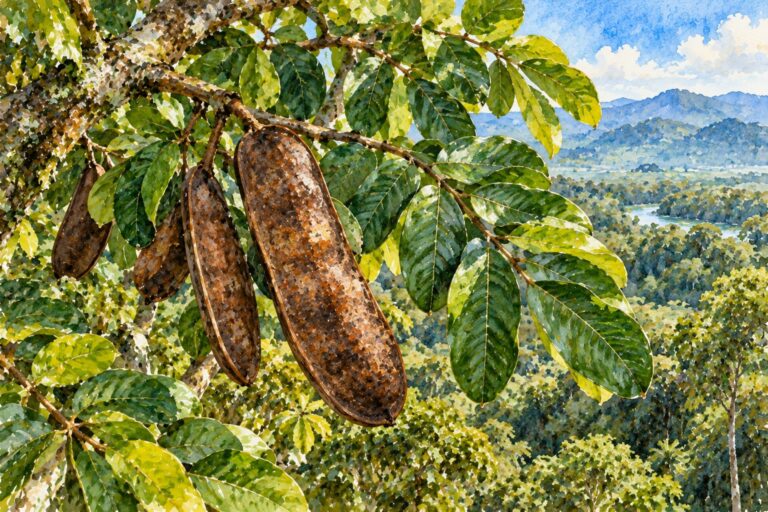
Almendro de Rio

Spanish name
Almendro de río / Almendro de montaña
Scientific name
Andira inermis

What Do Pico & Tati Think?

Pico: “Purple flower clusters stand out against a dense green crown.”

Tati: “Let’s notice the leaves, flowers and habitat without disturbing the plant.”

Identification

Key Features of the Almendro de Rio

  • Pinnate compound leaves

  • Clusters of lavender-purple flowers

  • Oval fruits and a dense leafy crown

Habitat & range

Dry and humid forests across both slopes, including Guanacaste, Nicoya, the Central Valley, Caribbean lowlands and Osa.

Conservation & care

Explore with an adult on permitted paths. Observe and photograph without picking leaves, flowers or fruits. Do not taste plants or let pets chew them. Avoid climbing trees and disturbing roots, seedlings or visiting wildlife.

Threats & pressures

Protect suitable habitat, mature trees and natural regeneration. Avoid trampling, unauthorized clearing and collection.

View full profile →

Nature Field Guide

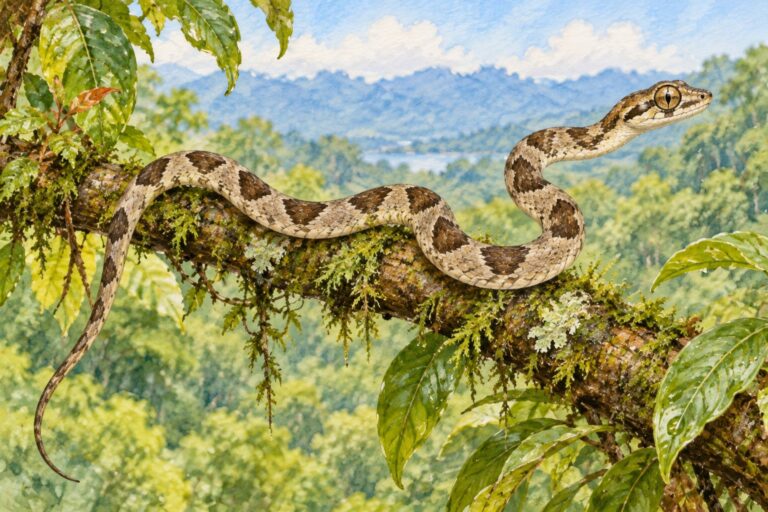
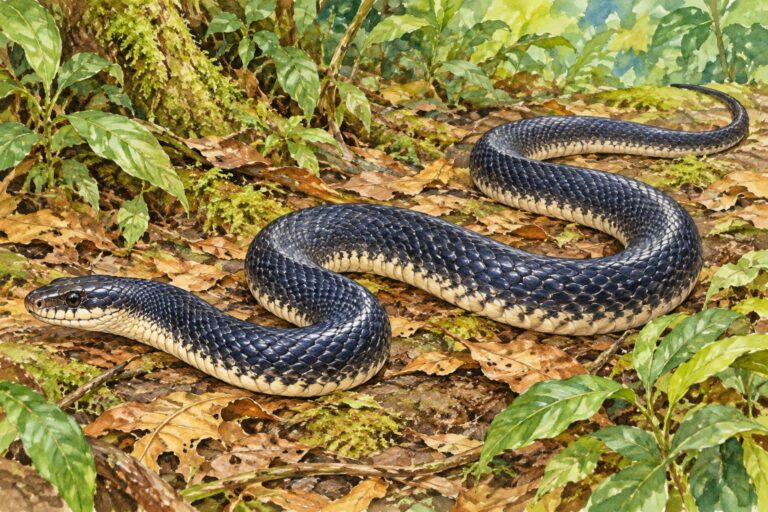
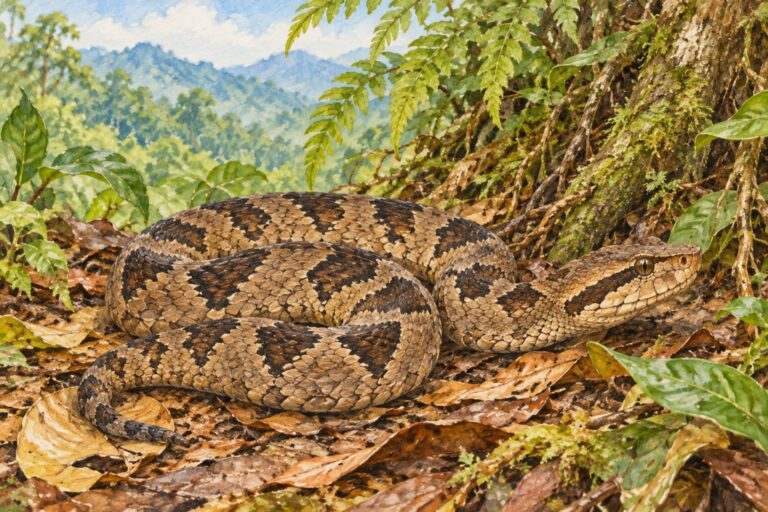
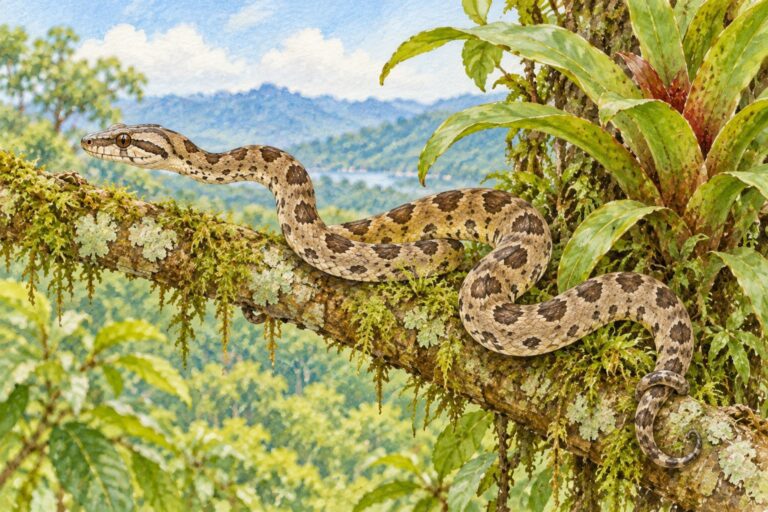
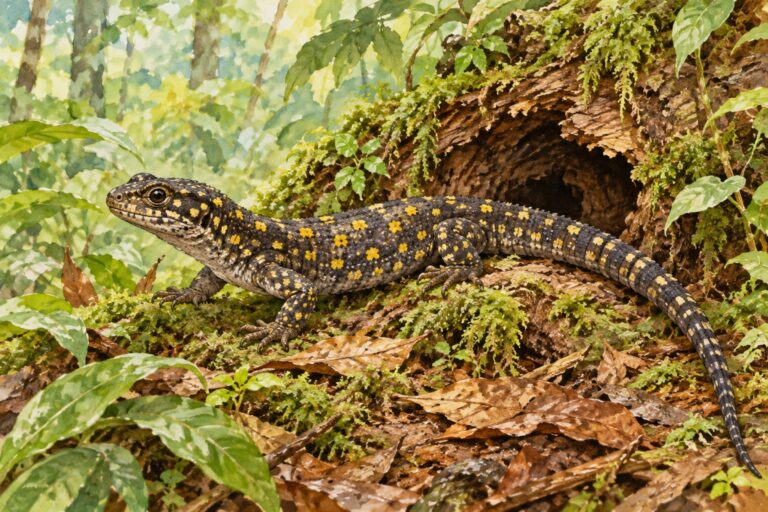
American Snail-eater

Spanish name
Caracolera articulada
Scientific name
Dipsas articulata

What Do Pico & Tati Think?

Pico: “What helps this reptile fit into its habitat?”

Tati: “Let’s look at its shape, colors and surroundings while giving it plenty of space.”

Identification

Key Features of the American Snail-eater

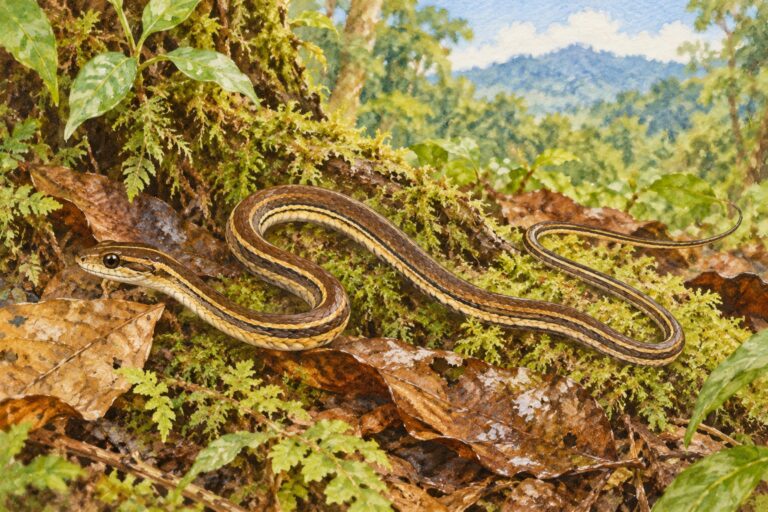
  • Slender body and narrow neck

  • Relatively large head and eyes

  • Dark blotches on a lighter background

Habitat & range

Humid forest and foothill vegetation on the Caribbean slope and in southwestern Costa Rica.

Conservation & care

Observe from a distance with an adult or qualified guide. Do not touch, catch, corner, feed or move any snake. Keep children and pets away. Colors, head shape and pupil shape must never be used to decide a snake is safe.

Threats & pressures

Protect connected habitat and natural shelters. Avoid collection, unnecessary clearing and deliberate killing. Leave wildlife in place and support responsible observation.

View full profile →

Nature Field Guide

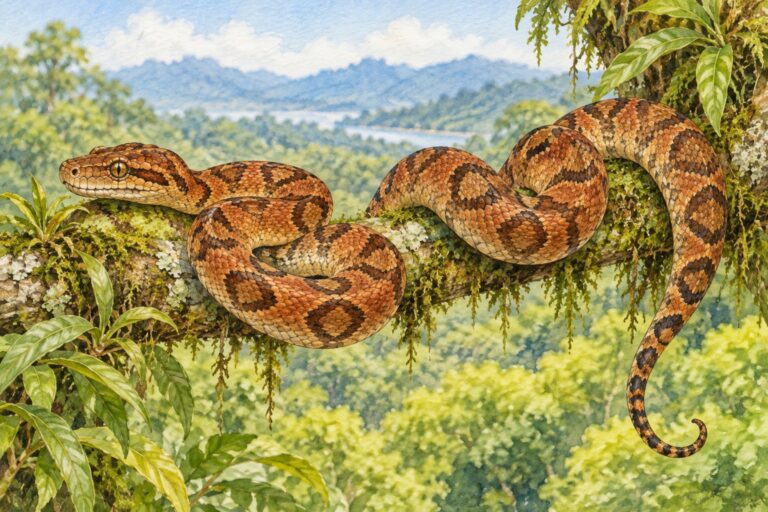
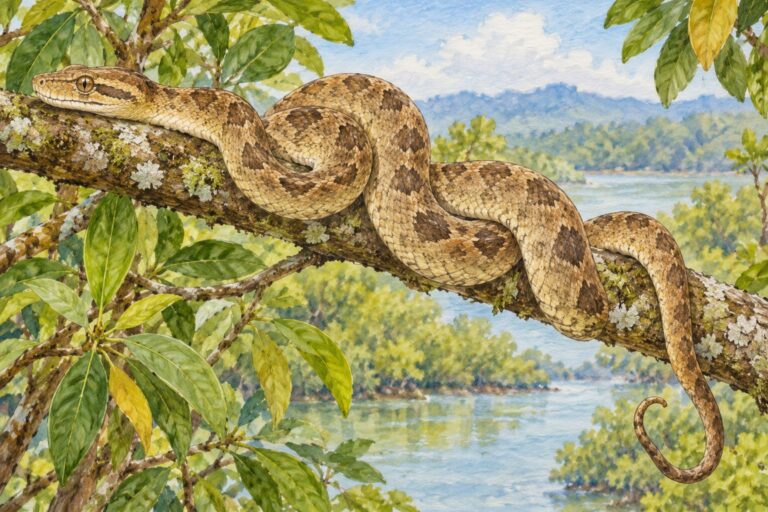
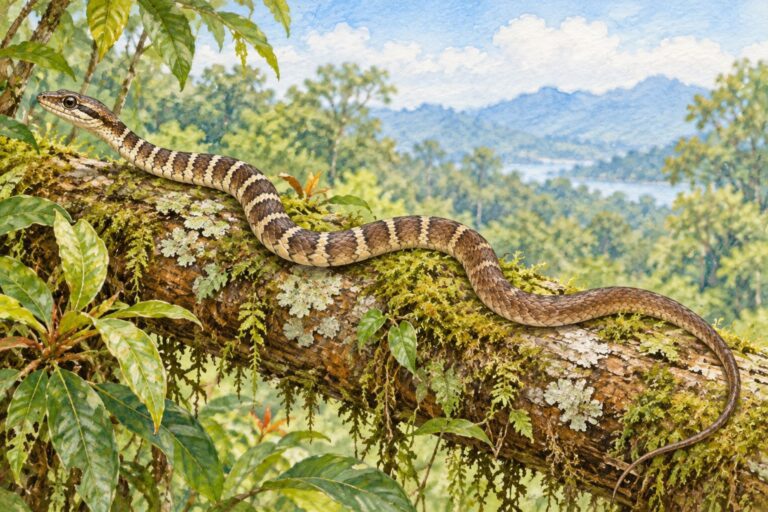
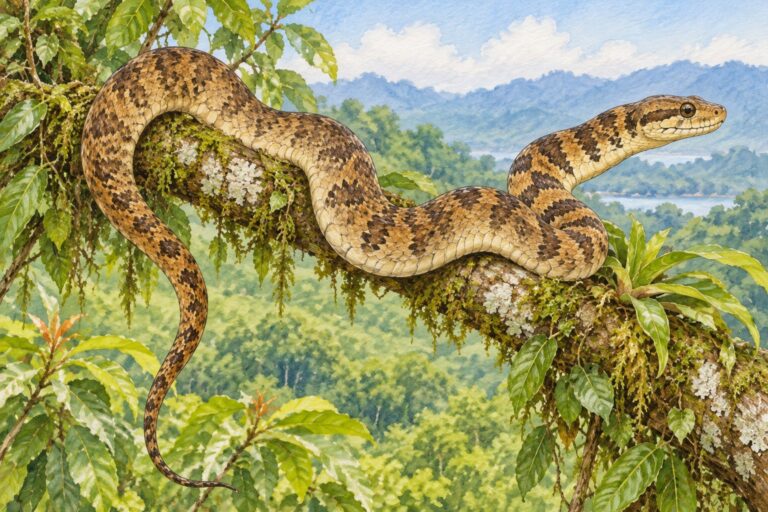
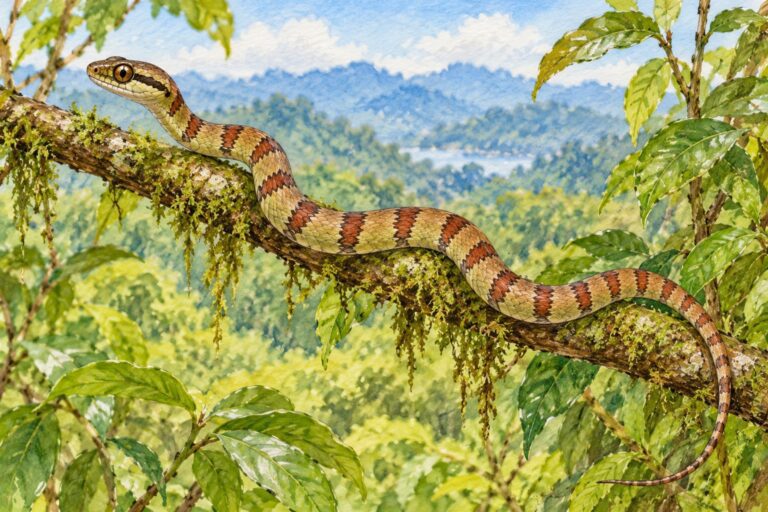
Annulated Tree Boa

Spanish name
Boa arborícola anillada
Scientific name
Corallus annulatus

What Do Pico & Tati Think?

Pico: “What helps this reptile fit into its habitat?”

Tati: “Let’s look at its shape, colors and surroundings while giving it plenty of space.”

Identification

Key Features of the Annulated Tree Boa

  • Brownish body with dark ringlike markings

  • Broad head and climbing posture

  • Tail used around branches

Habitat & range

Caribbean lowland wet forest and adjoining northern humid lowlands, including studied populations in northeastern Costa Rica.

Conservation & care

Observe from a distance with an adult or qualified guide. Do not touch, catch, corner, feed or move any snake. Keep children and pets away. Colors, head shape and pupil shape must never be used to decide a snake is safe.

Threats & pressures

Protect connected habitat and natural shelters. Avoid collection, unnecessary clearing and deliberate killing. Leave wildlife in place and support responsible observation.

View full profile →

Nature Field Guide

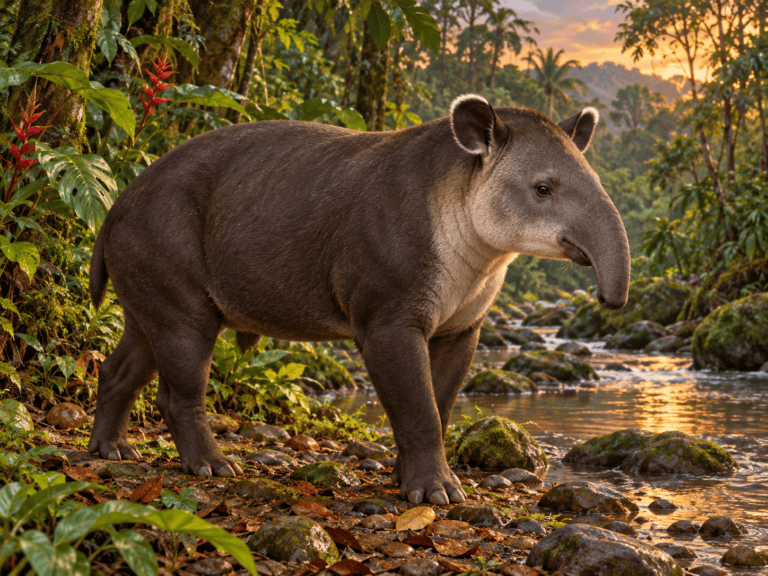
Baird’s Tapir

Spanish name
Danta
Scientific name
Tapirus bairdii

What Do Pico & Tati Think?

Pico: “Its nose can reach the leaves!”

Tati: “Let’s keep the path open and give it plenty of room.”

Identification

Key Features of the Baird’s Tapir

  • Large dark body and short flexible snout.

  • Pale edges around the ears.

  • Young calves have pale spots and stripes.

Habitat & range

Corcovado National Park’s forest and wetland landscape, including the Sirena area. Puerto Jiménez, Bahía Drake and Carate are gateways.

Conservation & care

Keep a respectful distance and leave an open route for the animal. Stay on authorized paths, secure food and rubbish, and observe without feeding, touching, baiting or chasing.

Threats & pressures

Habitat clearing and fragmentation, hunting and vehicle collisions threaten tapirs. Slow reproduction limits rapid recovery.

Conservation assessment

Global IUCN category as reported by the linked source, checked 7 October 2026. The source does not give an assessment year here. National legal protection and local abundance are separate questions.

View full profile →

Nature Field Guide

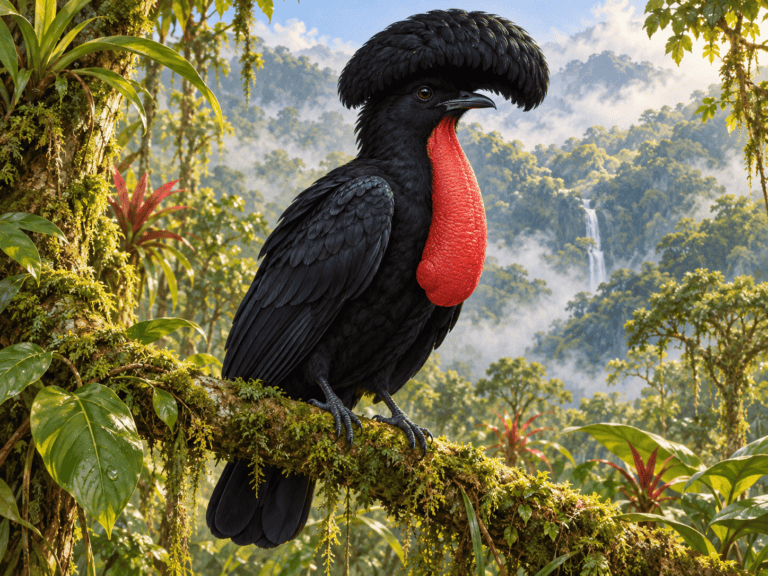
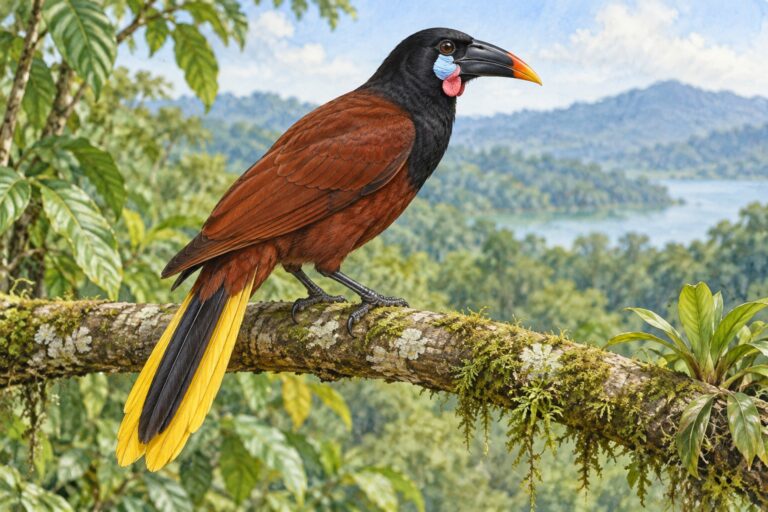
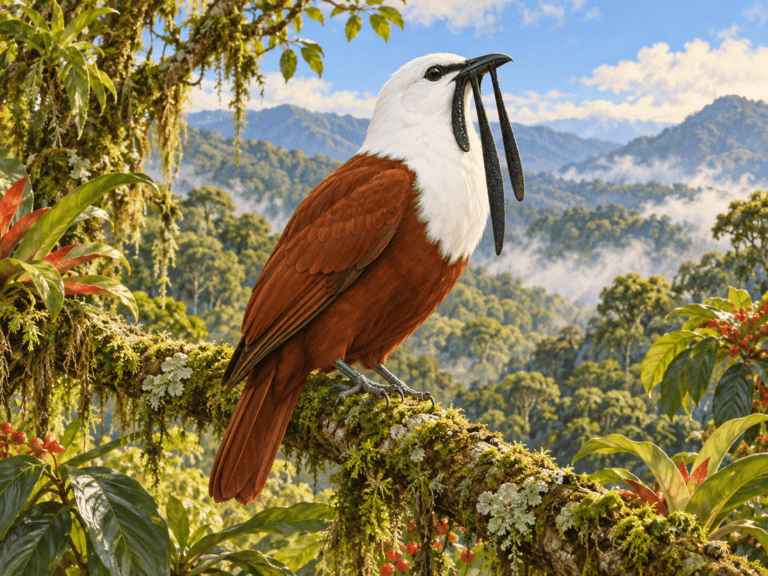
Bare-necked Umbrellabird

Spanish name
Pájaro sombrilla
Scientific name
Cephalopterus glabricollis

What Do Pico & Tati Think?

Pico: “That crest makes such an unusual shape!”

Tati: “We can learn about a shy bird without following it.”

Identification

Key Features of the Bare-necked Umbrellabird

  • Large dark bird with a heavy crest.

  • Short, square tail.

  • Male and female throat structures differ.

Habitat & range

Humid Caribbean-facing foothills and adjacent lowlands, with seasonal movement into montane breeding forest. Guanacaste refers to humid mountain slopes, not its dry coastal plain.

Conservation & care

Stay on authorized trails or viewing routes. Give birds space, keep voices low and leave nests undisturbed. Observe without bait, feeding or recorded calls.

Threats & pressures

UCAN identifies forest fragmentation and climate pressures on seasonal fruit availability as conservation concerns.

Conservation assessment

UCAN identifies the species as Endangered. Source checked 7 October 2026. This is a global species category, not a count of birds in the tagged towns.

View full profile →

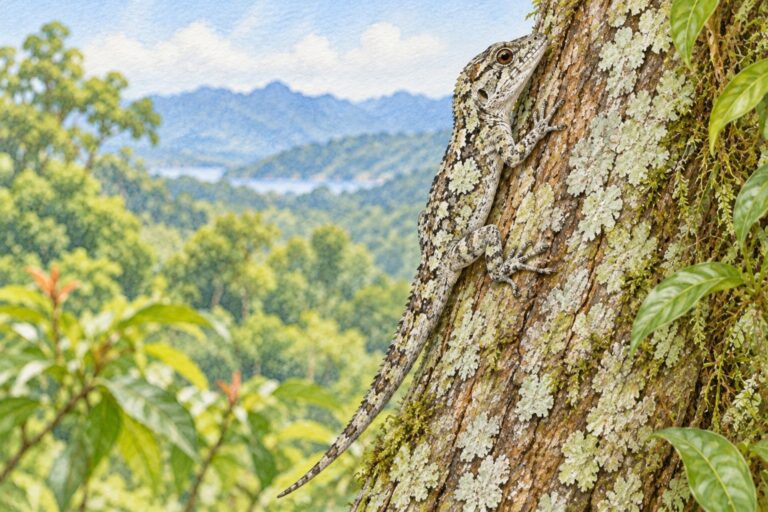
Nature Field Guide

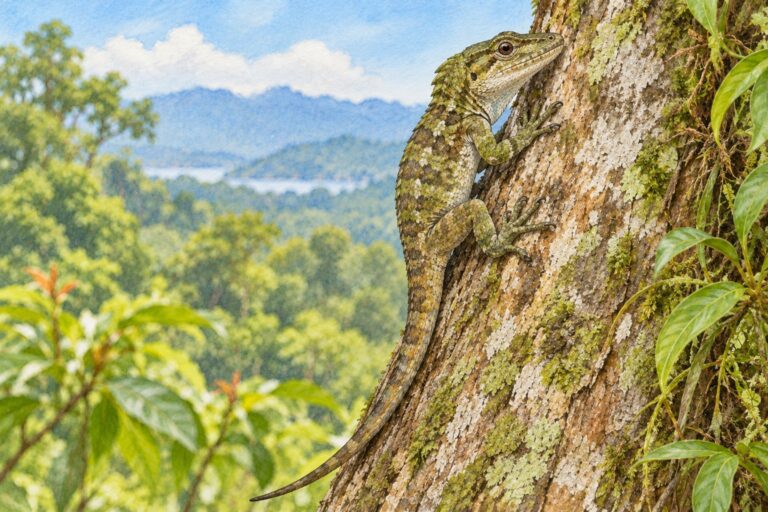
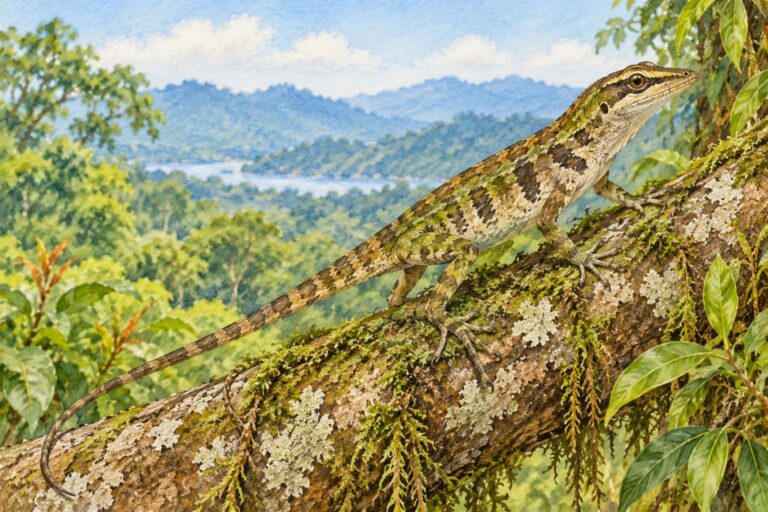
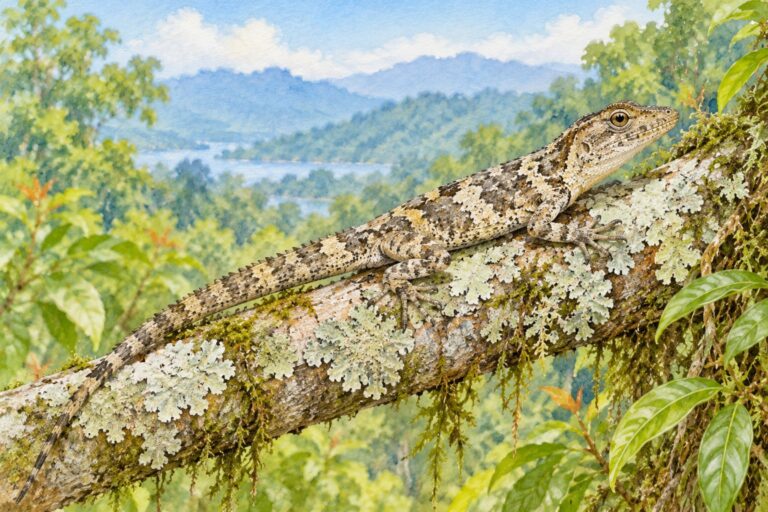
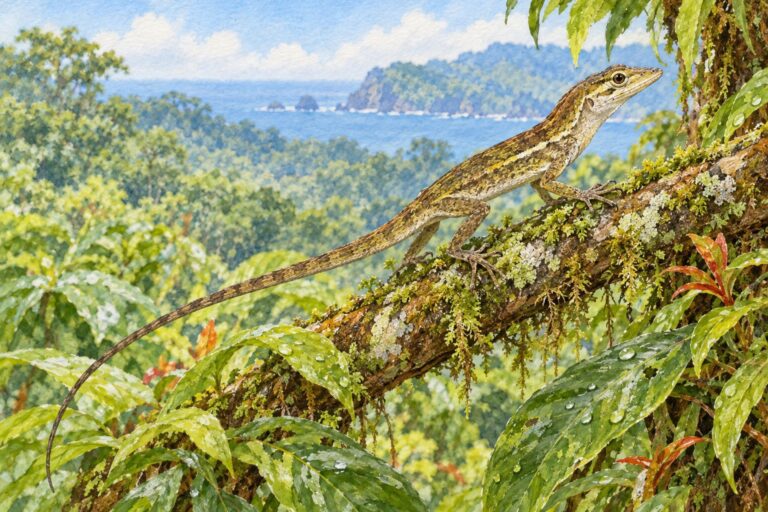
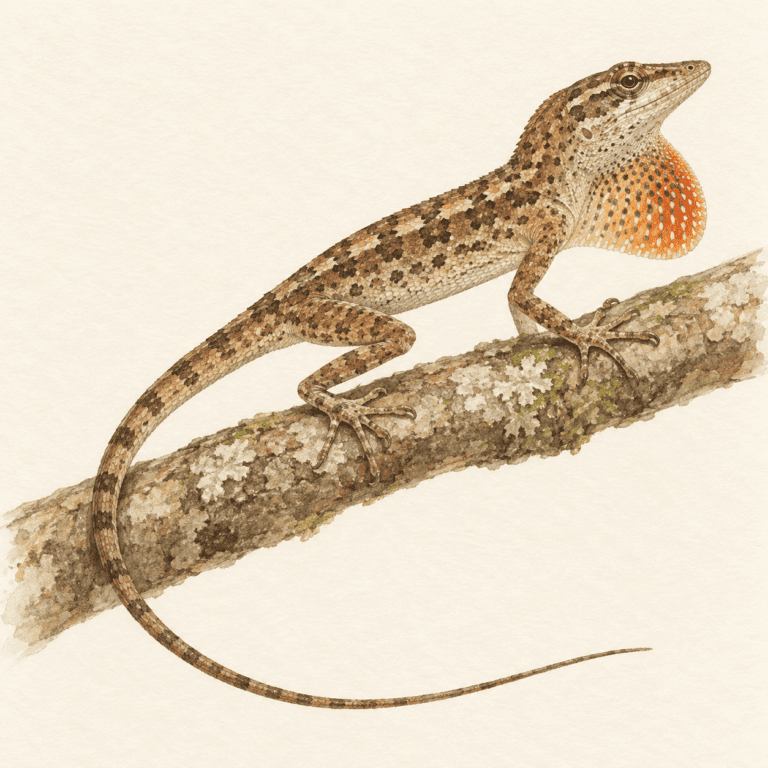
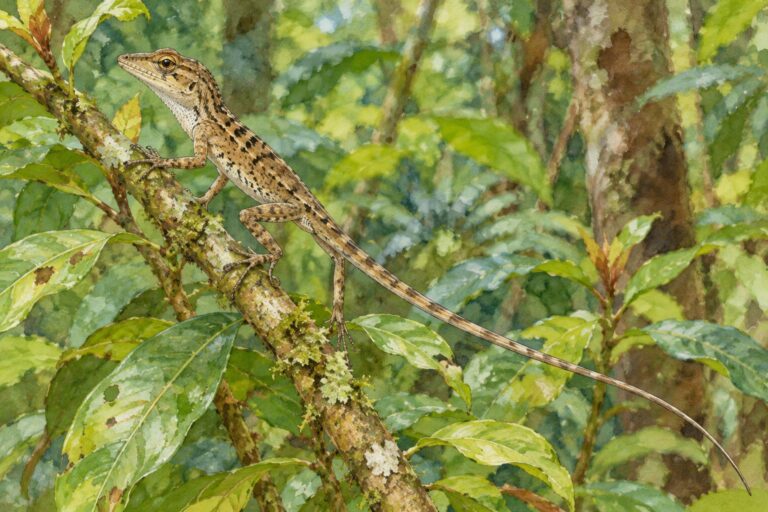
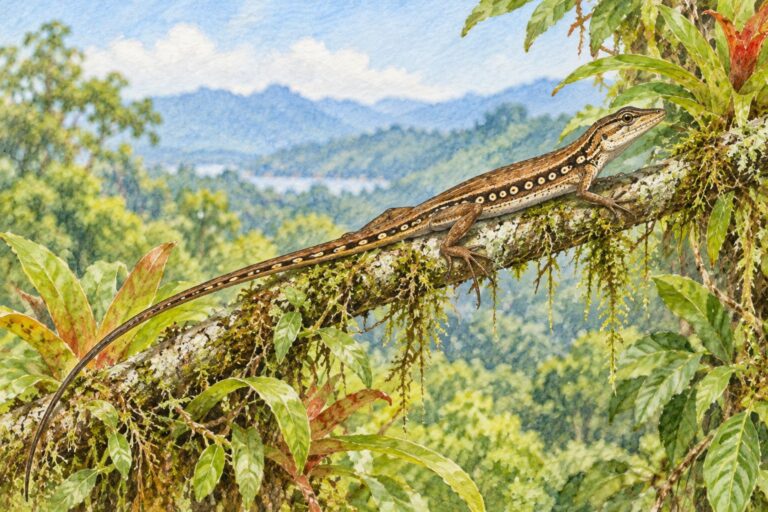
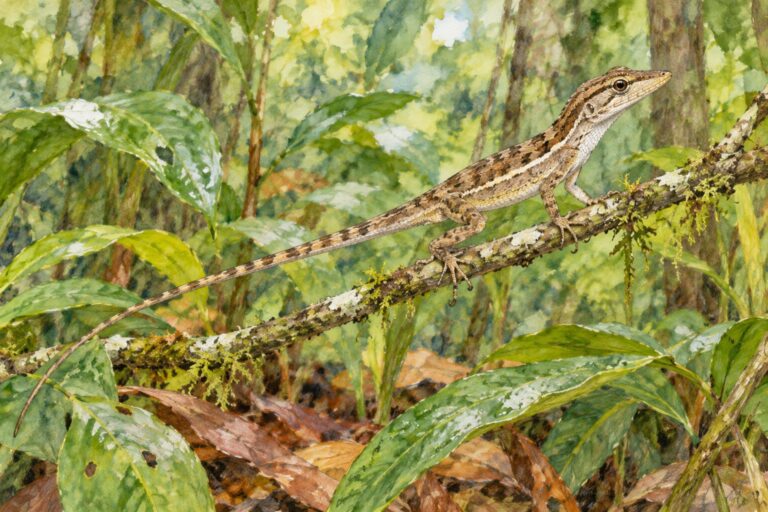
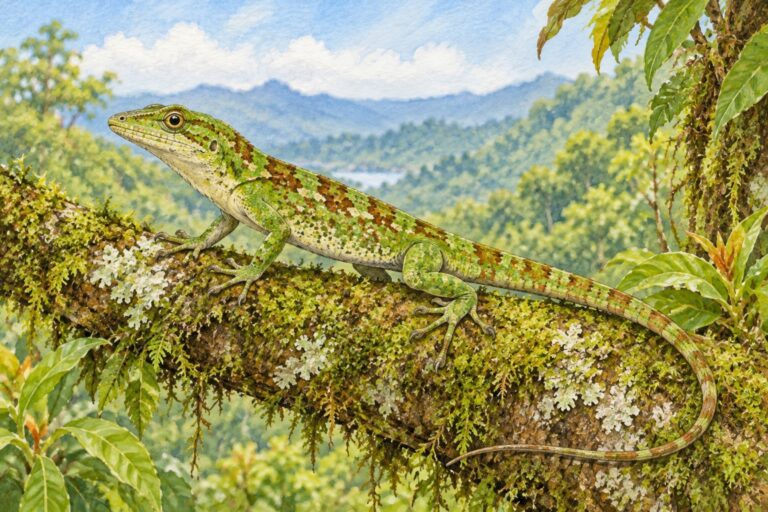
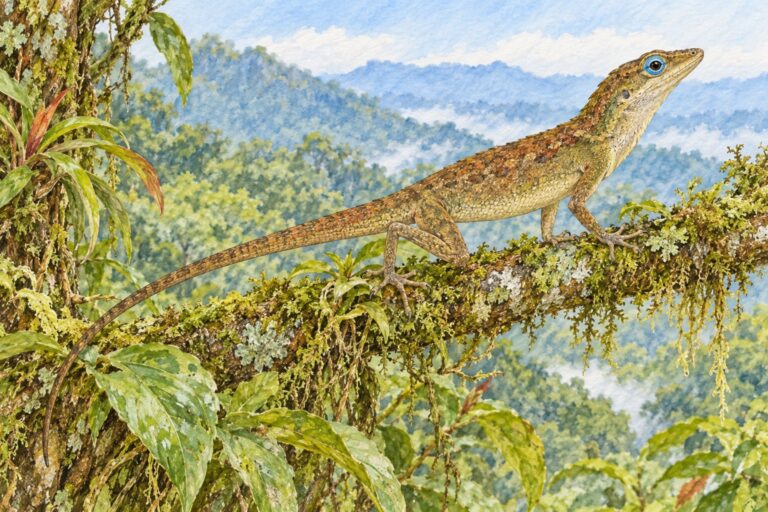
Big-headed Anole

Spanish name
Anolis de cabeza ancha / Anolis jaspeado
Scientific name
Anolis capito

What Do Pico & Tati Think?

Pico: “What clues help us recognize this reptile?”

Tati: “Let’s notice its shape, markings and habitat from a respectful distance.”

Identification

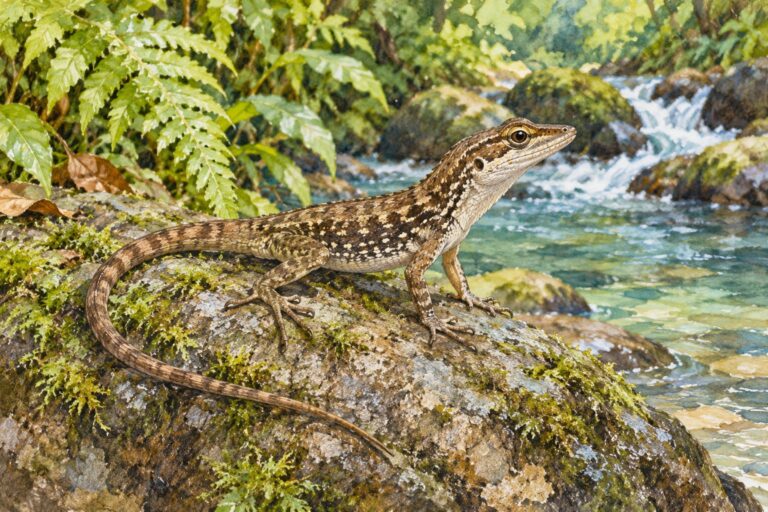
Key Features of the Big-headed Anole

  • Broad relatively large head

  • Mottled brown, olive or greenish body

  • Stout build and bark-colored camouflage

Habitat & range

Shaded Caribbean-slope forest and southwestern rainforest; also documented in humid forest at Rincón de la Vieja.

Conservation & care

Observe with an adult from permitted paths. Do not catch, chase, touch or feed reptiles. Leave bark, logs, rocks and leaf litter in place. Keep pets away and allow animals an open escape route.

Threats & pressures

Protect habitat connections and natural shelters. Avoid road mortality, collection and deliberate killing. Leave reptiles in their habitat rather than keeping or relocating them.

View full profile →

Nature Field Guide

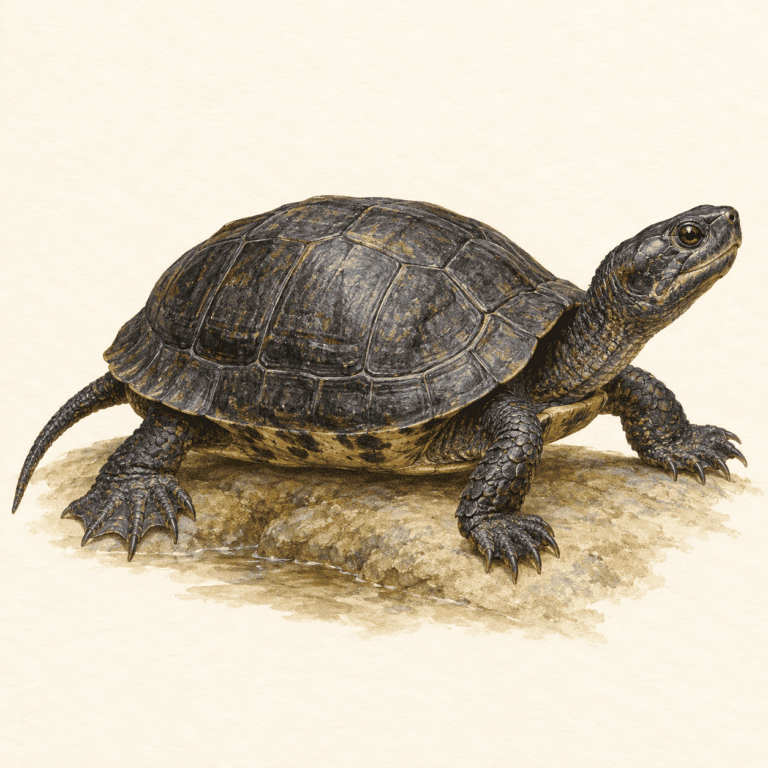
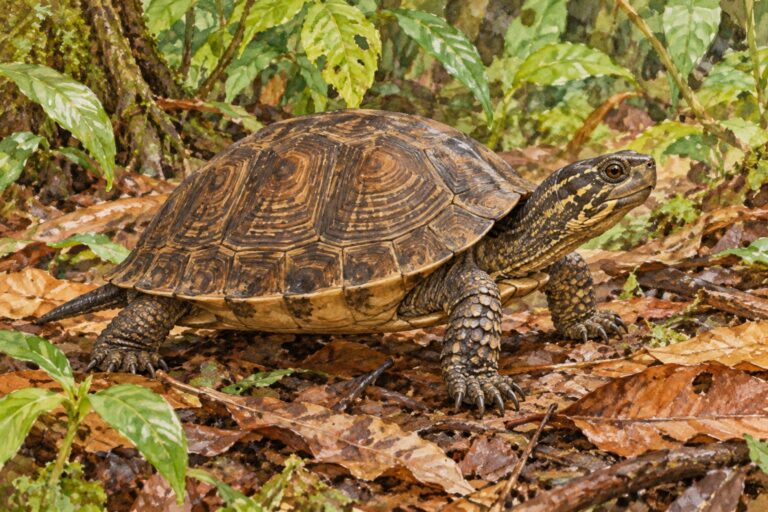
Black Wood Turtle

Spanish name
Tortuga negra
Scientific name
Rhinoclemmys funerea

What Do Pico & Tati Think?

Pico and Tati invite you to learn about the black wood turtle. Draw the major shell scutes from a photograph. Compare the outline with the painted wood turtle.

Identification

Key Features of the Black Wood Turtle

  • Dark shell and dark head.

  • Feet adapted to life around freshwater.

  • A hard shell divided into visible scutes.

Habitat & range

Humid lowland freshwater habitats such as streams, ponds and swamp forest, particularly Caribbean drainage areas.

Conservation & care

Watch wildlife with an adult from a safe path. Do not touch, feed, capture or move reptiles, and keep pets away. Leave eggs, shelters and vegetation undisturbed.

View full profile →

Nature Field Guide

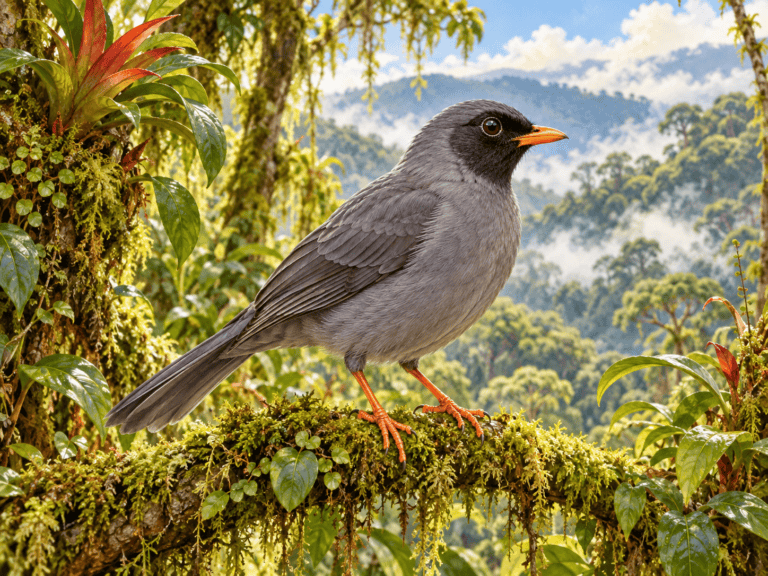
Black-faced Solitaire

Spanish name
Jilguero / Solitario carinegro
Scientific name
Myadestes melanops

What Do Pico & Tati Think?

Pico: “The song seems to be coming from a different place now!”

Tati: “Listening is a discovery, even without a photograph.”

Identification

Key Features of the Black-faced Solitaire

  • Slate-gray body and dark face.

  • A distinctive, varied mountain-forest song.

  • Singer may stay low and move within vegetation.

Habitat & range

Humid mountain forest on both slopes; after breeding some birds descend into Caribbean foothills and lowlands. Broad lowland tags represent seasonal forest habitat, not general abundance.

Conservation & care

Stay on authorized trails or viewing routes. Give birds space, keep voices low and leave nests undisturbed. Observe without bait, feeding or recorded calls.

View full profile →

Nature Field Guide

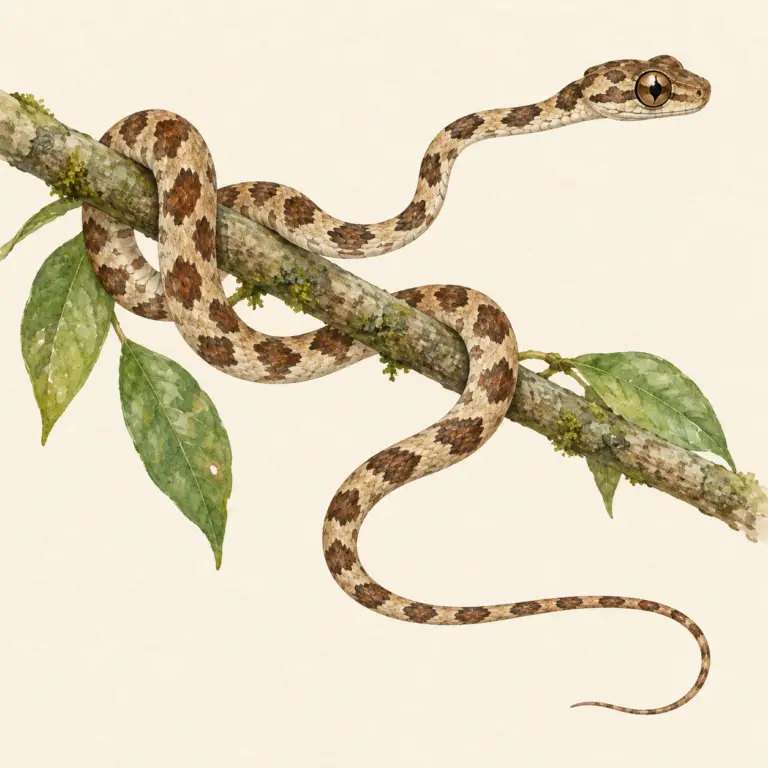
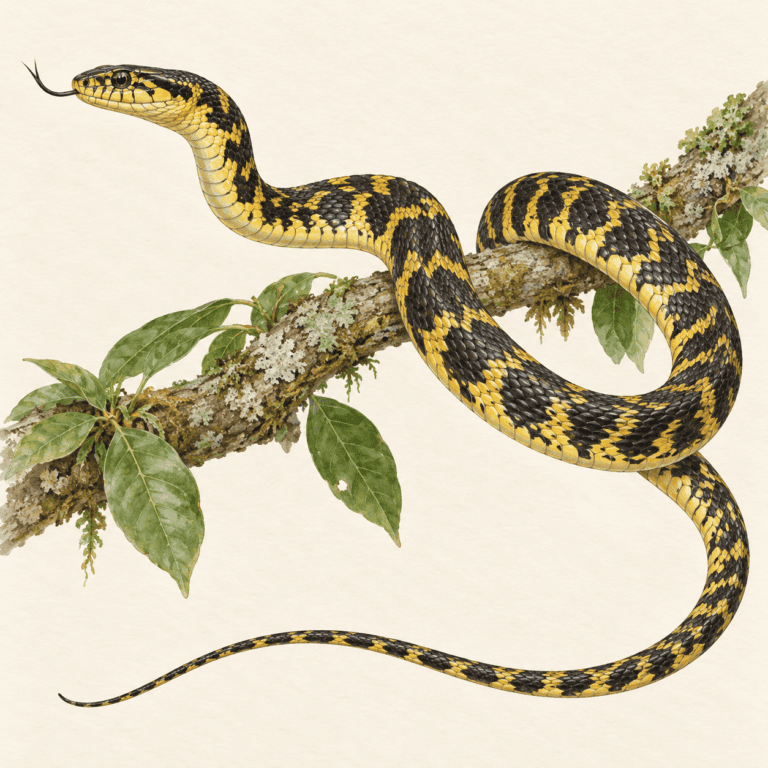
Blunt-headed Tree Snake

Spanish name
Serpiente bejuquillo cabezona
Scientific name
Imantodes cenchoa

What Do Pico & Tati Think?

Pico and Tati invite you to learn about the blunt-headed tree snake. From a photograph, compare the widths of the head and neck. Do not move foliage to look for a snake.

Identification

Key Features of the Blunt-headed Tree Snake

  • Very slender body.

  • Head noticeably wider than the neck.

  • Large eyes and brown blotches on a pale background.

Habitat & range

Humid forest understory, vines and shrubs.

Conservation & care

Never approach, touch, catch or try to move any snake, even if it appears harmless or dead. Keep children and pets away, step back calmly and tell an adult or guide. Do not use colors, head shape or this card to judge safety.

View full profile →

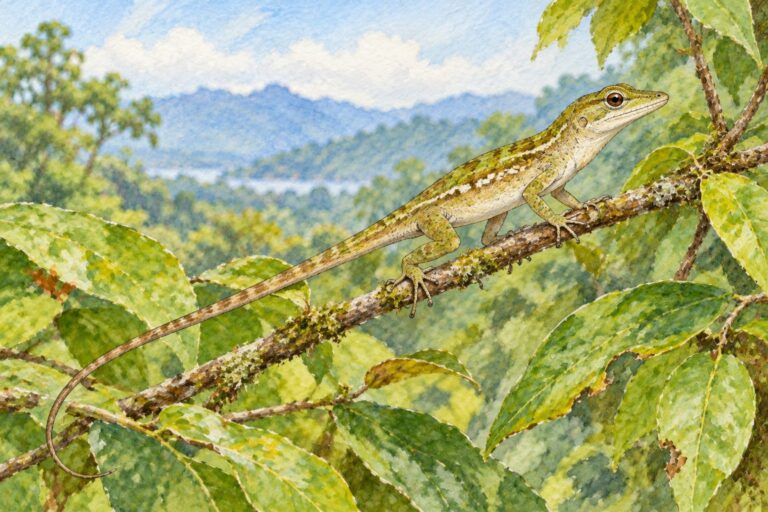
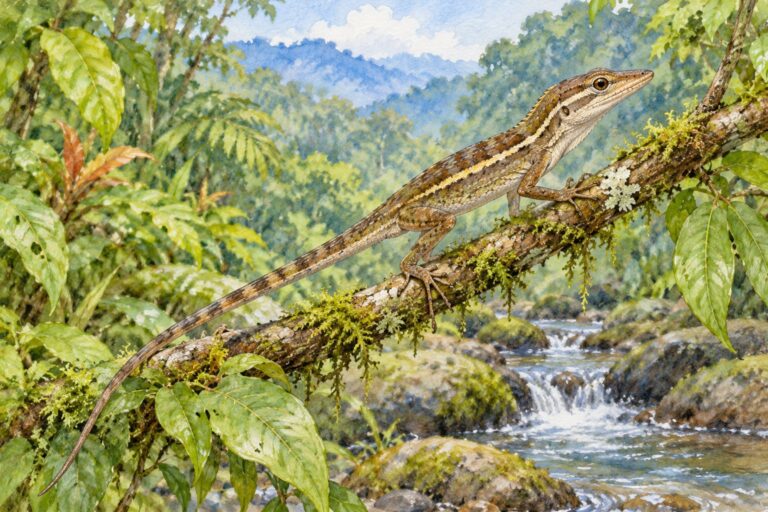
Nature Field Guide

Bridled Anole

Spanish name
Anolis con bridas
Scientific name
Anolis frenatus

What Do Pico & Tati Think?

Pico: “What can we learn from this reptile’s shape?”

Tati: “Let’s notice its markings and habitat while leaving it plenty of space.”

Identification

Key Features of the Bridled Anole

  • Large tree anole with long legs

  • Dark oblique markings on greenish tones

  • Pale interorbital head bar

Habitat & range

Lowland wet forest at scattered Caribbean-slope and southwestern Pacific localities.

Conservation & care

Observe from permitted paths with an adult. Do not touch, chase, catch or feed reptiles. Leave bark, stones, logs and leaf litter in place. Keep pets away and give animals an open escape route.

Threats & pressures

Protect natural shelters and connected habitat. Avoid collection, unnecessary clearing and deliberate killing. Leave wildlife in its habitat and support responsible observation.

View full profile →

Nature Field Guide

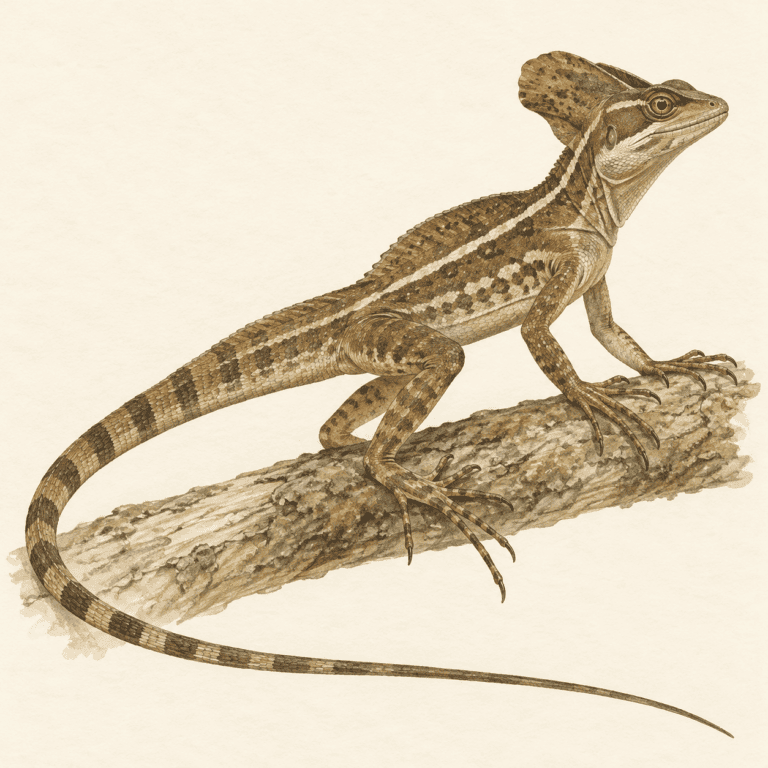
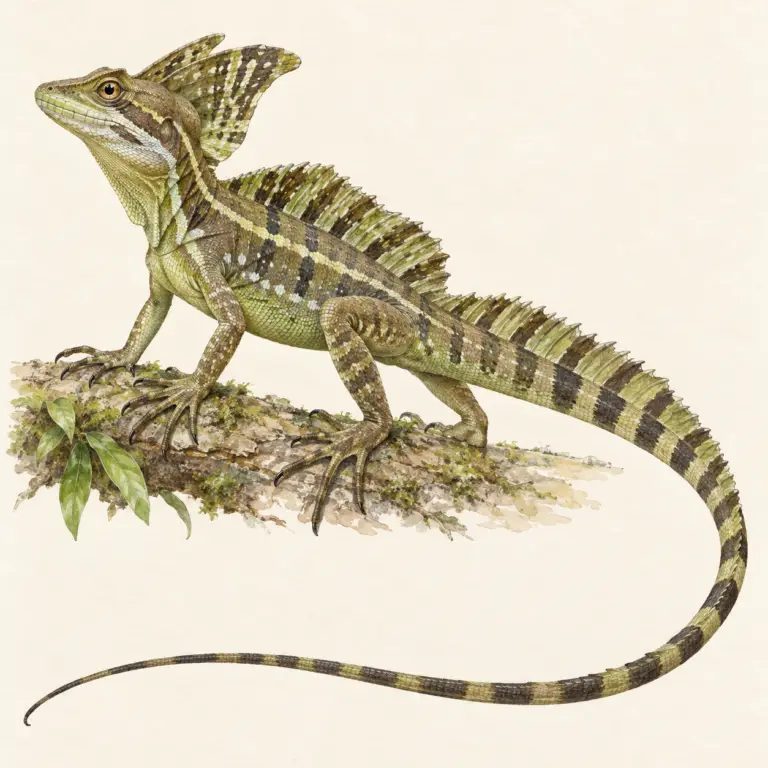
Brown Basilisk

Spanish name
Basilisco café
Scientific name
Basiliscus vittatus

What Do Pico & Tati Think?

Pico and Tati invite you to learn about the brown basilisk. Make a three-column comparison of the common, green and brown basilisk using verified photographs.

Identification

Key Features of the Brown Basilisk

  • Brown or olive body with pale side stripes.

  • Long tail and slender limbs.

  • Adult males can have a head crest without the green basilisk’s tall body sails.

Habitat & range

Lowland forest edges, streamside vegetation and disturbed wooded habitats, including Caribbean areas.

Conservation & care

Watch wildlife with an adult from a safe path. Do not touch, feed, capture or move reptiles, and keep pets away. Leave eggs, shelters and vegetation undisturbed.

View full profile →

Nature Field Guide

Brown Wood Turtle

Spanish name
Tortuga de bosque / Montañera
Scientific name
Rhinoclemmys annulata

What Do Pico & Tati Think?

Pico: “What clues help us recognize this reptile?”

Tati: “Let’s notice its shape, markings and habitat from a respectful distance.”

Identification

Key Features of the Brown Wood Turtle

  • Domed brown shell

  • Strong walking legs with claws

  • Forest-floor rather than open-water setting

Habitat & range

Caribbean-drainage rainforest and northern lowland habitat; Tortuguero is a documented protected-area example.

Conservation & care

Observe with an adult from permitted paths. Do not catch, chase, touch or feed reptiles. Leave bark, logs, rocks and leaf litter in place. Keep pets away and allow animals an open escape route.

Threats & pressures

Protect habitat connections and natural shelters. Avoid road mortality, collection and deliberate killing. Leave reptiles in their habitat rather than keeping or relocating them.

View full profile →

Nature Field Guide

Brown-throated Three-toed Sloth

Spanish name
Perezoso de tres dedos
Scientific name
Bradypus variegatus

What Do Pico & Tati Think?

Pico: “That shape looks like part of the tree!”

Tati: “Let’s use binoculars and give it time.”

Identification

Key Features of the Brown-throated Three-toed Sloth

  • Three claws on each forelimb, if naturally visible.

  • Rounded face with a dark eye mask.

  • Gray-brown fur may have a greenish appearance.

Habitat & range

Manuel Antonio National Park and the studied cacao landscape at FINMAC, Pueblo Nuevo / Villa Francia, Limón.

Seasonal Calendar

Observed birth concentration

FINMAC cacao landscape, Pueblo Nuevo / Villa Francia

Jan, Feb, Mar

In 2010–2012, 59% of observed births occurred in these months; births also occurred outside this window.

Event source ↗

Conservation & care

Keep a respectful distance and leave an open route for the animal. Stay on authorized paths, secure food and rubbish, and observe without feeding, touching, baiting or chasing.

Threats & pressures

Forest loss breaks canopy connections. Caribbean research identifies risks from domestic dogs and emphasizes retaining riverside forest and living fences.

View full profile →

Nature Field Guide

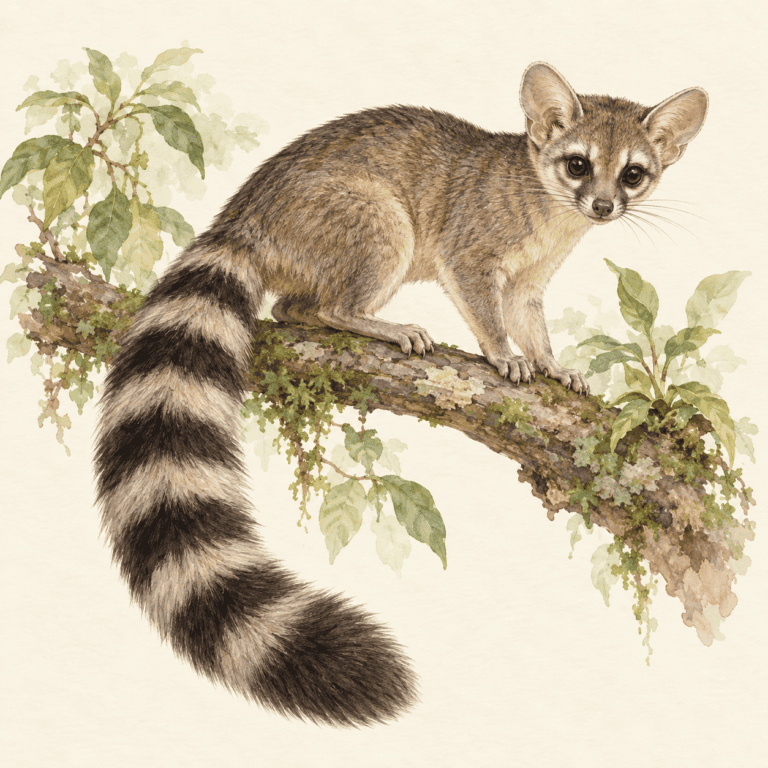
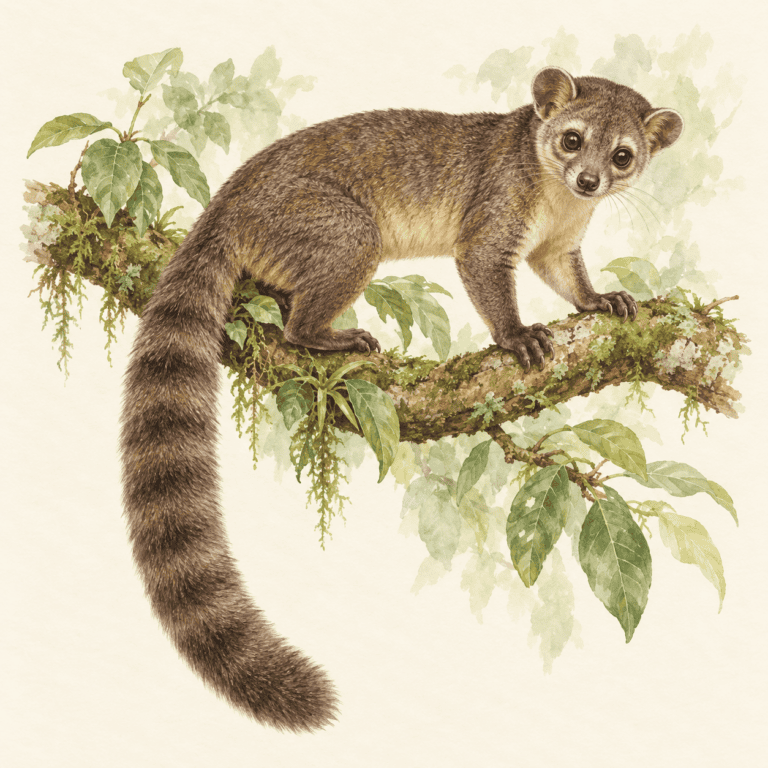
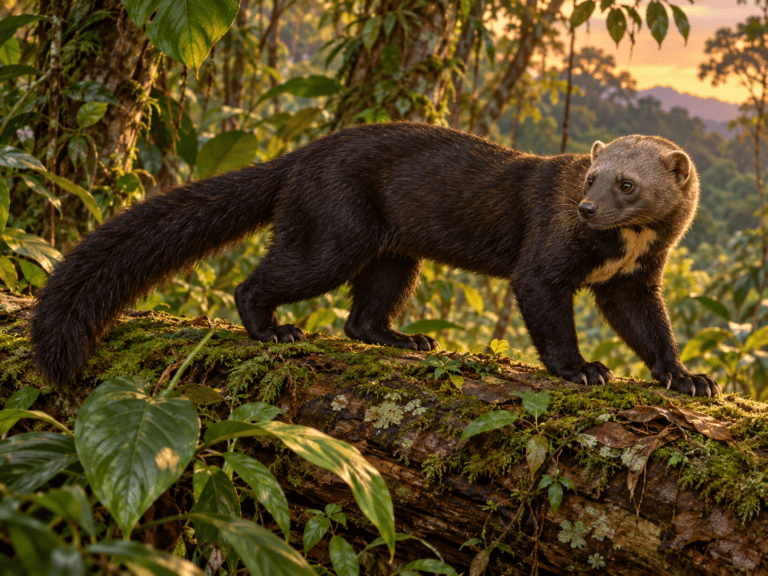
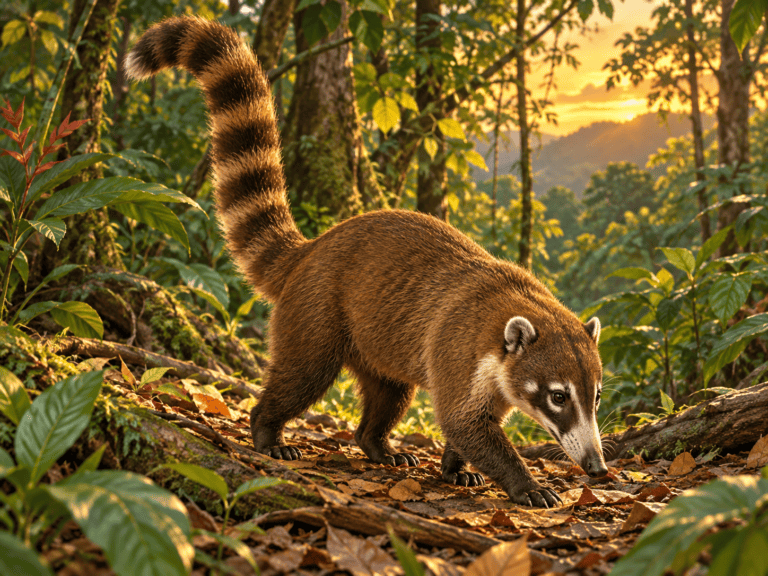
Cacomistle

Spanish name
Ostoche
Scientific name
Bassariscus sumichrasti

What Do Pico & Tati Think?

A cacomistle's long ringed tail is a memorable clue.

Identification

Key Features of the Cacomistle

  • Slender body, pointed face and relatively large ears.

  • Very long bushy tail with alternating pale and dark bands.

  • Usually associated with wooded habitat and climbing.

Habitat & range

Evergreen and mountain forests, with some use of seasonally dry forest.

Conservation & care

Explore with an adult or local guide. Observe quietly from a distance, stay on established trails and leave shelter undisturbed. Do not feed, touch, capture or corner wildlife. Keep pets away.

View full profile →

Nature Field Guide

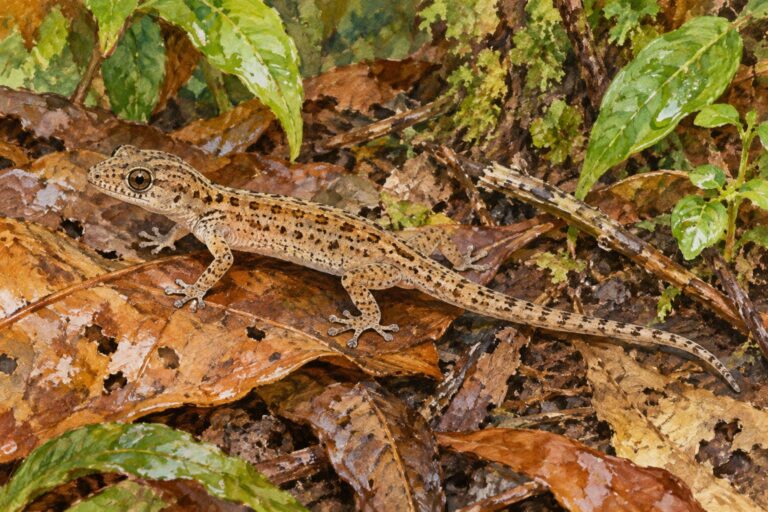
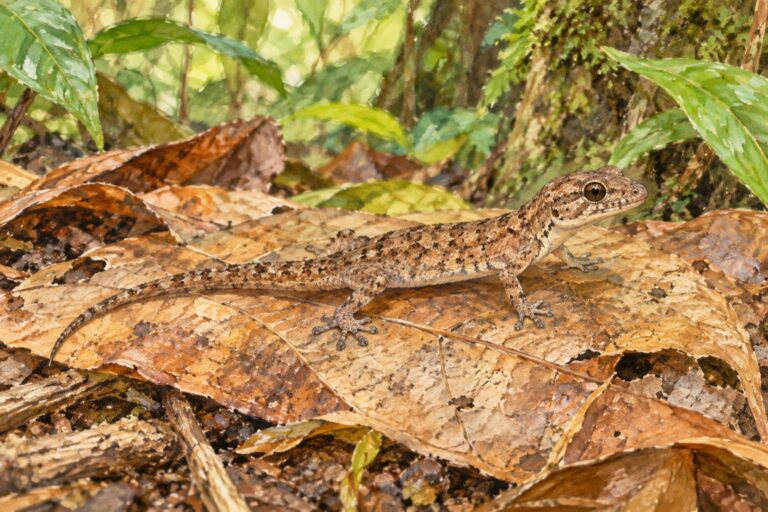
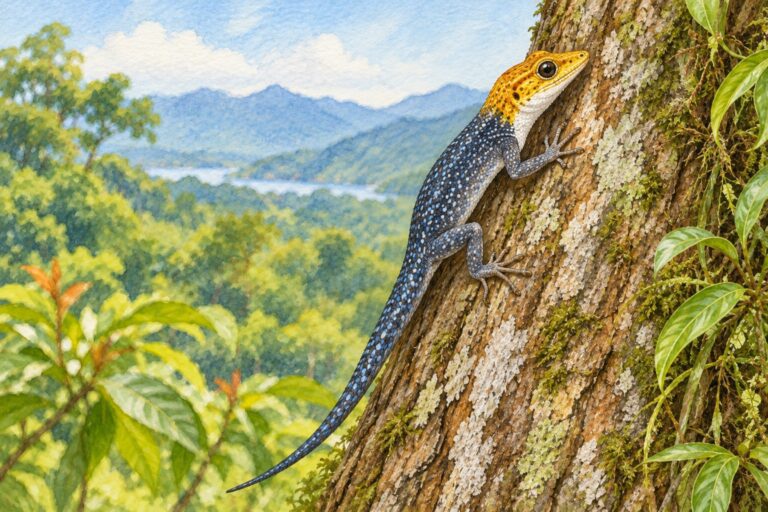
Caribbean Least Gecko

Spanish name
Gequito caribeño
Scientific name
Sphaerodactylus homolepis

What Do Pico & Tati Think?

Pico: “What helps this reptile fit into its habitat?”

Tati: “Let’s look at its shape, colors and surroundings while giving it plenty of space.”

Identification

Key Features of the Caribbean Least Gecko

  • Tiny body and rounded head

  • Narrow tapering tail

  • Small feet unlike a large wall gecko’s broad pads

Habitat & range

Caribbean-slope lowland forest and northern humid lowlands, including the Sarapiquí area.

Conservation & care

Observe with an adult from permitted paths. Do not touch, chase, catch or feed reptiles. Leave bark, logs, stones and leaf litter in place. Keep pets away and allow an open escape route.

Threats & pressures

Protect connected habitat and natural shelters. Avoid collection, unnecessary clearing and deliberate killing. Leave wildlife in place and support responsible observation.

View full profile →

Nature Field Guide

Carpenter’s Anole

Spanish name
Anolis de Carpenter
Scientific name
Anolis carpenteri

What Do Pico & Tati Think?

Pico: “What can we learn from this reptile’s shape?”

Tati: “Let’s notice its markings and habitat while leaving it plenty of space.”

Identification

Key Features of the Carpenter’s Anole

  • Small delicate greenish body

  • Relatively short limbs

  • Slender tail and narrow perch use

Habitat & range

Caribbean-slope humid forest and foothills, including the Reventazón valley and northern Caribbean lowlands.

Conservation & care

Observe from permitted paths with an adult. Do not touch, chase, catch or feed reptiles. Leave bark, stones, logs and leaf litter in place. Keep pets away and give animals an open escape route.

Threats & pressures

Protect natural shelters and connected habitat. Avoid collection, unnecessary clearing and deliberate killing. Leave wildlife in its habitat and support responsible observation.

View full profile →

Nature Field Guide

Ceiba Kapok Tree

Spanish name
Ceiba / Puri
Scientific name
Ceiba pentandra

What Do Pico & Tati Think?

Pico: “Huge buttress roots help make a mature ceiba unforgettable.”

Tati: “Let’s notice the leaves, flowers and habitat without disturbing the plant.”

Identification

Key Features of the Ceiba Kapok Tree

  • Large buttress roots on mature trees

  • Palmate leaves with several narrow leaflets

  • Seed capsules containing silky fibers

Habitat & range

Dry, humid and very wet lowland forests on both slopes, including Pacific, Caribbean and northern lowland landscapes.

Conservation & care

Explore with an adult on permitted paths. Observe and photograph without picking leaves, flowers or fruits. Do not taste plants or let pets chew them. Avoid climbing trees and disturbing roots, seedlings or visiting wildlife.

Threats & pressures

Protect suitable habitat, mature trees and natural regeneration. Avoid trampling, unauthorized clearing and collection.

View full profile →

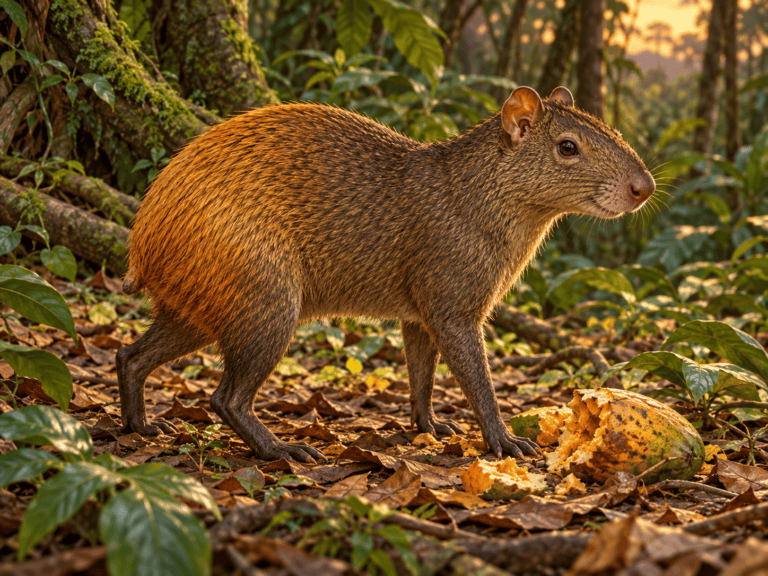
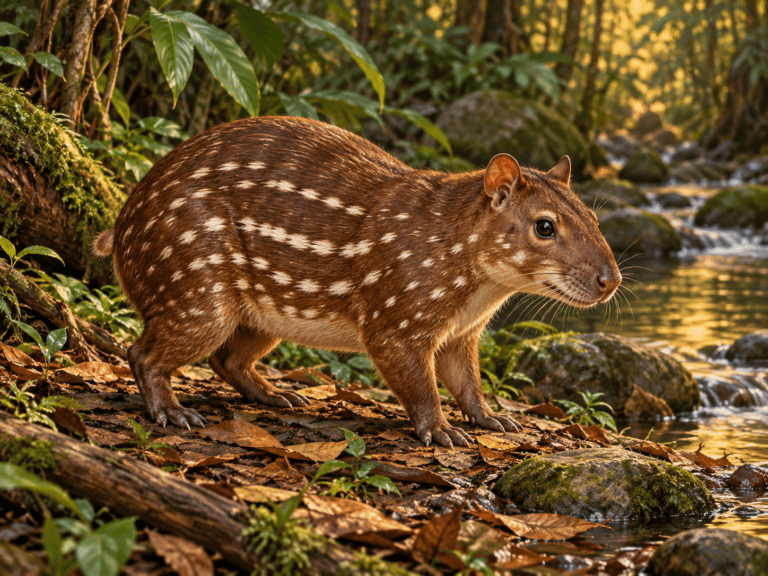
Nature Field Guide

Central American Agouti

Spanish name
Guatusa / Guatuza
Scientific name
Dasyprocta punctata

What Do Pico & Tati Think?

Pico: “It is carrying something from the forest floor!”

Tati: “A stored seed might become a tree.”

Identification

Key Features of the Central American Agouti

  • Rounded back, long legs and almost invisible tail.

  • Warm orange-brown to dark brown fur.

  • Often handles food with the forepaws.

Habitat & range

Sierra Zapote’s forest floor in Las Juntas district, Abangares; dry and humid forests can both provide habitat.

Conservation & care

Keep a respectful distance and leave an open route for the animal. Stay on authorized paths, secure food and rubbish, and observe without feeding, touching, baiting or chasing.

View full profile →

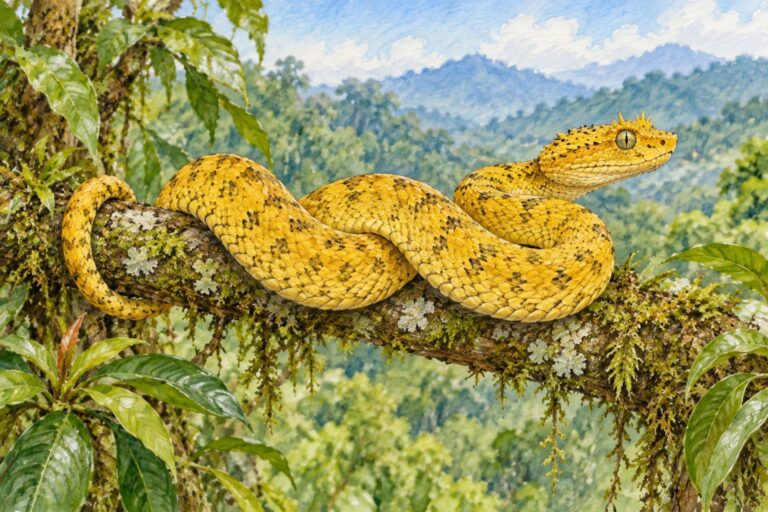
Nature Field Guide

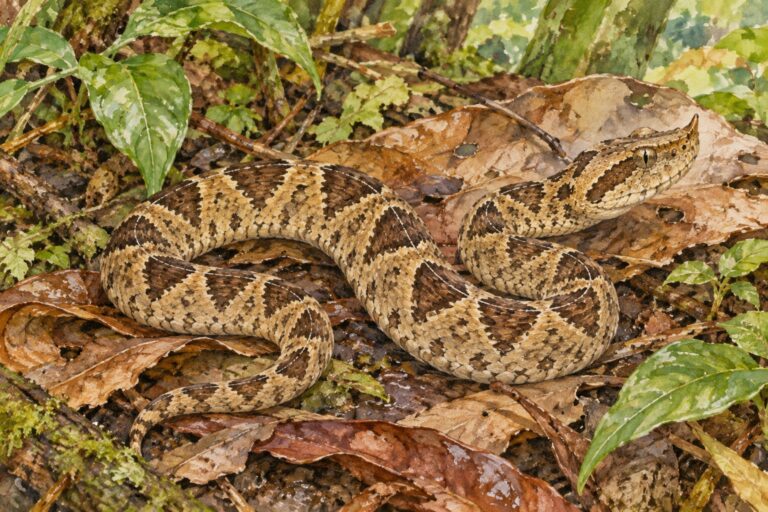
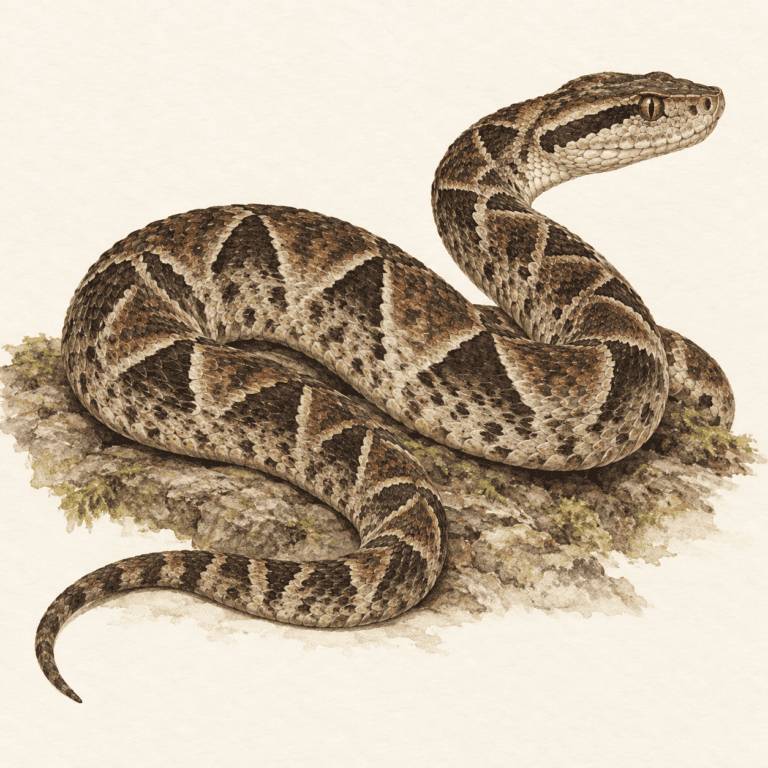
Central American Eyelash Pitviper

Spanish name
Bocaracá / Oropel / Toboba de pestañas
Scientific name
Bothriechis nigroadspersus

What Do Pico & Tati Think?

Pico: “What clues help us recognize this reptile?”

Tati: “Let’s notice its shape, markings and habitat from a respectful distance.”

Identification

Key Features of the Central American Eyelash Pitviper

  • Raised eyelash-like scales above the eyes

  • Compact body resting on branches

  • Highly variable colors, including yellow

Habitat & range

Humid lowland and foothill forests on the Caribbean slope and in the Central and South Pacific.

Conservation & care

VENOMOUS. Observe only at a distance with a qualified guide. Never approach, touch, catch or provoke this snake. Keep children and pets well away and do not reach into nearby vegetation or hiding places.

Threats & pressures

Protect habitat connections and natural shelters. Avoid road mortality, collection and deliberate killing. Leave reptiles in their habitat rather than keeping or relocating them.

View full profile →

Nature Field Guide

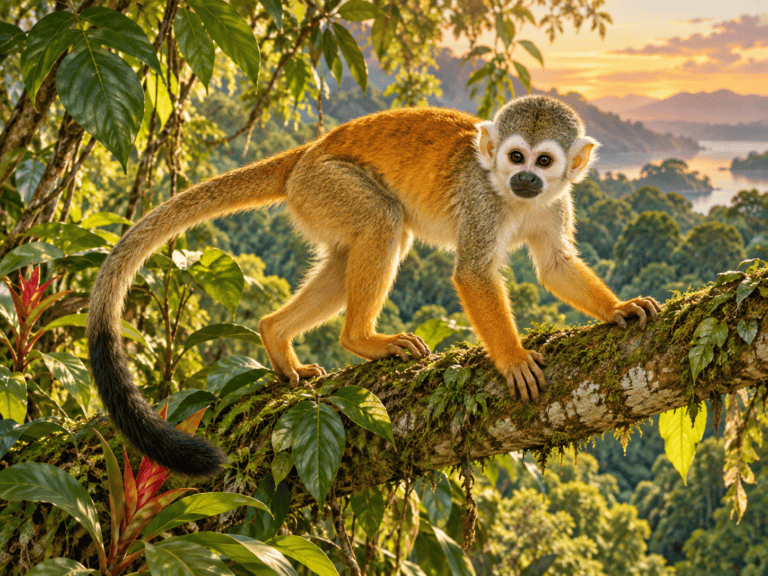
Central American Squirrel Monkey

Spanish name
Mono tití / Mono ardilla
Scientific name
Saimiri oerstedii

What Do Pico & Tati Think?

Pico: “The little monkeys are moving together!”

Tati: “Let’s watch the troop without following it off the trail.”

Identification

Key Features of the Central American Squirrel Monkey

  • Small slender monkey with pale facial markings.

  • Warm reddish or yellow-brown back.

  • Long tail and rapid movements through vegetation.

Habitat & range

Manuel Antonio National Park near Quepos; this species also occupies parts of the southern Pacific lowlands.

Conservation & care

Keep a respectful distance and leave an open route for the animal. Stay on authorized paths, secure food and rubbish, and observe without feeding, touching, baiting or chasing.

Threats & pressures

Forest destruction is a serious pressure for a species with a restricted geographic range.

Protection & recovery

Costa Rica’s government wildlife guide explicitly identifies this species as protected nationally. This legal designation is separate from its global IUCN category.

Conservation assessment

Global IUCN category as reported by the linked source, checked 7 October 2026. The source does not give an assessment year here. National legal protection and local abundance are separate questions.

View full profile →

Nature Field Guide

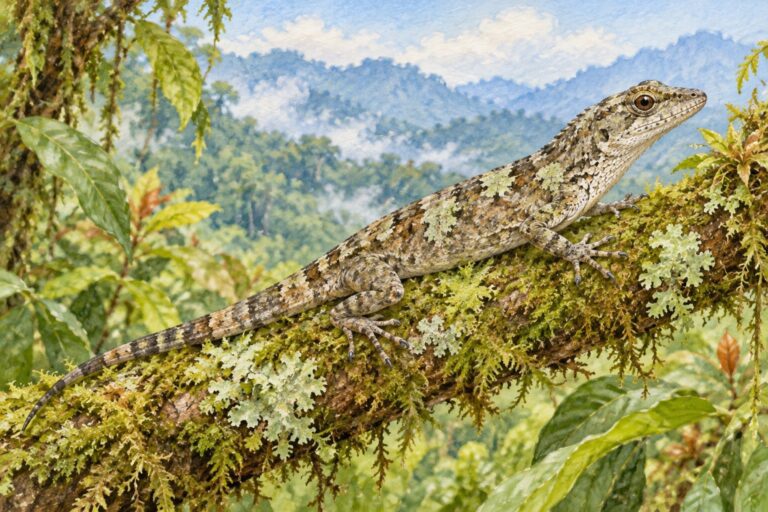
Charles Myers’s Anole

Spanish name
Anolis de Charles Myers
Scientific name
Anolis charlesmyersi

What Do Pico & Tati Think?

Pico: “What can we learn from this reptile’s shape?”

Tati: “Let’s notice its markings and habitat while leaving it plenty of space.”

Identification

Key Features of the Charles Myers’s Anole

  • Very short limbs

  • Lichenlike pale and dark mottling

  • Relatively short tail with a low serrated ridge

Habitat & range

Pacific lowland and adjoining foothill habitats in Costa Rica, including the Central and South Pacific.

Conservation & care

Observe from permitted paths with an adult. Do not touch, chase, catch or feed reptiles. Leave bark, stones, logs and leaf litter in place. Keep pets away and give animals an open escape route.

Threats & pressures

Protect natural shelters and connected habitat. Avoid collection, unnecessary clearing and deliberate killing. Leave wildlife in its habitat and support responsible observation.

View full profile →

Nature Field Guide

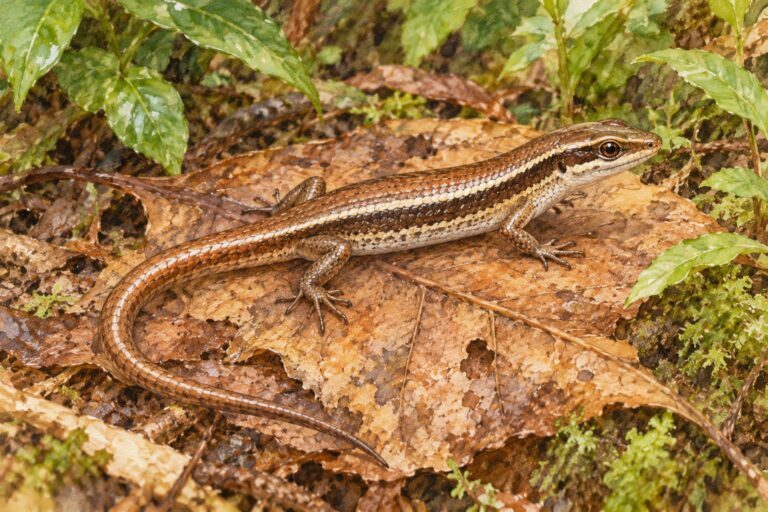
Cherrie’s Ground Skink

Spanish name
Eslaboncillo pardo / Escinco de Cherrie
Scientific name
Scincella cherriei

What Do Pico & Tati Think?

Pico: “What clues help us recognize this reptile?”

Tati: “Let’s notice its shape, markings and habitat from a respectful distance.”

Identification

Key Features of the Cherrie’s Ground Skink

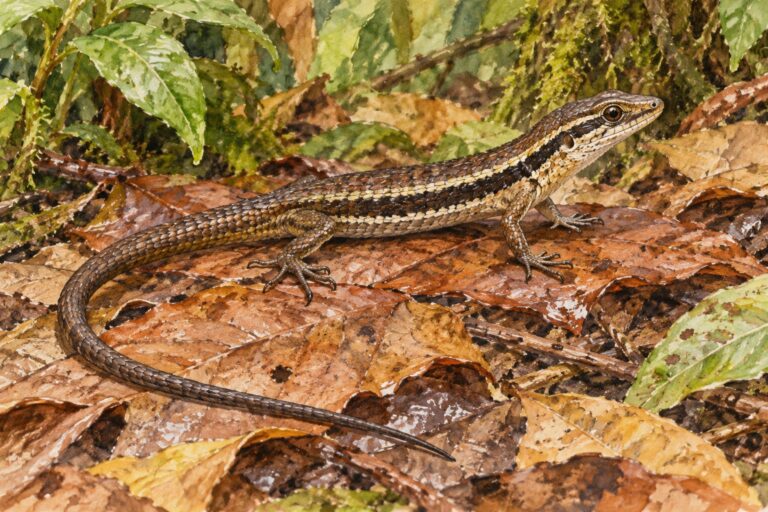
  • Smooth glossy-looking scales

  • Dark lateral stripe

  • Short legs and a tapering tail

Habitat & range

Pacific-slope forest floor and wooded edges, including southwestern Costa Rica and the Monteverde foothill area.

Conservation & care

Observe with an adult from permitted paths. Do not catch, chase, touch or feed reptiles. Leave bark, logs, rocks and leaf litter in place. Keep pets away and allow animals an open escape route.

Threats & pressures

Protect habitat connections and natural shelters. Avoid road mortality, collection and deliberate killing. Leave reptiles in their habitat rather than keeping or relocating them.

View full profile →

Nature Field Guide

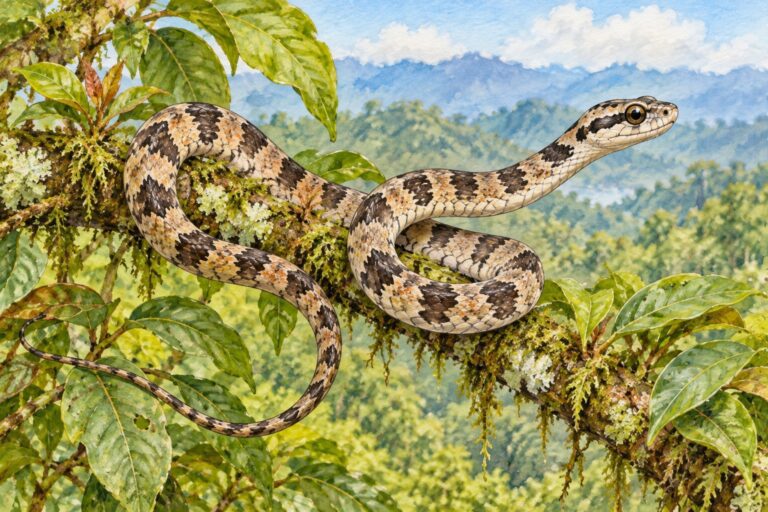
Clouded Snail-eater

Spanish name
Caracolera nublada
Scientific name
Sibon nebulatus

What Do Pico & Tati Think?

Pico: “What helps this reptile fit into its habitat?”

Tati: “Let’s look at its shape, colors and surroundings while giving it plenty of space.”

Identification

Key Features of the Clouded Snail-eater

  • Slender climbing body

  • Large rounded head and prominent eyes

  • Irregular dark markings on a lighter body

Habitat & range

Caribbean and Pacific humid forests and edges, including northern lowland wet forest.

Conservation & care

Observe from a distance with an adult or qualified guide. Do not touch, catch, corner, feed or move any snake. Keep children and pets away. Colors, head shape and pupil shape must never be used to decide a snake is safe.

Threats & pressures

Protect connected habitat and natural shelters. Avoid collection, unnecessary clearing and deliberate killing. Leave wildlife in place and support responsible observation.

View full profile →

Nature Field Guide

Cocos Island Anole

Spanish name
Anolis de la Isla del Coco
Scientific name
Anolis townsendi

What Do Pico & Tati Think?

Pico: “What can we learn from this reptile’s shape?”

Tati: “Let’s notice its markings and habitat while leaving it plenty of space.”

Identification

Key Features of the Cocos Island Anole

  • Small anole with a long tail

  • Brown-to-olive camouflage

  • Naturally restricted to Isla del Coco

Habitat & range

Isla del Coco, an offshore island administratively within Puntarenas province. It is separate from the Gulf of Nicoya islands and mainland regions.

Conservation & care

Observe from permitted paths with an adult. Do not touch, chase, catch or feed reptiles. Leave bark, stones, logs and leaf litter in place. Keep pets away and give animals an open escape route.

Threats & pressures

Protect natural shelters and connected habitat. Avoid collection, unnecessary clearing and deliberate killing. Leave wildlife in its habitat and support responsible observation.

View full profile →

Nature Field Guide

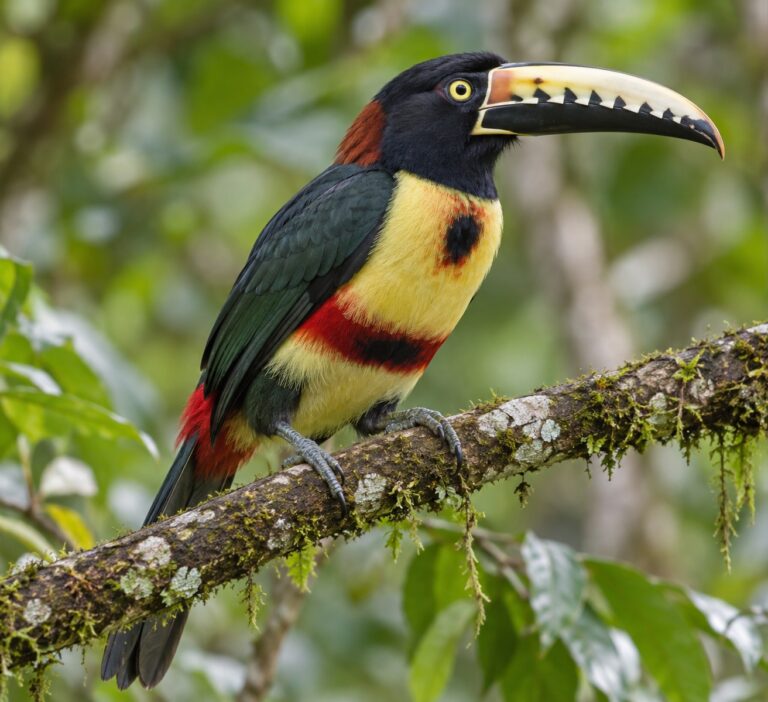
Collared Aracari

Spanish name
Tucancillo collarejo
Scientific name
Pteroglossus torquatus

What Do Pico & Tati Think?

Pico: “Is that a little toucan?”

Tati: “An aracari belongs to the toucan family. Its shape and bill give us clues.”

Identification

Key Features of the Collared Aracari

  • Dark head and throat

  • Yellow chest with red and black marks

  • Patterned pale upper bill

Habitat & range

Commoner in Caribbean lowlands and foothills; also occurs locally in the northern Pacific, including Nicoya woodland and lower Guanacaste slopes. Central Valley records are exceptional rather than a core range.

Conservation & care

Observe quietly from trails or established viewing areas. Give nests, roosts and feeding birds space. Do not handle, chase or lure birds with playback. Keep pets away from wildlife.

Threats & pressures

Protect native vegetation, reduce collision hazards around glass and keep cats away from birds. These are practical prevention priorities, not a claim of a measured decline at a specific Costa Rican site.

View full profile →

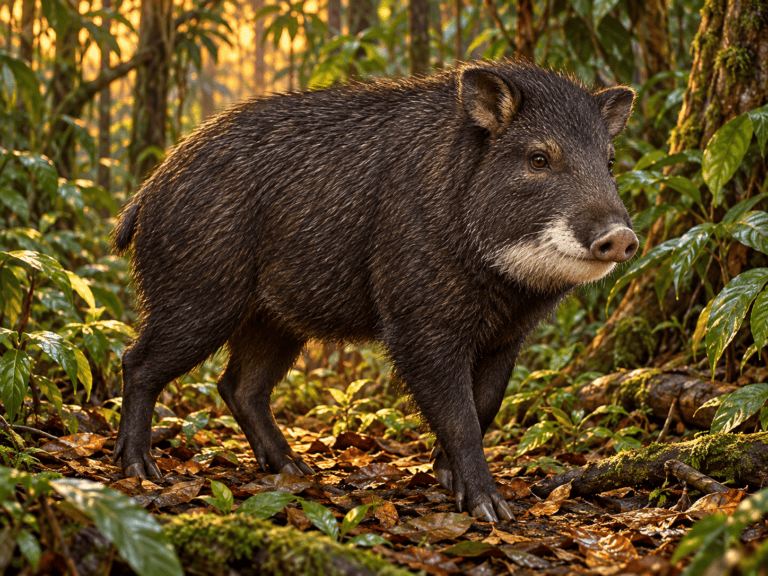
Nature Field Guide

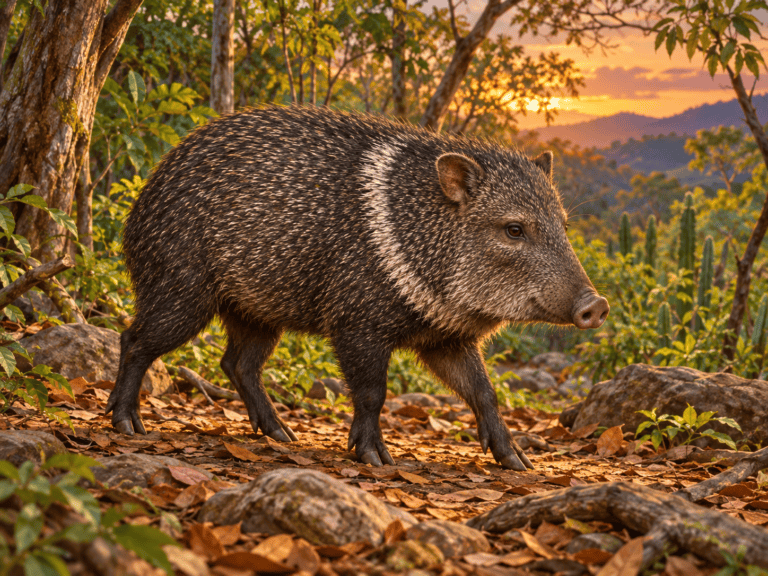
Collared Peccary

Spanish name
Saíno
Scientific name
Dicotyles tajacu

What Do Pico & Tati Think?

Pico: “I can see a pale band near its shoulders!”

Tati: “Let’s step back and leave space for the group.”

Identification

Key Features of the Collared Peccary

  • Pale collar around neck and shoulders.

  • Dark bristly coat and compact hoofed body.

  • Very short tail.

Habitat & range

Reserva Sierra Zapote in Las Juntas district and other dry or humid forest landscapes.

Seasonal Calendar

Breeding possible

Costa Rica; broad natural-history account

Year-round

Reproduction is not confined to a fixed season; local peaks vary with habitat and resources.

Event source ↗

Conservation & care

Keep a respectful distance and leave an open route for the animal. Stay on authorized paths, secure food and rubbish, and observe without feeding, touching, baiting or chasing.

Threats & pressures

Forest loss and fragmentation, hunting and conflict over crops are documented pressures.

View full profile →

Nature Field Guide

Common Basilisk

Spanish name
Basilisco común
Scientific name
Basiliscus basiliscus

What Do Pico & Tati Think?

Pico and Tati invite you to learn about the common basilisk. Draw the tail and hind feet from a reference photograph. Never frighten a basilisk to make it run.

Identification

Key Features of the Common Basilisk

  • Very long tail.

  • Brown or olive body with pale stripes and dark bands.

  • Adult males have prominent crests on the head, back and tail.

Habitat & range

Pacific lowland dry and moist forests near streams and rivers.

Conservation & care

Watch wildlife with an adult from a safe path. Do not touch, feed, capture or move reptiles, and keep pets away. Leave eggs, shelters and vegetation undisturbed.

View full profile →

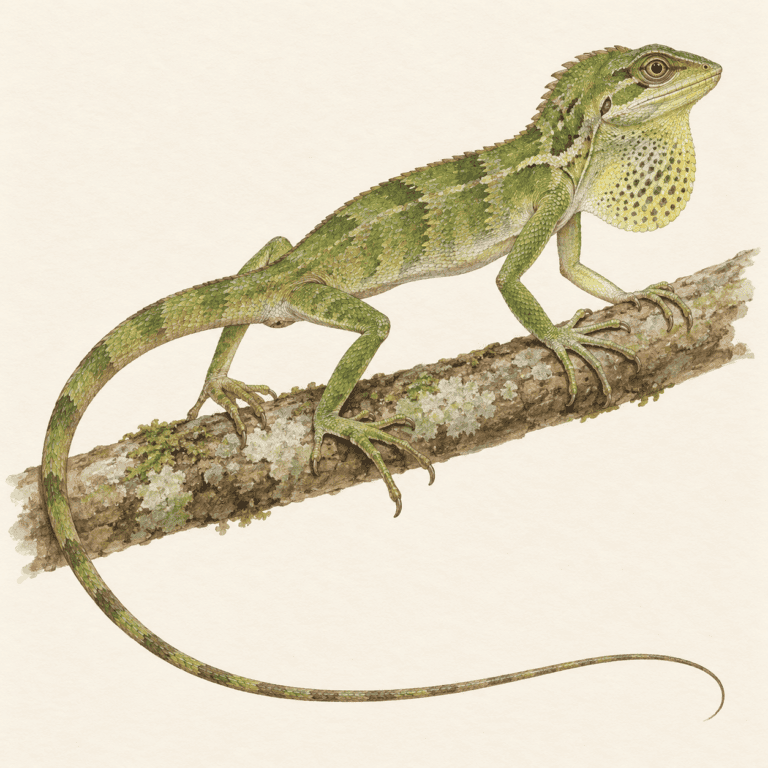
Nature Field Guide

Common Monkey Lizard

Spanish name
Lagartija de dosel
Scientific name
Polychrus gutturosus

What Do Pico & Tati Think?

Pico and Tati invite you to learn about the common monkey lizard. Look at a reference photograph and mark the outline of the tail. Compare its proportions with a basilisk.

Identification

Key Features of the Common Monkey Lizard

  • Laterally flattened body.

  • Long limbs, toes and whip-like tail.

  • Greenish coloration and an expandable throat region.

Habitat & range

Primarily humid forest canopy. A documented Hojancha record extends coverage into Guanacaste, where persistent streamside vegetation provides a moist refuge within the dry landscape. Also documented at Reserva Los Campesinos in San Jose province. Regional occurrence depends on suitable wooded microhabitat.

Conservation & care

Watch wildlife with an adult from a safe path. Do not touch, feed, capture or move reptiles, and keep pets away. Leave eggs, shelters and vegetation undisturbed.

View full profile →

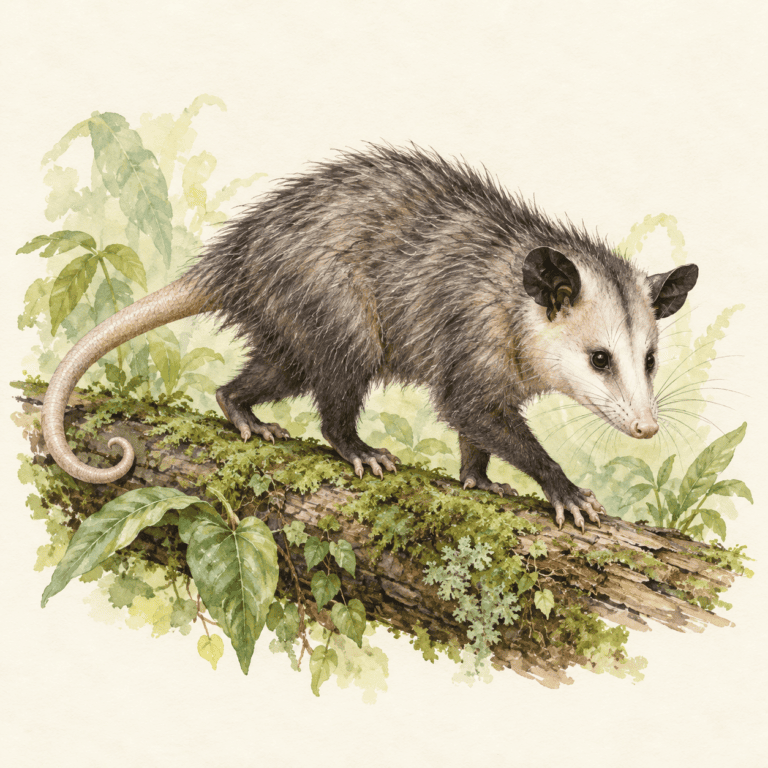
Nature Field Guide

Common Opossum

Spanish name
Zorro pelón común
Scientific name
Didelphis marsupialis

What Do Pico & Tati Think?

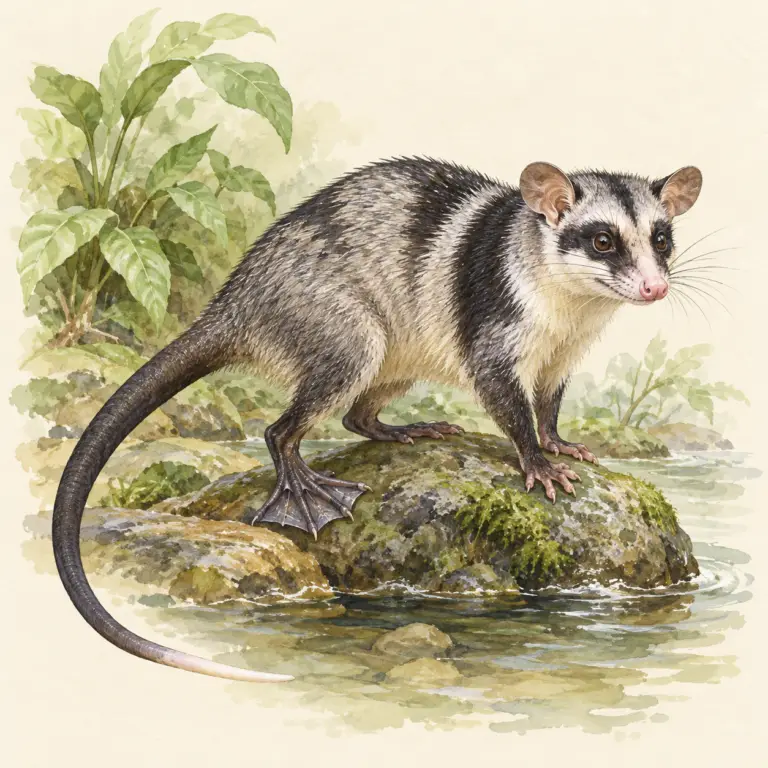
The common opossum is a marsupial: its young complete an important part of their development attached to their mother's teats, protected in her pouch.

Identification

Key Features of the Common Opossum

  • Coarse gray to dark fur and a pale pointed face.

  • Dark, largely hairless ears and a pink nose.

  • Long mostly bare tail; other opossums can look similar.

Habitat & range

Forests, wooded edges and some human-modified landscapes.

Conservation & care

Explore with an adult or local guide. Observe quietly from a distance, stay on established trails and leave shelter undisturbed. Do not feed, touch, capture or corner wildlife. Keep pets away.

View full profile →

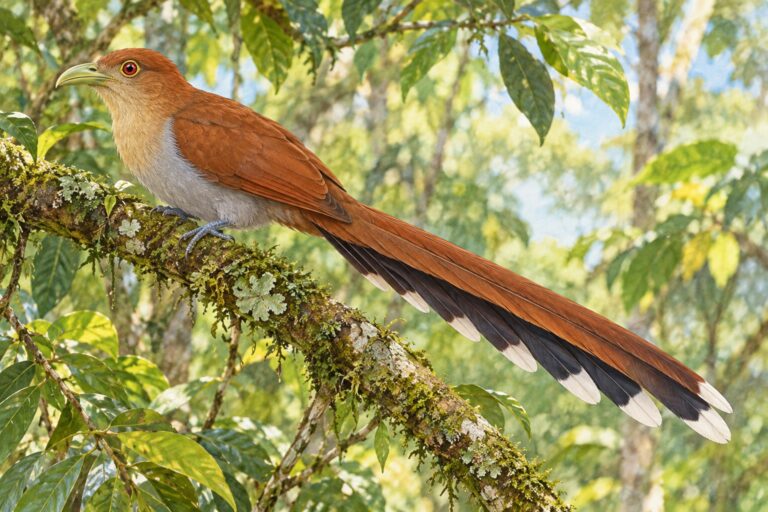
Nature Field Guide

Common Squirrel-Cuckoo

Spanish name
Cuco ardilla
Scientific name
Piaya cayana

What Do Pico & Tati Think?

Pico: “That tail is longer than I expected!”

Tati: “Follow its movement through the branches without chasing it.”

Identification

Key Features of the Common Squirrel-Cuckoo

  • Rusty upperparts

  • Very long graduated white-tipped tail

  • Greenish-yellow bill

Habitat & range

Widespread in wooded habitats on both slopes, including forest canopy, secondary growth, plantations and tree-rich gardens. It can occur well above the lowlands where trees remain.

Conservation & care

Observe quietly from trails or established viewing areas. Give nests, roosts and feeding birds space. Do not handle, chase or lure birds with playback. Keep pets away from wildlife.

Threats & pressures

Protect native vegetation, reduce collision hazards around glass and keep cats away from birds. These are practical prevention priorities, not a claim of a measured decline at a specific Costa Rican site.

View full profile →

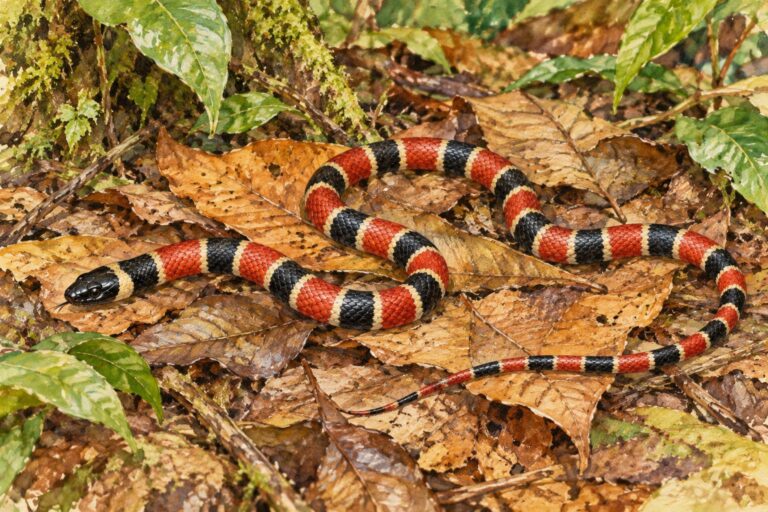
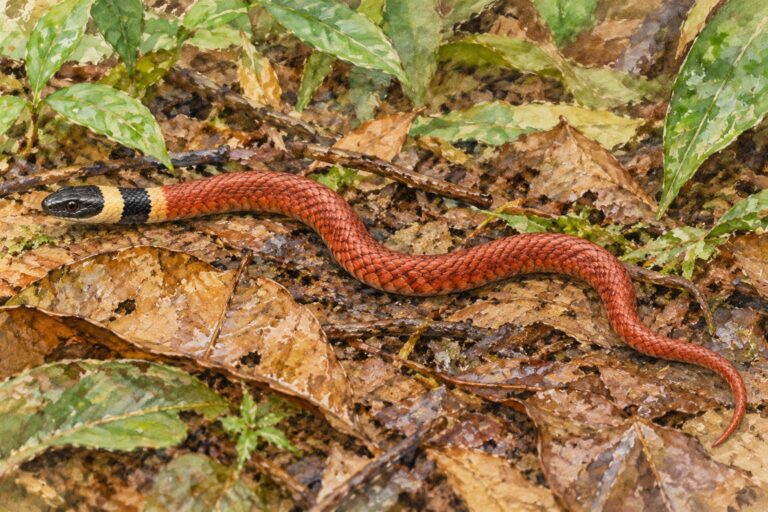
Nature Field Guide

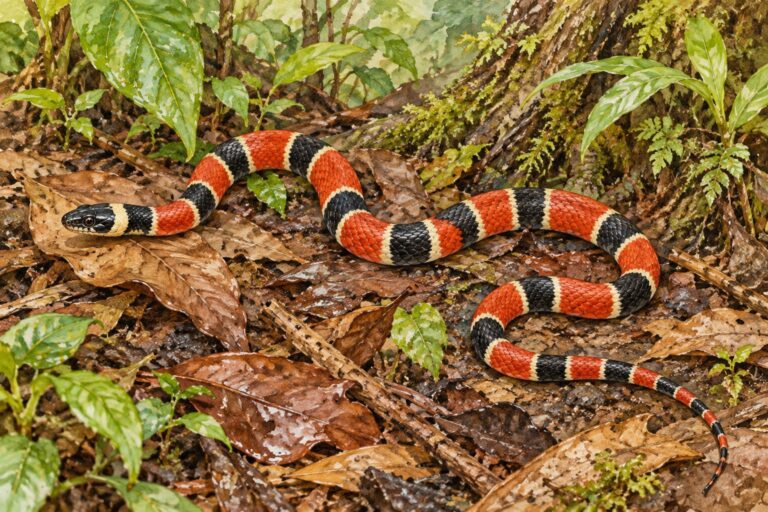
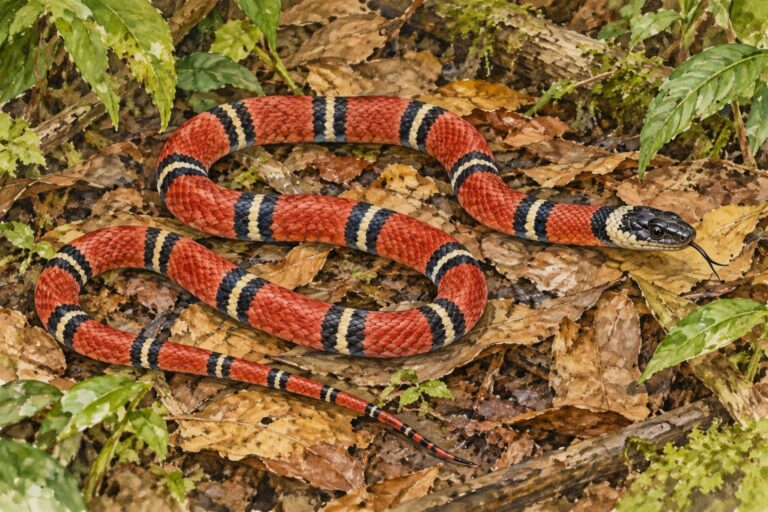
Cope’s False Coral Snake

Spanish name
Falsa coral de Cope
Scientific name
Pliocercus euryzonus

What Do Pico & Tati Think?

Pico: “What helps this reptile fit into its habitat?”

Tati: “Let’s look at its shape, colors and surroundings while giving it plenty of space.”

Identification

Key Features of the Cope’s False Coral Snake

  • Slender banded body

  • Long fine tail

  • Dark head and contrasting reddish markings

Habitat & range

Humid Caribbean-slope forests and southern Pacific forest habitats; documented at Tirimbina.

Conservation & care

Observe from a distance with an adult or qualified guide. Do not touch, catch, corner, feed or move any snake. Keep children and pets away. Colors, head shape and pupil shape must never be used to decide a snake is safe.

Threats & pressures

Protect connected habitat and natural shelters. Avoid collection, unnecessary clearing and deliberate killing. Leave wildlife in place and support responsible observation.

View full profile →

Nature Field Guide

Cope’s Parrot Snake

Spanish name
Lora falsa
Scientific name
Leptophis depressirostris

What Do Pico & Tati Think?

Pico: “What clues help us recognize this reptile?”

Tati: “Let’s notice its shape, markings and habitat from a respectful distance.”

Identification

Key Features of the Cope’s Parrot Snake

  • Slender green body

  • Large eyes with a dark eye stripe

  • Long fine tail

Habitat & range

Humid Caribbean and northern lowlands and southwestern Pacific rainforest.

Conservation & care

Observe only from a distance with an adult or qualified guide. Do not touch, catch, corner or attempt to move any snake. Step back and tell your adult; keep children and pets away. Do not use colors, head shape or pupil shape to decide a snake is safe.

Threats & pressures

Protect habitat connections and natural shelters. Avoid road mortality, collection and deliberate killing. Leave reptiles in their habitat rather than keeping or relocating them.

View full profile →

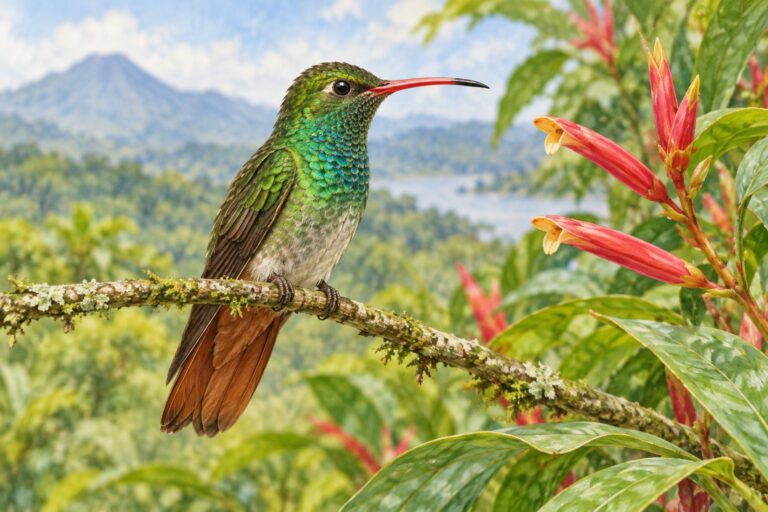
Nature Field Guide

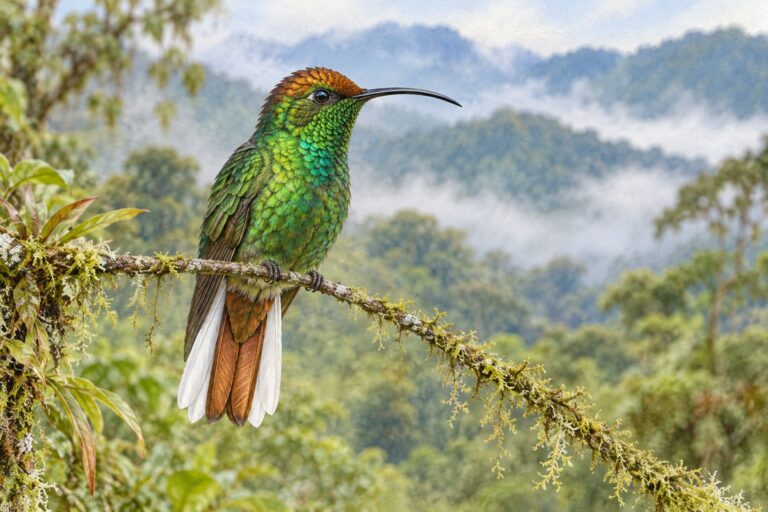
Coppery-headed Emerald

Spanish name
Esmeralda de coronilla cobriza
Scientific name
Microchera cupreiceps

What Do Pico & Tati Think?

Pico: “Does this tiny bird live only in Costa Rica?”

Tati: “Yes. Endemic means its natural range is limited to one place.”

Identification

Key Features of the Coppery-headed Emerald

  • Male coppery crown

  • White outer tail feathers

  • Small size and slightly curved bill

Habitat & range

Costa Rican endemic of humid northern and central mountain slopes, from the Guanacaste range toward the northern Reventazon valley. Seasonal descent occurs; dry coastal Guanacaste is unsuitable.

Conservation & care

Observe quietly from trails or established viewing areas. Give nests, roosts and feeding birds space. Do not handle, chase or lure birds with playback. Keep pets away from wildlife.

Threats & pressures

Protect native vegetation, reduce collision hazards around glass and keep cats away from birds. These are practical prevention priorities, not a claim of a measured decline at a specific Costa Rican site.

View full profile →

Nature Field Guide

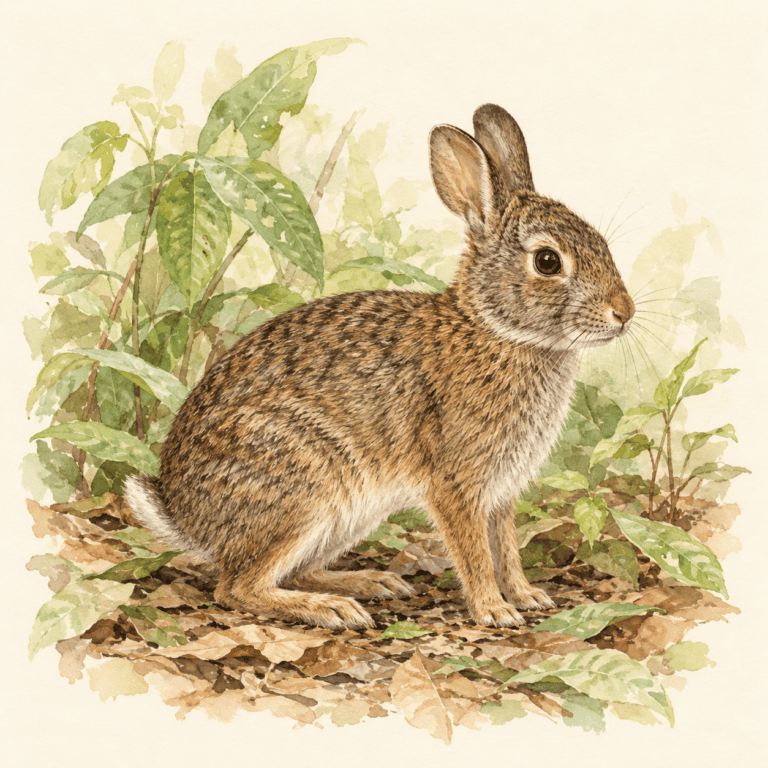
Costa Rica Forest Rabbit

Spanish name
Conejo de monte de Costa Rica
Scientific name
Sylvilagus gabbi

What Do Pico & Tati Think?

The Costa Rica forest rabbit is a native forest rabbit, not a domestic bunny living outdoors.

What does Least Concern mean?

In the linked conservation assessment, this species does not qualify as threatened or near threatened with extinction. It still needs care: local populations and habitats can face problems even when the species has a lower extinction risk overall.

This label describes conservation status. It does not tell us whether a plant is safe for children or pets. Select the status button to read the assessment.

Identification

Key Features of the Costa Rica Forest Rabbit

  • Small brown forest rabbit with a compact body.

  • Relatively short ears and an inconspicuous tail.

  • Use locality and expert advice to distinguish similar rabbits.

Habitat & range

Suitable wooded lowland landscapes and forest cover; local distribution varies.

Conservation & care

Explore with an adult or local guide. Observe quietly from a distance, stay on established trails and leave shelter undisturbed. Do not feed, touch, capture or corner wildlife. Keep pets away.

Conservation assessment

Global IUCN category reported by the linked specialist or Mammal Diversity Database account, checked October 2026. Least Concern does not mean there are no threats or that every local population is secure.

View full profile →

Nature Field Guide

Costa Rica Least Gecko

Spanish name
Gequito de garganta rayada
Scientific name
Sphaerodactylus graptolaemus

What Do Pico & Tati Think?

Pico: “What helps this reptile fit into its habitat?”

Tati: “Let’s look at its shape, colors and surroundings while giving it plenty of space.”

Identification

Key Features of the Costa Rica Least Gecko

  • Very small gecko

  • Rounded head and narrow tail

  • Fine throat lines require careful expert comparison

Habitat & range

Southwestern Costa Rican coastal forest, including Isla del Caño and the southern Pacific mainland.

Conservation & care

Observe with an adult from permitted paths. Do not touch, chase, catch or feed reptiles. Leave bark, logs, stones and leaf litter in place. Keep pets away and allow an open escape route.

Threats & pressures

Protect connected habitat and natural shelters. Avoid collection, unnecessary clearing and deliberate killing. Leave wildlife in place and support responsible observation.

View full profile →

Nature Field Guide

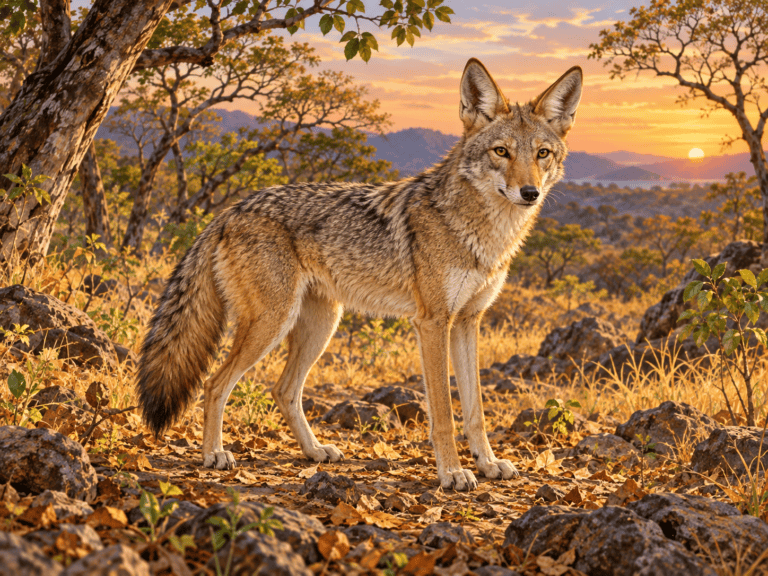
Coyote

Spanish name
Coyote
Scientific name
Canis latrans

What Do Pico & Tati Think?

Pico: “Its ears and bushy tail look different from a fox!”

Tati: “A wild animal should keep finding its own food.”

Identification

Key Features of the Coyote

  • Pointed muzzle and large upright ears.

  • Mixed gray-brown coat with paler underside.

  • Bushy tail usually carried low.

Habitat & range

Sierra Zapote’s forest-edge landscape in Las Juntas, Abangares, and other Guanacaste lowlands.

Conservation & care

Keep a respectful distance and leave an open route for the animal. Stay on authorized paths, secure food and rubbish, and observe without feeding, touching, baiting or chasing.

View full profile →

Nature Field Guide

Decorated Anole

Spanish name
Anolis decorado / Lagartija gigante de bandas
Scientific name
Anolis insignis

What Do Pico & Tati Think?

Pico: “What helps this reptile fit into its habitat?”

Tati: “Let’s look at its shape, colors and surroundings while giving it plenty of space.”

Identification

Key Features of the Decorated Anole

  • Large anole with a broad head

  • Green body with pale markings

  • Long tail and tree-perching posture

Habitat & range

Humid foothill and montane forests, including the Guanacaste volcanic range and the central mountains. Documented at San Gerardo Biological Station in Área de Conservación Guanacaste.

Conservation & care

Observe with an adult from permitted paths. Do not touch, chase, catch or feed reptiles. Leave bark, logs, stones and leaf litter in place. Keep pets away and allow an open escape route.

Threats & pressures

Protect connected habitat and natural shelters. Avoid collection, unnecessary clearing and deliberate killing. Leave wildlife in place and support responsible observation.

View full profile →

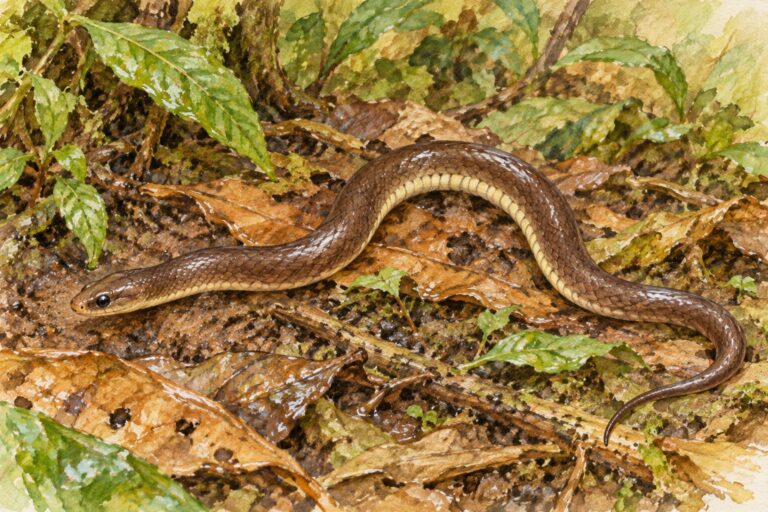
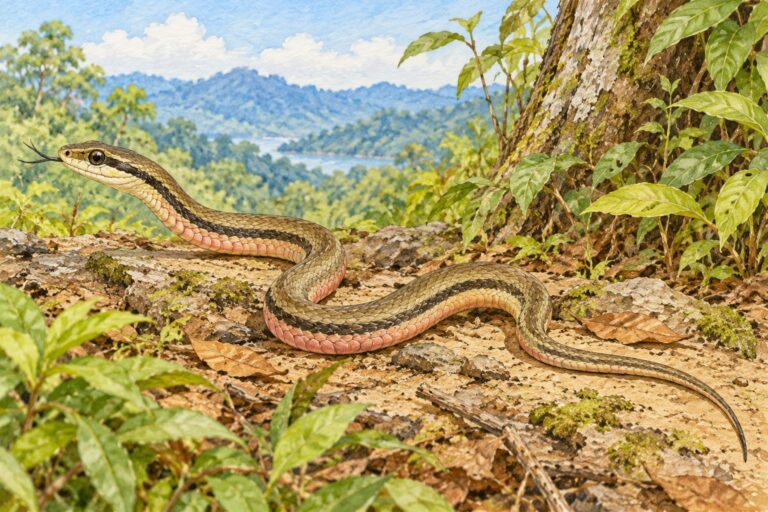
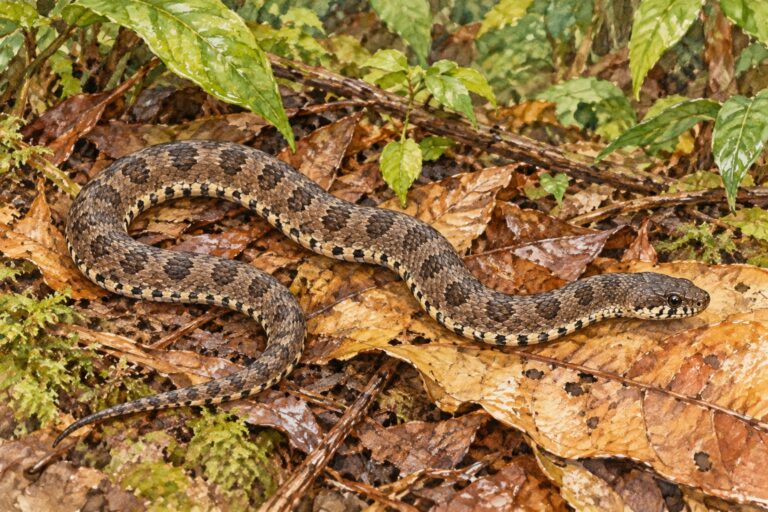
Nature Field Guide

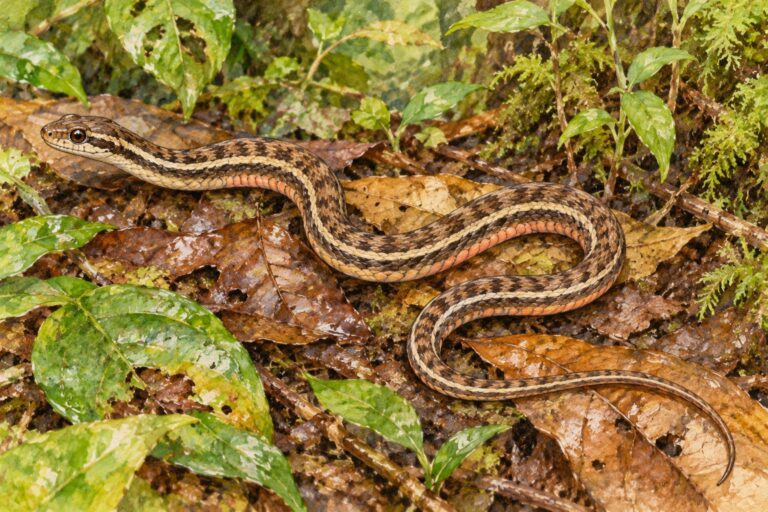
Decorated Forest Snake

Spanish name
Hojarasquera rayada
Scientific name
Rhadinaea decorata

What Do Pico & Tati Think?

Pico: “What can we learn from this reptile’s shape?”

Tati: “Let’s notice its markings and habitat while leaving it plenty of space.”

Identification

Key Features of the Decorated Forest Snake

  • Small slender brown body

  • Fine pale and dark lengthwise stripes

  • Forest-floor camouflage

Habitat & range

Humid Caribbean and Pacific forests and foothills, including northern lowlands and southwestern Costa Rica.

Conservation & care

Observe only from a distance with an adult or qualified guide. Never touch, catch, feed, corner or move any snake. Keep children and pets away. Colors, head shape and pupil shape must never be used to decide a snake is safe.

Threats & pressures

Protect natural shelters and connected habitat. Avoid collection, unnecessary clearing and deliberate killing. Leave wildlife in its habitat and support responsible observation.

View full profile →

Nature Field Guide

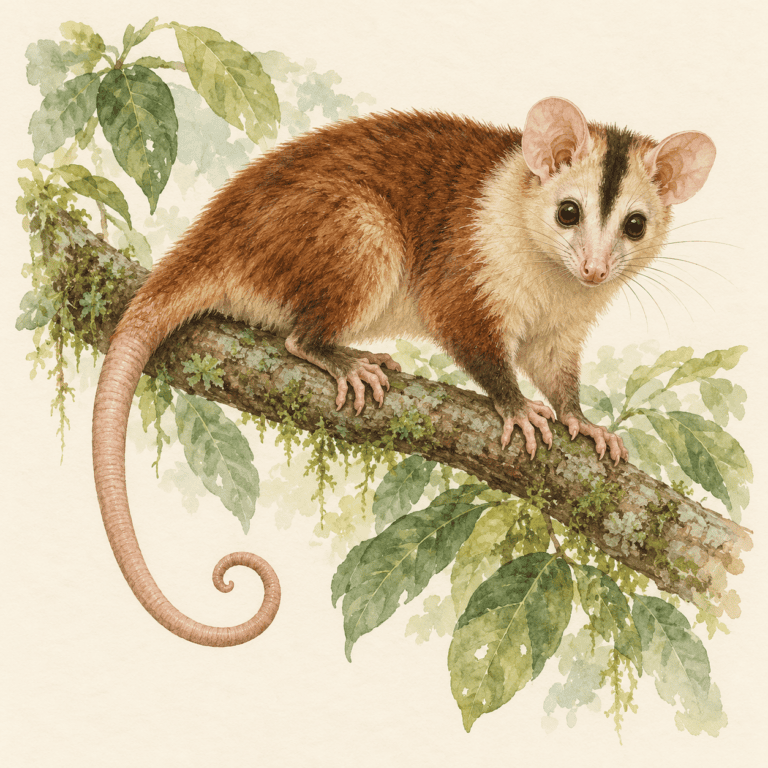
Derby’s Woolly Opossum

Spanish name
Zorro de balsa
Scientific name
Caluromys derbianus

What Do Pico & Tati Think?

Derby's woolly opossum is a tree-climbing marsupial with soft fur, large eyes and a dark stripe down its pale face.

Identification

Key Features of the Derby’s Woolly Opossum

  • Soft woolly coat, often reddish brown with pale patches.

  • Large eyes and a dark stripe down the center of a pale face.

  • Long gripping tail with a furred base and mostly bare outer portion.

Habitat & range

Humid forests, forest edges and other wooded habitats.

Conservation & care

Explore with an adult or local guide. Observe quietly from a distance, stay on established trails and leave shelter undisturbed. Do not feed, touch, capture or corner wildlife. Keep pets away.

View full profile →

Nature Field Guide

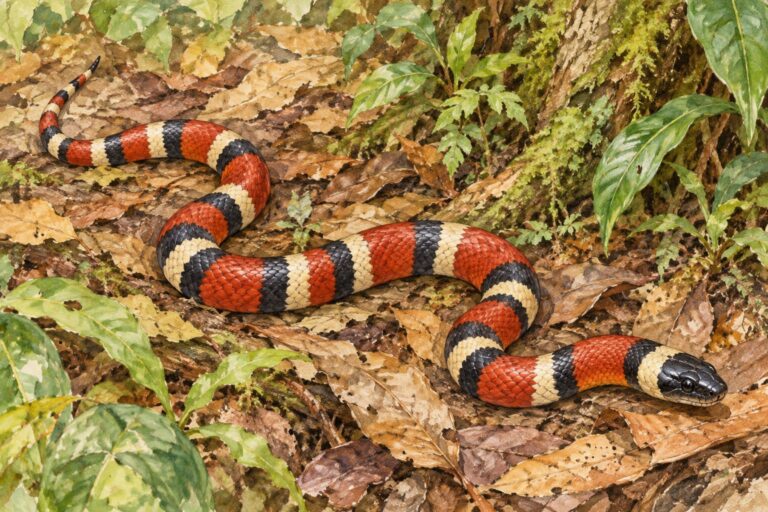
Ecuadorian Milksnake

Spanish name
Falsa coral / Serpiente de leche
Scientific name
Lampropeltis micropholis

What Do Pico & Tati Think?

Pico: “What can we learn from this reptile’s shape?”

Tati: “Let’s notice its markings and habitat while leaving it plenty of space.”

Identification

Key Features of the Ecuadorian Milksnake

  • Young animals may have red, pale and dark bands

  • Smooth-looking scales

  • Appearance can darken with age

Habitat & range

Eastern and southern Costa Rican forest landscapes and mountain slopes; province assignments refer to suitable habitat rather than all parts of each province.

Conservation & care

Observe only from a distance with an adult or qualified guide. Never touch, catch, feed, corner or move any snake. Keep children and pets away. Colors, head shape and pupil shape must never be used to decide a snake is safe.

Threats & pressures

Protect natural shelters and connected habitat. Avoid collection, unnecessary clearing and deliberate killing. Leave wildlife in its habitat and support responsible observation.

View full profile →

Nature Field Guide

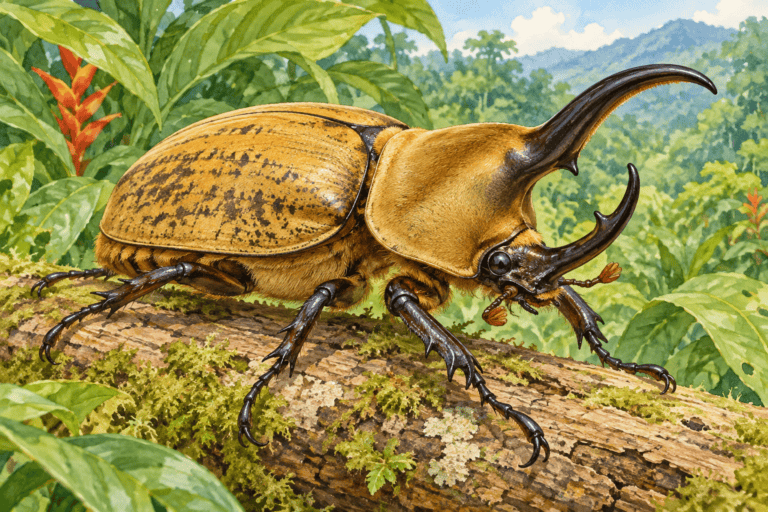
Elephant Beetle

Spanish name
Escarabajo elefante
Scientific name
Megasoma elephas

What Do Pico & Tati Think?

Pico: “Let's look closely at the elephant beetle!”

Tati: “We can compare its shape and markings without touching it.”

Identification

Key Features of the Elephant Beetle

  • Large rounded beetle

  • fine golden body hairs

  • males have a forward horn

Habitat & range

Most often associated with lowland wooded habitats; larvae develop in decaying wood and damp plant material. A documented Tortuguero record supports Caribbean rainforest habitat. A Costa Rican specialist account places most records below 500 m, with some to 1,500 m. Existing broad region tags require further locality checks and should not be read as presence throughout the highlands.

Conservation & care

Observe without collecting, handling or disturbing insects or nests. Stay on permitted paths. Leave caterpillars and their food plants in place.

View full profile →

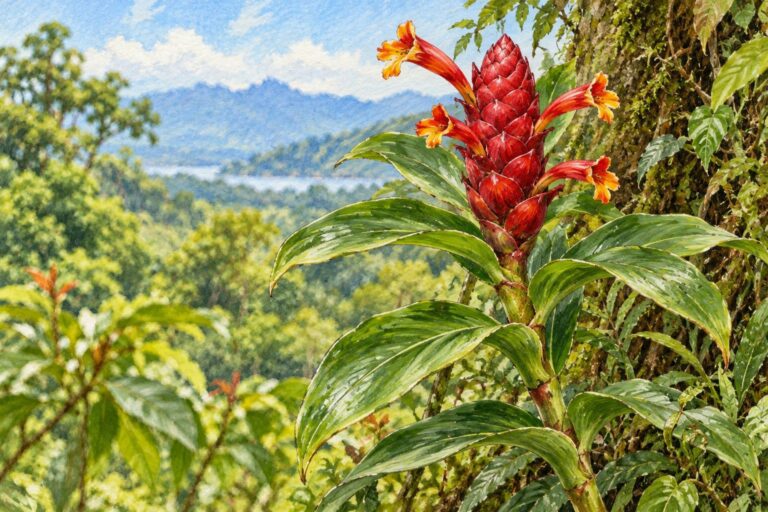
Nature Field Guide

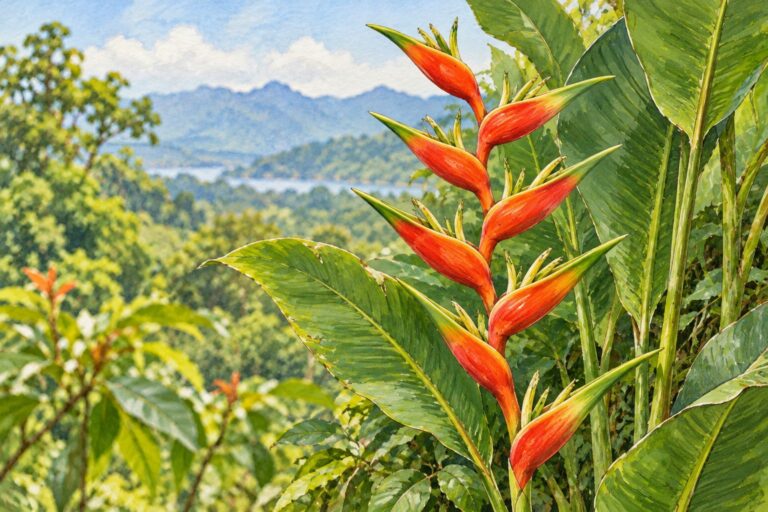
Expanded Lobster Claw

Spanish name
Platanilla / Caliguate
Scientific name
Heliconia latispatha

What Do Pico & Tati Think?

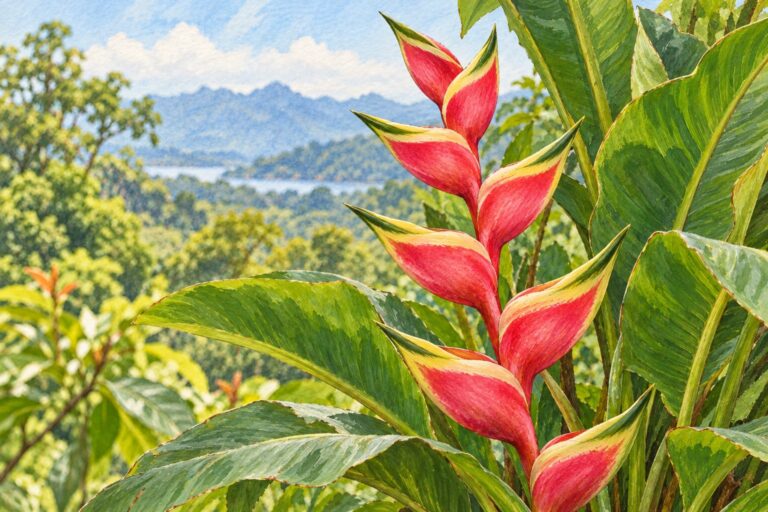
Pico: “An upright open arrangement of colorful bracts rises among broad green leaves.”

Tati: “Let’s notice the leaves, flowers and habitat without disturbing the plant.”

Identification

Key Features of the Expanded Lobster Claw

  • Broad banana-like leaves

  • Upright open inflorescence

  • Separated orange-to-red bracts holding small flowers

Habitat & range

Both slopes, including Guanacaste, the Northern Plains, Caribbean, Central Pacific and Osa; also cultivated in gardens.

Conservation & care

Explore with an adult on permitted paths. Observe and photograph without picking leaves, flowers or fruits. Do not taste plants or let pets chew them. Avoid climbing trees and disturbing roots, seedlings or visiting wildlife.

Threats & pressures

Protect suitable habitat, mature trees and natural regeneration. Avoid trampling, unauthorized clearing and collection.

View full profile →

Nature Field Guide

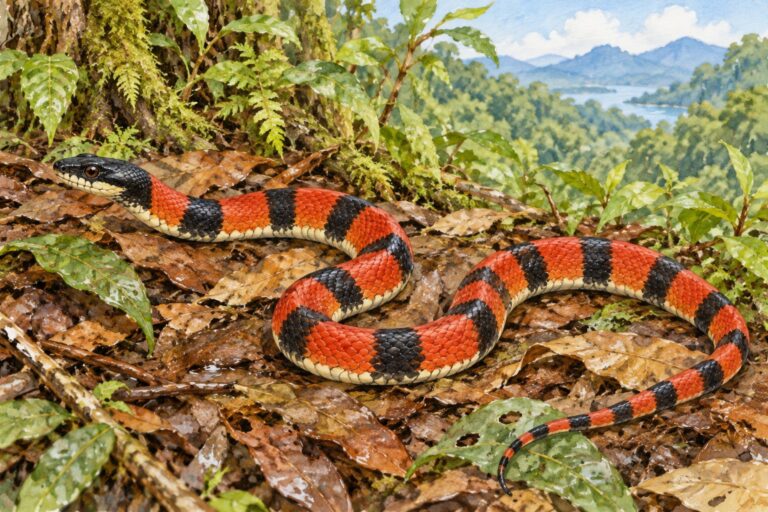
Forest Flame Snake

Spanish name
Falsa coral de bosque
Scientific name
Oxyrhopus petolarius

What Do Pico & Tati Think?

Pico: “What helps this reptile fit into its habitat?”

Tati: “Let’s look at its shape, colors and surroundings while giving it plenty of space.”

Identification

Key Features of the Forest Flame Snake

  • Dark head

  • Red-to-orange areas with dark crossbands

  • Slender body with variable markings

Habitat & range

Humid Caribbean-slope and southern Pacific forests and their edges in Costa Rica.

Conservation & care

Observe from a distance with an adult or qualified guide. Do not touch, catch, corner, feed or move any snake. Keep children and pets away. Colors, head shape and pupil shape must never be used to decide a snake is safe.

Threats & pressures

Protect connected habitat and natural shelters. Avoid collection, unnecessary clearing and deliberate killing. Leave wildlife in place and support responsible observation.

View full profile →

Nature Field Guide

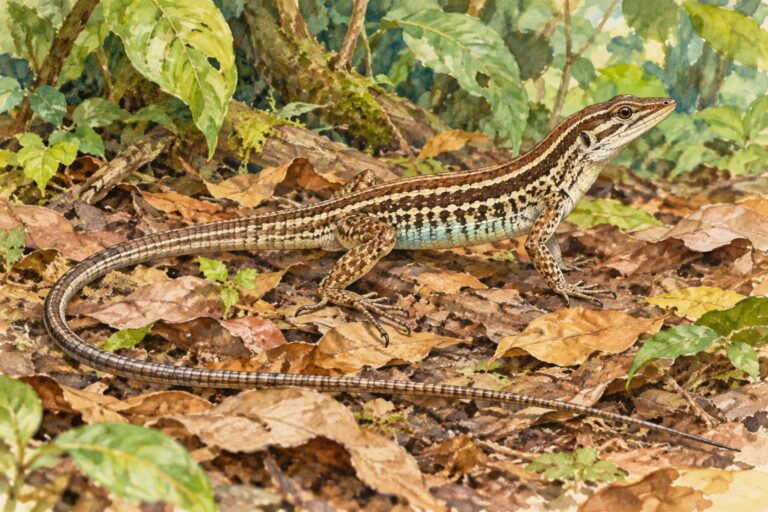
Four-lined Ameiva

Spanish name
Ameiva de cuatro líneas
Scientific name
Holcosus quadrilineatus

What Do Pico & Tati Think?

Pico: “What clues help us recognize this reptile?”

Tati: “Let’s notice its shape, markings and habitat from a respectful distance.”

Identification

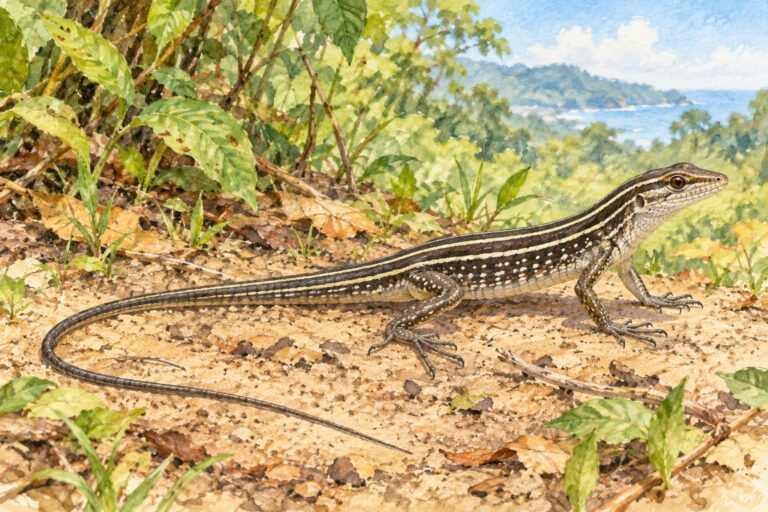
Key Features of the Four-lined Ameiva

  • Four pale longitudinal body stripes

  • Long slender tail

  • Small contrasting flank markings

Habitat & range

Humid Caribbean lowlands and suitable Pacific lowlands and edges; a field study documents Cocles, Limón.

Conservation & care

Observe with an adult from permitted paths. Do not catch, chase, touch or feed reptiles. Leave bark, logs, rocks and leaf litter in place. Keep pets away and allow animals an open escape route.

Threats & pressures

Protect habitat connections and natural shelters. Avoid road mortality, collection and deliberate killing. Leave reptiles in their habitat rather than keeping or relocating them.

View full profile →

Nature Field Guide

Geoffroy’s Spider Monkey

Spanish name
Mono araña / Mono colorado
Scientific name
Ateles geoffroyi

What Do Pico & Tati Think?

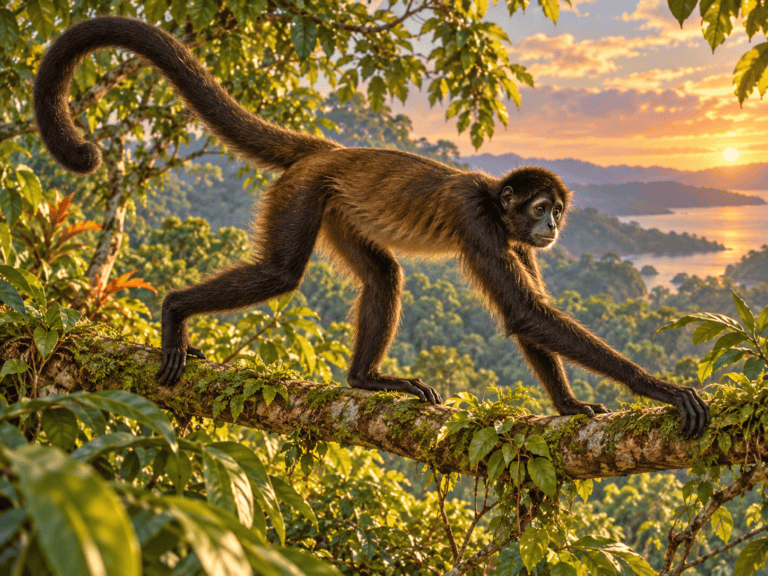
Pico: “Its tail is holding a branch too!”

Tati: “The forest needs connected treetops.”

Identification

Key Features of the Geoffroy’s Spider Monkey

  • Very long limbs and slender body.

  • Strong grasping tail with a bare gripping surface near its tip.

  • Brown to reddish fur; color varies.

Habitat & range

Manuel Antonio’s forest landscape; ACG also documents this species in rainforest at Botarrama.

Conservation & care

Keep a respectful distance and leave an open route for the animal. Stay on authorized paths, secure food and rubbish, and observe without feeding, touching, baiting or chasing.

Threats & pressures

Forest loss, capture for pets and hunting combine with slow reproduction to make recovery difficult.

Conservation assessment

Global IUCN category as reported by the linked source, checked 7 October 2026. The source does not give an assessment year here. National legal protection and local abundance are separate questions.

View full profile →

Nature Field Guide

Ghost Anole

Spanish name
Anolis fantasma
Scientific name
Anolis lemurinus

What Do Pico & Tati Think?

Pico: “What clues help us recognize this reptile?”

Tati: “Let’s notice its shape, markings and habitat from a respectful distance.”

Identification

Key Features of the Ghost Anole

  • Brown-to-gray coloration

  • Long hind legs and tapering tail

  • Subtle darker body markings

Habitat & range

Humid Caribbean lowlands and foothills and southwestern Pacific forest.

Conservation & care

Observe with an adult from permitted paths. Do not catch, chase, touch or feed reptiles. Leave bark, logs, rocks and leaf litter in place. Keep pets away and allow animals an open escape route.

Threats & pressures

Protect habitat connections and natural shelters. Avoid road mortality, collection and deliberate killing. Leave reptiles in their habitat rather than keeping or relocating them.

View full profile →

Nature Field Guide

Giant Green Anole

Spanish name
Anolis verde gigante
Scientific name
Anolis biporcatus

What Do Pico & Tati Think?

Pico and Tati invite you to learn about the giant green anole. Draw the shapes of a branch and the anole’s toes. How might those shapes help with climbing?

Identification

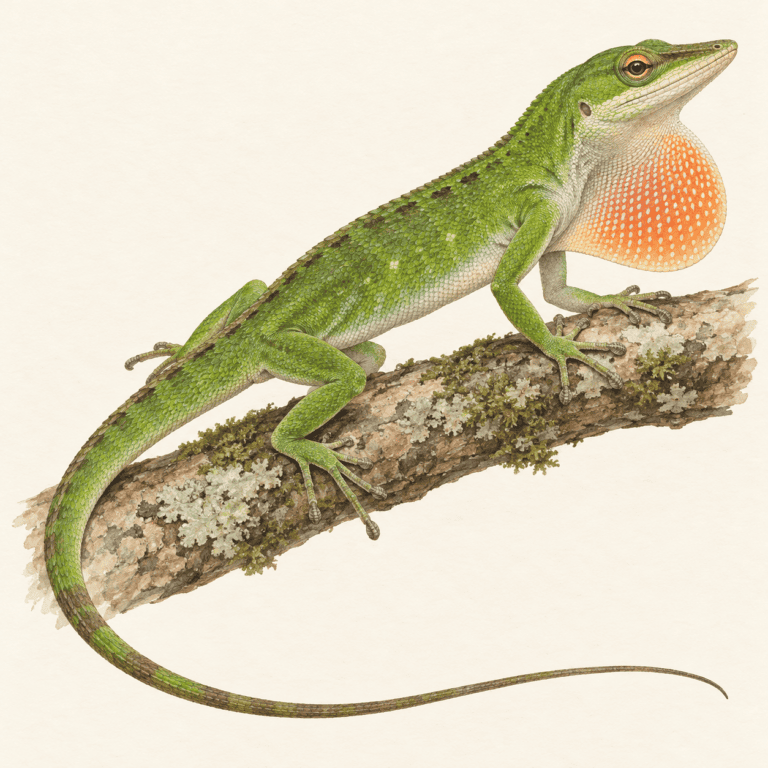
Key Features of the Giant Green Anole

  • Green body, sometimes with a darker appearance.

  • Long tail and climbing toes.

  • An extendable throat fan, especially noticeable during displays.

Habitat & range

Humid forests and wooded vegetation in Costa Rica.

Conservation & care

Watch wildlife with an adult from a safe path. Do not touch, feed, capture or move reptiles, and keep pets away. Leave eggs, shelters and vegetation undisturbed.

View full profile →

Nature Field Guide

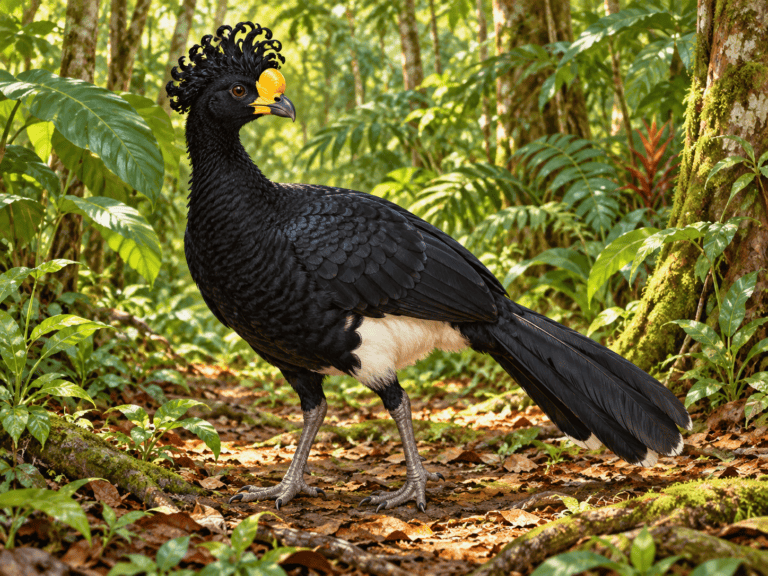
Great Curassow

Spanish name
Pavón
Scientific name
Crax rubra

What Do Pico & Tati Think?

Pico: “Those head feathers curl forward!”

Tati: “Let’s stay still while it searches the forest floor.”

Identification

Key Features of the Great Curassow

  • Curled feathers form a forward-facing crest.

  • Male: black body, white belly and yellow bill swelling.

  • Female plumage varies; no yellow bill swelling.

Habitat & range

Local surviving forest populations include Santa Rosa, Rincon de la Vieja, Braulio Carrillo and Corcovado. Present distribution is patchy; historical lowland range is not a promise of local occurrence.

Seasonal Calendar

Nesting

ACG / Costa Rican lowland forest

Mar, Apr, May

Legacy natural-history account reports egg laying; local dates and other regions can differ.

Event source ↗

Conservation & care

Stay on authorized trails or viewing routes. Give birds space, keep voices low and leave nests undisturbed. Observe without bait, feeding or recorded calls.

Threats & pressures

La Amistad’s management plan identifies hunting and forest pressures on the Pacific boundary. These are habitat-level concerns; no local curassow decline percentage is assigned.

Conservation assessment

ACG describes the species as Vulnerable; this is not a local population estimate. Source checked 7 October 2026. This is a global species category, not a count of birds in the tagged towns.

View full profile →

Nature Field Guide

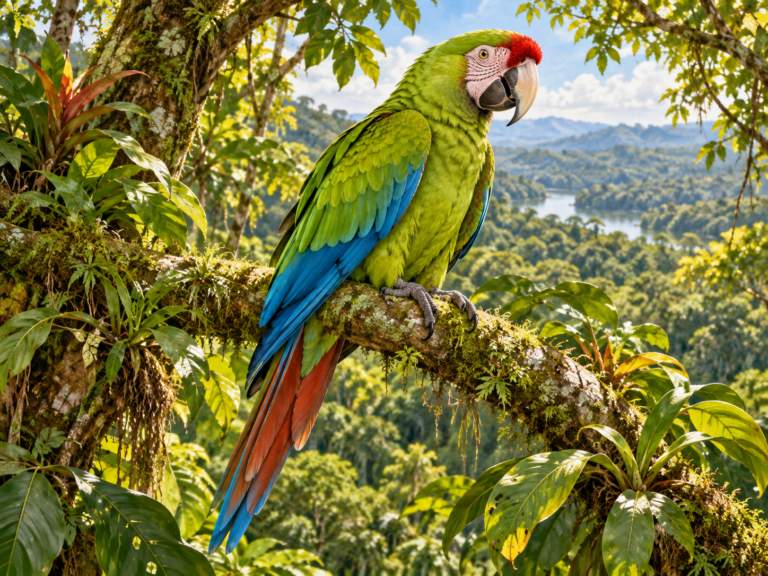
Great Green Macaw

Spanish name
Lapa verde
Scientific name
Ara ambiguus

What Do Pico & Tati Think?

Pico: “That green bird almost matches the treetops!”

Tati: “Its forest needs room for feeding and nesting.”

Identification

Key Features of the Great Green Macaw

  • Mainly green plumage with a reddish forehead.

  • Blue in the wings and a long tail.

  • Large, powerful bill.

Habitat & range

Humid northern and Caribbean lowland forest. Birds move with food availability. Northern Plains and Caribbean are broad browsing areas, not claims of continuous occupation.

Seasonal Calendar

Breeding

Costa Rica; broad national window

Jan, Feb, Mar, Apr, Dec

Costa Rican dry-season breeding window; individual sites vary.

Event source ↗

Conservation & care

Stay on authorized trails or viewing routes. Give birds space, keep voices low and leave nests undisturbed. Observe without bait, feeding or recorded calls.

Threats & pressures

Habitat disturbance, logging of important nesting trees and illegal capture threaten this species.

Documented impact

BirdLife’s 2021 Red List update reported a 99% decline over three generations for Nicaragua/Costa Rica. This historical regional estimate is not a 2026 local census.

Protection & recovery

World Parrot Trust reports 50 chicks fledged from artificial nests in the Ara Manzanillo project in 2022, and more than 60 in 2023. These are project breeding outcomes, not the total wild population.

Conservation assessment

World Parrot Trust reports IUCN Critically Endangered. Source checked 7 October 2026. This is a global species category, not a count of birds in the tagged towns.

View full profile →

Nature Field Guide

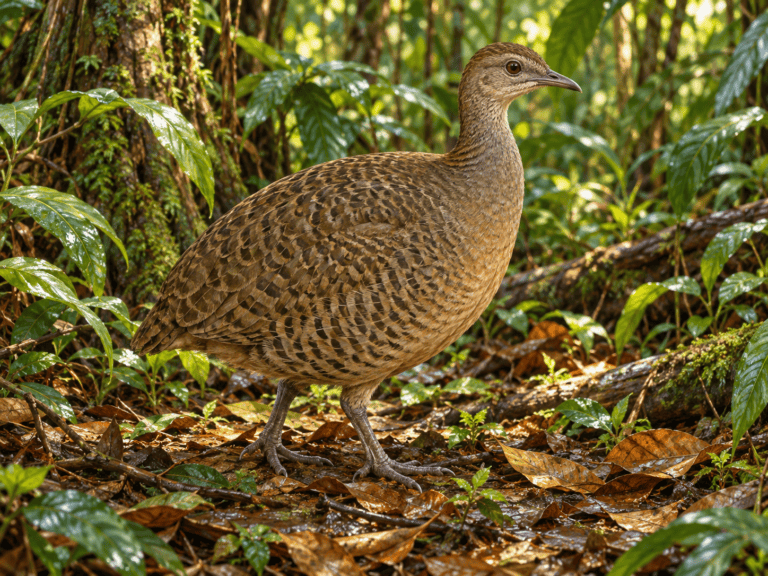
Great Tinamou

Spanish name
Tinamú grande / Gallina de monte
Scientific name
Tinamus major

What Do Pico & Tati Think?

Pico: “I can hear a whistle, but the leaves hide the bird!”

Tati: “We can listen without leaving the trail.”

Identification

Key Features of the Great Tinamou

  • Rounded body with almost no visible tail.

  • Gray-brown, dark-barred plumage.

  • A clear whistle from the forest floor.

Habitat & range

Humid lowland and foothill forest on the Caribbean slope and southern Pacific, north toward Carara. Guanacaste refers to humid forest sectors, including documented ACG rainforest, not dry coastal forest.

Conservation & care

Stay on authorized trails or viewing routes. Give birds space, keep voices low and leave nests undisturbed. Observe without bait, feeding or recorded calls.

View full profile →

Nature Field Guide

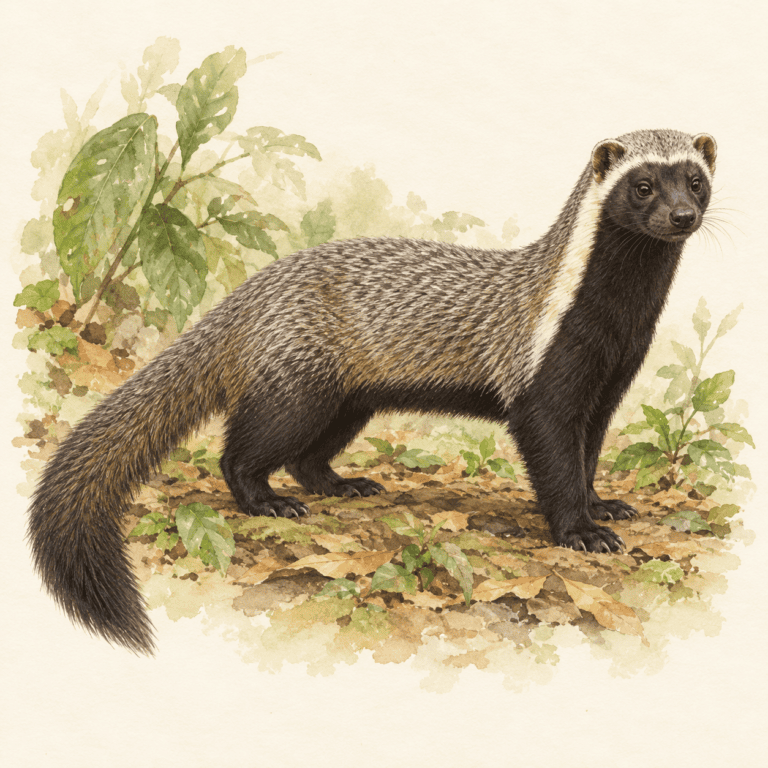
Greater Grison

Spanish name
Grisón
Scientific name
Galictis vittata

What Do Pico & Tati Think?

The greater grison has a long low body, short legs and a striking pale stripe separating its dark face and underside from its grizzled back.

Identification

Key Features of the Greater Grison

  • Long slim body carried on short legs.

  • Grizzled gray back with dark face, belly and legs.

  • Pale stripe across the forehead and down the sides of the shoulders.

Habitat & range

Forests, wooded edges and other suitable landscapes, often near freshwater.

Conservation & care

Explore with an adult or local guide. Observe quietly from a distance, stay on established trails and leave shelter undisturbed. Do not feed, touch, capture or corner wildlife. Keep pets away.

View full profile →

Nature Field Guide

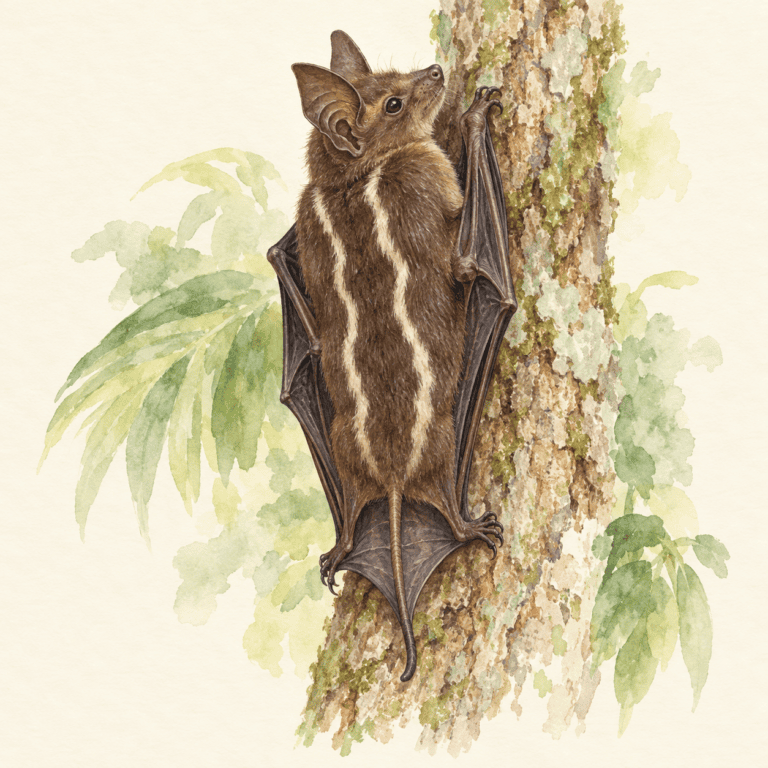
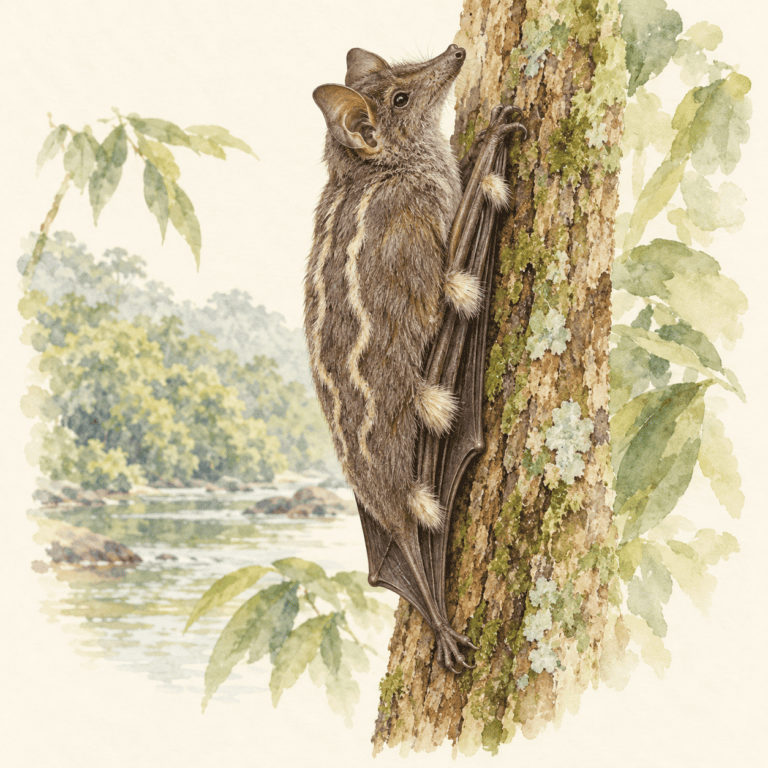
Greater Sac-winged Bat

Spanish name
Murciélago listado de sacos mayor
Scientific name
Saccopteryx bilineata

What Do Pico & Tati Think?

Two pale wavy stripes down a dark back are a starting clue for the greater sac-winged bat.

Identification

Key Features of the Greater Sac-winged Bat

  • Dark brown coat with two narrow pale wavy back stripes.

  • Small bat with pointed ears and dark membranous wings.

  • Similar species need expert comparison; never handle a bat to inspect wing sacs.

Habitat & range

Suitable tropical wooded habitat with undisturbed roosting surfaces.

Conservation & care

Observe bats from a distance with an adult or guide. Do not touch, feed or handle any bat, including one found on the ground. Leave roosts undisturbed, avoid direct flash and ask local wildlife professionals for help if an animal appears injured.

View full profile →

Nature Field Guide

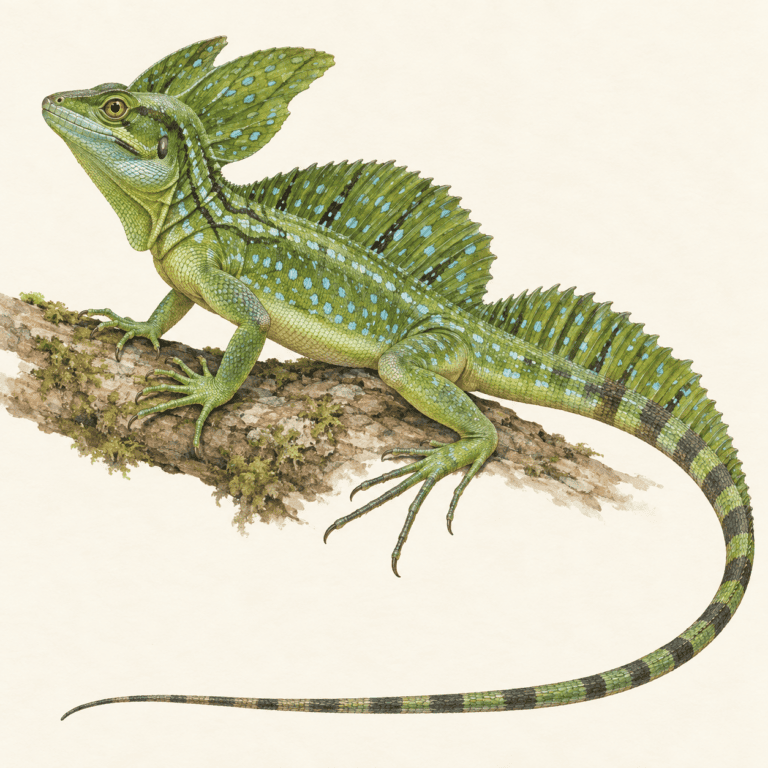
Green Basilisk

Spanish name
Basilisco verde
Scientific name
Basiliscus plumifrons

What Do Pico & Tati Think?

Pico and Tati invite you to learn about the green basilisk. Compare an adult male photograph with a juvenile. Which features change as the animal grows?

Identification

Key Features of the Green Basilisk

  • Green body with pale or bluish spots.

  • Long tail and long hind toes.

  • Large head, back and tail crests in adult males.

Habitat & range

Humid Caribbean lowland forests and suitable wooded stream corridors.

Conservation & care

Watch wildlife with an adult from a safe path. Do not touch, feed, capture or move reptiles, and keep pets away. Leave eggs, shelters and vegetation undisturbed.

View full profile →

Nature Field Guide

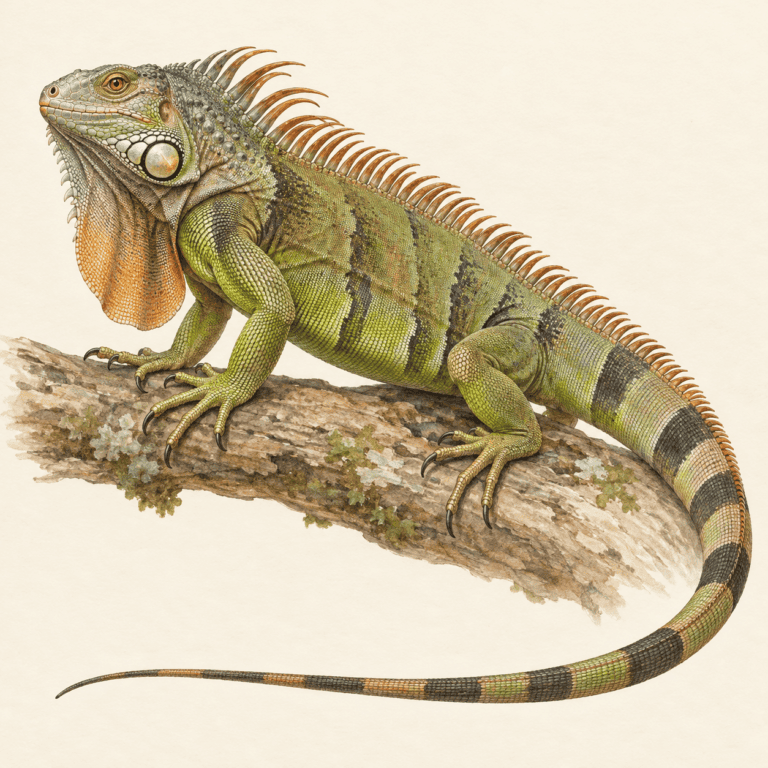
Green Iguana

Spanish name
Iguana verde
Scientific name
Iguana iguana

What Do Pico & Tati Think?

Pico and Tati invite you to learn about the green iguana. Sketch the outline of a distant iguana. Compare its throat fan with the spiny-tailed iguana card.

Identification

Key Features of the Green Iguana

  • Large hanging throat fan.

  • Long tail and a row of dorsal spines.

  • Large round scale below the ear opening.

Habitat & range

Lowland forests and wooded waterways on both Costa Rican slopes.

Conservation & care

Watch wildlife with an adult from a safe path. Do not touch, feed, capture or move reptiles, and keep pets away. Leave eggs, shelters and vegetation undisturbed.

View full profile →

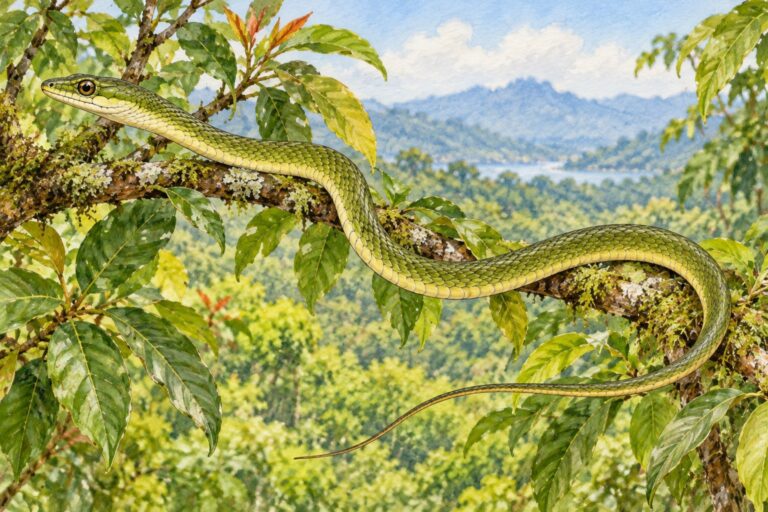
Nature Field Guide

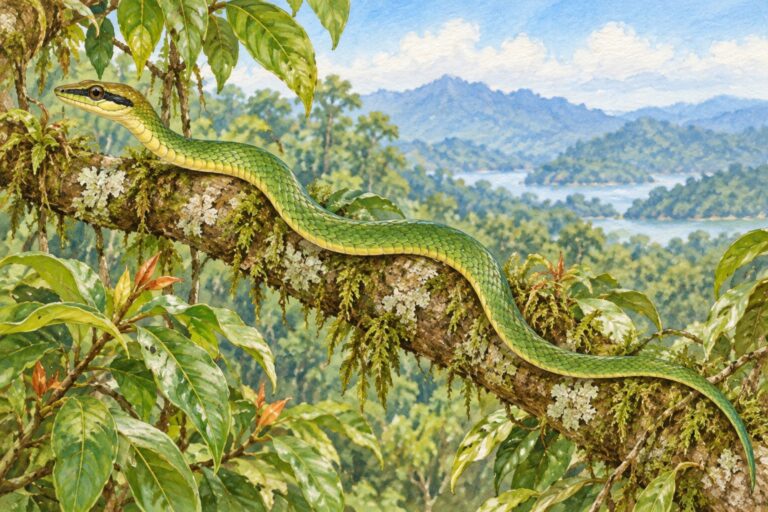
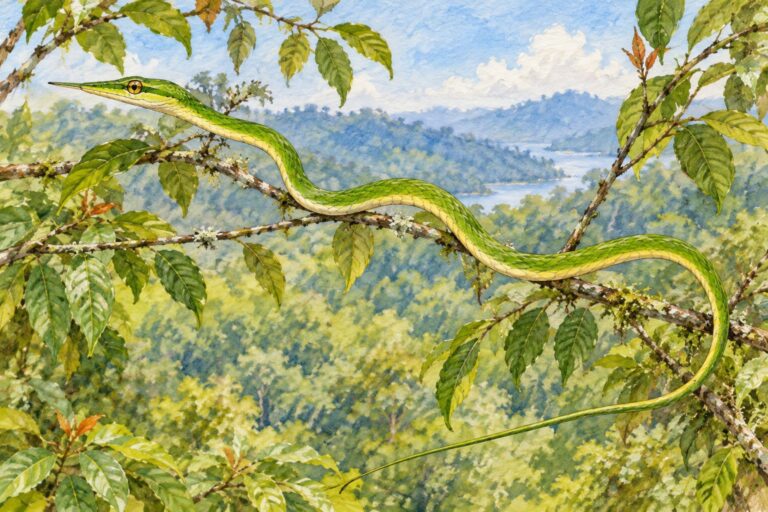
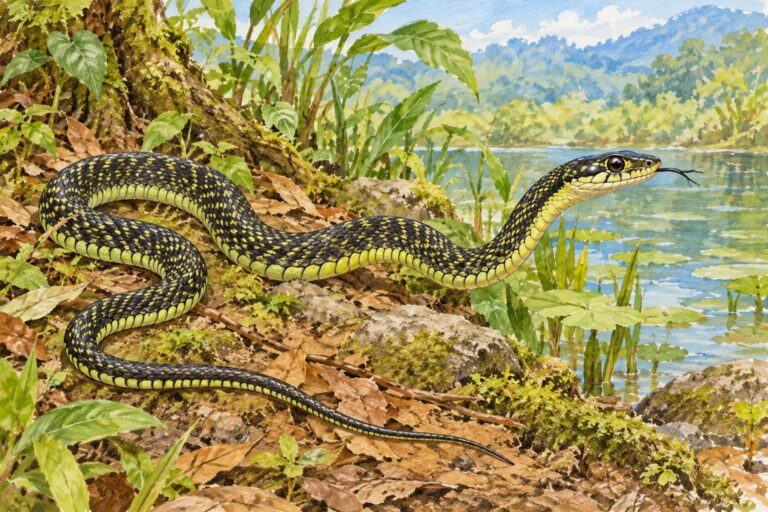
Green Vine Snake

Spanish name
Bejuquilla verde
Scientific name
Oxybelis fulgidus

What Do Pico & Tati Think?

Pico: “What clues help us recognize this reptile?”

Tati: “Let’s notice its shape, markings and habitat from a respectful distance.”

Identification

Key Features of the Green Vine Snake

  • Very slender green body

  • Elongated pointed snout

  • Exceptionally long tapering tail

Habitat & range

Wooded lowlands and foothills on both slopes, including Pacific and Caribbean forest edges.

Conservation & care

Observe only from a distance with an adult or qualified guide. Do not touch, catch, corner or attempt to move any snake. Step back and tell your adult; keep children and pets away. Do not use colors, head shape or pupil shape to decide a snake is safe.

Threats & pressures

Protect habitat connections and natural shelters. Avoid road mortality, collection and deliberate killing. Leave reptiles in their habitat rather than keeping or relocating them.

View full profile →

Nature Field Guide

Guapinol

Spanish name
Guapinol
Scientific name
Hymenaea courbaril

What Do Pico & Tati Think?

Pico: “Paired leaflets and hard brown pods identify a forest tree with an important wildlife role.”

Tati: “Let’s notice the leaves, flowers and habitat without disturbing the plant.”

Identification

Key Features of the Guapinol

  • Two leaflets in each compound leaf

  • Thick brown woody pods

  • Large spreading forest-tree form

Habitat & range

Pacific lowlands and western Central Valley; Guanacaste dry forest is one documented setting.

Conservation & care

Explore with an adult on permitted paths. Observe and photograph without picking leaves, flowers or fruits. Do not taste plants or let pets chew them. Avoid climbing trees and disturbing roots, seedlings or visiting wildlife.

Threats & pressures

Protect suitable habitat, mature trees and natural regeneration. Avoid trampling, unauthorized clearing and collection.

View full profile →

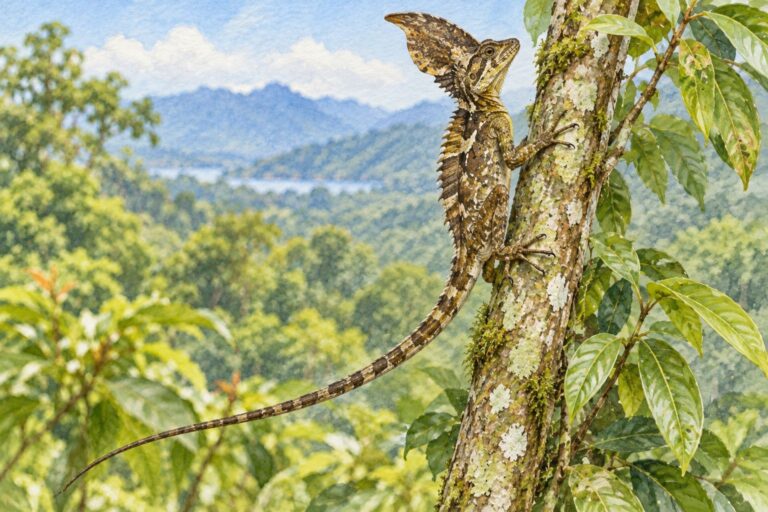
Nature Field Guide

Helmeted Iguana

Spanish name
Iguana de casco / Lagartija de casco
Scientific name
Corytophanes cristatus

What Do Pico & Tati Think?

Pico: “What can we learn from this reptile’s shape?”

Tati: “Let’s notice its markings and habitat while leaving it plenty of space.”

Identification

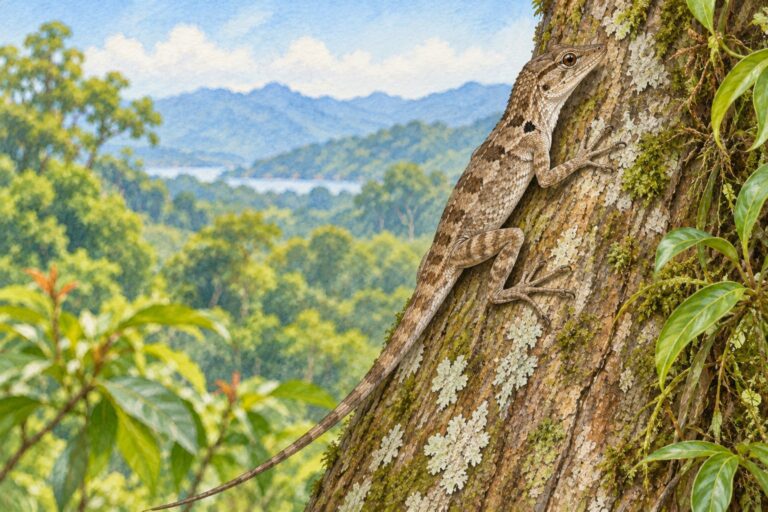
Key Features of the Helmeted Iguana

  • Tall helmetlike casque

  • Long tail and grasping limbs

  • Mottled bark-colored camouflage

Habitat & range

Humid Caribbean and Pacific forests and foothills, including northern wet forests and the southwest.

Conservation & care

Observe from permitted paths with an adult. Do not touch, chase, catch or feed reptiles. Leave bark, stones, logs and leaf litter in place. Keep pets away and give animals an open escape route.

Threats & pressures

Protect natural shelters and connected habitat. Avoid collection, unnecessary clearing and deliberate killing. Leave wildlife in its habitat and support responsible observation.

View full profile →

Nature Field Guide

Hoffmann’s Earth Snake

Spanish name
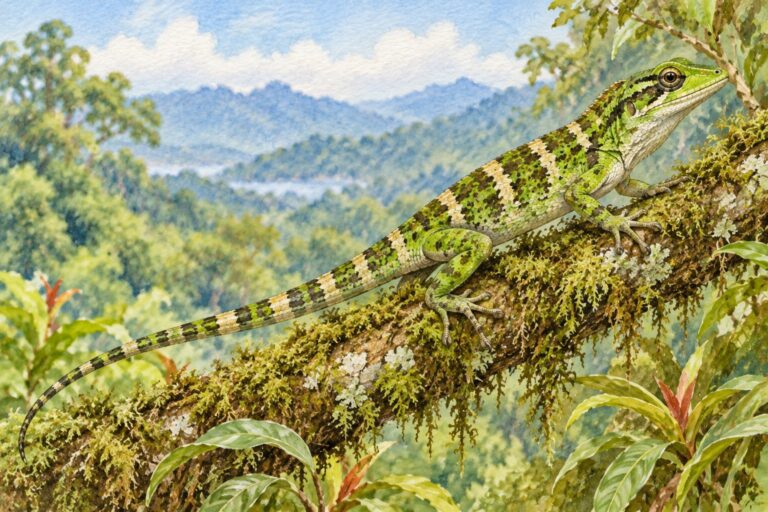
Culebra de tierra de Hoffmann
Scientific name
Geophis hoffmanni

What Do Pico & Tati Think?

Pico: “What can we learn from this reptile’s shape?”

Tati: “Let’s notice its markings and habitat while leaving it plenty of space.”

Identification

Key Features of the Hoffmann’s Earth Snake

  • Small head and dark slender body

  • Usually plain dark upper surfaces

  • Paler underside; young may have a pale neck mark

Habitat & range

Humid lowland and foothill habitats and central mountain slopes, including the Monteverde area.

Conservation & care

Observe only from a distance with an adult or qualified guide. Never touch, catch, feed, corner or move any snake. Keep children and pets away. Colors, head shape and pupil shape must never be used to decide a snake is safe.

Threats & pressures

Protect natural shelters and connected habitat. Avoid collection, unnecessary clearing and deliberate killing. Leave wildlife in its habitat and support responsible observation.

View full profile →

Nature Field Guide

Hoffmann’s Two-toed Sloth

Spanish name
Perezoso de dos dedos
Scientific name
Choloepus hoffmanni

What Do Pico & Tati Think?

Pico: “Is this the same kind of sloth?”

Tati: “We need more than its color to tell.”

Identification

Key Features of the Hoffmann’s Two-toed Sloth

  • Two long claws on each forelimb.

  • Long shaggy fur and a prominent rounded snout.

  • Identify with a guide; color alone is unreliable.

Habitat & range

The studied FINMAC cacao and riverside-forest landscape at Pueblo Nuevo / Villa Francia, Limón.

Seasonal Calendar

Births across the year

FINMAC cacao landscape, Pueblo Nuevo / Villa Francia

Year-round

Study births were spread across months; none was recorded in August. This is asynchronous reproduction, not an August exclusion rule.

Event source ↗

Conservation & care

Keep a respectful distance and leave an open route for the animal. Stay on authorized paths, secure food and rubbish, and observe without feeding, touching, baiting or chasing.

Threats & pressures

Deforestation removes feeding trees and canopy routes. Sloth research emphasizes connected habitat and avoiding removal of wild animals.

View full profile →

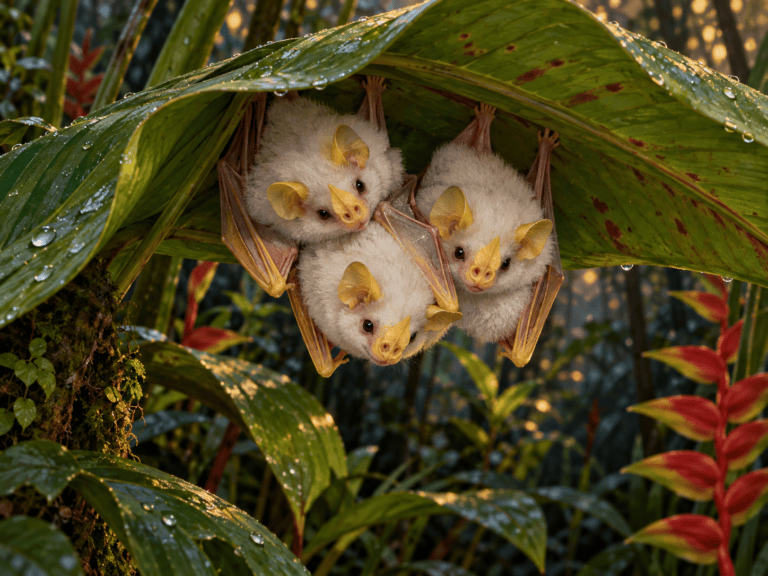
Nature Field Guide

Honduran White Bat

Spanish name
Murciélago blanco
Scientific name
Ectophylla alba

What Do Pico & Tati Think?

Pico: “Those white shapes are bats under a leaf!”

Tati: “Their leaf tent is a home we leave untouched.”

Identification

Key Features of the Honduran White Bat

  • Tiny pale or white-furred bat.

  • Yellowish ears and nose.

  • May rest in groups beneath a leaf tent.

Habitat & range

Tirimbina Biological Reserve at La Virgen de Sarapiquí, Heredia.

Conservation & care

Leave leaf tents and surrounding vegetation untouched. Follow a guide’s viewing distance and light guidance; never handle bats or expose a resting group for a photograph.

View full profile →

Nature Field Guide

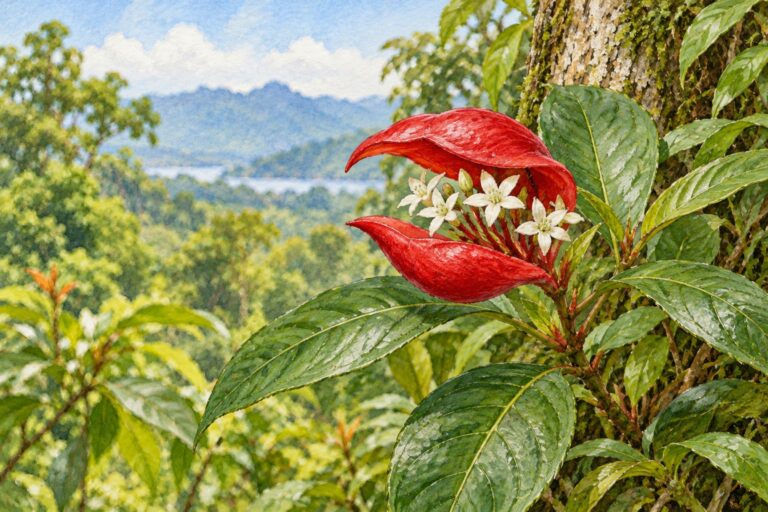
Hot Lips Plant

Spanish name
Labios ardientes / Botón rojo
Scientific name
Palicourea elata

What Do Pico & Tati Think?

Pico: “Two bright red bracts surround tiny pale flowers in the forest understory.”

Tati: “Let’s notice the leaves, flowers and habitat without disturbing the plant.”

Identification

Key Features of the Hot Lips Plant

  • Two conspicuous red floral bracts

  • Small white or creamy flowers

  • Opposite glossy leaves

Habitat & range

Humid understory and forest edges on both slopes, with records from Guanacaste, Sarapiquí, Talamanca, Cartago and Osa.

Conservation & care

Explore with an adult on permitted paths. Observe and photograph without picking leaves, flowers or fruits. Do not taste plants or let pets chew them. Avoid climbing trees and disturbing roots, seedlings or visiting wildlife.

Threats & pressures

Protect suitable habitat, mature trees and natural regeneration. Avoid trampling, unauthorized clearing and collection.

View full profile →

Nature Field Guide

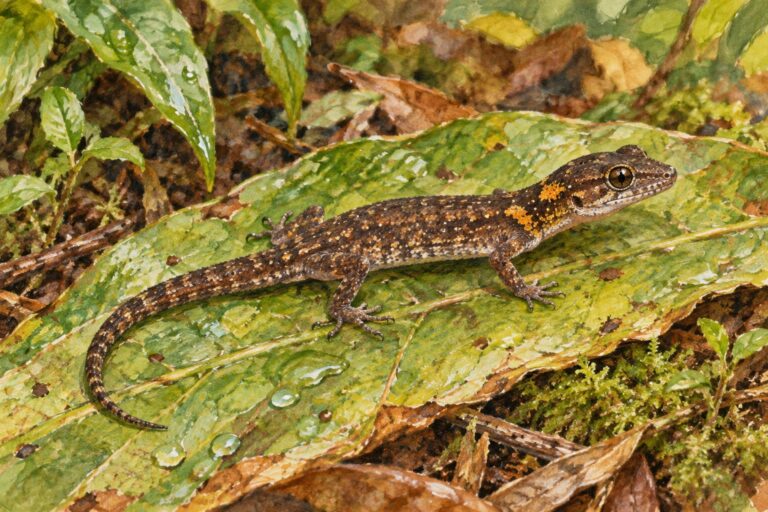
Humble Anole

Spanish name
Anolis humilde
Scientific name
Anolis humilis

What Do Pico & Tati Think?

Pico and Tati invite you to learn about the humble anole. Study a photograph and sketch how brown markings blend with fallen leaves.

Identification

Key Features of the Humble Anole

  • Small brown body with variable darker markings.

  • Slender tail.

  • An anole throat fan may be displayed by males.

Habitat & range

Shaded understory and leaf-litter edges in humid forest.

Conservation & care

Watch wildlife with an adult from a safe path. Do not touch, feed, capture or move reptiles, and keep pets away. Leave eggs, shelters and vegetation undisturbed.

View full profile →

Nature Field Guide

Indio Desnudo

Spanish name
Indio desnudo
Scientific name
Bursera simaruba

What Do Pico & Tati Think?

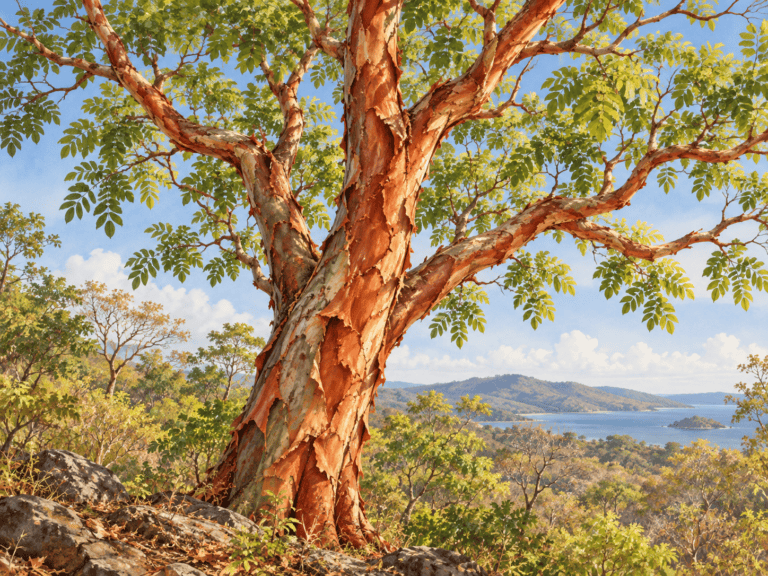
Warm-colored bark is a useful starting point when identifying indio desnudo. Look at the trunk, leaves and fruits together, as its appearance changes with the seasons.

Indio Desnudo Copper Bark Tree in Costa RIca

What does Least Concern mean?

In the linked conservation assessment, this species does not qualify as threatened or near threatened with extinction. It still needs care: local populations and habitats can face problems even when the species has a lower extinction risk overall.

This label describes conservation status. It does not tell us whether a plant is safe for children or pets. Select the status button to read the assessment.

Identification

Key Features of the Indio Desnudo

  • Warm orange-toned bark is an important clue.

  • The tree may lose its leaves during the dry season.

  • Look for small fruits in clusters at the ends of branches when present.

Habitat & range

Dry forest and other wooded habitats. Use several clues together and ask a guide before naming an unfamiliar tree.

Seasonal Calendar

Flowering

Guanacaste dry forest

Apr, May

ACG dry-forest reference: flowers appear in late April and May. Leaf cover varies through the dry season.

Event source ↗

Conservation & care

Child Safety: Not verified. Observe with an adult. Do not taste leaves, seeds, fruit or other tree parts.

Pet Safety: Not verified. Keep pets from chewing or swallowing tree parts. Check with a veterinarian before treating this species as pet-safe.

Keep bark intact. Observe without peeling, scratching or removing bark.

Conservation assessment

Global species assessment: Least Concern (IUCN Red List). Status checked on 7 October 2026. This category is not a guarantee that every local population or habitat is secure, and it is separate from legal protection in Costa Rica.

View full profile →

Nature Field Guide

Jaguar

Spanish name
Jaguar / Tigre
Scientific name
Panthera onca

What Do Pico & Tati Think?

Pico: “A forest can hide a very large cat!”

Tati: “A camera-trap record helps us learn without approaching it.”

Identification

Key Features of the Jaguar

  • Broad head and muscular body.

  • Rosettes often contain smaller dark spots.

  • Relatively thick limbs and shorter tail than a puma.

Habitat & range

Tortuguero National Park’s protected forest landscape; ACG camera traps also document the species in Pitilla.

Conservation & care

Keep a respectful distance and leave an open route for the animal. Stay on authorized paths, secure food and rubbish, and observe without feeding, touching, baiting or chasing.

Threats & pressures

Forest loss, hunting of prey and retaliatory killing after livestock conflict are documented pressures.

Protection & recovery

Costa Rica’s government wildlife guide explicitly identifies this species as protected nationally. This legal designation is separate from its global IUCN category.

Conservation assessment

Global IUCN category as reported by the linked source, checked 7 October 2026. The source does not give an assessment year here. National legal protection and local abundance are separate questions.

View full profile →

Nature Field Guide

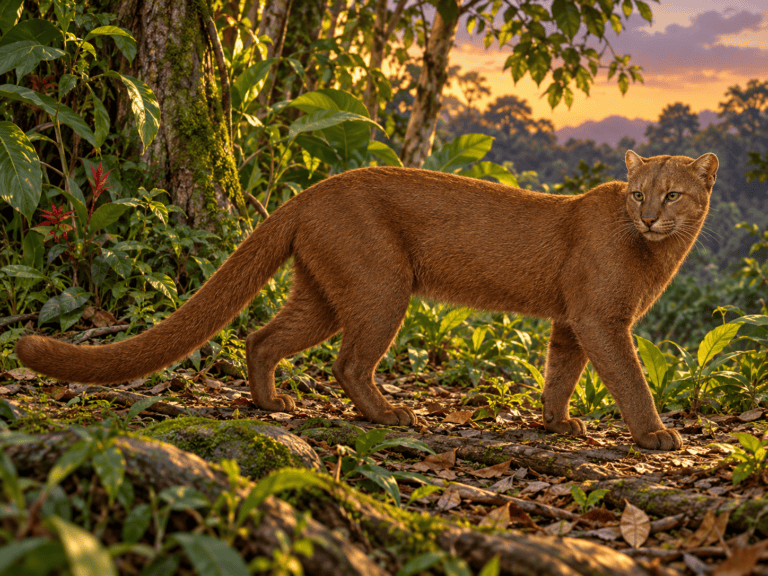
Jaguarundi

Spanish name
Yaguarundí / León breñero
Scientific name
Herpailurus yagouaroundi

What Do Pico & Tati Think?

Pico: “That outline is different from the spotted cats!”

Tati: “A brief view still needs careful identification.”

What does Least Concern mean?

In the linked conservation assessment, this species does not qualify as threatened or near threatened with extinction. It still needs care: local populations and habitats can face problems even when the species has a lower extinction risk overall.

This label describes conservation status. It does not tell us whether a plant is safe for children or pets. Select the status button to read the assessment.

Identification

Key Features of the Jaguarundi

  • Long low body and short legs.

  • Plain gray-brown or reddish coat, not rosettes.

  • Small rounded ears and long tail.

Habitat & range

Reserva Sierra Zapote in Las Juntas district, Abangares, Guanacaste.

Conservation & care

Keep a respectful distance and leave an open route for the animal. Stay on authorized paths, secure food and rubbish, and observe without feeding, touching, baiting or chasing.

Threats & pressures

Loss of suitable habitat and prey is a documented concern even where the global species category is Least Concern.

Protection & recovery

Costa Rica’s government wildlife guide explicitly identifies this species as protected nationally. This legal designation is separate from its global IUCN category.

Conservation assessment

Global IUCN category as reported by the linked source, checked 7 October 2026. The source does not give an assessment year here. National legal protection and local abundance are separate questions.

View full profile →

Nature Field Guide

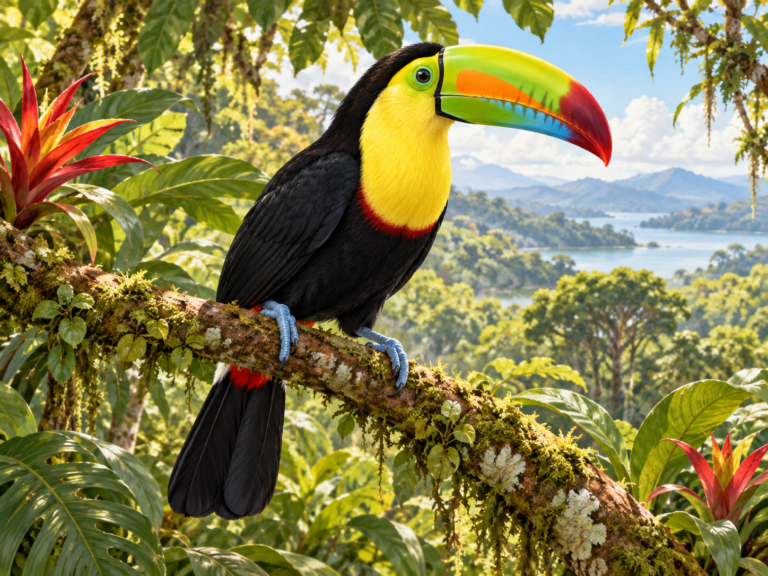
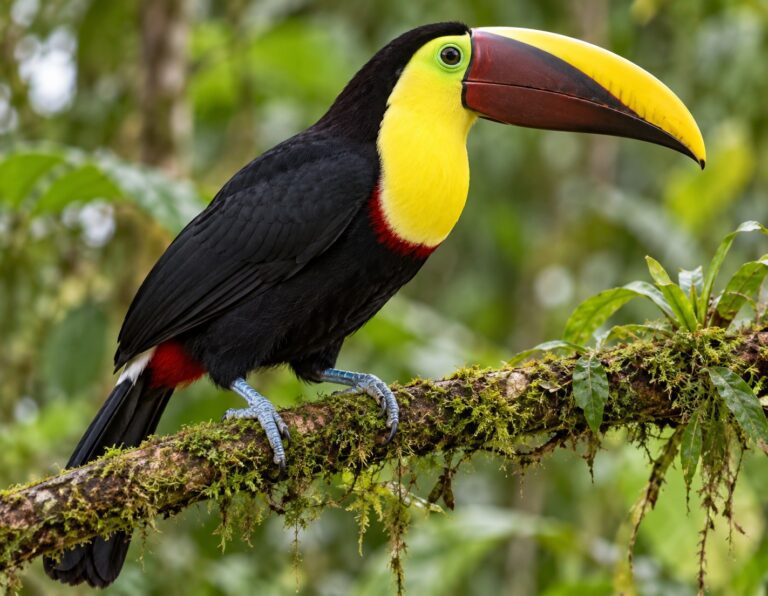
Keel-billed Toucan

Spanish name
Tucán pico arco iris / Pico canoa
Scientific name
Ramphastos sulfuratus

What Do Pico & Tati Think?

Pico: “Its bill has so many colors!”

Tati: “Let’s look at the throat and body too.”

Identification

Key Features of the Keel-billed Toucan

  • Large bill with several bright colors.

  • Yellow throat and dark body.

  • Compare the entire silhouette with other toucans.

Habitat & range

Most frequent in wooded Caribbean lowlands. Also occurs in suitable northern Pacific woodland, Nicoya hills, foothills and parts of the Central Valley; generally less frequent there.

Conservation & care

Stay on authorized trails or viewing routes. Give birds space, keep voices low and leave nests undisturbed. Observe without bait, feeding or recorded calls.

Conservation assessment

Costa Rica’s government wildlife guide reports IUCN Near Threatened and a decreasing trend; the page does not supply the assessment year. Source checked 7 October 2026. This is a global species category, not a count of birds in the tagged towns.

View full profile →

Nature Field Guide

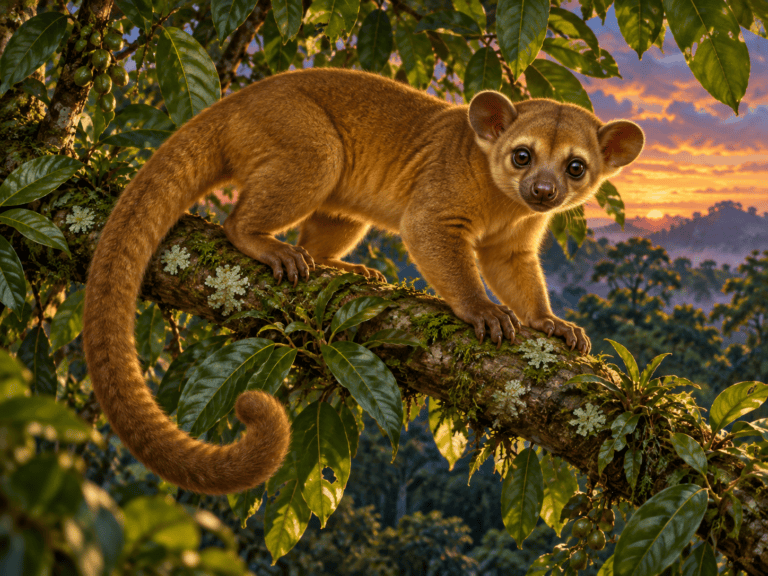
Kinkajou

Spanish name
Martilla / Mico de noche
Scientific name
Potos flavus

What Do Pico & Tati Think?

Pico: “It looks a little like a monkey!”

Tati: “It is actually related to coatis and raccoons.”

What does Least Concern mean?

In the linked conservation assessment, this species does not qualify as threatened or near threatened with extinction. It still needs care: local populations and habitats can face problems even when the species has a lower extinction risk overall.

This label describes conservation status. It does not tell us whether a plant is safe for children or pets. Select the status button to read the assessment.

Identification

Key Features of the Kinkajou

  • Golden-brown coat and rounded ears.

  • Long grasping tail without a raccoon’s bold rings.

  • Tree-dwelling mammal, not a monkey.

Habitat & range

Wooded South Pacific landscapes; a documented wildlife rescue occurred beside the Río Abrojo near Abrojo.

Conservation & care

Keep a respectful distance and leave an open route for the animal. Stay on authorized paths, secure food and rubbish, and observe without feeding, touching, baiting or chasing.

Threats & pressures

Forest gaps can interrupt treetop travel. A Costa Rican rescue record also documents injuries associated with dogs.

Protection & recovery

Costa Rica’s government wildlife guide explicitly identifies this species as protected nationally. This legal designation is separate from its global IUCN category.

Conservation assessment

Global IUCN category as reported by the linked source, checked 7 October 2026. The source does not give an assessment year here. National legal protection and local abundance are separate questions.

View full profile →

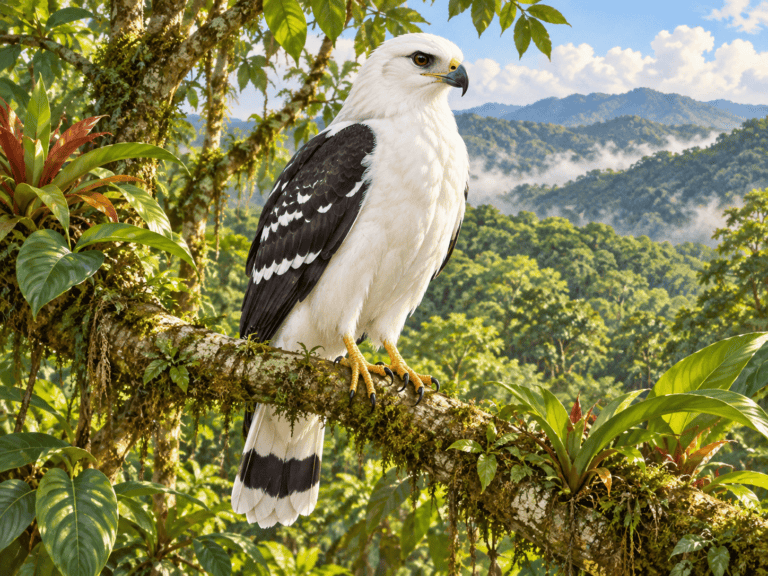
Nature Field Guide

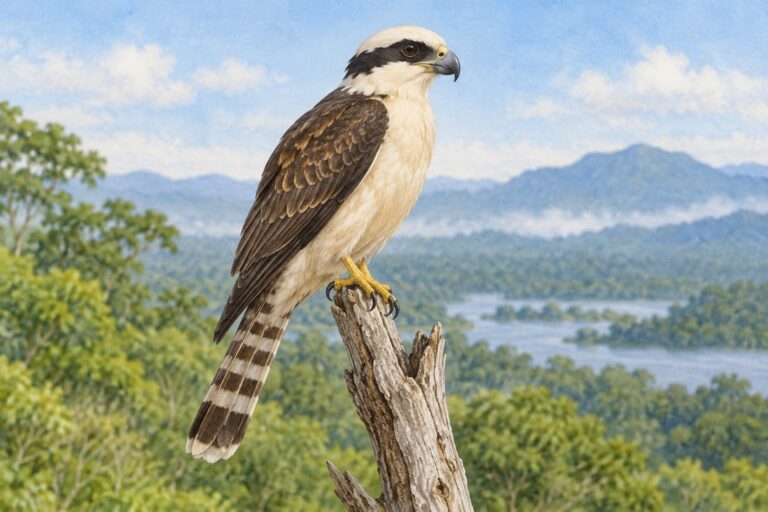
Laughing Falcon

Spanish name
Guaco
Scientific name
Herpetotheres cachinnans

What Do Pico & Tati Think?

Pico: “It sounds like a laugh!”

Tati: “That call explains its name. Its wide eye mask helps us recognize it too.”

Identification

Key Features of the Laughing Falcon

  • Creamy head and underparts

  • Broad black eye mask

  • Dark upperparts

Habitat & range

Lowland forest edges, secondary woodland and partly open country on both slopes. Occasional higher-elevation records do not make high mountain forest core habitat.

Conservation & care

Observe quietly from trails or established viewing areas. Give nests, roosts and feeding birds space. Do not handle, chase or lure birds with playback. Keep pets away from wildlife.

Threats & pressures

Protect native vegetation, reduce collision hazards around glass and keep cats away from birds. These are practical prevention priorities, not a claim of a measured decline at a specific Costa Rican site.

View full profile →

Nature Field Guide

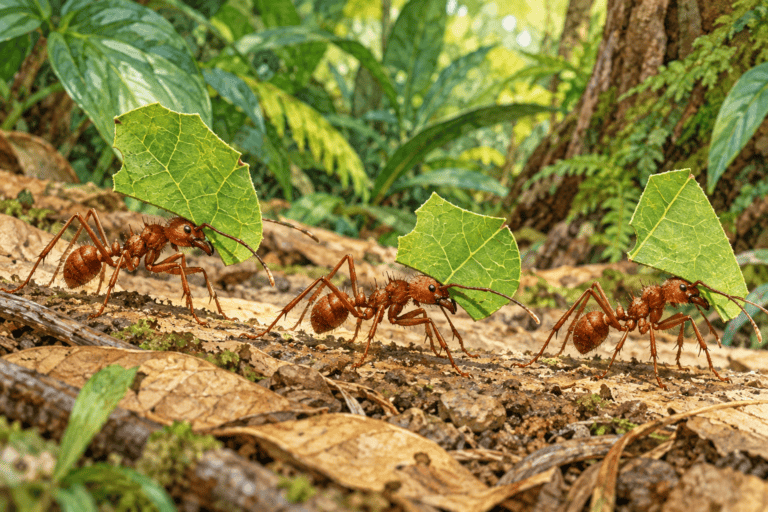
Leafcutter Ant

Spanish name
Hormiga zompopa
Scientific name
Atta cephalotes

What Do Pico & Tati Think?

Pico: “Let's look closely at the leafcutter ant!”

Tati: “We can compare its shape and markings without touching it.”

Identification

Key Features of the Leafcutter Ant

  • Leaf fragments carried above body

  • elbowed antennae

  • workers of different sizes

Habitat & range

Suitable forest, garden or open habitats; distribution varies with habitat and species.

Conservation & care

Observe without collecting, handling or disturbing insects or nests. Stay on permitted paths. Leave caterpillars and their food plants in place.

View full profile →

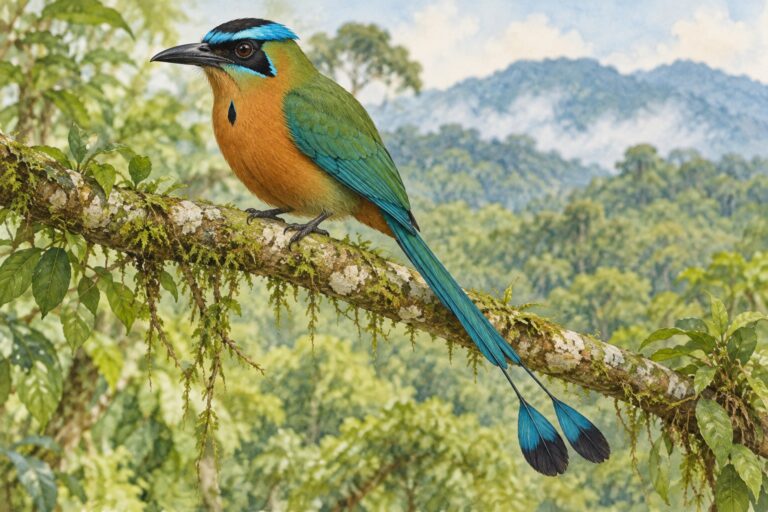
Nature Field Guide

Lesson’s Motmot

Spanish name
Momoto coroniazul
Scientific name
Momotus lessonii

What Do Pico & Tati Think?

Pico: “Its tail has tiny paddles!”

Tati: “They are feather tips. Let’s compare the crown with our other motmot.”

Identification

Key Features of the Lesson’s Motmot

  • Blue crown with dark center

  • Dark eye mask

  • Long central tail feathers with racket tips

Habitat & range

Pacific lowlands and middle elevations, the Central Valley and locally northern areas. In the dry northwest it is associated especially with gallery forest. Most Caribbean lowlands are outside its usual range.

Conservation & care

Observe quietly from trails or established viewing areas. Give nests, roosts and feeding birds space. Do not handle, chase or lure birds with playback. Keep pets away from wildlife.

Threats & pressures

Protect native vegetation, reduce collision hazards around glass and keep cats away from birds. These are practical prevention priorities, not a claim of a measured decline at a specific Costa Rican site.

View full profile →

Nature Field Guide

Lichen Anole

Spanish name
Anolis liquenoso
Scientific name
Anolis pentaprion

What Do Pico & Tati Think?

Pico: “What can we learn from this reptile’s shape?”

Tati: “Let’s notice its markings and habitat while leaving it plenty of space.”

Identification

Key Features of the Lichen Anole

  • Gray-and-cream bark camouflage

  • Short limbs

  • Relatively short tail with a serrated ridge

Habitat & range

Caribbean lowlands and northern humid lowlands, including the Los Chiles/Guatuso and Sarapiquí areas.

Conservation & care

Observe from permitted paths with an adult. Do not touch, chase, catch or feed reptiles. Leave bark, stones, logs and leaf litter in place. Keep pets away and give animals an open escape route.

Threats & pressures

Protect natural shelters and connected habitat. Avoid collection, unnecessary clearing and deliberate killing. Leave wildlife in its habitat and support responsible observation.

View full profile →

Nature Field Guide

Linnaeus’s Sipo

Spanish name
Bejuquilla verde de bosque
Scientific name
Chironius exoletus

What Do Pico & Tati Think?

Pico: “What can we learn from this reptile’s shape?”

Tati: “Let’s notice its markings and habitat while leaving it plenty of space.”

Identification

Key Features of the Linnaeus’s Sipo

  • Long green-to-olive body

  • Large eyes and elongated head

  • Very long tapering tail

Habitat & range

Humid Caribbean and Pacific forests and adjoining foothills in Costa Rica.

Conservation & care

Observe only from a distance with an adult or qualified guide. Never touch, catch, feed, corner or move any snake. Keep children and pets away. Colors, head shape and pupil shape must never be used to decide a snake is safe.

Threats & pressures

Protect natural shelters and connected habitat. Avoid collection, unnecessary clearing and deliberate killing. Leave wildlife in its habitat and support responsible observation.

View full profile →

Nature Field Guide

Lowland Paca

Spanish name
Tepezcuintle
Scientific name
Cuniculus paca

What Do Pico & Tati Think?

Pico: “Its white spots make neat rows!”

Tati: “A burrow is someone’s home; we leave it alone.”

Identification

Key Features of the Lowland Paca

  • Stocky brown body with rows of pale side spots.

  • Short legs and almost no visible tail.

  • Large rounded head and cheeks.

Habitat & range

La Amistad’s forest landscape, accessed from Biolley; ACG also has Quica, Pitilla camera-trap records.

Seasonal Calendar

Breeding possible

Costa Rica; broad natural-history account

Year-round

ACG describes reproduction through the year, not a fixed local birth season.

Event source ↗

Conservation & care

Keep a respectful distance and leave an open route for the animal. Stay on authorized paths, secure food and rubbish, and observe without feeding, touching, baiting or chasing.

Threats & pressures

Hunting, habitat destruction and conflict over crops are documented pressures.

View full profile →

Nature Field Guide

Mangrove Tree Boa

Spanish name
Boa arborícola del Pacífico
Scientific name
Corallus ruschenbergerii

What Do Pico & Tati Think?

Pico: “What helps this reptile fit into its habitat?”

Tati: “Let’s look at its shape, colors and surroundings while giving it plenty of space.”

Identification

Key Features of the Mangrove Tree Boa

  • Long branch-climbing body

  • Brown-to-tan camouflage

  • Gripping tail and a distinct head

Habitat & range

Southwestern Costa Rican forests and wooded coastal habitats, including the South Pacific.

Conservation & care

Observe from a distance with an adult or qualified guide. Do not touch, catch, corner, feed or move any snake. Keep children and pets away. Colors, head shape and pupil shape must never be used to decide a snake is safe.

Threats & pressures

Protect connected habitat and natural shelters. Avoid collection, unnecessary clearing and deliberate killing. Leave wildlife in place and support responsible observation.

View full profile →

Nature Field Guide

Mantled Howler Monkey

Spanish name
Mono congo / Mono aullador
Scientific name
Alouatta palliata

What Do Pico & Tati Think?

Pico: “We heard the monkeys before we could see them!”

Tati: “Let’s stay quiet and see what they’re doing in the branches.”

Identification

Key Features of the Mantled Howler Monkey

  • A mostly dark coat with a lighter mantle along the sides.

  • A long, grasping tail used while moving through trees.

  • Deep calls that may carry beyond the visible group.

Habitat & range

Tropical forest canopy and wooded corridors. Around the estuary, observe canopy habitat from a guided route rather than following animals into the forest.

Seasonal Calendar

Breeding

General species biology; local schedule unverified

Year-round

Mantled howlers breed throughout the year. Species-level biology, not a schedule of births in a particular troop.

Event source ↗

Conservation & care

Never offer food or try to touch a monkey. Avoid playback and shouting, and give groups space to move through the canopy.

View full profile →

Nature Field Guide

Many-scaled Anole

Spanish name
Anolis de muchas escamas
Scientific name
Anolis polylepis

What Do Pico & Tati Think?

Pico: “What helps this reptile fit into its habitat?”

Tati: “Let’s look at its shape, colors and surroundings while giving it plenty of space.”

Identification

Key Features of the Many-scaled Anole

  • Slender brown body

  • Long hind legs and a fine tail

  • Orange male throat fan when naturally displayed

Habitat & range

Humid Central and South Pacific forests and foothills, including San Vito. Osa populations have also been treated as Anolis osa in some references.

Conservation & care

Observe with an adult from permitted paths. Do not touch, chase, catch or feed reptiles. Leave bark, logs, stones and leaf litter in place. Keep pets away and allow an open escape route.

Threats & pressures

Protect connected habitat and natural shelters. Avoid collection, unnecessary clearing and deliberate killing. Leave wildlife in place and support responsible observation.

View full profile →

Nature Field Guide

Margay

Spanish name
Caucel / Tigrillo
Scientific name
Leopardus wiedii

What Do Pico & Tati Think?

Pico: “Could a cat move down a tree like that?”

Tati: “Its climbing adaptations belong in a connected forest.”

Identification

Key Features of the Margay

  • Small spotted cat with a relatively long tail.

  • Large eyes and rounded ears.

  • Agile climbing; verify identity with a guide.

Habitat & range

Forested habitat in Corcovado National Park and other suitable connected landscapes.

Conservation & care

Keep a respectful distance and leave an open route for the animal. Stay on authorized paths, secure food and rubbish, and observe without feeding, touching, baiting or chasing.

Threats & pressures

Forest destruction and fragmentation threaten habitat. Illegal hunting has also affected the species.

Protection & recovery

Costa Rica’s government wildlife guide explicitly identifies this species as protected nationally. This legal designation is separate from its global IUCN category.

Conservation assessment

Global IUCN category as reported by the linked source, checked 7 October 2026. The source does not give an assessment year here. National legal protection and local abundance are separate questions.

View full profile →

Nature Field Guide

Mexican Hairy Porcupine

Spanish name
Puercoespín
Scientific name
Coendou mexicanus

What Do Pico & Tati Think?

This tree-dwelling porcupine has dark coarse hair that can hide many of its protective quills.

What does Least Concern mean?

In the linked conservation assessment, this species does not qualify as threatened or near threatened with extinction. It still needs care: local populations and habitats can face problems even when the species has a lower extinction risk overall.

This label describes conservation status. It does not tell us whether a plant is safe for children or pets. Select the status button to read the assessment.

Identification

Key Features of the Mexican Hairy Porcupine

  • Dark coarse fur with protective quills beneath or among the hairs.

  • Rounded body and a long gripping tail.

  • Usually encountered in trees rather than on the ground.

Habitat & range

Lowland forest, including Guanacaste's tropical dry forest.

Conservation & care

Explore with an adult or local guide. Observe quietly from a distance, stay on established trails and leave shelter undisturbed. Do not feed, touch, capture or corner wildlife. Keep pets away.

Conservation assessment

Global IUCN category reported by the linked specialist or Mammal Diversity Database account, checked October 2026. Least Concern does not mean there are no threats or that every local population is secure.

View full profile →

Nature Field Guide

Mexican Long-nosed Armadillo

Spanish name
Armadillo de nueve bandas mexicano
Scientific name
Dasypus mexicanus

What Do Pico & Tati Think?

This armadillo wears a covering of bony plates, with flexible bands across its middle so it can bend while walking.

Identification

Key Features of the Mexican Long-nosed Armadillo

  • Long tapered snout and upright ears.

  • Flexible bands across the middle of the armored back.

  • Long tail covered with armor; this alone does not confirm the species.

Habitat & range

Forests, forest edges and other suitable wooded landscapes in Costa Rica.

Conservation & care

Explore with an adult or local guide. Observe quietly from a distance, stay on established trails and leave shelter undisturbed. Do not feed, touch, capture or corner wildlife. Keep pets away.

Conservation assessment

The Mammal Diversity Database lists this recently separated species as Not Evaluated, checked October 2026. An older assessment for Dasypus novemcinctus should not be applied automatically.

View full profile →

Nature Field Guide

Middle American Ameiva

Spanish name
Ameiva centroamericana
Scientific name
Holcosus festivus

What Do Pico & Tati Think?

Pico: “What clues help us recognize this reptile?”

Tati: “Let’s notice its shape, markings and habitat from a respectful distance.”

Identification

Key Features of the Middle American Ameiva

  • Long tail and pointed snout

  • Strong limbs suited to ground movement

  • Contrasting stripes and patterned flanks

Habitat & range

Humid lowlands and forest-edge openings on both slopes, including the southwestern Pacific.

Conservation & care

Observe with an adult from permitted paths. Do not catch, chase, touch or feed reptiles. Leave bark, logs, rocks and leaf litter in place. Keep pets away and allow animals an open escape route.

Threats & pressures

Protect habitat connections and natural shelters. Avoid road mortality, collection and deliberate killing. Leave reptiles in their habitat rather than keeping or relocating them.

View full profile →

Nature Field Guide

Mimic False Coral Snake

Spanish name
Falsa coral imitadora
Scientific name
Erythrolamprus mimus

What Do Pico & Tati Think?

Pico: “What helps this reptile fit into its habitat?”

Tati: “Let’s look at its shape, colors and surroundings while giving it plenty of space.”

Identification

Key Features of the Mimic False Coral Snake

  • Contrasting red, dark and pale bands

  • Slender forest-snake body

  • Coral-snake resemblance

Habitat & range

Humid Caribbean and southwestern Pacific forests and foothills, including San Vito.

Conservation & care

Observe from a distance with an adult or qualified guide. Do not touch, catch, corner, feed or move any snake. Keep children and pets away. Colors, head shape and pupil shape must never be used to decide a snake is safe.

Threats & pressures

Protect connected habitat and natural shelters. Avoid collection, unnecessary clearing and deliberate killing. Leave wildlife in place and support responsible observation.

View full profile →

Nature Field Guide

Montezuma Oropendola

Spanish name
Oropéndola de Moctezuma
Scientific name
Psarocolius montezuma

What Do Pico & Tati Think?

Pico: “Those nests hang like long baskets!”

Tati: “We can admire their shape from a distance and leave the colony quiet.”

Identification

Key Features of the Montezuma Oropendola

  • Black head and chestnut body

  • Yellow outer tail feathers

  • Large patterned bill and bare cheek area

Habitat & range

Most frequent in Caribbean lowlands, with distribution through the Reventazon basin and parts of the Central Valley. Local in the northwest, especially near mountain bases; not uniformly common across Guanacaste.

Conservation & care

Observe quietly from trails or established viewing areas. Give nests, roosts and feeding birds space. Do not handle, chase or lure birds with playback. Keep pets away from wildlife.

Threats & pressures

Protect native vegetation, reduce collision hazards around glass and keep cats away from birds. These are practical prevention priorities, not a claim of a measured decline at a specific Costa Rican site.

View full profile →

Nature Field Guide

Mussurana

Spanish name
Zopilota / Musurana
Scientific name
Clelia clelia

What Do Pico & Tati Think?

Pico: “What clues help us recognize this reptile?”

Tati: “Let’s notice its shape, markings and habitat from a respectful distance.”

Identification

Key Features of the Mussurana

  • Adult dark gray-to-black body

  • Paler underside

  • Juveniles may be red with a dark head and pale collar

Habitat & range

Lowland and lower foothill woodland on both slopes, including humid and secondary forest.

Conservation & care

Observe only from a distance with an adult or qualified guide. Do not touch, catch, corner or attempt to move any snake. Step back and tell your adult; keep children and pets away. Do not use colors, head shape or pupil shape to decide a snake is safe.

Threats & pressures

Protect habitat connections and natural shelters. Avoid road mortality, collection and deliberate killing. Leave reptiles in their habitat rather than keeping or relocating them.

View full profile →

Nature Field Guide

Northern Forest Racer

Spanish name
Corredora de bosque
Scientific name
Dendrophidion percarinatum

What Do Pico & Tati Think?

Pico: “What can we learn from this reptile’s shape?”

Tati: “Let’s notice its markings and habitat while leaving it plenty of space.”

Identification

Key Features of the Northern Forest Racer

  • Slender body and long fine tail

  • Relatively large eyes

  • Narrow crossmarks along the body

Habitat & range

Humid lowland and foothill forests, including southwestern Costa Rica, Monteverde and Caribbean-slope localities.

Conservation & care

Observe only from a distance with an adult or qualified guide. Never touch, catch, feed, corner or move any snake. Keep children and pets away. Colors, head shape and pupil shape must never be used to decide a snake is safe.

Threats & pressures

Protect natural shelters and connected habitat. Avoid collection, unnecessary clearing and deliberate killing. Leave wildlife in its habitat and support responsible observation.

View full profile →

Nature Field Guide

Northern Naked-tailed Armadillo

Spanish name
Armadillo de cola desnuda
Scientific name
Cabassous centralis

What Do Pico & Tati Think?

The northern naked-tailed armadillo is a digging specialist.

What does Least Concern mean?

In the linked conservation assessment, this species does not qualify as threatened or near threatened with extinction. It still needs care: local populations and habitats can face problems even when the species has a lower extinction risk overall.

This label describes conservation status. It does not tell us whether a plant is safe for children or pets. Select the status button to read the assessment.

Identification

Key Features of the Northern Naked-tailed Armadillo

  • Dark armored body with flexible bands.

  • Mostly unarmored tail with thin, widely spaced plates.

  • Large digging claws and a relatively broad head.

Habitat & range

Forests and wooded edges, including documented Costa Rican secondary-forest sites.

Conservation & care

Explore with an adult or local guide. Observe quietly from a distance, stay on established trails and leave shelter undisturbed. Do not feed, touch, capture or corner wildlife. Keep pets away.

Conservation assessment

IUCN specialist-group account reports Least Concern; checked October 2026. The account stresses limited population knowledge. Least Concern does not mean the animal faces no threats.

View full profile →

Nature Field Guide

Northern Olingo

Spanish name
Olingo norteño
Scientific name
Bassaricyon gabbii

What Do Pico & Tati Think?

The northern olingo is a forest mammal that moves among branches and eats fruit, with nectar also reported in its diet.

Identification

Key Features of the Northern Olingo

  • Gray-brown fur, rounded ears and a fairly pointed muzzle.

  • Long bushy tail that is not prehensile.

  • Compare several features with a kinkajou; a quick glimpse may be inconclusive.

Habitat & range

Forested canopies, including documented Monteverde sites.

Conservation & care

Explore with an adult or local guide. Observe quietly from a distance, stay on established trails and leave shelter undisturbed. Do not feed, touch, capture or corner wildlife. Keep pets away.

View full profile →

Nature Field Guide

Northern Raccoon

Spanish name
Mapache
Scientific name
Procyon lotor

What Do Pico & Tati Think?

Pico: “The rings on its tail are easy to notice!”

Tati: “We keep the rubbish closed so it finds natural food.”

Identification

Key Features of the Northern Raccoon

  • Dark mask across the face.

  • Bold rings along the tail.

  • Rounded ears with pale edges.

Habitat & range

Reserva Sierra Zapote, Las Juntas / Abangares, and other suitable wooded water-edge habitats.

Conservation & care

Keep a respectful distance and leave an open route for the animal. Stay on authorized paths, secure food and rubbish, and observe without feeding, touching, baiting or chasing.

View full profile →

Nature Field Guide

Northern Silky Anteater

Spanish name
Hormiguero sedoso norteño
Scientific name
Cyclopes dorsalis

What Do Pico & Tati Think?

The northern silky anteater is tiny compared with the northern tamandua already in your guide.

Identification

Key Features of the Northern Silky Anteater

  • Tiny body with soft golden or yellowish fur.

  • Short tapered snout and strong curved foreclaws.

  • Long gripping tail; much smaller than a tamandua.

Habitat & range

Suitable forest canopy, including documented Sarapiquí habitat.

Conservation & care

Explore with an adult or local guide. Observe quietly from a distance, stay on established trails and leave shelter undisturbed. Do not feed, touch, capture or corner wildlife. Keep pets away.

View full profile →

Nature Field Guide

Northern Tamandua

Spanish name
Oso hormiguero / Oso colmenero
Scientific name
Tamandua mexicana

What Do Pico & Tati Think?

Pico: “Its fur looks like a little vest!”

Tati: “Those claws are tools, so we give it space.”

Identification

Key Features of the Northern Tamandua

  • Pale coat with a dark vest-like pattern.

  • Long narrow snout and strong curved foreclaws.

  • Long grasping tail.

Habitat & range

Corcovado’s forest landscape and other suitable dry or humid woodland.

Seasonal Calendar

Breeding possible

Costa Rica; broad natural-history account

Year-round

ACG describes reproduction possible in any season; no local birth peak is assigned.

Event source ↗

Conservation & care

Keep a respectful distance and leave an open route for the animal. Stay on authorized paths, secure food and rubbish, and observe without feeding, touching, baiting or chasing.

Threats & pressures

Road collisions, dog attacks and habitat loss are documented pressures.

View full profile →

Nature Field Guide

O’Shaughnessy’s Galliwasp

Spanish name
Lagartija de hojarasca
Scientific name
Mesoamericus bilobatus

What Do Pico & Tati Think?

Pico: “What helps this reptile fit into its habitat?”

Tati: “Let’s look at its shape, colors and surroundings while giving it plenty of space.”

Identification

Key Features of the O’Shaughnessy’s Galliwasp

  • Elongated smooth-looking body

  • Four short legs

  • Brown coloration and a long tail

Habitat & range

Humid forests of the Caribbean slope and southwestern Pacific, including a documented population at Tirimbina.

Conservation & care

Observe with an adult from permitted paths. Do not touch, chase, catch or feed reptiles. Leave bark, logs, stones and leaf litter in place. Keep pets away and allow an open escape route.

Threats & pressures

Protect connected habitat and natural shelters. Avoid collection, unnecessary clearing and deliberate killing. Leave wildlife in place and support responsible observation.

View full profile →

Nature Field Guide

Ocellated Anadia

Spanish name
Anadia ocelada
Scientific name
Anadia ocellata

What Do Pico & Tati Think?

Pico: “What can we learn from this reptile’s shape?”

Tati: “Let’s notice its markings and habitat while leaving it plenty of space.”

Identification

Key Features of the Ocellated Anadia

  • Elongated body and short limbs

  • Long tapering tail

  • Small eyelike flank markings

Habitat & range

Forested foothill and upland habitats in Costa Rica, including Monteverde, the Aguacate mountains and humid mountain slopes.

Conservation & care

Observe from permitted paths with an adult. Do not touch, chase, catch or feed reptiles. Leave bark, stones, logs and leaf litter in place. Keep pets away and give animals an open escape route.

Threats & pressures

Protect natural shelters and connected habitat. Avoid collection, unnecessary clearing and deliberate killing. Leave wildlife in its habitat and support responsible observation.

View full profile →

Nature Field Guide

Ocelot

Spanish name
Manigordo / Ocelote
Scientific name
Leopardus pardalis

What Do Pico & Tati Think?

Pico: “Those spots form long patterns!”

Tati: “We can learn from photographs without disturbing a hidden cat.”

What does Least Concern mean?

In the linked conservation assessment, this species does not qualify as threatened or near threatened with extinction. It still needs care: local populations and habitats can face problems even when the species has a lower extinction risk overall.

This label describes conservation status. It does not tell us whether a plant is safe for children or pets. Select the status button to read the assessment.

Identification

Key Features of the Ocelot

  • Dark spots and elongated patterned markings.

  • Rounded ears and large eyes.

  • More robust body than a margay.

Habitat & range

Corcovado forest habitat; ACG also documents Ocelot at Quica, Pitilla.

Conservation & care

Keep a respectful distance and leave an open route for the animal. Stay on authorized paths, secure food and rubbish, and observe without feeding, touching, baiting or chasing.

Threats & pressures

Forest loss, depleted prey, road collisions and illegal hunting are documented pressures.

Protection & recovery

Costa Rica’s government wildlife guide explicitly identifies this species as protected nationally. This legal designation is separate from its global IUCN category.

Conservation assessment

Global IUCN category as reported by the linked source, checked 7 October 2026. The source does not give an assessment year here. National legal protection and local abundance are separate questions.

View full profile →

Nature Field Guide

Picado’s Pitviper

Spanish name
Mano de piedra costarricense
Scientific name
Atropoides picadoi

What Do Pico & Tati Think?

Pico: “What helps this reptile fit into its habitat?”

Tati: “Let’s look at its shape, colors and surroundings while giving it plenty of space.”

Identification

Key Features of the Picado’s Pitviper

  • Very robust body

  • Broad head and rough-looking keeled scales

  • Dark angular blotches on a lighter background

Habitat & range

Wet Caribbean-slope forests, including northern foothills and the Central Volcanic and Talamanca mountain systems.

Conservation & care

VENOMOUS. Observe only from a distance with a qualified guide. Keep children and pets well away. Never approach, touch, catch or provoke this snake, and do not reach into nearby vegetation.

Threats & pressures

Protect connected habitat and natural shelters. Avoid collection, unnecessary clearing and deliberate killing. Leave wildlife in place and support responsible observation.

View full profile →

Nature Field Guide

Proboscis Bat

Spanish name
Murciélago narigón
Scientific name
Rhynchonycteris naso

What Do Pico & Tati Think?

The proboscis bat is a tiny insect-eating bat with an elongated muzzle.

Identification

Key Features of the Proboscis Bat

  • Small grizzled gray-brown bat with a long muzzle.

  • Two faint pale back stripes.

  • Pale tufts spaced along the forearms; similar bats require expert comparison.

Habitat & range

Freshwater-associated habitats with suitable exposed roosting surfaces.

Conservation & care

Observe bats from a distance with an adult or guide. Do not touch, feed or handle any bat, including one found on the ground. Leave roosts undisturbed, avoid direct flash and ask local wildlife professionals for help if an animal appears injured.

View full profile →

Nature Field Guide

Puffing Snake

Spanish name
Pajarera / Culebra pajarera
Scientific name
Phrynonax poecilonotus

What Do Pico & Tati Think?

Pico: “What can we learn from this reptile’s shape?”

Tati: “Let’s notice its markings and habitat while leaving it plenty of space.”

Identification

Key Features of the Puffing Snake

  • Large elongated forest snake

  • Variable colors and darker markings

  • Distinct head and long climbing body

Habitat & range

Forests and wooded edges on both Costa Rican slopes, including lowlands and foothills; documented in the Monteverde area.

Conservation & care

Observe only from a distance with an adult or qualified guide. Never touch, catch, feed, corner or move any snake. Keep children and pets away. Colors, head shape and pupil shape must never be used to decide a snake is safe.

Threats & pressures

Protect natural shelters and connected habitat. Avoid collection, unnecessary clearing and deliberate killing. Leave wildlife in its habitat and support responsible observation.

View full profile →

Nature Field Guide

Puma

Spanish name
Puma / León de montaña
Scientific name
Puma concolor

What Do Pico & Tati Think?

Pico: “This cat has no rosettes!”

Tati: “Its shape helps us tell it apart from a jaguar.”

Identification

Key Features of the Puma

  • Uniform tawny adult coat, without jaguar rosettes.

  • Long tail with a darker tip.

  • Relatively small head and long legs.

Habitat & range

Reserva Sierra Zapote, Las Juntas district, Abangares, and suitable forests elsewhere in Costa Rica.

Conservation & care

Keep a respectful distance and leave an open route for the animal. Stay on authorized paths, secure food and rubbish, and observe without feeding, touching, baiting or chasing.

Threats & pressures

Forest fragmentation and loss of prey are habitat-level pressures relevant to wide-ranging predators.

View full profile →

Nature Field Guide

Rainforest Hognosed Pitviper

Spanish name
Tamagá
Scientific name
Porthidium nasutum

What Do Pico & Tati Think?

Pico: “What helps this reptile fit into its habitat?”

Tati: “Let’s look at its shape, colors and surroundings while giving it plenty of space.”

Identification

Key Features of the Rainforest Hognosed Pitviper

  • Pointed upturned snout

  • Stout body and short tail

  • Dark blotches and a narrow back line

Habitat & range

Caribbean lowlands and foothills and southwestern Pacific wet forests, mainly below the higher mountain zones.

Conservation & care

VENOMOUS. Observe only from a distance with a qualified guide. Keep children and pets well away. Never approach, touch, catch or provoke this snake, and do not reach into nearby vegetation.

Threats & pressures

Protect connected habitat and natural shelters. Avoid collection, unnecessary clearing and deliberate killing. Leave wildlife in place and support responsible observation.

View full profile →

Nature Field Guide

Red-legged Honeycreeper

Spanish name
Mielero patirrojo
Scientific name
Cyanerpes cyaneus

What Do Pico & Tati Think?

Pico: “Why are its feet so red?”

Tati: “Those red legs help us identify it, even when the body colors differ.”

Identification

Key Features of the Red-legged Honeycreeper

  • Bright red legs

  • Slender decurved bill

  • Breeding male blue with turquoise crown

Habitat & range

Wooded lowlands, forest edges, gardens and plantations. Common in northern Pacific areas and parts of Rio Frio; elsewhere on the Caribbean slope it is more local. Also occurs in the southern Pacific.

Conservation & care

Observe quietly from trails or established viewing areas. Give nests, roosts and feeding birds space. Do not handle, chase or lure birds with playback. Keep pets away from wildlife.

Threats & pressures

Protect native vegetation, reduce collision hazards around glass and keep cats away from birds. These are practical prevention priorities, not a claim of a measured decline at a specific Costa Rican site.

View full profile →

Nature Field Guide

Red-tailed Squirrel

Spanish name
Ardilla de cola roja
Scientific name
Sciurus granatensis

What Do Pico & Tati Think?

Red-tailed squirrels are active during the day and move readily through trees.

What does Least Concern mean?

In the linked conservation assessment, this species does not qualify as threatened or near threatened with extinction. It still needs care: local populations and habitats can face problems even when the species has a lower extinction risk overall.

This label describes conservation status. It does not tell us whether a plant is safe for children or pets. Select the status button to read the assessment.

Identification

Key Features of the Red-tailed Squirrel

  • Bushy tail and a typical tree-squirrel body shape.

  • Coat and tail may have reddish, brown or darker tones.

  • Color varies; compare locality and multiple features with other squirrels.

Habitat & range

Forests and other suitably wooded habitats.

Conservation & care

Explore with an adult or local guide. Observe quietly from a distance, stay on established trails and leave shelter undisturbed. Do not feed, touch, capture or corner wildlife. Keep pets away.

Conservation assessment

Global IUCN category reported by the linked specialist or Mammal Diversity Database account, checked October 2026. Least Concern does not mean there are no threats or that every local population is secure.

View full profile →

Nature Field Guide

Redback Coffee Snake

Spanish name
Dormilona común / Culebra de cafetal
Scientific name
Ninia sebae

What Do Pico & Tati Think?

Pico: “What clues help us recognize this reptile?”

Tati: “Let’s notice its shape, markings and habitat from a respectful distance.”

Identification

Key Features of the Redback Coffee Snake

  • Red or brick-colored upper body

  • Dark head

  • Pale neck collar and small eyes

Habitat & range

Lowland and foothill ground cover in suitable wooded and disturbed habitats on both slopes.

Conservation & care

Observe only from a distance with an adult or qualified guide. Do not touch, catch, corner or attempt to move any snake. Step back and tell your adult; keep children and pets away. Do not use colors, head shape or pupil shape to decide a snake is safe.

Threats & pressures

Protect habitat connections and natural shelters. Avoid road mortality, collection and deliberate killing. Leave reptiles in their habitat rather than keeping or relocating them.

View full profile →

Nature Field Guide

Ringed Snail-eating Snake

Spanish name
Caracolera anillada
Scientific name
Sibon annulatus

What Do Pico & Tati Think?

Pico: “What clues help us recognize this reptile?”

Tati: “Let’s notice its shape, markings and habitat from a respectful distance.”

Identification

Key Features of the Ringed Snail-eating Snake

  • Slender body with contrasting rings

  • Large eyes

  • Branch-climbing posture

Habitat & range

Humid Caribbean-slope forest and foothills, with records around Cartago and northern mountain forests.

Conservation & care

Observe only from a distance with an adult or qualified guide. Do not touch, catch, corner or attempt to move any snake. Step back and tell your adult; keep children and pets away. Do not use colors, head shape or pupil shape to decide a snake is safe.

Threats & pressures

Protect habitat connections and natural shelters. Avoid road mortality, collection and deliberate killing. Leave reptiles in their habitat rather than keeping or relocating them.

View full profile →

Nature Field Guide

Roble de Sabana

Spanish name
Roble de sabana
Scientific name
Tabebuia rosea

What Do Pico & Tati Think?

Pico: “A native tree whose pink trumpet flowers brighten forest edges and open landscapes.”

Tati: “Let’s notice the leaves, flowers and habitat without disturbing the plant.”

Identification

Key Features of the Roble de Sabana

  • Pink or pale pink trumpet flowers

  • Five leaflets spreading from one point

  • Long narrow seed capsules

Habitat & range

Lowland forest and edges on both slopes; records include Guanacaste, the Central Pacific, Osa and the Caribbean lowlands.

Conservation & care

Explore with an adult on permitted paths. Observe and photograph without picking leaves, flowers or fruits. Do not taste plants or let pets chew them. Avoid climbing trees and disturbing roots, seedlings or visiting wildlife.

Threats & pressures

Protect suitable habitat, mature trees and natural regeneration. Avoid trampling, unauthorized clearing and collection.

View full profile →

Nature Field Guide

Rufous-tailed Hummingbird

Spanish name
Colibrí rabirrufo
Scientific name
Amazilia tzacatl

What Do Pico & Tati Think?

Pico: “That hummingbird has a rusty tail!”

Tati: “Let’s check its bill and belly too.”

Identification

Key Features of the Rufous-tailed Hummingbird

  • Rusty rufous tail

  • Green head and chest

  • Reddish bill with dark tip

Habitat & range

Widespread on both slopes from sea level locally to about 1850 m. Flowering gardens, secondary growth and river corridors are useful habitat; occurrence is more local in the dry northwest.

Conservation & care

Observe quietly from trails or established viewing areas. Give nests, roosts and feeding birds space. Do not handle, chase or lure birds with playback. Keep pets away from wildlife.

Threats & pressures

Protect native vegetation, reduce collision hazards around glass and keep cats away from birds. These are practical prevention priorities, not a claim of a measured decline at a specific Costa Rican site.

View full profile →

Nature Field Guide

Salmon-bellied Racer

Spanish name
Corredora de vientre salmón
Scientific name
Mastigodryas melanolomus

What Do Pico & Tati Think?

Pico: “What helps this reptile fit into its habitat?”

Tati: “Let’s look at its shape, colors and surroundings while giving it plenty of space.”

Identification

Key Features of the Salmon-bellied Racer

  • Slender long-tailed body

  • Brown-to-olive upper surfaces

  • Pale or salmon-colored underside

Habitat & range

Pacific-slope forest, edges and foothill landscapes, including northwestern Costa Rica, San Luis de Monteverde and the South Pacific.

Conservation & care

Observe from a distance with an adult or qualified guide. Do not touch, catch, corner, feed or move any snake. Keep children and pets away. Colors, head shape and pupil shape must never be used to decide a snake is safe.

Threats & pressures

Protect connected habitat and natural shelters. Avoid collection, unnecessary clearing and deliberate killing. Leave wildlife in place and support responsible observation.

View full profile →

Nature Field Guide

Salvin’s Anole

Spanish name
Anolis de Salvin
Scientific name
Anolis salvini

What Do Pico & Tati Think?

Pico: “What can we learn from this reptile’s shape?”

Tati: “Let’s notice its markings and habitat while leaving it plenty of space.”

Identification

Key Features of the Salvin’s Anole

  • Short legs and compact outline

  • Mottled barklike pattern

  • Mountain-forest setting

Habitat & range

Pacific premontane and lower montane forests of Talamanca, from the central-southern highlands toward the Panama border.

Conservation & care

Observe from permitted paths with an adult. Do not touch, chase, catch or feed reptiles. Leave bark, stones, logs and leaf litter in place. Keep pets away and give animals an open escape route.

Threats & pressures

Protect natural shelters and connected habitat. Avoid collection, unnecessary clearing and deliberate killing. Leave wildlife in its habitat and support responsible observation.

View full profile →

Nature Field Guide

Scarlet Macaw

Spanish name
Lapa roja
Scientific name
Ara macao

What Do Pico & Tati Think?

Pico: “Those wings have three colors to discover!”

Tati: “Let’s listen, look up and give the pair room to fly.”

What does Least Concern mean?

In the linked conservation assessment, this species does not qualify as threatened or near threatened with extinction. It still needs care: local populations and habitats can face problems even when the species has a lower extinction risk overall.

This label describes conservation status. It does not tell us whether a plant is safe for children or pets. Select the status button to read the assessment.

Identification

Key Features of the Scarlet Macaw

  • Red body with yellow and blue wing feathers.

  • Long pointed tail and large pale upper bill.

  • Loud calls; birds may fly in pairs.

Habitat & range

Important populations occur around Carara and the Osa Peninsula. Guanacaste includes restored populations around Punta Islita; this does not imply occurrence throughout the region.

Seasonal Calendar

Breeding

Costa Rica; broad national window

Jan, Feb, Mar, Apr, Oct, Nov, Dec

Broad reported window, not a dated Carara nesting forecast.

Event source ↗

Conservation & care

Stay on authorized trails or viewing routes. Give birds space, keep voices low and leave nests undisturbed. Observe without bait, feeding or recorded calls.

Threats & pressures

Forest loss removes feeding and nesting trees. Capture for the pet trade also affects populations; global status does not describe every local population.

Conservation assessment

World Parrot Trust reports IUCN Least Concern; local declines are still documented. Source checked 7 October 2026. This is a global species category, not a count of birds in the tagged towns.

View full profile →

Nature Field Guide

Scarlet-rumped Tanager

Spanish name
Tangara de Passerini
Scientific name
Ramphocelus passerinii

What Do Pico & Tati Think?

Pico: “I saw a bright red flash near its tail!”

Tati: “That rump patch is the clue. The male’s head stays black.”

Identification

Key Features of the Scarlet-rumped Tanager

  • Male black with scarlet rump

  • Pale silvery bill

  • Female plumage differs strongly

Habitat & range

Humid lowlands and foothills, secondary growth and wooded gardens on the Caribbean and Pacific slopes. This profile follows the current Costa Rican checklist's combined Scarlet-rumped Tanager treatment, including the southern Pacific form formerly called Cherrie's Tanager.

Conservation & care

Observe quietly from trails or established viewing areas. Give nests, roosts and feeding birds space. Do not handle, chase or lure birds with playback. Keep pets away from wildlife.

Threats & pressures

Protect native vegetation, reduce collision hazards around glass and keep cats away from birds. These are practical prevention priorities, not a claim of a measured decline at a specific Costa Rican site.

View full profile →

Nature Field Guide

Slender Anole

Spanish name
Anolis delgado
Scientific name
Anolis limifrons

What Do Pico & Tati Think?

Pico: “What clues help us recognize this reptile?”

Tati: “Let’s notice its shape, markings and habitat from a respectful distance.”

Identification

Key Features of the Slender Anole

  • Slender brown-to-gray body

  • Long limbs and tail

  • Often perched on low narrow twigs

Habitat & range

Humid forest edges and regenerating vegetation on the Caribbean slope and in the Central and South Pacific.

Conservation & care

Observe with an adult from permitted paths. Do not catch, chase, touch or feed reptiles. Leave bark, logs, rocks and leaf litter in place. Keep pets away and allow animals an open escape route.

Threats & pressures

Protect habitat connections and natural shelters. Avoid road mortality, collection and deliberate killing. Leave reptiles in their habitat rather than keeping or relocating them.

View full profile →

Nature Field Guide

Southern Bromeliad Boa

Spanish name
Boa de bromelias
Scientific name
Ungaliophis panamensis

What Do Pico & Tati Think?

Pico: “What helps this reptile fit into its habitat?”

Tati: “Let’s look at its shape, colors and surroundings while giving it plenty of space.”

Identification

Key Features of the Southern Bromeliad Boa

  • Small boa with darker blotches

  • Slender climbing body

  • Often concealed among dense plant growth

Habitat & range

Caribbean-slope humid forest, including Barra del Colorado, and Pacific forests south of the Río Grande de Tárcoles.

Conservation & care

Observe from a distance with an adult or qualified guide. Do not touch, catch, corner, feed or move any snake. Keep children and pets away. Colors, head shape and pupil shape must never be used to decide a snake is safe.

Threats & pressures

Protect connected habitat and natural shelters. Avoid collection, unnecessary clearing and deliberate killing. Leave wildlife in place and support responsible observation.

View full profile →

Nature Field Guide

Speckled Racer

Spanish name
Corredora moteada
Scientific name
Drymobius margaritiferus

What Do Pico & Tati Think?

Pico: “What can we learn from this reptile’s shape?”

Tati: “Let’s notice its markings and habitat while leaving it plenty of space.”

Identification

Key Features of the Speckled Racer

  • Dark body with many pale scale centers

  • Long tail and slender build

  • Speckled rather than broadly banded pattern

Habitat & range

Lowland and foothill habitats on both slopes, including northwestern and western Pacific areas and humid Caribbean landscapes.

Conservation & care

Observe only from a distance with an adult or qualified guide. Never touch, catch, feed, corner or move any snake. Keep children and pets away. Colors, head shape and pupil shape must never be used to decide a snake is safe.

Threats & pressures

Protect natural shelters and connected habitat. Avoid collection, unnecessary clearing and deliberate killing. Leave wildlife in its habitat and support responsible observation.

View full profile →

Nature Field Guide

Spiral Ginger

Spanish name
Caña agria / Costus
Scientific name
Costus pulverulentus

What Do Pico & Tati Think?

Pico: “Spiraling leaves lead the eye to a red-orange cone of bracts.”

Tati: “Let’s notice the leaves, flowers and habitat without disturbing the plant.”

Identification

Key Features of the Spiral Ginger

  • Leaves spiraling around a cane-like stem

  • Elongated red-orange bract cone

  • Narrow tubular flowers

Habitat & range

Humid Caribbean and northern forests, Guanacaste foothills, the Central Pacific and Osa.

Conservation & care

Explore with an adult on permitted paths. Observe and photograph without picking leaves, flowers or fruits. Do not taste plants or let pets chew them. Avoid climbing trees and disturbing roots, seedlings or visiting wildlife.

Threats & pressures

Protect suitable habitat, mature trees and natural regeneration. Avoid trampling, unauthorized clearing and collection.

View full profile →

Nature Field Guide

Spotted Coffee Snake

Spanish name
Culebra cafetalera manchada
Scientific name
Ninia maculata

What Do Pico & Tati Think?

Pico: “What can we learn from this reptile’s shape?”

Tati: “Let’s notice its markings and habitat while leaving it plenty of space.”

Identification

Key Features of the Spotted Coffee Snake

  • Small dark-headed snake

  • Keeled scales and dark crossmarks

  • Spotted underside studied from references only

Habitat & range

Humid forest and foothill habitats on both slopes, including Monteverde, central highland margins and southwestern Costa Rica.

Conservation & care

Observe only from a distance with an adult or qualified guide. Never touch, catch, feed, corner or move any snake. Keep children and pets away. Colors, head shape and pupil shape must never be used to decide a snake is safe.

Threats & pressures

Protect natural shelters and connected habitat. Avoid collection, unnecessary clearing and deliberate killing. Leave wildlife in its habitat and support responsible observation.

View full profile →

Nature Field Guide

Stream Anole

Spanish name
Anolis de quebrada
Scientific name
Anolis oxylophus

What Do Pico & Tati Think?

Pico: “What clues help us recognize this reptile?”

Tati: “Let’s notice its shape, markings and habitat from a respectful distance.”

Identification

Key Features of the Stream Anole

  • Slender body and long tail

  • Brownish camouflage

  • Perches close to forest streams

Habitat & range

Caribbean-slope streams and humid northern foothills; the type locality is Sipurio in Limón.

Conservation & care

Observe with an adult from permitted paths. Do not catch, chase, touch or feed reptiles. Leave bark, logs, rocks and leaf litter in place. Keep pets away and allow animals an open escape route.

Threats & pressures

Protect habitat connections and natural shelters. Avoid road mortality, collection and deliberate killing. Leave reptiles in their habitat rather than keeping or relocating them.

View full profile →

Nature Field Guide

Striped Glasstail

Spanish name
Hojarasquera de cola frágil
Scientific name
Urotheca guentheri

What Do Pico & Tati Think?

Pico: “What can we learn from this reptile’s shape?”

Tati: “Let’s notice its markings and habitat while leaving it plenty of space.”

Identification

Key Features of the Striped Glasstail

  • Slender body with lengthwise stripes

  • Long delicate tail

  • Ground-dwelling forest posture

Habitat & range

Northern and Caribbean-facing wet forests, the Tilarán range on both slopes and southern Pacific-facing Talamanca. Documented near La Fortuna.

Conservation & care

Observe only from a distance with an adult or qualified guide. Never touch, catch, feed, corner or move any snake. Keep children and pets away. Colors, head shape and pupil shape must never be used to decide a snake is safe.

Threats & pressures

Protect natural shelters and connected habitat. Avoid collection, unnecessary clearing and deliberate killing. Leave wildlife in its habitat and support responsible observation.

View full profile →

Nature Field Guide

Summer Tanager

Spanish name
Tangara veranera
Scientific name
Piranga rubra

What Do Pico & Tati Think?

Pico: “Even its wings are red!”

Tati: “That helps us compare it with the scarlet tanager.”

Identification

Key Features of the Summer Tanager

  • Adult male entirely red

  • Hefty pale bill

  • Female yellowish and young males patchy

Habitat & range

A migrant and nonbreeding visitor, generally mid-September through April. Uses forest, edges and wooded gardens on both slopes, with fewer birds at higher elevations.

Conservation & care

Observe quietly from trails or established viewing areas. Give nests, roosts and feeding birds space. Do not handle, chase or lure birds with playback. Keep pets away from wildlife.

Threats & pressures

Migrants depend on suitable habitat across their full annual journey. Protect native vegetation, reduce collision hazards around glass and keep cats away from birds. These are practical prevention priorities, not a claim of a measured decline at a specific Costa Rican site.

View full profile →

Nature Field Guide

Sunbittern

Spanish name
Garza del sol
Scientific name
Eurypyga helias

What Do Pico & Tati Think?

Pico: “Its folded wings look so different from its open wings!”

Tati: “We will wait for natural movement instead of startling it.”

Identification

Key Features of the Sunbittern

  • Dark head with white stripes.

  • Long bill and slender neck.

  • Orange-chestnut wing pattern visible in a natural display.

Habitat & range

Wooded streams in Caribbean foothills and adjoining lowlands and the southern Pacific. Usually around 100–1200 m, locally higher in Coto Brus.

Conservation & care

Stay on authorized trails or viewing routes. Give birds space, keep voices low and leave nests undisturbed. Observe without bait, feeding or recorded calls.

Threats & pressures

Smithsonian identifies habitat loss as a pressure on Sunbittern populations.

View full profile →

Nature Field Guide

Taylor’s Leaf-litter Lizard

Spanish name
Lagartija de hojarasca de Taylor
Scientific name
Alopoglossus plicatus

What Do Pico & Tati Think?

Pico: “What can we learn from this reptile’s shape?”

Tati: “Let’s notice its markings and habitat while leaving it plenty of space.”

Identification

Key Features of the Taylor’s Leaf-litter Lizard

  • Elongated body with four short legs

  • Lengthwise flank markings

  • Long tail and overlapping scales

Habitat & range

Caribbean-slope wet forest and southwestern Pacific forest, including Turrialba, Limón and the San Vito region.

Conservation & care

Observe from permitted paths with an adult. Do not touch, chase, catch or feed reptiles. Leave bark, stones, logs and leaf litter in place. Keep pets away and give animals an open escape route.

Threats & pressures

Protect natural shelters and connected habitat. Avoid collection, unnecessary clearing and deliberate killing. Leave wildlife in its habitat and support responsible observation.

View full profile →

Nature Field Guide

Tayra

Spanish name
Tolomuco
Scientific name
Eira barbara

What Do Pico & Tati Think?

Pico: “That animal moves quickly on the ground and in trees!”

Tati: “Let’s watch without trying to keep up.”

Identification

Key Features of the Tayra

  • Long dark body with short legs.

  • Often a paler gray head.

  • Long bushy tail and agile climbing.

Habitat & range

Tortuguero’s Caño Chiquero–Mora aquatic route and surrounding rainforest.

Seasonal Calendar

Breeding possible

Costa Rica; broad natural-history account

Year-round

ACG describes reproduction throughout the year; no fixed Tortuguero birth months are established.

Event source ↗

Conservation & care

Keep a respectful distance and leave an open route for the animal. Stay on authorized paths, secure food and rubbish, and observe without feeding, touching, baiting or chasing.

Threats & pressures

Deforestation, forest fires and persecution around poultry or small farm animals are documented pressures.

View full profile →

Nature Field Guide

Terciopelo

Spanish name
Terciopelo o barba amarilla
Scientific name
Bothrops asper

What Do Pico & Tati Think?

Pico and Tati invite you to learn about the terciopelo. Use a reference photograph to draw one body marking. Practice telling an adult that a snake is present while keeping away.

Identification

Key Features of the Terciopelo

  • Robust body.

  • Dark triangular side markings with lighter edges.

  • A dark stripe behind the eye.

Habitat & range

Especially humid Caribbean and Pacific lowlands; it can also occur in disturbed habitats.

Conservation & care

Never approach, touch, catch or try to move any snake, even if it appears harmless or dead. Keep children and pets away, step back calmly and tell an adult or guide. Do not use colors, head shape or this card to judge safety.

View full profile →

Nature Field Guide

Three-wattled Bellbird

Spanish name
Pájaro campana
Scientific name
Procnias tricarunculatus

What Do Pico & Tati Think?

Pico: “That call sounds like a forest bell!”

Tati: “Let’s look high in the trees without calling it closer.”

Identification

Key Features of the Three-wattled Bellbird

  • Adult male: white head, chestnut body and three hanging wattles.

  • Females lack the male’s conspicuous wattles.

  • A loud, distinctive call from high forest perches.

Habitat & range

Breeds in mountain forest and moves downslope seasonally. Guanacaste includes mountain habitats; South Pacific includes Talamanca slopes and the General Valley. Not a year-round lowland bird throughout these regions.

Seasonal Calendar

Seasonal presence

Monteverde / Tilarán mountains

Mar, Apr, May, Jun, Jul, Aug

Reported upland presence; not a guarantee of calling, nesting or sightings throughout each month.

Event source ↗

Breeding

Caribbean slope of the Tilarán mountains, east of Monteverde

Feb, Mar, Apr, May

Reported for the Monteverde population; a different area from its later Pacific-slope feeding habitat.

Event source ↗

Post-breeding feeding movement

Pacific slope around Monteverde

Jun, Jul, Aug

Reported movement into fruiting forest; some birds remain into September.

Event source ↗

Conservation & care

Stay on authorized trails or viewing routes. Give birds space, keep voices low and leave nests undisturbed. Observe without bait, feeding or recorded calls.

Threats & pressures

Loss of mature forest and breaks in habitat along seasonal movement routes can reduce feeding and breeding opportunities.

Conservation assessment

American Bird Conservancy reports Vulnerable. Source checked 7 October 2026. This is a global species category, not a count of birds in the tagged towns.

View full profile →

Nature Field Guide

Tiger Rat Snake

Spanish name
Tigre o serpiente tigre
Scientific name
Spilotes pullatus

What Do Pico & Tati Think?

Pico and Tati invite you to learn about the tiger rat snake. Trace the black-and-yellow pattern on a printed reference image. Discuss why identification belongs to trained adults.

Identification

Key Features of the Tiger Rat Snake

  • Long body and tail.

  • Black-and-yellow pattern that varies between individuals.

  • Often seen in vegetation or moving between ground and branches.

Habitat & range

Forests and wooded edges in suitable Costa Rican habitats.

Conservation & care

Never approach, touch, catch or try to move any snake, even if it appears harmless or dead. Keep children and pets away, step back calmly and tell an adult or guide. Do not use colors, head shape or this card to judge safety.

View full profile →

Nature Field Guide

Tiny Anole

Spanish name
Anolis microtus
Scientific name
Anolis microtus

What Do Pico & Tati Think?

Pico: “What helps this reptile fit into its habitat?”

Tati: “Let’s look at its shape, colors and surroundings while giving it plenty of space.”

Identification

Key Features of the Tiny Anole

  • Large rather than tiny anole

  • Broad head and relatively short legs

  • Green-and-brown camouflage on a long-tailed body

Habitat & range

Premontane and lower montane forest in the Costa Rican highlands, particularly the Talamanca mountain system on both slopes.

Conservation & care

Observe with an adult from permitted paths. Do not touch, chase, catch or feed reptiles. Leave bark, logs, stones and leaf litter in place. Keep pets away and allow an open escape route.

Threats & pressures

Protect connected habitat and natural shelters. Avoid collection, unnecessary clearing and deliberate killing. Leave wildlife in place and support responsible observation.

View full profile →

Nature Field Guide

Turkey Vulture

Spanish name
Zopilote cabecirrojo
Scientific name
Cathartes aura

What Do Pico & Tati Think?

Pico: “Its wings look like a gentle V!”

Tati: “That posture and the pale flight feathers give us clues.”

Identification

Key Features of the Turkey Vulture

  • Red head in adults

  • Pale flight feathers beneath dark wings

  • Longer tail and shallow V in flight

Habitat & range

Widespread over open and wooded landscapes, less numerous at high elevations. Resident birds are joined by migrants, with especially conspicuous passage along Caribbean lowlands.

Conservation & care

Observe quietly from trails or established viewing areas. Give nests, roosts and feeding birds space. Do not handle, chase or lure birds with playback. Keep pets away from wildlife.

Threats & pressures

Protect native vegetation, reduce collision hazards around glass and keep cats away from birds. These are practical prevention priorities, not a claim of a measured decline at a specific Costa Rican site.

View full profile →

Nature Field Guide

Turnip-tailed Gecko

Spanish name
Geco de cola abultada
Scientific name
Thecadactylus rapicauda

What Do Pico & Tati Think?

Pico and Tati invite you to learn about the turnip-tailed gecko. Compare two verified photographs with different tail shapes. Record a difference without trying to catch a gecko.

Identification

Key Features of the Turnip-tailed Gecko

  • Broad toe pads.

  • Mottled brown or gray body.

  • A thick or swollen tail may be present, especially after regrowth.

Habitat & range

Humid forests, tree trunks and sheltered surfaces in suitable lowland areas.

Conservation & care

Watch wildlife with an adult from a safe path. Do not touch, feed, capture or move reptiles, and keep pets away. Leave eggs, shelters and vegetation undisturbed.

View full profile →

Nature Field Guide

Two-banded False Coral Snake

Spanish name
Falsa coral de dos bandas
Scientific name
Erythrolamprus bizona

What Do Pico & Tati Think?

Pico: “What helps this reptile fit into its habitat?”

Tati: “Let’s look at its shape, colors and surroundings while giving it plenty of space.”

Identification

Key Features of the Two-banded False Coral Snake

  • Dark bands often arranged in pairs

  • Reddish body with narrow pale markings

  • Small head and slender build

Habitat & range

Forest and forest-edge habitats on both slopes; documented in San Luis de Monteverde.

Conservation & care

Observe from a distance with an adult or qualified guide. Do not touch, catch, corner, feed or move any snake. Keep children and pets away. Colors, head shape and pupil shape must never be used to decide a snake is safe.

Threats & pressures

Protect connected habitat and natural shelters. Avoid collection, unnecessary clearing and deliberate killing. Leave wildlife in place and support responsible observation.

View full profile →

Nature Field Guide

Variegated Squirrel

Spanish name
Ardilla variada
Scientific name
Sciurus variegatoides

What Do Pico & Tati Think?

Pico: “This squirrel’s colors are different from the last one!”

Tati: “We should compare shape and tail markings too.”

What does Least Concern mean?

In the linked conservation assessment, this species does not qualify as threatened or near threatened with extinction. It still needs care: local populations and habitats can face problems even when the species has a lower extinction risk overall.

This label describes conservation status. It does not tell us whether a plant is safe for children or pets. Select the status button to read the assessment.

Identification

Key Features of the Variegated Squirrel

  • Long bushy tail, often with pale edging.

  • Contrasting ear patches and variable coat color.

  • Tree-dwelling daytime activity.

Habitat & range

The Arenal / La Fortuna landscape, including a documented photograph at Arenal Volcano Lodge.

Conservation & care

Keep a respectful distance and leave an open route for the animal. Stay on authorized paths, secure food and rubbish, and observe without feeding, touching, baiting or chasing.

Conservation assessment

Global IUCN category as reported by the linked source, checked 7 October 2026. The source does not give an assessment year here. National legal protection and local abundance are separate questions.

View full profile →

Nature Field Guide

Violet Sabrewing

Spanish name
Ala de sable violáceo
Scientific name
Campylopterus hemileucurus

What Do Pico & Tati Think?

Pico: “It looked dark until it turned!”

Tati: “Iridescent feathers can change appearance as the light changes.”

Identification

Key Features of the Violet Sabrewing

  • Large hummingbird shape

  • Thick curved bill

  • White outer tail corners

Habitat & range

Humid mountain forest and forest edges on both slopes. Breeding is mainly at middle elevations, with seasonal descent into foothills. Guanacaste means humid mountain habitat, not dry beaches.

Conservation & care

Observe quietly from trails or established viewing areas. Give nests, roosts and feeding birds space. Do not handle, chase or lure birds with playback. Keep pets away from wildlife.

Threats & pressures

Protect native vegetation, reduce collision hazards around glass and keep cats away from birds. These are practical prevention priorities, not a claim of a measured decline at a specific Costa Rican site.

View full profile →

Nature Field Guide

Wagner Heliconia

Spanish name
Platanilla
Scientific name
Heliconia wagneriana

What Do Pico & Tati Think?

Pico: “Broad pink-and-cream bracts form a colorful upright flower display.”

Tati: “Let’s notice the leaves, flowers and habitat without disturbing the plant.”

Identification

Key Features of the Wagner Heliconia

  • Large paddle-shaped leaves

  • Upright inflorescence

  • Broad pink-red bracts with pale margins and green tips

Habitat & range

Humid Caribbean lowlands and Northern Plains, the Central Pacific and Osa, as well as cultivated gardens.

Conservation & care

Explore with an adult on permitted paths. Observe and photograph without picking leaves, flowers or fruits. Do not taste plants or let pets chew them. Avoid climbing trees and disturbing roots, seedlings or visiting wildlife.

Threats & pressures

Protect suitable habitat, mature trees and natural regeneration. Avoid trampling, unauthorized clearing and collection.

View full profile →

Nature Field Guide

Water Anole

Spanish name
Anolis acuático
Scientific name
Anolis aquaticus

What Do Pico & Tati Think?

Pico: “What clues help us recognize this reptile?”

Tati: “Let’s notice its shape, markings and habitat from a respectful distance.”

Identification

Key Features of the Water Anole

  • Brown body with pale flank markings

  • Long tail

  • Close association with forest streams

Habitat & range

Southwestern Costa Rican stream habitats, with documented records from Osa and research around Las Cruces.

Conservation & care

Observe with an adult from permitted paths. Do not catch, chase, touch or feed reptiles. Leave bark, logs, rocks and leaf litter in place. Keep pets away and allow animals an open escape route.

Threats & pressures

Protect habitat connections and natural shelters. Avoid road mortality, collection and deliberate killing. Leave reptiles in their habitat rather than keeping or relocating them.

View full profile →

Nature Field Guide

Water Opossum

Spanish name
Zorro de agua
Scientific name
Chironectes minimus

What Do Pico & Tati Think?

The water opossum, also called the yapok, is a marsupial adapted to life beside freshwater.

Identification

Key Features of the Water Opossum

  • Silvery gray coat crossed by broad dark markings.

  • Dark facial mask and a long mostly bare tail.

  • Webbed hind feet, best studied in reference photographs.

Habitat & range

Forested freshwater streams and associated riverbanks.

Conservation & care

Explore with an adult or local guide. Observe quietly from a distance, stay on established trails and leave shelter undisturbed. Do not feed, touch, capture or corner wildlife. Keep pets away. Stay clear of slippery or unstable banks; do not enter water to follow an animal.

View full profile →

Nature Field Guide

White Hawk

Spanish name
Gavilán blanco
Scientific name
Pseudastur albicollis

What Do Pico & Tati Think?

Pico: “A white shape is circling above the forest!”

Tati: “Let’s compare its wings and tail before naming it.”

Identification

Key Features of the White Hawk

  • Mostly white plumage, with black wing and tail markings.

  • Broad wings while soaring.

  • Patient perching near forest gaps.

Habitat & range

Forested foothills and uneven terrain on the Caribbean side and southern Pacific, locally to about 1400 m. Dry northwestern lowlands are unsuitable.

Conservation & care

Stay on authorized trails or viewing routes. Give birds space, keep voices low and leave nests undisturbed. Observe without bait, feeding or recorded calls.

Threats & pressures

The Peregrine Fund reports declines where forest is cleared for agriculture and livestock.

View full profile →

Nature Field Guide

White-faced Capuchin

Spanish name
Mono carablanca
Scientific name
Cebus imitator

What Do Pico & Tati Think?

Pico: “That troop is searching so many branches!”

Tati: “Our snacks are for us, not for the monkeys.”

Identification

Key Features of the White-faced Capuchin

  • Pale face, chest and shoulders on a dark body.

  • Pinkish bare facial skin.

  • Long grasping tail, often curled at the tip.

Habitat & range

Manuel Antonio National Park near Quepos, in forest habitat rather than food stalls or rubbish areas.

Conservation & care

Keep a respectful distance and leave an open route for the animal. Stay on authorized paths, secure food and rubbish, and observe without feeding, touching, baiting or chasing.

Threats & pressures

Loss of forest affects habitat. Feeding wild troops can encourage dependence on visitor food and conflict around belongings.

Protection & recovery

Costa Rica’s government wildlife guide explicitly identifies this species as protected nationally. This legal designation is separate from its global IUCN category.

Conservation assessment

Global IUCN category as reported by the linked source, checked 7 October 2026. The source does not give an assessment year here. National legal protection and local abundance are separate questions.

View full profile →

Nature Field Guide

White-lipped Peccary

Spanish name
Chancho de monte / Saíno labiblanco
Scientific name
Tayassu pecari

What Do Pico & Tati Think?

Pico: “There may be more animals behind the ones we see!”

Tati: “We keep far away and let the herd pass.”

Identification

Key Features of the White-lipped Peccary

  • Pale lips and chin on a dark body.

  • No clear neck collar like a Collared Peccary.

  • Can travel in large, closely associated herds.

Habitat & range

Documented ACG rainforest sectors and Caño Negro Wildlife Refuge’s surrounding habitat.

Seasonal Calendar

Breeding possible

Costa Rica; broad natural-history account

Year-round

ACG describes year-round reproduction; local timing and herd movements vary.

Event source ↗

Conservation & care

Keep a respectful distance and leave an open route for the animal. Stay on authorized paths, secure food and rubbish, and observe without feeding, touching, baiting or chasing.

Threats & pressures

Clearing and fragmentation for farming and livestock, plus illegal hunting, threaten herds and their habitat.

Documented impact

A 2016 UNED paper reported that the species’ distribution in Costa Rica had contracted by 89%. This is a historical change in occupied range, not an 89% population count or a 2026 census.

Protection & recovery

Costa Rica’s government wildlife guide explicitly identifies this species as protected nationally. This legal designation is separate from its global IUCN category.

Conservation assessment

Global IUCN category as reported by the linked source, checked 7 October 2026. The source does not give an assessment year here. National legal protection and local abundance are separate questions.

View full profile →

Nature Field Guide

White-necked Jacobin

Spanish name
Jacobino nuquiblanco
Scientific name
Florisuga mellivora

What Do Pico & Tati Think?

Pico: “Its tail opened like a little white fan!”

Tati: “The white tail and blue hood are useful clues in a male.”

Identification

Key Features of the White-necked Jacobin

  • Male has blue hood

  • White belly and tail in males

  • Green back and white nape collar

Habitat & range

Humid lowlands and lower slopes of the Caribbean and southern Pacific, especially forest canopy, clearings and flowering edges. It is not a general dry-northwest garden hummingbird.

Conservation & care

Observe quietly from trails or established viewing areas. Give nests, roosts and feeding birds space. Do not handle, chase or lure birds with playback. Keep pets away from wildlife.

Threats & pressures

Protect native vegetation, reduce collision hazards around glass and keep cats away from birds. These are practical prevention priorities, not a claim of a measured decline at a specific Costa Rican site.

View full profile →

Nature Field Guide

White-nosed Coati

Spanish name
Pizote
Scientific name
Nasua narica

What Do Pico & Tati Think?

Pico: “Those tails are pointing above the leaves!”

Tati: “Let’s let the group pass without offering food.”

Identification

Key Features of the White-nosed Coati

  • Long pointed, flexible snout.

  • Long tail often held upright.

  • Strong claws and brown-to-gray fur.

Habitat & range

Reserva Sierra Zapote, Las Juntas / Abangares; ACG also records coatis at Quica, Pitilla.

Conservation & care

Keep a respectful distance and leave an open route for the animal. Stay on authorized paths, secure food and rubbish, and observe without feeding, touching, baiting or chasing.

View full profile →

Nature Field Guide

Wood’s Anole

Spanish name
Anolis de Wood
Scientific name
Anolis woodi

What Do Pico & Tati Think?

Pico: “What helps this reptile fit into its habitat?”

Tati: “Let’s look at its shape, colors and surroundings while giving it plenty of space.”

Identification

Key Features of the Wood’s Anole

  • Long legs and a narrow tail

  • Olive-to-brown body

  • Bluish eyes can be a useful supporting clue

Habitat & range

Humid mountain forests of the central volcanic range and Talamanca, including the Poás area and the San Vito/Las Cruces region in southern Puntarenas.

Conservation & care

Observe with an adult from permitted paths. Do not touch, chase, catch or feed reptiles. Leave bark, logs, stones and leaf litter in place. Keep pets away and allow an open escape route.

Threats & pressures

Protect connected habitat and natural shelters. Avoid collection, unnecessary clearing and deliberate killing. Leave wildlife in place and support responsible observation.

View full profile →

Nature Field Guide

Yellow-headed Gecko

Spanish name
Geco cabeza amarilla
Scientific name
Gonatodes albogularis

What Do Pico & Tati Think?

Pico: “What clues help us recognize this reptile?”

Tati: “Let’s notice its shape, markings and habitat from a respectful distance.”

Identification

Key Features of the Yellow-headed Gecko

  • Adult male with yellow-orange head

  • Darker male body

  • Small slender toes and round pupils

Habitat & range

Warm lowland woodland, forest edges and sheltered garden settings on both slopes.

Conservation & care

Observe with an adult from permitted paths. Do not catch, chase, touch or feed reptiles. Leave bark, logs, rocks and leaf litter in place. Keep pets away and allow animals an open escape route.

Threats & pressures

Protect habitat connections and natural shelters. Avoid road mortality, collection and deliberate killing. Leave reptiles in their habitat rather than keeping or relocating them.

View full profile →

Nature Field Guide

Yellow-marked Dwarf Gecko

Spanish name
Gequito de marca amarilla
Scientific name
Lepidoblepharis xanthostigma

What Do Pico & Tati Think?

Pico: “What can we learn from this reptile’s shape?”

Tati: “Let’s notice its markings and habitat while leaving it plenty of space.”

Identification

Key Features of the Yellow-marked Dwarf Gecko

  • Very small forest gecko

  • Granular-looking scales

  • Brown camouflage with small lighter markings

Habitat & range

Humid Caribbean-slope and southwestern Pacific forest, including the Limón and Sarapiquí areas.

Conservation & care

Observe from permitted paths with an adult. Do not touch, chase, catch or feed reptiles. Leave bark, stones, logs and leaf litter in place. Keep pets away and give animals an open escape route.

Threats & pressures

Protect natural shelters and connected habitat. Avoid collection, unnecessary clearing and deliberate killing. Leave wildlife in its habitat and support responsible observation.

View full profile →

Nature Field Guide

Yellow-spotted Night Lizard

Spanish name
Lagartija nocturna de manchas amarillas
Scientific name
Lepidophyma flavimaculatum

What Do Pico & Tati Think?

Pico: “What clues help us recognize this reptile?”

Tati: “Let’s notice its shape, markings and habitat from a respectful distance.”

Identification

Key Features of the Yellow-spotted Night Lizard

  • Dark body with yellowish spots

  • Broad head

  • Rough-looking scales and long tail

Habitat & range

Humid Caribbean-slope lowlands, including northern Costa Rica and the Upala area.

Conservation & care

Observe with an adult from permitted paths. Do not catch, chase, touch or feed reptiles. Leave bark, logs, rocks and leaf litter in place. Keep pets away and allow animals an open escape route.

Threats & pressures

Protect habitat connections and natural shelters. Avoid road mortality, collection and deliberate killing. Leave reptiles in their habitat rather than keeping or relocating them.

View full profile →

Nature Field Guide

Yellow-throated Toucan

Spanish name
Tucán pico castaño
Scientific name
Ramphastos ambiguus

What Do Pico & Tati Think?

Pico: “That bill is enormous!”

Tati: “Its yellow and chestnut areas help us compare it with the keel-billed toucan.”

Identification

Key Features of the Yellow-throated Toucan

  • Large yellow-and-chestnut bill

  • Yellow throat and upper chest

  • Mostly dark body

Habitat & range

Humid Caribbean lowlands and foothills and the southern Pacific, north toward Carara. Suitable Talamanca forest extends to middle elevations; dry Guanacaste is not core habitat.

Conservation & care

Observe quietly from trails or established viewing areas. Give nests, roosts and feeding birds space. Do not handle, chase or lure birds with playback. Keep pets away from wildlife.

Threats & pressures

Protect native vegetation, reduce collision hazards around glass and keep cats away from birds. These are practical prevention priorities, not a claim of a measured decline at a specific Costa Rican site.

View full profile →

My Tico Explorer Experience

Save nature, towns, discoveries and learning adventures for your next experience.

Your list stays in this browser on this device.