Tico Explorers

explore quepos + nearby discoveriesA Coastal Town with a Forest Connection

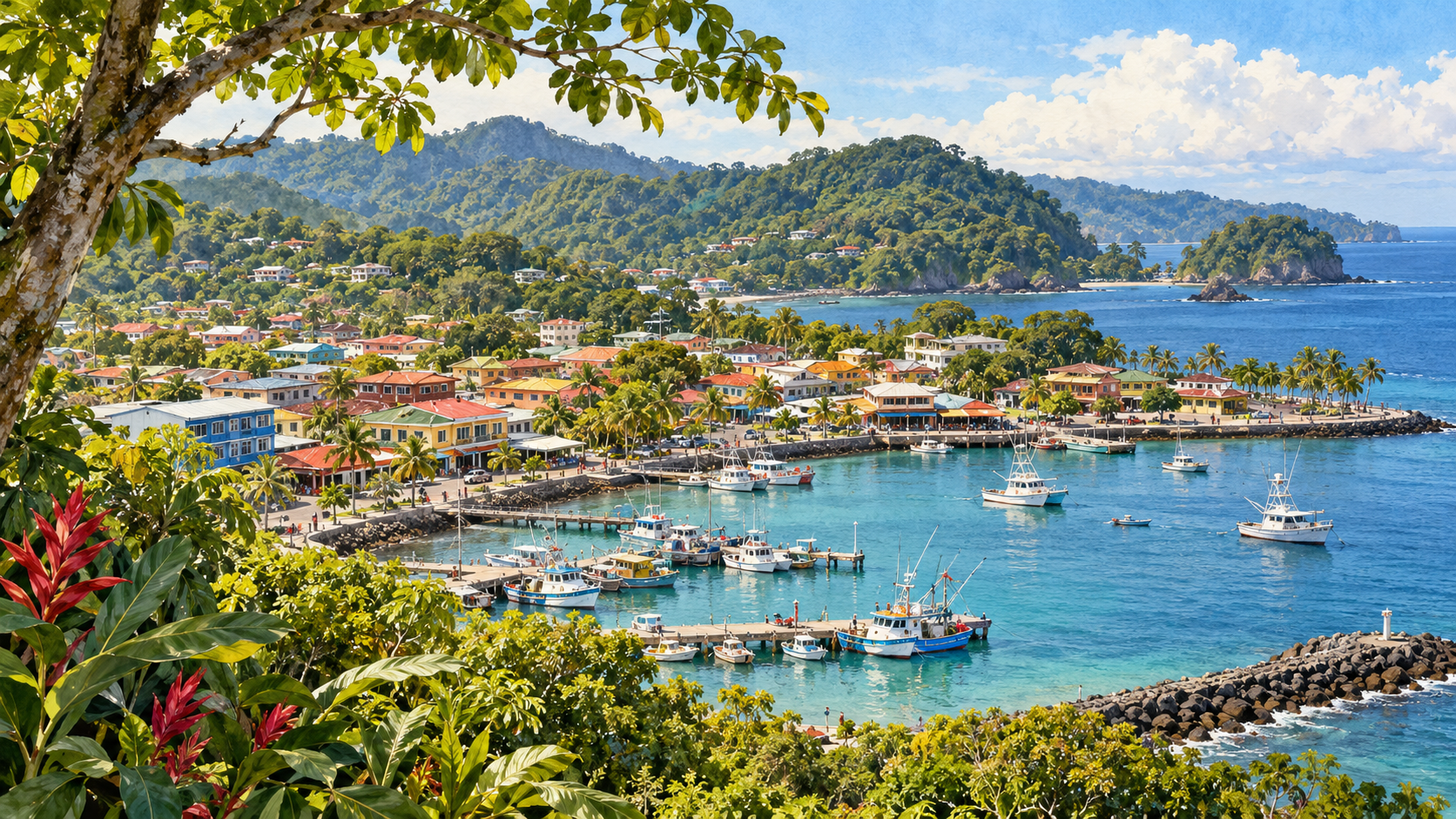
Quepos brings everyday coastal life into a visit to the Central Pacific. Walk a public waterfront, discover market ingredients and notice the boats that connect the town with the sea. Nearby Manuel Antonio and separate forest or mangrove outings add different ways to explore.

Explore with Pico & Tati
Turn a walk into a shared question, notice the world around you and discover how small choices help care for the places we visit.

Quepos Town

Nearby Quepos adds a working town setting to a Manuel Antonio visit. Explore its streets and public spaces at your family’s pace, notice daily life and plan transport back to your accommodation. Ask before photographing people or entering private spaces.

Quepos Waterfront

The Quepos waterfront offers a place to notice the coastal town’s connection with the sea. Choose a suitable public walking area, watch the weather and stay back from water edges. A short walk can become a shared observation game.

Marina Pez Vela Public Plaza

The marina’s commercial plaza brings together shops, restaurants and views of the harbor. Enjoy the public visitor areas and observe boats from a respectful distance. Working docks and vessels have separate access rules; the plaza is not a swimming area.

Paradero Nahomi

Paradero Nahomi is one of the Quepos landmarks identified on the marina’s area information. Ask locally about current access and facilities before heading over. Enjoy the coastal setting from secure public areas and plan your return route in advance.

Quepos Market Discoveries

Quepos has a central market and a farmers’ market identified in local area information. Check which market is open for your visit, then look for ingredients and produce you do not recognize. Ask questions politely and seek permission before taking photographs.

Damas Mangrove Outing

A separate guided excursion near Quepos introduces tidal channels and mangrove roots around Damas. Departure times and routes depend on the tide. Confirm the meeting point, flotation equipment and suitability for your group, and avoid touching or feeding wildlife.

Rainmaker Conservation Park

Rainmaker is a separate forest excursion outside Quepos, with trails, suspension bridges and water features. Arrange transport and check current access with the operator. Choose a route for your group’s abilities and recent weather rather than assuming every trail is suitable.

Manuel Antonio National Park

Forest paths, coastal views and beaches meet in this protected area. Plan admission through SINAC and follow current entry instructions. Choose open routes suited to your group and let wildlife remain wild: watch quietly without feeding or approaching animals.

Quepos and Its Neighboring Coast

Quepos is a coastal town rather than the national park itself. Use it as a starting point for a public waterfront walk, then plan any park or beach visit with its own entrance and transport arrangements.

Reading a Working Harbor

From public visitor spaces, notice the different boats and the work around them. Ask how the sea connects with local livelihoods. Keep clear of restricted docks and never enter a working vessel without an invitation.

A Market Ingredient Mission

During a permitted market visit, ask a willing vendor about an unfamiliar ingredient. Compare shapes and colors and let a responsible adult handle tasting or purchases. Ask permission before photographing people or stalls.

Quepos as a Conservation Starting Point

A visit to Quepos can connect town life with nearby forest and mangrove conservation. Choose an authorized outing, keep food away from wildlife and ask how your host helps protect the habitat you are exploring.

QUEPOS WEATHER

local life + insider tipsA Little Local Know-How

Start in town rather than treating Quepos as only a stop on the way to the national park. Confirm the exact meeting point for boat trips and allow separate time for Manuel Antonio, Damas or Rainmaker. A short local walk and a thoughtfully chosen outing can make a full family day.

No. Quepos is the nearby town. The national park is a separate destination with its own entrance and booking requirements.

No. The road toward Manuel Antonio is hilly and distances vary. Check the route from your accommodation and arrange suitable transport when needed.

Explore the public waterfront and marina plaza, ask about local markets or plan a separate guided outing. Check current access and arrangements for each activity.

No. These are separate excursions from the Quepos area. They need their own route, booking or transport arrangements.

Confirm the meeting point, access, transport and facilities with the responsible host or authority. Choose the route and activity for your group’s abilities and the current conditions.

Keep a flexible plan and check the forecast for the specific place you will visit. Local conditions can affect roads, trails, outdoor events and water activities.

Use public or authorized routes, ask before photographing people and support local hosts. Leave plants and wildlife in place and take your rubbish with you.

Choose one thing to observe closely, share what you noticed and ask a new question. You do not need a long checklist to learn something together.

things to doLittle Adventures Around Quepos

Explore Marina Pez Vela

Walk through Marina Pez Vela’s public plaza for views of fishing boats, waterfront restaurants and the surrounding hills. Browse the shops or settle in for a refreshment while learning about Quepos’ connection with the ocean. Stay within public areas, as the docks serve working boats and tour departures.

Go Birdwatching in the Damas Wetlands

Make birds the focus of a guided outing around the Damas estuary near Quepos. Ask your guide to help identify herons, egrets and kingfishers around the waterways. Binoculars give children a closer view without approaching wildlife, while the changing tide brings a different rhythm to this coastal habitat.

Make Time for a Quepos Lunch

Choose a downtown soda for a traditional casado or a local restaurant for fish and arroz con mariscos. Ask about the day’s specials and how your meal is prepared. Eating in town gives families time to experience everyday Quepos between excursions, with a bakery or fresh fruit drink as a possible next stop.

Spend a Morning at Playa Espadilla

Take the road toward Manuel Antonio for a beach outing at Playa Espadilla Norte, outside the national park. Its broad shoreline offers space for a walk, sandcastles and time beside the Pacific. Keep this separate from a park visit, and check local surf and swimming conditions before entering the water.

Meet the Wildlife of Manuel Antonio

Plan a separate visit to Manuel Antonio National Park for rainforest trails and coastal scenery. A qualified guide can help your family find wildlife that blends into the branches. Reserve admission through SINAC, bring a refillable water bottle and choose a manageable route with time to enjoy the forest.

See the Coast From a Catamaran

Depart from Marina Pez Vela on a coastal boat excursion for a different view of the Quepos–Manuel Antonio shoreline. Compare morning and afternoon options, and ask whether swimming or snorkeling is included when conditions permit. Choose a trip with a duration and onboard facilities that suit your family.

Explore the Damas Mangrove Channels

Travel through the Damas mangroves on a guided boat outing, where tangled roots and sheltered channels reveal a different landscape from the open coast. Learn how this habitat supports wildlife and protects the shoreline. Departures depend on tidal conditions, so let the operator recommend the timing for your visit.

End the Day Beside the Water

Leave one evening open for a relaxed waterfront meal at Marina Pez Vela. Arrive before dusk to enjoy the changing light over the boats, then settle into dinner without another excursion to rush toward. This is an easy way to bring the family together after a day exploring the area.

Explore Nature Field Guide cards from this province and the surrounding travel regions named below. Habitats and species vary by locality.

Nature Field Guide

Nature & Wildlife Around Quepos

Discover the monkeys, sloths, waterbirds and tropical plants around Quepos. Explore the species that connect the Damas mangroves, Manuel Antonio’s rainforests and Pacific coastal waters, then meet more wildlife from the wider Central Pacific region.

100 profiles
Nature Field Guide

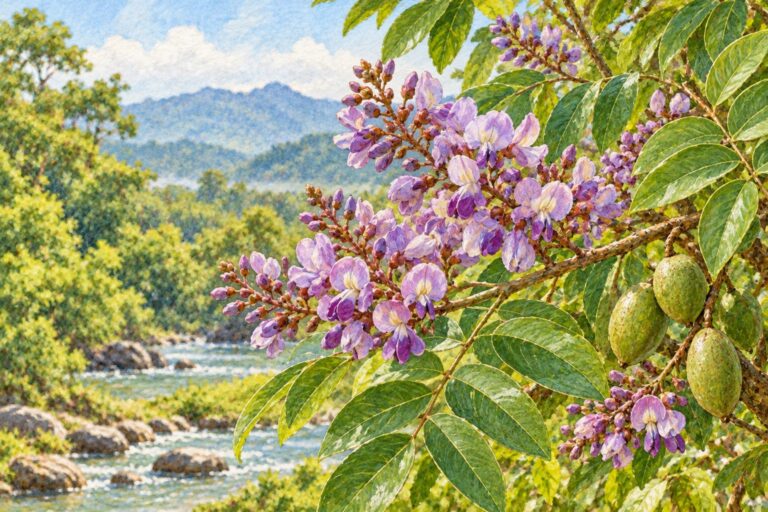
Almendro de Rio

Spanish name
Almendro de río / Almendro de montaña
Scientific name
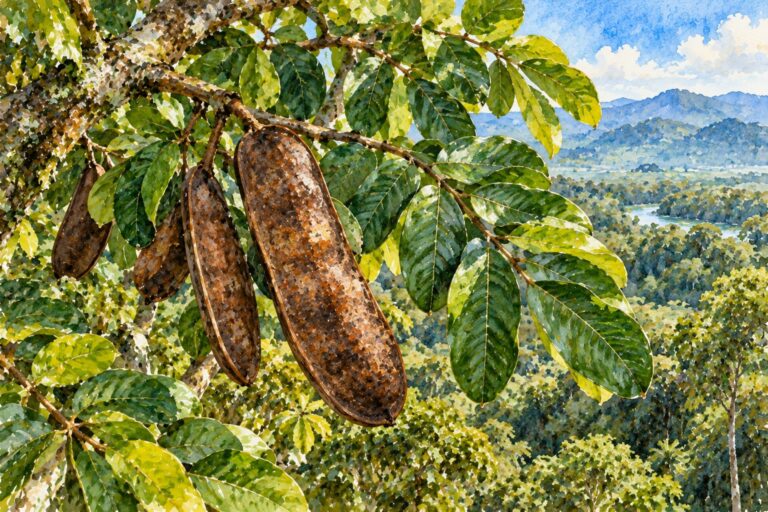
Andira inermis

What Do Pico & Tati Think?

Pico: “Purple flower clusters stand out against a dense green crown.”

Tati: “Let’s notice the leaves, flowers and habitat without disturbing the plant.”

Identification

Key Features of the Almendro de Rio

  • Pinnate compound leaves

  • Clusters of lavender-purple flowers

  • Oval fruits and a dense leafy crown

Habitat & range

Dry and humid forests across both slopes, including Guanacaste, Nicoya, the Central Valley, Caribbean lowlands and Osa.

Conservation & care

Explore with an adult on permitted paths. Observe and photograph without picking leaves, flowers or fruits. Do not taste plants or let pets chew them. Avoid climbing trees and disturbing roots, seedlings or visiting wildlife.

Threats & pressures

Protect suitable habitat, mature trees and natural regeneration. Avoid trampling, unauthorized clearing and collection.

View full profile →

Nature Field Guide

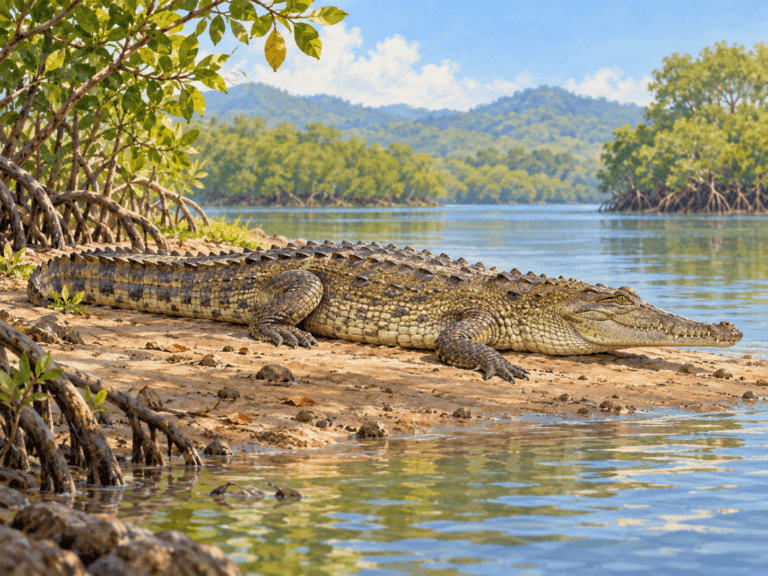
American Crocodile

Spanish name
Cocodrilo americano
Scientific name
Crocodylus acutus

What Do Pico & Tati Think?

Pico: “It blends into the riverbank so well.”

Tati: “We can observe from here with our guide. We don’t need to move closer.”

Identification

Key Features of the American Crocodile

  • A long snout and narrow head.

  • An olive-brown adult body with a long, strong tail.

  • Much of the body may be concealed in water or beside a bank.

Habitat & range

Rivers, estuaries, mangrove channels and other aquatic habitats. Observe only from a guide-approved boat or designated viewing place.

Seasonal Calendar

Egg-laying

General species biology; local schedule unverified

Apr, May

General species reference: April–May egg-laying and about 9–10 weeks of incubation. Tamarindo-specific nesting dates have not been verified. Never approach nests.

Event source ↗

Conservation & care

Never feed, approach or provoke crocodiles. Stay in the boat, keep hands inside, and follow local signs and guide instructions. Keep children and pets away from water edges.

View full profile →

Nature Field Guide

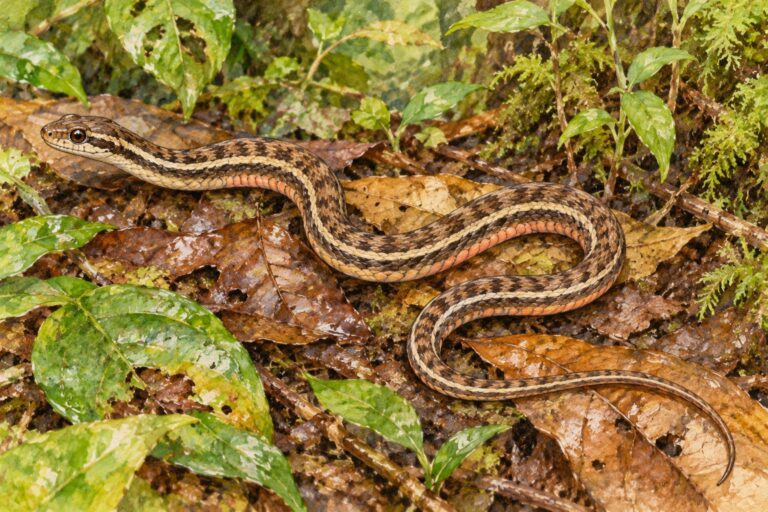
American Snail-eater

Spanish name
Caracolera articulada
Scientific name
Dipsas articulata

What Do Pico & Tati Think?

Pico: “What helps this reptile fit into its habitat?”

Tati: “Let’s look at its shape, colors and surroundings while giving it plenty of space.”

Identification

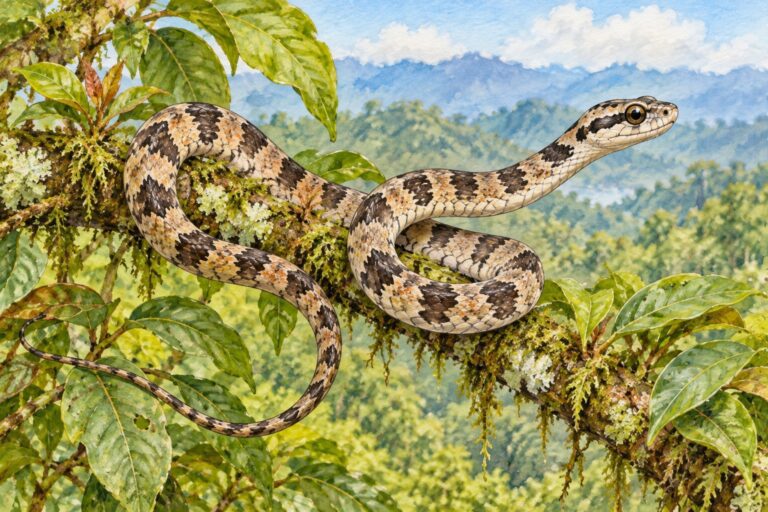
Key Features of the American Snail-eater

  • Slender body and narrow neck

  • Relatively large head and eyes

  • Dark blotches on a lighter background

Habitat & range

Humid forest and foothill vegetation on the Caribbean slope and in southwestern Costa Rica.

Conservation & care

Observe from a distance with an adult or qualified guide. Do not touch, catch, corner, feed or move any snake. Keep children and pets away. Colors, head shape and pupil shape must never be used to decide a snake is safe.

Threats & pressures

Protect connected habitat and natural shelters. Avoid collection, unnecessary clearing and deliberate killing. Leave wildlife in place and support responsible observation.

View full profile →

Nature Field Guide

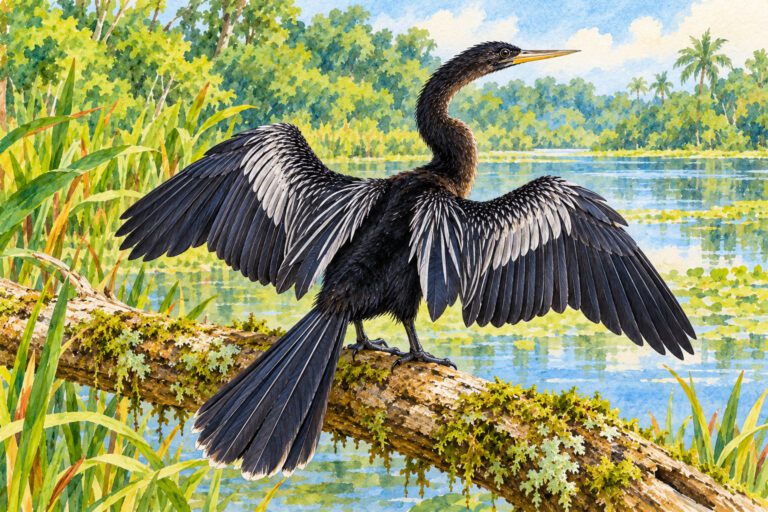
Anhinga

Spanish name
Aninga o pato aguja
Scientific name
Anhinga anhinga

What Do Pico & Tati Think?

A long neck rises above the water like a question mark. Pico waits while Tati looks for the rest of the bird.

Identification

Key Features of the Anhinga

  • Very long slender neck

  • Straight pointed bill

  • Long tail and pale wing markings

  • Often rests with wings spread

Habitat & range

Scan sheltered freshwater wetlands and wooded lagoon margins for swimming birds or a resting bird on a branch. Observe from a permitted viewpoint.

Conservation & care

Give feeding and resting birds space. If a bird stops feeding, repeatedly looks at you or moves away, increase your distance. Keep dogs away from flocks, avoid playback and feeding, and leave nests and natural shoreline debris undisturbed.

View full profile →

Nature Field Guide

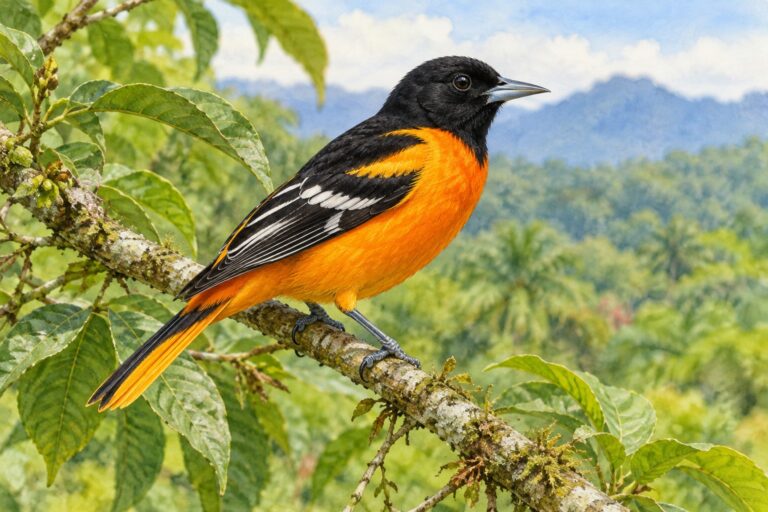
Baltimore Oriole

Spanish name
Bolsero norteño
Scientific name
Icterus galbula

What Do Pico & Tati Think?

Pico: “Did that bird travel here?”

Tati: “Baltimore orioles connect Costa Rica with places farther north.”

Identification

Key Features of the Baltimore Oriole

  • Male orange body and black head

  • White wingbar

  • Slender pointed bill

Habitat & range

A migrant and nonbreeding visitor, generally September to early May. Occurs on both slopes, especially the northern Pacific and Central Valley, in wooded gardens, edges and plantations.

Conservation & care

Observe quietly from trails or established viewing areas. Give nests, roosts and feeding birds space. Do not handle, chase or lure birds with playback. Keep pets away from wildlife.

Threats & pressures

Migrants depend on suitable habitat across their full annual journey. Protect native vegetation, reduce collision hazards around glass and keep cats away from birds. These are practical prevention priorities, not a claim of a measured decline at a specific Costa Rican site.

View full profile →

Nature Field Guide

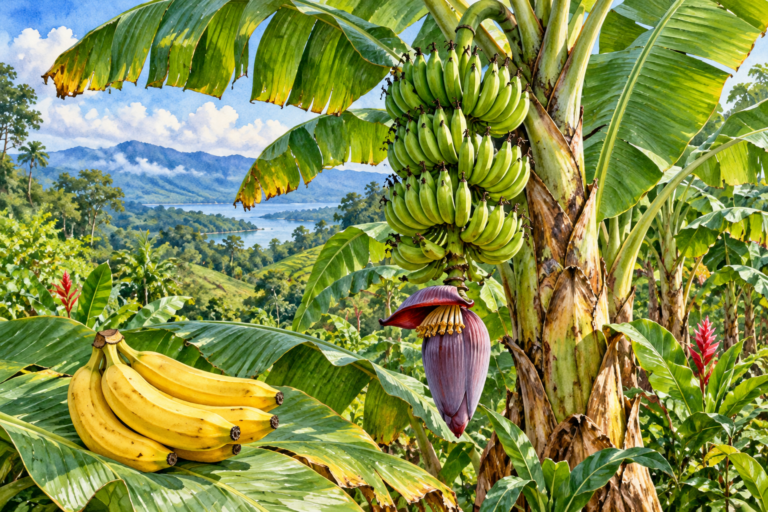
Banana

Spanish name
Banano
Scientific name
Musa spp. (dessert banana cultivars)

What Do Pico & Tati Think?

Pico: “That banana plant looks like a tree!”

Tati: “Its stem is made from layers of leaf bases.”

Identification

Key Features of the Banana

  • Very broad elongated leaves

  • A thick pseudostem made from leaf bases

  • Fruit arranged in hands within a hanging bunch

  • New shoots near the base

Habitat & range

Humid cultivated lowlands. CORBANA documents farms in the Caribbean, Sarapiquí and Parrita; these correspond to Caribbean, Northern Plains and Central Pacific tags.

Conservation & care

Visit farms only with permission and follow the host's instructions. Stay clear of machinery, chemical applications and working areas. Do not pick or taste plants without a responsible adult and the host's approval.

View full profile →

Nature Field Guide

Bare-throated Tiger-Heron

Spanish name
Garza tigre cuellinuda
Scientific name
Tigrisoma mexicanum

What Do Pico & Tati Think?

Pico wonders where the tiger is hiding. Tati points to the fine patterns on a very watchful heron.

Identification

Key Features of the Bare-throated Tiger-Heron

  • Bare yellow throat patch

  • Adult finely barred neck and body

  • Gray cheeks and greenish legs

  • Young birds have bold brown bands

Habitat & range

Scan shallow water, quiet mangrove channels and vegetated wetland margins from an established viewpoint. Follow a local guide’s directions around estuaries.

Conservation & care

Give feeding and resting birds space. If a bird stops feeding, repeatedly looks at you or moves away, increase your distance. Keep dogs away from flocks, avoid playback and feeding, and leave nests and natural shoreline debris undisturbed.

View full profile →

Nature Field Guide

Beach Morning Glory

Spanish name
Churristate de playa / Pudre oreja
Scientific name
Ipomoea pes-caprae

What Do Pico & Tati Think?

Pico: “These flowers grow right across the sand!”

Tati: “Let’s look at the shape of the leaves without stepping on the vine.”

Identification

Key Features of the Beach Morning Glory

  • Creeping stems extending across beach sand.

  • Simple leaves with a notch giving a goat’s-hoof appearance.

  • Pink-purple flowers with a joined, funnel-like corolla.

Habitat & range

Upper sandy beaches in tropical coastal habitats. Observe vegetation from established access routes rather than stepping across vines.

Seasonal Calendar

Main flowering window

Costa Rican coastal populations

Jul, Aug, Sep, Oct, Nov

ACG reports abundant flowers July–November and seed maturation December–April on Costa Rican coasts. Typical seasonal windows, not exact dates.

Event source ↗

Seed maturation

Costa Rican coastal populations

Jan, Feb, Mar, Apr, Dec

ACG reports abundant flowers July–November and seed maturation December–April on Costa Rican coasts. Typical seasonal windows, not exact dates.

Event source ↗

Conservation & care

Do not uproot vines, pick flowers or taste plant parts. Use existing beach paths and avoid trampling coastal vegetation.

View full profile →

Nature Field Guide

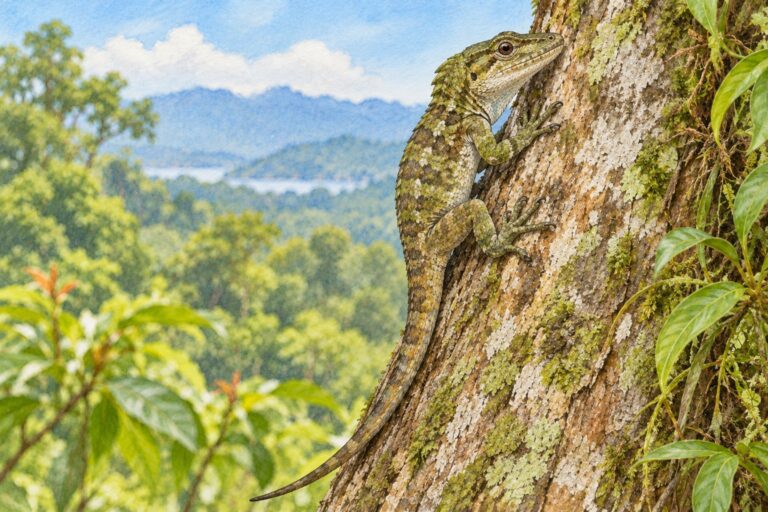
Big-headed Anole

Spanish name
Anolis de cabeza ancha / Anolis jaspeado
Scientific name
Anolis capito

What Do Pico & Tati Think?

Pico: “What clues help us recognize this reptile?”

Tati: “Let’s notice its shape, markings and habitat from a respectful distance.”

Identification

Key Features of the Big-headed Anole

  • Broad relatively large head

  • Mottled brown, olive or greenish body

  • Stout build and bark-colored camouflage

Habitat & range

Shaded Caribbean-slope forest and southwestern rainforest; also documented in humid forest at Rincón de la Vieja.

Conservation & care

Observe with an adult from permitted paths. Do not catch, chase, touch or feed reptiles. Leave bark, logs, rocks and leaf litter in place. Keep pets away and allow animals an open escape route.

Threats & pressures

Protect habitat connections and natural shelters. Avoid road mortality, collection and deliberate killing. Leave reptiles in their habitat rather than keeping or relocating them.

View full profile →

Nature Field Guide

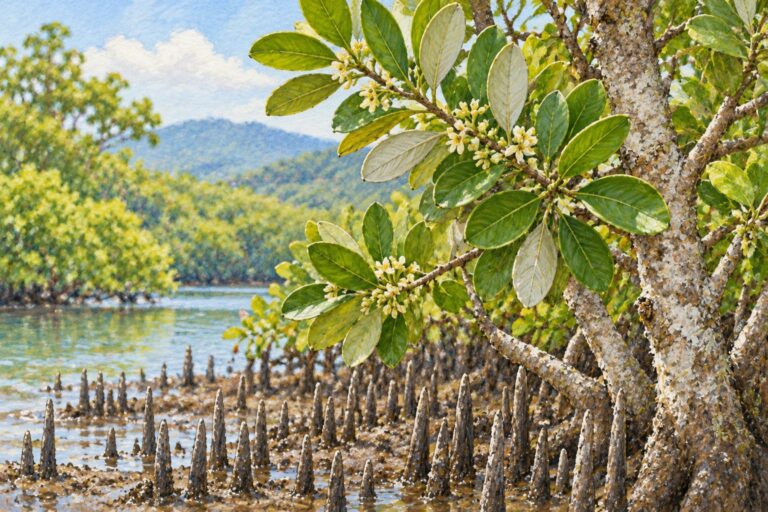
Black Mangrove

Spanish name
Mangle negro / Palo de sal
Scientific name
Avicennia germinans

What Do Pico & Tati Think?

Pico: “Pencil-shaped breathing roots rise from the mud around this mangrove.”

Tati: “Let’s notice the leaves, flowers and habitat without disturbing the plant.”

Identification

Key Features of the Black Mangrove

  • Opposite oval leaves with pale undersides

  • Upright pencil-shaped roots

  • Small pale flowers

Habitat & range

Coastal mangroves; Pacific documentation includes Guanacaste and Tivives near the Gulf of Nicoya. Gandoca provides a documented Caribbean example.

Conservation & care

Explore mangroves only with an adult on permitted paths or a guided route. Do not step on roots, collect seedlings or enter mud and tidal channels. Leave leaves and wildlife undisturbed.

Threats & pressures

Protect suitable habitat, mature trees and natural regeneration. Avoid trampling, unauthorized clearing and collection.

View full profile →

Nature Field Guide

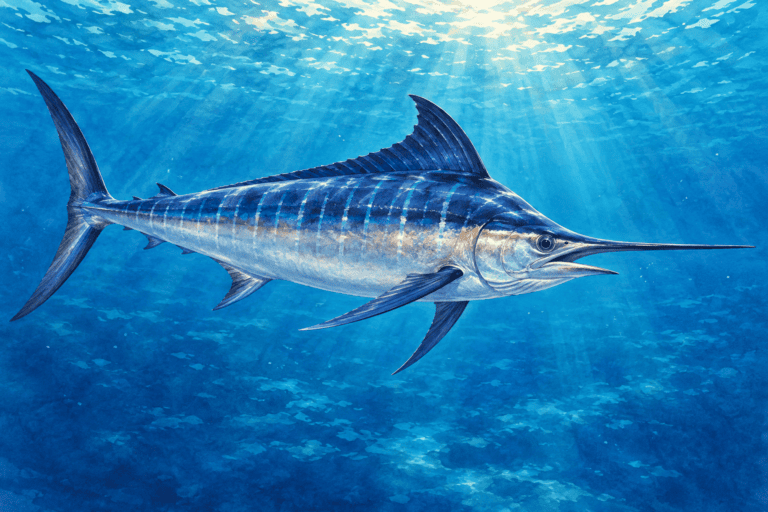
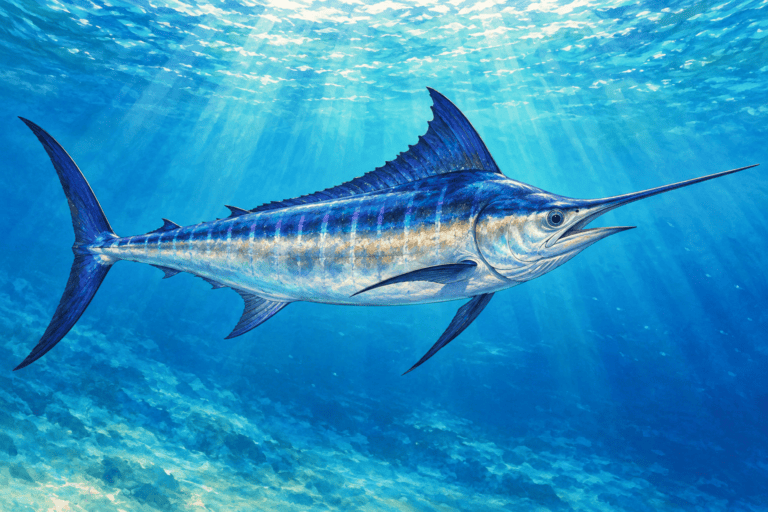
Black Marlin

Spanish name
Marlín negro
Scientific name
Istiompax indica

What Do Pico & Tati Think?

Pico: “How can we tell this marlin apart?”

Tati: “Its stiff side fins are a useful clue.”

Identification

Key Features of the Black Marlin

  • Rigid pectoral fins that do not fold flat against the body.

  • A substantial head and comparatively stout bill.

  • A powerful streamlined body.

Habitat & range

Offshore Pacific waters.

Conservation & care

Observe marine wildlife without feeding, touching or chasing it. Keep litter and discarded fishing line out of waterways. Follow qualified guides and current local rules.

Threats & pressures

Fishing capture is a conservation concern for billfish. Tracking catches and releases helps assess pressures across a migratory range.

View full profile →

Nature Field Guide

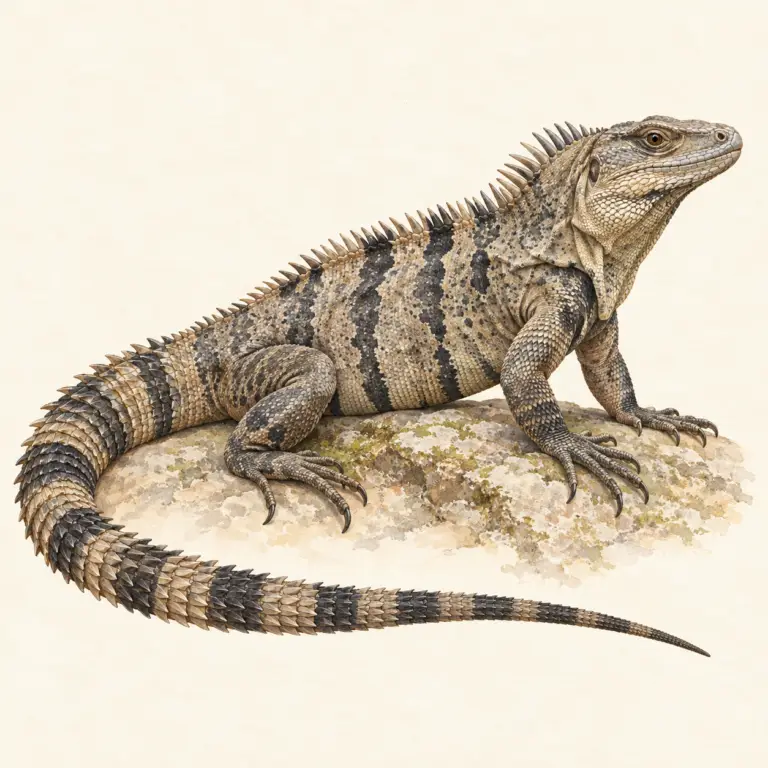
Black Spiny-tailed Iguana

Spanish name
Garrobo
Scientific name
Ctenosaura similis

What Do Pico & Tati Think?

Pico and Tati invite you to learn about the black spiny-tailed iguana. Use a photograph to compare this tail with the smooth-looking outline of a green iguana tail.

Identification

Key Features of the Black Spiny-tailed Iguana

  • Rings of pointed scales on the tail.

  • Gray or brown adults with dark body bands.

  • Raised scales along the back.

Habitat & range

Pacific-slope dry forest, rocky ground and open wooded areas.

Conservation & care

Watch wildlife with an adult from a safe path. Do not touch, feed, capture or move reptiles, and keep pets away. Leave eggs, shelters and vegetation undisturbed.

View full profile →

Nature Field Guide

Black Vulture

Spanish name
Zopilote negro
Scientific name
Coragyps atratus

What Do Pico & Tati Think?

Pico: “Which vulture is that one?”

Tati: “Look for the short tail and pale patches just at the wingtips.”

Identification

Key Features of the Black Vulture

  • Bare dark head

  • Short rounded tail

  • White patches at outer wingtips

Habitat & range

Widespread over towns and open landscapes from the coast into the mountains, becoming less frequent above about 2000 m. A regional tag does not identify a nesting site.

Conservation & care

Observe quietly from trails or established viewing areas. Give nests, roosts and feeding birds space. Do not handle, chase or lure birds with playback. Keep pets away from wildlife.

Threats & pressures

Protect native vegetation, reduce collision hazards around glass and keep cats away from birds. These are practical prevention priorities, not a claim of a measured decline at a specific Costa Rican site.

View full profile →

Nature Field Guide

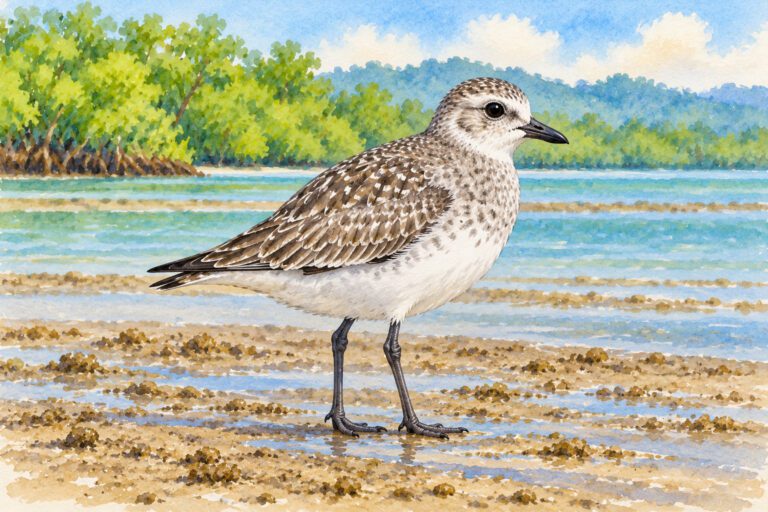
Black-bellied Plover

Spanish name
Chorlito gris
Scientific name
Pluvialis squatarola

What Do Pico & Tati Think?

Pico expects a black belly. Tati’s winter bird has a pale belly and a very different outfit.

Identification

Key Features of the Black-bellied Plover

  • Large round-headed plover

  • Short stout dark bill

  • Gray upperparts and pale nonbreeding belly

  • Dark armpit patch visible in natural flight

Habitat & range

Scan exposed shoreline feeding areas and nearby resting places with binoculars. The tide changes which flats are available; remain on a safe established route.

Conservation & care

Give feeding and resting birds space. If a bird stops feeding, repeatedly looks at you or moves away, increase your distance. Keep dogs away from flocks, avoid playback and feeding, and leave nests and natural shoreline debris undisturbed.

View full profile →

Nature Field Guide

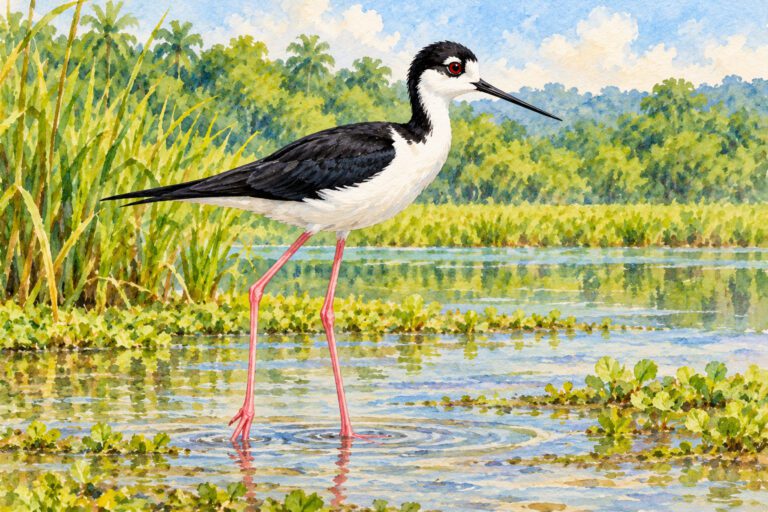
Black-necked Stilt

Spanish name
Cigüeñuela cuellinegra
Scientific name
Himantopus mexicanus

What Do Pico & Tati Think?

Those pink legs look almost too long for Pico’s page. Tati turns the journal upright to draw the whole bird.

Identification

Key Features of the Black-necked Stilt

  • Very long pink legs

  • Thin straight black bill

  • White underparts with dark back and hindneck

Habitat & range

Scan exposed shoreline feeding areas and nearby resting places with binoculars. The tide changes which flats are available; remain on a safe established route.

Conservation & care

Give feeding and resting birds space. If a bird stops feeding, repeatedly looks at you or moves away, increase your distance. Keep dogs away from flocks, avoid playback and feeding, and leave nests and natural shoreline debris undisturbed.

View full profile →

Nature Field Guide

Blue Marlin

Spanish name
Marlín azul
Scientific name
Makaira nigricans

What Do Pico & Tati Think?

Pico: “Its back is such a deep blue!”

Tati: “Let’s compare its fin and bill with the other marlin.”

Identification

Key Features of the Blue Marlin

  • A long spear-shaped bill.

  • A cobalt-blue back and silvery underside.

  • A pronounced front dorsal fin and crescent-shaped tail.

Habitat & range

Warm tropical and subtropical open water.

Seasonal Calendar

Regional presence

Costa Rican Pacific waters

Year-round

FECOP reports year-round Costa Rican Pacific presence and a historical May–September Guanacaste fishing peak. Catch patterns are not exact migration or breeding dates.

Event source ↗

Reported fishing peak

Guanacaste offshore waters

May, Jun, Jul, Aug, Sep

FECOP reports year-round Costa Rican Pacific presence and a historical May–September Guanacaste fishing peak. Catch patterns are not exact migration or breeding dates.

Event source ↗

Conservation & care

Observe marine wildlife without feeding, touching or chasing it. Keep litter and discarded fishing line out of waterways. Follow qualified guides and current local rules.

Threats & pressures

Blue marlin can be caught incidentally in longline fisheries targeting tuna and swordfish. Fishing pressure needs monitoring across its migratory range.

View full profile →

Nature Field Guide

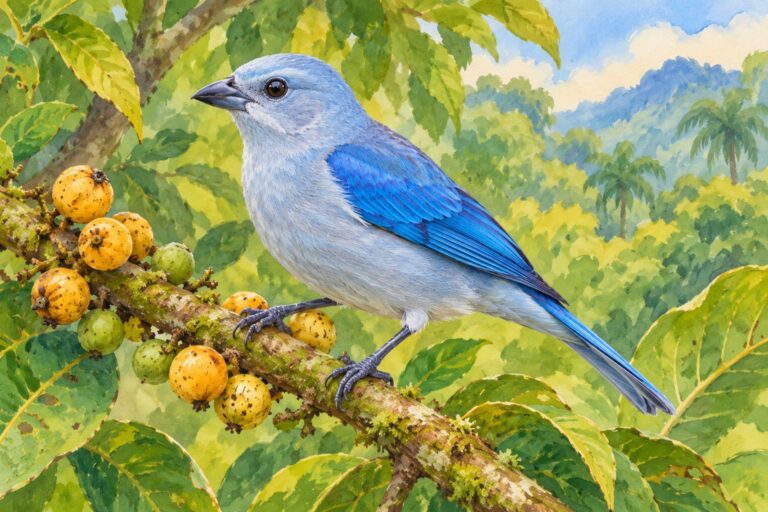
Blue-gray Tanager

Spanish name
Tangara azuleja
Scientific name
Thraupis episcopus

What Do Pico & Tati Think?

Pico: “It looks like a piece of the sky!”

Tati: “Let’s see where the blue is pale and where it is brighter.”

Identification

Key Features of the Blue-gray Tanager

  • Powder blue-gray body

  • Brighter blue wings and shoulder

  • Dark eye and stout bill

Habitat & range

Widespread in gardens, towns and semi-open wooded areas, mainly below about 2000 m. In the dry northwest it is less frequent and associated with moister sites near homes.

Conservation & care

Observe quietly from trails or established viewing areas. Give nests, roosts and feeding birds space. Do not handle, chase or lure birds with playback. Keep pets away from wildlife.

Threats & pressures

Protect native vegetation, reduce collision hazards around glass and keep cats away from birds. These are practical prevention priorities, not a claim of a measured decline at a specific Costa Rican site.

View full profile →

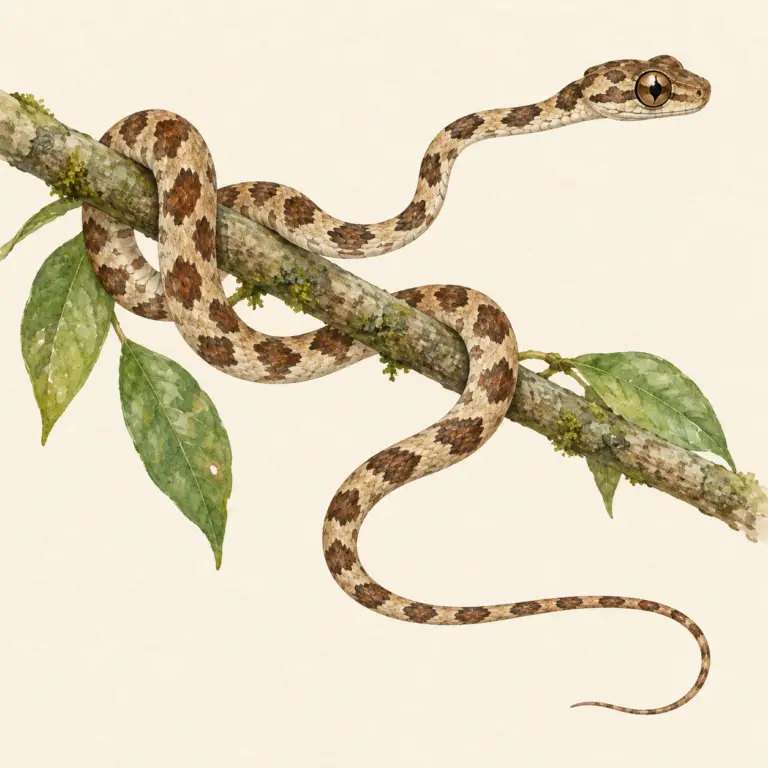
Nature Field Guide

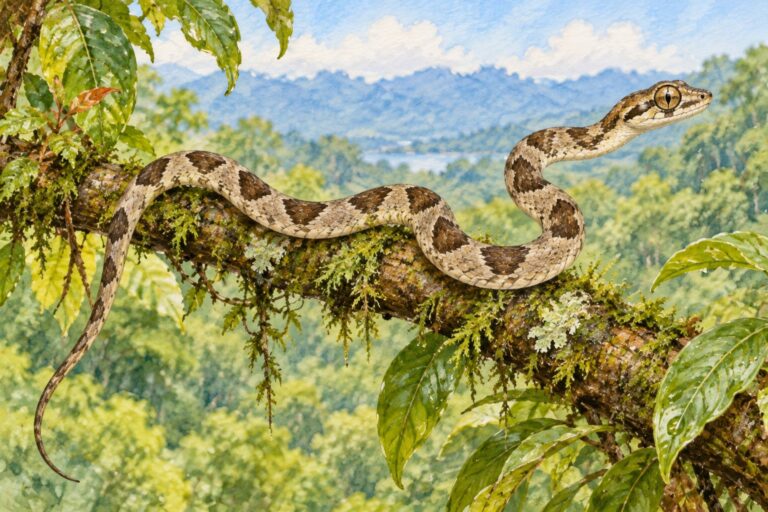
Blunt-headed Tree Snake

Spanish name
Serpiente bejuquillo cabezona
Scientific name
Imantodes cenchoa

What Do Pico & Tati Think?

Pico and Tati invite you to learn about the blunt-headed tree snake. From a photograph, compare the widths of the head and neck. Do not move foliage to look for a snake.

Identification

Key Features of the Blunt-headed Tree Snake

  • Very slender body.

  • Head noticeably wider than the neck.

  • Large eyes and brown blotches on a pale background.

Habitat & range

Humid forest understory, vines and shrubs.

Conservation & care

Never approach, touch, catch or try to move any snake, even if it appears harmless or dead. Keep children and pets away, step back calmly and tell an adult or guide. Do not use colors, head shape or this card to judge safety.

View full profile →

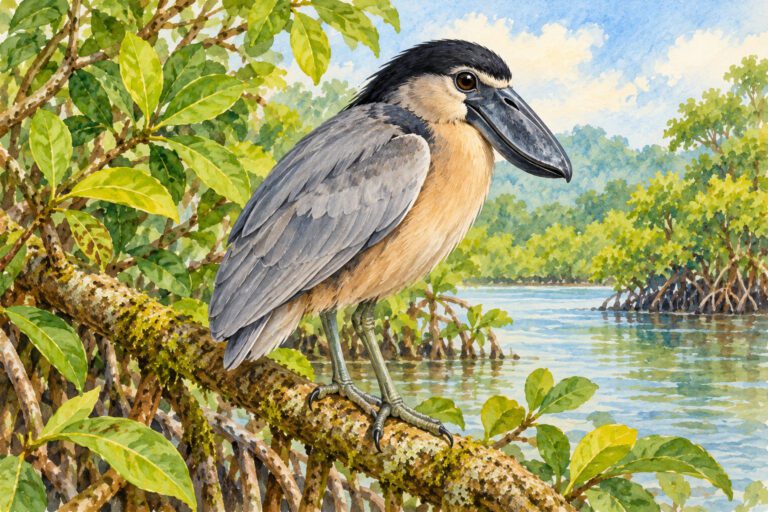
Nature Field Guide

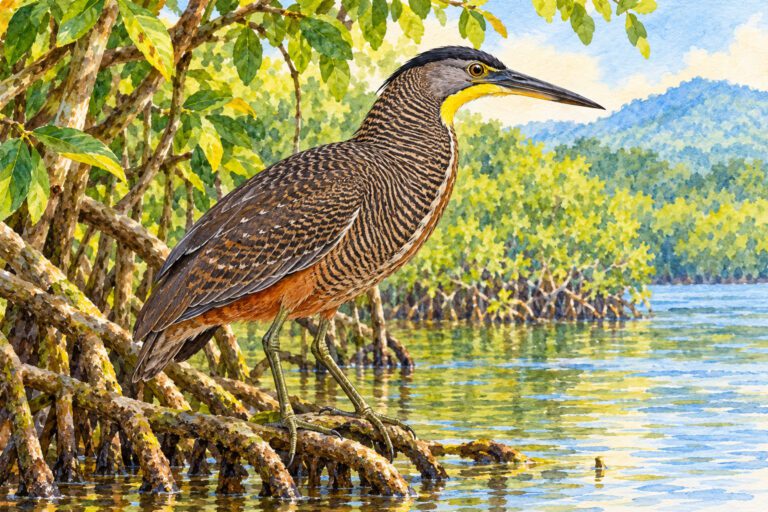
Boat-billed Heron

Spanish name
Chocuaco o picocuchara
Scientific name
Cochlearius cochlearius

What Do Pico & Tati Think?

That broad bill looks unlike the pointed bills Pico has drawn. Tati adds a new shape to the explorer journal.

Identification

Key Features of the Boat-billed Heron

  • Very broad boat-shaped bill

  • Large dark eyes and black crown

  • Stocky body with gray back

Habitat & range

Scan shallow water, quiet mangrove channels and vegetated wetland margins from an established viewpoint. Follow a local guide’s directions around estuaries.

Conservation & care

Give feeding and resting birds space. If a bird stops feeding, repeatedly looks at you or moves away, increase your distance. Keep dogs away from flocks, avoid playback and feeding, and leave nests and natural shoreline debris undisturbed.

View full profile →

Nature Field Guide

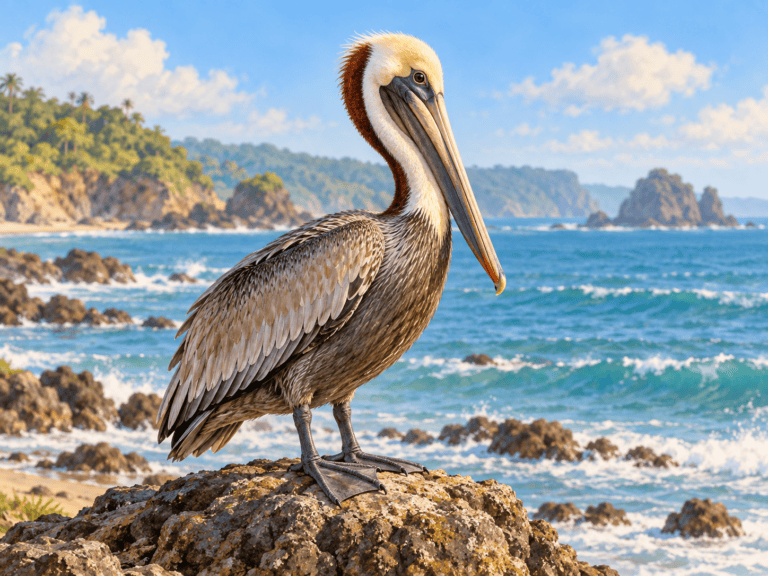
Brown Pelican

Spanish name
Pelícano pardo
Scientific name
Pelecanus occidentalis

What Do Pico & Tati Think?

Pico: “Look at that enormous bill!”

Tati: “Let’s compare its shape with the other birds by the water.”

Identification

Key Features of the Brown Pelican

  • A long bill with a pouch beneath the lower jaw.

  • A large gray-brown body and broad wings.

  • Head and neck colors change with age and breeding condition.

Habitat & range

Coastal waters along the Pacific, with less frequent nonbreeding visitors on the Caribbean coast. Regional tags refer to coastal habitat, not inland towns.

Seasonal Calendar

Resident presence

Isla San Lucas, Costa Rica

Year-round

SINAC lists Brown Pelican as a resident at Isla San Lucas on Costa Rica’s Pacific coast. This regional pattern does not guarantee a Tamarindo sighting or establish a local breeding calendar.

Event source ↗

Conservation & care

Do not feed birds or approach resting groups. Dispose of fishing line responsibly and leave nests undisturbed.

View full profile →

Nature Field Guide

Brown-throated Three-toed Sloth

Spanish name
Perezoso de tres dedos
Scientific name
Bradypus variegatus

What Do Pico & Tati Think?

Pico: “That shape looks like part of the tree!”

Tati: “Let’s use binoculars and give it time.”

Identification

Key Features of the Brown-throated Three-toed Sloth

  • Three claws on each forelimb, if naturally visible.

  • Rounded face with a dark eye mask.

  • Gray-brown fur may have a greenish appearance.

Habitat & range

Manuel Antonio National Park and the studied cacao landscape at FINMAC, Pueblo Nuevo / Villa Francia, Limón.

Seasonal Calendar

Observed birth concentration

FINMAC cacao landscape, Pueblo Nuevo / Villa Francia

Jan, Feb, Mar

In 2010–2012, 59% of observed births occurred in these months; births also occurred outside this window.

Event source ↗

Conservation & care

Keep a respectful distance and leave an open route for the animal. Stay on authorized paths, secure food and rubbish, and observe without feeding, touching, baiting or chasing.

Threats & pressures

Forest loss breaks canopy connections. Caribbean research identifies risks from domestic dogs and emphasizes retaining riverside forest and living fences.

View full profile →

Nature Field Guide

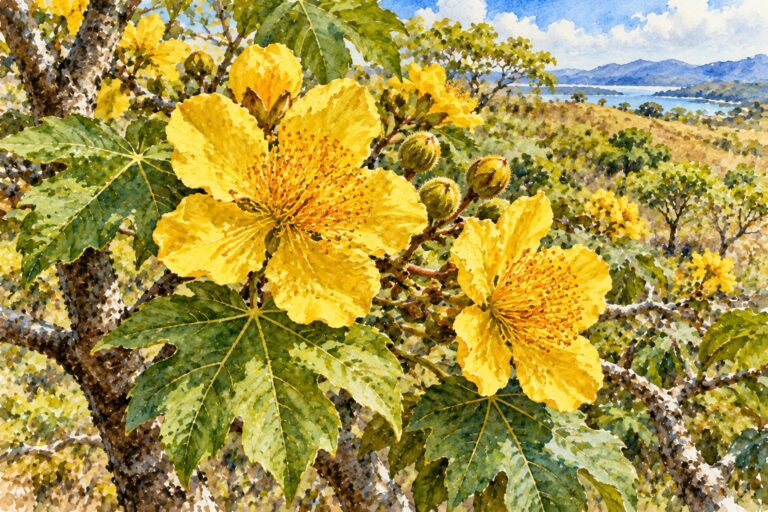
Buttercup Tree

Spanish name
Poro poro
Scientific name
Cochlospermum vitifolium

What Do Pico & Tati Think?

Pico wants to sketch the tree’s silhouette. Tati suggests looking for three clues before guessing its name. What would you notice first?

Identification

Key Features of the Buttercup Tree

  • Large open yellow flowers

  • Simple leaves with three to five lobes

  • Roundish capsules with fluffy seed fibers

Habitat & range

Seasonal woodland and open dry landscapes.

Conservation & care

Observe from paths and leave leaves, bark, flowers and fruits attached. Do not taste wild plants or offer them to pets. Ask a knowledgeable guide to confirm the species.

View full profile →

Nature Field Guide

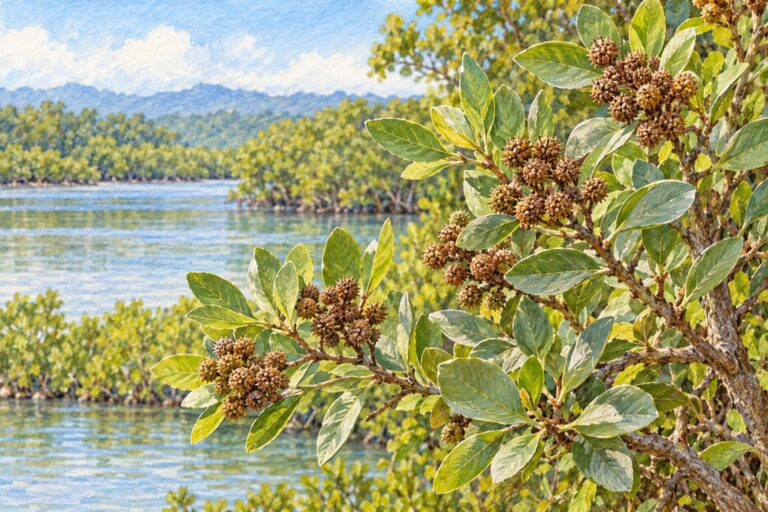
Buttonwood

Spanish name
Mangle botoncillo / Botoncillo
Scientific name
Conocarpus erectus

What Do Pico & Tati Think?

Pico: “Small buttonlike fruit heads help identify this coastal tree or shrub.”

Tati: “Let’s notice the leaves, flowers and habitat without disturbing the plant.”

Identification

Key Features of the Buttonwood

  • Simple alternate leaves

  • Round buttonlike fruit heads

  • Often at the landward mangrove edge

Habitat & range

Coastal margins, including documented mangrove-edge habitat at Tivives and the North Pacific. Gandoca provides a documented Caribbean example.

Conservation & care

Explore with an adult on permitted paths. Observe and photograph without picking leaves, flowers or fruits. Do not taste plants or let pets chew them. Avoid climbing trees and disturbing roots, seedlings or visiting wildlife.

Threats & pressures

Protect suitable habitat, mature trees and natural regeneration. Avoid trampling, unauthorized clearing and collection.

View full profile →

Nature Field Guide

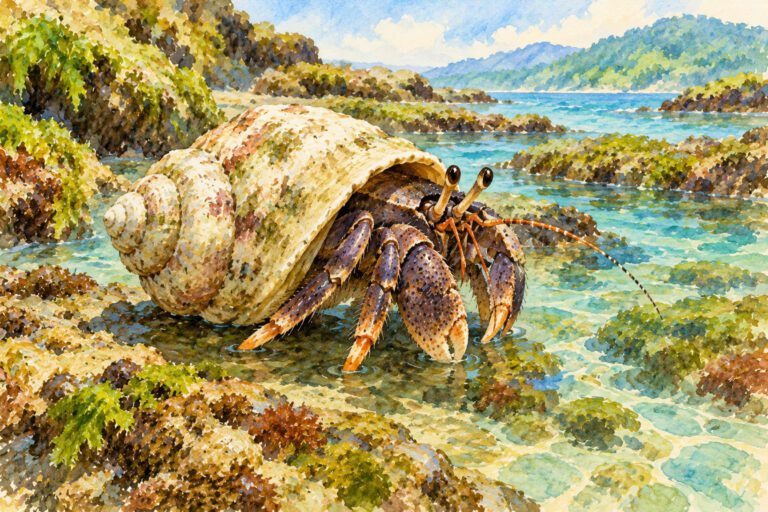
Calcinus Hermit Crab

Spanish name
Cangrejo ermitaño Calcinus
Scientific name
Calcinus obscurus

What Do Pico & Tati Think?

Pico thinks a shell has moved. Tati waits until a small leg appears before writing down what she has seen.

Identification

Key Features of the Calcinus Hermit Crab

  • A marine hermit crab in a borrowed shell

  • Visible legs and claws at the shell opening

  • The shell species and crab species are separate identifications

Habitat & range

Rocky shore and naturally visible tidal habitat. Choose a permitted observation point with an adult; do not turn rocks or reach into holes.

Conservation & care

Give claws and burrow entrances space. Do not handle, feed, chase or collect crabs. Leave rocks and shells where they are, and follow your adult’s route and local signs.

View full profile →

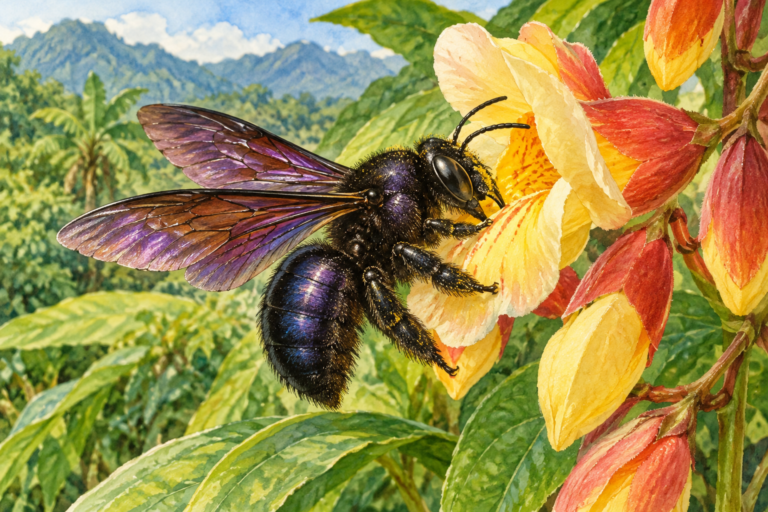
Nature Field Guide

Carpenter Bees

Spanish name
Abejas carpinteras
Scientific name
Xylocopa spp. — genus card

What Do Pico & Tati Think?

Pico: “Let's look closely at the carpenter bees!”

Tati: “We can compare its shape and markings without touching it.”

Identification

Key Features of the Carpenter Bees

  • Robust body

  • often shiny abdomen

  • some nest in wood

Habitat & range

Suitable forest, garden or open habitats; distribution varies with habitat and species.

Conservation & care

Observe without collecting, handling or disturbing insects or nests. Stay on permitted paths. Leave caterpillars and their food plants in place.

View full profile →

Nature Field Guide

Ceiba Kapok Tree

Spanish name
Ceiba / Puri
Scientific name
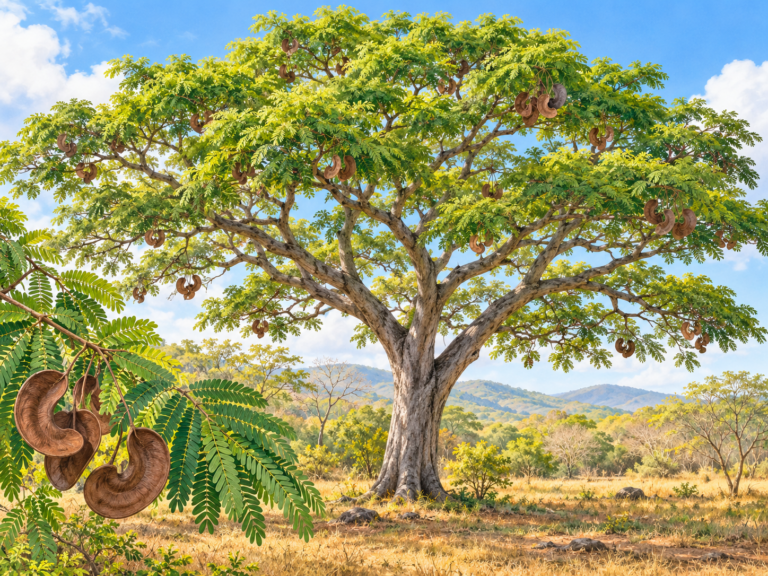
Ceiba pentandra

What Do Pico & Tati Think?

Pico: “Huge buttress roots help make a mature ceiba unforgettable.”

Tati: “Let’s notice the leaves, flowers and habitat without disturbing the plant.”

Identification

Key Features of the Ceiba Kapok Tree

  • Large buttress roots on mature trees

  • Palmate leaves with several narrow leaflets

  • Seed capsules containing silky fibers

Habitat & range

Dry, humid and very wet lowland forests on both slopes, including Pacific, Caribbean and northern lowland landscapes.

Conservation & care

Explore with an adult on permitted paths. Observe and photograph without picking leaves, flowers or fruits. Do not taste plants or let pets chew them. Avoid climbing trees and disturbing roots, seedlings or visiting wildlife.

Threats & pressures

Protect suitable habitat, mature trees and natural regeneration. Avoid trampling, unauthorized clearing and collection.

View full profile →

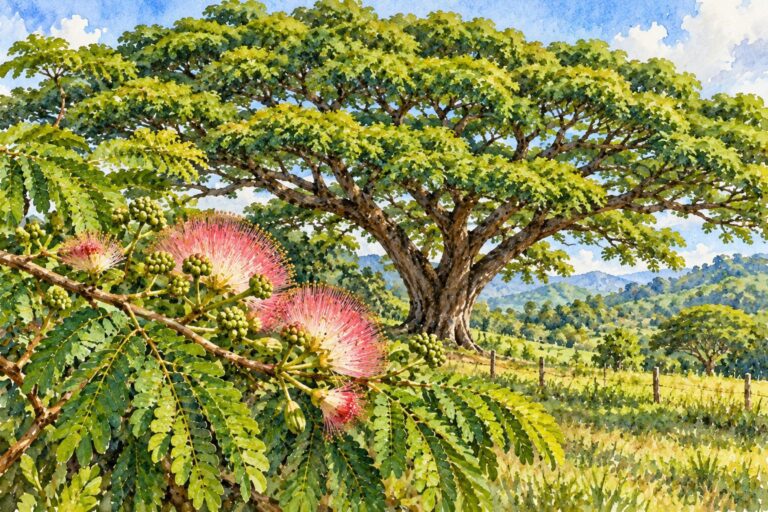
Nature Field Guide

Cenizaro Rain Tree

Spanish name
Cenízaro
Scientific name
Samanea saman

What Do Pico & Tati Think?

Pico: “An umbrella-shaped crown shelters a world beneath its branches.”

Tati: “Let’s notice the leaves, flowers and habitat without disturbing the plant.”

Identification

Key Features of the Cenizaro Rain Tree

  • Broad umbrella-shaped crown

  • Twice-divided compound leaves

  • Pink-and-white brushlike flowers and dark pods

Habitat & range

Pacific lowlands and open landscapes, also documented in the Northern Plains and around San Ramón.

Conservation & care

Explore with an adult on permitted paths. Observe and photograph without picking leaves, flowers or fruits. Do not taste plants or let pets chew them. Avoid climbing trees and disturbing roots, seedlings or visiting wildlife.

Threats & pressures

Protect suitable habitat, mature trees and natural regeneration. Avoid trampling, unauthorized clearing and collection.

View full profile →

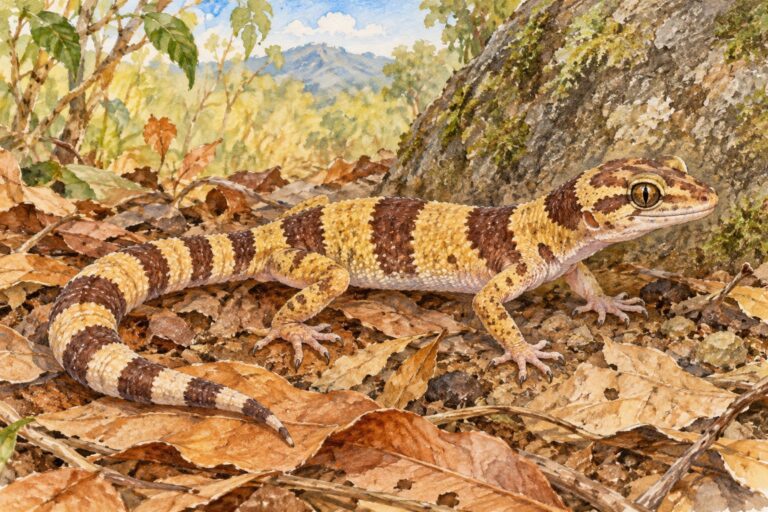
Nature Field Guide

Central American Banded Gecko

Spanish name
Geco bandeado centroamericano
Scientific name
Coleonyx mitratus

What Do Pico & Tati Think?

Pico: “What can we learn from this reptile’s shape?”

Tati: “Let’s notice its markings and habitat while leaving it plenty of space.”

Identification

Key Features of the Central American Banded Gecko

  • Dark bands on yellow-tan tones

  • Movable eyelids

  • Clawed toes without broad wall-climbing pads

Habitat & range

Northwestern and western Pacific-slope forests, including Guanacaste and San Luis de Monteverde.

Conservation & care

Observe from permitted paths with an adult. Do not touch, chase, catch or feed reptiles. Leave bark, stones, logs and leaf litter in place. Keep pets away and give animals an open escape route.

Threats & pressures

Protect natural shelters and connected habitat. Avoid collection, unnecessary clearing and deliberate killing. Leave wildlife in its habitat and support responsible observation.

View full profile →

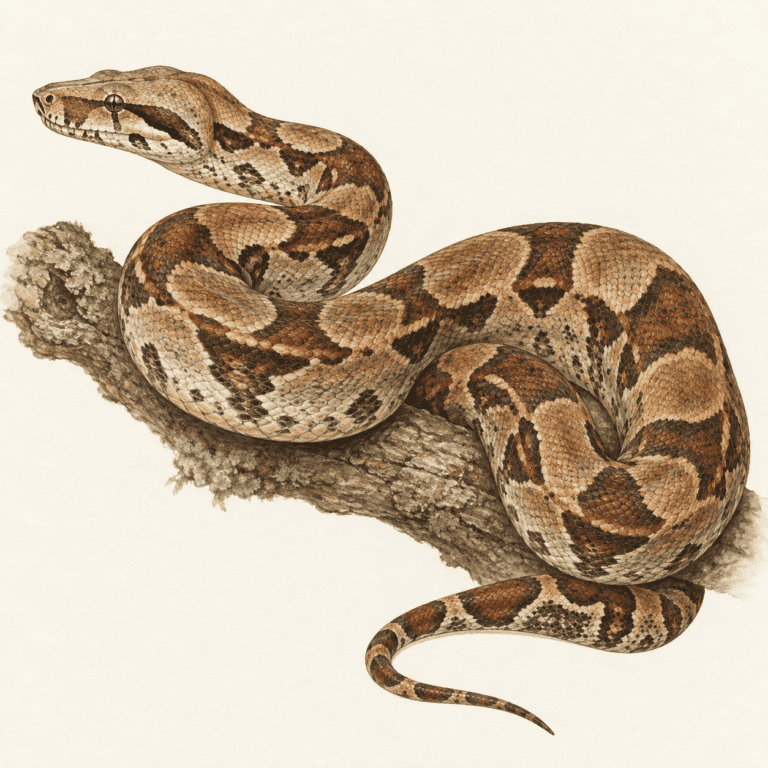
Nature Field Guide

Central American Boa

Spanish name
Boa o béquer
Scientific name
Boa imperator

What Do Pico & Tati Think?

Pico and Tati invite you to learn about the central american boa. Using a photograph, draw three saddle-shaped markings and explain how patterns can blend with a background.

Identification

Key Features of the Central American Boa

  • Heavy body with large brown saddle-like markings.

  • Broad head and a tapering tail.

  • Color and pattern vary between individuals.

Habitat & range

Forests, forest edges and other suitable habitats across Costa Rica.

Conservation & care

Never approach, touch, catch or try to move any snake, even if it appears harmless or dead. Keep children and pets away, step back calmly and tell an adult or guide. Do not use colors, head shape or this card to judge safety.

View full profile →

Nature Field Guide

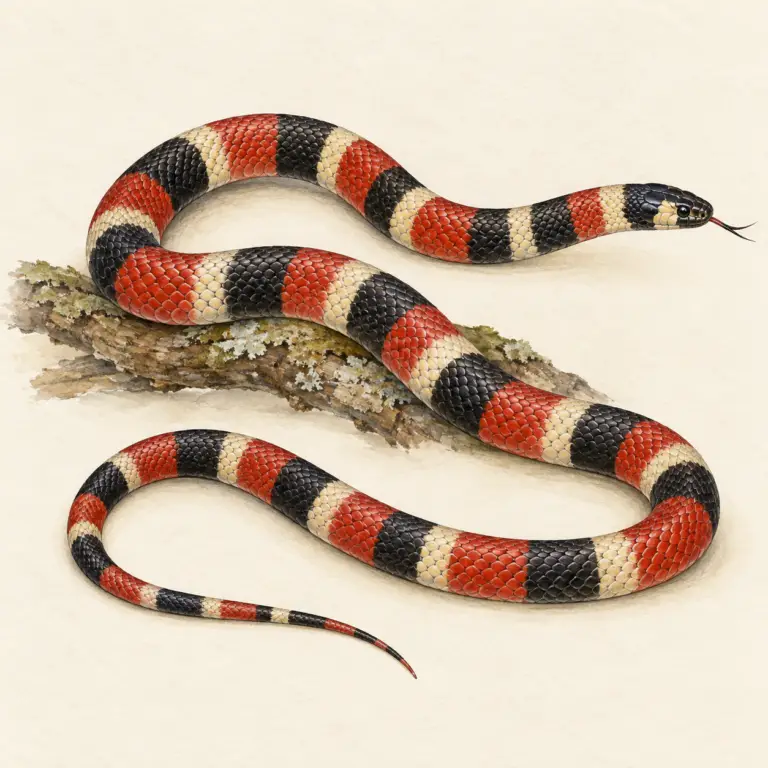
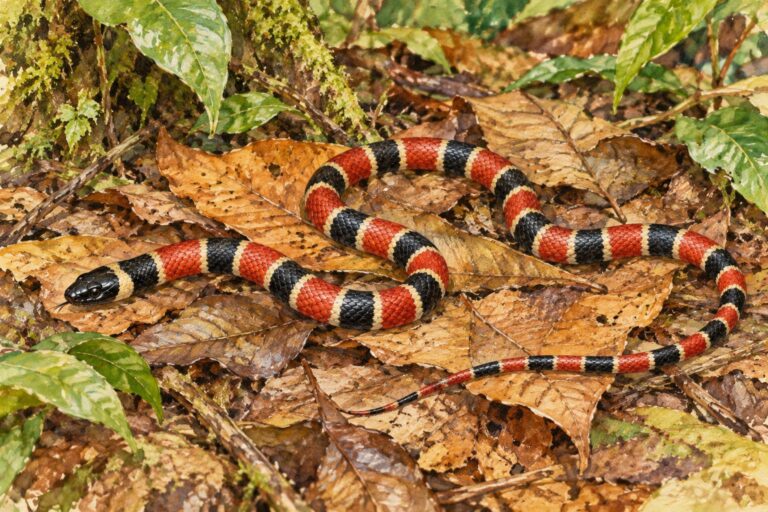
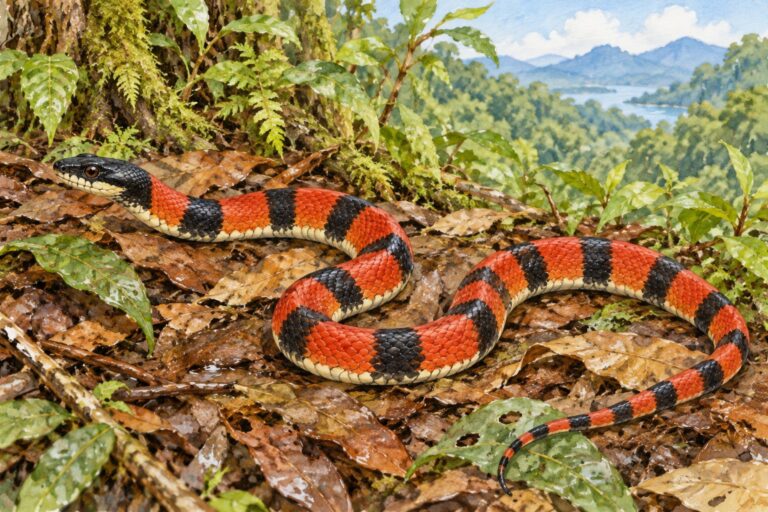
Central American Coral Snake

Spanish name
Coral macho
Scientific name
Micrurus nigrocinctus

What Do Pico & Tati Think?

Pico and Tati invite you to learn about the central american coral snake. Create a ring-pattern drawing from a verified photograph. Write the rule: observe snakes from a distance and tell an adult.

Identification

Key Features of the Central American Coral Snake

  • Red, pale and black rings encircling the body.

  • Relatively small head with little separation from the neck.

  • A slender-to-moderately robust cylindrical body.

Habitat & range

Pacific-slope lowlands and premontane areas, including parts of the Central Valley.

Conservation & care

Never approach, touch, catch or try to move any snake, even if it appears harmless or dead. Keep children and pets away, step back calmly and tell an adult or guide. Do not use colors, head shape or this card to judge safety.

View full profile →

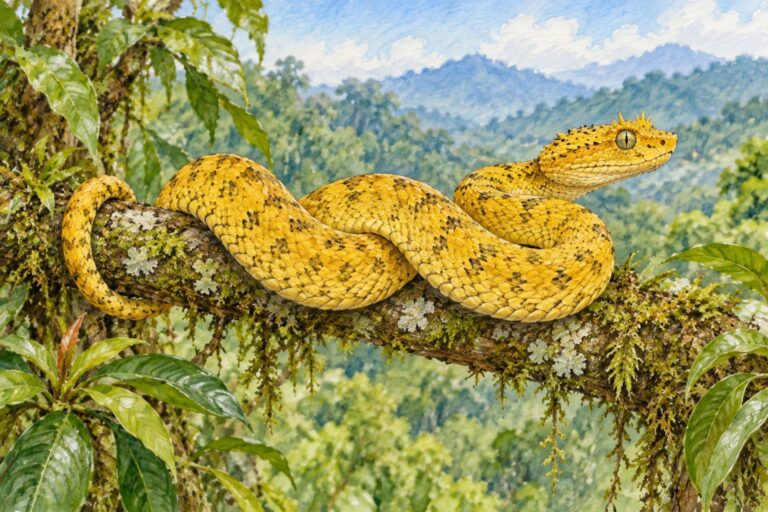
Nature Field Guide

Central American Eyelash Pitviper

Spanish name
Bocaracá / Oropel / Toboba de pestañas
Scientific name
Bothriechis nigroadspersus

What Do Pico & Tati Think?

Pico: “What clues help us recognize this reptile?”

Tati: “Let’s notice its shape, markings and habitat from a respectful distance.”

Identification

Key Features of the Central American Eyelash Pitviper

  • Raised eyelash-like scales above the eyes

  • Compact body resting on branches

  • Highly variable colors, including yellow

Habitat & range

Humid lowland and foothill forests on the Caribbean slope and in the Central and South Pacific.

Conservation & care

VENOMOUS. Observe only at a distance with a qualified guide. Never approach, touch, catch or provoke this snake. Keep children and pets well away and do not reach into nearby vegetation or hiding places.

Threats & pressures

Protect habitat connections and natural shelters. Avoid road mortality, collection and deliberate killing. Leave reptiles in their habitat rather than keeping or relocating them.

View full profile →

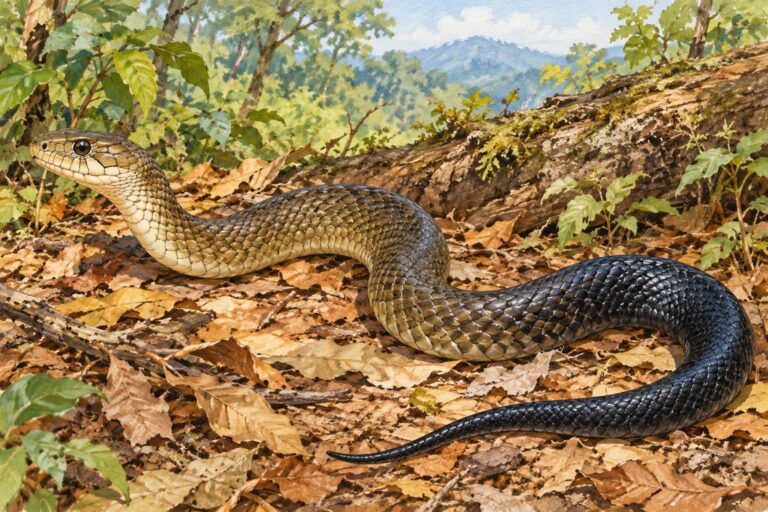
Nature Field Guide

Central American Indigo Snake

Spanish name
Sabanera / Mica
Scientific name
Drymarchon melanurus

What Do Pico & Tati Think?

Pico: “What clues help us recognize this reptile?”

Tati: “Let’s notice its shape, markings and habitat from a respectful distance.”

Identification

Key Features of the Central American Indigo Snake

  • Large robust body

  • Smooth-looking scales

  • Color can become darker toward the tail

Habitat & range

Lowland woodland and open habitats, including Guanacaste and the Pacific slope.

Conservation & care

Observe only from a distance with an adult or qualified guide. Do not touch, catch, corner or attempt to move any snake. Step back and tell your adult; keep children and pets away. Do not use colors, head shape or pupil shape to decide a snake is safe.

Threats & pressures

Protect habitat connections and natural shelters. Avoid road mortality, collection and deliberate killing. Leave reptiles in their habitat rather than keeping or relocating them.

View full profile →

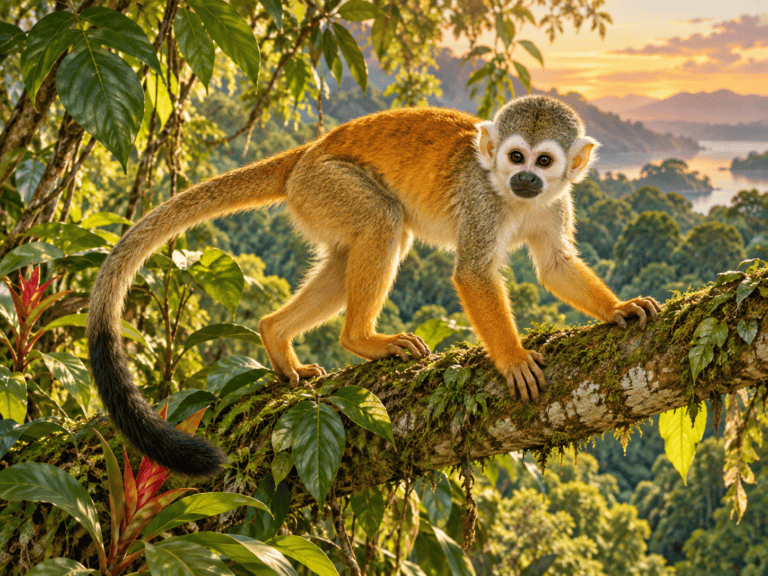
Nature Field Guide

Central American Squirrel Monkey

Spanish name
Mono tití / Mono ardilla
Scientific name
Saimiri oerstedii

What Do Pico & Tati Think?

Pico: “The little monkeys are moving together!”

Tati: “Let’s watch the troop without following it off the trail.”

Identification

Key Features of the Central American Squirrel Monkey

  • Small slender monkey with pale facial markings.

  • Warm reddish or yellow-brown back.

  • Long tail and rapid movements through vegetation.

Habitat & range

Manuel Antonio National Park near Quepos; this species also occupies parts of the southern Pacific lowlands.

Conservation & care

Keep a respectful distance and leave an open route for the animal. Stay on authorized paths, secure food and rubbish, and observe without feeding, touching, baiting or chasing.

Threats & pressures

Forest destruction is a serious pressure for a species with a restricted geographic range.

Protection & recovery

Costa Rica’s government wildlife guide explicitly identifies this species as protected nationally. This legal designation is separate from its global IUCN category.

Conservation assessment

Global IUCN category as reported by the linked source, checked 7 October 2026. The source does not give an assessment year here. National legal protection and local abundance are separate questions.

View full profile →

Nature Field Guide

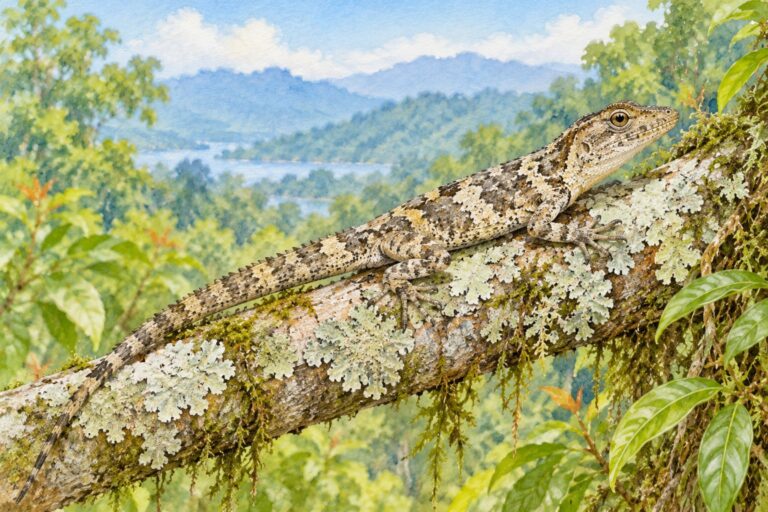
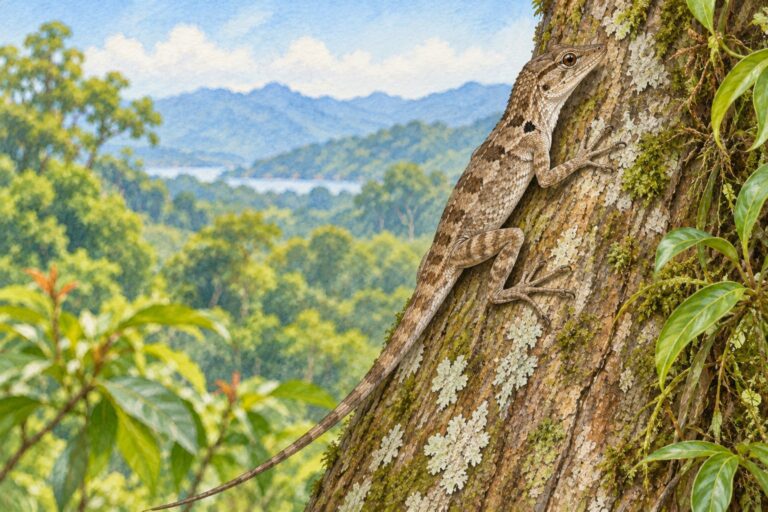
Charles Myers’s Anole

Spanish name
Anolis de Charles Myers
Scientific name
Anolis charlesmyersi

What Do Pico & Tati Think?

Pico: “What can we learn from this reptile’s shape?”

Tati: “Let’s notice its markings and habitat while leaving it plenty of space.”

Identification

Key Features of the Charles Myers’s Anole

  • Very short limbs

  • Lichenlike pale and dark mottling

  • Relatively short tail with a low serrated ridge

Habitat & range

Pacific lowland and adjoining foothill habitats in Costa Rica, including the Central and South Pacific.

Conservation & care

Observe from permitted paths with an adult. Do not touch, chase, catch or feed reptiles. Leave bark, stones, logs and leaf litter in place. Keep pets away and give animals an open escape route.

Threats & pressures

Protect natural shelters and connected habitat. Avoid collection, unnecessary clearing and deliberate killing. Leave wildlife in its habitat and support responsible observation.

View full profile →

Nature Field Guide

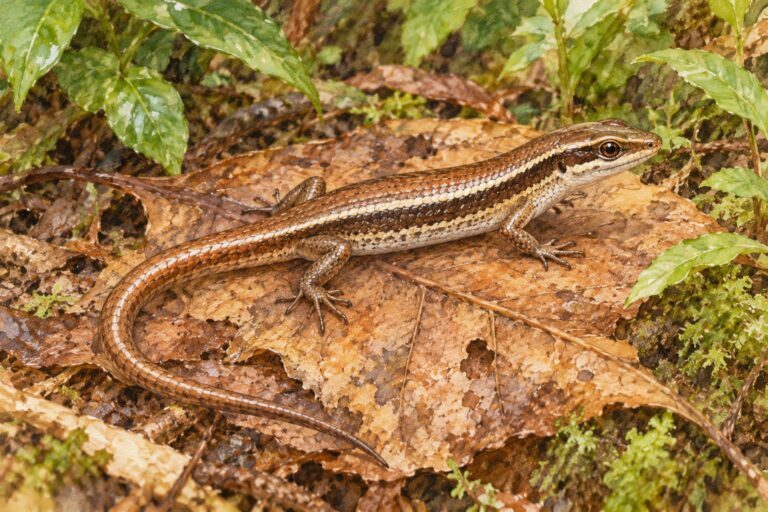
Cherrie’s Ground Skink

Spanish name
Eslaboncillo pardo / Escinco de Cherrie
Scientific name
Scincella cherriei

What Do Pico & Tati Think?

Pico: “What clues help us recognize this reptile?”

Tati: “Let’s notice its shape, markings and habitat from a respectful distance.”

Identification

Key Features of the Cherrie’s Ground Skink

  • Smooth glossy-looking scales

  • Dark lateral stripe

  • Short legs and a tapering tail

Habitat & range

Pacific-slope forest floor and wooded edges, including southwestern Costa Rica and the Monteverde foothill area.

Conservation & care

Observe with an adult from permitted paths. Do not catch, chase, touch or feed reptiles. Leave bark, logs, rocks and leaf litter in place. Keep pets away and allow animals an open escape route.

Threats & pressures

Protect habitat connections and natural shelters. Avoid road mortality, collection and deliberate killing. Leave reptiles in their habitat rather than keeping or relocating them.

View full profile →

Nature Field Guide

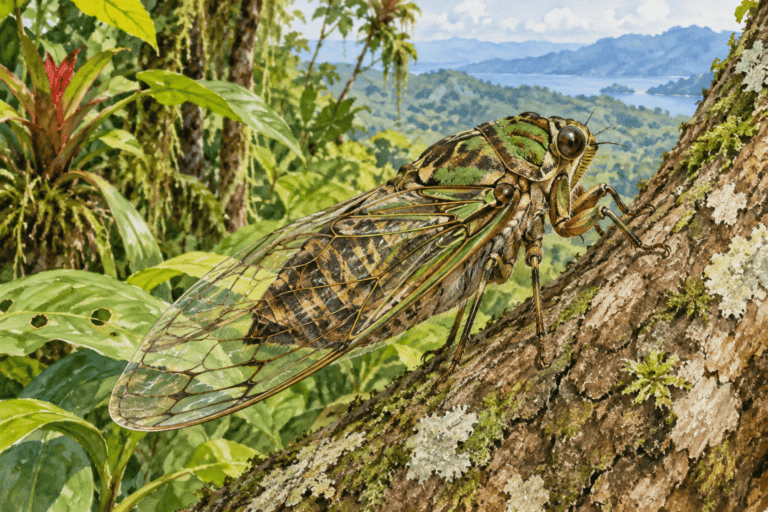
Cicadas

Spanish name
Chicharras
Scientific name
Cicadidae — family card

What Do Pico & Tati Think?

Pico: “Let's look closely at the cicadas!”

Tati: “We can compare its shape and markings without touching it.”

Identification

Key Features of the Cicadas

  • Large transparent wings

  • broad head

  • loud calls from some males

Habitat & range

Suitable forest, garden or open habitats; distribution varies with habitat and species.

Conservation & care

Observe without collecting, handling or disturbing insects or nests. Stay on permitted paths. Leave caterpillars and their food plants in place.

View full profile →

Nature Field Guide

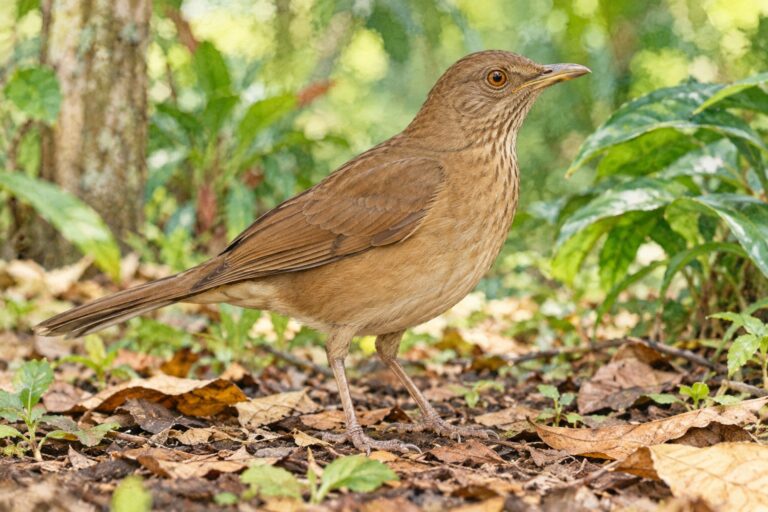
Clay-colored Thrush

Spanish name
Mirlo pardo / Yigüirro
Scientific name
Turdus grayi

What Do Pico & Tati Think?

Pico: “That brown bird has a beautiful song!”

Tati: “That is the yigüirro. We can learn its voice as well as its colors.”

Identification

Key Features of the Clay-colored Thrush

  • Warm brown plumage

  • Yellowish bill

  • Fine throat streaks and orange-brown eye

Habitat & range

Widespread across Costa Rica from lowlands to about 2450 m, in gardens, farms, secondary growth and wooded urban areas. Less numerous in the dry northwest and higher mountains.

Conservation & care

Observe quietly from trails or established viewing areas. Give nests, roosts and feeding birds space. Do not handle, chase or lure birds with playback. Keep pets away from wildlife.

Threats & pressures

Protect native vegetation, reduce collision hazards around glass and keep cats away from birds. These are practical prevention priorities, not a claim of a measured decline at a specific Costa Rican site.

View full profile →

Nature Field Guide

Clouded Snail-eater

Spanish name
Caracolera nublada
Scientific name
Sibon nebulatus

What Do Pico & Tati Think?

Pico: “What helps this reptile fit into its habitat?”

Tati: “Let’s look at its shape, colors and surroundings while giving it plenty of space.”

Identification

Key Features of the Clouded Snail-eater

  • Slender climbing body

  • Large rounded head and prominent eyes

  • Irregular dark markings on a lighter body

Habitat & range

Caribbean and Pacific humid forests and edges, including northern lowland wet forest.

Conservation & care

Observe from a distance with an adult or qualified guide. Do not touch, catch, corner, feed or move any snake. Keep children and pets away. Colors, head shape and pupil shape must never be used to decide a snake is safe.

Threats & pressures

Protect connected habitat and natural shelters. Avoid collection, unnecessary clearing and deliberate killing. Leave wildlife in place and support responsible observation.

View full profile →

Nature Field Guide

Cocos Booby

Spanish name
Piquero de Cocos
Scientific name
Sula brewsteri

What Do Pico & Tati Think?

Pico meets a familiar-looking seabird with a newer name. Tati keeps the scientific name beside the illustration.

Identification

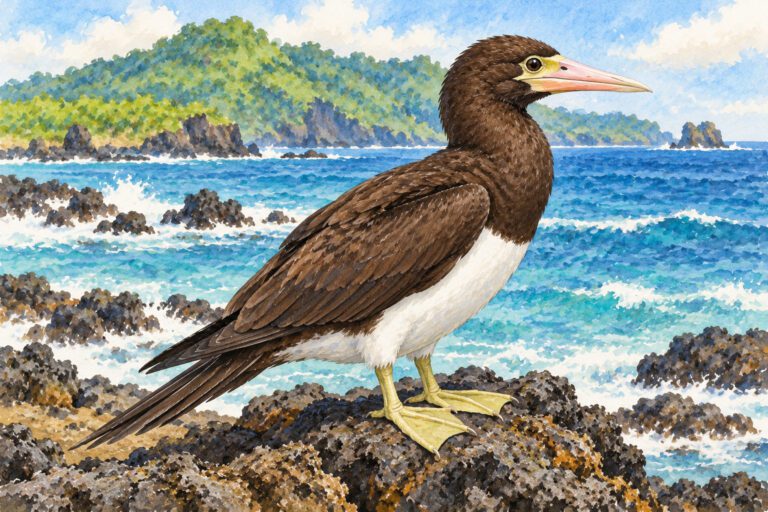
Key Features of the Cocos Booby

  • Brown adult upperparts and white belly

  • Strong pointed pale bill

  • Short legs and broad webbed feet

  • Identification may require close expert comparison

Habitat & range

Scan Pacific coastal waters and offshore rocks from a safe viewpoint or responsible boat trip. Do not approach seabird colonies or land on nesting islands.

Conservation & care

Give feeding and resting birds space. If a bird stops feeding, repeatedly looks at you or moves away, increase your distance. Keep dogs away from flocks, avoid playback and feeding, and leave nests and natural shoreline debris undisturbed.

View full profile →

Nature Field Guide

Common Basilisk

Spanish name
Basilisco común
Scientific name
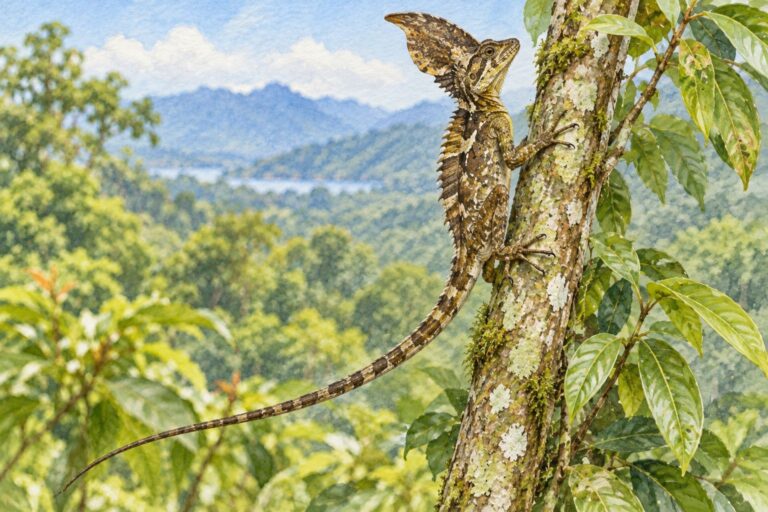
Basiliscus basiliscus

What Do Pico & Tati Think?

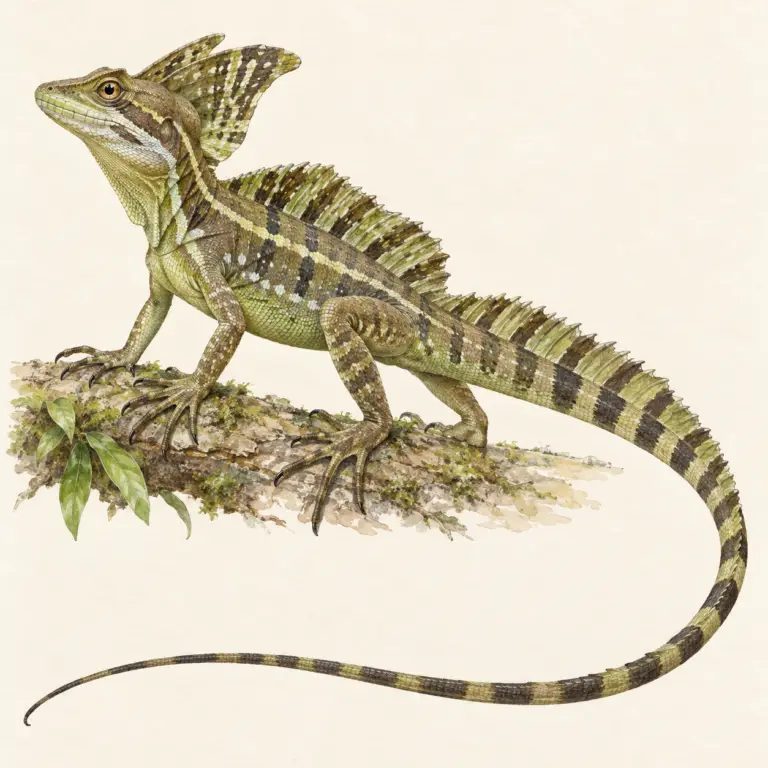
Pico and Tati invite you to learn about the common basilisk. Draw the tail and hind feet from a reference photograph. Never frighten a basilisk to make it run.

Identification

Key Features of the Common Basilisk

  • Very long tail.

  • Brown or olive body with pale stripes and dark bands.

  • Adult males have prominent crests on the head, back and tail.

Habitat & range

Pacific lowland dry and moist forests near streams and rivers.

Conservation & care

Watch wildlife with an adult from a safe path. Do not touch, feed, capture or move reptiles, and keep pets away. Leave eggs, shelters and vegetation undisturbed.

View full profile →

Nature Field Guide

Common Bottlenose Dolphin

Spanish name
Delfín nariz de botella
Scientific name
Tursiops truncatus

What Do Pico & Tati Think?

The common bottlenose dolphin has a short thick beak and a generally gray body.

Identification

Key Features of the Common Bottlenose Dolphin

  • Short thick beak and robust gray body.

  • Curved dorsal fin and paler underside.

  • Horizontal tail flukes; other dolphin species require careful comparison.

Habitat & range

Suitable Costa Rican coastal and offshore waters.

Conservation & care

Use a responsible local wildlife operator and follow site rules. Give aquatic mammals room to feed, rest and travel. Do not feed, touch, chase or enter the water to approach them. Keep waste and fishing line out of waterways.

View full profile →

Nature Field Guide

Common House Gecko

Spanish name
Geco casero común
Scientific name
Hemidactylus frenatus

What Do Pico & Tati Think?

Pico: “What helps this reptile fit into its habitat?”

Tati: “Let’s look at its shape, colors and surroundings while giving it plenty of space.”

Identification

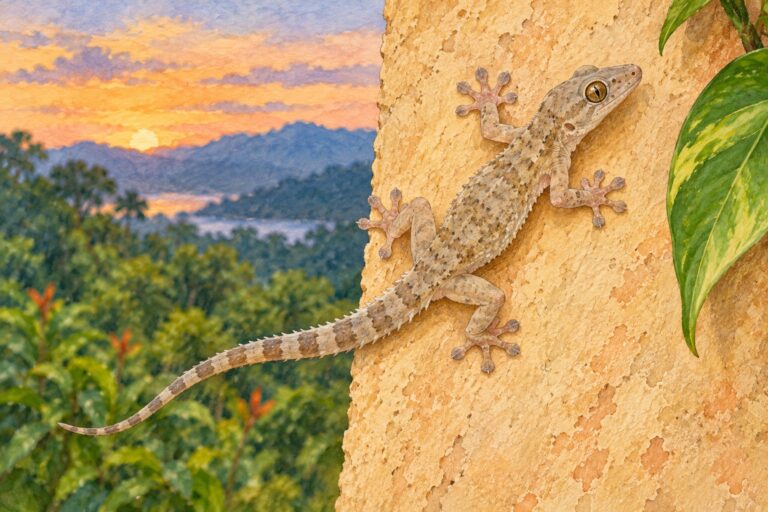
Key Features of the Common House Gecko

  • Pale gray-to-beige coloration

  • Broad spreading toe pads

  • Often on walls near night lighting

Habitat & range

Buildings, gardens and disturbed habitats across much of Costa Rica, especially warm lowlands and settled areas. Documented at Tirimbina and San Luis de Monteverde.

Conservation & care

Observe with an adult from permitted paths. Do not touch, chase, catch or feed reptiles. Leave bark, logs, stones and leaf litter in place. Keep pets away and allow an open escape route.

Threats & pressures

Prevent accidental transport of introduced geckos and their eggs in belongings or plant materials. Protect native reptile habitats and avoid moving animals between places.

View full profile →

Nature Field Guide

Common Monkey Lizard

Spanish name
Lagartija de dosel
Scientific name
Polychrus gutturosus

What Do Pico & Tati Think?

Pico and Tati invite you to learn about the common monkey lizard. Look at a reference photograph and mark the outline of the tail. Compare its proportions with a basilisk.

Identification

Key Features of the Common Monkey Lizard

  • Laterally flattened body.

  • Long limbs, toes and whip-like tail.

  • Greenish coloration and an expandable throat region.

Habitat & range

Primarily humid forest canopy. A documented Hojancha record extends coverage into Guanacaste, where persistent streamside vegetation provides a moist refuge within the dry landscape. Also documented at Reserva Los Campesinos in San Jose province. Regional occurrence depends on suitable wooded microhabitat.

Conservation & care

Watch wildlife with an adult from a safe path. Do not touch, feed, capture or move reptiles, and keep pets away. Leave eggs, shelters and vegetation undisturbed.

View full profile →

Nature Field Guide

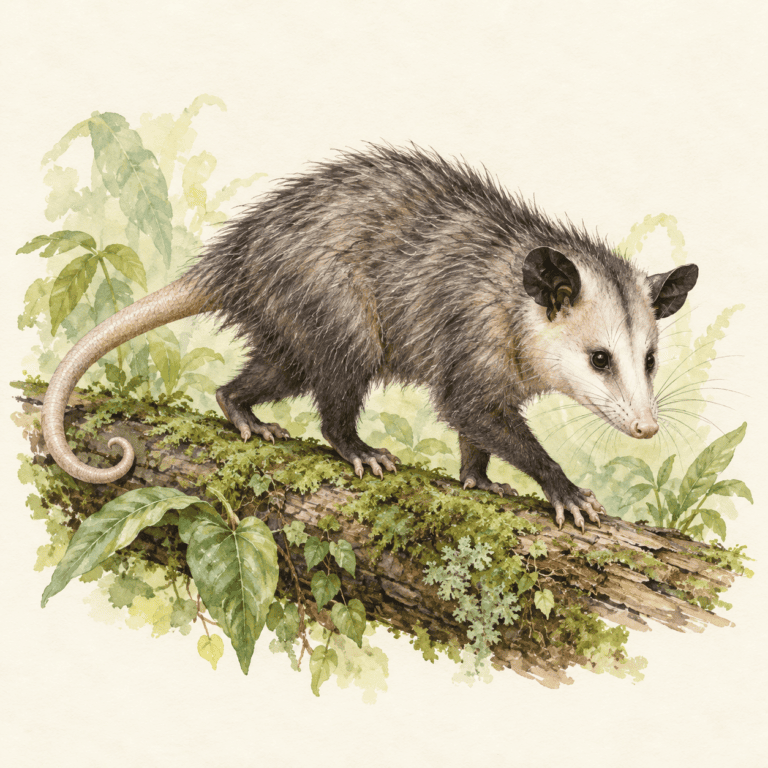
Common Opossum

Spanish name
Zorro pelón común
Scientific name
Didelphis marsupialis

What Do Pico & Tati Think?

The common opossum is a marsupial: its young complete an important part of their development attached to their mother's teats, protected in her pouch.

Identification

Key Features of the Common Opossum

  • Coarse gray to dark fur and a pale pointed face.

  • Dark, largely hairless ears and a pink nose.

  • Long mostly bare tail; other opossums can look similar.

Habitat & range

Forests, wooded edges and some human-modified landscapes.

Conservation & care

Explore with an adult or local guide. Observe quietly from a distance, stay on established trails and leave shelter undisturbed. Do not feed, touch, capture or corner wildlife. Keep pets away.

View full profile →

Nature Field Guide

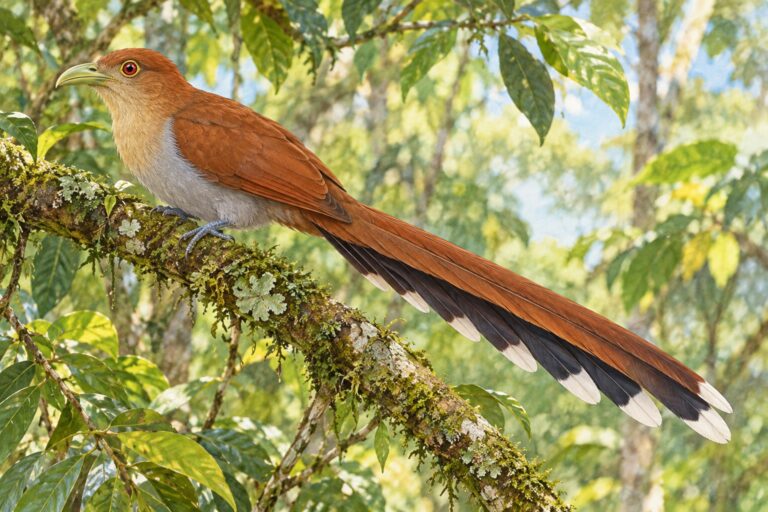
Common Squirrel-Cuckoo

Spanish name
Cuco ardilla
Scientific name
Piaya cayana

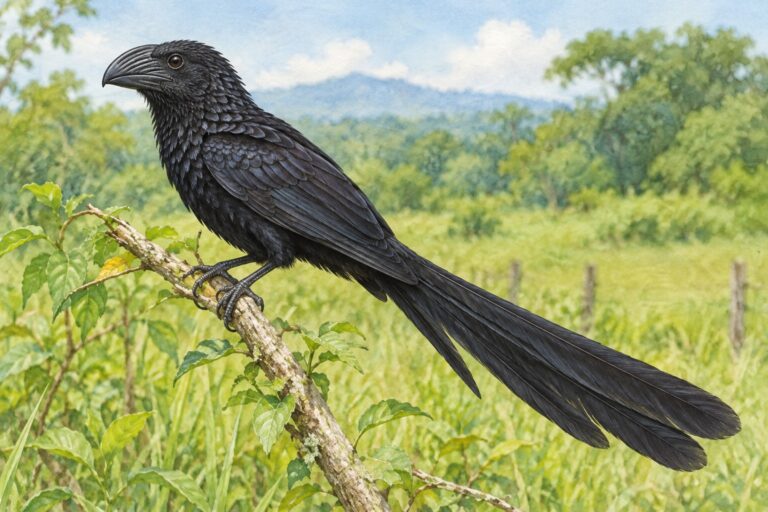
What Do Pico & Tati Think?

Pico: “That tail is longer than I expected!”

Tati: “Follow its movement through the branches without chasing it.”

Identification

Key Features of the Common Squirrel-Cuckoo

  • Rusty upperparts

  • Very long graduated white-tipped tail

  • Greenish-yellow bill

Habitat & range

Widespread in wooded habitats on both slopes, including forest canopy, secondary growth, plantations and tree-rich gardens. It can occur well above the lowlands where trees remain.

Conservation & care

Observe quietly from trails or established viewing areas. Give nests, roosts and feeding birds space. Do not handle, chase or lure birds with playback. Keep pets away from wildlife.

Threats & pressures

Protect native vegetation, reduce collision hazards around glass and keep cats away from birds. These are practical prevention priorities, not a claim of a measured decline at a specific Costa Rican site.

View full profile →

Nature Field Guide

Cope’s False Coral Snake

Spanish name
Falsa coral de Cope
Scientific name
Pliocercus euryzonus

What Do Pico & Tati Think?

Pico: “What helps this reptile fit into its habitat?”

Tati: “Let’s look at its shape, colors and surroundings while giving it plenty of space.”

Identification

Key Features of the Cope’s False Coral Snake

  • Slender banded body

  • Long fine tail

  • Dark head and contrasting reddish markings

Habitat & range

Humid Caribbean-slope forests and southern Pacific forest habitats; documented at Tirimbina.

Conservation & care

Observe from a distance with an adult or qualified guide. Do not touch, catch, corner, feed or move any snake. Keep children and pets away. Colors, head shape and pupil shape must never be used to decide a snake is safe.

Threats & pressures

Protect connected habitat and natural shelters. Avoid collection, unnecessary clearing and deliberate killing. Leave wildlife in place and support responsible observation.

View full profile →

Nature Field Guide

Cope’s Parrot Snake

Spanish name
Lora falsa
Scientific name
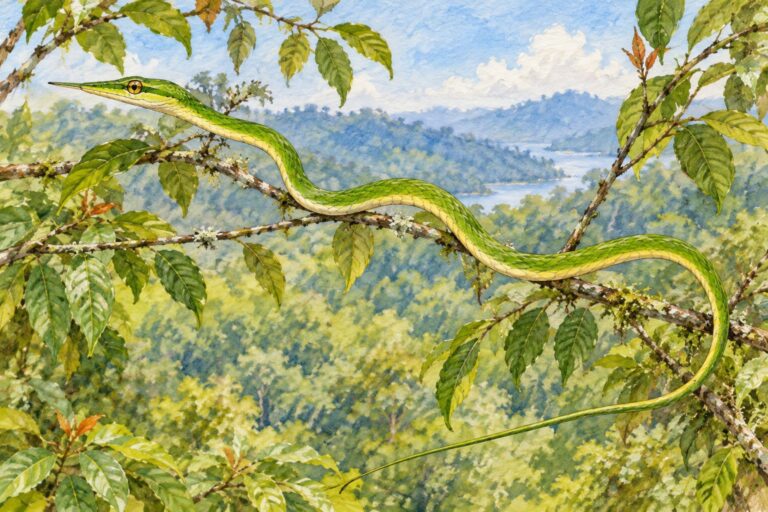
Leptophis depressirostris

What Do Pico & Tati Think?

Pico: “What clues help us recognize this reptile?”

Tati: “Let’s notice its shape, markings and habitat from a respectful distance.”

Identification

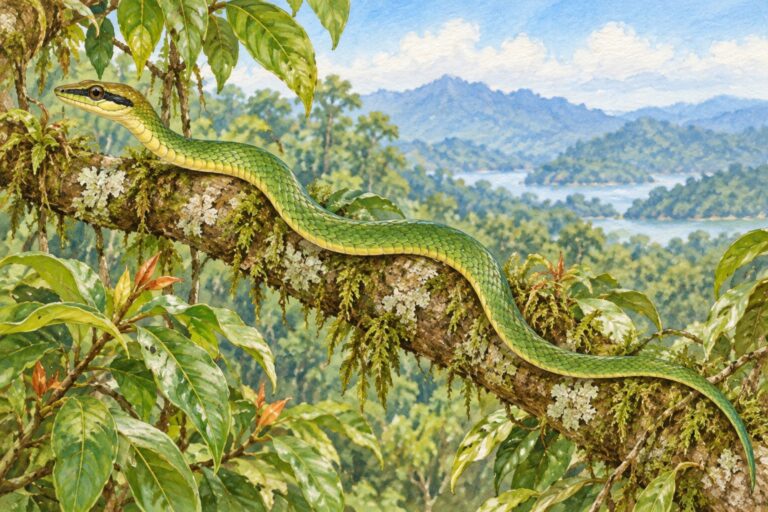
Key Features of the Cope’s Parrot Snake

  • Slender green body

  • Large eyes with a dark eye stripe

  • Long fine tail

Habitat & range

Humid Caribbean and northern lowlands and southwestern Pacific rainforest.

Conservation & care

Observe only from a distance with an adult or qualified guide. Do not touch, catch, corner or attempt to move any snake. Step back and tell your adult; keep children and pets away. Do not use colors, head shape or pupil shape to decide a snake is safe.

Threats & pressures

Protect habitat connections and natural shelters. Avoid road mortality, collection and deliberate killing. Leave reptiles in their habitat rather than keeping or relocating them.

View full profile →

Nature Field Guide

Copper Anole

Spanish name
Anolis cobrizo
Scientific name
Anolis cupreus

What Do Pico & Tati Think?

Pico: “What can we learn from this reptile’s shape?”

Tati: “Let’s notice its markings and habitat while leaving it plenty of space.”

Identification

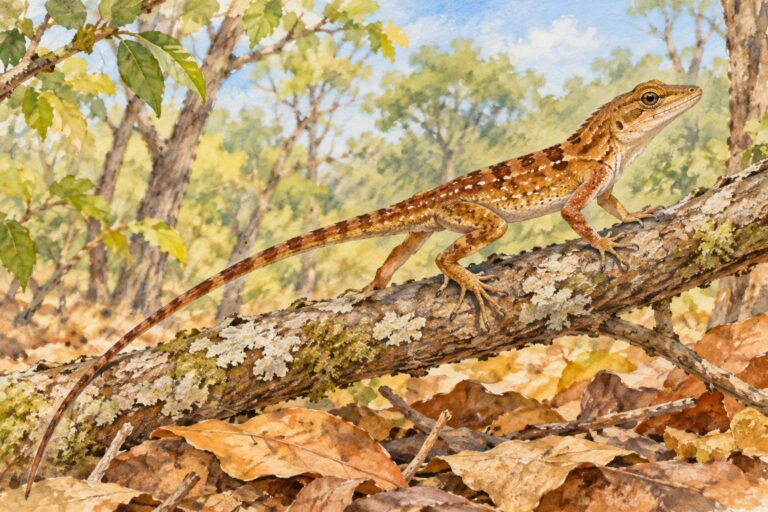
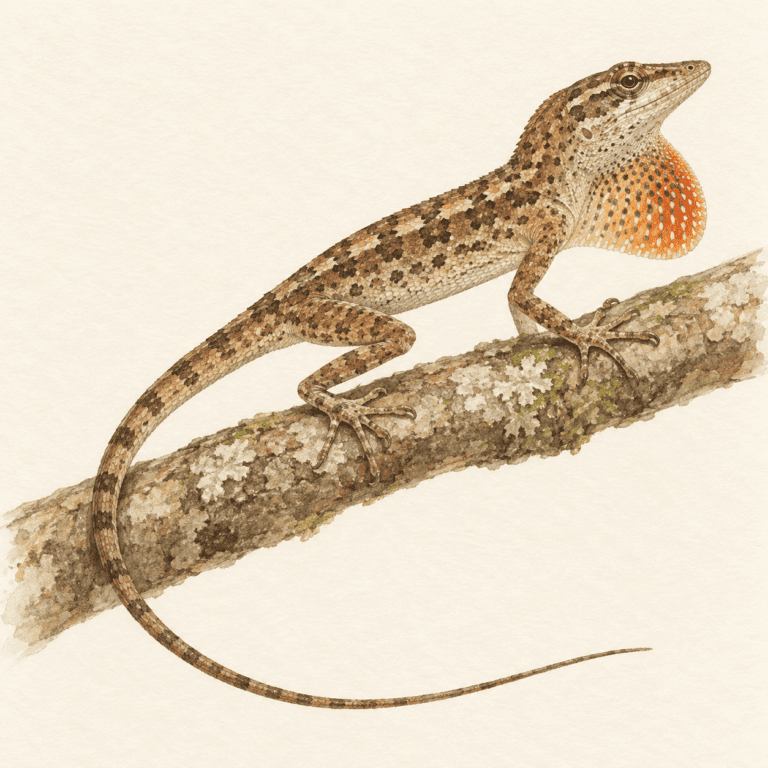
Key Features of the Copper Anole

  • Tan-to-coppery brown body

  • Variable spots, bars or darker markings

  • Long tail and low-perching posture

Habitat & range

Northwestern and western Pacific slope, including Guanacaste, Monteverde and Quepos, with populations in the Central Valley.

Conservation & care

Observe from permitted paths with an adult. Do not touch, chase, catch or feed reptiles. Leave bark, stones, logs and leaf litter in place. Keep pets away and give animals an open escape route.

Threats & pressures

Protect natural shelters and connected habitat. Avoid collection, unnecessary clearing and deliberate killing. Leave wildlife in its habitat and support responsible observation.

View full profile →

Nature Field Guide

Cortez Amarillo

Spanish name
Cortés amarillo / Cortez amarillo
Scientific name
Handroanthus ochraceus

What Do Pico & Tati Think?

Pico: “Golden trumpet flowers can brighten the branches of an almost leafless tree.”

Tati: “Let’s notice the leaves, flowers and habitat without disturbing the plant.”

Identification

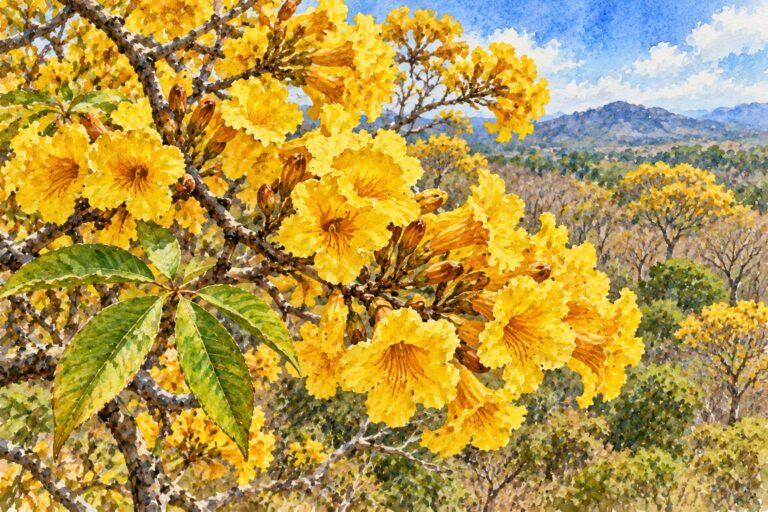
Key Features of the Cortez Amarillo

  • Yellow trumpet-shaped flowers

  • Palmately compound leaves

  • Flowering branches may be nearly leafless

Habitat & range

Seasonally dry Pacific forests and wooded edges, including Guanacaste, the Central Pacific and the Térraba valley.

Conservation & care

Explore with an adult on permitted paths. Observe and photograph without picking leaves, flowers or fruits. Do not taste plants or let pets chew them. Avoid climbing trees and disturbing roots, seedlings or visiting wildlife.

Threats & pressures

Protect suitable habitat, mature trees and natural regeneration. Avoid trampling, unauthorized clearing and collection.

View full profile →

Nature Field Guide

Damselflies

Spanish name
Caballitos del diablo
Scientific name
Odonata: Zygoptera — group card

What Do Pico & Tati Think?

Pico: “Let's look closely at the damselflies!”

Tati: “We can compare its shape and markings without touching it.”

Identification

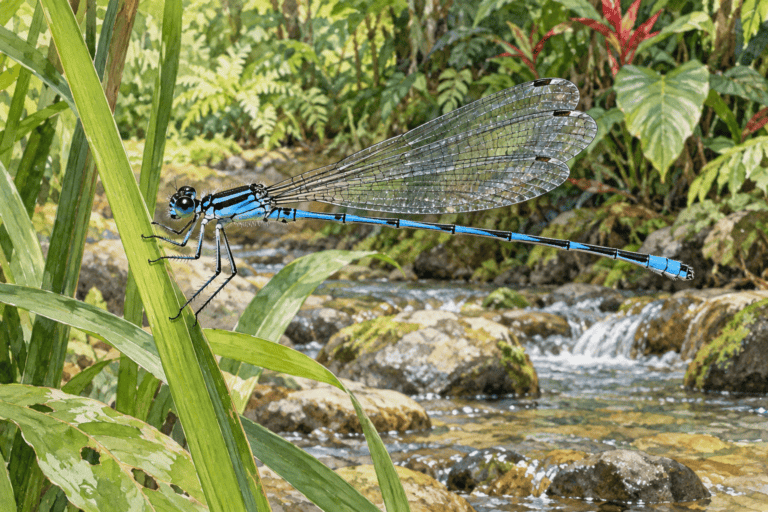
Key Features of the Damselflies

  • Slender body

  • widely separated eyes

  • many fold wings above abdomen

Habitat & range

Vegetation near ponds, wetlands and streams; individual species use different waters.

Conservation & care

Observe without collecting, handling or disturbing insects or nests. Stay on permitted paths. Leave caterpillars and their food plants in place.

View full profile →

Nature Field Guide

Decorated Forest Snake

Spanish name
Hojarasquera rayada
Scientific name
Rhadinaea decorata

What Do Pico & Tati Think?

Pico: “What can we learn from this reptile’s shape?”

Tati: “Let’s notice its markings and habitat while leaving it plenty of space.”

Identification

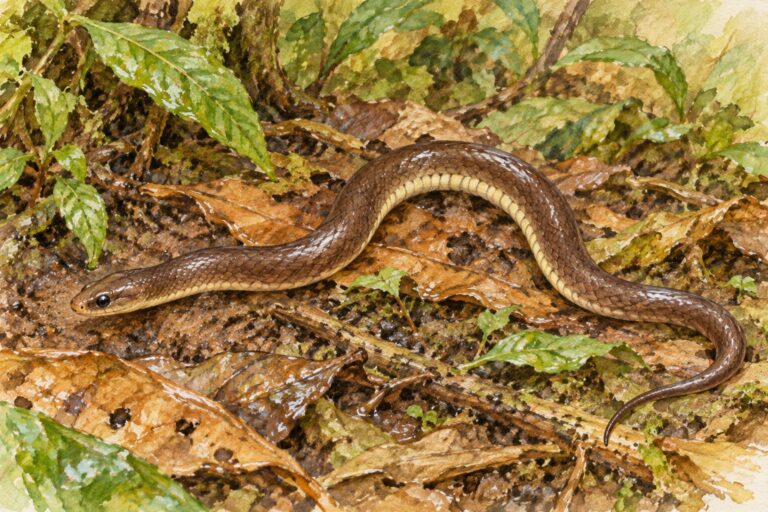
Key Features of the Decorated Forest Snake

  • Small slender brown body

  • Fine pale and dark lengthwise stripes

  • Forest-floor camouflage

Habitat & range

Humid Caribbean and Pacific forests and foothills, including northern lowlands and southwestern Costa Rica.

Conservation & care

Observe only from a distance with an adult or qualified guide. Never touch, catch, feed, corner or move any snake. Keep children and pets away. Colors, head shape and pupil shape must never be used to decide a snake is safe.

Threats & pressures

Protect natural shelters and connected habitat. Avoid collection, unnecessary clearing and deliberate killing. Leave wildlife in its habitat and support responsible observation.

View full profile →

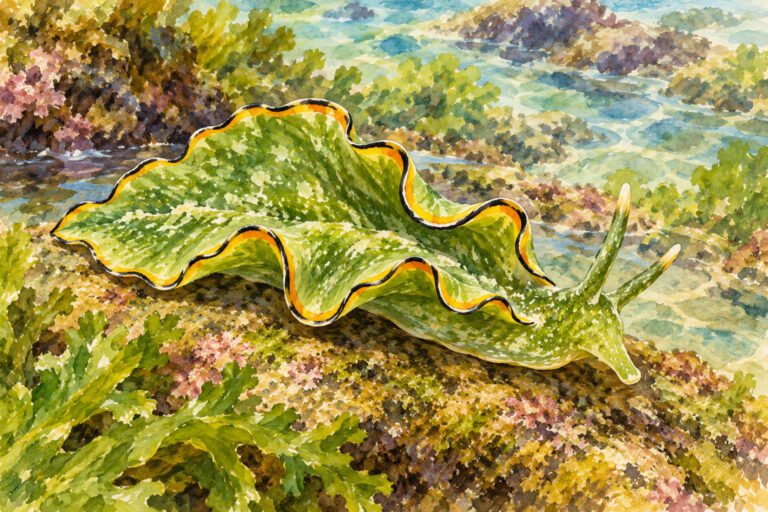
Nature Field Guide

Diomedea Leaf Sea Slug

Spanish name
Babosa marina de hoja
Scientific name
Elysia diomedea

What Do Pico & Tati Think?

Pico spots a leafy-looking shape. Tati asks how an animal can blend into the algae around it.

Identification

Key Features of the Diomedea Leaf Sea Slug

  • A small soft body with folded sides

  • Greenish coloring with contrasting lines

  • Tentacle-like rhinophores on the head

Habitat & range

Suitable underwater coastal habitat. Use a permitted guided snorkeling or viewing activity appropriate to your family; do not enter the sea just to find this animal.

Conservation & care

Watch without touching, lifting, feeding or collecting. Keep fingers and equipment away from spines and other surface structures. Leave the animal submerged and its habitat undisturbed.

View full profile →

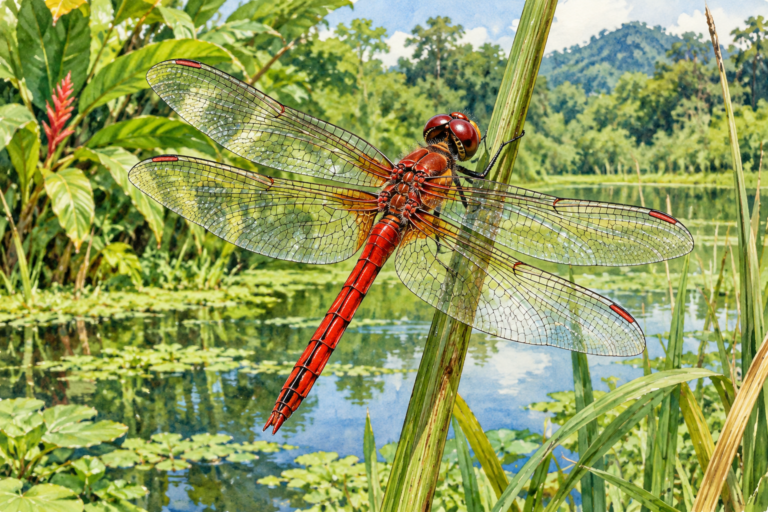
Nature Field Guide

Dragonflies

Spanish name
Libélulas
Scientific name
Odonata: Anisoptera — group card

What Do Pico & Tati Think?

Pico: “Let's look closely at the dragonflies!”

Tati: “We can compare its shape and markings without touching it.”

Identification

Key Features of the Dragonflies

  • Large eyes

  • two pairs of wings

  • wings usually held open at rest

Habitat & range

Vegetation near ponds, wetlands and streams; individual species use different waters.

Conservation & care

Observe without collecting, handling or disturbing insects or nests. Stay on permitted paths. Leave caterpillars and their food plants in place.

View full profile →

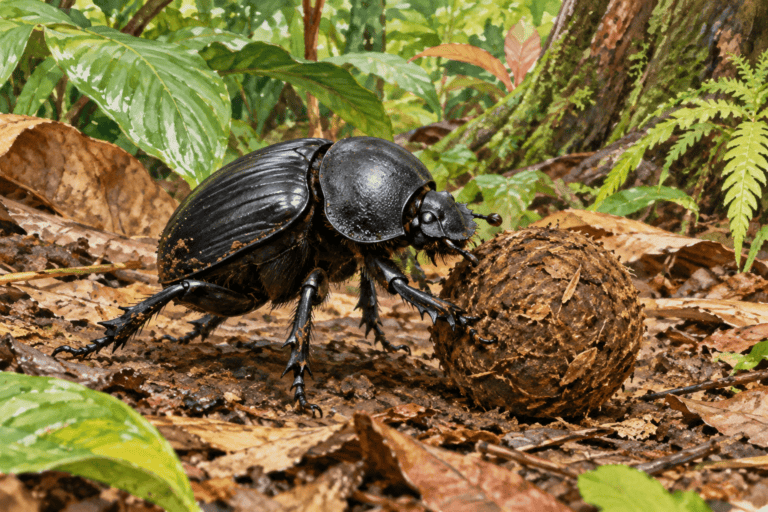
Nature Field Guide

Dung Beetles

Spanish name
Escarabajos estercoleros
Scientific name
Scarabaeinae — subfamily card

What Do Pico & Tati Think?

Pico: “Let's look closely at the dung beetles!”

Tati: “We can compare its shape and markings without touching it.”

Identification

Key Features of the Dung Beetles

  • Compact beetle body

  • digging legs

  • some species roll dung balls

Habitat & range

Suitable forest, garden or open habitats; distribution varies with habitat and species.

Conservation & care

Observe without collecting, handling or disturbing insects or nests. Stay on permitted paths. Leave caterpillars and their food plants in place.

View full profile →

Nature Field Guide

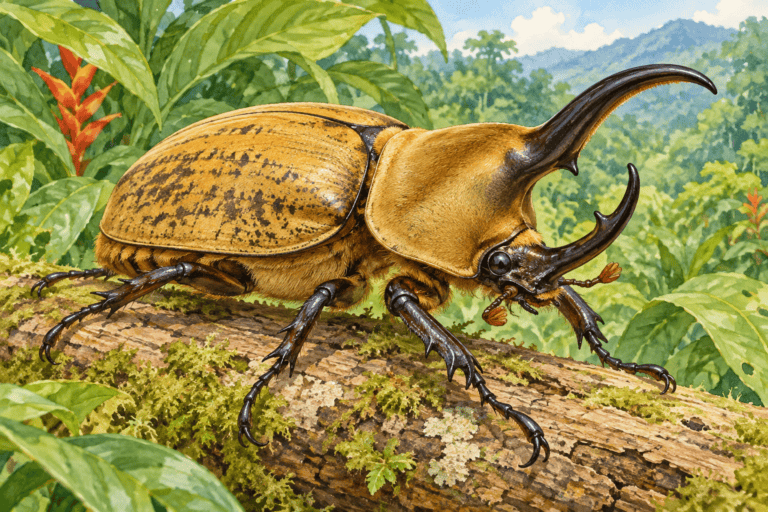
Elephant Beetle

Spanish name
Escarabajo elefante
Scientific name
Megasoma elephas

What Do Pico & Tati Think?

Pico: “Let's look closely at the elephant beetle!”

Tati: “We can compare its shape and markings without touching it.”

Identification

Key Features of the Elephant Beetle

  • Large rounded beetle

  • fine golden body hairs

  • males have a forward horn

Habitat & range

Most often associated with lowland wooded habitats; larvae develop in decaying wood and damp plant material. A documented Tortuguero record supports Caribbean rainforest habitat. A Costa Rican specialist account places most records below 500 m, with some to 1,500 m. Existing broad region tags require further locality checks and should not be read as presence throughout the highlands.

Conservation & care

Observe without collecting, handling or disturbing insects or nests. Stay on permitted paths. Leave caterpillars and their food plants in place.

View full profile →

Nature Field Guide

Expanded Lobster Claw

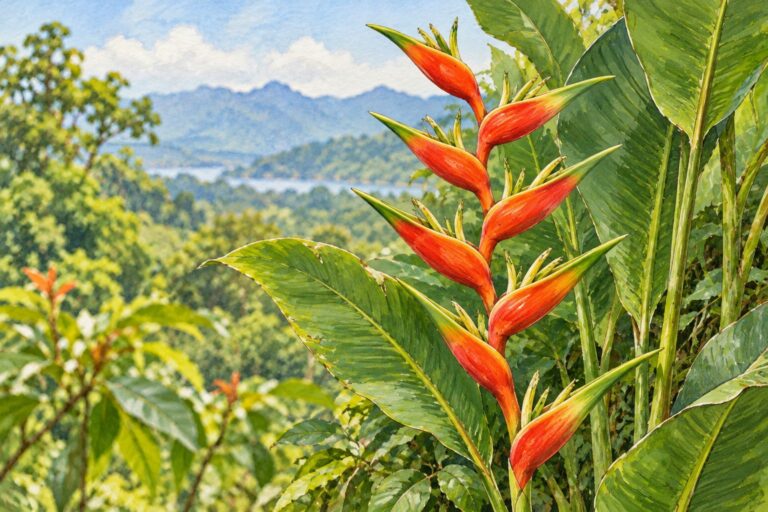
Spanish name
Platanilla / Caliguate
Scientific name
Heliconia latispatha

What Do Pico & Tati Think?

Pico: “An upright open arrangement of colorful bracts rises among broad green leaves.”

Tati: “Let’s notice the leaves, flowers and habitat without disturbing the plant.”

Identification

Key Features of the Expanded Lobster Claw

  • Broad banana-like leaves

  • Upright open inflorescence

  • Separated orange-to-red bracts holding small flowers

Habitat & range

Both slopes, including Guanacaste, the Northern Plains, Caribbean, Central Pacific and Osa; also cultivated in gardens.

Conservation & care

Explore with an adult on permitted paths. Observe and photograph without picking leaves, flowers or fruits. Do not taste plants or let pets chew them. Avoid climbing trees and disturbing roots, seedlings or visiting wildlife.

Threats & pressures

Protect suitable habitat, mature trees and natural regeneration. Avoid trampling, unauthorized clearing and collection.

View full profile →

Nature Field Guide

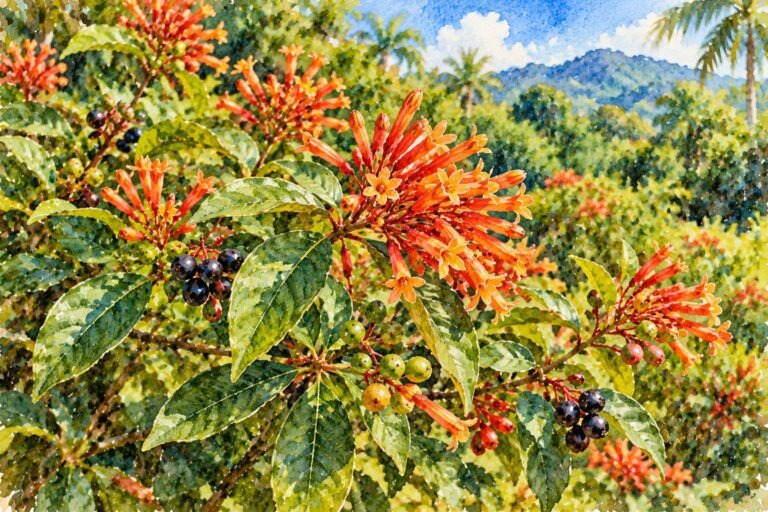
Firebush

Spanish name
Coralillo
Scientific name
Hamelia patens

What Do Pico & Tati Think?

Pico wants to sketch the plant’s shapes. Tati suggests looking for three clues before guessing its name. What would you notice first?

Identification

Key Features of the Firebush

  • Narrow orange-red tubular flowers

  • Simple leaves often arranged in whorls

  • Small rounded fruits that darken with age

Habitat & range

Clearings, roadsides, forest edges and gardens.

Conservation & care

Observe from paths and leave leaves, bark, flowers and fruits attached. Do not taste wild plants or offer them to pets. Ask a knowledgeable guide to confirm the species.

View full profile →

Nature Field Guide

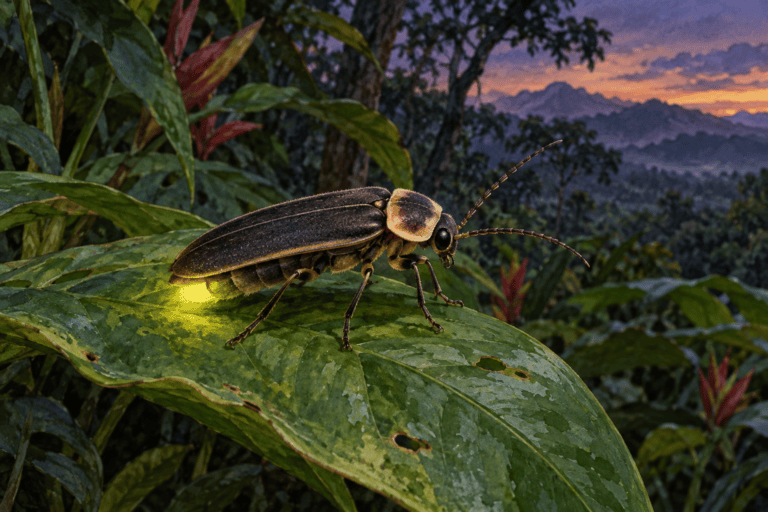
Fireflies

Spanish name
Luciérnagas
Scientific name
Lampyridae — family card

What Do Pico & Tati Think?

Pico: “Let's look closely at the fireflies!”

Tati: “We can compare its shape and markings without touching it.”

Identification

Key Features of the Fireflies

  • Soft beetle wing covers

  • some show glowing abdominal segments

  • light patterns vary

Habitat & range

Suitable forest, garden or open habitats; distribution varies with habitat and species.

Conservation & care

Observe without collecting, handling or disturbing insects or nests. Stay on permitted paths. Leave caterpillars and their food plants in place.

View full profile →

Nature Field Guide

Forest Flame Snake

Spanish name
Falsa coral de bosque
Scientific name
Oxyrhopus petolarius

What Do Pico & Tati Think?

Pico: “What helps this reptile fit into its habitat?”

Tati: “Let’s look at its shape, colors and surroundings while giving it plenty of space.”

Identification

Key Features of the Forest Flame Snake

  • Dark head

  • Red-to-orange areas with dark crossbands

  • Slender body with variable markings

Habitat & range

Humid Caribbean-slope and southern Pacific forests and their edges in Costa Rica.

Conservation & care

Observe from a distance with an adult or qualified guide. Do not touch, catch, corner, feed or move any snake. Keep children and pets away. Colors, head shape and pupil shape must never be used to decide a snake is safe.

Threats & pressures

Protect connected habitat and natural shelters. Avoid collection, unnecessary clearing and deliberate killing. Leave wildlife in place and support responsible observation.

View full profile →

Nature Field Guide

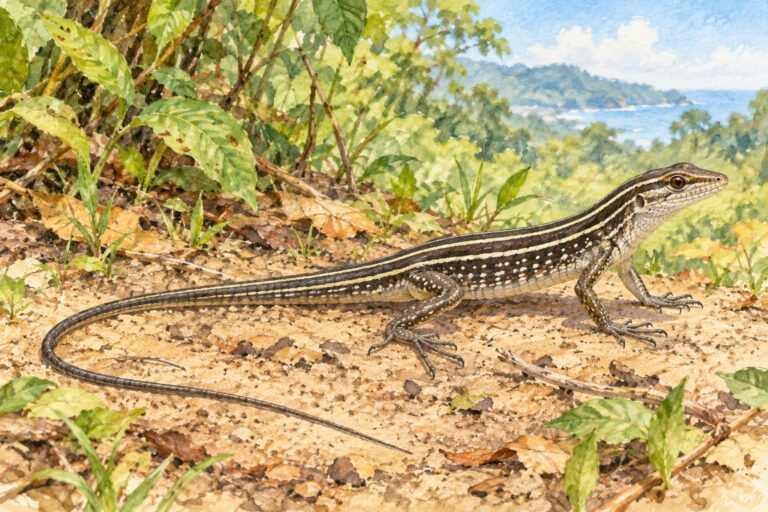
Four-lined Ameiva

Spanish name
Ameiva de cuatro líneas
Scientific name
Holcosus quadrilineatus

What Do Pico & Tati Think?

Pico: “What clues help us recognize this reptile?”

Tati: “Let’s notice its shape, markings and habitat from a respectful distance.”

Identification

Key Features of the Four-lined Ameiva

  • Four pale longitudinal body stripes

  • Long slender tail

  • Small contrasting flank markings

Habitat & range

Humid Caribbean lowlands and suitable Pacific lowlands and edges; a field study documents Cocles, Limón.

Conservation & care

Observe with an adult from permitted paths. Do not catch, chase, touch or feed reptiles. Leave bark, logs, rocks and leaf litter in place. Keep pets away and allow animals an open escape route.

Threats & pressures

Protect habitat connections and natural shelters. Avoid road mortality, collection and deliberate killing. Leave reptiles in their habitat rather than keeping or relocating them.

View full profile →

Nature Field Guide

Frangipani

Spanish name
Flor blanca / Sacuanjoche
Scientific name
Plumeria rubra

What Do Pico & Tati Think?

Pico wants to sketch the tree’s silhouette. Tati suggests looking for three clues before guessing its name. What would you notice first?

Identification

Key Features of the Frangipani

  • Thick succulent-looking branches

  • Five-lobed flowers with yellow centers

  • Long simple leaves clustered near branch ends

Habitat & range

Sunny woodland edges, rocky coastal sites and gardens.

Conservation & care

Observe from paths and leave leaves, bark, flowers and fruits attached. Do not taste wild plants or offer them to pets. Ask a knowledgeable guide to confirm the species. Avoid contact with milky latex.

View full profile →

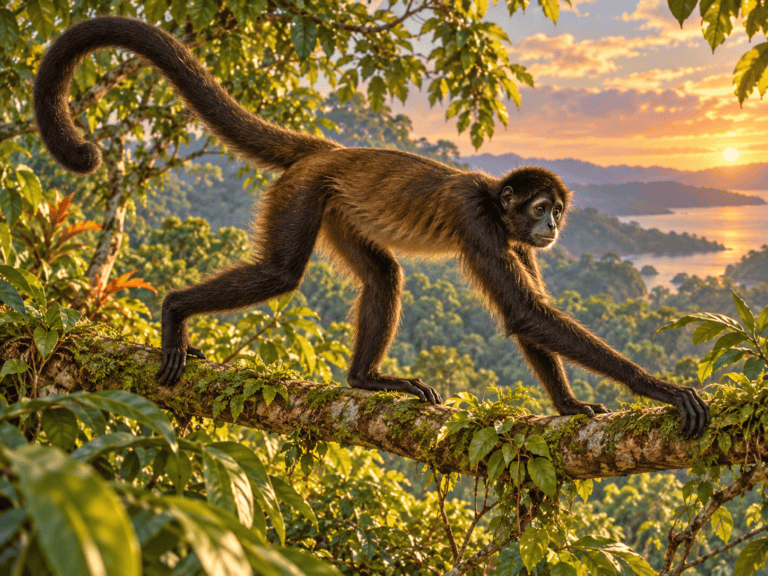
Nature Field Guide

Geoffroy’s Spider Monkey

Spanish name
Mono araña / Mono colorado
Scientific name
Ateles geoffroyi

What Do Pico & Tati Think?

Pico: “Its tail is holding a branch too!”

Tati: “The forest needs connected treetops.”

Identification

Key Features of the Geoffroy’s Spider Monkey

  • Very long limbs and slender body.

  • Strong grasping tail with a bare gripping surface near its tip.

  • Brown to reddish fur; color varies.

Habitat & range

Manuel Antonio’s forest landscape; ACG also documents this species in rainforest at Botarrama.

Conservation & care

Keep a respectful distance and leave an open route for the animal. Stay on authorized paths, secure food and rubbish, and observe without feeding, touching, baiting or chasing.

Threats & pressures

Forest loss, capture for pets and hunting combine with slow reproduction to make recovery difficult.

Conservation assessment

Global IUCN category as reported by the linked source, checked 7 October 2026. The source does not give an assessment year here. National legal protection and local abundance are separate questions.

View full profile →

Nature Field Guide

Ghost Anole

Spanish name
Anolis fantasma
Scientific name
Anolis lemurinus

What Do Pico & Tati Think?

Pico: “What clues help us recognize this reptile?”

Tati: “Let’s notice its shape, markings and habitat from a respectful distance.”

Identification

Key Features of the Ghost Anole

  • Brown-to-gray coloration

  • Long hind legs and tapering tail

  • Subtle darker body markings

Habitat & range

Humid Caribbean lowlands and foothills and southwestern Pacific forest.

Conservation & care

Observe with an adult from permitted paths. Do not catch, chase, touch or feed reptiles. Leave bark, logs, rocks and leaf litter in place. Keep pets away and allow animals an open escape route.

Threats & pressures

Protect habitat connections and natural shelters. Avoid road mortality, collection and deliberate killing. Leave reptiles in their habitat rather than keeping or relocating them.

View full profile →

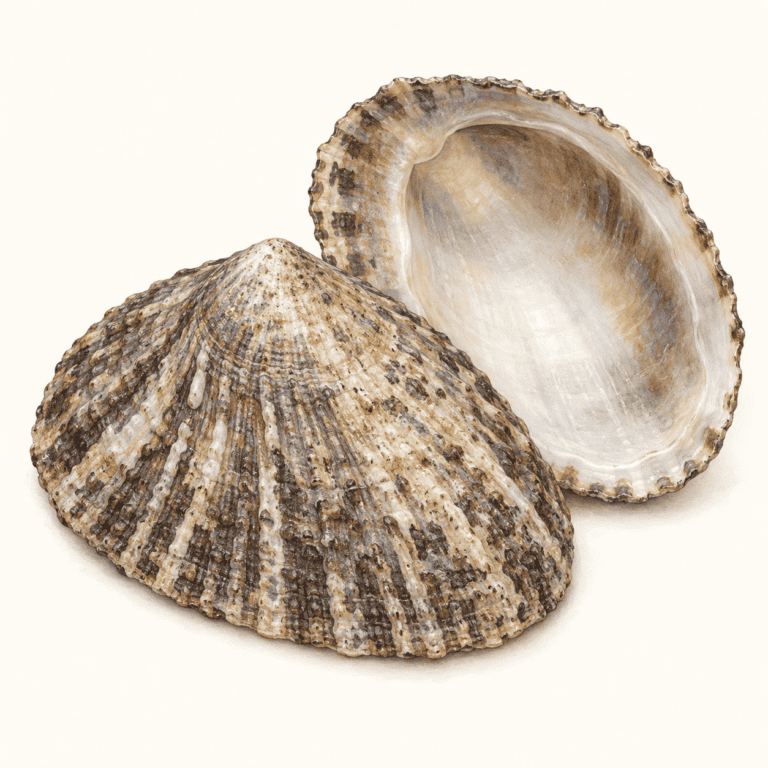
Nature Field Guide

Giant False Limpet

Spanish name
Lapa
Scientific name
Siphonaria gigas

What Do Pico & Tati Think?

A cap-shaped shell shelters a snail on the rocky shore.

Identification

Key Features of the Giant False Limpet

  • Single cap-shaped shell rather than two hinged halves.

  • Look at the shell outline and raised top.

  • Compare with a keyhole limpet; a top opening is an important difference.

Habitat & range

Rocky intertidal habitat.

Conservation & care

Observe and photograph shells where they are. Leave living animals, occupied shells and empty shells in place. Do not pry animals from rocks, dig in mangroves or put fingers into shell openings. Explore with an adult or guide, follow site rules and stay clear of surf and slippery rocks.

View full profile →

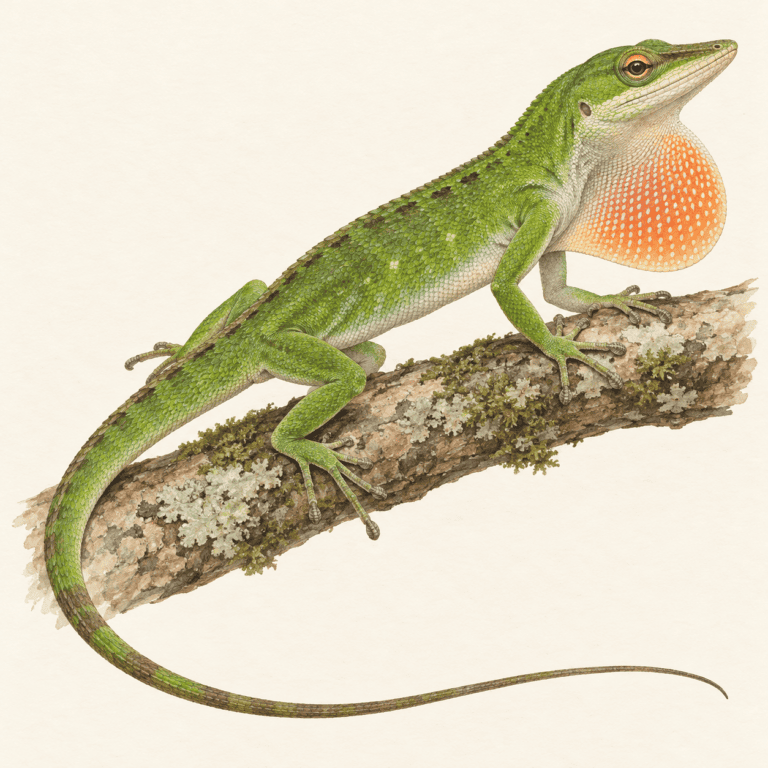
Nature Field Guide

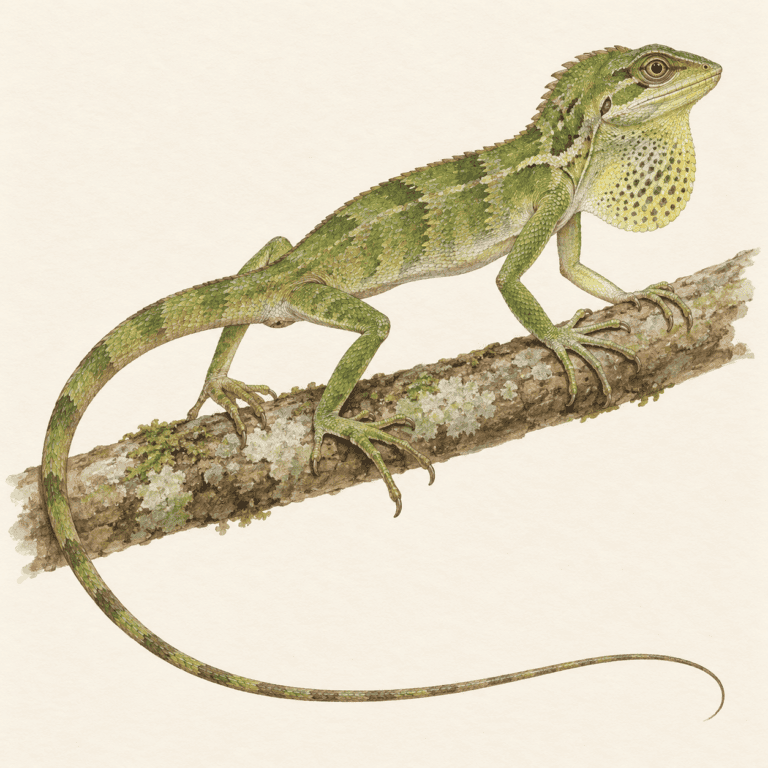
Giant Green Anole

Spanish name
Anolis verde gigante
Scientific name
Anolis biporcatus

What Do Pico & Tati Think?

Pico and Tati invite you to learn about the giant green anole. Draw the shapes of a branch and the anole’s toes. How might those shapes help with climbing?

Identification

Key Features of the Giant Green Anole

  • Green body, sometimes with a darker appearance.

  • Long tail and climbing toes.

  • An extendable throat fan, especially noticeable during displays.

Habitat & range

Humid forests and wooded vegetation in Costa Rica.

Conservation & care

Watch wildlife with an adult from a safe path. Do not touch, feed, capture or move reptiles, and keep pets away. Leave eggs, shelters and vegetation undisturbed.

View full profile →

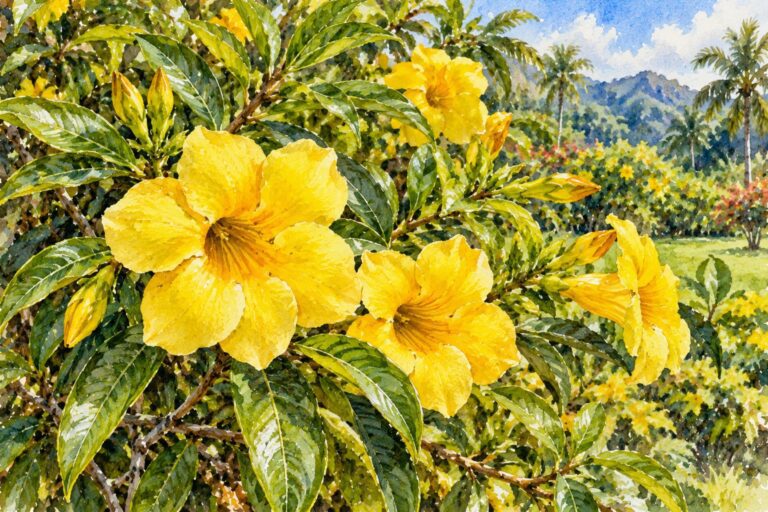
Nature Field Guide

Golden Trumpet

Spanish name
Campana amarilla
Scientific name
Allamanda cathartica

What Do Pico & Tati Think?

Pico wants to sketch the plant’s shapes. Tati suggests looking for three clues before guessing its name. What would you notice first?

Identification

Key Features of the Golden Trumpet

  • Large yellow funnel-shaped flowers

  • Glossy leaves in whorls

  • Climbing or sprawling woody stems

Habitat & range

Gardens and disturbed moist to seasonally dry sites.

Conservation & care

Observe from paths and leave leaves, bark, flowers and fruits attached. Do not taste wild plants or offer them to pets. Ask a knowledgeable guide to confirm the species. Avoid contact with milky sap.

View full profile →

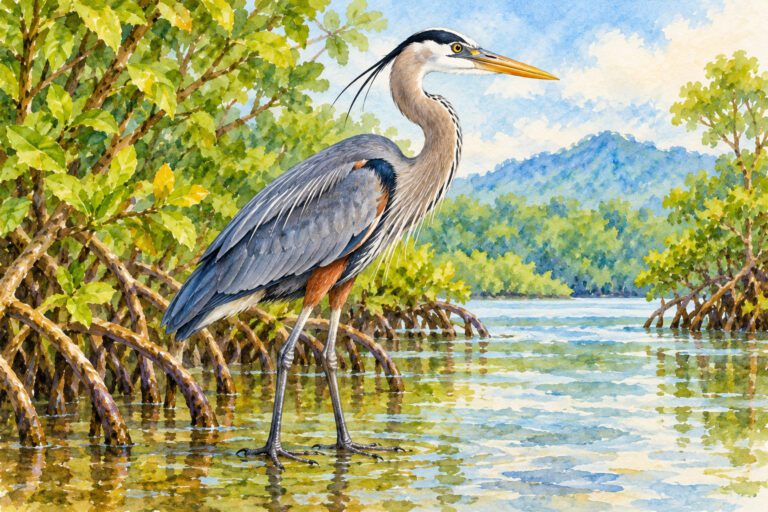
Nature Field Guide

Great Blue Heron

Spanish name
Garzón azulado
Scientific name
Ardea herodias

What Do Pico & Tati Think?

A tall, patient hunter can make the whole shoreline feel still. Pico counts its slow steps while Tati watches its folded neck.

Identification

Key Features of the Great Blue Heron

  • Large blue-gray body

  • Long legs and a heavy yellowish bill

  • Pale head with a dark stripe above the eye

Habitat & range

Scan shallow water, quiet mangrove channels and vegetated wetland margins from an established viewpoint. Follow a local guide’s directions around estuaries.

Conservation & care

Give feeding and resting birds space. If a bird stops feeding, repeatedly looks at you or moves away, increase your distance. Keep dogs away from flocks, avoid playback and feeding, and leave nests and natural shoreline debris undisturbed.

View full profile →

Nature Field Guide

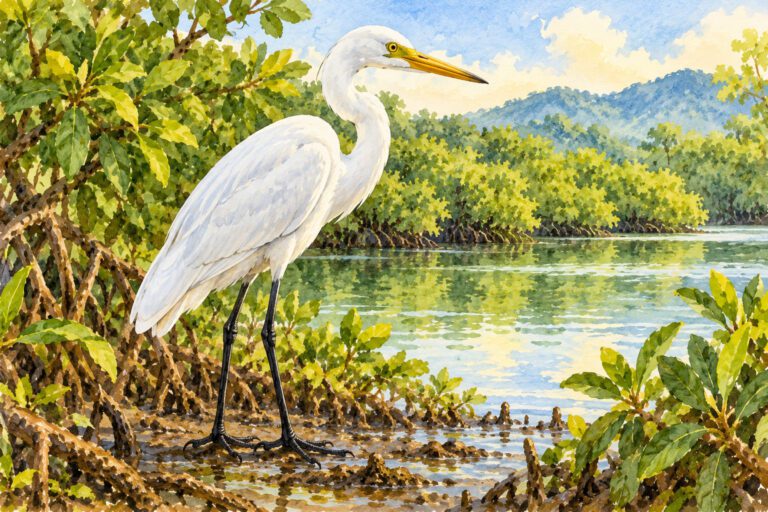
Great Egret

Spanish name
Garceta grande
Scientific name
Ardea alba

What Do Pico & Tati Think?

Pico calls it a bright white shape in the green. Tati checks the bill and feet before giving it a name.

Identification

Key Features of the Great Egret

  • White plumage and long slender neck

  • Yellow bill

  • Black legs and dark feet

Habitat & range

Scan shallow water, quiet mangrove channels and vegetated wetland margins from an established viewpoint. Follow a local guide’s directions around estuaries.

Conservation & care

Give feeding and resting birds space. If a bird stops feeding, repeatedly looks at you or moves away, increase your distance. Keep dogs away from flocks, avoid playback and feeding, and leave nests and natural shoreline debris undisturbed.

View full profile →

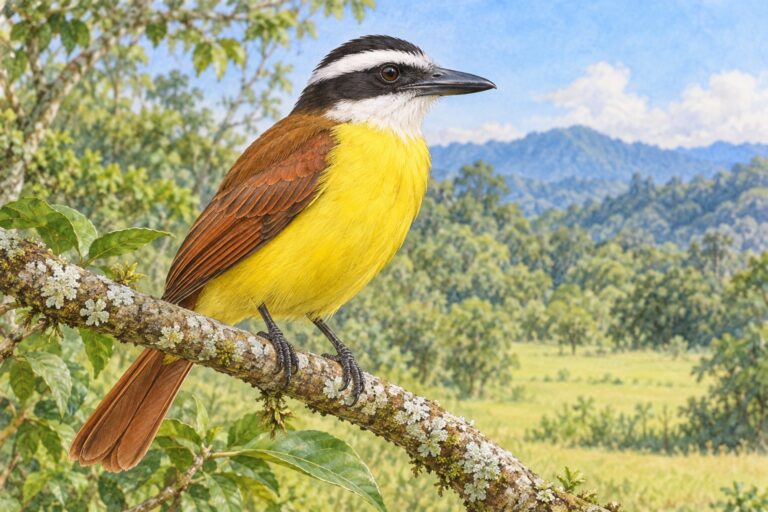
Nature Field Guide

Great Kiskadee

Spanish name
Bienteveo grande
Scientific name
Pitangus sulphuratus

What Do Pico & Tati Think?

Pico: “It sounds like it is calling its own name!”

Tati: “Let’s also check its bold eyebrow and strong bill.”

Identification

Key Features of the Great Kiskadee

  • Black-and-white head pattern

  • Bright yellow belly

  • Heavy bill and reddish-brown wings

Habitat & range

Open wooded country and settled areas, often near water, on both slopes, mainly below about 1500 m. Less frequent in some southern Pacific areas; not a high-mountain specialist.

Conservation & care

Observe quietly from trails or established viewing areas. Give nests, roosts and feeding birds space. Do not handle, chase or lure birds with playback. Keep pets away from wildlife.

Threats & pressures

Protect native vegetation, reduce collision hazards around glass and keep cats away from birds. These are practical prevention priorities, not a claim of a measured decline at a specific Costa Rican site.

View full profile →

Nature Field Guide

Great Tinamou

Spanish name
Tinamú grande / Gallina de monte
Scientific name
Tinamus major

What Do Pico & Tati Think?

Pico: “I can hear a whistle, but the leaves hide the bird!”

Tati: “We can listen without leaving the trail.”

Identification

Key Features of the Great Tinamou

  • Rounded body with almost no visible tail.

  • Gray-brown, dark-barred plumage.

  • A clear whistle from the forest floor.

Habitat & range

Humid lowland and foothill forest on the Caribbean slope and southern Pacific, north toward Carara. Guanacaste refers to humid forest sectors, including documented ACG rainforest, not dry coastal forest.

Conservation & care

Stay on authorized trails or viewing routes. Give birds space, keep voices low and leave nests undisturbed. Observe without bait, feeding or recorded calls.

View full profile →

Nature Field Guide

Greater Bulldog Bat

Spanish name
Murciélago pescador mayor
Scientific name
Noctilio leporinus

What Do Pico & Tati Think?

The greater bulldog bat is one of the bats that regularly catches fish.

Identification

Key Features of the Greater Bulldog Bat

  • Prominent folded lips and pointed ears.

  • Large clawed hind feet adapted for fishing.

  • Short fur that can be reddish, brown or grayish.

Habitat & range

Rivers, ponds and suitable coastal waters near roosting habitat.

Conservation & care

Observe bats from a distance with an adult or guide. Do not touch, feed or handle any bat, including one found on the ground. Leave roosts undisturbed, avoid direct flash and ask local wildlife professionals for help if an animal appears injured.

View full profile →

Nature Field Guide

Green Heron

Spanish name
Garcilla verde
Scientific name
Butorides virescens

What Do Pico & Tati Think?

A small hunched shape almost disappears among the roots. Pico and Tati learn that patient looking beats noisy searching.

Identification

Key Features of the Green Heron

  • Small hunched silhouette

  • Greenish back and chestnut neck

  • Straight pointed bill and yellowish legs

Habitat & range

Scan shallow water, quiet mangrove channels and vegetated wetland margins from an established viewpoint. Follow a local guide’s directions around estuaries.

Conservation & care

Give feeding and resting birds space. If a bird stops feeding, repeatedly looks at you or moves away, increase your distance. Keep dogs away from flocks, avoid playback and feeding, and leave nests and natural shoreline debris undisturbed.

View full profile →

Nature Field Guide

Green Iguana

Spanish name
Iguana verde
Scientific name
Iguana iguana

What Do Pico & Tati Think?

Pico and Tati invite you to learn about the green iguana. Sketch the outline of a distant iguana. Compare its throat fan with the spiny-tailed iguana card.

Identification

Key Features of the Green Iguana

  • Large hanging throat fan.

  • Long tail and a row of dorsal spines.

  • Large round scale below the ear opening.

Habitat & range

Lowland forests and wooded waterways on both Costa Rican slopes.

Conservation & care

Watch wildlife with an adult from a safe path. Do not touch, feed, capture or move reptiles, and keep pets away. Leave eggs, shelters and vegetation undisturbed.

View full profile →

Nature Field Guide

Green Lacewings

Spanish name
Crisopas verdes
Scientific name
Chrysopidae — family card

What Do Pico & Tati Think?

Pico: “Let's look closely at the green lacewings!”

Tati: “We can compare its shape and markings without touching it.”

Identification

Key Features of the Green Lacewings

  • Delicate green body

  • finely veined wings

  • long antennae

Habitat & range

Suitable forest, garden or open habitats; distribution varies with habitat and species.

Conservation & care

Observe without collecting, handling or disturbing insects or nests. Stay on permitted paths. Leave caterpillars and their food plants in place.

View full profile →

Nature Field Guide

Green Sea Turtle

Spanish name
Tortuga verde / Tortuga negra
Scientific name
Chelonia mydas

What Do Pico & Tati Think?

Pico: “What clues help us recognize this reptile?”

Tati: “Let’s notice its shape, markings and habitat from a respectful distance.”

Identification

Key Features of the Green Sea Turtle

  • Smooth oval carapace

  • Rounded rather than sharply hooked head

  • Four pairs of lateral shell scutes

Habitat & range

Pacific and Caribbean coastal waters; Tortuguero and Cahuita are documented Caribbean examples.

Conservation & care

Never touch, chase, ride or feed a sea turtle. Keep clear of nesting females, eggs and hatchlings. Follow local beach rules and authorized guides; avoid lights and flash photography during nesting observations. Leave shells and wildlife products out of your purchases.

Threats & pressures

Protect nesting beaches and marine habitats. Reduce plastic waste, avoid disturbing wildlife and do not buy turtle products.

View full profile →

Nature Field Guide

Green Vine Snake

Spanish name
Bejuquilla verde
Scientific name
Oxybelis fulgidus

What Do Pico & Tati Think?

Pico: “What clues help us recognize this reptile?”

Tati: “Let’s notice its shape, markings and habitat from a respectful distance.”

Identification

Key Features of the Green Vine Snake

  • Very slender green body

  • Elongated pointed snout

  • Exceptionally long tapering tail

Habitat & range

Wooded lowlands and foothills on both slopes, including Pacific and Caribbean forest edges.

Conservation & care

Observe only from a distance with an adult or qualified guide. Do not touch, catch, corner or attempt to move any snake. Step back and tell your adult; keep children and pets away. Do not use colors, head shape or pupil shape to decide a snake is safe.

Threats & pressures

Protect habitat connections and natural shelters. Avoid road mortality, collection and deliberate killing. Leave reptiles in their habitat rather than keeping or relocating them.

View full profile →

Nature Field Guide

Grinning Tun

Spanish name
Cambute de lodo
Scientific name
Malea ringens

What Do Pico & Tati Think?

A rounded shell with a tooth-lined opening explains its memorable name.

Identification

Key Features of the Grinning Tun

  • Rounded, inflated shell.

  • Ribs run around the shell.

  • Strong ridges along the opening create a tooth-like appearance.

Habitat & range

Shallow coastal marine waters; a washed-up shell does not reveal its original depth.

Conservation & care

Observe and photograph shells where they are. Leave living animals, occupied shells and empty shells in place. Do not pry animals from rocks, dig in mangroves or put fingers into shell openings. Explore with an adult or guide, follow site rules and stay clear of surf and slippery rocks.

View full profile →

Nature Field Guide

Groove-billed Ani

Spanish name
Garrapatero piquiestriado / Tijo
Scientific name
Crotophaga sulcirostris

What Do Pico & Tati Think?

Pico: “Its beak has tiny lines!”

Tati: “Those grooves are helpful, but we need a clear view.”

Identification

Key Features of the Groove-billed Ani

  • All-black plumage

  • Long loosely held tail

  • Heavy upper bill with grooves

Habitat & range

Open and shrubby country, pasture margins and settled areas across Costa Rica, reaching middle elevations. It is less frequent in much of the southern Pacific, where Smooth-billed Ani predominates.

Conservation & care

Observe quietly from trails or established viewing areas. Give nests, roosts and feeding birds space. Do not handle, chase or lure birds with playback. Keep pets away from wildlife.

Threats & pressures

Protect native vegetation, reduce collision hazards around glass and keep cats away from birds. These are practical prevention priorities, not a claim of a measured decline at a specific Costa Rican site.

View full profile →

Nature Field Guide

Guacimo

Spanish name
Guácimo / Guácimo ternero
Scientific name
Guazuma ulmifolia

What Do Pico & Tati Think?

Pico: “Bumpy dark fruits and toothed leaves offer clues to a familiar Pacific-slope tree.”

Tati: “Let’s notice the leaves, flowers and habitat without disturbing the plant.”

Identification

Key Features of the Guacimo

  • Simple alternate leaves with toothed edges

  • Dark round-to-oval woody fruits

  • Fruit surface covered in bumps

Habitat & range

Pacific-slope woodland, pastures and living fences, with strong documentation in Guanacaste and the northern Puntarenas area.

Conservation & care

Explore with an adult on permitted paths. Observe and photograph without picking leaves, flowers or fruits. Do not taste plants or let pets chew them. Avoid climbing trees and disturbing roots, seedlings or visiting wildlife.

Threats & pressures

Protect suitable habitat, mature trees and natural regeneration. Avoid trampling, unauthorized clearing and collection.

View full profile →

Nature Field Guide

Guanacaste Tree

Spanish name
Guanacaste
Scientific name
Enterolobium cyclocarpum

What Do Pico & Tati Think?

Identify the guanacaste tree by its small leaflets, pale flower clusters and distinctive curved seed pods. Observing several features together helps distinguish it from other trees.

What does Least Concern mean?

In the linked conservation assessment, this species does not qualify as threatened or near threatened with extinction. It still needs care: local populations and habitats can face problems even when the species has a lower extinction risk overall.

This label describes conservation status. It does not tell us whether a plant is safe for children or pets. Select the status button to read the assessment.

Identification

Key Features of the Guanacaste Tree

  • Leaves divided into many small leaflets.

  • Curved, ear-shaped pods that become brown as they mature.

  • Small flowers gathered into pale, rounded clusters.

Habitat & range

Dry and seasonally dry lowland Pacific forests and open areas. Ask a local guide to help identify an individual tree.

Seasonal Calendar

Flowering

Guanacaste dry forest

Feb, Mar, Apr

Guanacaste reference: February–April flowering, with variation among trees and locations. The tree remains present outside these flowering months.

Event source ↗

Conservation & care

Child Safety: Not verified. Observe with an adult. Do not taste leaves, seeds, fruit or other tree parts.

Pet Safety: Not verified. Keep pets from chewing or swallowing tree parts. Check with a veterinarian before treating this species as pet-safe.

Leave pods and branches where they belong. Notice the living things around the tree and give them space.

Conservation assessment

Global species assessment: Least Concern (IUCN Red List). Status checked on 7 October 2026. This category is not a guarantee that every local population or habitat is secure, and it is separate from legal protection in Costa Rica.

View full profile →

Nature Field Guide

Guapinol

Spanish name
Guapinol
Scientific name
Hymenaea courbaril

What Do Pico & Tati Think?

Pico: “Paired leaflets and hard brown pods identify a forest tree with an important wildlife role.”

Tati: “Let’s notice the leaves, flowers and habitat without disturbing the plant.”

Identification

Key Features of the Guapinol

  • Two leaflets in each compound leaf

  • Thick brown woody pods

  • Large spreading forest-tree form

Habitat & range

Pacific lowlands and western Central Valley; Guanacaste dry forest is one documented setting.

Conservation & care

Explore with an adult on permitted paths. Observe and photograph without picking leaves, flowers or fruits. Do not taste plants or let pets chew them. Avoid climbing trees and disturbing roots, seedlings or visiting wildlife.

Threats & pressures

Protect suitable habitat, mature trees and natural regeneration. Avoid trampling, unauthorized clearing and collection.

View full profile →

Nature Field Guide

Halloween Land Crab

Spanish name
Cangrejo arlequín
Scientific name
Gecarcinus quadratus

What Do Pico & Tati Think?

Not every coastal crab lives underwater. Pico and Tati look at the ground beside the path without leaving it.

Identification

Key Features of the Halloween Land Crab

  • A crab walking on land near coastal vegetation

  • Burrows may be present in suitable ground

  • Confirm the species from the whole animal, not a burrow alone

Habitat & range

Coastal vegetation and adjacent ground. Stay on established routes and do not search inside burrows.

Conservation & care

Give claws and burrow entrances space. Do not handle, feed, chase or collect crabs. Leave rocks and shells where they are, and follow your adult’s route and local signs.

View full profile →

Nature Field Guide

Hawksbill Sea Turtle

Spanish name
Tortuga carey
Scientific name
Eretmochelys imbricata

What Do Pico & Tati Think?

Pico: “What clues help us recognize this reptile?”

Tati: “Let’s notice its shape, markings and habitat from a respectful distance.”

Identification

Key Features of the Hawksbill Sea Turtle

  • Narrow hooked beak

  • Overlapping patterned shell scutes

  • Often a serrated rear shell edge

Habitat & range

Pacific and Caribbean coastal waters and reefs; documented sites include Cahuita and Tortuguero.

Conservation & care

Never touch, chase, ride or feed a sea turtle. Keep clear of nesting females, eggs and hatchlings. Follow local beach rules and authorized guides; avoid lights and flash photography during nesting observations. Leave shells and wildlife products out of your purchases.

Threats & pressures

Protect nesting beaches and marine habitats. Reduce plastic waste, avoid disturbing wildlife and do not buy turtle products.

View full profile →

Nature Field Guide

Helmeted Iguana

Spanish name
Iguana de casco / Lagartija de casco
Scientific name
Corytophanes cristatus

What Do Pico & Tati Think?

Pico: “What can we learn from this reptile’s shape?”

Tati: “Let’s notice its markings and habitat while leaving it plenty of space.”

Identification

Key Features of the Helmeted Iguana

  • Tall helmetlike casque

  • Long tail and grasping limbs

  • Mottled bark-colored camouflage

Habitat & range

Humid Caribbean and Pacific forests and foothills, including northern wet forests and the southwest.

Conservation & care

Observe from permitted paths with an adult. Do not touch, chase, catch or feed reptiles. Leave bark, stones, logs and leaf litter in place. Keep pets away and give animals an open escape route.

Threats & pressures

Protect natural shelters and connected habitat. Avoid collection, unnecessary clearing and deliberate killing. Leave wildlife in its habitat and support responsible observation.

View full profile →

Nature Field Guide

Hoffmann’s Earth Snake

Spanish name
Culebra de tierra de Hoffmann
Scientific name
Geophis hoffmanni

What Do Pico & Tati Think?

Pico: “What can we learn from this reptile’s shape?”

Tati: “Let’s notice its markings and habitat while leaving it plenty of space.”

Identification

Key Features of the Hoffmann’s Earth Snake

  • Small head and dark slender body

  • Usually plain dark upper surfaces

  • Paler underside; young may have a pale neck mark

Habitat & range

Humid lowland and foothill habitats and central mountain slopes, including the Monteverde area.

Conservation & care

Observe only from a distance with an adult or qualified guide. Never touch, catch, feed, corner or move any snake. Keep children and pets away. Colors, head shape and pupil shape must never be used to decide a snake is safe.

Threats & pressures

Protect natural shelters and connected habitat. Avoid collection, unnecessary clearing and deliberate killing. Leave wildlife in its habitat and support responsible observation.

View full profile →

Nature Field Guide

Hoffmann’s Woodpecker

Spanish name
Carpintero de Hoffmann
Scientific name
Melanerpes hoffmannii

What Do Pico & Tati Think?

Pico: “Its back looks like a striped pattern!”

Tati: “Look at the crown too. Males and females differ there.”

Identification

Key Features of the Hoffmann’s Woodpecker

  • Black-and-white barred back

  • Yellow nape

  • Male has a red crown

Habitat & range

Strongest in the northern Pacific and Central Valley, extending south toward Tarcoles and locally into Rio Frio. Occurs along parts of the Reventazon corridor; avoid treating all Caribbean rainforest as typical habitat.

Conservation & care

Observe quietly from trails or established viewing areas. Give nests, roosts and feeding birds space. Do not handle, chase or lure birds with playback. Keep pets away from wildlife.

Threats & pressures

Protect native vegetation, reduce collision hazards around glass and keep cats away from birds. These are practical prevention priorities, not a claim of a measured decline at a specific Costa Rican site.

View full profile →

Nature Field Guide

Hoffmann’s Two-toed Sloth

Spanish name
Perezoso de dos dedos
Scientific name
Choloepus hoffmanni

What Do Pico & Tati Think?

Pico: “Is this the same kind of sloth?”

Tati: “We need more than its color to tell.”

Identification

Key Features of the Hoffmann’s Two-toed Sloth

  • Two long claws on each forelimb.

  • Long shaggy fur and a prominent rounded snout.

  • Identify with a guide; color alone is unreliable.

Habitat & range

The studied FINMAC cacao and riverside-forest landscape at Pueblo Nuevo / Villa Francia, Limón.

Seasonal Calendar

Births across the year

FINMAC cacao landscape, Pueblo Nuevo / Villa Francia

Year-round

Study births were spread across months; none was recorded in August. This is asynchronous reproduction, not an August exclusion rule.

Event source ↗

Conservation & care

Keep a respectful distance and leave an open route for the animal. Stay on authorized paths, secure food and rubbish, and observe without feeding, touching, baiting or chasing.

Threats & pressures

Deforestation removes feeding trees and canopy routes. Sloth research emphasizes connected habitat and avoiding removal of wild animals.

View full profile →

Nature Field Guide

Hudsonian Whimbrel

Spanish name
Zarapito trinador
Scientific name
Numenius hudsonicus

What Do Pico & Tati Think?

Pico curves his pencil line to match the bill. Tati checks the striped head for another clue.

Identification

Key Features of the Hudsonian Whimbrel

  • Long downward-curved bill

  • Striped brown head with a pale central crown stripe

  • Brown patterned body and long legs

Habitat & range

Scan exposed shoreline feeding areas and nearby resting places with binoculars. The tide changes which flats are available; remain on a safe established route.

Conservation & care

Give feeding and resting birds space. If a bird stops feeding, repeatedly looks at you or moves away, increase your distance. Keep dogs away from flocks, avoid playback and feeding, and leave nests and natural shoreline debris undisturbed.

View full profile →

Nature Field Guide

Humble Anole

Spanish name
Anolis humilde
Scientific name
Anolis humilis

What Do Pico & Tati Think?

Pico and Tati invite you to learn about the humble anole. Study a photograph and sketch how brown markings blend with fallen leaves.

Identification

Key Features of the Humble Anole

  • Small brown body with variable darker markings.

  • Slender tail.

  • An anole throat fan may be displayed by males.

Habitat & range

Shaded understory and leaf-litter edges in humid forest.

Conservation & care

Watch wildlife with an adult from a safe path. Do not touch, feed, capture or move reptiles, and keep pets away. Leave eggs, shelters and vegetation undisturbed.

View full profile →

Nature Field Guide

Humpback Whale

Spanish name
Ballena jorobada
Scientific name
Megaptera novaeangliae

What Do Pico & Tati Think?

A humpback whale is a mammal that breathes air through blowholes and nurses its young with milk.

Identification

Key Features of the Humpback Whale

  • Very long pectoral flippers and bumps on the head.

  • Small dorsal fin on a raised hump.

  • Broad tail flukes with variable underside patterns.

Habitat & range

Costa Rican marine waters; arrange viewing with a responsible operator using current local knowledge.

Conservation & care

Use a responsible local wildlife operator and follow site rules. Give aquatic mammals room to feed, rest and travel. Do not feed, touch, chase or enter the water to approach them. Keep waste and fishing line out of waterways.

View full profile →

Nature Field Guide

Ice Cream Bean

Spanish name
Guaba
Scientific name
Inga edulis

What Do Pico & Tati Think?

Pico wants to sketch the tree’s silhouette. Tati suggests looking for three clues before guessing its name. What would you notice first?

Identification

Key Features of the Ice Cream Bean

  • Very long ribbed pods

  • Paired leaflets

  • Winged central leaf stalk

Habitat & range

Moist forest margins, farms and planted orchards.

Conservation & care

Observe from paths and leave leaves, bark, flowers and fruits attached. Do not taste wild plants or offer them to pets. Ask a knowledgeable guide to confirm the species.

View full profile →

Nature Field Guide

Indio Desnudo

Spanish name
Indio desnudo
Scientific name
Bursera simaruba

What Do Pico & Tati Think?

Warm-colored bark is a useful starting point when identifying indio desnudo. Look at the trunk, leaves and fruits together, as its appearance changes with the seasons.

Indio Desnudo Copper Bark Tree in Costa RIca

What does Least Concern mean?

In the linked conservation assessment, this species does not qualify as threatened or near threatened with extinction. It still needs care: local populations and habitats can face problems even when the species has a lower extinction risk overall.

This label describes conservation status. It does not tell us whether a plant is safe for children or pets. Select the status button to read the assessment.

Identification

Key Features of the Indio Desnudo

  • Warm orange-toned bark is an important clue.

  • The tree may lose its leaves during the dry season.

  • Look for small fruits in clusters at the ends of branches when present.

Habitat & range

Dry forest and other wooded habitats. Use several clues together and ask a guide before naming an unfamiliar tree.

Seasonal Calendar

Flowering

Guanacaste dry forest

Apr, May

ACG dry-forest reference: flowers appear in late April and May. Leaf cover varies through the dry season.

Event source ↗

Conservation & care

Child Safety: Not verified. Observe with an adult. Do not taste leaves, seeds, fruit or other tree parts.

Pet Safety: Not verified. Keep pets from chewing or swallowing tree parts. Check with a veterinarian before treating this species as pet-safe.

Keep bark intact. Observe without peeling, scratching or removing bark.

Conservation assessment

Global species assessment: Least Concern (IUCN Red List). Status checked on 7 October 2026. This category is not a guarantee that every local population or habitat is secure, and it is separate from legal protection in Costa Rica.

View full profile →

Nature Field Guide

Katydids

Spanish name
Esperanzas
Scientific name
Tettigoniidae — family card

What Do Pico & Tati Think?

Pico: “Let's look closely at the katydids!”

Tati: “We can compare its shape and markings without touching it.”

Identification

Key Features of the Katydids

  • Very long antennae

  • leaf-like wings in many species

  • strong jumping hindlegs

Habitat & range

Suitable forest, garden or open habitats; distribution varies with habitat and species.

Conservation & care

Observe without collecting, handling or disturbing insects or nests. Stay on permitted paths. Leave caterpillars and their food plants in place.

View full profile →

Nature Field Guide

Keel-billed Toucan

Spanish name
Tucán pico arco iris / Pico canoa
Scientific name
Ramphastos sulfuratus

What Do Pico & Tati Think?

Pico: “Its bill has so many colors!”

Tati: “Let’s look at the throat and body too.”

Identification

Key Features of the Keel-billed Toucan

  • Large bill with several bright colors.

  • Yellow throat and dark body.

  • Compare the entire silhouette with other toucans.

Habitat & range

Most frequent in wooded Caribbean lowlands. Also occurs in suitable northern Pacific woodland, Nicoya hills, foothills and parts of the Central Valley; generally less frequent there.

Conservation & care

Stay on authorized trails or viewing routes. Give birds space, keep voices low and leave nests undisturbed. Observe without bait, feeding or recorded calls.

Conservation assessment

Costa Rica’s government wildlife guide reports IUCN Near Threatened and a decreasing trend; the page does not supply the assessment year. Source checked 7 October 2026. This is a global species category, not a count of birds in the tagged towns.

View full profile →

Nature Field Guide

Lady Beetles

Spanish name
Mariquitas
Scientific name
Coccinellidae — family card

What Do Pico & Tati Think?

Pico: “Let's look closely at the lady beetles!”

Tati: “We can compare its shape and markings without touching it.”

Identification

Key Features of the Lady Beetles

  • Rounded beetle body

  • hard wing covers

  • spot patterns vary

Habitat & range

Suitable forest, garden or open habitats; distribution varies with habitat and species.

Conservation & care

Observe without collecting, handling or disturbing insects or nests. Stay on permitted paths. Leave caterpillars and their food plants in place.

View full profile →

Nature Field Guide

Laughing Falcon

Spanish name
Guaco
Scientific name
Herpetotheres cachinnans

What Do Pico & Tati Think?

Pico: “It sounds like a laugh!”

Tati: “That call explains its name. Its wide eye mask helps us recognize it too.”

Identification

Key Features of the Laughing Falcon

  • Creamy head and underparts

  • Broad black eye mask

  • Dark upperparts

Habitat & range

Lowland forest edges, secondary woodland and partly open country on both slopes. Occasional higher-elevation records do not make high mountain forest core habitat.

Conservation & care

Observe quietly from trails or established viewing areas. Give nests, roosts and feeding birds space. Do not handle, chase or lure birds with playback. Keep pets away from wildlife.

Threats & pressures

Protect native vegetation, reduce collision hazards around glass and keep cats away from birds. These are practical prevention priorities, not a claim of a measured decline at a specific Costa Rican site.

View full profile →

Nature Field Guide

Laughing Gull

Spanish name
Gaviota reidora
Scientific name
Leucophaeus atricilla

What Do Pico & Tati Think?

Pico hears a call that sounds like laughter. Tati checks the season before expecting a black hood.

Identification

Key Features of the Laughing Gull

  • Dark gray back and pale body

  • Blackish wingtips

  • Breeding adults have a dark hood

  • Winter head is paler with gray smudges

Habitat & range

Scan coastal waters and undisturbed shoreline resting places from a safe public viewpoint. Keep boats and people away from nesting or resting colonies.

Conservation & care

Give feeding and resting birds space. If a bird stops feeding, repeatedly looks at you or moves away, increase your distance. Keep dogs away from flocks, avoid playback and feeding, and leave nests and natural shoreline debris undisturbed.

View full profile →

Nature Field Guide

Lemonwood

Spanish name
Madroño
Scientific name
Calycophyllum candidissimum

What Do Pico & Tati Think?

Pico wants to sketch the tree’s silhouette. Tati suggests looking for three clues before guessing its name. What would you notice first?

Identification

Key Features of the Lemonwood

  • Reddish peeling bark

  • Opposite simple leaves

  • Dense pale flower clusters

Habitat & range

Lowland seasonal forest and wooded stream margins.

Conservation & care

Observe from paths and leave leaves, bark, flowers and fruits attached. Do not taste wild plants or offer them to pets. Ask a knowledgeable guide to confirm the species.

View full profile →

Nature Field Guide

Leopard Roundray

Spanish name
Raya redonda leopardo
Scientific name
Urobatis pardalis

What Do Pico & Tati Think?

A quiet shape on the seabed might be easy to miss. Pico and Tati give rays space and let a marine guide help them observe.

Identification

Key Features of the Leopard Roundray

  • A rounded disc

  • Small dark spots and short wavy markings on a pale brown upper surface

  • A relatively short tail with a rounded fin

Habitat & range

Suitable underwater coastal habitat. Use a permitted guided snorkeling or viewing activity appropriate to your family; do not enter the sea just to find this animal.

Conservation & care

Observe rays without approaching, touching, feeding, cornering or following them. Stay with a qualified local guide and follow their instructions about entering and moving in the water.

View full profile →

Nature Field Guide

Lesson’s Motmot

Spanish name
Momoto coroniazul
Scientific name
Momotus lessonii

What Do Pico & Tati Think?

Pico: “Its tail has tiny paddles!”

Tati: “They are feather tips. Let’s compare the crown with our other motmot.”

Identification

Key Features of the Lesson’s Motmot

  • Blue crown with dark center

  • Dark eye mask

  • Long central tail feathers with racket tips

Habitat & range

Pacific lowlands and middle elevations, the Central Valley and locally northern areas. In the dry northwest it is associated especially with gallery forest. Most Caribbean lowlands are outside its usual range.

Conservation & care

Observe quietly from trails or established viewing areas. Give nests, roosts and feeding birds space. Do not handle, chase or lure birds with playback. Keep pets away from wildlife.

Threats & pressures

Protect native vegetation, reduce collision hazards around glass and keep cats away from birds. These are practical prevention priorities, not a claim of a measured decline at a specific Costa Rican site.

View full profile →

learning adventuresKeep Exploring,
Keep Learning

Choose a Learning Adventure to turn a local outing into shared discovery. These activities offer questions, observation games and ways to care for God’s creation. Pick one that suits your family and the setting.

My Tico Explorer Experience

Save nature, towns, discoveries and learning adventures for your next experience.

Your list stays in this browser on this device.