Tico Explorers

San Marcos de Tarrazú

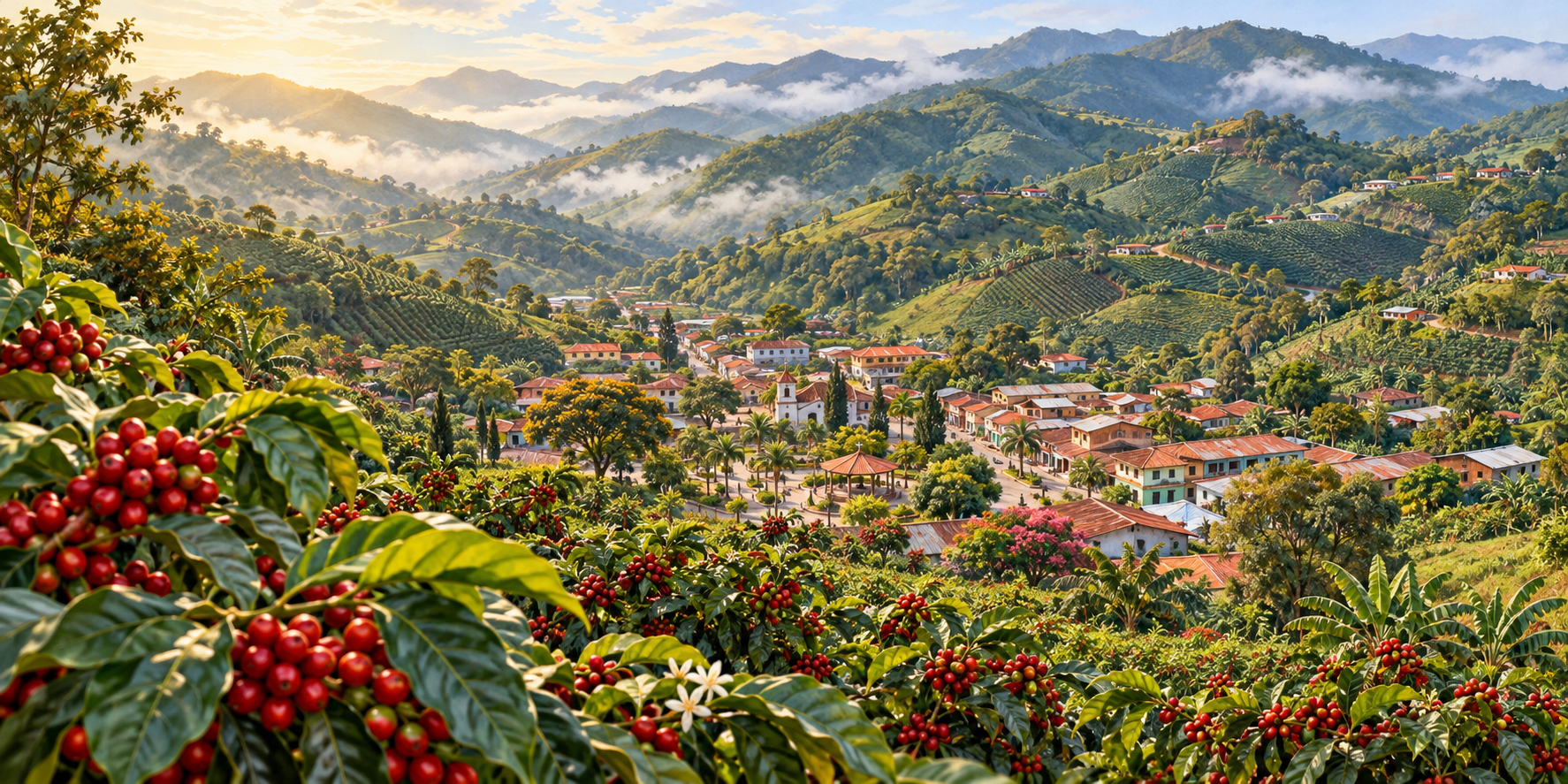
Illustrated landscape of San Marcos de Tarrazú, Costa Rica

explore san marcos de tarrazúCoffee Country, One Experience at a Time

Coffee is woven into the hills, businesses and daily life of San Marcos de Tarrazú. Slow down and meet the people behind a local cup, book a farm visit or explore the surrounding highlands with a guide. Between outings, the town offers cafés, local food and a comfortable place to pause before continuing through Los Santos.

Explore Together
Choose a farm tour that welcomes children and balance it with a short town visit and a meal. Ask hosts to explain the growing process in a way everyone can follow. The more demanding highland outings suit prepared groups; an easy coffee stop is a worthwhile experience in its own right.

Bring Home Coffee With a Local Story — San Marcos de Tarrazú

Contact Café Don Mayo about buying coffee and learn more about the producer behind the label. Choose beans to enjoy at home or give as a gift, and ask about the available roast and preparation advice. Confirm visitor arrangements; do not assume an unscheduled farm tour is offered.

Continue to Neighboring Santa María de Dota — San Marcos de Tarrazú

Add a separately planned visit to Santa María for another perspective on Los Santos. Explore its town center and coffee-country setting, with time for a meal before the return drive. Santa María is in Dota canton; check the route and leave room in your day for mountain travel.

Explore the Heart of San Marcos — San Marcos de Tarrazú

Take a relaxed walk around the town center and San Marcos Evangelista parish church, then stop at a local bakery or café. It is an easy way to enjoy everyday life between scheduled tours. Respect worship services and ask before photographing people or private interiors.

Go From Coffee Cherry to Your Cup — San Marcos de Tarrazú

Reserve Café Don Lucas’s hosted coffee experience for a closer look at the craft behind Tarrazú coffee. Follow the story through the farm and processing stages, then enjoy tasting with a new appreciation for the work involved. Confirm tour availability and family participation directly.

Linger Over Lunch at La Terraza del Cafetal — San Marcos de Tarrazú

Set aside time for a satisfying meal, specialty coffee and a handmade dessert at La Terraza del Cafetal. A slow lunch works especially well between a morning farm visit and an afternoon in town. Check the current menu and reserve when traveling with a group.

See the Highlands From the Treetops — San Marcos de Tarrazú

Ask Tropical Forest CR about its La Net del Roble experience for an unusual perspective on the mountain setting. Check the approach, physical demands and age suitability before booking. This is a hosted outing to plan with the operator, not a drop-in public viewpoint.

Take a Guided Walk Around La Pastora — San Marcos de Tarrazú

Explore a different side of coffee country with a guided mountain outing arranged through Tropical Forest CR. Choose a route for your group’s ability and ask about trail length and conditions. The operator describes demanding routes, so make this a prepared adventure rather than a casual stroll.

Taste the Details at Kwiso Coffee — San Marcos de Tarrazú

Arrange a farm visit or tasting with Kwiso Coffee and discover what gives a local coffee its character. Ask questions, compare aromas and hear the producer’s perspective. It is a chance to make a familiar daily drink feel connected to the landscape around you.

local life + insider tipsA Little Local Know-How

This guide centers on San Marcos and its Tarrazú surroundings. Book farms and guided outings directly, and confirm the actual meeting point. Mountain routes can take longer than their distance suggests. Bring layers and rain protection. Santa María de Dota is a separate neighboring destination and is labeled as such below.

Coffee is woven into the hills, businesses and daily life of San Marcos de Tarrazú. Slow down and meet the people behind a local cup, book a farm visit or explore the surrounding highlands with a guide. Between outings, the town offers cafés, local food and a comfortable place to pause before continuing through Los Santos.

This guide centers on San Marcos and its Tarrazú surroundings. Book farms and guided outings directly, and confirm the actual meeting point. Mountain routes can take longer than their distance suggests. Bring layers and rain protection. Santa María de Dota is a separate neighboring destination and is labeled as such below.

Choose a farm tour that welcomes children and balance it with a short town visit and a meal. Ask hosts to explain the growing process in a way everyone can follow. The more demanding highland outings suit prepared groups; an easy coffee stop is a worthwhile experience in its own right.

Explore Nature Field Guide cards from this province and the surrounding travel regions named below. Habitats and species vary by locality.

Nature Field Guide

Nature & Wildlife Around San Marcos de Tarrazú

Explore wildlife, plants and trees. Learn what to look for and where to find them.

100 profiles
Nature Field Guide

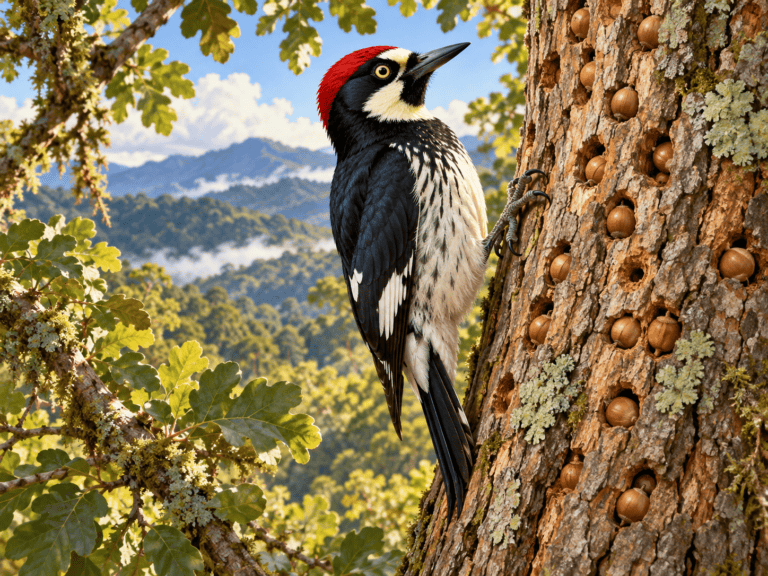
Acorn Woodpecker

Spanish name
Carpintero careto
Scientific name
Melanerpes formicivorus

What Do Pico & Tati Think?

Pico: “That face has bold black, white and red shapes!”

Tati: “Let’s look for clues on the tree without touching them.”

Identification

Key Features of the Acorn Woodpecker

  • Red cap, pale face and black patch around the bill.

  • White wing patches and white rump in flight.

  • Straight bill and stiff supporting tail.

Habitat & range

Mainly middle and high elevations in the Central and Talamanca ranges, especially oak landscapes. South Pacific refers to upland slopes, not the coastal plain.

Conservation & care

Stay on authorized trails or viewing routes. Give birds space, keep voices low and leave nests undisturbed. Observe without bait, feeding or recorded calls.

View full profile →

Nature Field Guide

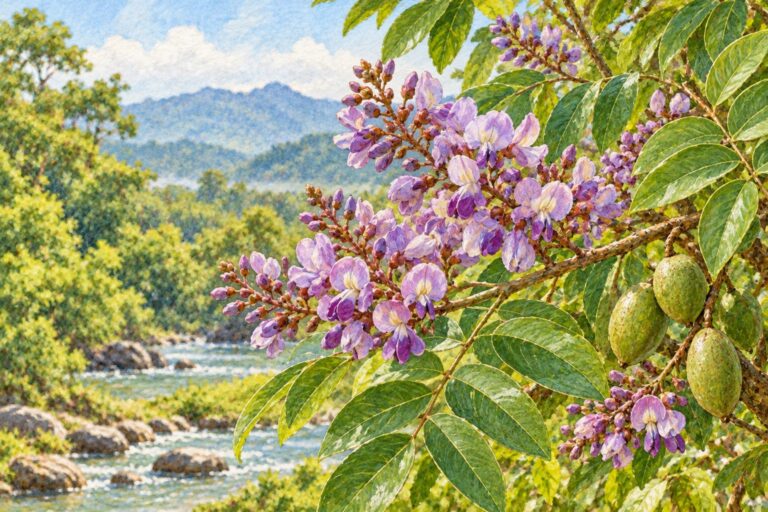
Almendro de Rio

Spanish name
Almendro de río / Almendro de montaña
Scientific name
Andira inermis

What Do Pico & Tati Think?

Pico: “Purple flower clusters stand out against a dense green crown.”

Tati: “Let’s notice the leaves, flowers and habitat without disturbing the plant.”

Identification

Key Features of the Almendro de Rio

  • Pinnate compound leaves

  • Clusters of lavender-purple flowers

  • Oval fruits and a dense leafy crown

Habitat & range

Dry and humid forests across both slopes, including Guanacaste, Nicoya, the Central Valley, Caribbean lowlands and Osa.

Conservation & care

Explore with an adult on permitted paths. Observe and photograph without picking leaves, flowers or fruits. Do not taste plants or let pets chew them. Avoid climbing trees and disturbing roots, seedlings or visiting wildlife.

Threats & pressures

Protect suitable habitat, mature trees and natural regeneration. Avoid trampling, unauthorized clearing and collection.

View full profile →

Nature Field Guide

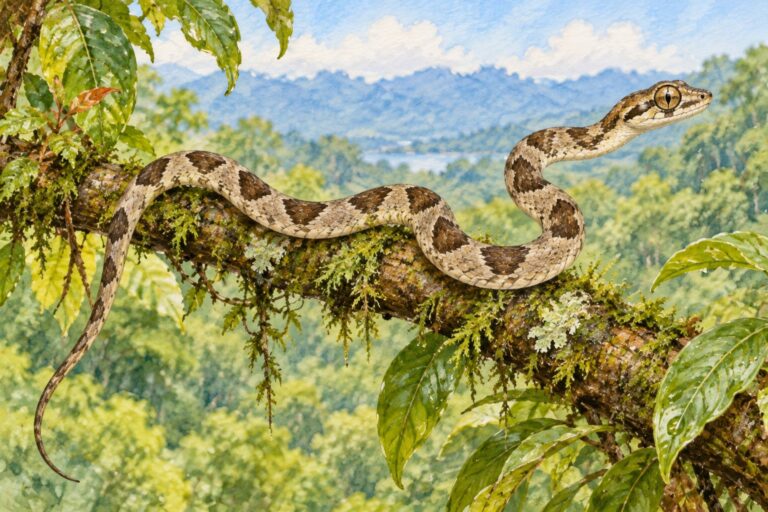
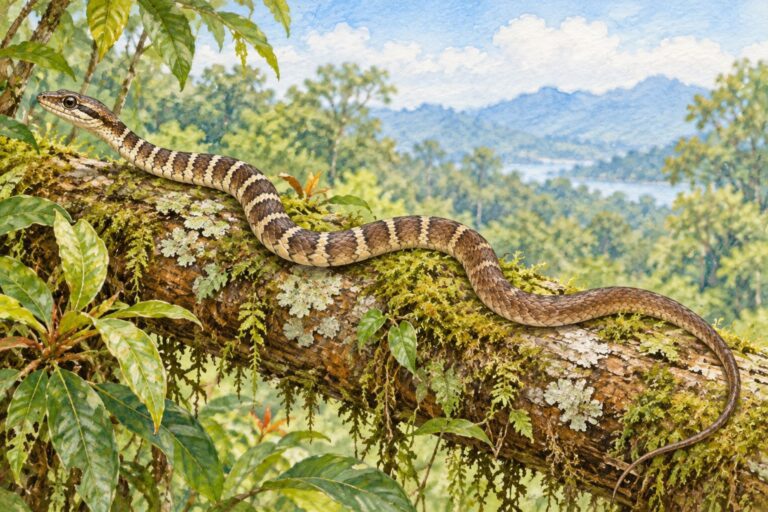
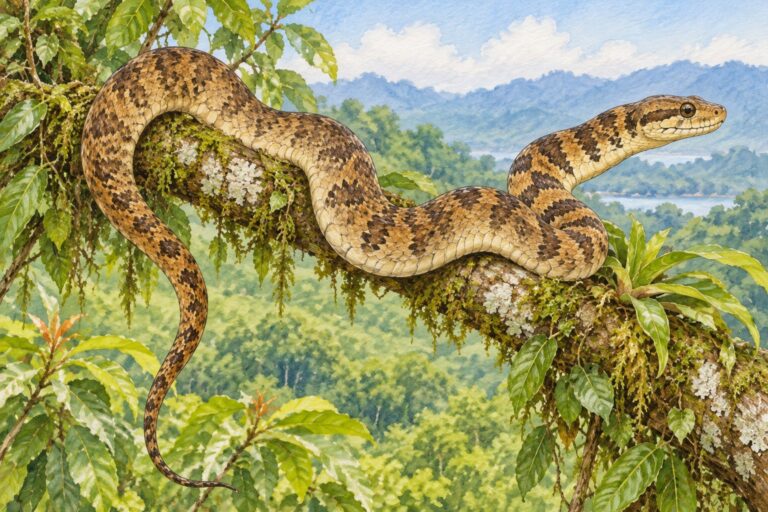
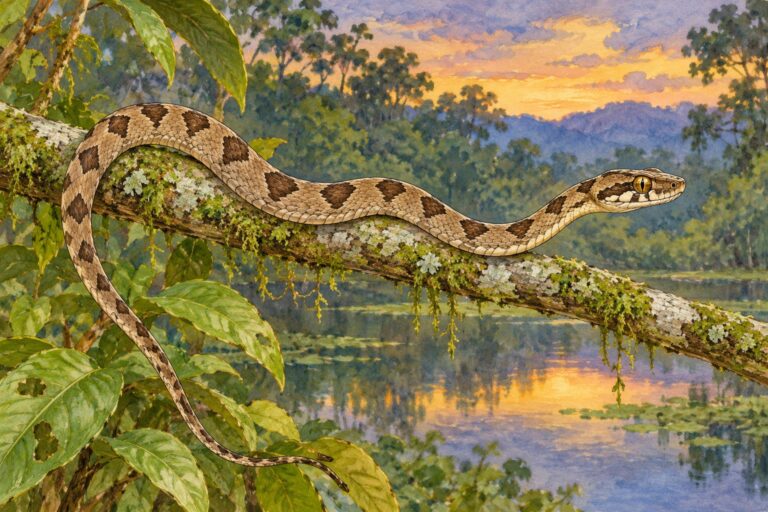
American Snail-eater

Spanish name
Caracolera articulada
Scientific name
Dipsas articulata

What Do Pico & Tati Think?

Pico: “What helps this reptile fit into its habitat?”

Tati: “Let’s look at its shape, colors and surroundings while giving it plenty of space.”

Identification

Key Features of the American Snail-eater

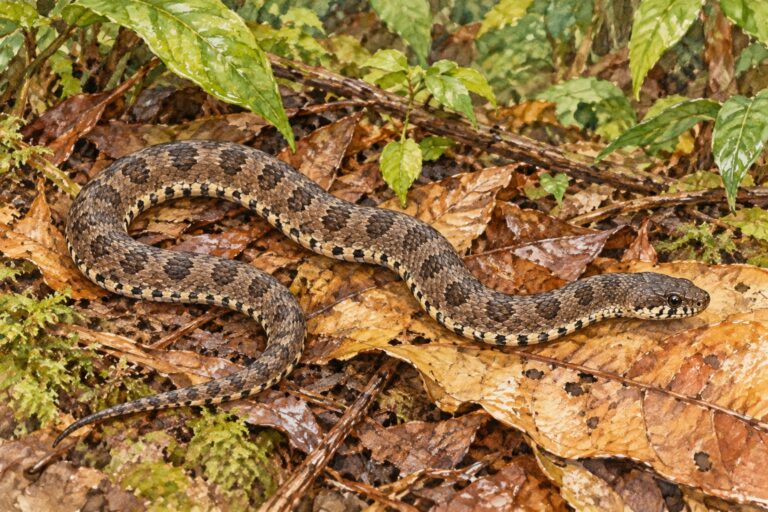
  • Slender body and narrow neck

  • Relatively large head and eyes

  • Dark blotches on a lighter background

Habitat & range

Humid forest and foothill vegetation on the Caribbean slope and in southwestern Costa Rica.

Conservation & care

Observe from a distance with an adult or qualified guide. Do not touch, catch, corner, feed or move any snake. Keep children and pets away. Colors, head shape and pupil shape must never be used to decide a snake is safe.

Threats & pressures

Protect connected habitat and natural shelters. Avoid collection, unnecessary clearing and deliberate killing. Leave wildlife in place and support responsible observation.

View full profile →

Nature Field Guide

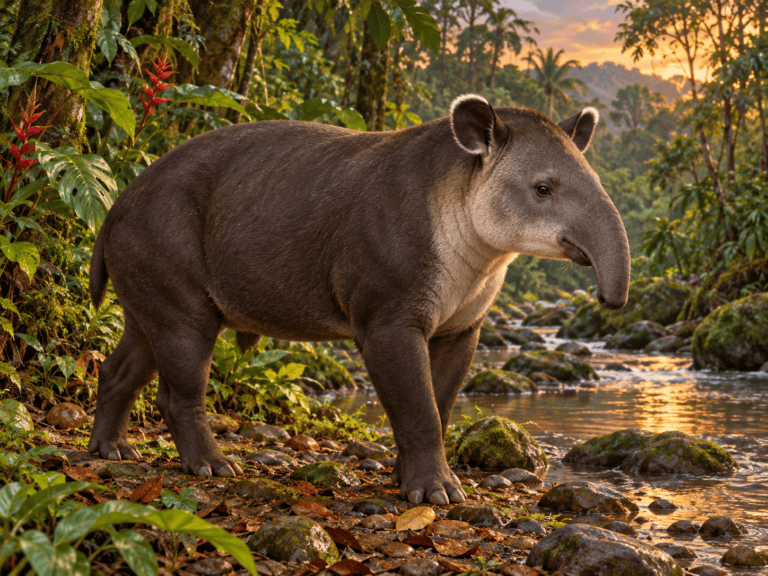
Baird’s Tapir

Spanish name
Danta
Scientific name
Tapirus bairdii

What Do Pico & Tati Think?

Pico: “Its nose can reach the leaves!”

Tati: “Let’s keep the path open and give it plenty of room.”

Identification

Key Features of the Baird’s Tapir

  • Large dark body and short flexible snout.

  • Pale edges around the ears.

  • Young calves have pale spots and stripes.

Habitat & range

Corcovado National Park’s forest and wetland landscape, including the Sirena area. Puerto Jiménez, Bahía Drake and Carate are gateways.

Conservation & care

Keep a respectful distance and leave an open route for the animal. Stay on authorized paths, secure food and rubbish, and observe without feeding, touching, baiting or chasing.

Threats & pressures

Habitat clearing and fragmentation, hunting and vehicle collisions threaten tapirs. Slow reproduction limits rapid recovery.

Conservation assessment

Global IUCN category as reported by the linked source, checked 7 October 2026. The source does not give an assessment year here. National legal protection and local abundance are separate questions.

View full profile →

Nature Field Guide

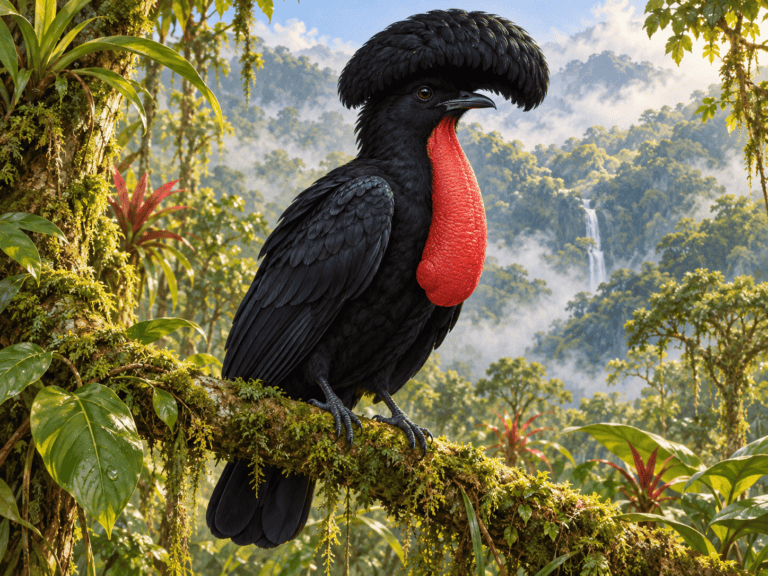
Bare-necked Umbrellabird

Spanish name
Pájaro sombrilla
Scientific name
Cephalopterus glabricollis

What Do Pico & Tati Think?

Pico: “That crest makes such an unusual shape!”

Tati: “We can learn about a shy bird without following it.”

Identification

Key Features of the Bare-necked Umbrellabird

  • Large dark bird with a heavy crest.

  • Short, square tail.

  • Male and female throat structures differ.

Habitat & range

Humid Caribbean-facing foothills and adjacent lowlands, with seasonal movement into montane breeding forest. Guanacaste refers to humid mountain slopes, not its dry coastal plain.

Conservation & care

Stay on authorized trails or viewing routes. Give birds space, keep voices low and leave nests undisturbed. Observe without bait, feeding or recorded calls.

Threats & pressures

UCAN identifies forest fragmentation and climate pressures on seasonal fruit availability as conservation concerns.

Conservation assessment

UCAN identifies the species as Endangered. Source checked 7 October 2026. This is a global species category, not a count of birds in the tagged towns.

View full profile →

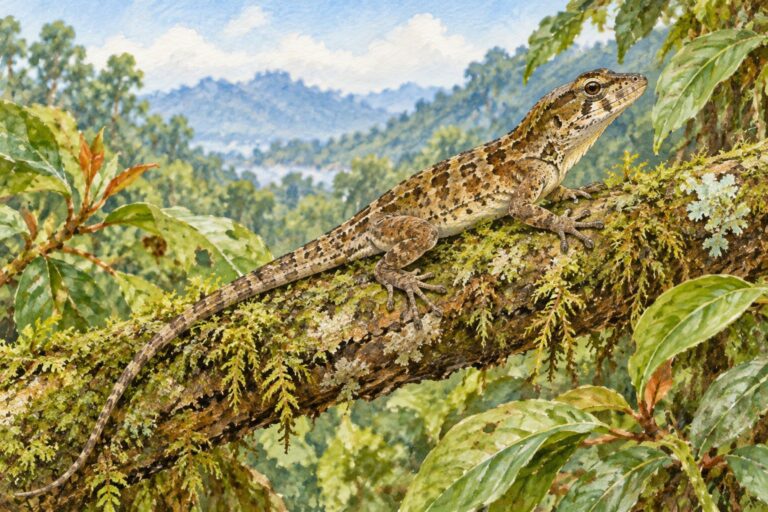
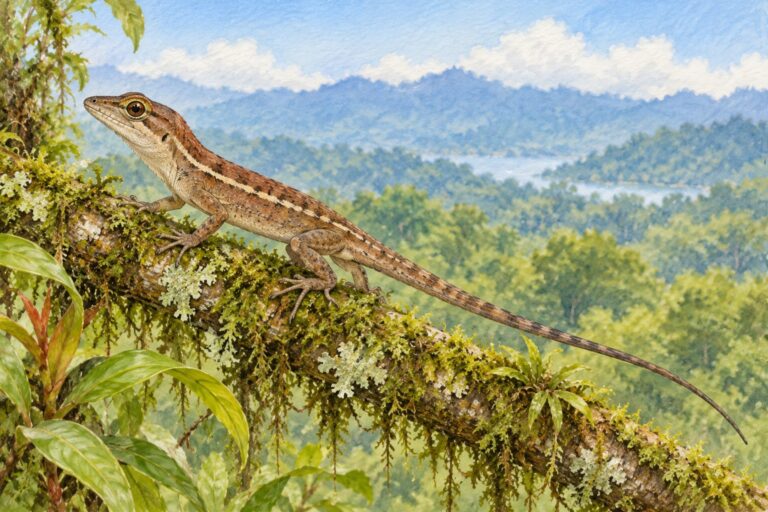
Nature Field Guide

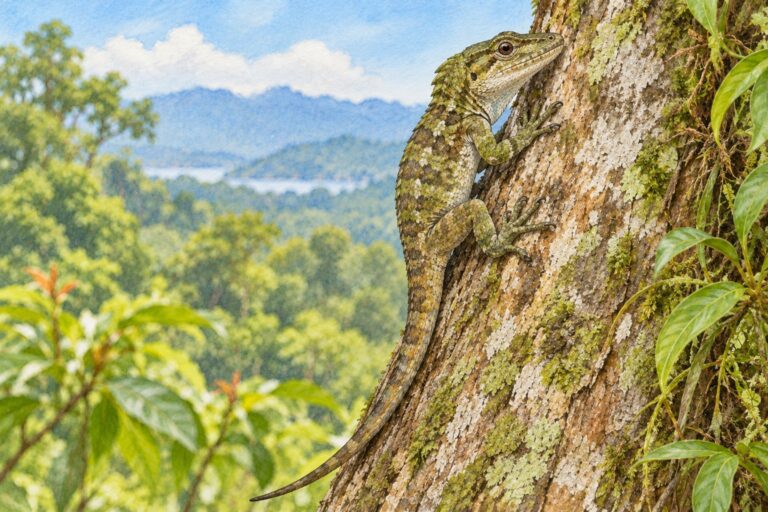
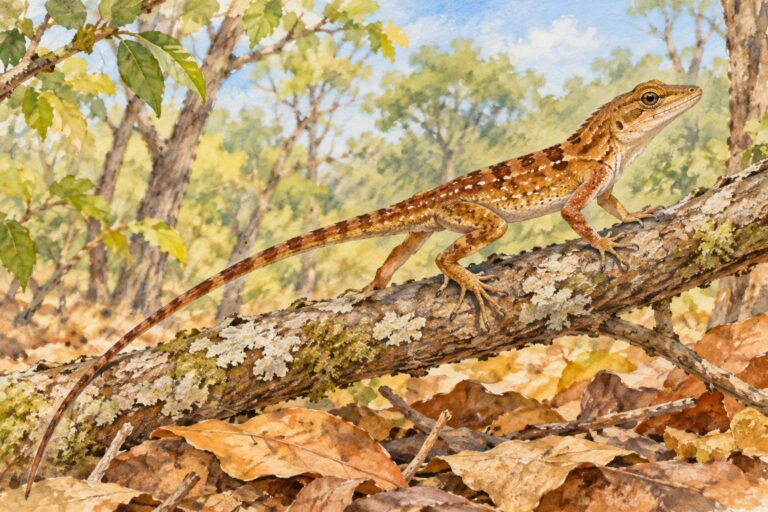
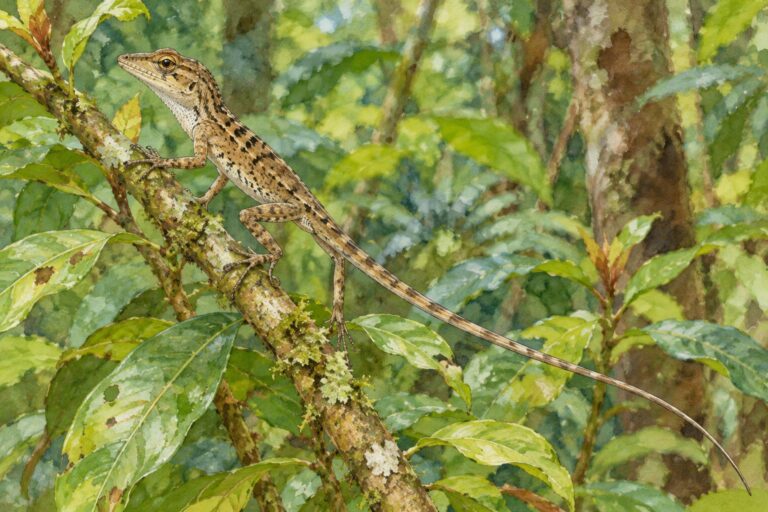
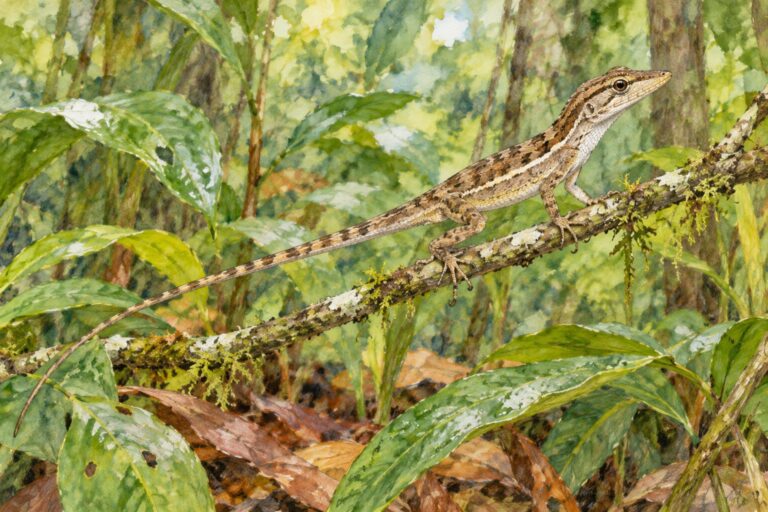
Big-headed Anole

Spanish name
Anolis de cabeza ancha / Anolis jaspeado
Scientific name
Anolis capito

What Do Pico & Tati Think?

Pico: “What clues help us recognize this reptile?”

Tati: “Let’s notice its shape, markings and habitat from a respectful distance.”

Identification

Key Features of the Big-headed Anole

  • Broad relatively large head

  • Mottled brown, olive or greenish body

  • Stout build and bark-colored camouflage

Habitat & range

Shaded Caribbean-slope forest and southwestern rainforest; also documented in humid forest at Rincón de la Vieja.

Conservation & care

Observe with an adult from permitted paths. Do not catch, chase, touch or feed reptiles. Leave bark, logs, rocks and leaf litter in place. Keep pets away and allow animals an open escape route.

Threats & pressures

Protect habitat connections and natural shelters. Avoid road mortality, collection and deliberate killing. Leave reptiles in their habitat rather than keeping or relocating them.

View full profile →

Nature Field Guide

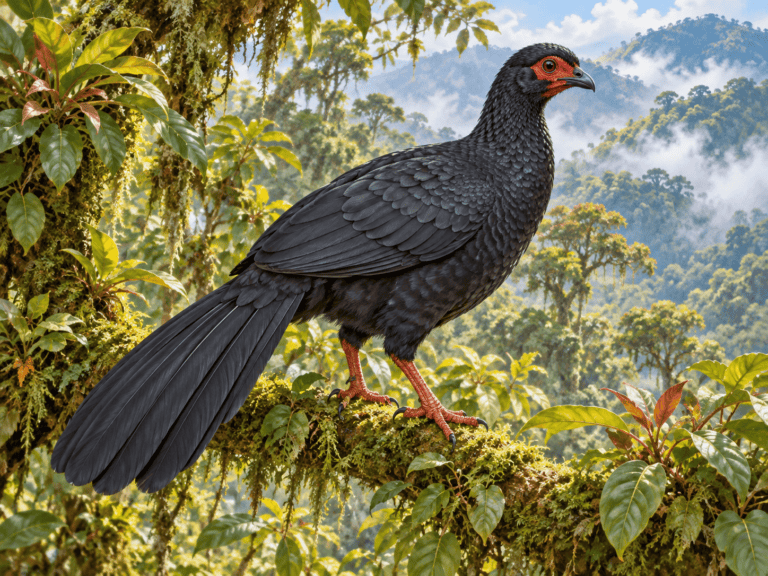
Black Guan

Spanish name
Pava negra
Scientific name
Chamaepetes unicolor

What Do Pico & Tati Think?

Pico: “A big bird is moving through the branches!”

Tati: “Look for its face and legs as well as its feathers.”

What does Least Concern mean?

In the linked conservation assessment, this species does not qualify as threatened or near threatened with extinction. It still needs care: local populations and habitats can face problems even when the species has a lower extinction risk overall.

This label describes conservation status. It does not tell us whether a plant is safe for children or pets. Select the status button to read the assessment.

Identification

Key Features of the Black Guan

  • Black body without a curassow’s curled crest.

  • Blue bare skin around a red eye.

  • Reddish legs.

Habitat & range

Montane forest, generally from about 1000 m to the upper forest limit. South Pacific refers to high Talamanca slopes, not coastal lowlands.

Seasonal Calendar

Resident presence

Costa Rica; suitable highland forest

Year-round

Resident nationally; presence and detectability vary among local sites.

Event source ↗

Conservation & care

Stay on authorized trails or viewing routes. Give birds space, keep voices low and leave nests undisturbed. Observe without bait, feeding or recorded calls.

Threats & pressures

Dependence on forest makes clearing and fragmentation relevant pressures despite the global Least Concern category.

Conservation assessment

BirdLife gives Least Concern, last assessment 2021. Source checked 7 October 2026. This is a global species category, not a count of birds in the tagged towns.

View full profile →

Nature Field Guide

Black Vulture

Spanish name
Zopilote negro
Scientific name
Coragyps atratus

What Do Pico & Tati Think?

Pico: “Which vulture is that one?”

Tati: “Look for the short tail and pale patches just at the wingtips.”

Identification

Key Features of the Black Vulture

  • Bare dark head

  • Short rounded tail

  • White patches at outer wingtips

Habitat & range

Widespread over towns and open landscapes from the coast into the mountains, becoming less frequent above about 2000 m. A regional tag does not identify a nesting site.

Conservation & care

Observe quietly from trails or established viewing areas. Give nests, roosts and feeding birds space. Do not handle, chase or lure birds with playback. Keep pets away from wildlife.

Threats & pressures

Protect native vegetation, reduce collision hazards around glass and keep cats away from birds. These are practical prevention priorities, not a claim of a measured decline at a specific Costa Rican site.

View full profile →

Nature Field Guide

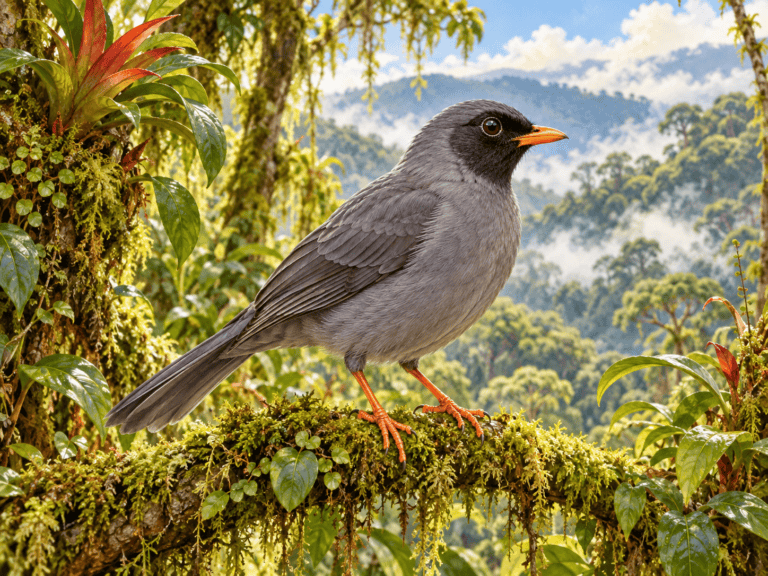
Black-faced Solitaire

Spanish name
Jilguero / Solitario carinegro
Scientific name
Myadestes melanops

What Do Pico & Tati Think?

Pico: “The song seems to be coming from a different place now!”

Tati: “Listening is a discovery, even without a photograph.”

Identification

Key Features of the Black-faced Solitaire

  • Slate-gray body and dark face.

  • A distinctive, varied mountain-forest song.

  • Singer may stay low and move within vegetation.

Habitat & range

Humid mountain forest on both slopes; after breeding some birds descend into Caribbean foothills and lowlands. Broad lowland tags represent seasonal forest habitat, not general abundance.

Conservation & care

Stay on authorized trails or viewing routes. Give birds space, keep voices low and leave nests undisturbed. Observe without bait, feeding or recorded calls.

View full profile →

Nature Field Guide

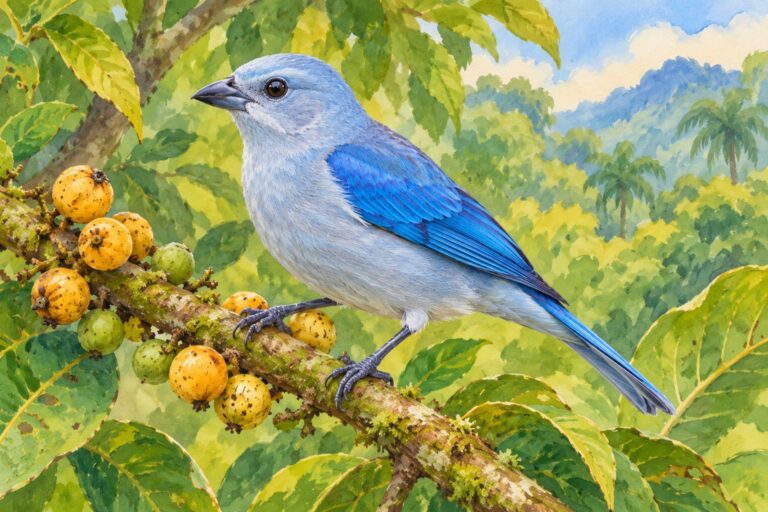
Blue-gray Tanager

Spanish name
Tangara azuleja
Scientific name
Thraupis episcopus

What Do Pico & Tati Think?

Pico: “It looks like a piece of the sky!”

Tati: “Let’s see where the blue is pale and where it is brighter.”

Identification

Key Features of the Blue-gray Tanager

  • Powder blue-gray body

  • Brighter blue wings and shoulder

  • Dark eye and stout bill

Habitat & range

Widespread in gardens, towns and semi-open wooded areas, mainly below about 2000 m. In the dry northwest it is less frequent and associated with moister sites near homes.

Conservation & care

Observe quietly from trails or established viewing areas. Give nests, roosts and feeding birds space. Do not handle, chase or lure birds with playback. Keep pets away from wildlife.

Threats & pressures

Protect native vegetation, reduce collision hazards around glass and keep cats away from birds. These are practical prevention priorities, not a claim of a measured decline at a specific Costa Rican site.

View full profile →

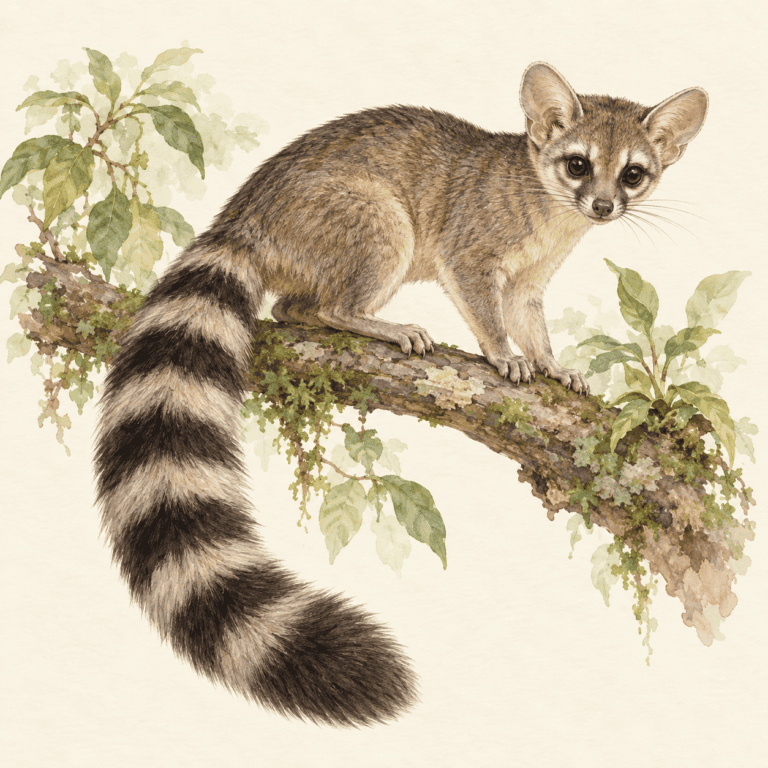
Nature Field Guide

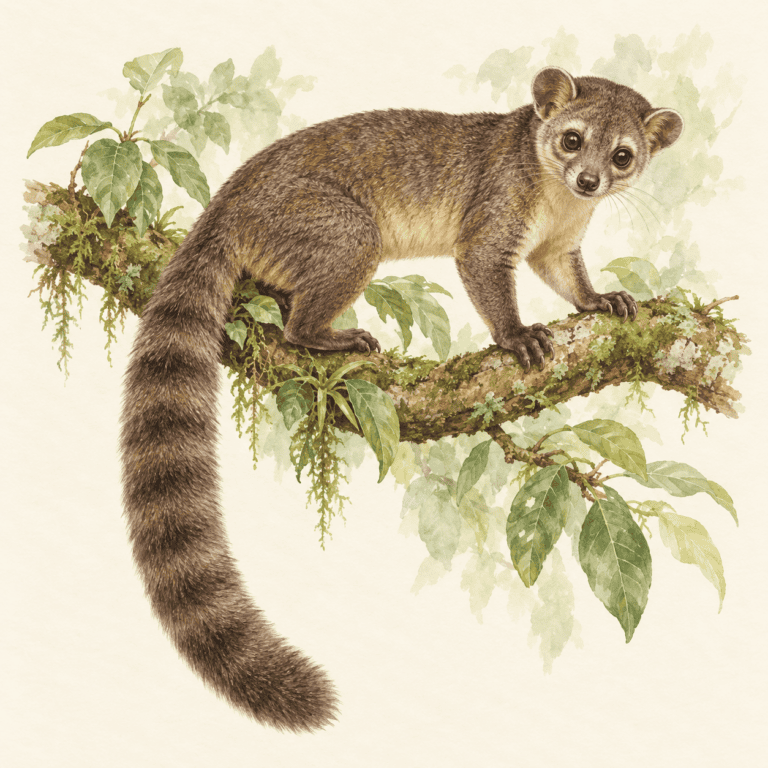
Cacomistle

Spanish name
Ostoche
Scientific name
Bassariscus sumichrasti

What Do Pico & Tati Think?

A cacomistle's long ringed tail is a memorable clue.

Identification

Key Features of the Cacomistle

  • Slender body, pointed face and relatively large ears.

  • Very long bushy tail with alternating pale and dark bands.

  • Usually associated with wooded habitat and climbing.

Habitat & range

Evergreen and mountain forests, with some use of seasonally dry forest.

Conservation & care

Explore with an adult or local guide. Observe quietly from a distance, stay on established trails and leave shelter undisturbed. Do not feed, touch, capture or corner wildlife. Keep pets away.

View full profile →

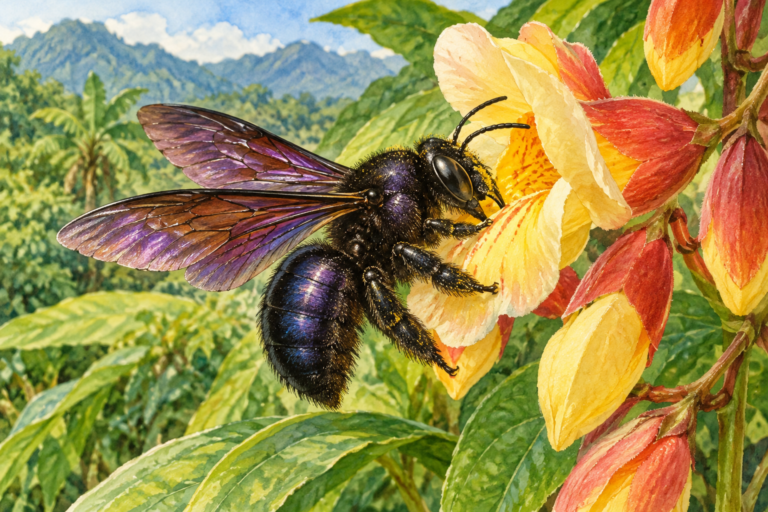
Nature Field Guide

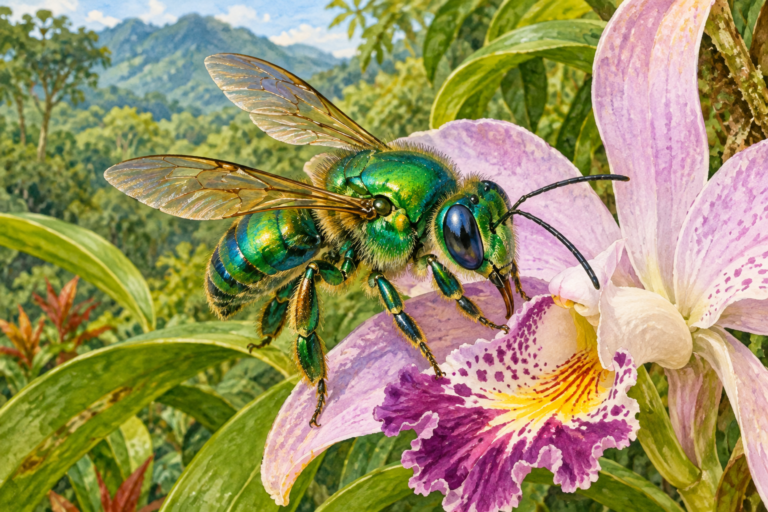
Carpenter Bees

Spanish name
Abejas carpinteras
Scientific name
Xylocopa spp. — genus card

What Do Pico & Tati Think?

Pico: “Let's look closely at the carpenter bees!”

Tati: “We can compare its shape and markings without touching it.”

Identification

Key Features of the Carpenter Bees

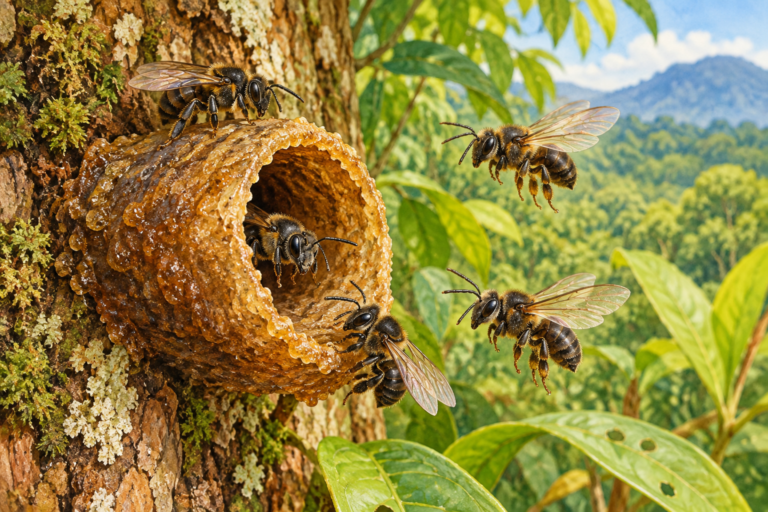
  • Robust body

  • often shiny abdomen

  • some nest in wood

Habitat & range

Suitable forest, garden or open habitats; distribution varies with habitat and species.

Conservation & care

Observe without collecting, handling or disturbing insects or nests. Stay on permitted paths. Leave caterpillars and their food plants in place.

View full profile →

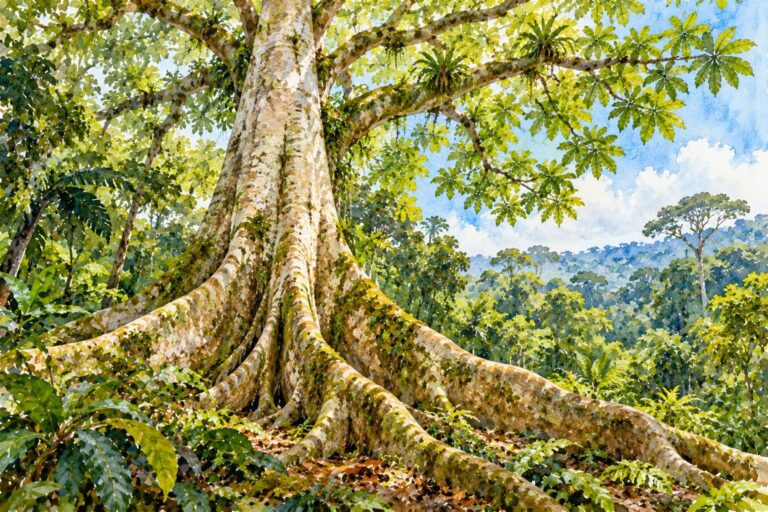
Nature Field Guide

Ceiba Kapok Tree

Spanish name
Ceiba / Puri
Scientific name
Ceiba pentandra

What Do Pico & Tati Think?

Pico: “Huge buttress roots help make a mature ceiba unforgettable.”

Tati: “Let’s notice the leaves, flowers and habitat without disturbing the plant.”

Identification

Key Features of the Ceiba Kapok Tree

  • Large buttress roots on mature trees

  • Palmate leaves with several narrow leaflets

  • Seed capsules containing silky fibers

Habitat & range

Dry, humid and very wet lowland forests on both slopes, including Pacific, Caribbean and northern lowland landscapes.

Conservation & care

Explore with an adult on permitted paths. Observe and photograph without picking leaves, flowers or fruits. Do not taste plants or let pets chew them. Avoid climbing trees and disturbing roots, seedlings or visiting wildlife.

Threats & pressures

Protect suitable habitat, mature trees and natural regeneration. Avoid trampling, unauthorized clearing and collection.

View full profile →

Nature Field Guide

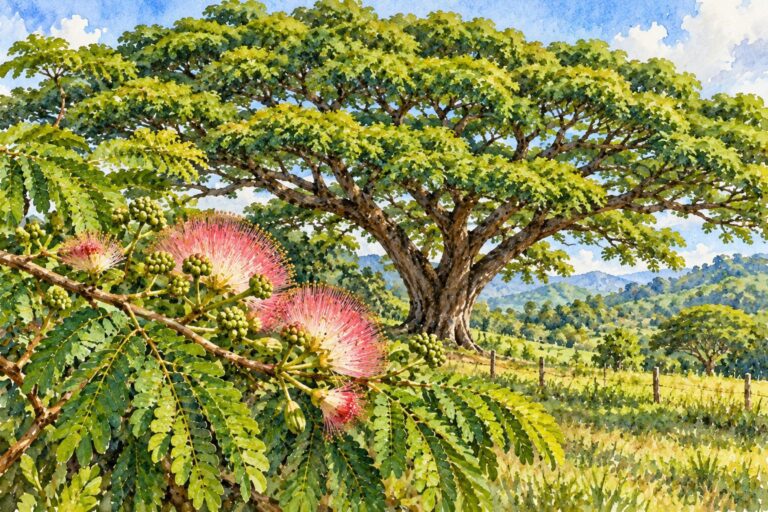
Cenizaro Rain Tree

Spanish name
Cenízaro
Scientific name
Samanea saman

What Do Pico & Tati Think?

Pico: “An umbrella-shaped crown shelters a world beneath its branches.”

Tati: “Let’s notice the leaves, flowers and habitat without disturbing the plant.”

Identification

Key Features of the Cenizaro Rain Tree

  • Broad umbrella-shaped crown

  • Twice-divided compound leaves

  • Pink-and-white brushlike flowers and dark pods

Habitat & range

Pacific lowlands and open landscapes, also documented in the Northern Plains and around San Ramón.

Conservation & care

Explore with an adult on permitted paths. Observe and photograph without picking leaves, flowers or fruits. Do not taste plants or let pets chew them. Avoid climbing trees and disturbing roots, seedlings or visiting wildlife.

Threats & pressures

Protect suitable habitat, mature trees and natural regeneration. Avoid trampling, unauthorized clearing and collection.

View full profile →

Nature Field Guide

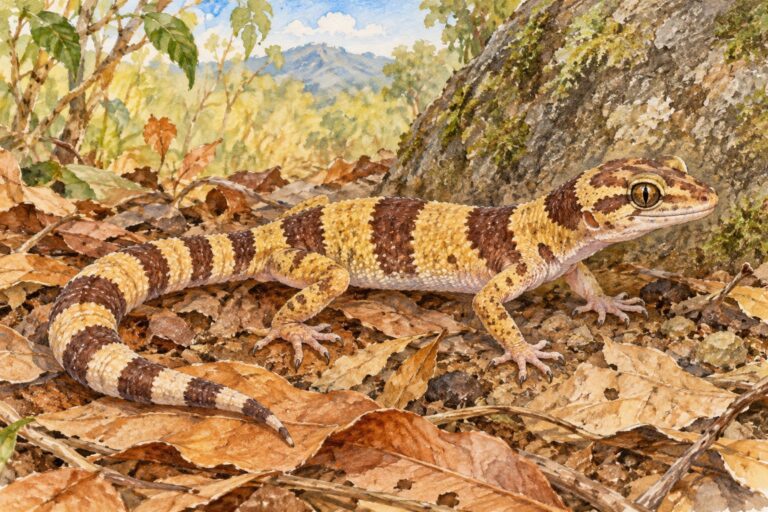
Central American Banded Gecko

Spanish name
Geco bandeado centroamericano
Scientific name
Coleonyx mitratus

What Do Pico & Tati Think?

Pico: “What can we learn from this reptile’s shape?”

Tati: “Let’s notice its markings and habitat while leaving it plenty of space.”

Identification

Key Features of the Central American Banded Gecko

  • Dark bands on yellow-tan tones

  • Movable eyelids

  • Clawed toes without broad wall-climbing pads

Habitat & range

Northwestern and western Pacific-slope forests, including Guanacaste and San Luis de Monteverde.

Conservation & care

Observe from permitted paths with an adult. Do not touch, chase, catch or feed reptiles. Leave bark, stones, logs and leaf litter in place. Keep pets away and give animals an open escape route.

Threats & pressures

Protect natural shelters and connected habitat. Avoid collection, unnecessary clearing and deliberate killing. Leave wildlife in its habitat and support responsible observation.

View full profile →

Nature Field Guide

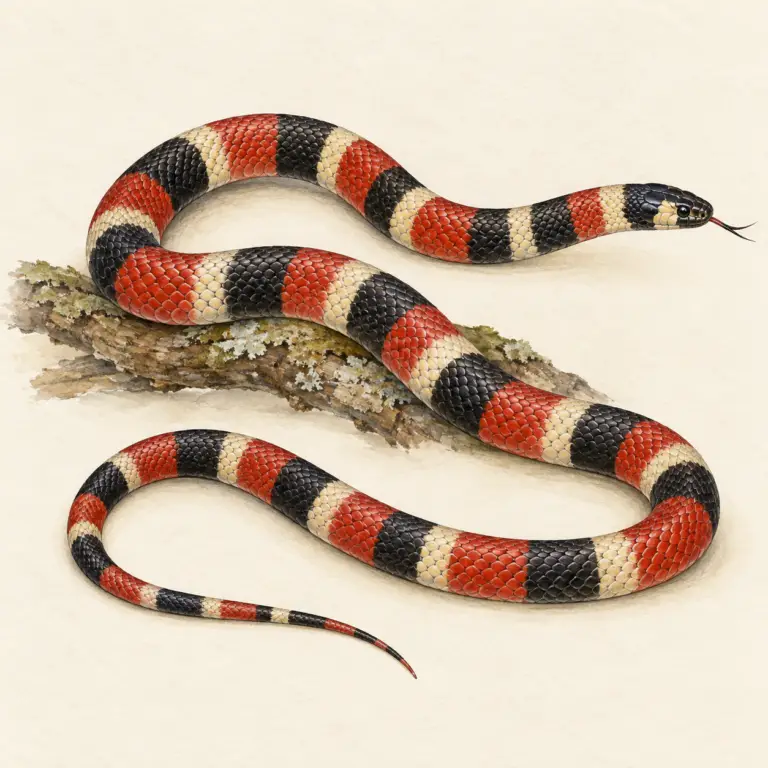
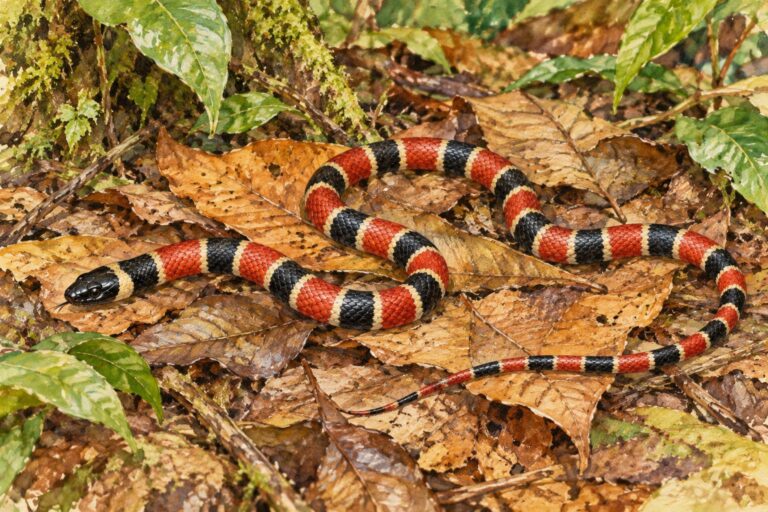
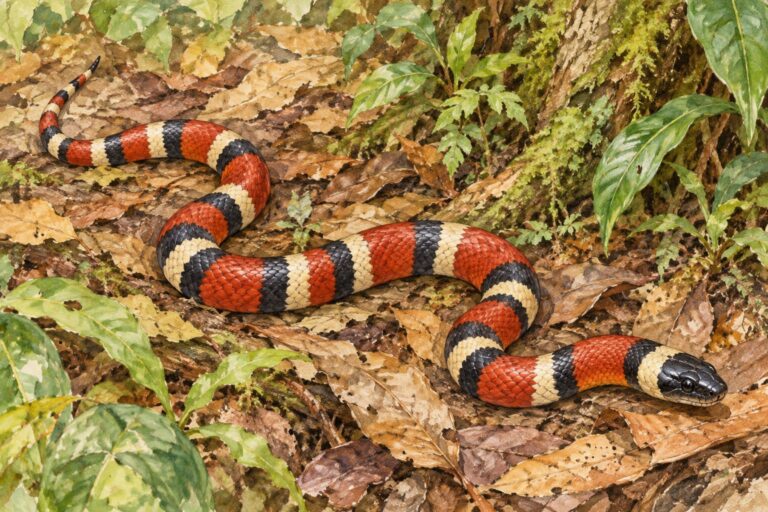
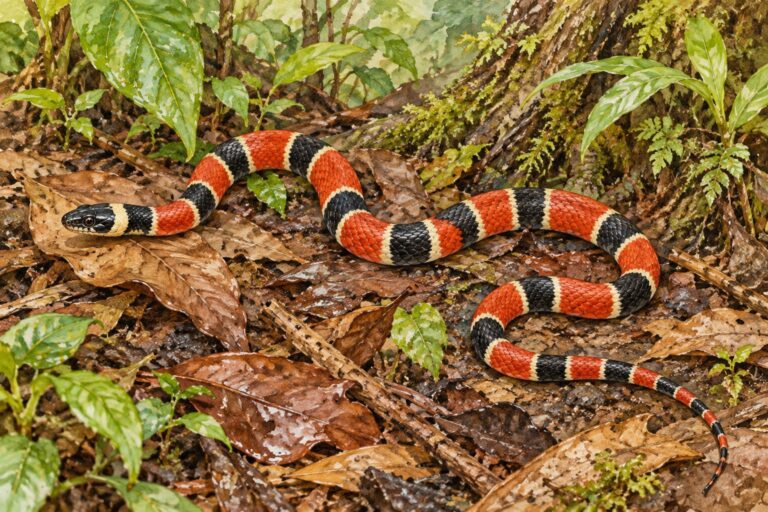
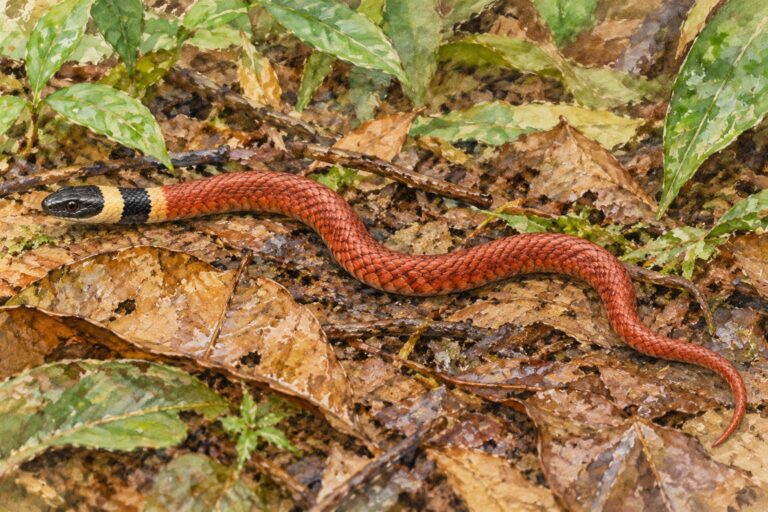
Central American Coral Snake

Spanish name
Coral macho
Scientific name
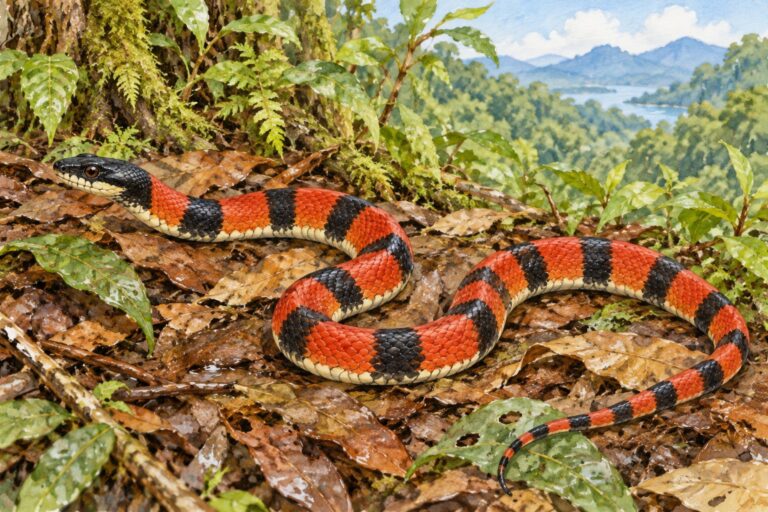
Micrurus nigrocinctus

What Do Pico & Tati Think?

Pico and Tati invite you to learn about the central american coral snake. Create a ring-pattern drawing from a verified photograph. Write the rule: observe snakes from a distance and tell an adult.

Identification

Key Features of the Central American Coral Snake

  • Red, pale and black rings encircling the body.

  • Relatively small head with little separation from the neck.

  • A slender-to-moderately robust cylindrical body.

Habitat & range

Pacific-slope lowlands and premontane areas, including parts of the Central Valley.

Conservation & care

Never approach, touch, catch or try to move any snake, even if it appears harmless or dead. Keep children and pets away, step back calmly and tell an adult or guide. Do not use colors, head shape or this card to judge safety.

View full profile →

Nature Field Guide

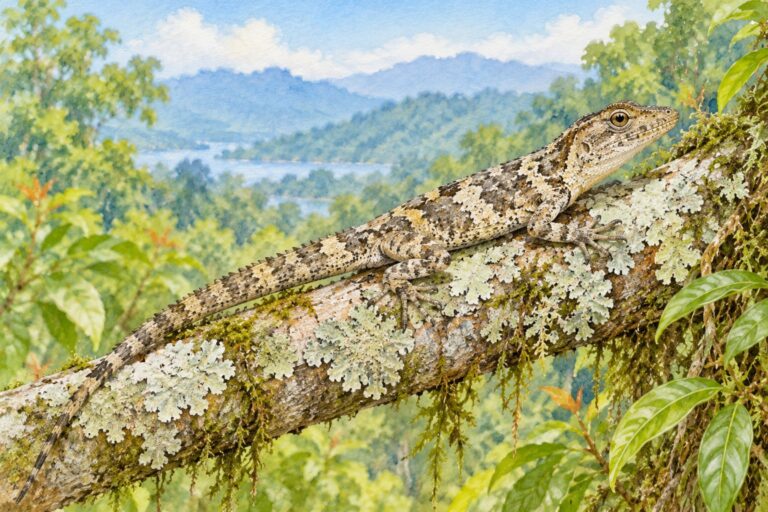
Charles Myers’s Anole

Spanish name
Anolis de Charles Myers
Scientific name
Anolis charlesmyersi

What Do Pico & Tati Think?

Pico: “What can we learn from this reptile’s shape?”

Tati: “Let’s notice its markings and habitat while leaving it plenty of space.”

Identification

Key Features of the Charles Myers’s Anole

  • Very short limbs

  • Lichenlike pale and dark mottling

  • Relatively short tail with a low serrated ridge

Habitat & range

Pacific lowland and adjoining foothill habitats in Costa Rica, including the Central and South Pacific.

Conservation & care

Observe from permitted paths with an adult. Do not touch, chase, catch or feed reptiles. Leave bark, stones, logs and leaf litter in place. Keep pets away and give animals an open escape route.

Threats & pressures

Protect natural shelters and connected habitat. Avoid collection, unnecessary clearing and deliberate killing. Leave wildlife in its habitat and support responsible observation.

View full profile →

Nature Field Guide

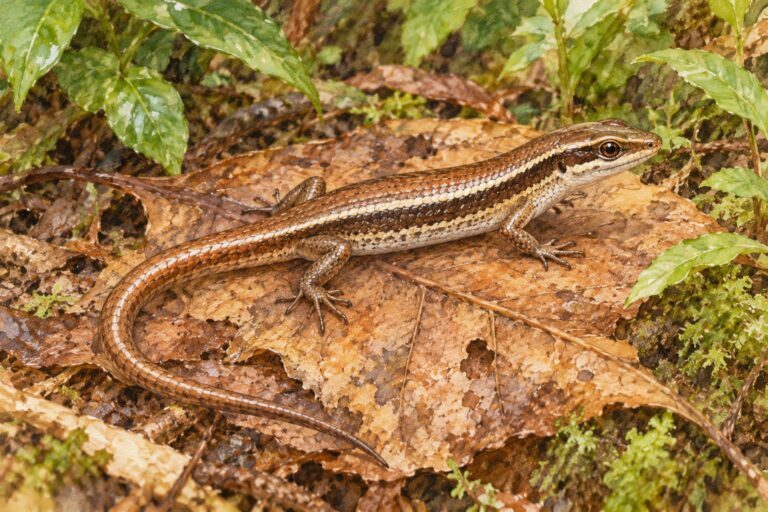
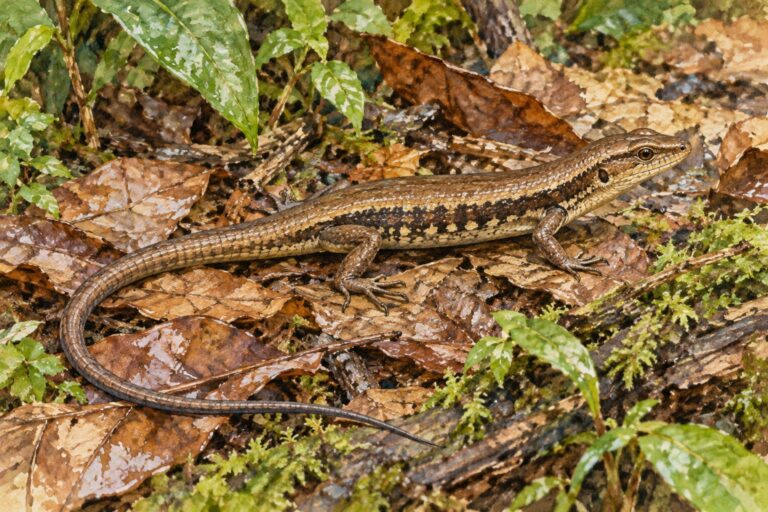
Cherrie’s Ground Skink

Spanish name
Eslaboncillo pardo / Escinco de Cherrie
Scientific name
Scincella cherriei

What Do Pico & Tati Think?

Pico: “What clues help us recognize this reptile?”

Tati: “Let’s notice its shape, markings and habitat from a respectful distance.”

Identification

Key Features of the Cherrie’s Ground Skink

  • Smooth glossy-looking scales

  • Dark lateral stripe

  • Short legs and a tapering tail

Habitat & range

Pacific-slope forest floor and wooded edges, including southwestern Costa Rica and the Monteverde foothill area.

Conservation & care

Observe with an adult from permitted paths. Do not catch, chase, touch or feed reptiles. Leave bark, logs, rocks and leaf litter in place. Keep pets away and allow animals an open escape route.

Threats & pressures

Protect habitat connections and natural shelters. Avoid road mortality, collection and deliberate killing. Leave reptiles in their habitat rather than keeping or relocating them.

View full profile →

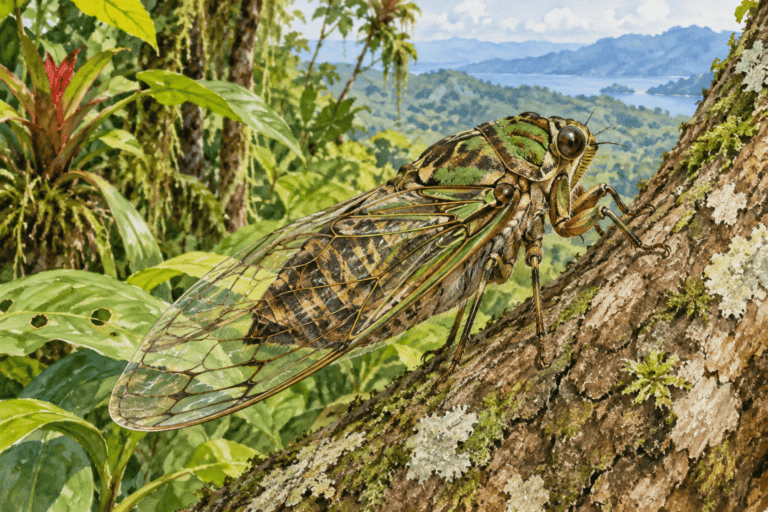
Nature Field Guide

Cicadas

Spanish name
Chicharras
Scientific name
Cicadidae — family card

What Do Pico & Tati Think?

Pico: “Let's look closely at the cicadas!”

Tati: “We can compare its shape and markings without touching it.”

Identification

Key Features of the Cicadas

  • Large transparent wings

  • broad head

  • loud calls from some males

Habitat & range

Suitable forest, garden or open habitats; distribution varies with habitat and species.

Conservation & care

Observe without collecting, handling or disturbing insects or nests. Stay on permitted paths. Leave caterpillars and their food plants in place.

View full profile →

Nature Field Guide

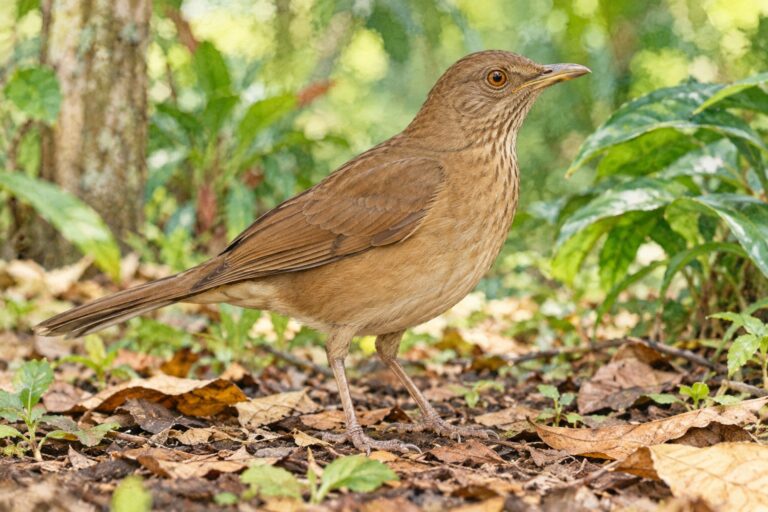
Clay-colored Thrush

Spanish name
Mirlo pardo / Yigüirro
Scientific name
Turdus grayi

What Do Pico & Tati Think?

Pico: “That brown bird has a beautiful song!”

Tati: “That is the yigüirro. We can learn its voice as well as its colors.”

Identification

Key Features of the Clay-colored Thrush

  • Warm brown plumage

  • Yellowish bill

  • Fine throat streaks and orange-brown eye

Habitat & range

Widespread across Costa Rica from lowlands to about 2450 m, in gardens, farms, secondary growth and wooded urban areas. Less numerous in the dry northwest and higher mountains.

Conservation & care

Observe quietly from trails or established viewing areas. Give nests, roosts and feeding birds space. Do not handle, chase or lure birds with playback. Keep pets away from wildlife.

Threats & pressures

Protect native vegetation, reduce collision hazards around glass and keep cats away from birds. These are practical prevention priorities, not a claim of a measured decline at a specific Costa Rican site.

View full profile →

Nature Field Guide

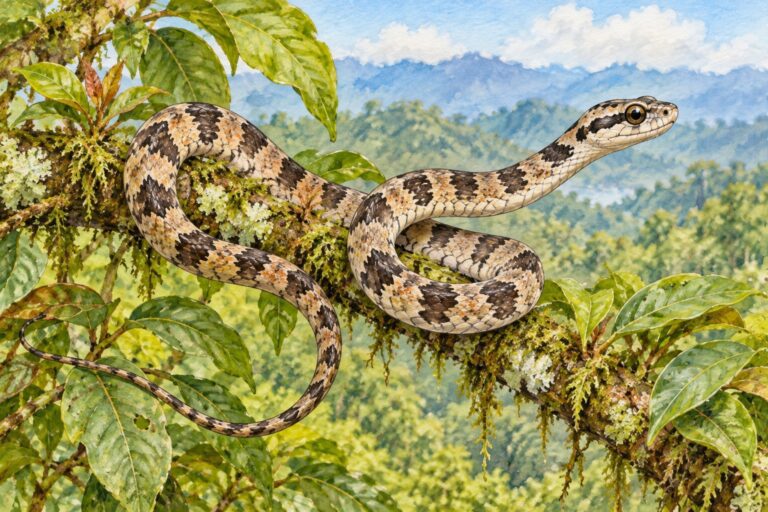
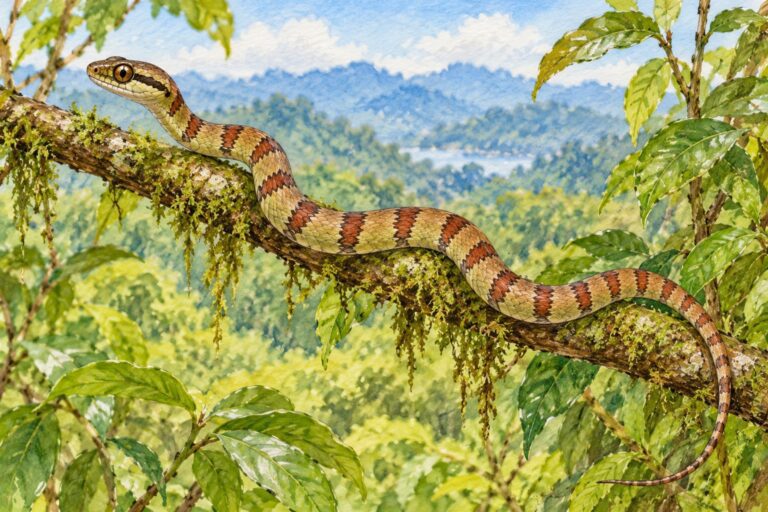
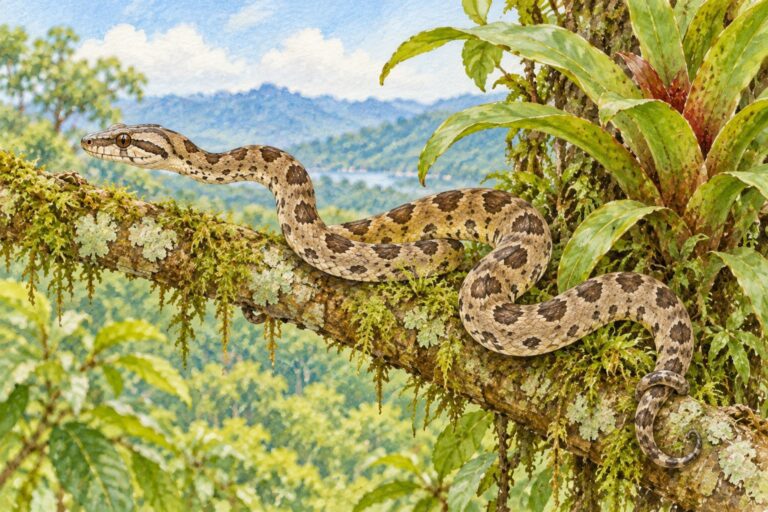
Clouded Snail-eater

Spanish name
Caracolera nublada
Scientific name
Sibon nebulatus

What Do Pico & Tati Think?

Pico: “What helps this reptile fit into its habitat?”

Tati: “Let’s look at its shape, colors and surroundings while giving it plenty of space.”

Identification

Key Features of the Clouded Snail-eater

  • Slender climbing body

  • Large rounded head and prominent eyes

  • Irregular dark markings on a lighter body

Habitat & range

Caribbean and Pacific humid forests and edges, including northern lowland wet forest.

Conservation & care

Observe from a distance with an adult or qualified guide. Do not touch, catch, corner, feed or move any snake. Keep children and pets away. Colors, head shape and pupil shape must never be used to decide a snake is safe.

Threats & pressures

Protect connected habitat and natural shelters. Avoid collection, unnecessary clearing and deliberate killing. Leave wildlife in place and support responsible observation.

View full profile →

Nature Field Guide

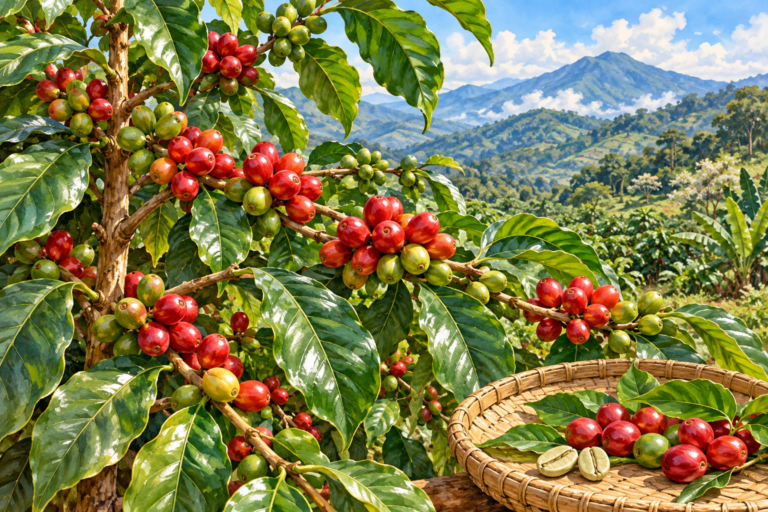
Coffee

Spanish name
Café
Scientific name
Coffea arabica

What Do Pico & Tati Think?

Pico: “The coffee bean starts inside a fruit!”

Tati: “Let's find the cherry before we think about the bean.”

Identification

Key Features of the Coffee

  • Glossy leaves arranged in pairs

  • Small fruits clustered along branches

  • Ripe cherries are often red, though some varieties ripen yellow

  • Small white flowers when flowering

Habitat & range

Cultivated farms in several Costa Rican coffee zones, including the Central and Western Valleys, Los Santos, Turrialba, Orosi, Tres Rios, Guanacaste and Brunca. ICAFE also documents production in San Carlos and Sarapiqui, mapped here to Northern Plains. Coffee requires suitable elevation and local growing conditions; a regional tag does not mean all climates within that region are suitable.

Conservation & care

Visit farms only with permission and follow the host's instructions. Stay clear of machinery, chemical applications and working areas. Do not pick or taste plants without a responsible adult and the host's approval.

View full profile →

Nature Field Guide

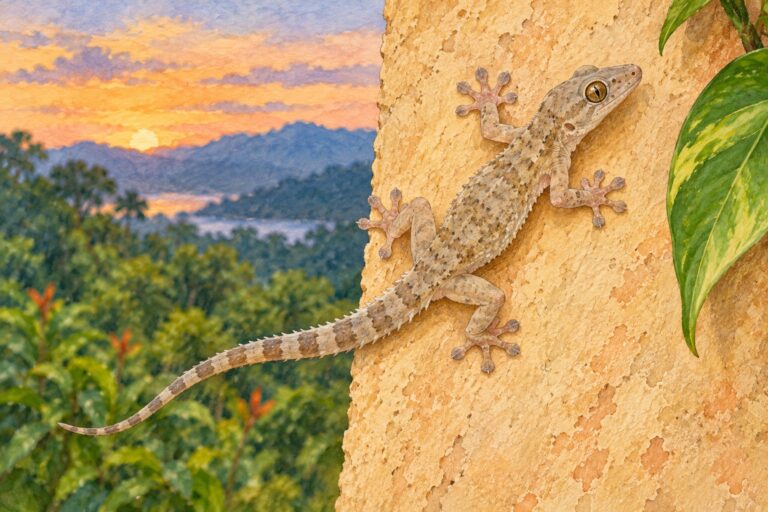
Common House Gecko

Spanish name
Geco casero común
Scientific name
Hemidactylus frenatus

What Do Pico & Tati Think?

Pico: “What helps this reptile fit into its habitat?”

Tati: “Let’s look at its shape, colors and surroundings while giving it plenty of space.”

Identification

Key Features of the Common House Gecko

  • Pale gray-to-beige coloration

  • Broad spreading toe pads

  • Often on walls near night lighting

Habitat & range

Buildings, gardens and disturbed habitats across much of Costa Rica, especially warm lowlands and settled areas. Documented at Tirimbina and San Luis de Monteverde.

Conservation & care

Observe with an adult from permitted paths. Do not touch, chase, catch or feed reptiles. Leave bark, logs, stones and leaf litter in place. Keep pets away and allow an open escape route.

Threats & pressures

Prevent accidental transport of introduced geckos and their eggs in belongings or plant materials. Protect native reptile habitats and avoid moving animals between places.

View full profile →

Nature Field Guide

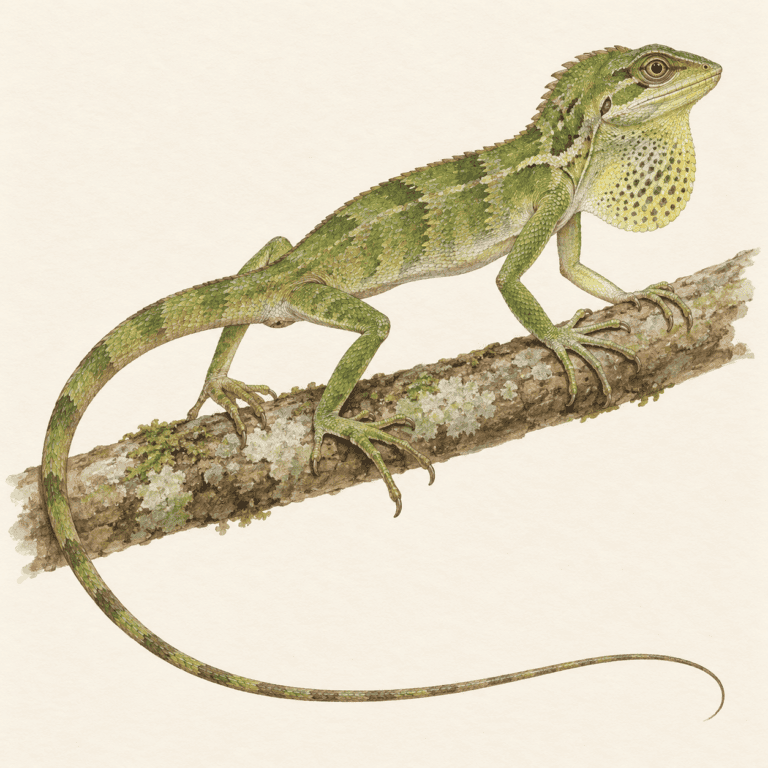
Common Monkey Lizard

Spanish name
Lagartija de dosel
Scientific name
Polychrus gutturosus

What Do Pico & Tati Think?

Pico and Tati invite you to learn about the common monkey lizard. Look at a reference photograph and mark the outline of the tail. Compare its proportions with a basilisk.

Identification

Key Features of the Common Monkey Lizard

  • Laterally flattened body.

  • Long limbs, toes and whip-like tail.

  • Greenish coloration and an expandable throat region.

Habitat & range

Primarily humid forest canopy. A documented Hojancha record extends coverage into Guanacaste, where persistent streamside vegetation provides a moist refuge within the dry landscape. Also documented at Reserva Los Campesinos in San Jose province. Regional occurrence depends on suitable wooded microhabitat.

Conservation & care

Watch wildlife with an adult from a safe path. Do not touch, feed, capture or move reptiles, and keep pets away. Leave eggs, shelters and vegetation undisturbed.

View full profile →

Nature Field Guide

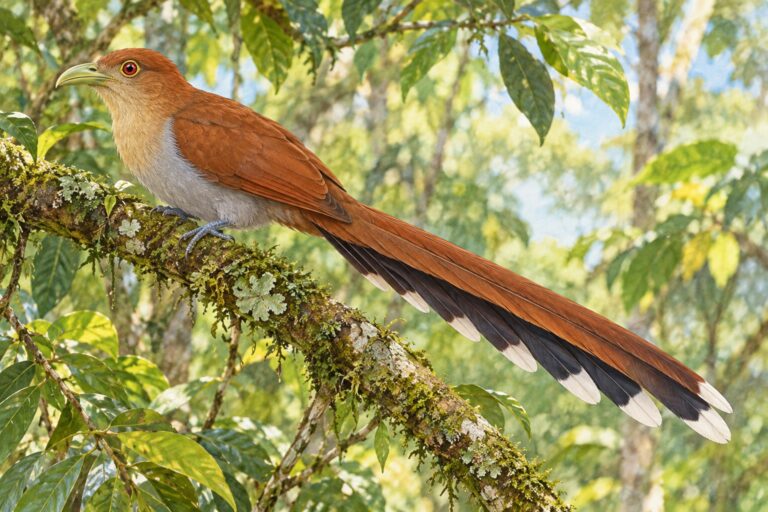
Common Squirrel-Cuckoo

Spanish name
Cuco ardilla
Scientific name
Piaya cayana

What Do Pico & Tati Think?

Pico: “That tail is longer than I expected!”

Tati: “Follow its movement through the branches without chasing it.”

Identification

Key Features of the Common Squirrel-Cuckoo

  • Rusty upperparts

  • Very long graduated white-tipped tail

  • Greenish-yellow bill

Habitat & range

Widespread in wooded habitats on both slopes, including forest canopy, secondary growth, plantations and tree-rich gardens. It can occur well above the lowlands where trees remain.

Conservation & care

Observe quietly from trails or established viewing areas. Give nests, roosts and feeding birds space. Do not handle, chase or lure birds with playback. Keep pets away from wildlife.

Threats & pressures

Protect native vegetation, reduce collision hazards around glass and keep cats away from birds. These are practical prevention priorities, not a claim of a measured decline at a specific Costa Rican site.

View full profile →

Nature Field Guide

Cope’s False Coral Snake

Spanish name
Falsa coral de Cope
Scientific name
Pliocercus euryzonus

What Do Pico & Tati Think?

Pico: “What helps this reptile fit into its habitat?”

Tati: “Let’s look at its shape, colors and surroundings while giving it plenty of space.”

Identification

Key Features of the Cope’s False Coral Snake

  • Slender banded body

  • Long fine tail

  • Dark head and contrasting reddish markings

Habitat & range

Humid Caribbean-slope forests and southern Pacific forest habitats; documented at Tirimbina.

Conservation & care

Observe from a distance with an adult or qualified guide. Do not touch, catch, corner, feed or move any snake. Keep children and pets away. Colors, head shape and pupil shape must never be used to decide a snake is safe.

Threats & pressures

Protect connected habitat and natural shelters. Avoid collection, unnecessary clearing and deliberate killing. Leave wildlife in place and support responsible observation.

View full profile →

Nature Field Guide

Copper Anole

Spanish name
Anolis cobrizo
Scientific name
Anolis cupreus

What Do Pico & Tati Think?

Pico: “What can we learn from this reptile’s shape?”

Tati: “Let’s notice its markings and habitat while leaving it plenty of space.”

Identification

Key Features of the Copper Anole

  • Tan-to-coppery brown body

  • Variable spots, bars or darker markings

  • Long tail and low-perching posture

Habitat & range

Northwestern and western Pacific slope, including Guanacaste, Monteverde and Quepos, with populations in the Central Valley.

Conservation & care

Observe from permitted paths with an adult. Do not touch, chase, catch or feed reptiles. Leave bark, stones, logs and leaf litter in place. Keep pets away and give animals an open escape route.

Threats & pressures

Protect natural shelters and connected habitat. Avoid collection, unnecessary clearing and deliberate killing. Leave wildlife in its habitat and support responsible observation.

View full profile →

Nature Field Guide

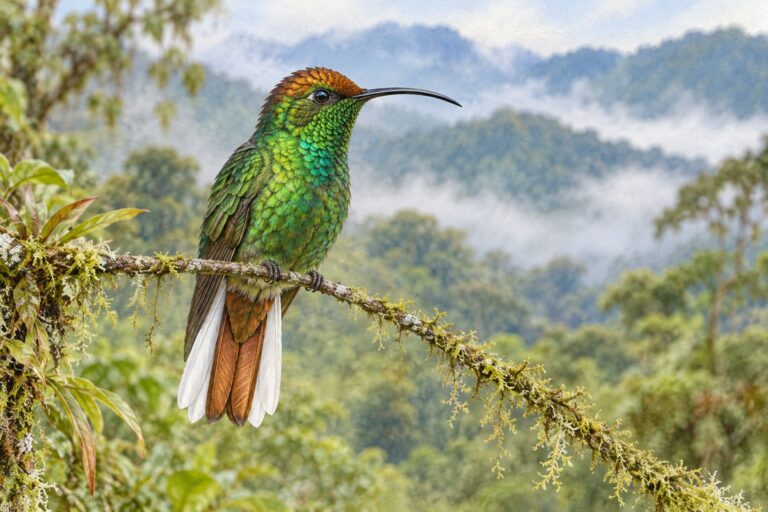
Coppery-headed Emerald

Spanish name
Esmeralda de coronilla cobriza
Scientific name
Microchera cupreiceps

What Do Pico & Tati Think?

Pico: “Does this tiny bird live only in Costa Rica?”

Tati: “Yes. Endemic means its natural range is limited to one place.”

Identification

Key Features of the Coppery-headed Emerald

  • Male coppery crown

  • White outer tail feathers

  • Small size and slightly curved bill

Habitat & range

Costa Rican endemic of humid northern and central mountain slopes, from the Guanacaste range toward the northern Reventazon valley. Seasonal descent occurs; dry coastal Guanacaste is unsuitable.

Conservation & care

Observe quietly from trails or established viewing areas. Give nests, roosts and feeding birds space. Do not handle, chase or lure birds with playback. Keep pets away from wildlife.

Threats & pressures

Protect native vegetation, reduce collision hazards around glass and keep cats away from birds. These are practical prevention priorities, not a claim of a measured decline at a specific Costa Rican site.

View full profile →

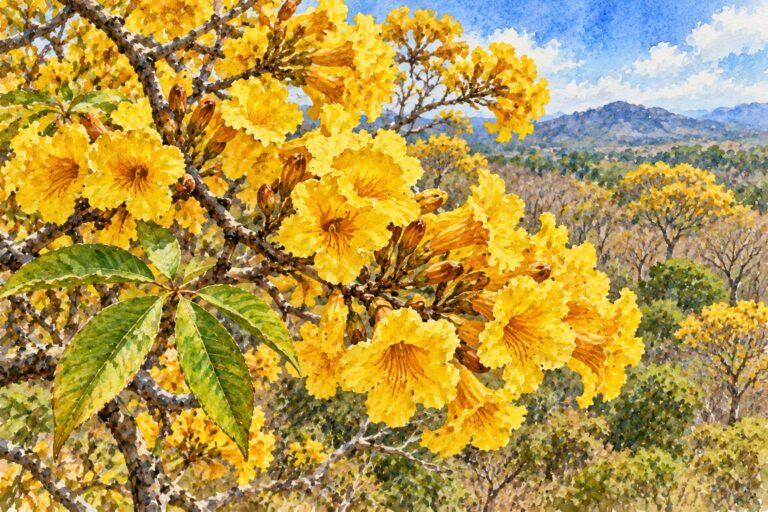
Nature Field Guide

Cortez Amarillo

Spanish name
Cortés amarillo / Cortez amarillo
Scientific name
Handroanthus ochraceus

What Do Pico & Tati Think?

Pico: “Golden trumpet flowers can brighten the branches of an almost leafless tree.”

Tati: “Let’s notice the leaves, flowers and habitat without disturbing the plant.”

Identification

Key Features of the Cortez Amarillo

  • Yellow trumpet-shaped flowers

  • Palmately compound leaves

  • Flowering branches may be nearly leafless

Habitat & range

Seasonally dry Pacific forests and wooded edges, including Guanacaste, the Central Pacific and the Térraba valley.

Conservation & care

Explore with an adult on permitted paths. Observe and photograph without picking leaves, flowers or fruits. Do not taste plants or let pets chew them. Avoid climbing trees and disturbing roots, seedlings or visiting wildlife.

Threats & pressures

Protect suitable habitat, mature trees and natural regeneration. Avoid trampling, unauthorized clearing and collection.

View full profile →

Nature Field Guide

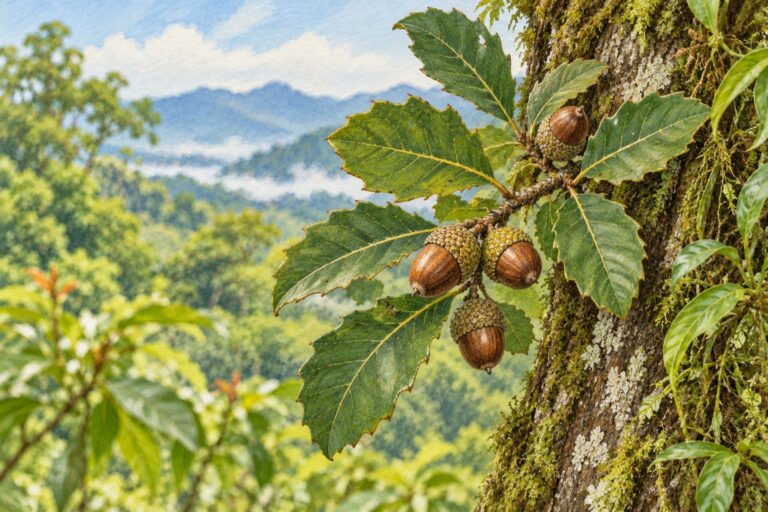
Costa Rican Oak

Spanish name
Roble / Encino
Scientific name
Quercus costaricensis

What Do Pico & Tati Think?

Pico: “Acorns and leathery leaves belong to this mountain-forest oak.”

Tati: “Let’s notice the leaves, flowers and habitat without disturbing the plant.”

Identification

Key Features of the Costa Rican Oak

  • Acorns in scaly cups

  • Simple leathery leaves

  • Mountain-forest habitat

Habitat & range

Highland forests of the Talamanca range, including Dota, Chirripó and adjoining mountain slopes.

Conservation & care

Explore with an adult on permitted paths. Observe and photograph without picking leaves, flowers or fruits. Do not taste plants or let pets chew them. Avoid climbing trees and disturbing roots, seedlings or visiting wildlife.

Threats & pressures

Protect suitable habitat, mature trees and natural regeneration. Avoid trampling, unauthorized clearing and collection.

View full profile →

Nature Field Guide

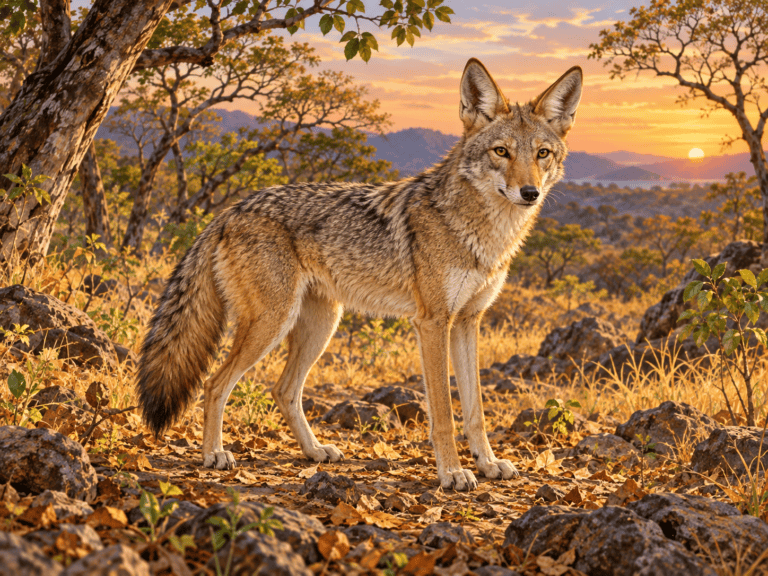
Coyote

Spanish name
Coyote
Scientific name
Canis latrans

What Do Pico & Tati Think?

Pico: “Its ears and bushy tail look different from a fox!”

Tati: “A wild animal should keep finding its own food.”

Identification

Key Features of the Coyote

  • Pointed muzzle and large upright ears.

  • Mixed gray-brown coat with paler underside.

  • Bushy tail usually carried low.

Habitat & range

Sierra Zapote’s forest-edge landscape in Las Juntas, Abangares, and other Guanacaste lowlands.

Conservation & care

Keep a respectful distance and leave an open route for the animal. Stay on authorized paths, secure food and rubbish, and observe without feeding, touching, baiting or chasing.

View full profile →

Nature Field Guide

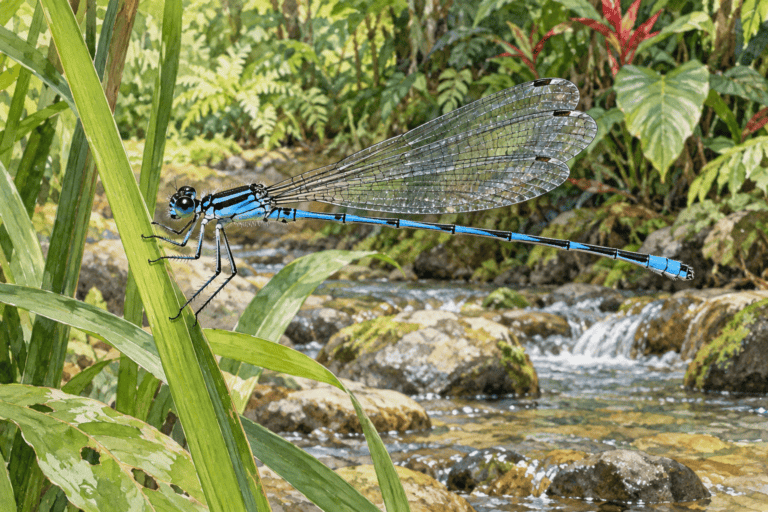
Damselflies

Spanish name
Caballitos del diablo
Scientific name
Odonata: Zygoptera — group card

What Do Pico & Tati Think?

Pico: “Let's look closely at the damselflies!”

Tati: “We can compare its shape and markings without touching it.”

Identification

Key Features of the Damselflies

  • Slender body

  • widely separated eyes

  • many fold wings above abdomen

Habitat & range

Vegetation near ponds, wetlands and streams; individual species use different waters.

Conservation & care

Observe without collecting, handling or disturbing insects or nests. Stay on permitted paths. Leave caterpillars and their food plants in place.

View full profile →

Nature Field Guide

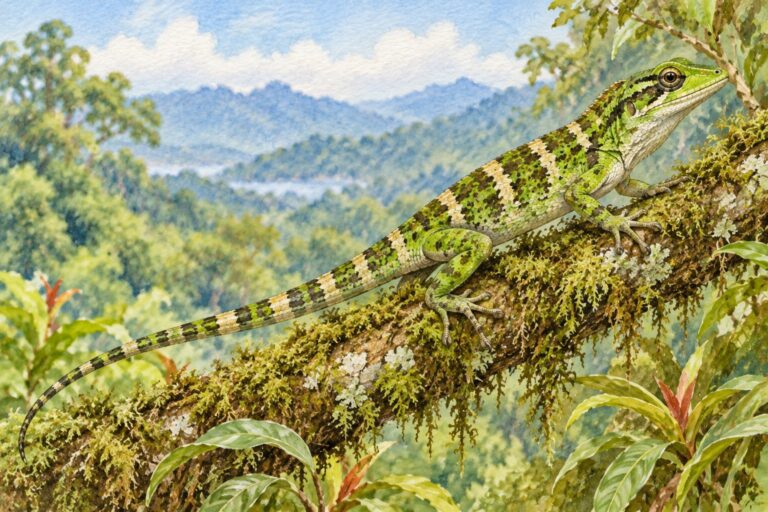
Decorated Anole

Spanish name
Anolis decorado / Lagartija gigante de bandas
Scientific name
Anolis insignis

What Do Pico & Tati Think?

Pico: “What helps this reptile fit into its habitat?”

Tati: “Let’s look at its shape, colors and surroundings while giving it plenty of space.”

Identification

Key Features of the Decorated Anole

  • Large anole with a broad head

  • Green body with pale markings

  • Long tail and tree-perching posture

Habitat & range

Humid foothill and montane forests, including the Guanacaste volcanic range and the central mountains. Documented at San Gerardo Biological Station in Área de Conservación Guanacaste.

Conservation & care

Observe with an adult from permitted paths. Do not touch, chase, catch or feed reptiles. Leave bark, logs, stones and leaf litter in place. Keep pets away and allow an open escape route.

Threats & pressures

Protect connected habitat and natural shelters. Avoid collection, unnecessary clearing and deliberate killing. Leave wildlife in place and support responsible observation.

View full profile →

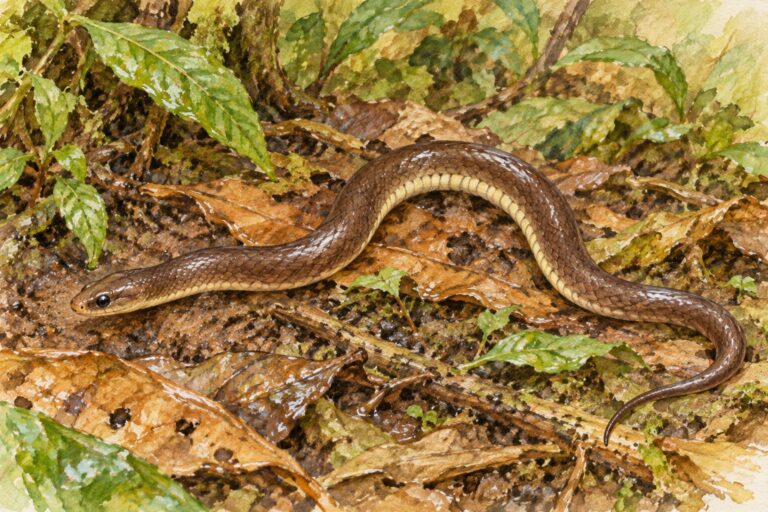
Nature Field Guide

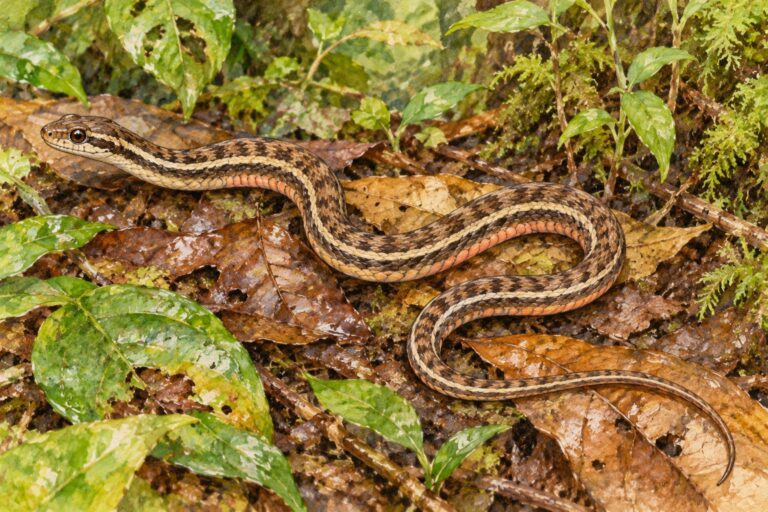
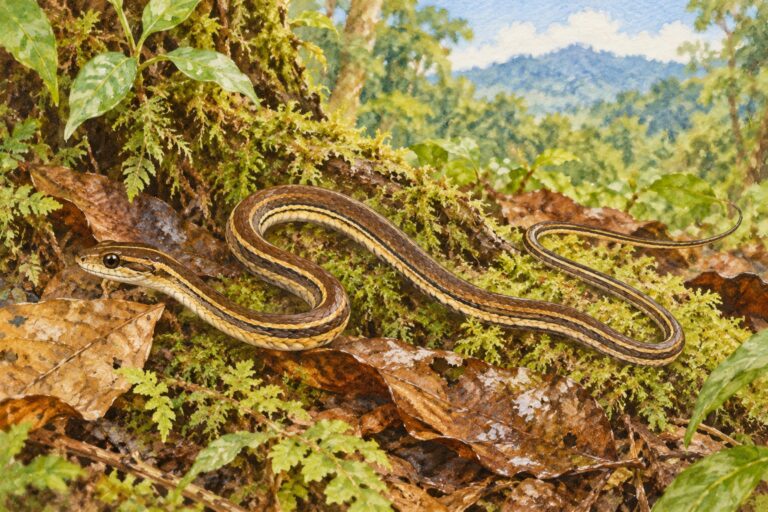
Decorated Forest Snake

Spanish name
Hojarasquera rayada
Scientific name
Rhadinaea decorata

What Do Pico & Tati Think?

Pico: “What can we learn from this reptile’s shape?”

Tati: “Let’s notice its markings and habitat while leaving it plenty of space.”

Identification

Key Features of the Decorated Forest Snake

  • Small slender brown body

  • Fine pale and dark lengthwise stripes

  • Forest-floor camouflage

Habitat & range

Humid Caribbean and Pacific forests and foothills, including northern lowlands and southwestern Costa Rica.

Conservation & care

Observe only from a distance with an adult or qualified guide. Never touch, catch, feed, corner or move any snake. Keep children and pets away. Colors, head shape and pupil shape must never be used to decide a snake is safe.

Threats & pressures

Protect natural shelters and connected habitat. Avoid collection, unnecessary clearing and deliberate killing. Leave wildlife in its habitat and support responsible observation.

View full profile →

Nature Field Guide

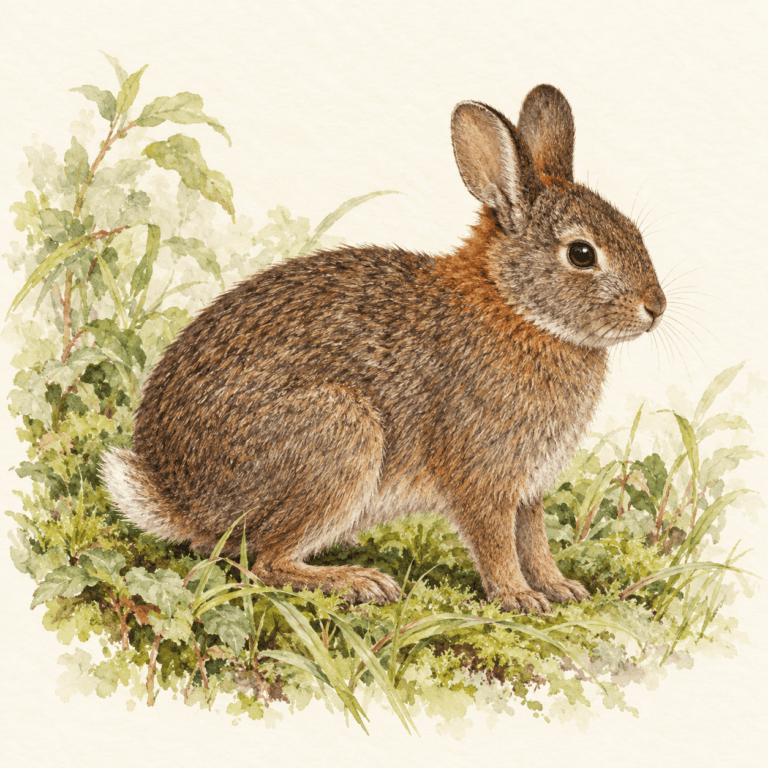
Dice’s Cottontail

Spanish name
Conejo de Dice
Scientific name
Sylvilagus dicei

What Do Pico & Tati Think?

Dice's cottontail is a mountain rabbit found in Costa Rica and western Panama.

Identification

Key Features of the Dice’s Cottontail

  • Small brown rabbit with fairly short ears.

  • Often a darker or reddish area around the nape.

  • Highland locality is important; appearance alone may be insufficient.

Habitat & range

Costa Rican highlands, including the Talamanca mountain region.

Conservation & care

Explore with an adult or local guide. Observe quietly from a distance, stay on established trails and leave shelter undisturbed. Do not feed, touch, capture or corner wildlife. Keep pets away.

Conservation assessment

Global IUCN category reported by Mammal Diversity Database, checked October 2026. Vulnerable means assessed as facing a high risk of extinction in the wild; it does not mean every local population has the same condition.

View full profile →

Nature Field Guide

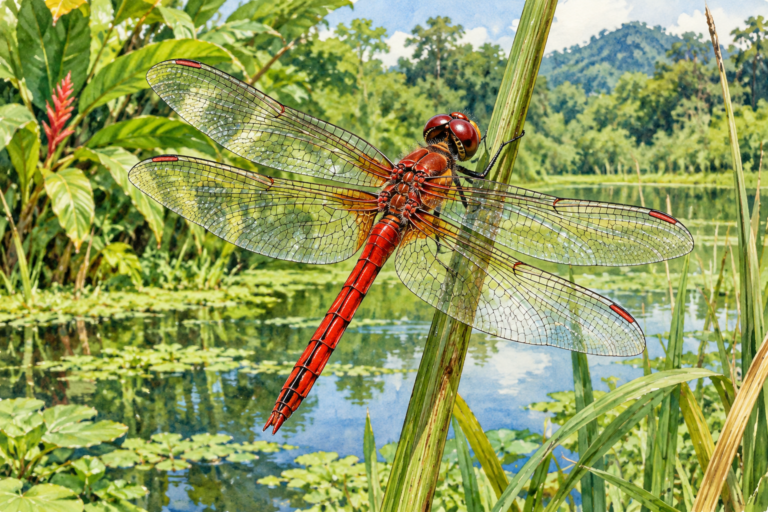
Dragonflies

Spanish name
Libélulas
Scientific name
Odonata: Anisoptera — group card

What Do Pico & Tati Think?

Pico: “Let's look closely at the dragonflies!”

Tati: “We can compare its shape and markings without touching it.”

Identification

Key Features of the Dragonflies

  • Large eyes

  • two pairs of wings

  • wings usually held open at rest

Habitat & range

Vegetation near ponds, wetlands and streams; individual species use different waters.

Conservation & care

Observe without collecting, handling or disturbing insects or nests. Stay on permitted paths. Leave caterpillars and their food plants in place.

View full profile →

Nature Field Guide

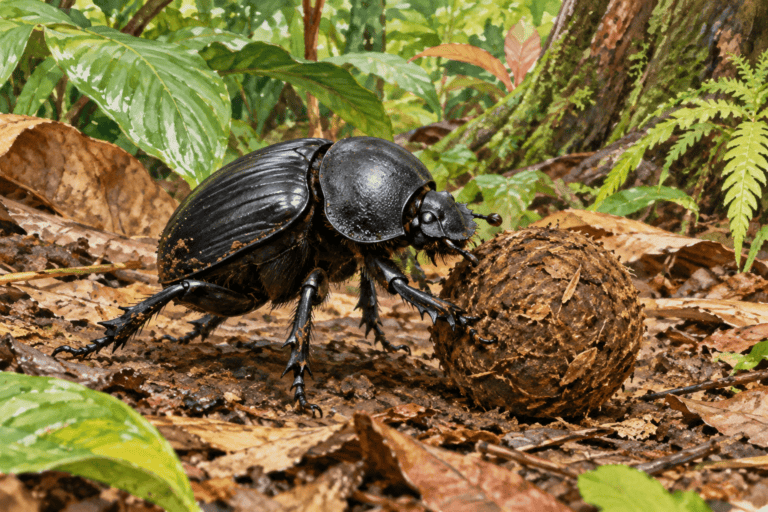
Dung Beetles

Spanish name
Escarabajos estercoleros
Scientific name
Scarabaeinae — subfamily card

What Do Pico & Tati Think?

Pico: “Let's look closely at the dung beetles!”

Tati: “We can compare its shape and markings without touching it.”

Identification

Key Features of the Dung Beetles

  • Compact beetle body

  • digging legs

  • some species roll dung balls

Habitat & range

Suitable forest, garden or open habitats; distribution varies with habitat and species.

Conservation & care

Observe without collecting, handling or disturbing insects or nests. Stay on permitted paths. Leave caterpillars and their food plants in place.

View full profile →

Nature Field Guide

Ecuadorian Milksnake

Spanish name
Falsa coral / Serpiente de leche
Scientific name
Lampropeltis micropholis

What Do Pico & Tati Think?

Pico: “What can we learn from this reptile’s shape?”

Tati: “Let’s notice its markings and habitat while leaving it plenty of space.”

Identification

Key Features of the Ecuadorian Milksnake

  • Young animals may have red, pale and dark bands

  • Smooth-looking scales

  • Appearance can darken with age

Habitat & range

Eastern and southern Costa Rican forest landscapes and mountain slopes; province assignments refer to suitable habitat rather than all parts of each province.

Conservation & care

Observe only from a distance with an adult or qualified guide. Never touch, catch, feed, corner or move any snake. Keep children and pets away. Colors, head shape and pupil shape must never be used to decide a snake is safe.

Threats & pressures

Protect natural shelters and connected habitat. Avoid collection, unnecessary clearing and deliberate killing. Leave wildlife in its habitat and support responsible observation.

View full profile →

Nature Field Guide

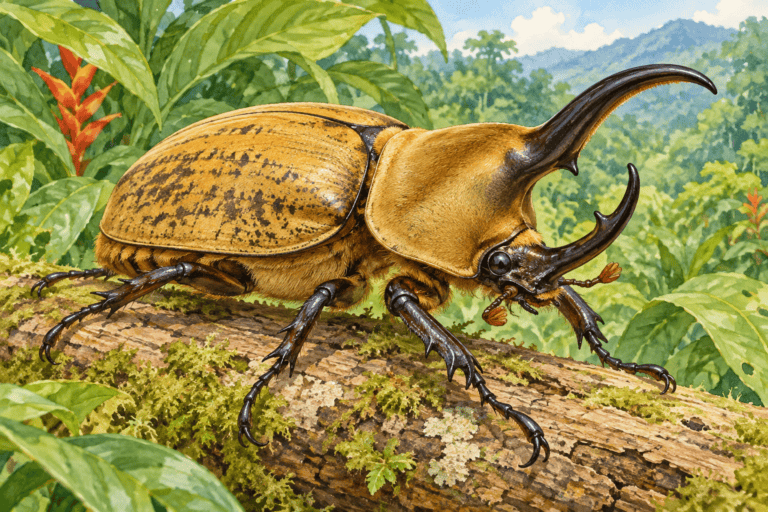
Elephant Beetle

Spanish name
Escarabajo elefante
Scientific name
Megasoma elephas

What Do Pico & Tati Think?

Pico: “Let's look closely at the elephant beetle!”

Tati: “We can compare its shape and markings without touching it.”

Identification

Key Features of the Elephant Beetle

  • Large rounded beetle

  • fine golden body hairs

  • males have a forward horn

Habitat & range

Most often associated with lowland wooded habitats; larvae develop in decaying wood and damp plant material. A documented Tortuguero record supports Caribbean rainforest habitat. A Costa Rican specialist account places most records below 500 m, with some to 1,500 m. Existing broad region tags require further locality checks and should not be read as presence throughout the highlands.

Conservation & care

Observe without collecting, handling or disturbing insects or nests. Stay on permitted paths. Leave caterpillars and their food plants in place.

View full profile →

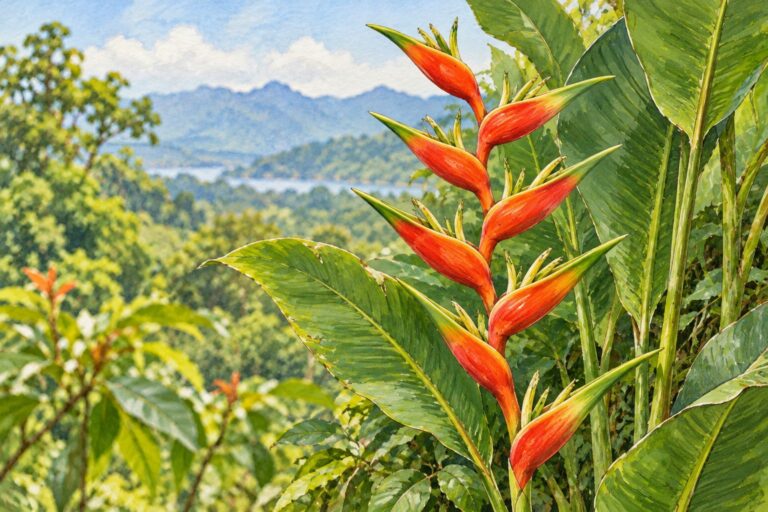
Nature Field Guide

Expanded Lobster Claw

Spanish name
Platanilla / Caliguate
Scientific name
Heliconia latispatha

What Do Pico & Tati Think?

Pico: “An upright open arrangement of colorful bracts rises among broad green leaves.”

Tati: “Let’s notice the leaves, flowers and habitat without disturbing the plant.”

Identification

Key Features of the Expanded Lobster Claw

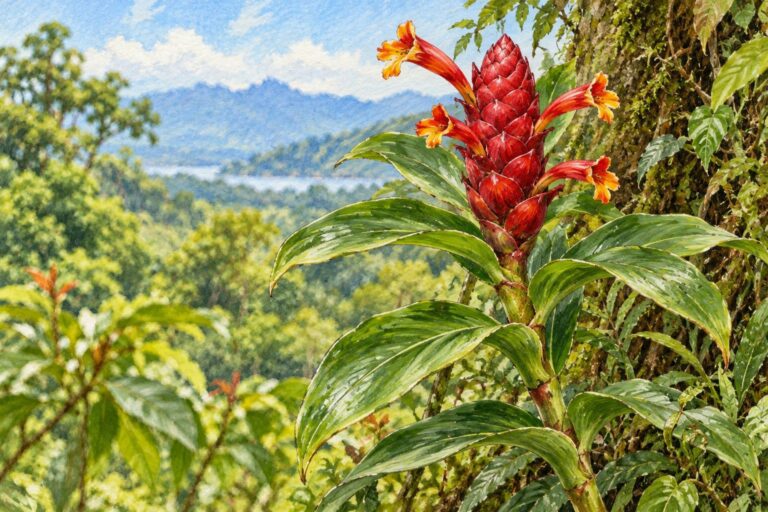
  • Broad banana-like leaves

  • Upright open inflorescence

  • Separated orange-to-red bracts holding small flowers

Habitat & range

Both slopes, including Guanacaste, the Northern Plains, Caribbean, Central Pacific and Osa; also cultivated in gardens.

Conservation & care

Explore with an adult on permitted paths. Observe and photograph without picking leaves, flowers or fruits. Do not taste plants or let pets chew them. Avoid climbing trees and disturbing roots, seedlings or visiting wildlife.

Threats & pressures

Protect suitable habitat, mature trees and natural regeneration. Avoid trampling, unauthorized clearing and collection.

View full profile →

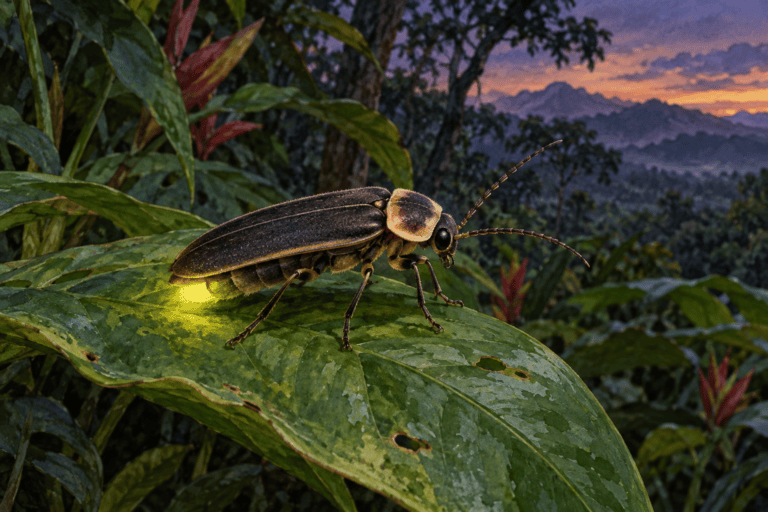
Nature Field Guide

Fireflies

Spanish name
Luciérnagas
Scientific name
Lampyridae — family card

What Do Pico & Tati Think?

Pico: “Let's look closely at the fireflies!”

Tati: “We can compare its shape and markings without touching it.”

Identification

Key Features of the Fireflies

  • Soft beetle wing covers

  • some show glowing abdominal segments

  • light patterns vary

Habitat & range

Suitable forest, garden or open habitats; distribution varies with habitat and species.

Conservation & care

Observe without collecting, handling or disturbing insects or nests. Stay on permitted paths. Leave caterpillars and their food plants in place.

View full profile →

Nature Field Guide

Forest Flame Snake

Spanish name
Falsa coral de bosque
Scientific name
Oxyrhopus petolarius

What Do Pico & Tati Think?

Pico: “What helps this reptile fit into its habitat?”

Tati: “Let’s look at its shape, colors and surroundings while giving it plenty of space.”

Identification

Key Features of the Forest Flame Snake

  • Dark head

  • Red-to-orange areas with dark crossbands

  • Slender body with variable markings

Habitat & range

Humid Caribbean-slope and southern Pacific forests and their edges in Costa Rica.

Conservation & care

Observe from a distance with an adult or qualified guide. Do not touch, catch, corner, feed or move any snake. Keep children and pets away. Colors, head shape and pupil shape must never be used to decide a snake is safe.

Threats & pressures

Protect connected habitat and natural shelters. Avoid collection, unnecessary clearing and deliberate killing. Leave wildlife in place and support responsible observation.

View full profile →

Nature Field Guide

Green Heron

Spanish name
Garcilla verde
Scientific name
Butorides virescens

What Do Pico & Tati Think?

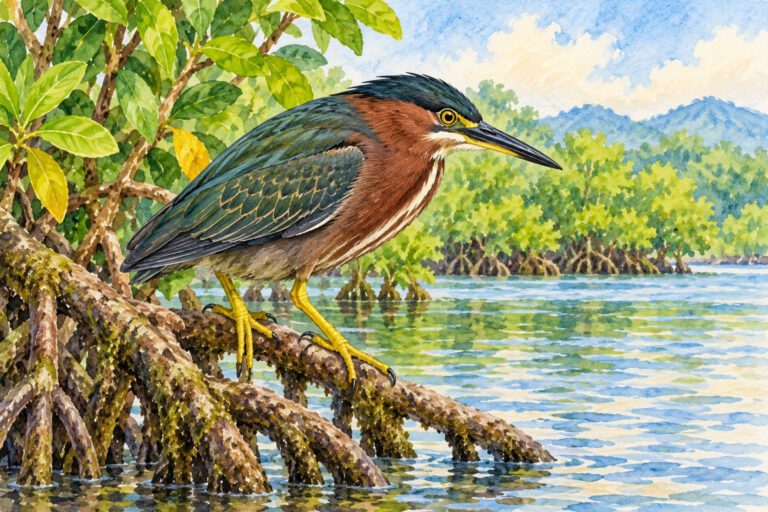
A small hunched shape almost disappears among the roots. Pico and Tati learn that patient looking beats noisy searching.

Identification

Key Features of the Green Heron

  • Small hunched silhouette

  • Greenish back and chestnut neck

  • Straight pointed bill and yellowish legs

Habitat & range

Scan shallow water, quiet mangrove channels and vegetated wetland margins from an established viewpoint. Follow a local guide’s directions around estuaries.

Conservation & care

Give feeding and resting birds space. If a bird stops feeding, repeatedly looks at you or moves away, increase your distance. Keep dogs away from flocks, avoid playback and feeding, and leave nests and natural shoreline debris undisturbed.

View full profile →

Nature Field Guide

Green Lacewings

Spanish name
Crisopas verdes
Scientific name
Chrysopidae — family card

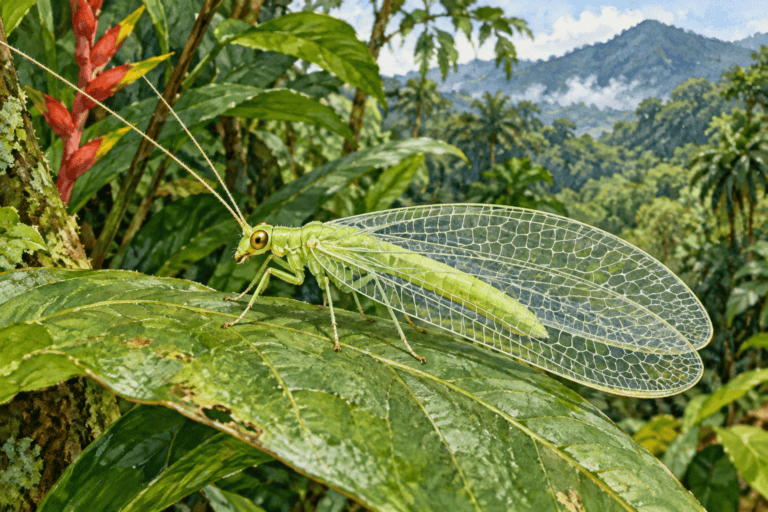
What Do Pico & Tati Think?

Pico: “Let's look closely at the green lacewings!”

Tati: “We can compare its shape and markings without touching it.”

Identification

Key Features of the Green Lacewings

  • Delicate green body

  • finely veined wings

  • long antennae

Habitat & range

Suitable forest, garden or open habitats; distribution varies with habitat and species.

Conservation & care

Observe without collecting, handling or disturbing insects or nests. Stay on permitted paths. Leave caterpillars and their food plants in place.

View full profile →

Nature Field Guide

Green Ratsnake

Spanish name
Ratonera / Culebra ratonera
Scientific name
Senticolis triaspis

What Do Pico & Tati Think?

Pico: “What helps this reptile fit into its habitat?”

Tati: “Let’s look at its shape, colors and surroundings while giving it plenty of space.”

Identification

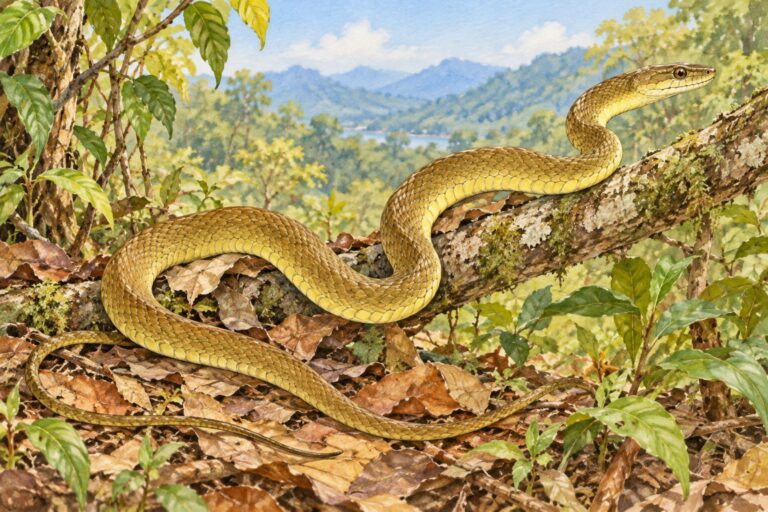
Key Features of the Green Ratsnake

  • Long body and elongated head

  • Adults may be tan, golden or olive-brown

  • Juveniles show darker blotches

Habitat & range

Northwestern and western Pacific-slope woodland and forest, including the San Luis de Monteverde area.

Conservation & care

Observe from a distance with an adult or qualified guide. Do not touch, catch, corner, feed or move any snake. Keep children and pets away. Colors, head shape and pupil shape must never be used to decide a snake is safe.

Threats & pressures

Protect connected habitat and natural shelters. Avoid collection, unnecessary clearing and deliberate killing. Leave wildlife in place and support responsible observation.

View full profile →

Nature Field Guide

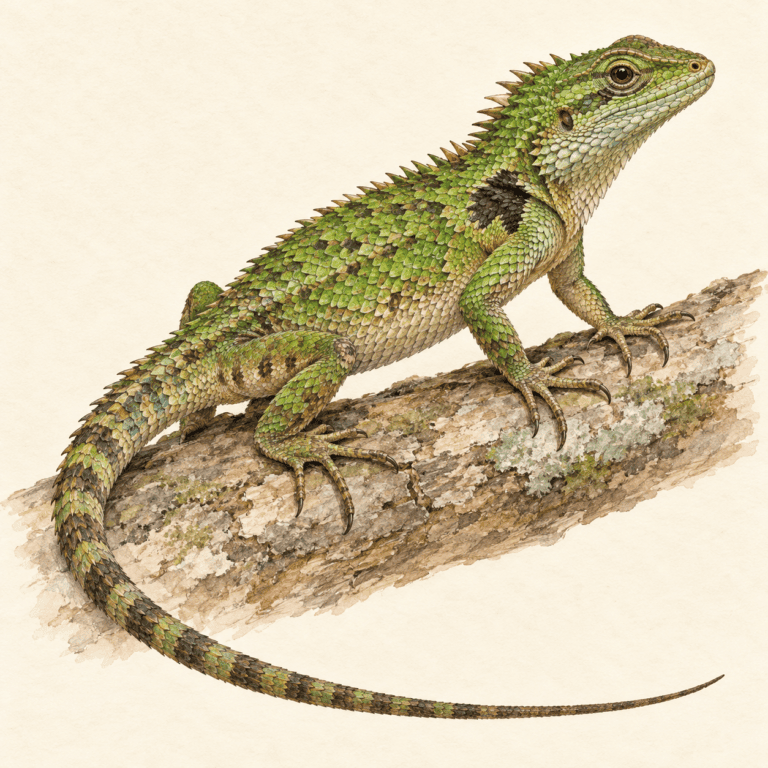
Green Spiny Lizard

Spanish name
Lagartija espinosa verde
Scientific name
Sceloporus malachiticus

What Do Pico & Tati Think?

Pico and Tati invite you to learn about the green spiny lizard. Compare a photo of its rough scales with a smooth-looking anole. Describe texture without touching either animal.

Identification

Key Features of the Green Spiny Lizard

  • Pointed, strongly textured body scales.

  • A dark shoulder marking.

  • Adult males often show green coloration.

Habitat & range

Costa Rican uplands, including suitable forest edges and rocky or open perches.

Conservation & care

Watch wildlife with an adult from a safe path. Do not touch, feed, capture or move reptiles, and keep pets away. Leave eggs, shelters and vegetation undisturbed.

View full profile →

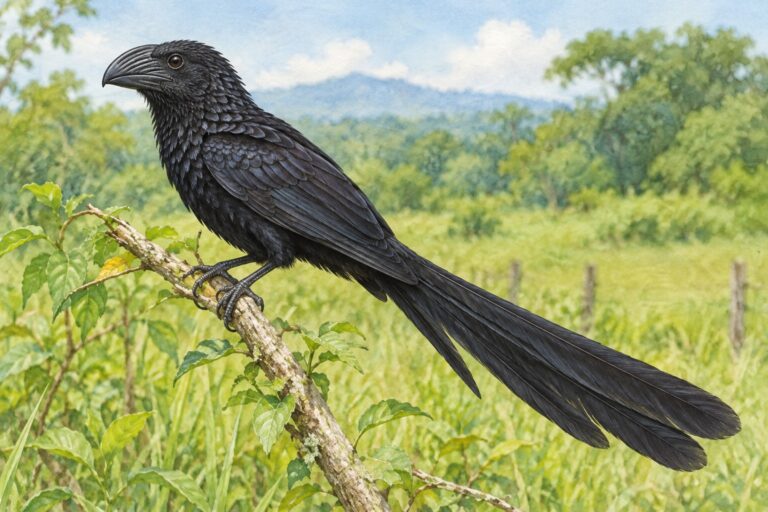
Nature Field Guide

Groove-billed Ani

Spanish name
Garrapatero piquiestriado / Tijo
Scientific name
Crotophaga sulcirostris

What Do Pico & Tati Think?

Pico: “Its beak has tiny lines!”

Tati: “Those grooves are helpful, but we need a clear view.”

Identification

Key Features of the Groove-billed Ani

  • All-black plumage

  • Long loosely held tail

  • Heavy upper bill with grooves

Habitat & range

Open and shrubby country, pasture margins and settled areas across Costa Rica, reaching middle elevations. It is less frequent in much of the southern Pacific, where Smooth-billed Ani predominates.

Conservation & care

Observe quietly from trails or established viewing areas. Give nests, roosts and feeding birds space. Do not handle, chase or lure birds with playback. Keep pets away from wildlife.

Threats & pressures

Protect native vegetation, reduce collision hazards around glass and keep cats away from birds. These are practical prevention priorities, not a claim of a measured decline at a specific Costa Rican site.

View full profile →

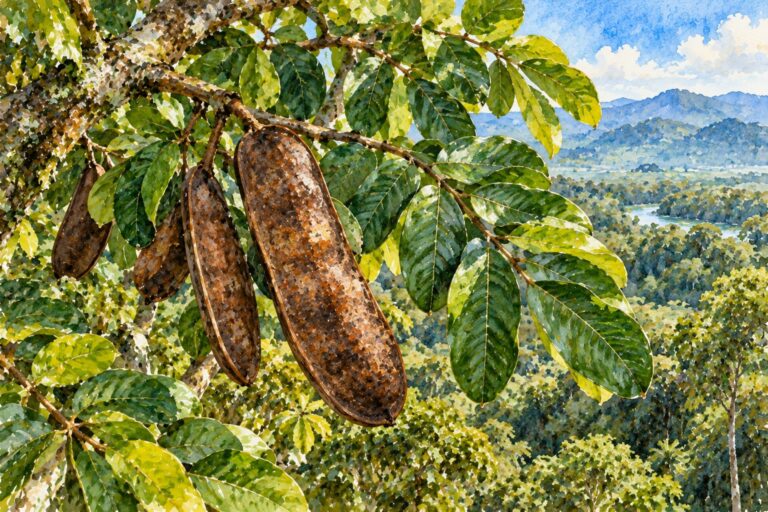
Nature Field Guide

Guapinol

Spanish name
Guapinol
Scientific name
Hymenaea courbaril

What Do Pico & Tati Think?

Pico: “Paired leaflets and hard brown pods identify a forest tree with an important wildlife role.”

Tati: “Let’s notice the leaves, flowers and habitat without disturbing the plant.”

Identification

Key Features of the Guapinol

  • Two leaflets in each compound leaf

  • Thick brown woody pods

  • Large spreading forest-tree form

Habitat & range

Pacific lowlands and western Central Valley; Guanacaste dry forest is one documented setting.

Conservation & care

Explore with an adult on permitted paths. Observe and photograph without picking leaves, flowers or fruits. Do not taste plants or let pets chew them. Avoid climbing trees and disturbing roots, seedlings or visiting wildlife.

Threats & pressures

Protect suitable habitat, mature trees and natural regeneration. Avoid trampling, unauthorized clearing and collection.

View full profile →

Nature Field Guide

Guaria Morada Orchid

Spanish name
Guaria morada
Scientific name
Guarianthe skinneri

What Do Pico & Tati Think?

Pico: “Costa Rica’s national flower carries pink-purple blossoms above fleshy leaves.”

Tati: “Let’s notice the leaves, flowers and habitat without disturbing the plant.”

Identification

Key Features of the Guaria Morada Orchid

  • Pink-purple orchid flowers with a shaped lip

  • Fleshy oblong leaves

  • Thickened stem bases and roots on a support

Habitat & range

Native Central American orchid, also cultivated in Costa Rican homes and gardens. The Greater Metropolitan Area supports both native flora records and a strong garden tradition.

Conservation & care

Do not collect wild orchids, remove roots or climb supporting trees. Observe with an adult from the ground. Any garden plant should come from a documented lawful nursery source.

Threats & pressures

Wild collection and habitat loss are conservation concerns. Leave forest plants in place and support protection of their habitat.

View full profile →

Nature Field Guide

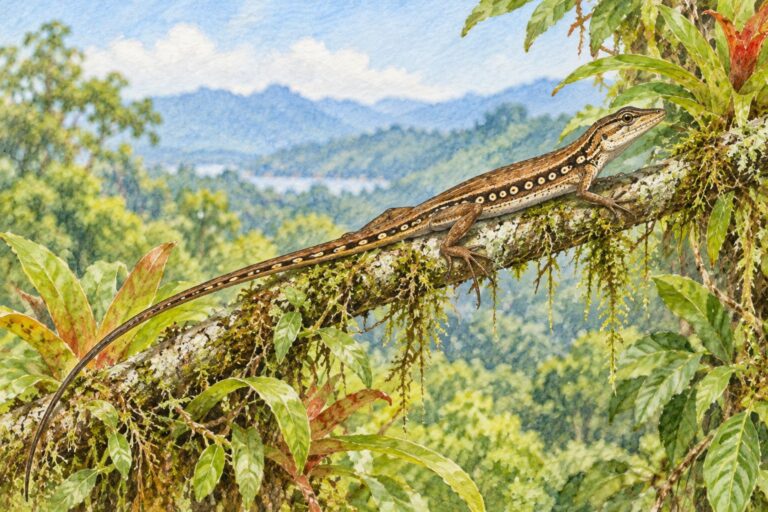
Heavy-footed Anole

Spanish name
Anolis de patas robustas
Scientific name
Anolis pachypus

What Do Pico & Tati Think?

Pico: “What can we learn from this reptile’s shape?”

Tati: “Let’s notice its markings and habitat while leaving it plenty of space.”

Identification

Key Features of the Heavy-footed Anole

  • Compact brown mountain anole

  • Stout-looking feet

  • Camouflaged body and long tapering tail

Habitat & range

Middle and upper elevations of the Talamanca mountain system in southern Costa Rica.

Conservation & care

Observe from permitted paths with an adult. Do not touch, chase, catch or feed reptiles. Leave bark, stones, logs and leaf litter in place. Keep pets away and give animals an open escape route.

Threats & pressures

Protect natural shelters and connected habitat. Avoid collection, unnecessary clearing and deliberate killing. Leave wildlife in its habitat and support responsible observation.

View full profile →

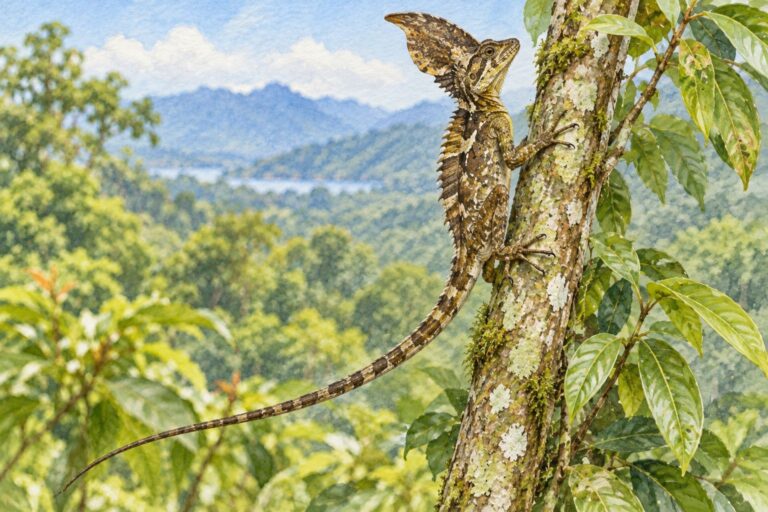
Nature Field Guide

Helmeted Iguana

Spanish name
Iguana de casco / Lagartija de casco
Scientific name
Corytophanes cristatus

What Do Pico & Tati Think?

Pico: “What can we learn from this reptile’s shape?”

Tati: “Let’s notice its markings and habitat while leaving it plenty of space.”

Identification

Key Features of the Helmeted Iguana

  • Tall helmetlike casque

  • Long tail and grasping limbs

  • Mottled bark-colored camouflage

Habitat & range

Humid Caribbean and Pacific forests and foothills, including northern wet forests and the southwest.

Conservation & care

Observe from permitted paths with an adult. Do not touch, chase, catch or feed reptiles. Leave bark, stones, logs and leaf litter in place. Keep pets away and give animals an open escape route.

Threats & pressures

Protect natural shelters and connected habitat. Avoid collection, unnecessary clearing and deliberate killing. Leave wildlife in its habitat and support responsible observation.

View full profile →

Nature Field Guide

High Anole

Spanish name
Anolis de altura
Scientific name
Anolis altae

What Do Pico & Tati Think?

Pico: “What can we learn from this reptile’s shape?”

Tati: “Let’s notice its markings and habitat while leaving it plenty of space.”

Identification

Key Features of the High Anole

  • Small slender brown body

  • Relatively short legs

  • Long tail and subtle camouflage

Habitat & range

Central volcanic highlands, including the Barva, Irazú and northern Alajuela mountain areas.

Conservation & care

Observe from permitted paths with an adult. Do not touch, chase, catch or feed reptiles. Leave bark, stones, logs and leaf litter in place. Keep pets away and give animals an open escape route.

Threats & pressures

Protect natural shelters and connected habitat. Avoid collection, unnecessary clearing and deliberate killing. Leave wildlife in its habitat and support responsible observation.

View full profile →

Nature Field Guide

Hoffmann’s Earth Snake

Spanish name
Culebra de tierra de Hoffmann
Scientific name
Geophis hoffmanni

What Do Pico & Tati Think?

Pico: “What can we learn from this reptile’s shape?”

Tati: “Let’s notice its markings and habitat while leaving it plenty of space.”

Identification

Key Features of the Hoffmann’s Earth Snake

  • Small head and dark slender body

  • Usually plain dark upper surfaces

  • Paler underside; young may have a pale neck mark

Habitat & range

Humid lowland and foothill habitats and central mountain slopes, including the Monteverde area.

Conservation & care

Observe only from a distance with an adult or qualified guide. Never touch, catch, feed, corner or move any snake. Keep children and pets away. Colors, head shape and pupil shape must never be used to decide a snake is safe.

Threats & pressures

Protect natural shelters and connected habitat. Avoid collection, unnecessary clearing and deliberate killing. Leave wildlife in its habitat and support responsible observation.

View full profile →

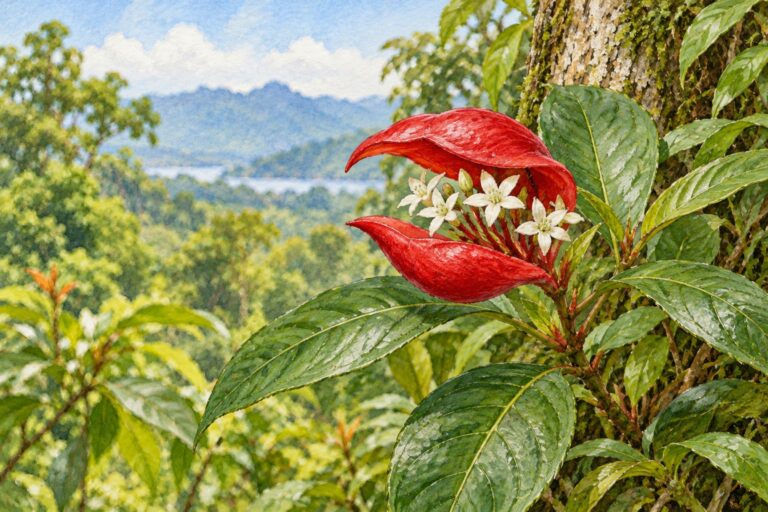
Nature Field Guide

Hot Lips Plant

Spanish name
Labios ardientes / Botón rojo
Scientific name
Palicourea elata

What Do Pico & Tati Think?

Pico: “Two bright red bracts surround tiny pale flowers in the forest understory.”

Tati: “Let’s notice the leaves, flowers and habitat without disturbing the plant.”

Identification

Key Features of the Hot Lips Plant

  • Two conspicuous red floral bracts

  • Small white or creamy flowers

  • Opposite glossy leaves

Habitat & range

Humid understory and forest edges on both slopes, with records from Guanacaste, Sarapiquí, Talamanca, Cartago and Osa.

Conservation & care

Explore with an adult on permitted paths. Observe and photograph without picking leaves, flowers or fruits. Do not taste plants or let pets chew them. Avoid climbing trees and disturbing roots, seedlings or visiting wildlife.

Threats & pressures

Protect suitable habitat, mature trees and natural regeneration. Avoid trampling, unauthorized clearing and collection.

View full profile →

Nature Field Guide

Jaguar

Spanish name
Jaguar / Tigre
Scientific name
Panthera onca

What Do Pico & Tati Think?

Pico: “A forest can hide a very large cat!”

Tati: “A camera-trap record helps us learn without approaching it.”

Identification

Key Features of the Jaguar

  • Broad head and muscular body.

  • Rosettes often contain smaller dark spots.

  • Relatively thick limbs and shorter tail than a puma.

Habitat & range

Tortuguero National Park’s protected forest landscape; ACG camera traps also document the species in Pitilla.

Conservation & care

Keep a respectful distance and leave an open route for the animal. Stay on authorized paths, secure food and rubbish, and observe without feeding, touching, baiting or chasing.

Threats & pressures

Forest loss, hunting of prey and retaliatory killing after livestock conflict are documented pressures.

Protection & recovery

Costa Rica’s government wildlife guide explicitly identifies this species as protected nationally. This legal designation is separate from its global IUCN category.

Conservation assessment

Global IUCN category as reported by the linked source, checked 7 October 2026. The source does not give an assessment year here. National legal protection and local abundance are separate questions.

View full profile →

Nature Field Guide

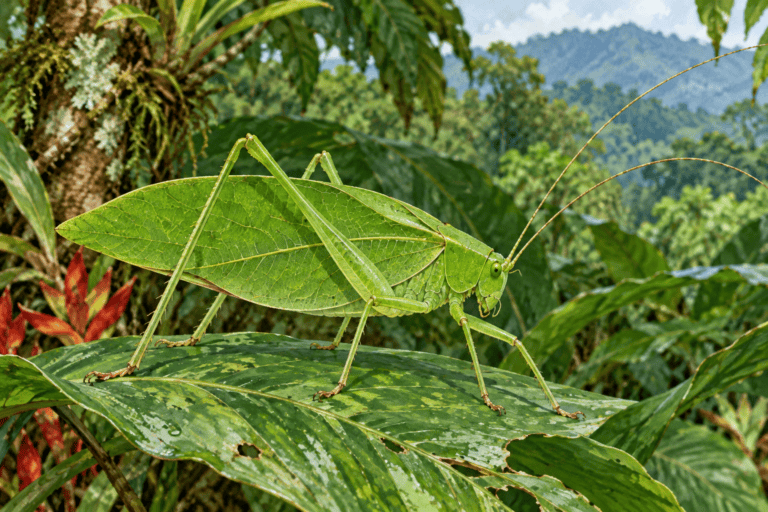
Katydids

Spanish name
Esperanzas
Scientific name
Tettigoniidae — family card

What Do Pico & Tati Think?

Pico: “Let's look closely at the katydids!”

Tati: “We can compare its shape and markings without touching it.”

Identification

Key Features of the Katydids

  • Very long antennae

  • leaf-like wings in many species

  • strong jumping hindlegs

Habitat & range

Suitable forest, garden or open habitats; distribution varies with habitat and species.

Conservation & care

Observe without collecting, handling or disturbing insects or nests. Stay on permitted paths. Leave caterpillars and their food plants in place.

View full profile →

Nature Field Guide

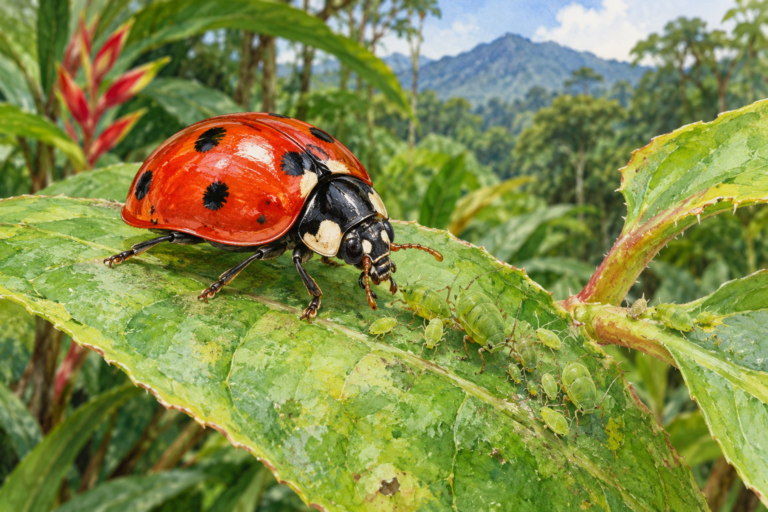
Lady Beetles

Spanish name
Mariquitas
Scientific name
Coccinellidae — family card

What Do Pico & Tati Think?

Pico: “Let's look closely at the lady beetles!”

Tati: “We can compare its shape and markings without touching it.”

Identification

Key Features of the Lady Beetles

  • Rounded beetle body

  • hard wing covers

  • spot patterns vary

Habitat & range

Suitable forest, garden or open habitats; distribution varies with habitat and species.

Conservation & care

Observe without collecting, handling or disturbing insects or nests. Stay on permitted paths. Leave caterpillars and their food plants in place.

View full profile →

Nature Field Guide

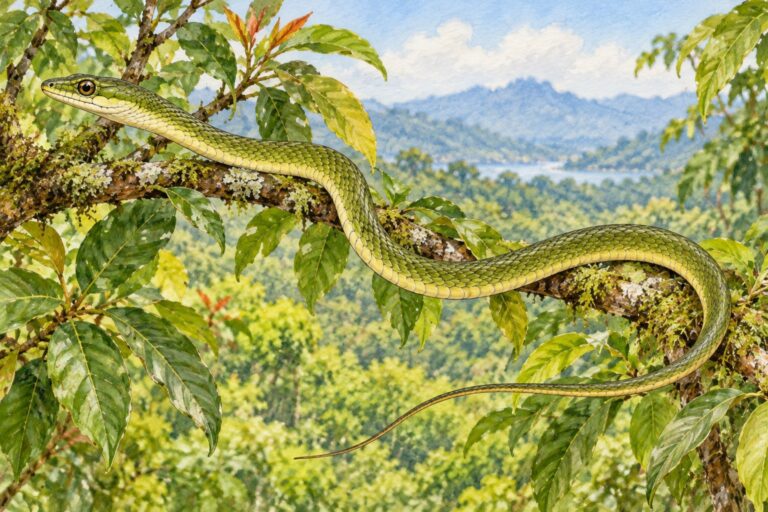
Linnaeus’s Sipo

Spanish name
Bejuquilla verde de bosque
Scientific name
Chironius exoletus

What Do Pico & Tati Think?

Pico: “What can we learn from this reptile’s shape?”

Tati: “Let’s notice its markings and habitat while leaving it plenty of space.”

Identification

Key Features of the Linnaeus’s Sipo

  • Long green-to-olive body

  • Large eyes and elongated head

  • Very long tapering tail

Habitat & range

Humid Caribbean and Pacific forests and adjoining foothills in Costa Rica.

Conservation & care

Observe only from a distance with an adult or qualified guide. Never touch, catch, feed, corner or move any snake. Keep children and pets away. Colors, head shape and pupil shape must never be used to decide a snake is safe.

Threats & pressures

Protect natural shelters and connected habitat. Avoid collection, unnecessary clearing and deliberate killing. Leave wildlife in its habitat and support responsible observation.

View full profile →

Nature Field Guide

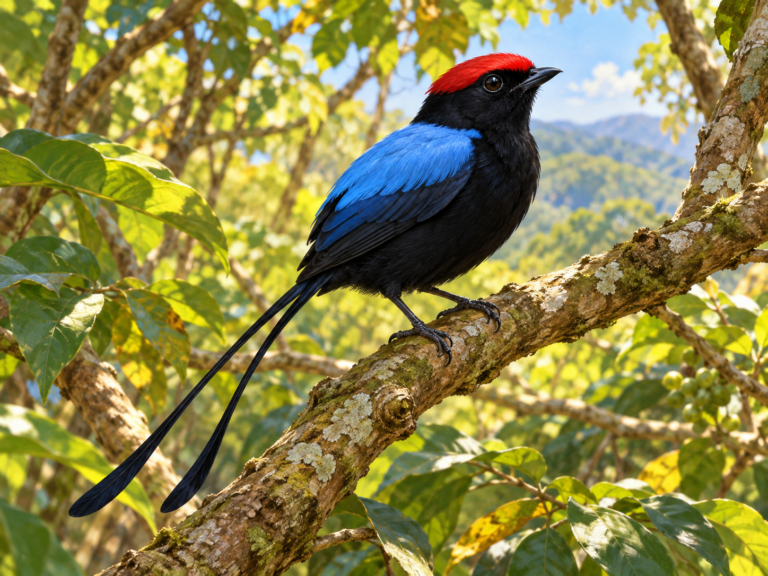
Long-tailed Manakin

Spanish name
Saltarín toledo
Scientific name
Chiroxiphia linearis

What Do Pico & Tati Think?

Pico: “Two birds are moving together on the branches!”

Tati: “We can watch the rhythm without interrupting.”

Identification

Key Features of the Long-tailed Manakin

  • Adult male: black body, blue back and red crown.

  • Long central tail feathers in males.

  • Female: less conspicuous greenish plumage.

Habitat & range

Gallery forest, mature secondary woodland and mangrove edges in the northern Pacific, extending toward Carara, the Central Valley and suitable Dota slopes. Shaded woodland is essential.

Conservation & care

Stay on authorized trails or viewing routes. Give birds space, keep voices low and leave nests undisturbed. Observe without bait, feeding or recorded calls.

View full profile →

Nature Field Guide

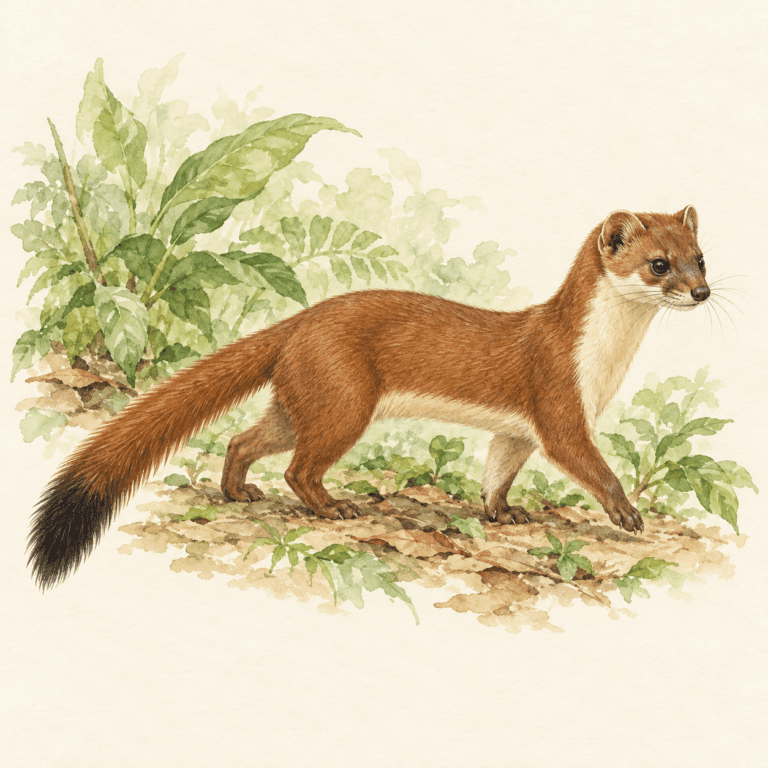
Long-tailed Weasel

Spanish name
Comadreja de cola larga
Scientific name
Neogale frenata

What Do Pico & Tati Think?

A long-tailed weasel has a narrow flexible body that helps it move through cover and investigate small spaces.

Identification

Key Features of the Long-tailed Weasel

  • Very slender body with short legs and a small head.

  • Brown upper coat and pale underside.

  • Long tail with a black tip.

Habitat & range

Wooded edges, scrub and other suitable partly open landscapes.

Conservation & care

Explore with an adult or local guide. Observe quietly from a distance, stay on established trails and leave shelter undisturbed. Do not feed, touch, capture or corner wildlife. Keep pets away.

View full profile →

Nature Field Guide

Many-scaled Anole

Spanish name
Anolis de muchas escamas
Scientific name
Anolis polylepis

What Do Pico & Tati Think?

Pico: “What helps this reptile fit into its habitat?”

Tati: “Let’s look at its shape, colors and surroundings while giving it plenty of space.”

Identification

Key Features of the Many-scaled Anole

  • Slender brown body

  • Long hind legs and a fine tail

  • Orange male throat fan when naturally displayed

Habitat & range

Humid Central and South Pacific forests and foothills, including San Vito. Osa populations have also been treated as Anolis osa in some references.

Conservation & care

Observe with an adult from permitted paths. Do not touch, chase, catch or feed reptiles. Leave bark, logs, stones and leaf litter in place. Keep pets away and allow an open escape route.

Threats & pressures

Protect connected habitat and natural shelters. Avoid collection, unnecessary clearing and deliberate killing. Leave wildlife in place and support responsible observation.

View full profile →

Nature Field Guide

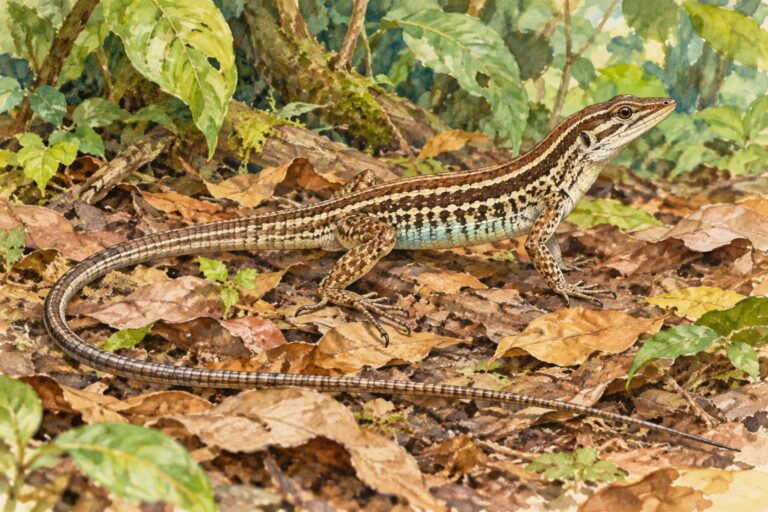
Middle American Ameiva

Spanish name
Ameiva centroamericana
Scientific name
Holcosus festivus

What Do Pico & Tati Think?

Pico: “What clues help us recognize this reptile?”

Tati: “Let’s notice its shape, markings and habitat from a respectful distance.”

Identification

Key Features of the Middle American Ameiva

  • Long tail and pointed snout

  • Strong limbs suited to ground movement

  • Contrasting stripes and patterned flanks

Habitat & range

Humid lowlands and forest-edge openings on both slopes, including the southwestern Pacific.

Conservation & care

Observe with an adult from permitted paths. Do not catch, chase, touch or feed reptiles. Leave bark, logs, rocks and leaf litter in place. Keep pets away and allow animals an open escape route.

Threats & pressures

Protect habitat connections and natural shelters. Avoid road mortality, collection and deliberate killing. Leave reptiles in their habitat rather than keeping or relocating them.

View full profile →

Nature Field Guide

Mimic False Coral Snake

Spanish name
Falsa coral imitadora
Scientific name
Erythrolamprus mimus

What Do Pico & Tati Think?

Pico: “What helps this reptile fit into its habitat?”

Tati: “Let’s look at its shape, colors and surroundings while giving it plenty of space.”

Identification

Key Features of the Mimic False Coral Snake

  • Contrasting red, dark and pale bands

  • Slender forest-snake body

  • Coral-snake resemblance

Habitat & range

Humid Caribbean and southwestern Pacific forests and foothills, including San Vito.

Conservation & care

Observe from a distance with an adult or qualified guide. Do not touch, catch, corner, feed or move any snake. Keep children and pets away. Colors, head shape and pupil shape must never be used to decide a snake is safe.

Threats & pressures

Protect connected habitat and natural shelters. Avoid collection, unnecessary clearing and deliberate killing. Leave wildlife in place and support responsible observation.

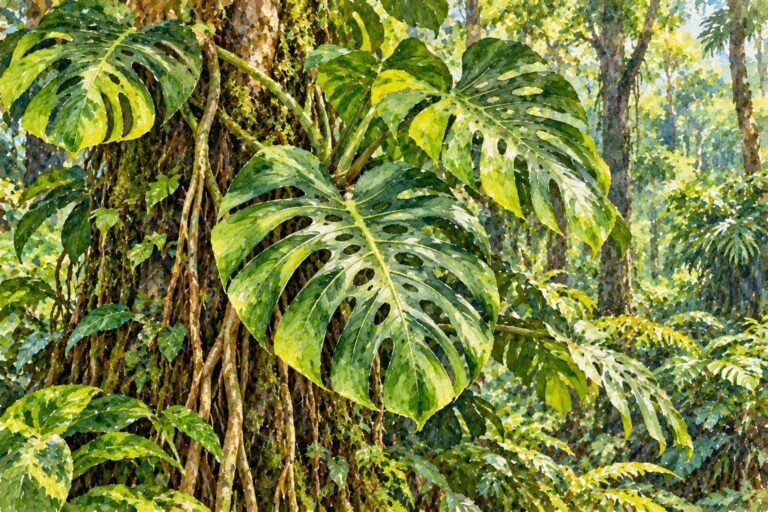
View full profile →

Nature Field Guide

Monstera

Spanish name
Costilla de Adán
Scientific name
Monstera deliciosa

What Do Pico & Tati Think?

Pico: “Large split leaves with natural holes make this cultivated climber easy to notice.”

Tati: “Let’s notice the leaves, flowers and habitat without disturbing the plant.”

Identification

Key Features of the Monstera

  • Large heart-shaped mature leaves

  • Natural holes and deep splits

  • Climbing stem with aerial roots

Habitat & range

Cultivated gardens and collections, including plants documented at the University of Costa Rica campus in San José.

Conservation & care

Observe without handling. Do not chew or taste leaves, stems or unripe fruit. Keep children and pets from mouthing plant parts. Ask the garden owner before approaching a planted specimen.

Threats & pressures

Protect suitable habitat, mature trees and natural regeneration. Avoid trampling, unauthorized clearing and collection.

View full profile →

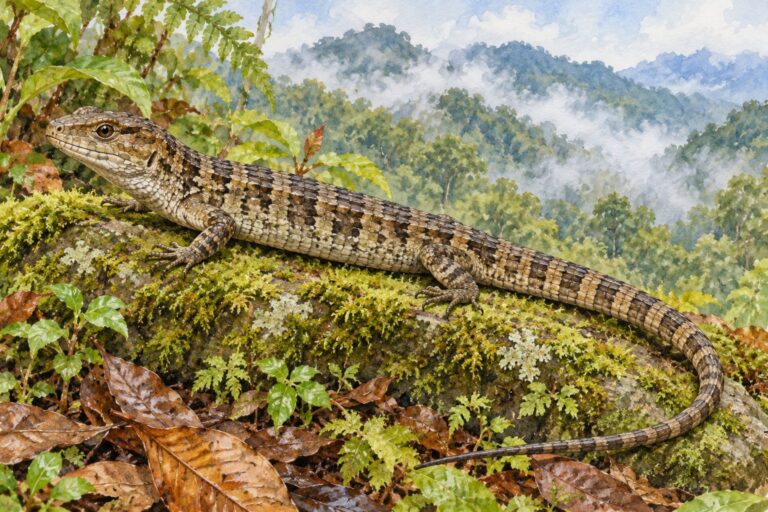
Nature Field Guide

Mountain Alligator Lizard

Spanish name
Dragón de altura
Scientific name
Abronia monticola

What Do Pico & Tati Think?

Pico: “What clues help us recognize this reptile?”

Tati: “Let’s notice its shape, markings and habitat from a respectful distance.”

Identification

Key Features of the Mountain Alligator Lizard

  • Elongated body with short legs

  • Distinct rows of armored-looking scales

  • Brown-gray highland camouflage

Habitat & range

Cool highlands, including the Irazú region and the Talamanca mountain range.

Conservation & care

Observe with an adult from permitted paths. Do not catch, chase, touch or feed reptiles. Leave bark, logs, rocks and leaf litter in place. Keep pets away and allow animals an open escape route.

Threats & pressures

Protect habitat connections and natural shelters. Avoid road mortality, collection and deliberate killing. Leave reptiles in their habitat rather than keeping or relocating them.

View full profile →

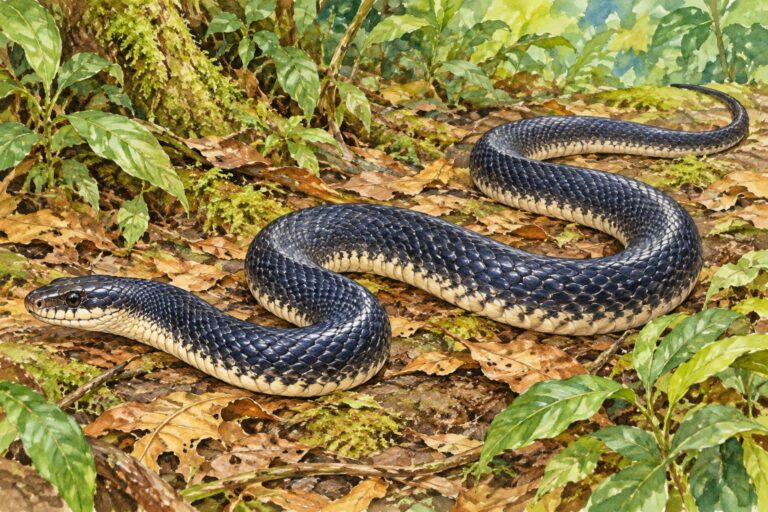
Nature Field Guide

Mussurana

Spanish name
Zopilota / Musurana
Scientific name
Clelia clelia

What Do Pico & Tati Think?

Pico: “What clues help us recognize this reptile?”

Tati: “Let’s notice its shape, markings and habitat from a respectful distance.”

Identification

Key Features of the Mussurana

  • Adult dark gray-to-black body

  • Paler underside

  • Juveniles may be red with a dark head and pale collar

Habitat & range

Lowland and lower foothill woodland on both slopes, including humid and secondary forest.

Conservation & care

Observe only from a distance with an adult or qualified guide. Do not touch, catch, corner or attempt to move any snake. Step back and tell your adult; keep children and pets away. Do not use colors, head shape or pupil shape to decide a snake is safe.

Threats & pressures

Protect habitat connections and natural shelters. Avoid road mortality, collection and deliberate killing. Leave reptiles in their habitat rather than keeping or relocating them.

View full profile →

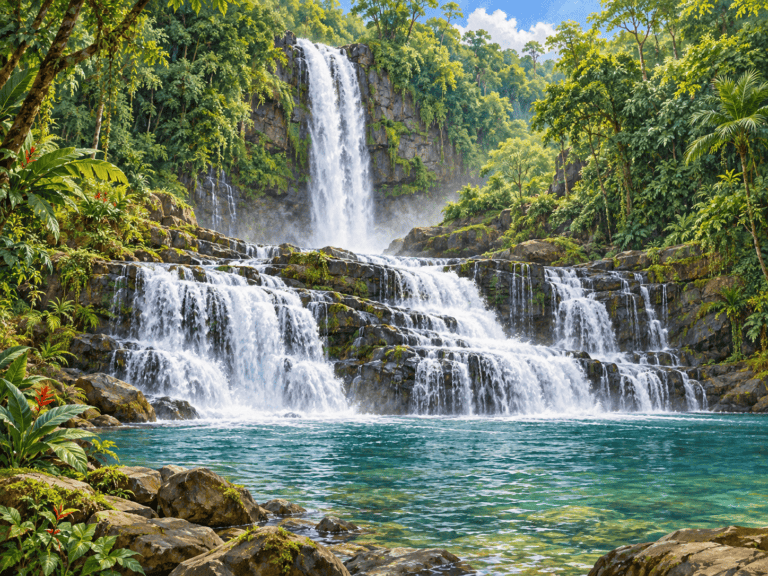
Nature Field Guide

Nauyaca Waterfalls

Spanish name
Cataratas Nauyaca
Scientific name

What Do Pico & Tati Think?

Join Pico and Tati to discover Nauyaca Waterfalls and learn how water shapes Costa Rica’s landscapes.

Identification

Key Features of the Nauyaca Waterfalls

  • A tall upper waterfall.

  • A lower fall spreading over steps of rock.

  • Forest around a broad canyon and pools.

Habitat & range

Barú area near Platanillo and Dominical. Look for the waterfall’s river, rock formations and surrounding vegetation from approved viewing areas.

Conservation & care

Visit with an adult and follow the site’s current access rules and staff guidance. Stay on authorized trails and behind barriers. Wet rocks, steep drops, strong currents and sudden rises in water can be dangerous. Do not jump from waterfalls or climb wet rock faces. Enter water only where explicitly permitted and conditions are approved by site staff. Leave plants, rocks and wildlife undisturbed and carry out all litter.

Plan Your Visit

Nauyaca Waterfall Nature Park — San Salvador office

Get Directions ↗

Getting There

For this entrance, approach via Route 243 to Tinamastes and follow the operator’s signs toward San Salvador and its office. Check in for the hiking or transport option.

Before You Go

Nauyaca has two separately operated entrances. This map selects Nauyaca Waterfall Nature Park, not the other operator. Match your ticket to this office and confirm the recommended vehicle route.
Visit information reviewed October 8, 2026. Confirm current access before travel.

View full profile →

Nature Field Guide

Neotropical Whipsnake

Spanish name
Sabanera / Corredora de sabana
Scientific name
Masticophis mentovarius

What Do Pico & Tati Think?

Pico: “What can we learn from this reptile’s shape?”

Tati: “Let’s notice its markings and habitat while leaving it plenty of space.”

Identification

Key Features of the Neotropical Whipsnake

  • Long slender body

  • Very long whiplike tail

  • Pale chin below a brown-to-olive head

Habitat & range

Northwestern and western Pacific-slope dry and open wooded habitats, including Guanacaste, western lowlands and suitable Central Valley areas.

Conservation & care

Observe only from a distance with an adult or qualified guide. Never touch, catch, feed, corner or move any snake. Keep children and pets away. Colors, head shape and pupil shape must never be used to decide a snake is safe.

Threats & pressures

Protect natural shelters and connected habitat. Avoid collection, unnecessary clearing and deliberate killing. Leave wildlife in its habitat and support responsible observation.

View full profile →

Nature Field Guide

Northern Forest Racer

Spanish name
Corredora de bosque
Scientific name
Dendrophidion percarinatum

What Do Pico & Tati Think?

Pico: “What can we learn from this reptile’s shape?”

Tati: “Let’s notice its markings and habitat while leaving it plenty of space.”

Identification

Key Features of the Northern Forest Racer

  • Slender body and long fine tail

  • Relatively large eyes

  • Narrow crossmarks along the body

Habitat & range

Humid lowland and foothill forests, including southwestern Costa Rica, Monteverde and Caribbean-slope localities.

Conservation & care

Observe only from a distance with an adult or qualified guide. Never touch, catch, feed, corner or move any snake. Keep children and pets away. Colors, head shape and pupil shape must never be used to decide a snake is safe.

Threats & pressures

Protect natural shelters and connected habitat. Avoid collection, unnecessary clearing and deliberate killing. Leave wildlife in its habitat and support responsible observation.

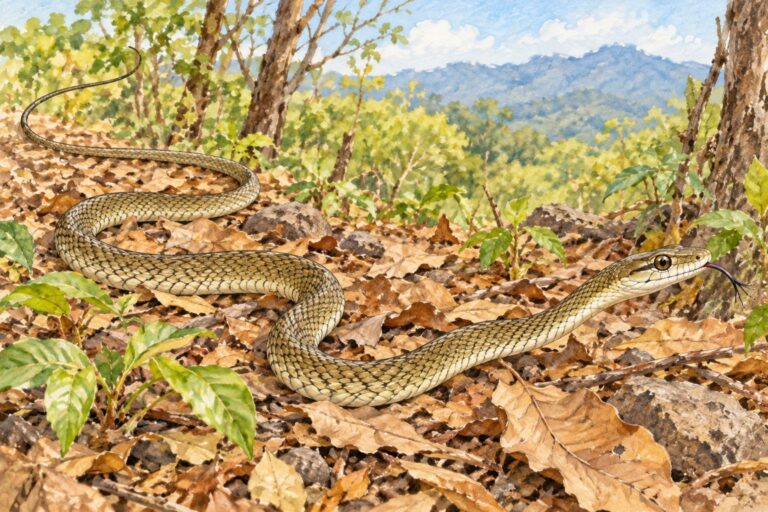
View full profile →

Nature Field Guide

Northern Naked-tailed Armadillo

Spanish name
Armadillo de cola desnuda
Scientific name
Cabassous centralis

What Do Pico & Tati Think?

The northern naked-tailed armadillo is a digging specialist.

What does Least Concern mean?

In the linked conservation assessment, this species does not qualify as threatened or near threatened with extinction. It still needs care: local populations and habitats can face problems even when the species has a lower extinction risk overall.

This label describes conservation status. It does not tell us whether a plant is safe for children or pets. Select the status button to read the assessment.

Identification

Key Features of the Northern Naked-tailed Armadillo

  • Dark armored body with flexible bands.

  • Mostly unarmored tail with thin, widely spaced plates.

  • Large digging claws and a relatively broad head.

Habitat & range

Forests and wooded edges, including documented Costa Rican secondary-forest sites.

Conservation & care

Explore with an adult or local guide. Observe quietly from a distance, stay on established trails and leave shelter undisturbed. Do not feed, touch, capture or corner wildlife. Keep pets away.

Conservation assessment

IUCN specialist-group account reports Least Concern; checked October 2026. The account stresses limited population knowledge. Least Concern does not mean the animal faces no threats.

View full profile →

Nature Field Guide

Northern Olingo

Spanish name
Olingo norteño
Scientific name
Bassaricyon gabbii

What Do Pico & Tati Think?

The northern olingo is a forest mammal that moves among branches and eats fruit, with nectar also reported in its diet.

Identification

Key Features of the Northern Olingo

  • Gray-brown fur, rounded ears and a fairly pointed muzzle.

  • Long bushy tail that is not prehensile.

  • Compare several features with a kinkajou; a quick glimpse may be inconclusive.

Habitat & range

Forested canopies, including documented Monteverde sites.

Conservation & care

Explore with an adult or local guide. Observe quietly from a distance, stay on established trails and leave shelter undisturbed. Do not feed, touch, capture or corner wildlife. Keep pets away.

View full profile →

Nature Field Guide

O’Shaughnessy’s Galliwasp

Spanish name
Lagartija de hojarasca
Scientific name
Mesoamericus bilobatus

What Do Pico & Tati Think?

Pico: “What helps this reptile fit into its habitat?”

Tati: “Let’s look at its shape, colors and surroundings while giving it plenty of space.”

Identification

Key Features of the O’Shaughnessy’s Galliwasp

  • Elongated smooth-looking body

  • Four short legs

  • Brown coloration and a long tail

Habitat & range

Humid forests of the Caribbean slope and southwestern Pacific, including a documented population at Tirimbina.

Conservation & care

Observe with an adult from permitted paths. Do not touch, chase, catch or feed reptiles. Leave bark, logs, stones and leaf litter in place. Keep pets away and allow an open escape route.

Threats & pressures

Protect connected habitat and natural shelters. Avoid collection, unnecessary clearing and deliberate killing. Leave wildlife in place and support responsible observation.

View full profile →

Nature Field Guide

Ocellated Anadia

Spanish name
Anadia ocelada
Scientific name
Anadia ocellata

What Do Pico & Tati Think?

Pico: “What can we learn from this reptile’s shape?”

Tati: “Let’s notice its markings and habitat while leaving it plenty of space.”

Identification

Key Features of the Ocellated Anadia

  • Elongated body and short limbs

  • Long tapering tail

  • Small eyelike flank markings

Habitat & range

Forested foothill and upland habitats in Costa Rica, including Monteverde, the Aguacate mountains and humid mountain slopes.

Conservation & care

Observe from permitted paths with an adult. Do not touch, chase, catch or feed reptiles. Leave bark, stones, logs and leaf litter in place. Keep pets away and give animals an open escape route.

Threats & pressures

Protect natural shelters and connected habitat. Avoid collection, unnecessary clearing and deliberate killing. Leave wildlife in its habitat and support responsible observation.

View full profile →

Nature Field Guide

Orchid Bees

Spanish name
Abejas de las orquídeas
Scientific name
Euglossini — group card

What Do Pico & Tati Think?

Pico: “Let's look closely at the orchid bees!”

Tati: “We can compare its shape and markings without touching it.”

Identification

Key Features of the Orchid Bees

  • Often metallic colors

  • two pairs of wings

  • males may visit scented flowers

Habitat & range

Suitable forest, garden or open habitats; distribution varies with habitat and species.

Conservation & care

Observe without collecting, handling or disturbing insects or nests. Stay on permitted paths. Leave caterpillars and their food plants in place.

View full profile →

Nature Field Guide

Osprey

Spanish name
Águila pescadora
Scientific name
Pandion haliaetus

What Do Pico & Tati Think?

Pico sees a fish hunter high above the water. Tati follows its shape with binoculars while keeping both feet on the trail.

Identification

Key Features of the Osprey

  • White head with broad dark eye stripe

  • Brown back and pale underparts

  • Hooked bill and powerful feet

  • Long angled wings in flight

Habitat & range

Scan exposed branches and the sky above fish-bearing rivers, estuaries and coastal water. Watch from a safe shore viewpoint.

Conservation & care

Give feeding and resting birds space. If a bird stops feeding, repeatedly looks at you or moves away, increase your distance. Keep dogs away from flocks, avoid playback and feeding, and leave nests and natural shoreline debris undisturbed.

View full profile →

Nature Field Guide

Picado’s Pitviper

Spanish name
Mano de piedra costarricense
Scientific name
Atropoides picadoi

What Do Pico & Tati Think?

Pico: “What helps this reptile fit into its habitat?”

Tati: “Let’s look at its shape, colors and surroundings while giving it plenty of space.”

Identification

Key Features of the Picado’s Pitviper

  • Very robust body

  • Broad head and rough-looking keeled scales

  • Dark angular blotches on a lighter background

Habitat & range

Wet Caribbean-slope forests, including northern foothills and the Central Volcanic and Talamanca mountain systems.

Conservation & care

VENOMOUS. Observe only from a distance with a qualified guide. Keep children and pets well away. Never approach, touch, catch or provoke this snake, and do not reach into nearby vegetation.

Threats & pressures

Protect connected habitat and natural shelters. Avoid collection, unnecessary clearing and deliberate killing. Leave wildlife in place and support responsible observation.

View full profile →

Nature Field Guide

Praying Mantises

Spanish name
Mantis
Scientific name
Mantodea — order card

What Do Pico & Tati Think?

Pico: “Let's look closely at the praying mantises!”

Tati: “We can compare its shape and markings without touching it.”

Identification

Key Features of the Praying Mantises

  • Triangular head

  • grasping front legs

  • alert upright posture

Habitat & range

Suitable forest, garden or open habitats; distribution varies with habitat and species.

Conservation & care

Observe without collecting, handling or disturbing insects or nests. Stay on permitted paths. Leave caterpillars and their food plants in place.

View full profile →

Nature Field Guide

Puffing Snake

Spanish name
Pajarera / Culebra pajarera
Scientific name
Phrynonax poecilonotus

What Do Pico & Tati Think?

Pico: “What can we learn from this reptile’s shape?”

Tati: “Let’s notice its markings and habitat while leaving it plenty of space.”

Identification

Key Features of the Puffing Snake

  • Large elongated forest snake

  • Variable colors and darker markings

  • Distinct head and long climbing body

Habitat & range

Forests and wooded edges on both Costa Rican slopes, including lowlands and foothills; documented in the Monteverde area.

Conservation & care

Observe only from a distance with an adult or qualified guide. Never touch, catch, feed, corner or move any snake. Keep children and pets away. Colors, head shape and pupil shape must never be used to decide a snake is safe.

Threats & pressures

Protect natural shelters and connected habitat. Avoid collection, unnecessary clearing and deliberate killing. Leave wildlife in its habitat and support responsible observation.

View full profile →

Nature Field Guide

Puma

Spanish name
Puma / León de montaña
Scientific name
Puma concolor

What Do Pico & Tati Think?

Pico: “This cat has no rosettes!”

Tati: “Its shape helps us tell it apart from a jaguar.”

Identification

Key Features of the Puma

  • Uniform tawny adult coat, without jaguar rosettes.

  • Long tail with a darker tip.

  • Relatively small head and long legs.

Habitat & range

Reserva Sierra Zapote, Las Juntas district, Abangares, and suitable forests elsewhere in Costa Rica.

Conservation & care

Keep a respectful distance and leave an open route for the animal. Stay on authorized paths, secure food and rubbish, and observe without feeding, touching, baiting or chasing.

Threats & pressures

Forest fragmentation and loss of prey are habitat-level pressures relevant to wide-ranging predators.

View full profile →

Nature Field Guide

Rainforest Hognosed Pitviper

Spanish name
Tamagá
Scientific name
Porthidium nasutum

What Do Pico & Tati Think?

Pico: “What helps this reptile fit into its habitat?”

Tati: “Let’s look at its shape, colors and surroundings while giving it plenty of space.”

Identification

Key Features of the Rainforest Hognosed Pitviper

  • Pointed upturned snout

  • Stout body and short tail

  • Dark blotches and a narrow back line

Habitat & range

Caribbean lowlands and foothills and southwestern Pacific wet forests, mainly below the higher mountain zones.

Conservation & care

VENOMOUS. Observe only from a distance with a qualified guide. Keep children and pets well away. Never approach, touch, catch or provoke this snake, and do not reach into nearby vegetation.

Threats & pressures

Protect connected habitat and natural shelters. Avoid collection, unnecessary clearing and deliberate killing. Leave wildlife in place and support responsible observation.

View full profile →

Nature Field Guide

Red-legged Honeycreeper

Spanish name
Mielero patirrojo
Scientific name
Cyanerpes cyaneus

What Do Pico & Tati Think?

Pico: “Why are its feet so red?”

Tati: “Those red legs help us identify it, even when the body colors differ.”

Identification

Key Features of the Red-legged Honeycreeper

  • Bright red legs

  • Slender decurved bill

  • Breeding male blue with turquoise crown

Habitat & range

Wooded lowlands, forest edges, gardens and plantations. Common in northern Pacific areas and parts of Rio Frio; elsewhere on the Caribbean slope it is more local. Also occurs in the southern Pacific.

Conservation & care

Observe quietly from trails or established viewing areas. Give nests, roosts and feeding birds space. Do not handle, chase or lure birds with playback. Keep pets away from wildlife.

Threats & pressures

Protect native vegetation, reduce collision hazards around glass and keep cats away from birds. These are practical prevention priorities, not a claim of a measured decline at a specific Costa Rican site.

View full profile →

Nature Field Guide

Redback Coffee Snake

Spanish name
Dormilona común / Culebra de cafetal
Scientific name
Ninia sebae

What Do Pico & Tati Think?

Pico: “What clues help us recognize this reptile?”

Tati: “Let’s notice its shape, markings and habitat from a respectful distance.”

Identification

Key Features of the Redback Coffee Snake

  • Red or brick-colored upper body

  • Dark head

  • Pale neck collar and small eyes

Habitat & range

Lowland and foothill ground cover in suitable wooded and disturbed habitats on both slopes.

Conservation & care

Observe only from a distance with an adult or qualified guide. Do not touch, catch, corner or attempt to move any snake. Step back and tell your adult; keep children and pets away. Do not use colors, head shape or pupil shape to decide a snake is safe.

Threats & pressures

Protect habitat connections and natural shelters. Avoid road mortality, collection and deliberate killing. Leave reptiles in their habitat rather than keeping or relocating them.

View full profile →

Nature Field Guide

Resplendent Quetzal

Spanish name
Quetzal
Scientific name
Pharomachrus mocinno

What Do Pico & Tati Think?

Pico: “Can you find green feathers among the green leaves?”

Tati: “Let’s watch the fruiting trees quietly.”

Identification

Key Features of the Resplendent Quetzal

  • Shimmering green upperparts and a red belly.

  • Adult males have very long upper-tail feathers.

  • Look in forest trees, especially where fruit is available.

Habitat & range

Forested mountains from the Tilaran range south through the Central and Talamanca ranges, principally cloud forest at suitable elevations. Lower-elevation seasonal movements need site-specific treatment.

Conservation & care

Stay on authorized trails or viewing routes. Give birds space, keep voices low and leave nests undisturbed. Observe without bait, feeding or recorded calls.

Threats & pressures

Forest loss and fragmentation can remove nesting cavities and interrupt access to seasonal feeding habitat.

Conservation assessment

American Bird Conservancy reports Near Threatened and a decreasing population trend. Source checked 7 October 2026. This is a global species category, not a count of birds in the tagged towns.

View full profile →

Nature Field Guide

Rhombic Cat-eyed Snake

Spanish name
Culebra ojo de gato / Escombrera
Scientific name
Leptodeira rhombifera

What Do Pico & Tati Think?

Pico: “What clues help us recognize this reptile?”

Tati: “Let’s notice its shape, markings and habitat from a respectful distance.”

Identification

Key Features of the Rhombic Cat-eyed Snake

  • Large eyes

  • Dark rhombic or saddle-shaped back blotches

  • Slender body and long tail

Habitat & range

Lowland and foothill habitats, with published Costa Rican observations in Guanacaste and the Pacific landscape.

Conservation & care

Observe only from a distance with an adult or qualified guide. Do not touch, catch, corner or attempt to move any snake. Step back and tell your adult; keep children and pets away. Do not use colors, head shape or pupil shape to decide a snake is safe.

Threats & pressures

Protect habitat connections and natural shelters. Avoid road mortality, collection and deliberate killing. Leave reptiles in their habitat rather than keeping or relocating them.

View full profile →

Nature Field Guide

Ringed Snail-eating Snake

Spanish name
Caracolera anillada
Scientific name
Sibon annulatus

What Do Pico & Tati Think?

Pico: “What clues help us recognize this reptile?”

Tati: “Let’s notice its shape, markings and habitat from a respectful distance.”

Identification

Key Features of the Ringed Snail-eating Snake

  • Slender body with contrasting rings

  • Large eyes

  • Branch-climbing posture

Habitat & range

Humid Caribbean-slope forest and foothills, with records around Cartago and northern mountain forests.

Conservation & care

Observe only from a distance with an adult or qualified guide. Do not touch, catch, corner or attempt to move any snake. Step back and tell your adult; keep children and pets away. Do not use colors, head shape or pupil shape to decide a snake is safe.

Threats & pressures

Protect habitat connections and natural shelters. Avoid road mortality, collection and deliberate killing. Leave reptiles in their habitat rather than keeping or relocating them.

View full profile →

Nature Field Guide

Roble de Sabana

Spanish name
Roble de sabana
Scientific name
Tabebuia rosea

What Do Pico & Tati Think?

Pico: “A native tree whose pink trumpet flowers brighten forest edges and open landscapes.”

Tati: “Let’s notice the leaves, flowers and habitat without disturbing the plant.”

Identification

Key Features of the Roble de Sabana

  • Pink or pale pink trumpet flowers

  • Five leaflets spreading from one point

  • Long narrow seed capsules

Habitat & range

Lowland forest and edges on both slopes; records include Guanacaste, the Central Pacific, Osa and the Caribbean lowlands.

Conservation & care

Explore with an adult on permitted paths. Observe and photograph without picking leaves, flowers or fruits. Do not taste plants or let pets chew them. Avoid climbing trees and disturbing roots, seedlings or visiting wildlife.

Threats & pressures

Protect suitable habitat, mature trees and natural regeneration. Avoid trampling, unauthorized clearing and collection.

View full profile →

Nature Field Guide

Salmon-bellied Racer

Spanish name
Corredora de vientre salmón
Scientific name
Mastigodryas melanolomus

What Do Pico & Tati Think?

Pico: “What helps this reptile fit into its habitat?”

Tati: “Let’s look at its shape, colors and surroundings while giving it plenty of space.”

Identification

Key Features of the Salmon-bellied Racer

  • Slender long-tailed body

  • Brown-to-olive upper surfaces

  • Pale or salmon-colored underside

Habitat & range

Pacific-slope forest, edges and foothill landscapes, including northwestern Costa Rica, San Luis de Monteverde and the South Pacific.

Conservation & care

Observe from a distance with an adult or qualified guide. Do not touch, catch, corner, feed or move any snake. Keep children and pets away. Colors, head shape and pupil shape must never be used to decide a snake is safe.

Threats & pressures

Protect connected habitat and natural shelters. Avoid collection, unnecessary clearing and deliberate killing. Leave wildlife in place and support responsible observation.

View full profile →

Nature Field Guide

Salvin’s Anole

Spanish name
Anolis de Salvin
Scientific name
Anolis salvini

What Do Pico & Tati Think?

Pico: “What can we learn from this reptile’s shape?”

Tati: “Let’s notice its markings and habitat while leaving it plenty of space.”

Identification

Key Features of the Salvin’s Anole

  • Short legs and compact outline

  • Mottled barklike pattern

  • Mountain-forest setting

Habitat & range

Pacific premontane and lower montane forests of Talamanca, from the central-southern highlands toward the Panama border.

Conservation & care

Observe from permitted paths with an adult. Do not touch, chase, catch or feed reptiles. Leave bark, stones, logs and leaf litter in place. Keep pets away and give animals an open escape route.

Threats & pressures

Protect natural shelters and connected habitat. Avoid collection, unnecessary clearing and deliberate killing. Leave wildlife in its habitat and support responsible observation.

View full profile →

Nature Field Guide

Scarlet Macaw

Spanish name
Lapa roja
Scientific name
Ara macao

What Do Pico & Tati Think?

Pico: “Those wings have three colors to discover!”

Tati: “Let’s listen, look up and give the pair room to fly.”

What does Least Concern mean?

In the linked conservation assessment, this species does not qualify as threatened or near threatened with extinction. It still needs care: local populations and habitats can face problems even when the species has a lower extinction risk overall.

This label describes conservation status. It does not tell us whether a plant is safe for children or pets. Select the status button to read the assessment.

Identification

Key Features of the Scarlet Macaw

  • Red body with yellow and blue wing feathers.

  • Long pointed tail and large pale upper bill.

  • Loud calls; birds may fly in pairs.

Habitat & range

Important populations occur around Carara and the Osa Peninsula. Guanacaste includes restored populations around Punta Islita; this does not imply occurrence throughout the region.

Seasonal Calendar

Breeding

Costa Rica; broad national window

Jan, Feb, Mar, Apr, Oct, Nov, Dec

Broad reported window, not a dated Carara nesting forecast.

Event source ↗

Conservation & care

Stay on authorized trails or viewing routes. Give birds space, keep voices low and leave nests undisturbed. Observe without bait, feeding or recorded calls.

Threats & pressures

Forest loss removes feeding and nesting trees. Capture for the pet trade also affects populations; global status does not describe every local population.

Conservation assessment

World Parrot Trust reports IUCN Least Concern; local declines are still documented. Source checked 7 October 2026. This is a global species category, not a count of birds in the tagged towns.

View full profile →

Nature Field Guide

Semipalmated Plover

Spanish name
Chorlitejo semipalmado
Scientific name
Charadrius semipalmatus

What Do Pico & Tati Think?

Pico follows a run, then a stop. Tati notices one breast band on a small round shorebird.

Identification

Key Features of the Semipalmated Plover

  • Small compact brown-and-white body

  • One dark breast band

  • Short bill and orange legs

  • Run-and-pause feeding

Habitat & range

Scan exposed shoreline feeding areas and nearby resting places with binoculars. The tide changes which flats are available; remain on a safe established route.

Conservation & care

Give feeding and resting birds space. If a bird stops feeding, repeatedly looks at you or moves away, increase your distance. Keep dogs away from flocks, avoid playback and feeding, and leave nests and natural shoreline debris undisturbed.

View full profile →

Nature Field Guide

Side-striped Palm Pitviper

Spanish name
Lora venenosa
Scientific name
Bothriechis lateralis

What Do Pico & Tati Think?

Pico: “What helps this reptile fit into its habitat?”

Tati: “Let’s look at its shape, colors and surroundings while giving it plenty of space.”

Identification

Key Features of the Side-striped Palm Pitviper

  • Thin pale line along each side

  • Adults often green; juveniles may be brown

  • Climbing body with a gripping tail

Habitat & range

Mountain forests and wooded agricultural landscapes of Costa Rica, including Monteverde and the central and Talamanca ranges.

Conservation & care

VENOMOUS. Observe only from a distance with a qualified guide. Keep children and pets well away. Never approach, touch, catch or provoke this snake, and do not reach into nearby vegetation.

Threats & pressures

Protect connected habitat and natural shelters. Avoid collection, unnecessary clearing and deliberate killing. Leave wildlife in place and support responsible observation.

View full profile →

Nature Field Guide

Slender Anole

Spanish name
Anolis delgado
Scientific name
Anolis limifrons

What Do Pico & Tati Think?

Pico: “What clues help us recognize this reptile?”

Tati: “Let’s notice its shape, markings and habitat from a respectful distance.”

Identification

Key Features of the Slender Anole

  • Slender brown-to-gray body

  • Long limbs and tail

  • Often perched on low narrow twigs

Habitat & range

Humid forest edges and regenerating vegetation on the Caribbean slope and in the Central and South Pacific.

Conservation & care

Observe with an adult from permitted paths. Do not catch, chase, touch or feed reptiles. Leave bark, logs, rocks and leaf litter in place. Keep pets away and allow animals an open escape route.

Threats & pressures

Protect habitat connections and natural shelters. Avoid road mortality, collection and deliberate killing. Leave reptiles in their habitat rather than keeping or relocating them.

View full profile →

Nature Field Guide

Southern Bromeliad Boa

Spanish name
Boa de bromelias
Scientific name
Ungaliophis panamensis

What Do Pico & Tati Think?

Pico: “What helps this reptile fit into its habitat?”

Tati: “Let’s look at its shape, colors and surroundings while giving it plenty of space.”

Identification

Key Features of the Southern Bromeliad Boa

  • Small boa with darker blotches

  • Slender climbing body

  • Often concealed among dense plant growth

Habitat & range

Caribbean-slope humid forest, including Barra del Colorado, and Pacific forests south of the Río Grande de Tárcoles.

Conservation & care

Observe from a distance with an adult or qualified guide. Do not touch, catch, corner, feed or move any snake. Keep children and pets away. Colors, head shape and pupil shape must never be used to decide a snake is safe.

Threats & pressures

Protect connected habitat and natural shelters. Avoid collection, unnecessary clearing and deliberate killing. Leave wildlife in place and support responsible observation.

View full profile →

Nature Field Guide

Speckled Racer

Spanish name
Corredora moteada
Scientific name
Drymobius margaritiferus

What Do Pico & Tati Think?

Pico: “What can we learn from this reptile’s shape?”

Tati: “Let’s notice its markings and habitat while leaving it plenty of space.”

Identification

Key Features of the Speckled Racer

  • Dark body with many pale scale centers

  • Long tail and slender build

  • Speckled rather than broadly banded pattern

Habitat & range

Lowland and foothill habitats on both slopes, including northwestern and western Pacific areas and humid Caribbean landscapes.

Conservation & care

Observe only from a distance with an adult or qualified guide. Never touch, catch, feed, corner or move any snake. Keep children and pets away. Colors, head shape and pupil shape must never be used to decide a snake is safe.

Threats & pressures

Protect natural shelters and connected habitat. Avoid collection, unnecessary clearing and deliberate killing. Leave wildlife in its habitat and support responsible observation.

View full profile →

Nature Field Guide

Spiral Ginger

Spanish name
Caña agria / Costus
Scientific name
Costus pulverulentus

What Do Pico & Tati Think?

Pico: “Spiraling leaves lead the eye to a red-orange cone of bracts.”

Tati: “Let’s notice the leaves, flowers and habitat without disturbing the plant.”

Identification

Key Features of the Spiral Ginger

  • Leaves spiraling around a cane-like stem

  • Elongated red-orange bract cone

  • Narrow tubular flowers

Habitat & range

Humid Caribbean and northern forests, Guanacaste foothills, the Central Pacific and Osa.

Conservation & care

Explore with an adult on permitted paths. Observe and photograph without picking leaves, flowers or fruits. Do not taste plants or let pets chew them. Avoid climbing trees and disturbing roots, seedlings or visiting wildlife.

Threats & pressures

Protect suitable habitat, mature trees and natural regeneration. Avoid trampling, unauthorized clearing and collection.

View full profile →

Nature Field Guide

Spotted Coffee Snake

Spanish name
Culebra cafetalera manchada
Scientific name
Ninia maculata

What Do Pico & Tati Think?

Pico: “What can we learn from this reptile’s shape?”

Tati: “Let’s notice its markings and habitat while leaving it plenty of space.”

Identification

Key Features of the Spotted Coffee Snake

  • Small dark-headed snake

  • Keeled scales and dark crossmarks

  • Spotted underside studied from references only

Habitat & range

Humid forest and foothill habitats on both slopes, including Monteverde, central highland margins and southwestern Costa Rica.

Conservation & care

Observe only from a distance with an adult or qualified guide. Never touch, catch, feed, corner or move any snake. Keep children and pets away. Colors, head shape and pupil shape must never be used to decide a snake is safe.

Threats & pressures

Protect natural shelters and connected habitat. Avoid collection, unnecessary clearing and deliberate killing. Leave wildlife in its habitat and support responsible observation.

View full profile →

Nature Field Guide

Spotted Sandpiper

Spanish name
Andarríos maculado
Scientific name
Actitis macularius

What Do Pico & Tati Think?

Pico looks for spots but finds a plain white belly. Tati learns that the name does not describe every season.

Identification

Key Features of the Spotted Sandpiper

  • Brown back and white underparts

  • Frequent tail bobbing

  • Short straight bill

  • Belly spots may be absent outside breeding

Habitat & range

Scan exposed shoreline feeding areas and nearby resting places with binoculars. The tide changes which flats are available; remain on a safe established route.

Conservation & care

Give feeding and resting birds space. If a bird stops feeding, repeatedly looks at you or moves away, increase your distance. Keep dogs away from flocks, avoid playback and feeding, and leave nests and natural shoreline debris undisturbed.

View full profile →

Nature Field Guide

Stingless Bees

Spanish name
Abejas sin aguijón
Scientific name
Meliponini — group card

What Do Pico & Tati Think?

Pico: “Let's look closely at the stingless bees!”

Tati: “We can compare its shape and markings without touching it.”

Identification

Key Features of the Stingless Bees

  • Usually small bees

  • busy nest entrances

  • shape varies among species

Habitat & range

Suitable forest, garden or open habitats; distribution varies with habitat and species.

Conservation & care

Observe without collecting, handling or disturbing insects or nests. Stay on permitted paths. Leave caterpillars and their food plants in place.

View full profile →

Nature Field Guide

Striped Glasstail

Spanish name
Hojarasquera de cola frágil
Scientific name
Urotheca guentheri

What Do Pico & Tati Think?

Pico: “What can we learn from this reptile’s shape?”

Tati: “Let’s notice its markings and habitat while leaving it plenty of space.”

Identification

Key Features of the Striped Glasstail

  • Slender body with lengthwise stripes

  • Long delicate tail

  • Ground-dwelling forest posture

Habitat & range

Northern and Caribbean-facing wet forests, the Tilarán range on both slopes and southern Pacific-facing Talamanca. Documented near La Fortuna.

Conservation & care

Observe only from a distance with an adult or qualified guide. Never touch, catch, feed, corner or move any snake. Keep children and pets away. Colors, head shape and pupil shape must never be used to decide a snake is safe.

Threats & pressures

Protect natural shelters and connected habitat. Avoid collection, unnecessary clearing and deliberate killing. Leave wildlife in its habitat and support responsible observation.

View full profile →

Nature Field Guide

Summer Tanager

Spanish name
Tangara veranera
Scientific name
Piranga rubra

What Do Pico & Tati Think?

Pico: “Even its wings are red!”

Tati: “That helps us compare it with the scarlet tanager.”

Identification

Key Features of the Summer Tanager

  • Adult male entirely red

  • Hefty pale bill

  • Female yellowish and young males patchy

Habitat & range

A migrant and nonbreeding visitor, generally mid-September through April. Uses forest, edges and wooded gardens on both slopes, with fewer birds at higher elevations.

Conservation & care

Observe quietly from trails or established viewing areas. Give nests, roosts and feeding birds space. Do not handle, chase or lure birds with playback. Keep pets away from wildlife.

Threats & pressures

Migrants depend on suitable habitat across their full annual journey. Protect native vegetation, reduce collision hazards around glass and keep cats away from birds. These are practical prevention priorities, not a claim of a measured decline at a specific Costa Rican site.

View full profile →

things to do8 Things to Do Around San Marcos de Tarrazú

Go From Coffee Cherry to Your Cup

Reserve Café Don Lucas’s hosted coffee experience for a closer look at the craft behind Tarrazú coffee. Follow the story through the farm and processing stages, then enjoy tasting with a new appreciation for the work involved. Confirm tour availability and family participation directly.

Taste the Details at Kwiso Coffee

Arrange a farm visit or tasting with Kwiso Coffee and discover what gives a local coffee its character. Ask questions, compare aromas and hear the producer’s perspective. It is a chance to make a familiar daily drink feel connected to the landscape around you.

See the Highlands From the Treetops

Ask Tropical Forest CR about its La Net del Roble experience for an unusual perspective on the mountain setting. Check the approach, physical demands and age suitability before booking. This is a hosted outing to plan with the operator, not a drop-in public viewpoint.

Take a Guided Walk Around La Pastora

Explore a different side of coffee country with a guided mountain outing arranged through Tropical Forest CR. Choose a route for your group’s ability and ask about trail length and conditions. The operator describes demanding routes, so make this a prepared adventure rather than a casual stroll.

Linger Over Lunch at La Terraza del Cafetal

Set aside time for a satisfying meal, specialty coffee and a handmade dessert at La Terraza del Cafetal. A slow lunch works especially well between a morning farm visit and an afternoon in town. Check the current menu and reserve when traveling with a group.

Bring Home Coffee With a Local Story

Contact Café Don Mayo about buying coffee and learn more about the producer behind the label. Choose beans to enjoy at home or give as a gift, and ask about the available roast and preparation advice. Confirm visitor arrangements; do not assume an unscheduled farm tour is offered.

Explore the Heart of San Marcos

Take a relaxed walk around the town center and San Marcos Evangelista parish church, then stop at a local bakery or café. It is an easy way to enjoy everyday life between scheduled tours. Respect worship services and ask before photographing people or private interiors.

Continue to Neighboring Santa María de Dota

Add a separately planned visit to Santa María for another perspective on Los Santos. Explore its town center and coffee-country setting, with time for a meal before the return drive. Santa María is in Dota canton; check the route and leave room in your day for mountain travel.

learning adventuresLet the Story Spark a New Adventure.

Keep exploring with Pico and Tati through activities and discoveries inspired by this story. Ask questions. Try something new. Find little ways to care for God’s creation.

My Tico Explorer Experience

Save nature, towns, discoveries and learning adventures for your next experience.

Your list stays in this browser on this device.