Tico Explorers

Nature Field Guide

Estuary & Mangroves

Explore wildlife, plants and trees. Learn what to look for and where to find them.

All Nature

44 profiles

Nature Field Guide

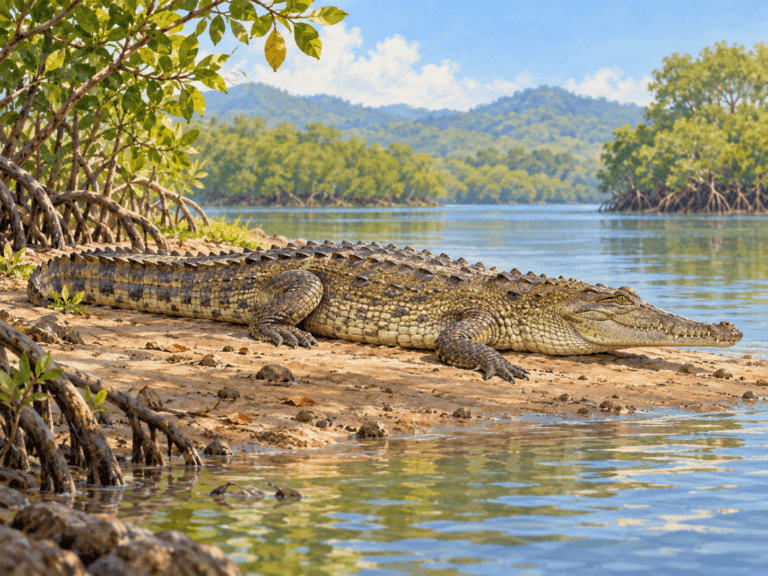
American Crocodile

Spanish name
Cocodrilo americano
Scientific name
Crocodylus acutus

What Do Pico & Tati Think?

Pico: “It blends into the riverbank so well.”

Tati: “We can observe from here with our guide. We don’t need to move closer.”

Identification

Key Features of the American Crocodile

  • A long snout and narrow head.

  • An olive-brown adult body with a long, strong tail.

  • Much of the body may be concealed in water or beside a bank.

Habitat & range

Rivers, estuaries, mangrove channels and other aquatic habitats. Observe only from a guide-approved boat or designated viewing place.

Seasonal Calendar

Egg-laying

General species biology; local schedule unverified

Apr, May

General species reference: April–May egg-laying and about 9–10 weeks of incubation. Tamarindo-specific nesting dates have not been verified. Never approach nests.

Event source ↗

Conservation & care

Never feed, approach or provoke crocodiles. Stay in the boat, keep hands inside, and follow local signs and guide instructions. Keep children and pets away from water edges.

View full profile →

Nature Field Guide

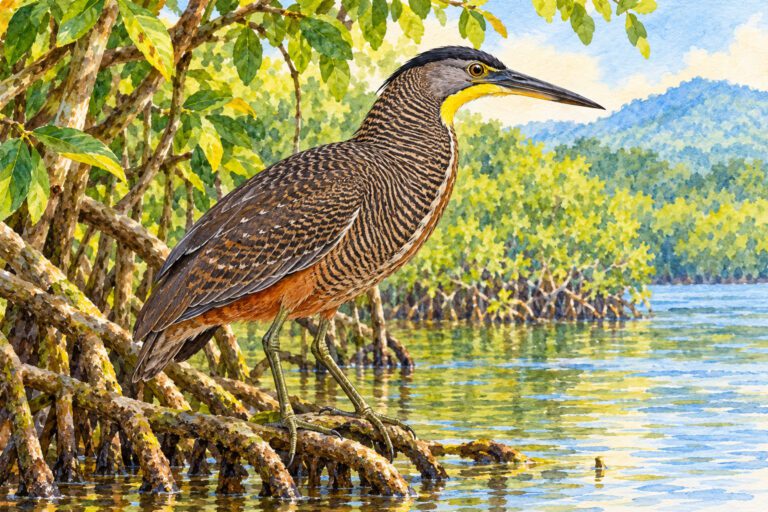
Bare-throated Tiger-Heron

Spanish name
Garza tigre cuellinuda
Scientific name
Tigrisoma mexicanum

What Do Pico & Tati Think?

Pico wonders where the tiger is hiding. Tati points to the fine patterns on a very watchful heron.

Identification

Key Features of the Bare-throated Tiger-Heron

  • Bare yellow throat patch

  • Adult finely barred neck and body

  • Gray cheeks and greenish legs

  • Young birds have bold brown bands

Habitat & range

Scan shallow water, quiet mangrove channels and vegetated wetland margins from an established viewpoint. Follow a local guide’s directions around estuaries.

Conservation & care

Give feeding and resting birds space. If a bird stops feeding, repeatedly looks at you or moves away, increase your distance. Keep dogs away from flocks, avoid playback and feeding, and leave nests and natural shoreline debris undisturbed.

View full profile →

Nature Field Guide

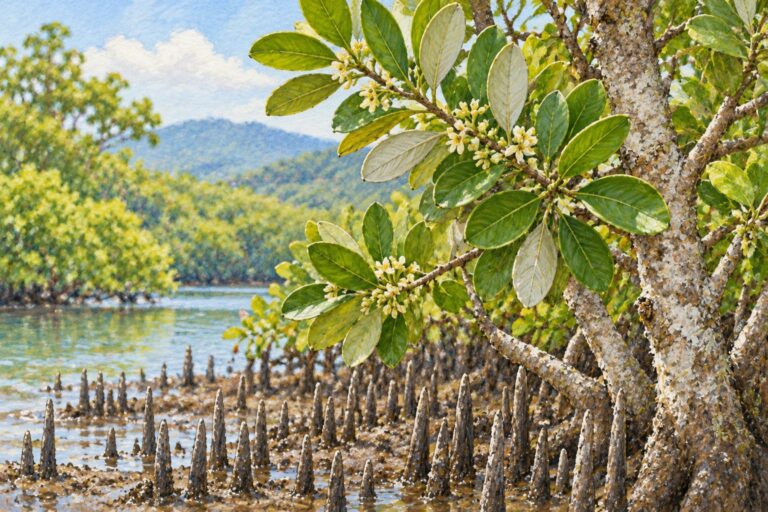
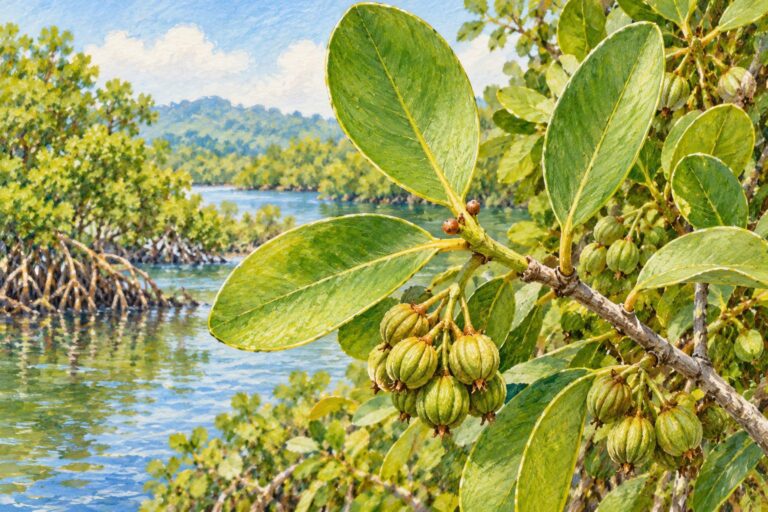
Black Mangrove

Spanish name
Mangle negro / Palo de sal
Scientific name
Avicennia germinans

What Do Pico & Tati Think?

Pico: “Pencil-shaped breathing roots rise from the mud around this mangrove.”

Tati: “Let’s notice the leaves, flowers and habitat without disturbing the plant.”

Identification

Key Features of the Black Mangrove

  • Opposite oval leaves with pale undersides

  • Upright pencil-shaped roots

  • Small pale flowers

Habitat & range

Coastal mangroves; Pacific documentation includes Guanacaste and Tivives near the Gulf of Nicoya. Gandoca provides a documented Caribbean example.

Conservation & care

Explore mangroves only with an adult on permitted paths or a guided route. Do not step on roots, collect seedlings or enter mud and tidal channels. Leave leaves and wildlife undisturbed.

Threats & pressures

Protect suitable habitat, mature trees and natural regeneration. Avoid trampling, unauthorized clearing and collection.

View full profile →

Nature Field Guide

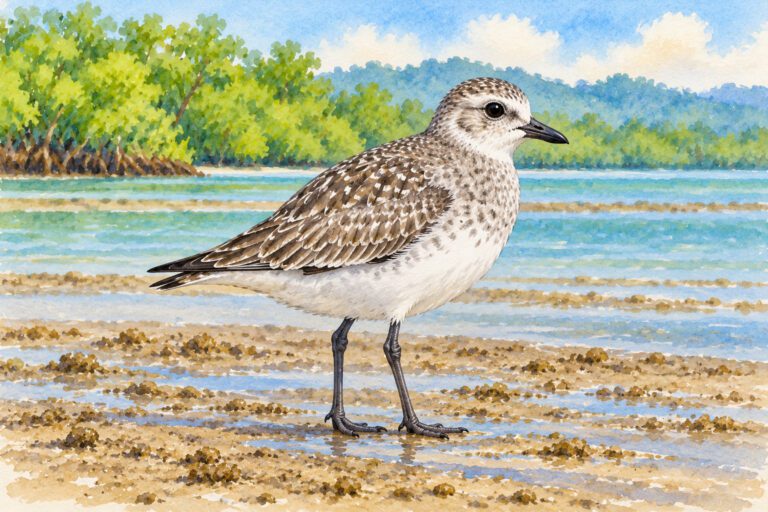
Black-bellied Plover

Spanish name
Chorlito gris
Scientific name
Pluvialis squatarola

What Do Pico & Tati Think?

Pico expects a black belly. Tati’s winter bird has a pale belly and a very different outfit.

Identification

Key Features of the Black-bellied Plover

  • Large round-headed plover

  • Short stout dark bill

  • Gray upperparts and pale nonbreeding belly

  • Dark armpit patch visible in natural flight

Habitat & range

Scan exposed shoreline feeding areas and nearby resting places with binoculars. The tide changes which flats are available; remain on a safe established route.

Conservation & care

Give feeding and resting birds space. If a bird stops feeding, repeatedly looks at you or moves away, increase your distance. Keep dogs away from flocks, avoid playback and feeding, and leave nests and natural shoreline debris undisturbed.

View full profile →

Nature Field Guide

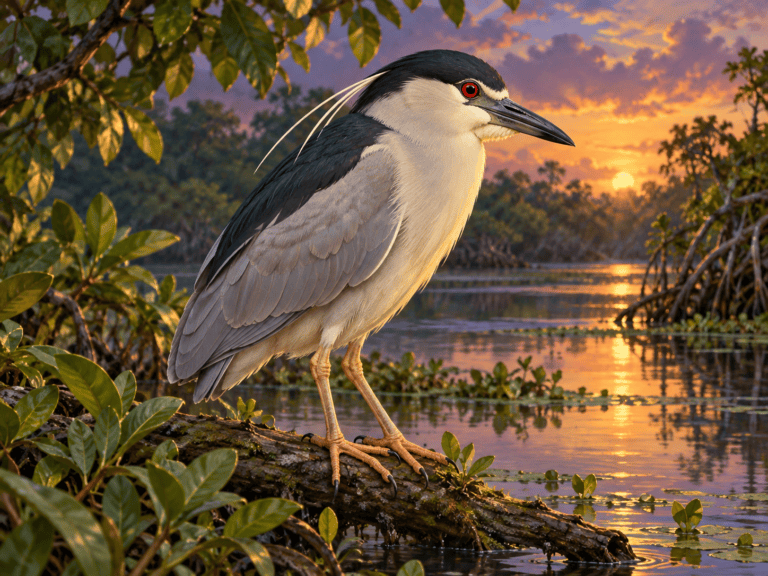
Black-crowned Night-Heron

Spanish name
Martinete coroninegro
Scientific name
Nycticorax nycticorax

What Do Pico & Tati Think?

Pico: “This heron looks shorter and rounder than the others!”

Tati: “It may be resting now and feeding later.”

Identification

Key Features of the Black-crowned Night-Heron

  • Stocky body and short-looking neck.

  • Adult: black crown and back, gray wings.

  • Young: brown plumage with pale spots.

Habitat & range

Wetland and mangrove populations include the Tempisque and Gulf of Nicoya landscape and local Caribbean lowlands. Resident birds and seasonal visitors both occur.

Conservation & care

Stay on authorized trails or viewing routes. Give birds space, keep voices low and leave nests undisturbed. Observe without bait, feeding or recorded calls.

Threats & pressures

Wetland drainage, development and contaminated runoff can degrade habitat and water quality.

View full profile →

Nature Field Guide

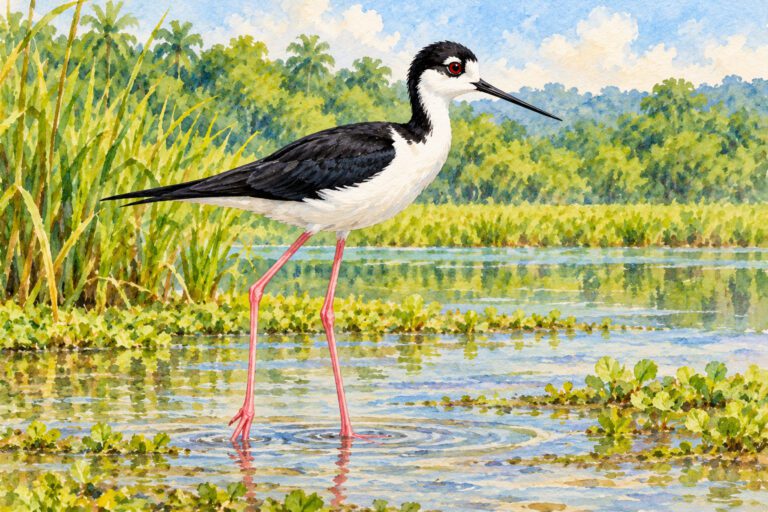
Black-necked Stilt

Spanish name
Cigüeñuela cuellinegra
Scientific name
Himantopus mexicanus

What Do Pico & Tati Think?

Those pink legs look almost too long for Pico’s page. Tati turns the journal upright to draw the whole bird.

Identification

Key Features of the Black-necked Stilt

  • Very long pink legs

  • Thin straight black bill

  • White underparts with dark back and hindneck

Habitat & range

Scan exposed shoreline feeding areas and nearby resting places with binoculars. The tide changes which flats are available; remain on a safe established route.

Conservation & care

Give feeding and resting birds space. If a bird stops feeding, repeatedly looks at you or moves away, increase your distance. Keep dogs away from flocks, avoid playback and feeding, and leave nests and natural shoreline debris undisturbed.

View full profile →

Nature Field Guide

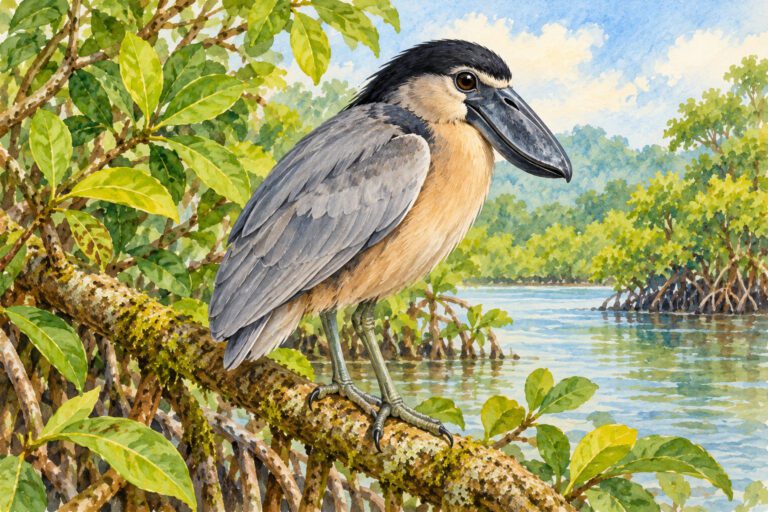
Boat-billed Heron

Spanish name
Chocuaco o picocuchara
Scientific name
Cochlearius cochlearius

What Do Pico & Tati Think?

That broad bill looks unlike the pointed bills Pico has drawn. Tati adds a new shape to the explorer journal.

Identification

Key Features of the Boat-billed Heron

  • Very broad boat-shaped bill

  • Large dark eyes and black crown

  • Stocky body with gray back

Habitat & range

Scan shallow water, quiet mangrove channels and vegetated wetland margins from an established viewpoint. Follow a local guide’s directions around estuaries.

Conservation & care

Give feeding and resting birds space. If a bird stops feeding, repeatedly looks at you or moves away, increase your distance. Keep dogs away from flocks, avoid playback and feeding, and leave nests and natural shoreline debris undisturbed.

View full profile →

Nature Field Guide

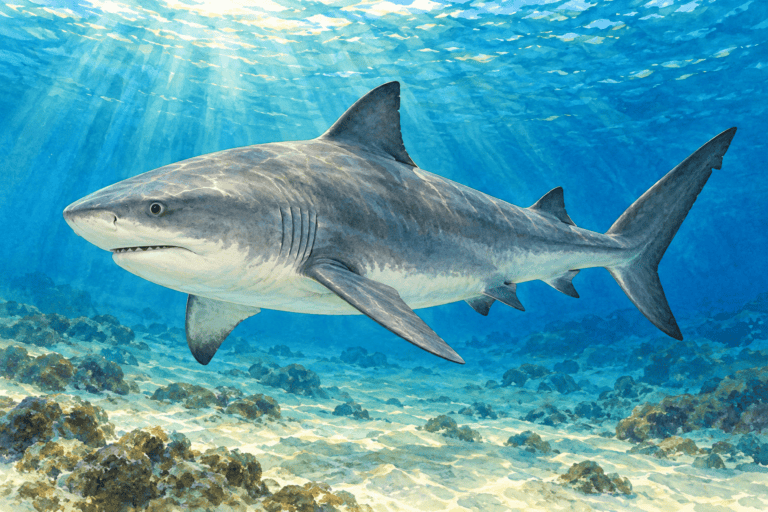
Bull Shark

Spanish name
Tiburón toro
Scientific name
Carcharhinus leucas

What Do Pico & Tati Think?

Pico: “That shark looks strong and stocky!”

Tati: “It can move between salt water and fresh water.”

Identification

Key Features of the Bull Shark

  • A stocky gray body with a pale belly.

  • A short, broad rounded snout and small eyes.

  • A large triangular first dorsal fin.

Habitat & range

Tropical and subtropical coastal waters, estuaries and some freshwater systems.

Conservation & care

Observe marine wildlife without feeding, touching or chasing it. Keep litter and discarded fishing line out of waterways. Follow qualified guides and current local rules.

Threats & pressures

Capture in fisheries affects bull sharks. Coastal development and damage to estuarine nursery habitats can put young animals under additional pressure.

View full profile →

Nature Field Guide

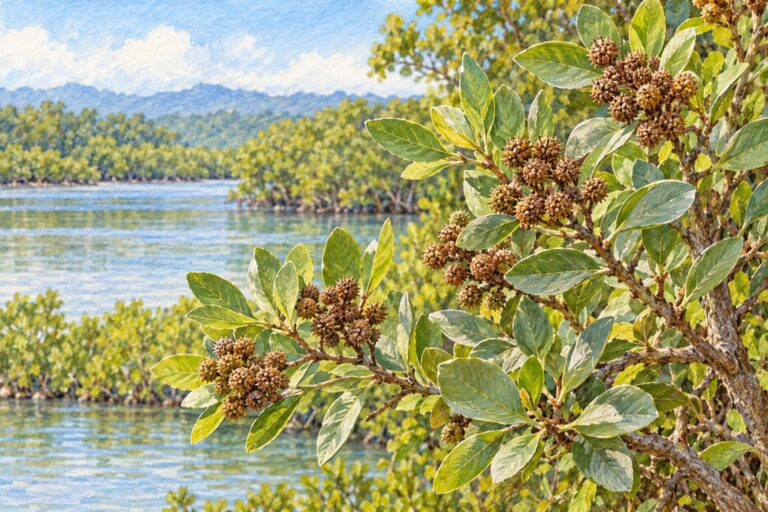
Buttonwood

Spanish name
Mangle botoncillo / Botoncillo
Scientific name
Conocarpus erectus

What Do Pico & Tati Think?

Pico: “Small buttonlike fruit heads help identify this coastal tree or shrub.”

Tati: “Let’s notice the leaves, flowers and habitat without disturbing the plant.”

Identification

Key Features of the Buttonwood

  • Simple alternate leaves

  • Round buttonlike fruit heads

  • Often at the landward mangrove edge

Habitat & range

Coastal margins, including documented mangrove-edge habitat at Tivives and the North Pacific. Gandoca provides a documented Caribbean example.

Conservation & care

Explore with an adult on permitted paths. Observe and photograph without picking leaves, flowers or fruits. Do not taste plants or let pets chew them. Avoid climbing trees and disturbing roots, seedlings or visiting wildlife.

Threats & pressures

Protect suitable habitat, mature trees and natural regeneration. Avoid trampling, unauthorized clearing and collection.

View full profile →

Nature Field Guide

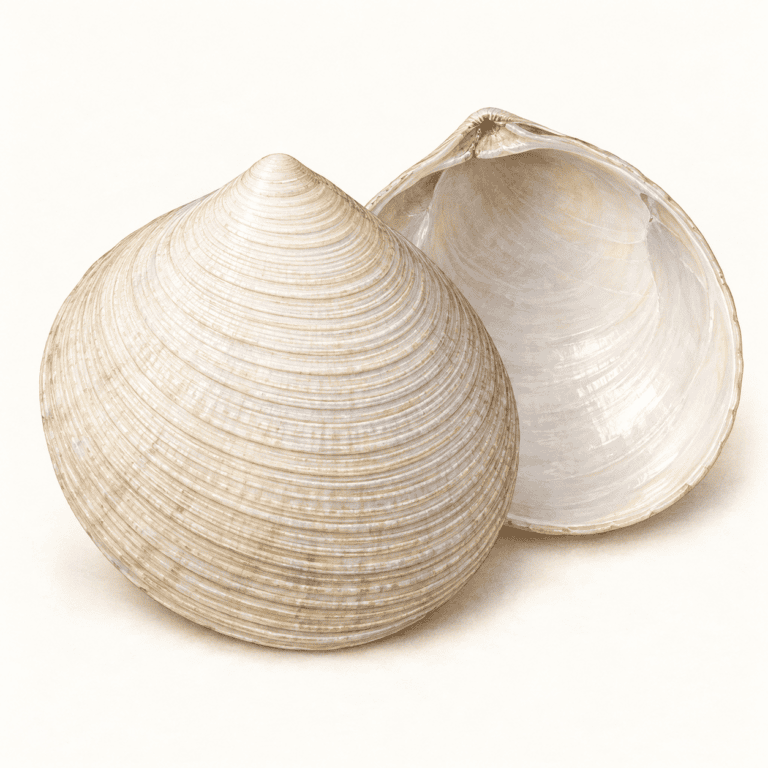
Dunker’s Dosinia

Spanish name
Almeja Dosinia
Scientific name
Dosinia dunkeri

What Do Pico & Tati Think?

A rounded clam shell rewards a closer look at fine surface lines.

Identification

Key Features of the Dunker’s Dosinia

  • Rounded, pale valves.

  • Fine concentric lines curve around the raised area near the hinge.

  • Confirm with hinge details and an identified reference.

Habitat & range

Coastal sand-mud habitat.

Conservation & care

Observe and photograph shells where they are. Leave living animals, occupied shells and empty shells in place. Do not pry animals from rocks, dig in mangroves or put fingers into shell openings. Explore with an adult or guide, follow site rules and stay clear of surf and slippery rocks.

View full profile →

Nature Field Guide

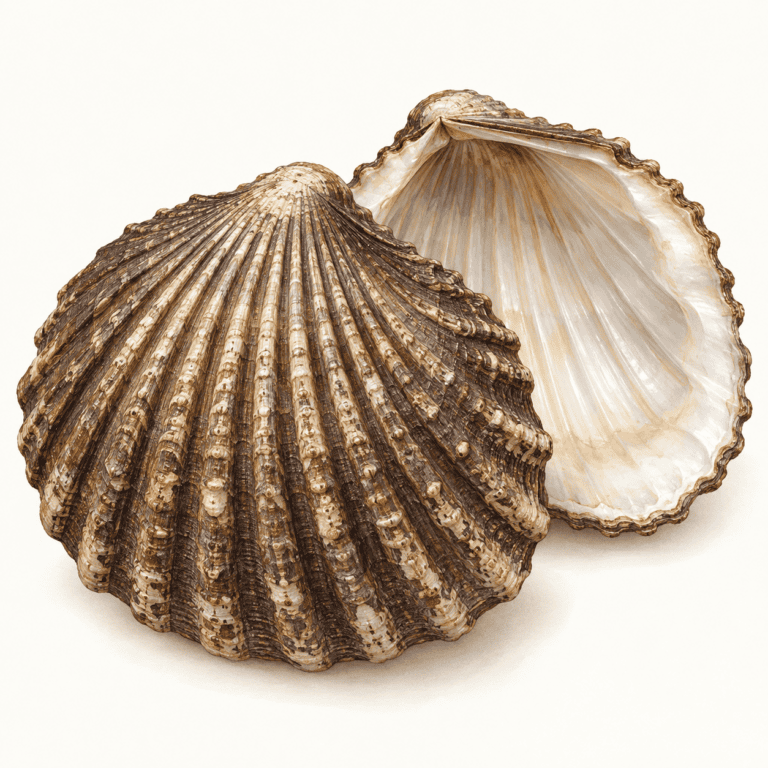
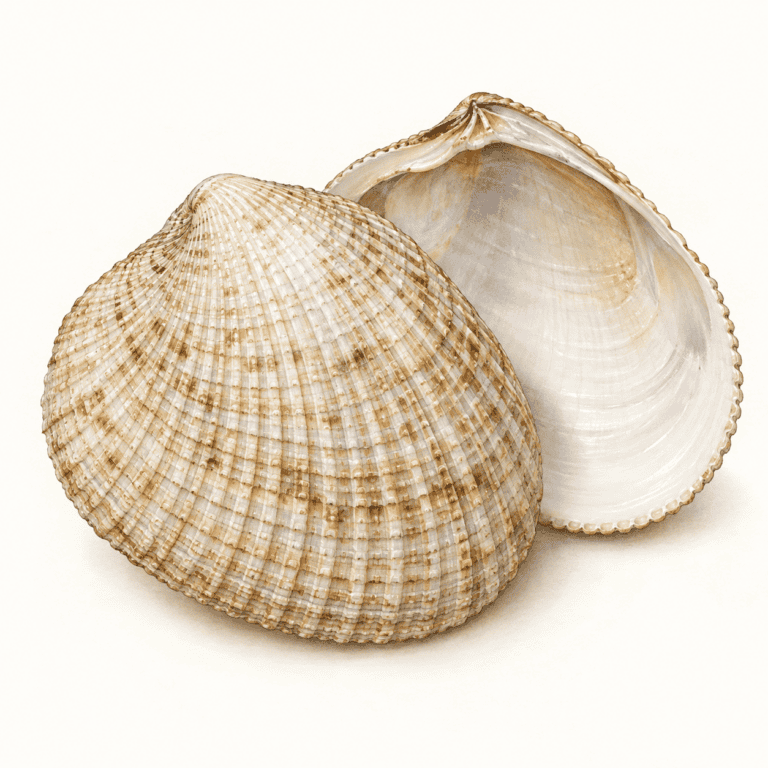
Giant Ark Clam

Spanish name
Chucheca
Scientific name
Larkinia grandis

What Do Pico & Tati Think?

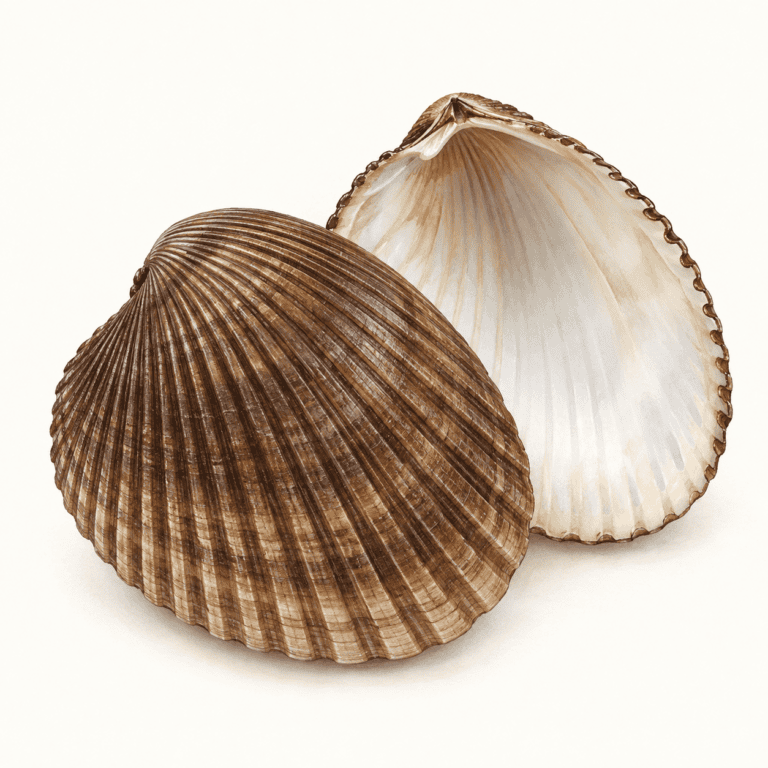
A large ark shell has deep spaces between its strong ribs.

Identification

Key Features of the Giant Ark Clam

  • Broad, nearly square outline.

  • Strong ribs separated by deep grooves.

  • Prominent raised area near the hinge.

Habitat & range

Pacific estuarine and mangrove-associated coastal habitat.

Conservation & care

Observe and photograph shells where they are. Leave living animals, occupied shells and empty shells in place. Do not pry animals from rocks, dig in mangroves or put fingers into shell openings. Explore with an adult or guide, follow site rules and stay clear of surf and slippery rocks.

View full profile →

Nature Field Guide

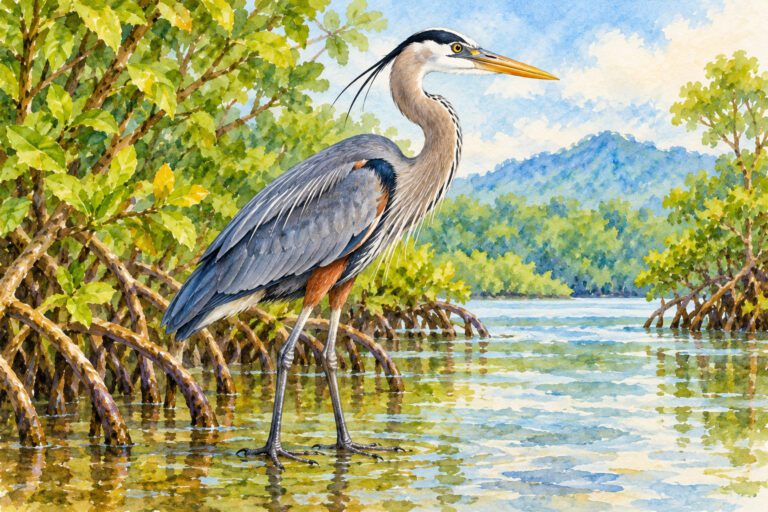
Great Blue Heron

Spanish name
Garzón azulado
Scientific name
Ardea herodias

What Do Pico & Tati Think?

A tall, patient hunter can make the whole shoreline feel still. Pico counts its slow steps while Tati watches its folded neck.

Identification

Key Features of the Great Blue Heron

  • Large blue-gray body

  • Long legs and a heavy yellowish bill

  • Pale head with a dark stripe above the eye

Habitat & range

Scan shallow water, quiet mangrove channels and vegetated wetland margins from an established viewpoint. Follow a local guide’s directions around estuaries.

Conservation & care

Give feeding and resting birds space. If a bird stops feeding, repeatedly looks at you or moves away, increase your distance. Keep dogs away from flocks, avoid playback and feeding, and leave nests and natural shoreline debris undisturbed.

View full profile →

Nature Field Guide

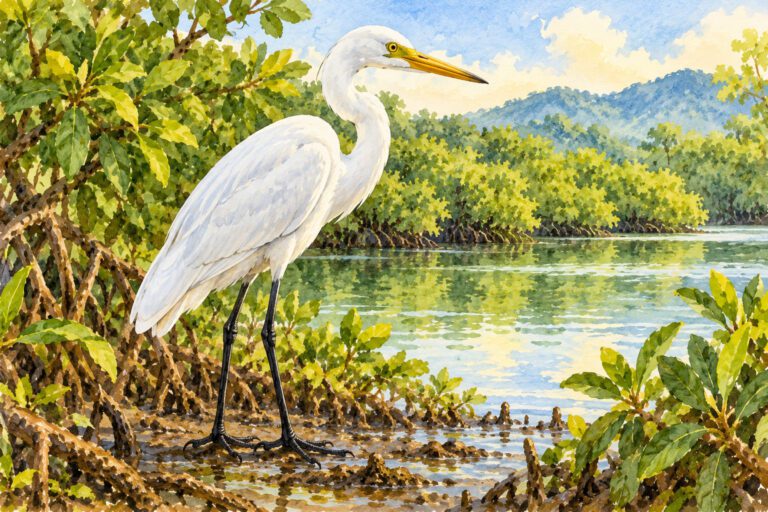
Great Egret

Spanish name
Garceta grande
Scientific name
Ardea alba

What Do Pico & Tati Think?

Pico calls it a bright white shape in the green. Tati checks the bill and feet before giving it a name.

Identification

Key Features of the Great Egret

  • White plumage and long slender neck

  • Yellow bill

  • Black legs and dark feet

Habitat & range

Scan shallow water, quiet mangrove channels and vegetated wetland margins from an established viewpoint. Follow a local guide’s directions around estuaries.

Conservation & care

Give feeding and resting birds space. If a bird stops feeding, repeatedly looks at you or moves away, increase your distance. Keep dogs away from flocks, avoid playback and feeding, and leave nests and natural shoreline debris undisturbed.

View full profile →

Nature Field Guide

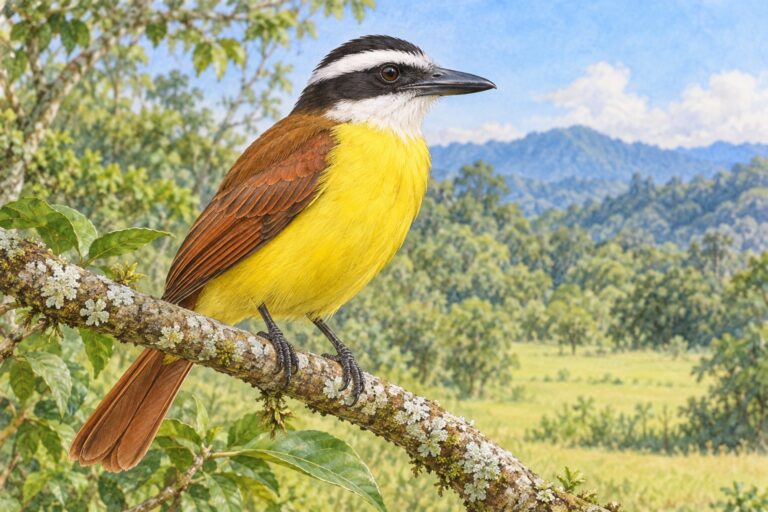
Great Kiskadee

Spanish name
Bienteveo grande
Scientific name
Pitangus sulphuratus

What Do Pico & Tati Think?

Pico: “It sounds like it is calling its own name!”

Tati: “Let’s also check its bold eyebrow and strong bill.”

Identification

Key Features of the Great Kiskadee

  • Black-and-white head pattern

  • Bright yellow belly

  • Heavy bill and reddish-brown wings

Habitat & range

Open wooded country and settled areas, often near water, on both slopes, mainly below about 1500 m. Less frequent in some southern Pacific areas; not a high-mountain specialist.

Conservation & care

Observe quietly from trails or established viewing areas. Give nests, roosts and feeding birds space. Do not handle, chase or lure birds with playback. Keep pets away from wildlife.

Threats & pressures

Protect native vegetation, reduce collision hazards around glass and keep cats away from birds. These are practical prevention priorities, not a claim of a measured decline at a specific Costa Rican site.

View full profile →

Nature Field Guide

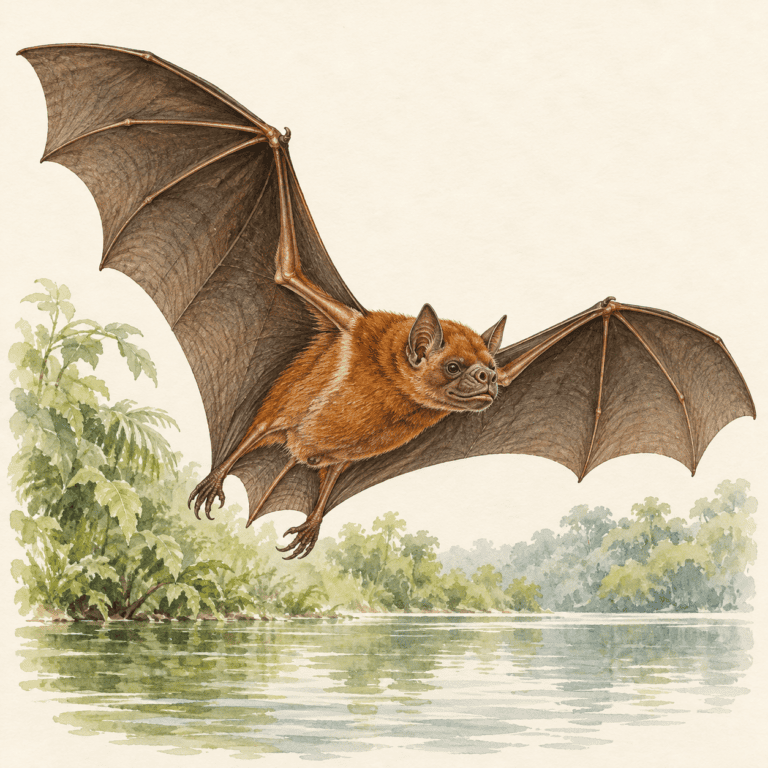
Greater Bulldog Bat

Spanish name
Murciélago pescador mayor
Scientific name
Noctilio leporinus

What Do Pico & Tati Think?

The greater bulldog bat is one of the bats that regularly catches fish.

Identification

Key Features of the Greater Bulldog Bat

  • Prominent folded lips and pointed ears.

  • Large clawed hind feet adapted for fishing.

  • Short fur that can be reddish, brown or grayish.

Habitat & range

Rivers, ponds and suitable coastal waters near roosting habitat.

Conservation & care

Observe bats from a distance with an adult or guide. Do not touch, feed or handle any bat, including one found on the ground. Leave roosts undisturbed, avoid direct flash and ask local wildlife professionals for help if an animal appears injured.

View full profile →

Nature Field Guide

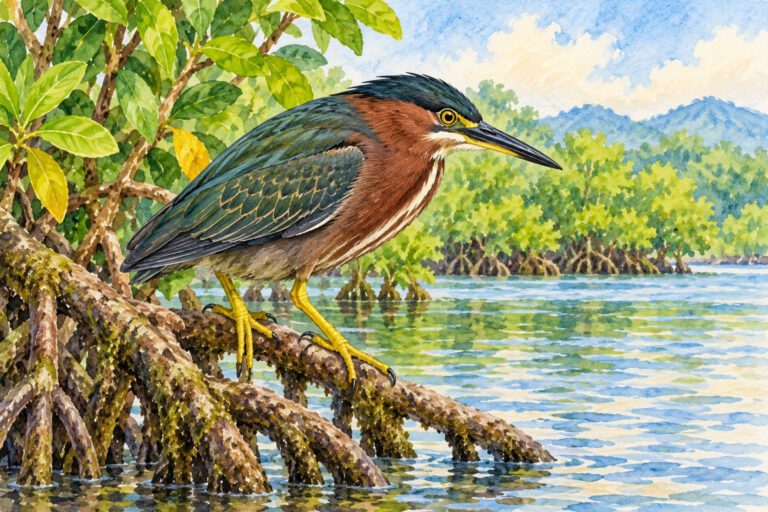
Green Heron

Spanish name
Garcilla verde
Scientific name
Butorides virescens

What Do Pico & Tati Think?

A small hunched shape almost disappears among the roots. Pico and Tati learn that patient looking beats noisy searching.

Identification

Key Features of the Green Heron

  • Small hunched silhouette

  • Greenish back and chestnut neck

  • Straight pointed bill and yellowish legs

Habitat & range

Scan shallow water, quiet mangrove channels and vegetated wetland margins from an established viewpoint. Follow a local guide’s directions around estuaries.

Conservation & care

Give feeding and resting birds space. If a bird stops feeding, repeatedly looks at you or moves away, increase your distance. Keep dogs away from flocks, avoid playback and feeding, and leave nests and natural shoreline debris undisturbed.

View full profile →

Nature Field Guide

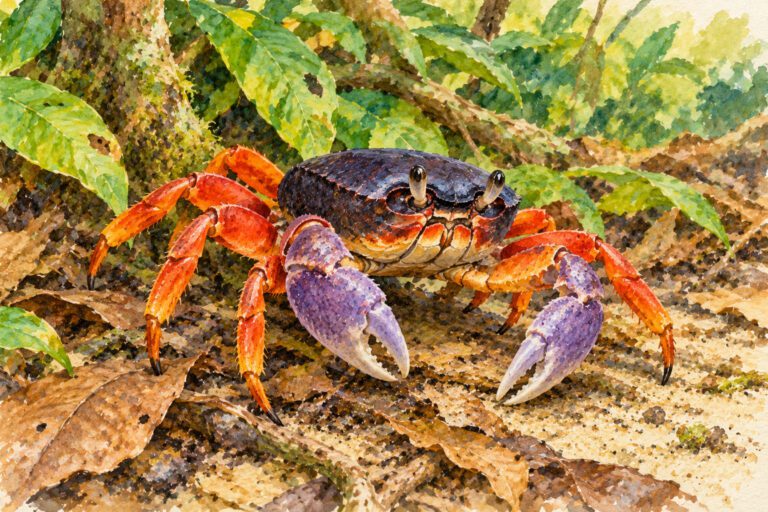
Halloween Land Crab

Spanish name
Cangrejo arlequín
Scientific name
Gecarcinus quadratus

What Do Pico & Tati Think?

Not every coastal crab lives underwater. Pico and Tati look at the ground beside the path without leaving it.

Identification

Key Features of the Halloween Land Crab

  • A crab walking on land near coastal vegetation

  • Burrows may be present in suitable ground

  • Confirm the species from the whole animal, not a burrow alone

Habitat & range

Coastal vegetation and adjacent ground. Stay on established routes and do not search inside burrows.

Conservation & care

Give claws and burrow entrances space. Do not handle, feed, chase or collect crabs. Leave rocks and shells where they are, and follow your adult’s route and local signs.

View full profile →

Nature Field Guide

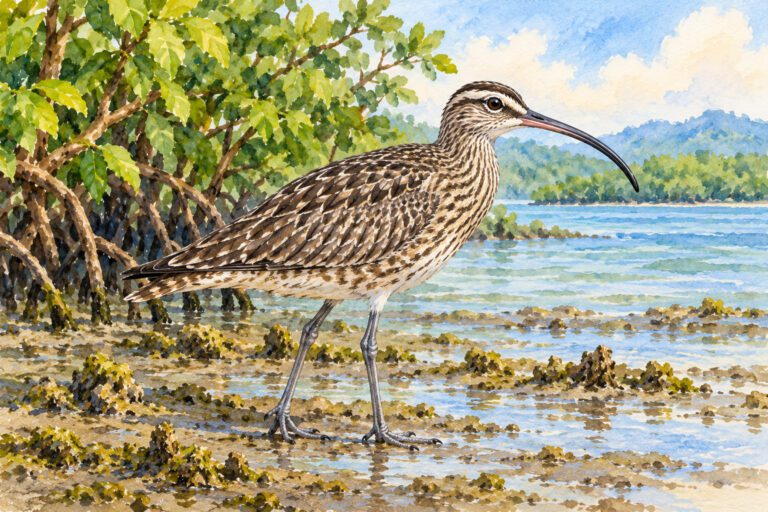
Hudsonian Whimbrel

Spanish name
Zarapito trinador
Scientific name
Numenius hudsonicus

What Do Pico & Tati Think?

Pico curves his pencil line to match the bill. Tati checks the striped head for another clue.

Identification

Key Features of the Hudsonian Whimbrel

  • Long downward-curved bill

  • Striped brown head with a pale central crown stripe

  • Brown patterned body and long legs

Habitat & range

Scan exposed shoreline feeding areas and nearby resting places with binoculars. The tide changes which flats are available; remain on a safe established route.

Conservation & care

Give feeding and resting birds space. If a bird stops feeding, repeatedly looks at you or moves away, increase your distance. Keep dogs away from flocks, avoid playback and feeding, and leave nests and natural shoreline debris undisturbed.

View full profile →

Nature Field Guide

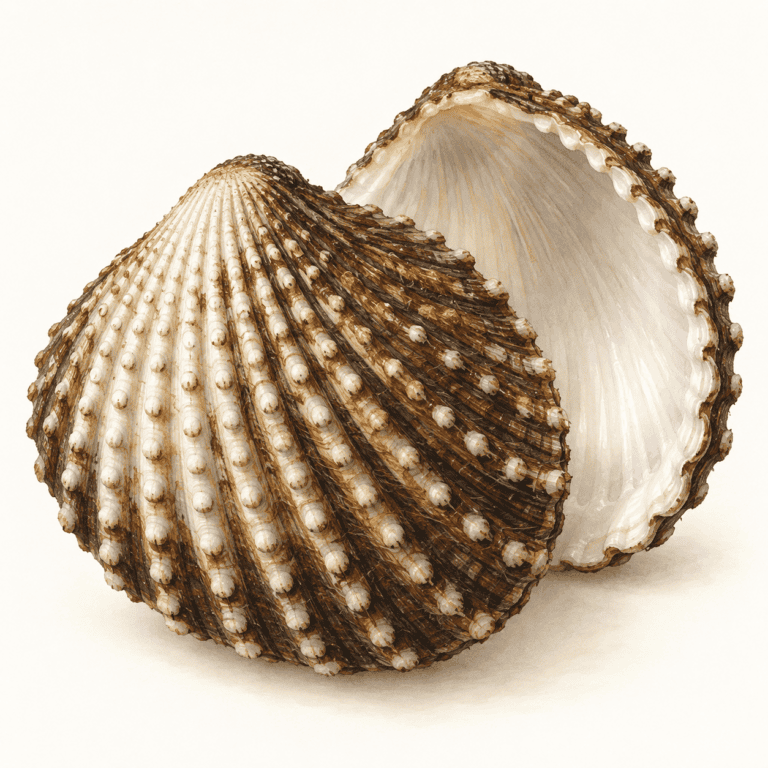
Knobby Mangrove Cockle

Spanish name
Piangua
Scientific name
Anadara tuberculosa

What Do Pico & Tati Think?

A ribbed mangrove shell has small bumps that help explain its name.

Identification

Key Features of the Knobby Mangrove Cockle

  • Thick, oval valves with raised ribs.

  • Small nodules occur along the ribs.

  • A dark, sometimes bristly outer covering may remain on fresh shells.

Habitat & range

Mangrove-associated muddy habitat.

Conservation & care

Observe and photograph shells where they are. Leave living animals, occupied shells and empty shells in place. Do not pry animals from rocks, dig in mangroves or put fingers into shell openings. Explore with an adult or guide, follow site rules and stay clear of surf and slippery rocks.

View full profile →

Nature Field Guide

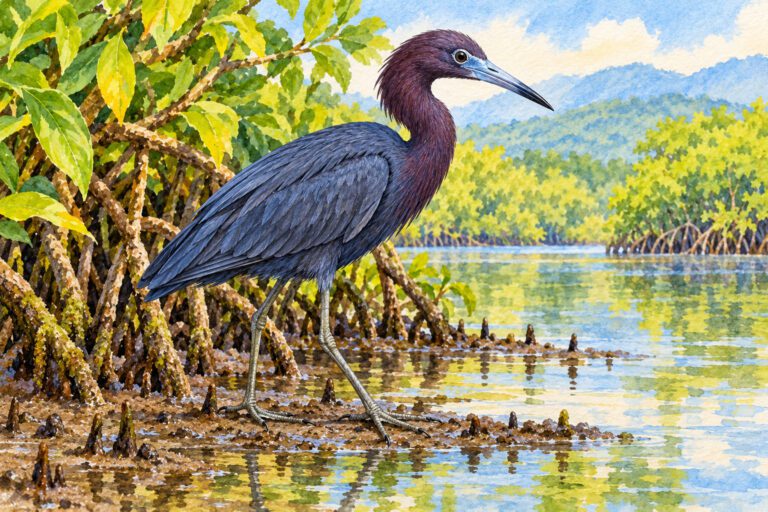
Little Blue Heron

Spanish name
Garceta azul
Scientific name
Egretta caerulea

What Do Pico & Tati Think?

Pico expects every Little Blue Heron to be blue. Tati discovers that young birds tell a different color story.

Identification

Key Features of the Little Blue Heron

  • Adult slate-blue body and purplish neck

  • Two-toned bill with a dark tip

  • Juveniles are white, unlike the illustrated adult

Habitat & range

Scan shallow water, quiet mangrove channels and vegetated wetland margins from an established viewpoint. Follow a local guide’s directions around estuaries.

Conservation & care

Give feeding and resting birds space. If a bird stops feeding, repeatedly looks at you or moves away, increase your distance. Keep dogs away from flocks, avoid playback and feeding, and leave nests and natural shoreline debris undisturbed.

View full profile →

Nature Field Guide

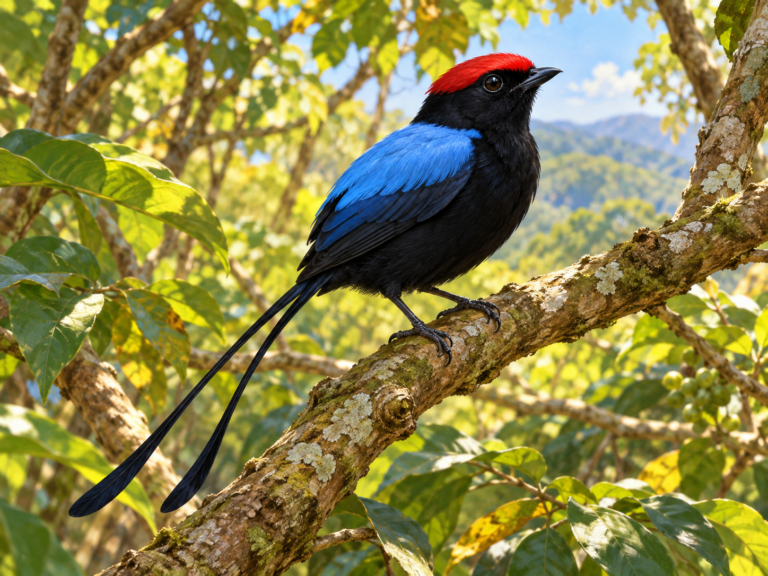
Long-tailed Manakin

Spanish name
Saltarín toledo
Scientific name
Chiroxiphia linearis

What Do Pico & Tati Think?

Pico: “Two birds are moving together on the branches!”

Tati: “We can watch the rhythm without interrupting.”

Identification

Key Features of the Long-tailed Manakin

  • Adult male: black body, blue back and red crown.

  • Long central tail feathers in males.

  • Female: less conspicuous greenish plumage.

Habitat & range

Gallery forest, mature secondary woodland and mangrove edges in the northern Pacific, extending toward Carara, the Central Valley and suitable Dota slopes. Shaded woodland is essential.

Conservation & care

Stay on authorized trails or viewing routes. Give birds space, keep voices low and leave nests undisturbed. Observe without bait, feeding or recorded calls.

View full profile →

Nature Field Guide

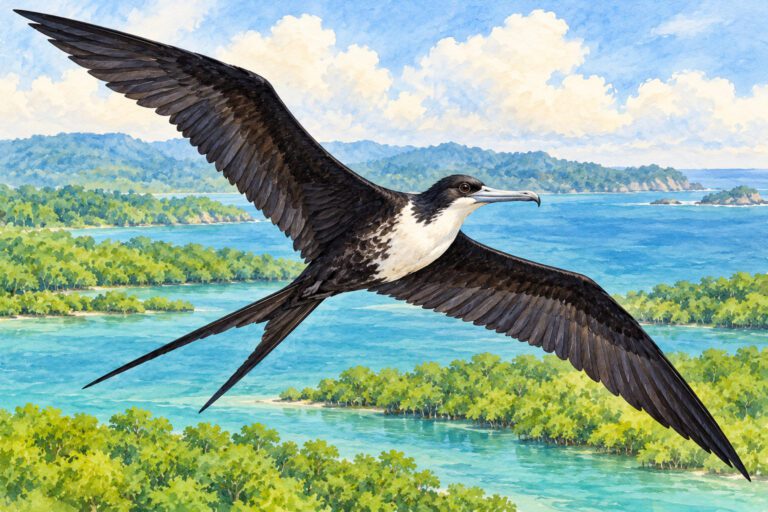
Magnificent Frigatebird

Spanish name
Rabihorcado magnífico
Scientific name
Fregata magnificens

What Do Pico & Tati Think?

Pico draws a bird that barely seems to flap. Tati adds a deeply forked tail to finish its sky silhouette.

Identification

Key Features of the Magnificent Frigatebird

  • Very long angular wings

  • Deeply forked tail

  • Adult male dark with red throat skin

  • Adult female has a white chest

Habitat & range

Scan coastal waters and undisturbed shoreline resting places from a safe public viewpoint. Keep boats and people away from nesting or resting colonies.

Conservation & care

Give feeding and resting birds space. If a bird stops feeding, repeatedly looks at you or moves away, increase your distance. Keep dogs away from flocks, avoid playback and feeding, and leave nests and natural shoreline debris undisturbed.

View full profile →

Nature Field Guide

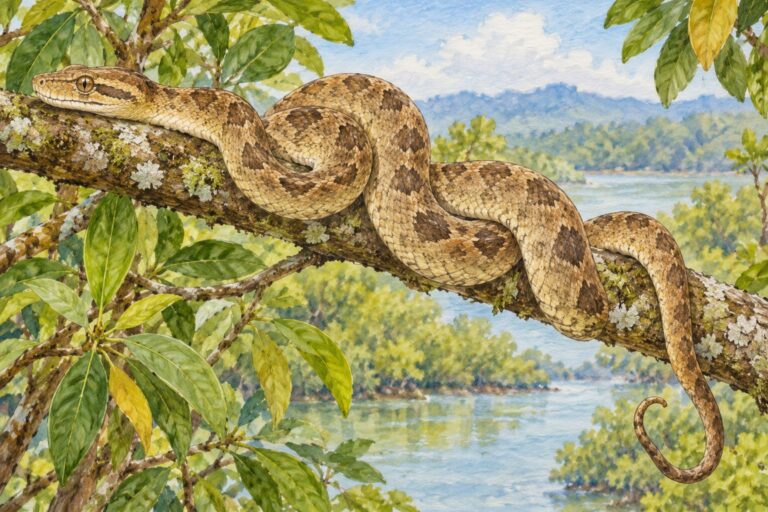
Mangrove Tree Boa

Spanish name
Boa arborícola del Pacífico
Scientific name
Corallus ruschenbergerii

What Do Pico & Tati Think?

Pico: “What helps this reptile fit into its habitat?”

Tati: “Let’s look at its shape, colors and surroundings while giving it plenty of space.”

Identification

Key Features of the Mangrove Tree Boa

  • Long branch-climbing body

  • Brown-to-tan camouflage

  • Gripping tail and a distinct head

Habitat & range

Southwestern Costa Rican forests and wooded coastal habitats, including the South Pacific.

Conservation & care

Observe from a distance with an adult or qualified guide. Do not touch, catch, corner, feed or move any snake. Keep children and pets away. Colors, head shape and pupil shape must never be used to decide a snake is safe.

Threats & pressures

Protect connected habitat and natural shelters. Avoid collection, unnecessary clearing and deliberate killing. Leave wildlife in place and support responsible observation.

View full profile →

Nature Field Guide

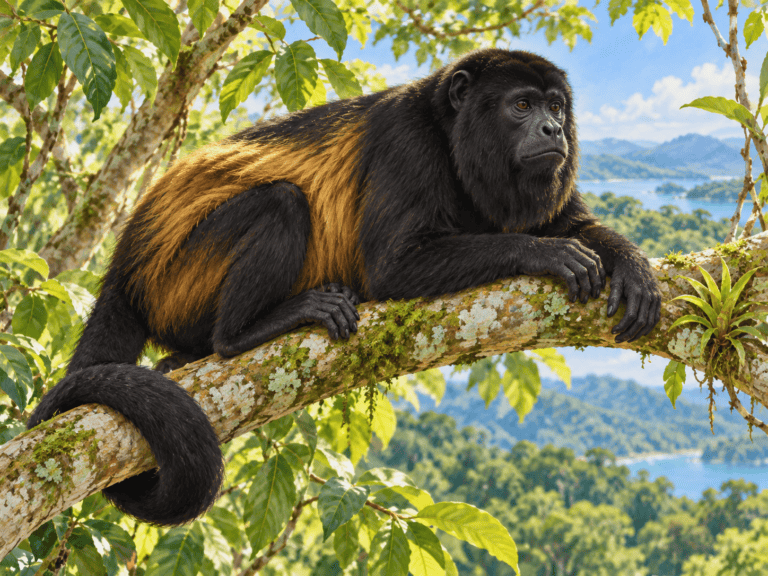
Mantled Howler Monkey

Spanish name
Mono congo / Mono aullador
Scientific name
Alouatta palliata

What Do Pico & Tati Think?

Pico: “We heard the monkeys before we could see them!”

Tati: “Let’s stay quiet and see what they’re doing in the branches.”

Identification

Key Features of the Mantled Howler Monkey

  • A mostly dark coat with a lighter mantle along the sides.

  • A long, grasping tail used while moving through trees.

  • Deep calls that may carry beyond the visible group.

Habitat & range

Tropical forest canopy and wooded corridors. Around the estuary, observe canopy habitat from a guided route rather than following animals into the forest.

Seasonal Calendar

Breeding

General species biology; local schedule unverified

Year-round

Mantled howlers breed throughout the year. Species-level biology, not a schedule of births in a particular troop.

Event source ↗

Conservation & care

Never offer food or try to touch a monkey. Avoid playback and shouting, and give groups space to move through the canopy.

View full profile →

Nature Field Guide

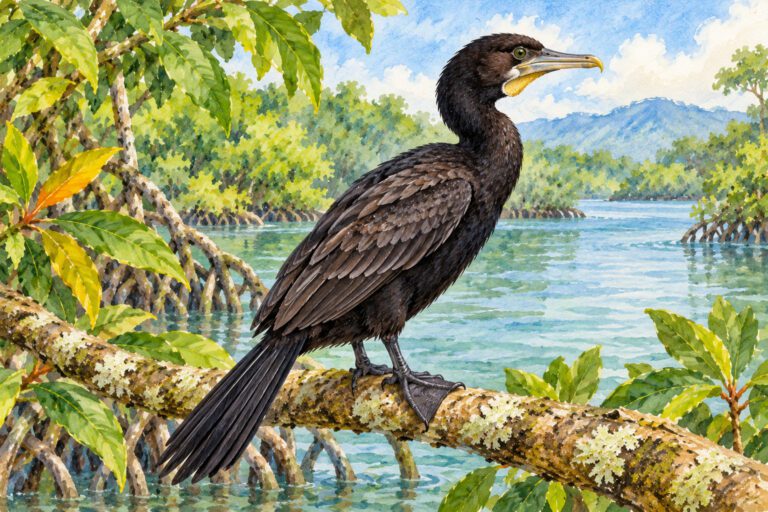
Neotropic Cormorant

Spanish name
Cormorán neotropical
Scientific name
Nannopterum brasilianum

What Do Pico & Tati Think?

Pico watches a dark swimmer vanish below the surface. Tati looks for its hooked bill when it returns.

Identification

Key Features of the Neotropic Cormorant

  • Dark body and long tail

  • Slender neck

  • Bill with a hooked tip

  • Often dives from the water surface

Habitat & range

Look across sheltered wetlands, lagoons and river margins from permitted trails or a responsible guided boat trip.

Conservation & care

Give feeding and resting birds space. If a bird stops feeding, repeatedly looks at you or moves away, increase your distance. Keep dogs away from flocks, avoid playback and feeding, and leave nests and natural shoreline debris undisturbed.

View full profile →

Nature Field Guide

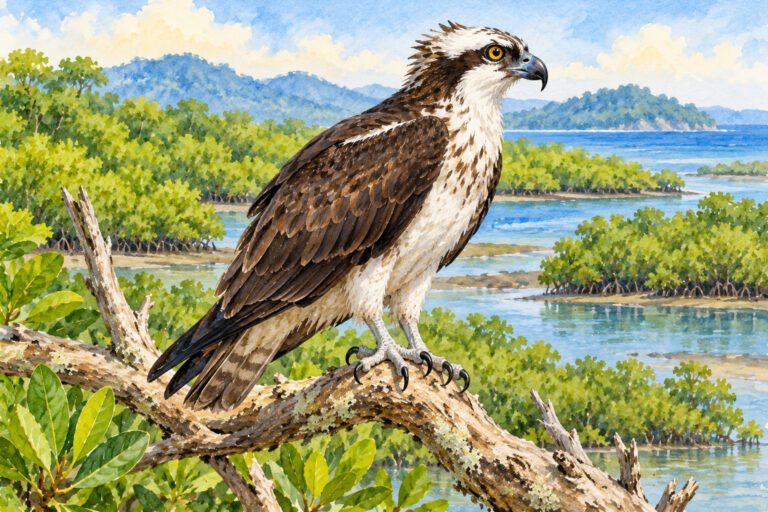
Osprey

Spanish name
Águila pescadora
Scientific name
Pandion haliaetus

What Do Pico & Tati Think?

Pico sees a fish hunter high above the water. Tati follows its shape with binoculars while keeping both feet on the trail.

Identification

Key Features of the Osprey

  • White head with broad dark eye stripe

  • Brown back and pale underparts

  • Hooked bill and powerful feet

  • Long angled wings in flight

Habitat & range

Scan exposed branches and the sky above fish-bearing rivers, estuaries and coastal water. Watch from a safe shore viewpoint.

Conservation & care

Give feeding and resting birds space. If a bird stops feeding, repeatedly looks at you or moves away, increase your distance. Keep dogs away from flocks, avoid playback and feeding, and leave nests and natural shoreline debris undisturbed.

View full profile →

Nature Field Guide

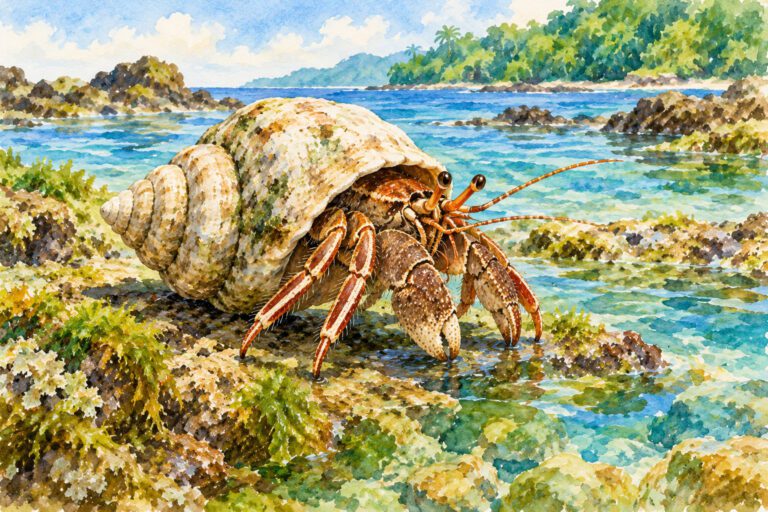
Panama Hermit Crab

Spanish name
Cangrejo ermitaño panameño
Scientific name
Clibanarius panamensis

What Do Pico & Tati Think?

A shell can be both a clue and a hiding place. Pico and Tati practice patience while its resident decides whether to appear.

Identification

Key Features of the Panama Hermit Crab

  • Legs or claws extending from a shell

  • An animal carrying the shell as it moves

  • Check the crab’s features with a specialist reference

Habitat & range

Rocky shore and naturally visible tidal habitat. Choose a permitted observation point with an adult; do not turn rocks or reach into holes.

Conservation & care

Give claws and burrow entrances space. Do not handle, feed, chase or collect crabs. Leave rocks and shells where they are, and follow your adult’s route and local signs.

View full profile →

Nature Field Guide

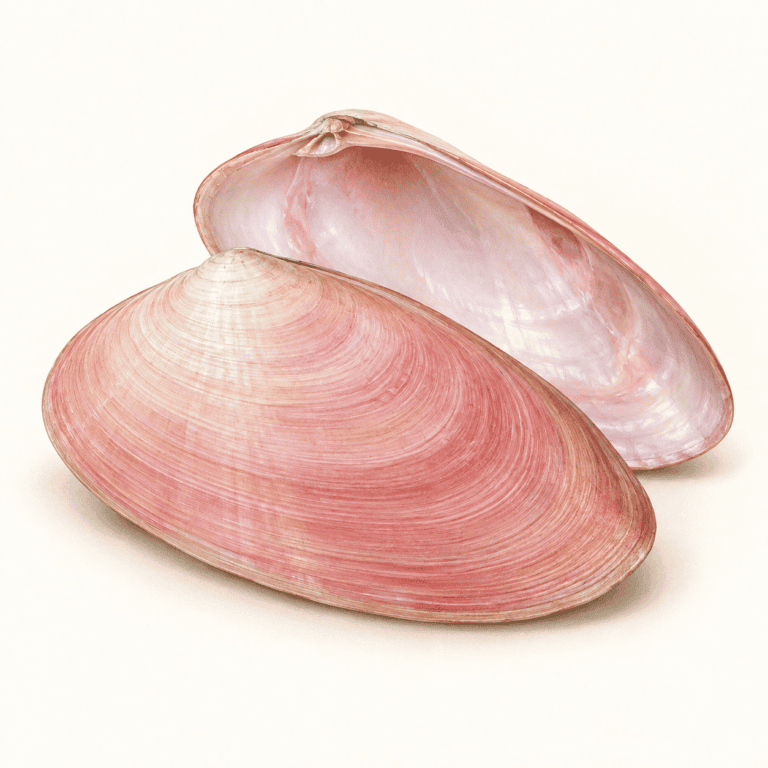
Pink Tellin

Spanish name
Almeja rosada
Scientific name
Eurytellina rubescens

What Do Pico & Tati Think?

A pink bivalve adds color to the story of Costa Rica’s tidal flats.

Identification

Key Features of the Pink Tellin

  • Two-valved clam shell with pink coloration when preserved.

  • Compare outline, hinge and both ends with an identified reference.

  • Older references use Tellina rubescens.

Habitat & range

Estuarine sand-mud flats.

Conservation & care

Observe and photograph shells where they are. Leave living animals, occupied shells and empty shells in place. Do not pry animals from rocks, dig in mangroves or put fingers into shell openings. Explore with an adult or guide, follow site rules and stay clear of surf and slippery rocks.

View full profile →

Nature Field Guide

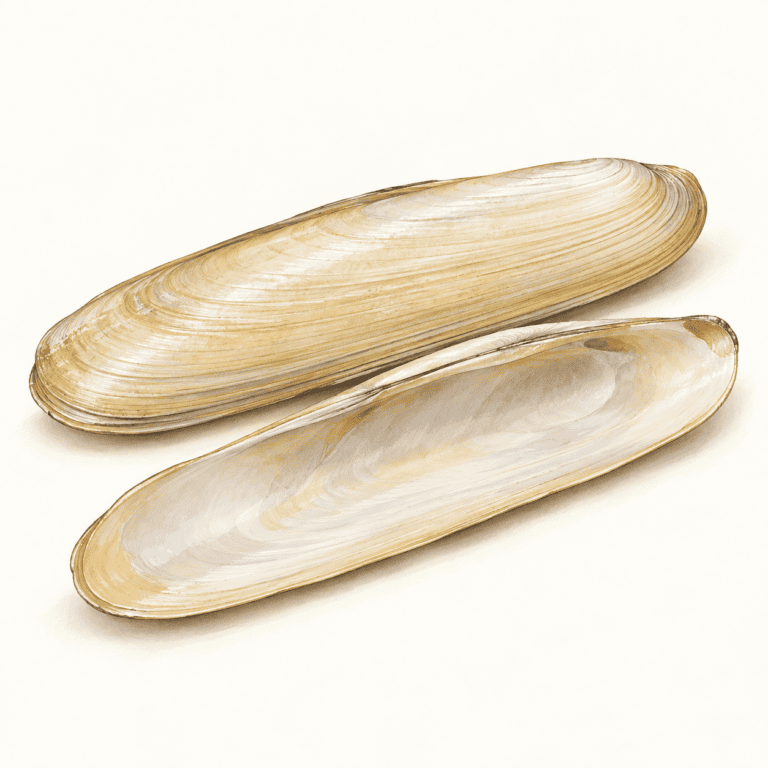
Polished Tagelus Clam

Spanish name
Almeja Tagelus
Scientific name
Tagelus politus

What Do Pico & Tati Think?

This tidal-flat clam demonstrates how a scientific name can be updated.

Identification

Key Features of the Polished Tagelus Clam

  • A bivalve rather than a coiled snail shell.

  • Record length, height and hinge position in a reference photograph.

  • Compare with Tagelus politus, including references labeled T. bourgeoisae.

Habitat & range

Estuarine sand-mud flats.

Conservation & care

Observe and photograph shells where they are. Leave living animals, occupied shells and empty shells in place. Do not pry animals from rocks, dig in mangroves or put fingers into shell openings. Explore with an adult or guide, follow site rules and stay clear of surf and slippery rocks.

View full profile →

Nature Field Guide

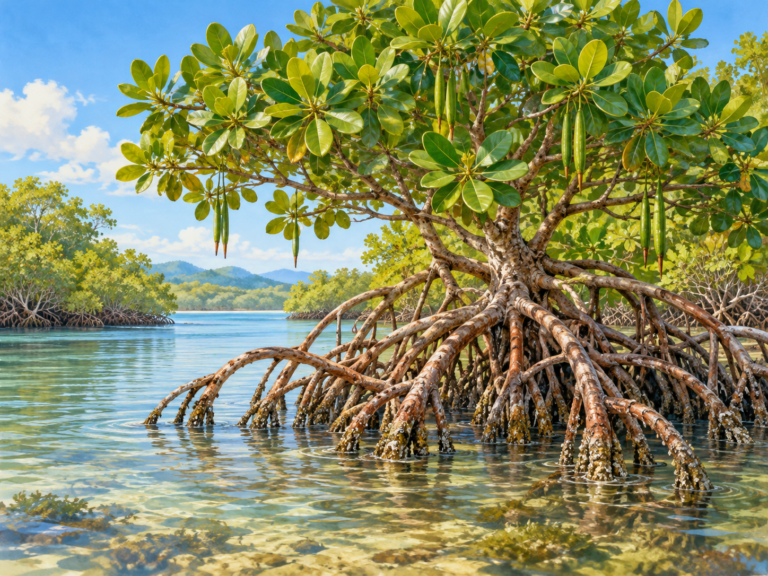
Red Mangrove

Spanish name
Mangle rojo
Scientific name
Rhizophora mangle

What Do Pico & Tati Think?

Red mangrove grows beside tidal water. Its arching prop roots and long propagules offer useful identification clues during a guided estuary visit.

What does Least Concern mean?

In the linked conservation assessment, this species does not qualify as threatened or near threatened with extinction. It still needs care: local populations and habitats can face problems even when the species has a lower extinction risk overall.

This label describes conservation status. It does not tell us whether a plant is safe for children or pets. Select the status button to read the assessment.

Identification

Key Features of the Red Mangrove

  • Arching prop roots extend from the trunk and branches.

  • Long, slender propagules may hang from the tree.

  • Look for the tree beside tidal or brackish water.

Habitat & range

Mangrove habitat beside tidal channels. Explore the Tamarindo estuary with a local guide who can confirm the species from several features.

Seasonal Calendar

Flowering

Panama reference population

Year-round

Panama reference: some flowers may occur at any time of year. This is general species biology, not a measured Tamarindo flowering calendar.

Event source ↗

Conservation & care

Child Safety: Not verified. Observe with an adult. Do not taste leaves, seeds, fruit or other tree parts.

Pet Safety: Not verified. Keep pets from chewing or swallowing tree parts. Check with a veterinarian before treating this species as pet-safe.

Stay in the boat or on authorized paths and follow your guide. Do not enter the water, climb on roots or collect propagules. Mangrove habitat is a shared home.

Conservation assessment

Global species assessment: Least Concern (IUCN Red List). Status checked on 7 October 2026. This category is not a guarantee that every local population or habitat is secure, and it is separate from legal protection in Costa Rica.

View full profile →

Nature Field Guide

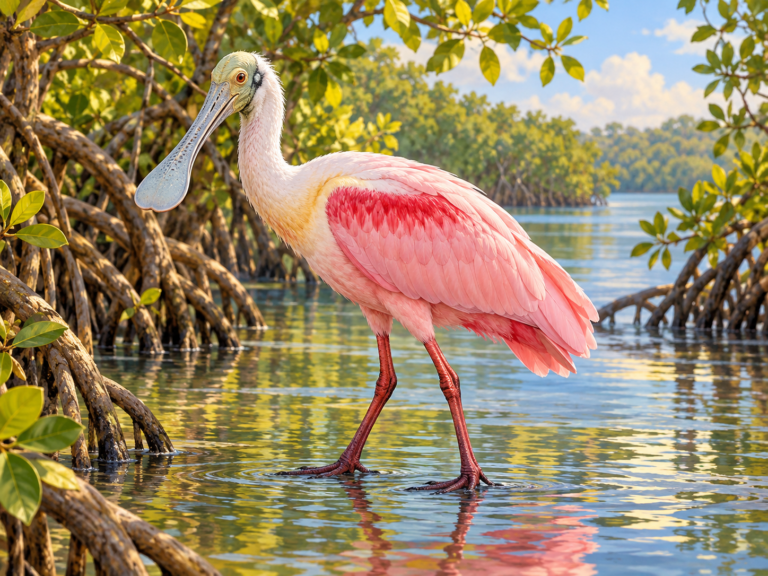
Roseate Spoonbill

Spanish name
Espátula rosada
Scientific name
Platalea ajaja

What Do Pico & Tati Think?

Pico: “Why does its bill widen at the end?”

Tati: “Let’s watch how it moves through the water.”

Identification

Key Features of the Roseate Spoonbill

  • Pink plumage, often paler in young birds.

  • Long bill with a broad, flattened spoon tip.

  • Side-to-side bill sweeping in shallow water.

Habitat & range

Shallow wetlands around Tempisque, Rio Frio and the Gulf of Nicoya, with smaller numbers elsewhere along the Pacific coast. Rare inland or Caribbean records are not used as core regional tags.

Conservation & care

Stay on authorized trails or viewing routes. Give birds space, keep voices low and leave nests undisturbed. Observe without bait, feeding or recorded calls.

Threats & pressures

Altered wetland water conditions can affect feeding habitat. Disturbance at nesting colonies can cause abandonment; keep boats and observers at a respectful distance.

View full profile →

Nature Field Guide

Rough Venus Clam

Spanish name
Almeja blanca
Scientific name
Leukoma asperrima

What Do Pico & Tati Think?

Fine crossing sculpture gives this small clam a textured surface.

Identification

Key Features of the Rough Venus Clam

  • Rounded to oval valves.

  • Radial ribs crossed by finer lines.

  • Compare intact shell sculpture and hinge with an identified reference.

Habitat & range

Documented on estuarine sand-mud flats at Punta Morales in the Gulf of Nicoya. The study supports the Puntarenas & the Gulf Islands browsing region; it does not establish a complete national range.

Conservation & care

Observe and photograph shells where they are. Leave living animals, occupied shells and empty shells in place. Do not pry animals from rocks, dig in mangroves or put fingers into shell openings. Explore with an adult or guide, follow site rules and stay clear of surf and slippery rocks.

View full profile →

Nature Field Guide

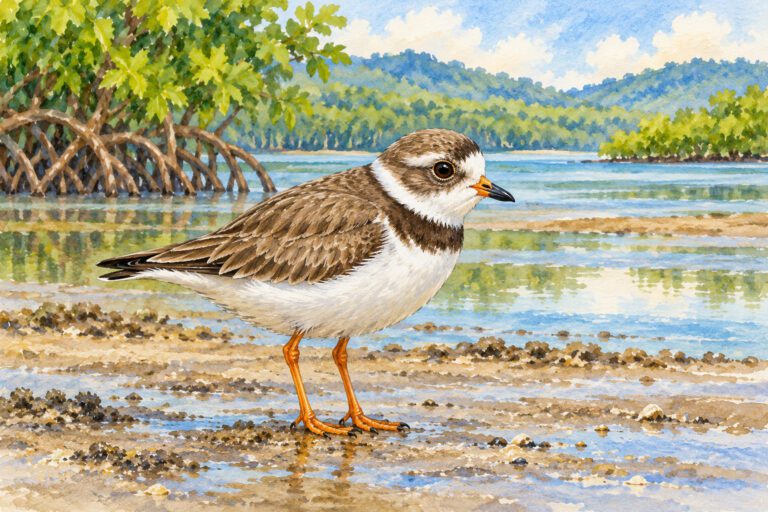
Semipalmated Plover

Spanish name
Chorlitejo semipalmado
Scientific name
Charadrius semipalmatus

What Do Pico & Tati Think?

Pico follows a run, then a stop. Tati notices one breast band on a small round shorebird.

Identification

Key Features of the Semipalmated Plover

  • Small compact brown-and-white body

  • One dark breast band

  • Short bill and orange legs

  • Run-and-pause feeding

Habitat & range

Scan exposed shoreline feeding areas and nearby resting places with binoculars. The tide changes which flats are available; remain on a safe established route.

Conservation & care

Give feeding and resting birds space. If a bird stops feeding, repeatedly looks at you or moves away, increase your distance. Keep dogs away from flocks, avoid playback and feeding, and leave nests and natural shoreline debris undisturbed.

View full profile →

Nature Field Guide

Smooth-ribbed Mangrove Cockle

Spanish name
Piangua o conchudo
Scientific name
Anadara similis

What Do Pico & Tati Think?

This mangrove cockle resembles its knobby relative, but details differ.

Identification

Key Features of the Smooth-ribbed Mangrove Cockle

  • Oval shell with many radial ribs.

  • Generally thinner shell and rounder upper outline than A. tuberculosa.

  • Compare rib structure and outer covering in identified photographs.

Habitat & range

Pacific mangrove-associated habitat.

Conservation & care

Observe and photograph shells where they are. Leave living animals, occupied shells and empty shells in place. Do not pry animals from rocks, dig in mangroves or put fingers into shell openings. Explore with an adult or guide, follow site rules and stay clear of surf and slippery rocks.

View full profile →

Nature Field Guide

Snowy Egret

Spanish name
Garceta patiamarilla
Scientific name
Egretta thula

What Do Pico & Tati Think?

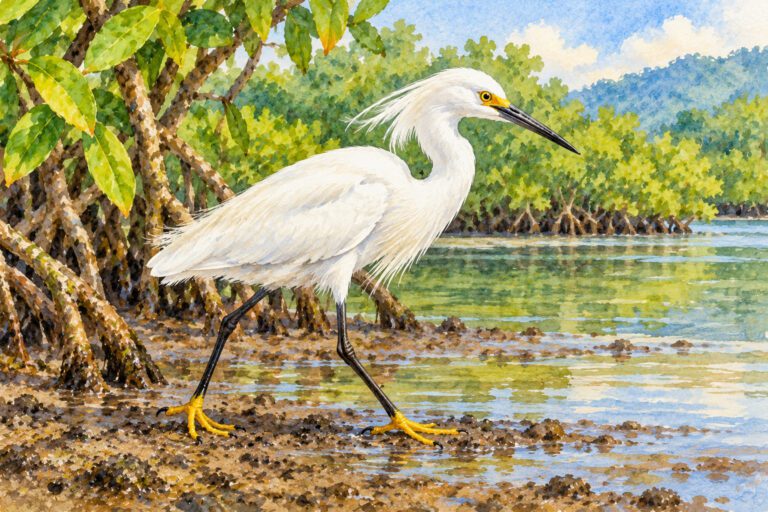
Those yellow feet catch Pico’s attention. Tati waits to see whether the bird uses them while feeding.

Identification

Key Features of the Snowy Egret

  • White body and slim black bill

  • Black legs with yellow feet

  • Often active in shallow water

Habitat & range

Scan shallow water, quiet mangrove channels and vegetated wetland margins from an established viewpoint. Follow a local guide’s directions around estuaries.

Conservation & care

Give feeding and resting birds space. If a bird stops feeding, repeatedly looks at you or moves away, increase your distance. Keep dogs away from flocks, avoid playback and feeding, and leave nests and natural shoreline debris undisturbed.

View full profile →

Nature Field Guide

Spectacled Caiman

Spanish name
Caimán de anteojos
Scientific name
Caiman crocodilus

What Do Pico & Tati Think?

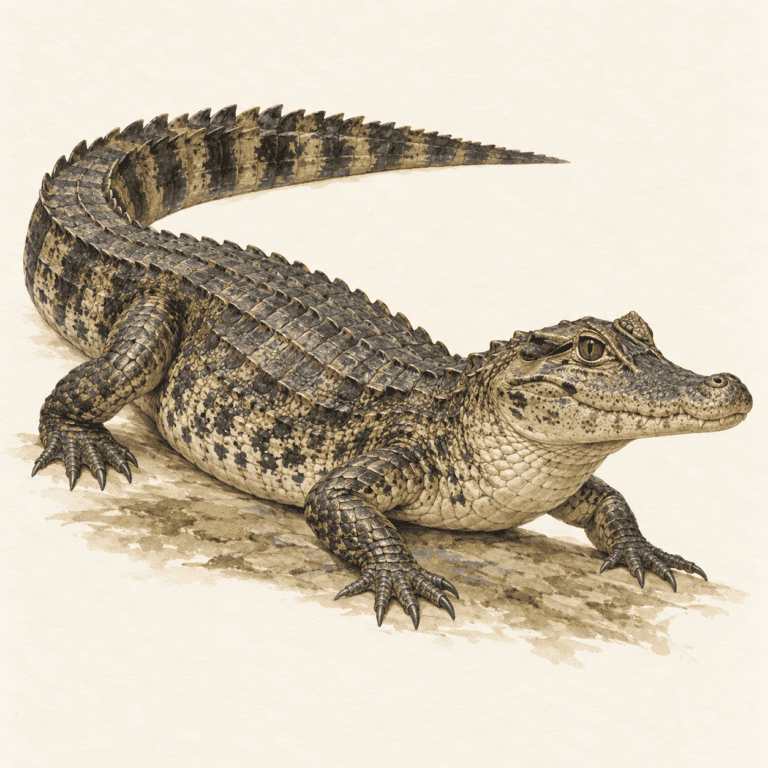
Pico and Tati invite you to learn about the spectacled caiman. Compare verified caiman and American crocodile photographs. Draw the eye ridge without treating it as a field safety test.

Identification

Key Features of the Spectacled Caiman

  • Bony ridge between the eyes.

  • Armored back and muscular tail.

  • Broad crocodilian head and body.

Habitat & range

Suitable lowland freshwater wetlands, rivers and ponds in Costa Rica.

Conservation & care

Observe only from a guide-approved viewing location. Stay away from water edges, never swim or wade where crocodilians may occur, and never feed or approach one. Keep children and pets well away from banks.

View full profile →

Nature Field Guide

Spotted Sandpiper

Spanish name
Andarríos maculado
Scientific name
Actitis macularius

What Do Pico & Tati Think?

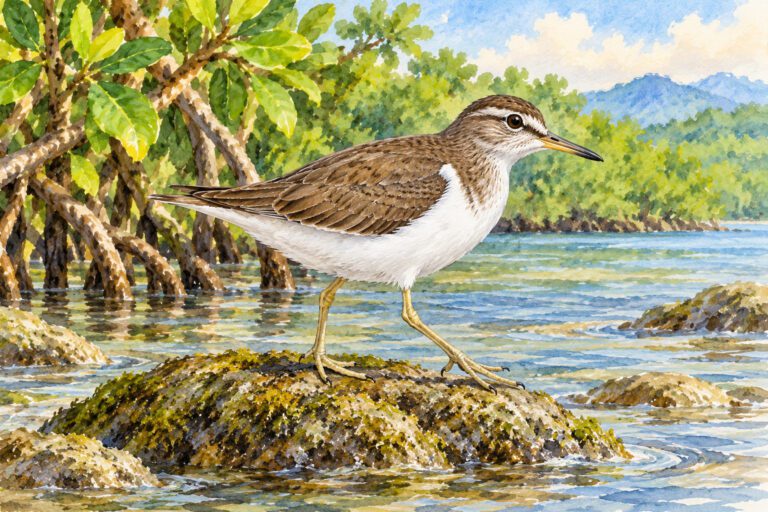
Pico looks for spots but finds a plain white belly. Tati learns that the name does not describe every season.

Identification

Key Features of the Spotted Sandpiper

  • Brown back and white underparts

  • Frequent tail bobbing

  • Short straight bill

  • Belly spots may be absent outside breeding

Habitat & range

Scan exposed shoreline feeding areas and nearby resting places with binoculars. The tide changes which flats are available; remain on a safe established route.

Conservation & care

Give feeding and resting birds space. If a bird stops feeding, repeatedly looks at you or moves away, increase your distance. Keep dogs away from flocks, avoid playback and feeding, and leave nests and natural shoreline debris undisturbed.

View full profile →

Nature Field Guide

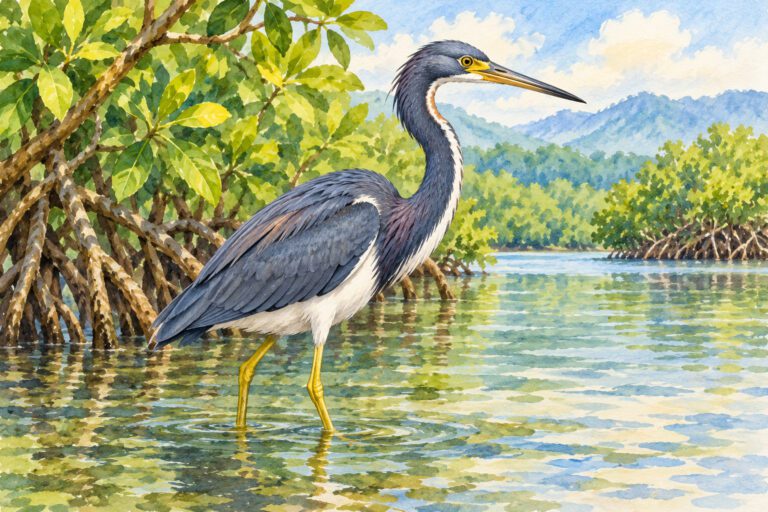
Tricolored Heron

Spanish name
Garceta tricolor
Scientific name
Egretta tricolor

What Do Pico & Tati Think?

Pico follows a quick turn in the shallows. Tati notices the white belly beneath the darker neck.

Identification

Key Features of the Tricolored Heron

  • Dark blue-gray upperparts

  • White belly and pale front-neck stripe

  • Long slim bill and lively feeding movements

Habitat & range

Scan shallow water, quiet mangrove channels and vegetated wetland margins from an established viewpoint. Follow a local guide’s directions around estuaries.

Conservation & care

Give feeding and resting birds space. If a bird stops feeding, repeatedly looks at you or moves away, increase your distance. Keep dogs away from flocks, avoid playback and feeding, and leave nests and natural shoreline debris undisturbed.

View full profile →

Nature Field Guide

West Indian Manatee

Spanish name
Manatí del Caribe
Scientific name
Trichechus manatus

What Do Pico & Tati Think?

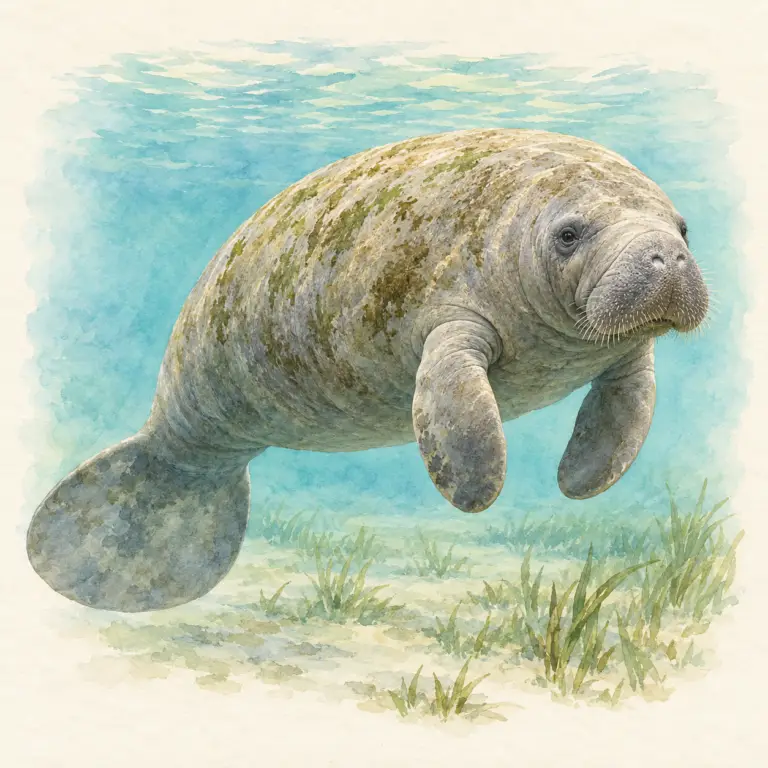
The West Indian manatee is a large aquatic mammal with a rounded paddle-shaped tail and a whiskered muzzle.

Identification

Key Features of the West Indian Manatee

  • Large rounded body with gray skin.

  • Blunt whiskered muzzle and two front flippers.

  • Broad rounded paddle tail, without a dolphin's split flukes or dorsal fin.

Habitat & range

Caribbean waterways and wetlands, including Tortuguero.

Conservation & care

Use a responsible local wildlife operator and follow site rules. Give aquatic mammals room to feed, rest and travel. Do not feed, touch, chase or enter the water to approach them. Keep waste and fishing line out of waterways.

Conservation assessment

Global species-level IUCN category reported by Mammal Diversity Database, checked October 2026. Subspecies and national categories can differ.

View full profile →

Nature Field Guide

Western Sandpiper

Spanish name
Correlimos occidental
Scientific name
Calidris mauri

What Do Pico & Tati Think?

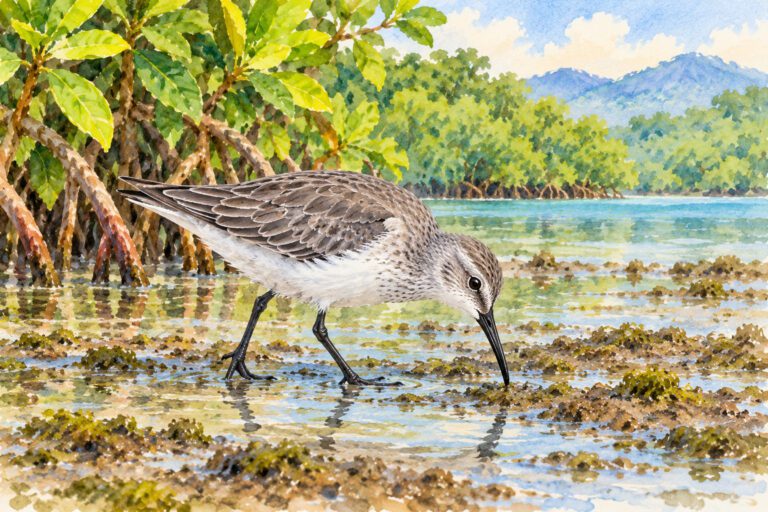
A tiny gray bird makes Pico slow down. Tati learns that some identifications deserve a question mark.

Identification

Key Features of the Western Sandpiper

  • Very small gray-and-white nonbreeding bird

  • Fine dark bill often slightly downcurved

  • Dark legs

  • Compare carefully with other small sandpipers

Habitat & range

Scan exposed shoreline feeding areas and nearby resting places with binoculars. The tide changes which flats are available; remain on a safe established route.

Conservation & care

Give feeding and resting birds space. If a bird stops feeding, repeatedly looks at you or moves away, increase your distance. Keep dogs away from flocks, avoid playback and feeding, and leave nests and natural shoreline debris undisturbed.

View full profile →

Nature Field Guide

White Ibis

Spanish name
Ibis blanco
Scientific name
Eudocimus albus

What Do Pico & Tati Think?

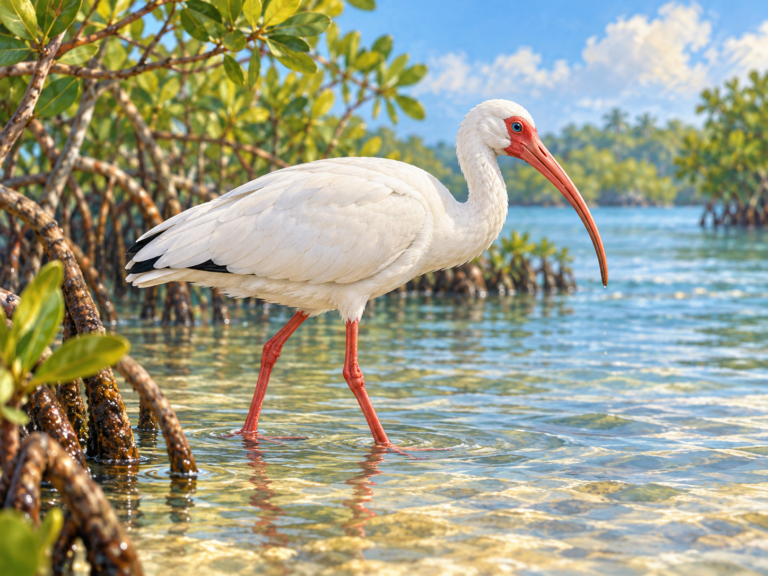
Pico: “Its bill curves down like a little hook.”

Tati: “I wonder what we can learn by watching how it searches for food.”

Identification

Key Features of the White Ibis

  • A long, downward-curving bill.

  • Adults have white plumage with black wing tips.

  • Reddish legs and bill on adults; younger birds are brown and white.

Habitat & range

Strongest around the Tempisque basin and Gulf of Nicoya, with seasonal occurrence in Rio Frio and local Pacific wetlands. Rare scattered records elsewhere are not used to populate every region.

Conservation & care

Keep enough distance that birds continue their natural activity. Stay out of nesting and roosting areas.

View full profile →

Nature Field Guide

White Mangrove

Spanish name
Mangle blanco
Scientific name
Laguncularia racemosa

What Do Pico & Tati Think?

Pico: “Rounded leaves and two tiny stalk glands are useful mangrove clues.”

Tati: “Let’s notice the leaves, flowers and habitat without disturbing the plant.”

Identification

Key Features of the White Mangrove

  • Opposite rounded leaves

  • Two small glands on the leaf stalk

  • Clusters of small ribbed fruits

Habitat & range

Coastal estuaries and mangrove margins; documented Pacific sites include Guanacaste and Tivives. Gandoca provides a documented Caribbean example.

Conservation & care

Stay on permitted paths or boardwalks with an adult. Do not break twigs, remove propagules or walk through mangrove roots and tidal mud.

Threats & pressures

Protect suitable habitat, mature trees and natural regeneration. Avoid trampling, unauthorized clearing and collection.

View full profile →

Nature Field Guide

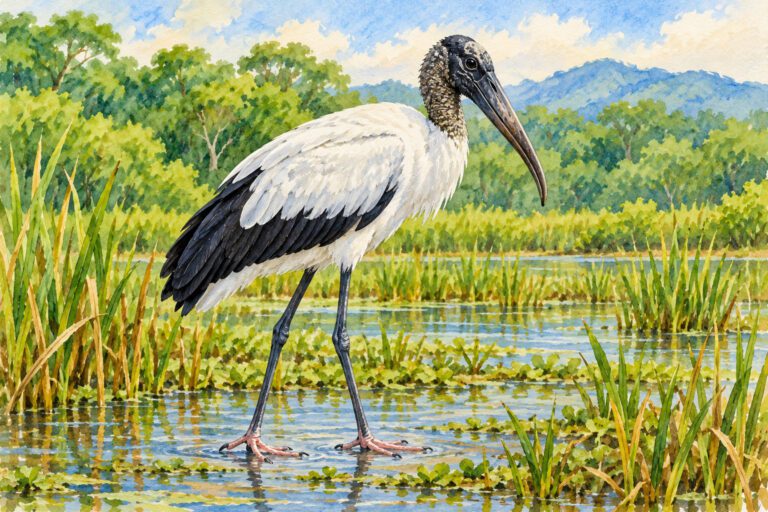
Wood Stork

Spanish name
Cigüeñón
Scientific name
Mycteria americana

What Do Pico & Tati Think?

Pico spots a tall white bird with a very different head. Tati checks its heavy bill before comparing it with the egrets.

Identification

Key Features of the Wood Stork

  • White body with black flight feathers

  • Bare dark adult head

  • Heavy slightly curved bill

  • Long legs

Habitat & range

Look across sheltered wetlands, lagoons and river margins from permitted trails or a responsible guided boat trip.

Conservation & care

Give feeding and resting birds space. If a bird stops feeding, repeatedly looks at you or moves away, increase your distance. Keep dogs away from flocks, avoid playback and feeding, and leave nests and natural shoreline debris undisturbed.

View full profile →

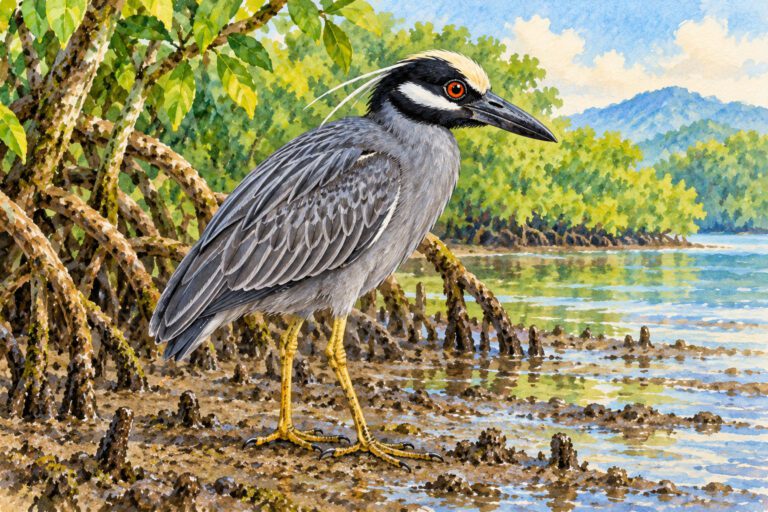
Nature Field Guide

Yellow-crowned Night-Heron

Spanish name
Martinete cabecipinto
Scientific name
Nyctanassa violacea

What Do Pico & Tati Think?

Pico reads the word night and expects an invisible bird. Tati learns that feeding can also happen in daylight.

Identification

Key Features of the Yellow-crowned Night-Heron

  • Adult gray body

  • Dark face with pale cheek and crown

  • Heavy dark bill

  • Juveniles are brown and spotted

Habitat & range

Scan shallow water, quiet mangrove channels and vegetated wetland margins from an established viewpoint. Follow a local guide’s directions around estuaries.

Conservation & care

Give feeding and resting birds space. If a bird stops feeding, repeatedly looks at you or moves away, increase your distance. Keep dogs away from flocks, avoid playback and feeding, and leave nests and natural shoreline debris undisturbed.

View full profile →

My Tico Explorer Experience

Save nature, towns, discoveries and learning adventures for your next experience.

Your list stays in this browser on this device.