Tico Explorers

Nature Field Guide

Mammals

Explore wildlife, plants and trees. Learn what to look for and where to find them.

All Nature

51 profiles

Nature Field Guide

Baird’s Tapir

Spanish name
Danta
Scientific name
Tapirus bairdii

What Do Pico & Tati Think?

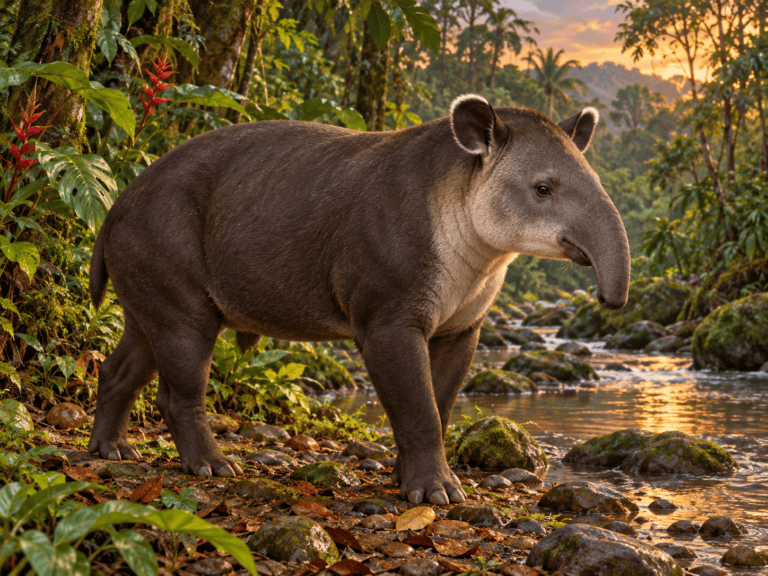
Pico: “Its nose can reach the leaves!”

Tati: “Let’s keep the path open and give it plenty of room.”

Identification

Key Features of the Baird’s Tapir

  • Large dark body and short flexible snout.

  • Pale edges around the ears.

  • Young calves have pale spots and stripes.

Habitat & range

Corcovado National Park’s forest and wetland landscape, including the Sirena area. Puerto Jiménez, Bahía Drake and Carate are gateways.

Conservation & care

Keep a respectful distance and leave an open route for the animal. Stay on authorized paths, secure food and rubbish, and observe without feeding, touching, baiting or chasing.

Threats & pressures

Habitat clearing and fragmentation, hunting and vehicle collisions threaten tapirs. Slow reproduction limits rapid recovery.

Conservation assessment

Global IUCN category as reported by the linked source, checked 7 October 2026. The source does not give an assessment year here. National legal protection and local abundance are separate questions.

View full profile →

Nature Field Guide

Brown-throated Three-toed Sloth

Spanish name
Perezoso de tres dedos
Scientific name
Bradypus variegatus

What Do Pico & Tati Think?

Pico: “That shape looks like part of the tree!”

Tati: “Let’s use binoculars and give it time.”

Identification

Key Features of the Brown-throated Three-toed Sloth

  • Three claws on each forelimb, if naturally visible.

  • Rounded face with a dark eye mask.

  • Gray-brown fur may have a greenish appearance.

Habitat & range

Manuel Antonio National Park and the studied cacao landscape at FINMAC, Pueblo Nuevo / Villa Francia, Limón.

Seasonal Calendar

Observed birth concentration

FINMAC cacao landscape, Pueblo Nuevo / Villa Francia

Jan, Feb, Mar

In 2010–2012, 59% of observed births occurred in these months; births also occurred outside this window.

Event source ↗

Conservation & care

Keep a respectful distance and leave an open route for the animal. Stay on authorized paths, secure food and rubbish, and observe without feeding, touching, baiting or chasing.

Threats & pressures

Forest loss breaks canopy connections. Caribbean research identifies risks from domestic dogs and emphasizes retaining riverside forest and living fences.

View full profile →

Nature Field Guide

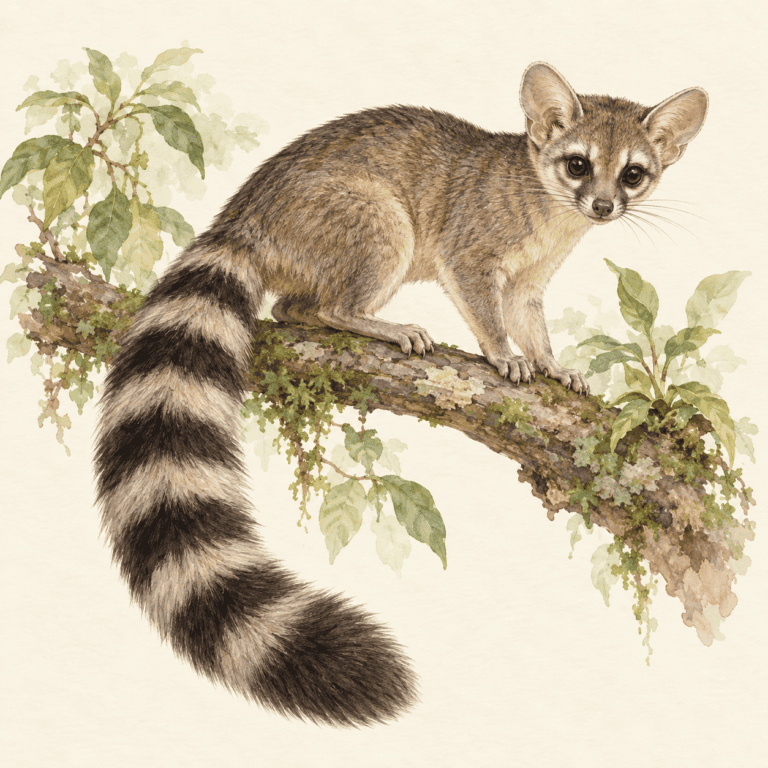
Cacomistle

Spanish name
Ostoche
Scientific name
Bassariscus sumichrasti

What Do Pico & Tati Think?

A cacomistle's long ringed tail is a memorable clue.

Identification

Key Features of the Cacomistle

  • Slender body, pointed face and relatively large ears.

  • Very long bushy tail with alternating pale and dark bands.

  • Usually associated with wooded habitat and climbing.

Habitat & range

Evergreen and mountain forests, with some use of seasonally dry forest.

Conservation & care

Explore with an adult or local guide. Observe quietly from a distance, stay on established trails and leave shelter undisturbed. Do not feed, touch, capture or corner wildlife. Keep pets away.

View full profile →

Nature Field Guide

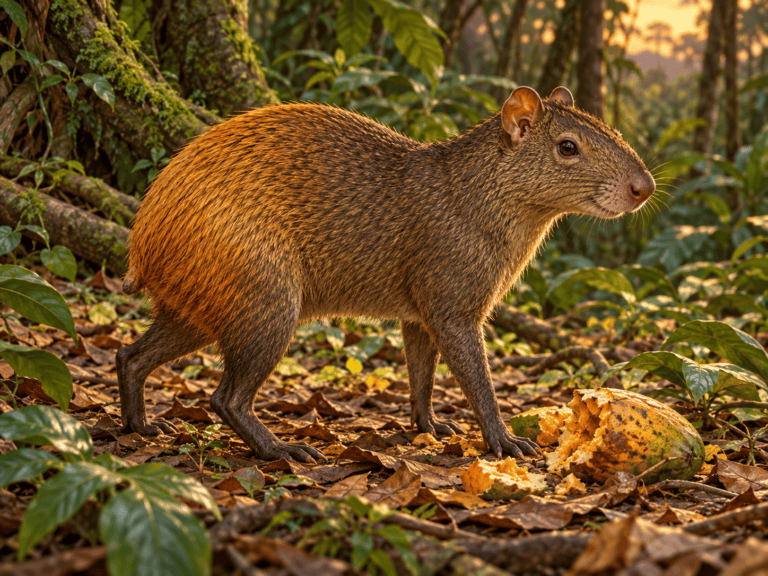
Central American Agouti

Spanish name
Guatusa / Guatuza
Scientific name
Dasyprocta punctata

What Do Pico & Tati Think?

Pico: “It is carrying something from the forest floor!”

Tati: “A stored seed might become a tree.”

Identification

Key Features of the Central American Agouti

  • Rounded back, long legs and almost invisible tail.

  • Warm orange-brown to dark brown fur.

  • Often handles food with the forepaws.

Habitat & range

Sierra Zapote’s forest floor in Las Juntas district, Abangares; dry and humid forests can both provide habitat.

Conservation & care

Keep a respectful distance and leave an open route for the animal. Stay on authorized paths, secure food and rubbish, and observe without feeding, touching, baiting or chasing.

View full profile →

Nature Field Guide

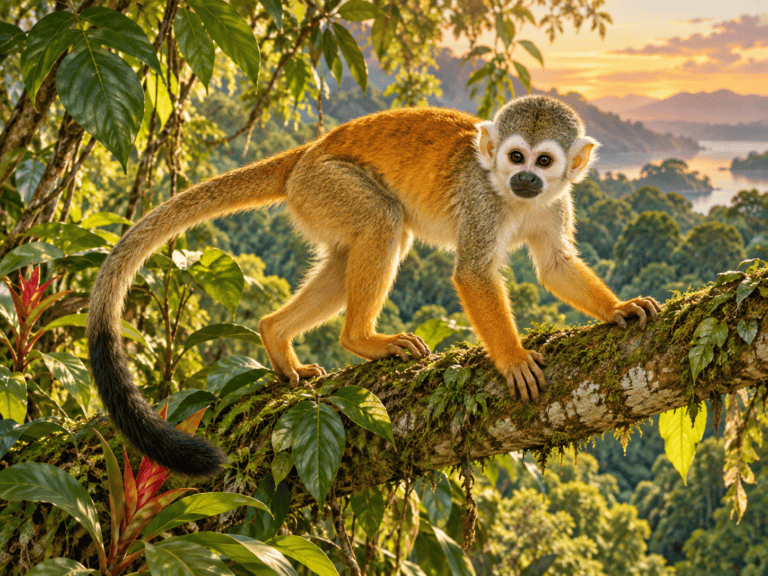
Central American Squirrel Monkey

Spanish name
Mono tití / Mono ardilla
Scientific name
Saimiri oerstedii

What Do Pico & Tati Think?

Pico: “The little monkeys are moving together!”

Tati: “Let’s watch the troop without following it off the trail.”

Identification

Key Features of the Central American Squirrel Monkey

  • Small slender monkey with pale facial markings.

  • Warm reddish or yellow-brown back.

  • Long tail and rapid movements through vegetation.

Habitat & range

Manuel Antonio National Park near Quepos; this species also occupies parts of the southern Pacific lowlands.

Conservation & care

Keep a respectful distance and leave an open route for the animal. Stay on authorized paths, secure food and rubbish, and observe without feeding, touching, baiting or chasing.

Threats & pressures

Forest destruction is a serious pressure for a species with a restricted geographic range.

Protection & recovery

Costa Rica’s government wildlife guide explicitly identifies this species as protected nationally. This legal designation is separate from its global IUCN category.

Conservation assessment

Global IUCN category as reported by the linked source, checked 7 October 2026. The source does not give an assessment year here. National legal protection and local abundance are separate questions.

View full profile →

Nature Field Guide

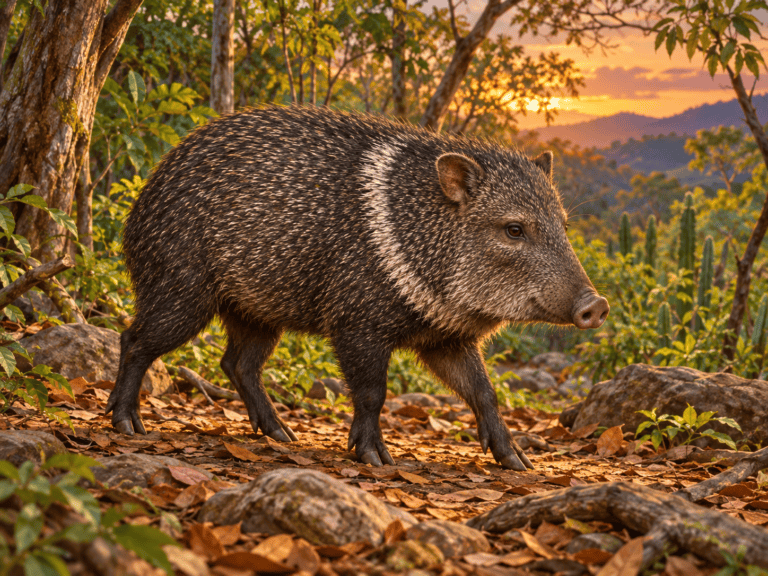
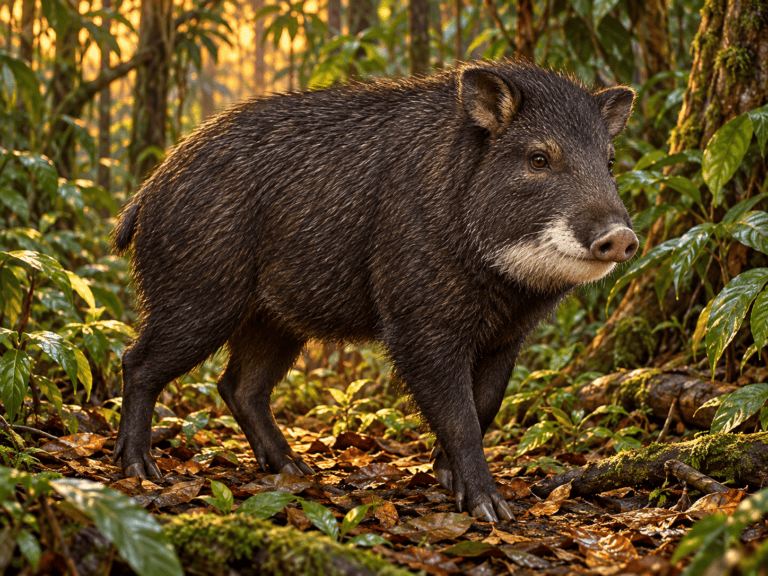
Collared Peccary

Spanish name
Saíno
Scientific name
Dicotyles tajacu

What Do Pico & Tati Think?

Pico: “I can see a pale band near its shoulders!”

Tati: “Let’s step back and leave space for the group.”

Identification

Key Features of the Collared Peccary

  • Pale collar around neck and shoulders.

  • Dark bristly coat and compact hoofed body.

  • Very short tail.

Habitat & range

Reserva Sierra Zapote in Las Juntas district and other dry or humid forest landscapes.

Seasonal Calendar

Breeding possible

Costa Rica; broad natural-history account

Year-round

Reproduction is not confined to a fixed season; local peaks vary with habitat and resources.

Event source ↗

Conservation & care

Keep a respectful distance and leave an open route for the animal. Stay on authorized paths, secure food and rubbish, and observe without feeding, touching, baiting or chasing.

Threats & pressures

Forest loss and fragmentation, hunting and conflict over crops are documented pressures.

View full profile →

Nature Field Guide

Common Bottlenose Dolphin

Spanish name
Delfín nariz de botella
Scientific name
Tursiops truncatus

What Do Pico & Tati Think?

The common bottlenose dolphin has a short thick beak and a generally gray body.

Identification

Key Features of the Common Bottlenose Dolphin

  • Short thick beak and robust gray body.

  • Curved dorsal fin and paler underside.

  • Horizontal tail flukes; other dolphin species require careful comparison.

Habitat & range

Suitable Costa Rican coastal and offshore waters.

Conservation & care

Use a responsible local wildlife operator and follow site rules. Give aquatic mammals room to feed, rest and travel. Do not feed, touch, chase or enter the water to approach them. Keep waste and fishing line out of waterways.

View full profile →

Nature Field Guide

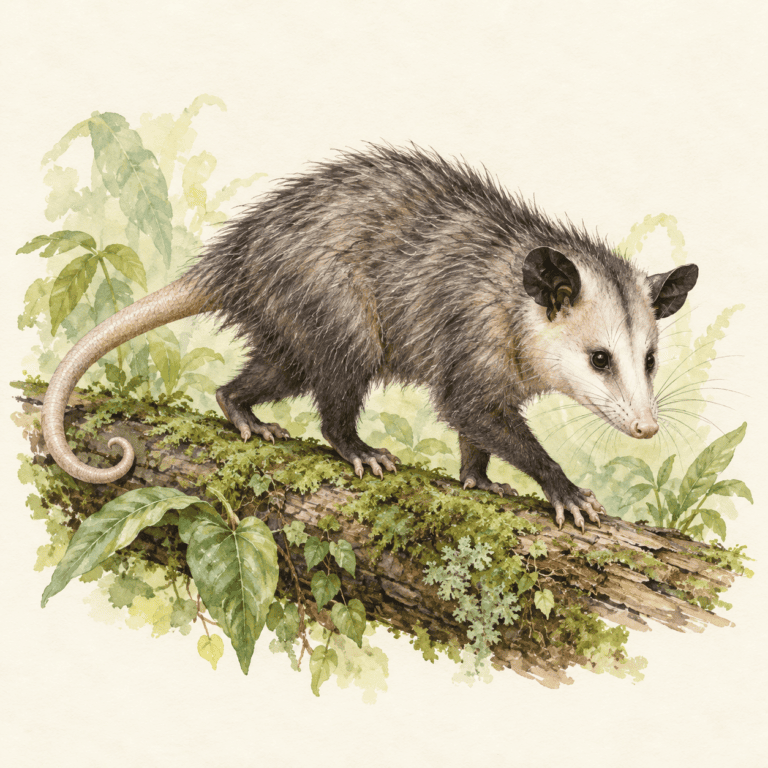
Common Opossum

Spanish name
Zorro pelón común
Scientific name
Didelphis marsupialis

What Do Pico & Tati Think?

The common opossum is a marsupial: its young complete an important part of their development attached to their mother's teats, protected in her pouch.

Identification

Key Features of the Common Opossum

  • Coarse gray to dark fur and a pale pointed face.

  • Dark, largely hairless ears and a pink nose.

  • Long mostly bare tail; other opossums can look similar.

Habitat & range

Forests, wooded edges and some human-modified landscapes.

Conservation & care

Explore with an adult or local guide. Observe quietly from a distance, stay on established trails and leave shelter undisturbed. Do not feed, touch, capture or corner wildlife. Keep pets away.

View full profile →

Nature Field Guide

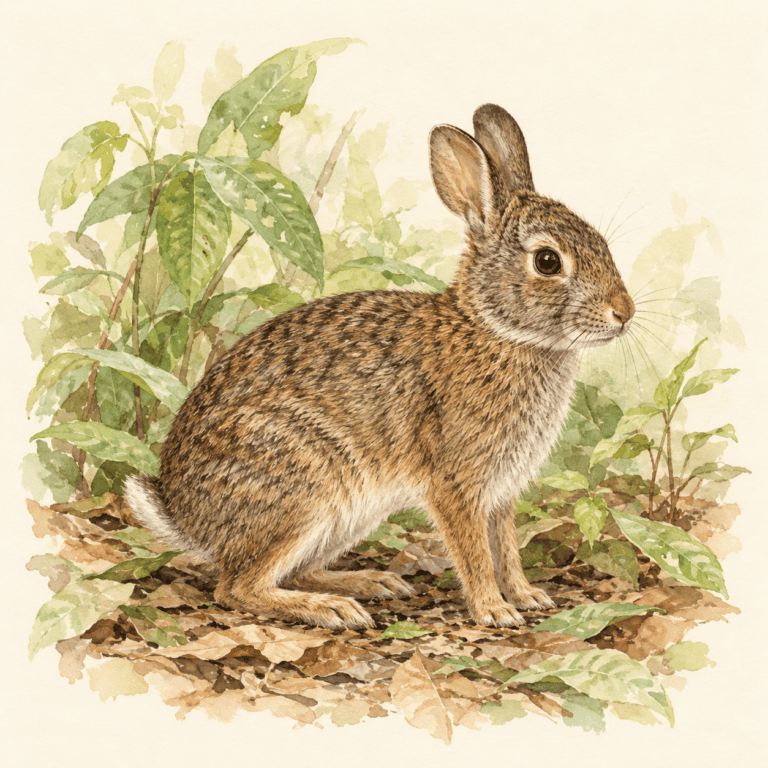
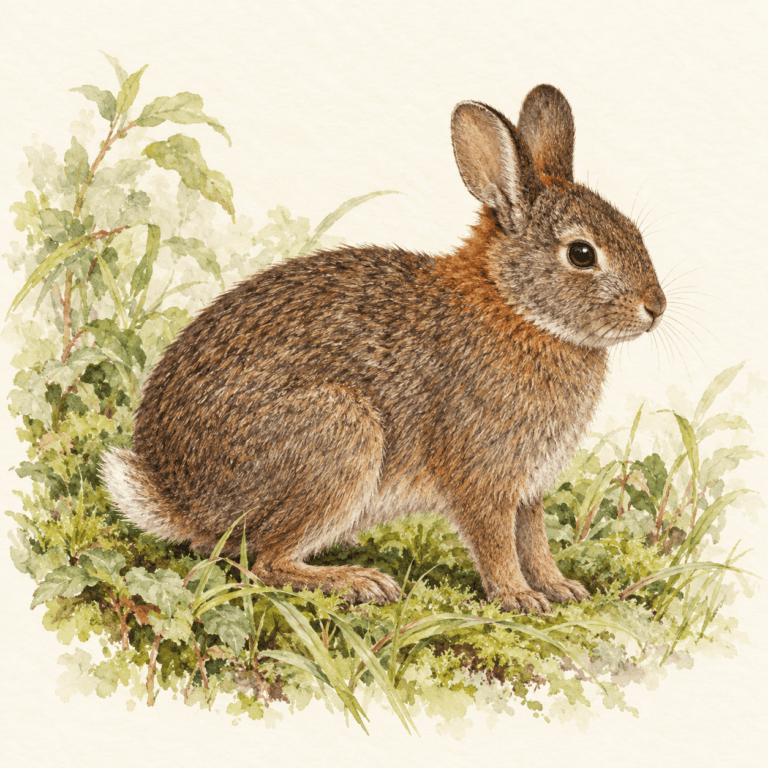
Costa Rica Forest Rabbit

Spanish name
Conejo de monte de Costa Rica
Scientific name
Sylvilagus gabbi

What Do Pico & Tati Think?

The Costa Rica forest rabbit is a native forest rabbit, not a domestic bunny living outdoors.

What does Least Concern mean?

In the linked conservation assessment, this species does not qualify as threatened or near threatened with extinction. It still needs care: local populations and habitats can face problems even when the species has a lower extinction risk overall.

This label describes conservation status. It does not tell us whether a plant is safe for children or pets. Select the status button to read the assessment.

Identification

Key Features of the Costa Rica Forest Rabbit

  • Small brown forest rabbit with a compact body.

  • Relatively short ears and an inconspicuous tail.

  • Use locality and expert advice to distinguish similar rabbits.

Habitat & range

Suitable wooded lowland landscapes and forest cover; local distribution varies.

Conservation & care

Explore with an adult or local guide. Observe quietly from a distance, stay on established trails and leave shelter undisturbed. Do not feed, touch, capture or corner wildlife. Keep pets away.

Conservation assessment

Global IUCN category reported by the linked specialist or Mammal Diversity Database account, checked October 2026. Least Concern does not mean there are no threats or that every local population is secure.

View full profile →

Nature Field Guide

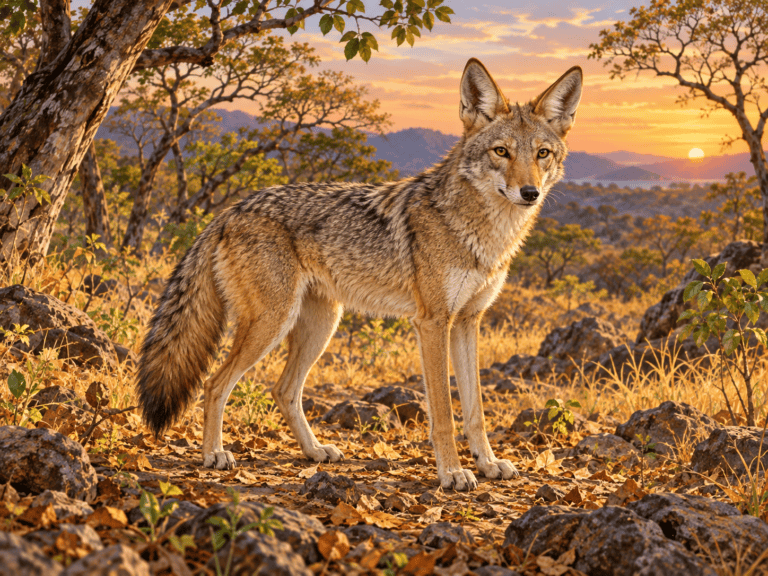
Coyote

Spanish name
Coyote
Scientific name
Canis latrans

What Do Pico & Tati Think?

Pico: “Its ears and bushy tail look different from a fox!”

Tati: “A wild animal should keep finding its own food.”

Identification

Key Features of the Coyote

  • Pointed muzzle and large upright ears.

  • Mixed gray-brown coat with paler underside.

  • Bushy tail usually carried low.

Habitat & range

Sierra Zapote’s forest-edge landscape in Las Juntas, Abangares, and other Guanacaste lowlands.

Conservation & care

Keep a respectful distance and leave an open route for the animal. Stay on authorized paths, secure food and rubbish, and observe without feeding, touching, baiting or chasing.

View full profile →

Nature Field Guide

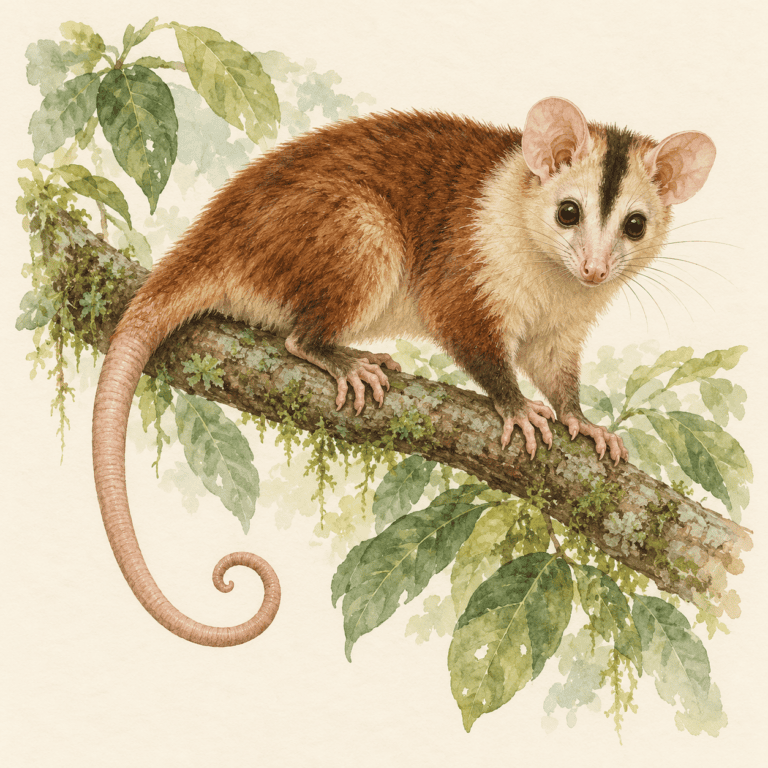
Derby’s Woolly Opossum

Spanish name
Zorro de balsa
Scientific name
Caluromys derbianus

What Do Pico & Tati Think?

Derby's woolly opossum is a tree-climbing marsupial with soft fur, large eyes and a dark stripe down its pale face.

Identification

Key Features of the Derby’s Woolly Opossum

  • Soft woolly coat, often reddish brown with pale patches.

  • Large eyes and a dark stripe down the center of a pale face.

  • Long gripping tail with a furred base and mostly bare outer portion.

Habitat & range

Humid forests, forest edges and other wooded habitats.

Conservation & care

Explore with an adult or local guide. Observe quietly from a distance, stay on established trails and leave shelter undisturbed. Do not feed, touch, capture or corner wildlife. Keep pets away.

View full profile →

Nature Field Guide

Dice’s Cottontail

Spanish name
Conejo de Dice
Scientific name
Sylvilagus dicei

What Do Pico & Tati Think?

Dice's cottontail is a mountain rabbit found in Costa Rica and western Panama.

Identification

Key Features of the Dice’s Cottontail

  • Small brown rabbit with fairly short ears.

  • Often a darker or reddish area around the nape.

  • Highland locality is important; appearance alone may be insufficient.

Habitat & range

Costa Rican highlands, including the Talamanca mountain region.

Conservation & care

Explore with an adult or local guide. Observe quietly from a distance, stay on established trails and leave shelter undisturbed. Do not feed, touch, capture or corner wildlife. Keep pets away.

Conservation assessment

Global IUCN category reported by Mammal Diversity Database, checked October 2026. Vulnerable means assessed as facing a high risk of extinction in the wild; it does not mean every local population has the same condition.

View full profile →

Nature Field Guide

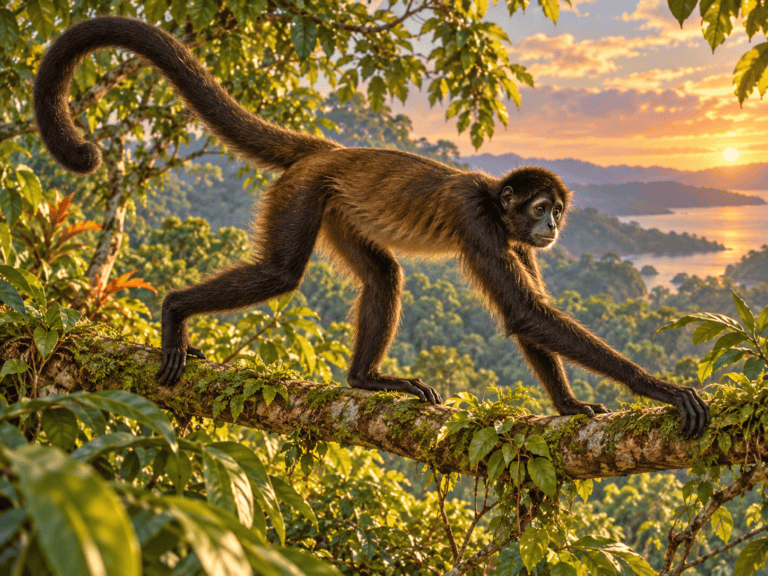
Geoffroy’s Spider Monkey

Spanish name
Mono araña / Mono colorado
Scientific name
Ateles geoffroyi

What Do Pico & Tati Think?

Pico: “Its tail is holding a branch too!”

Tati: “The forest needs connected treetops.”

Identification

Key Features of the Geoffroy’s Spider Monkey

  • Very long limbs and slender body.

  • Strong grasping tail with a bare gripping surface near its tip.

  • Brown to reddish fur; color varies.

Habitat & range

Manuel Antonio’s forest landscape; ACG also documents this species in rainforest at Botarrama.

Conservation & care

Keep a respectful distance and leave an open route for the animal. Stay on authorized paths, secure food and rubbish, and observe without feeding, touching, baiting or chasing.

Threats & pressures

Forest loss, capture for pets and hunting combine with slow reproduction to make recovery difficult.

Conservation assessment

Global IUCN category as reported by the linked source, checked 7 October 2026. The source does not give an assessment year here. National legal protection and local abundance are separate questions.

View full profile →

Nature Field Guide

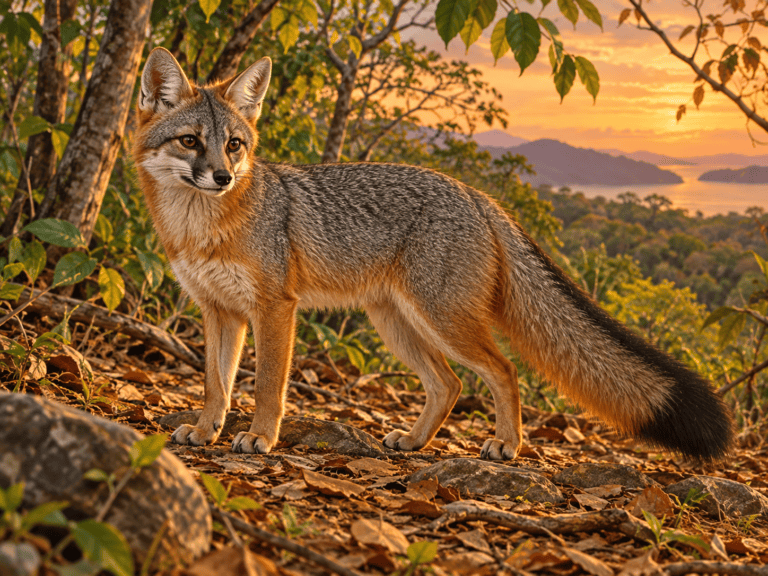
Gray Fox

Spanish name
Zorro gris
Scientific name
Urocyon cinereoargenteus

What Do Pico & Tati Think?

Pico: “A fox can use trees too?”

Tati: “Different animals use the forest in different ways.”

Identification

Key Features of the Gray Fox

  • Gray back with reddish sides and legs.

  • Triangular upright ears and pointed muzzle.

  • Dark upper surface of the bushy tail.

Habitat & range

Dry-forest and wooded-edge habitat in the Horizontes landscape near Liberia.

Conservation & care

Keep a respectful distance and leave an open route for the animal. Stay on authorized paths, secure food and rubbish, and observe without feeding, touching, baiting or chasing.

View full profile →

Nature Field Guide

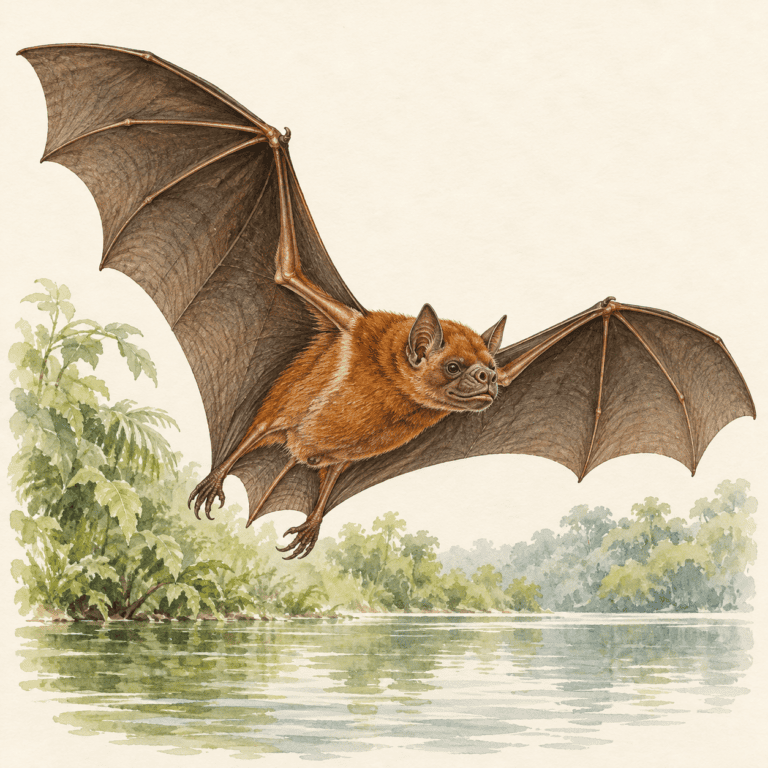
Greater Bulldog Bat

Spanish name
Murciélago pescador mayor
Scientific name
Noctilio leporinus

What Do Pico & Tati Think?

The greater bulldog bat is one of the bats that regularly catches fish.

Identification

Key Features of the Greater Bulldog Bat

  • Prominent folded lips and pointed ears.

  • Large clawed hind feet adapted for fishing.

  • Short fur that can be reddish, brown or grayish.

Habitat & range

Rivers, ponds and suitable coastal waters near roosting habitat.

Conservation & care

Observe bats from a distance with an adult or guide. Do not touch, feed or handle any bat, including one found on the ground. Leave roosts undisturbed, avoid direct flash and ask local wildlife professionals for help if an animal appears injured.

View full profile →

Nature Field Guide

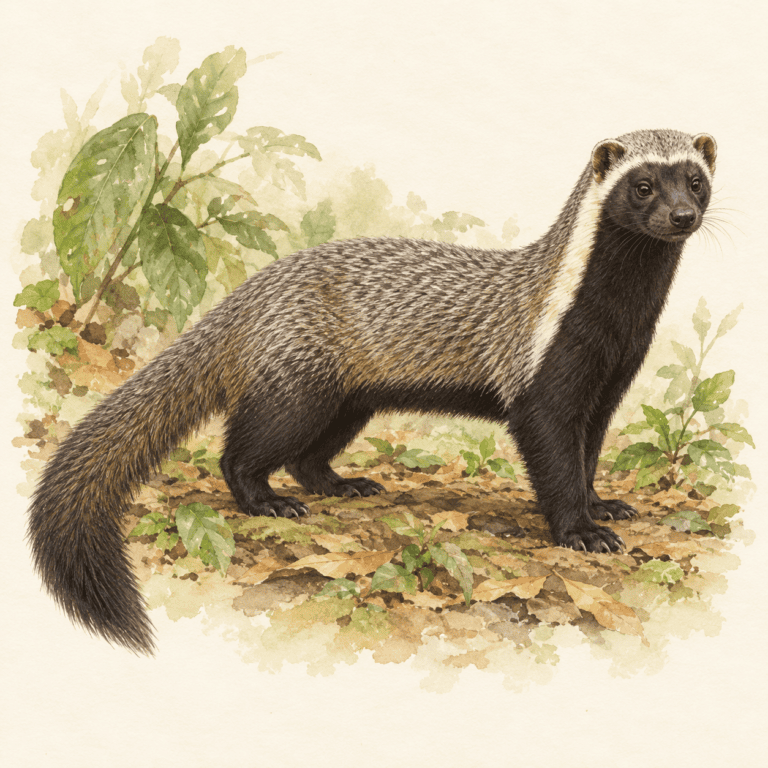
Greater Grison

Spanish name
Grisón
Scientific name
Galictis vittata

What Do Pico & Tati Think?

The greater grison has a long low body, short legs and a striking pale stripe separating its dark face and underside from its grizzled back.

Identification

Key Features of the Greater Grison

  • Long slim body carried on short legs.

  • Grizzled gray back with dark face, belly and legs.

  • Pale stripe across the forehead and down the sides of the shoulders.

Habitat & range

Forests, wooded edges and other suitable landscapes, often near freshwater.

Conservation & care

Explore with an adult or local guide. Observe quietly from a distance, stay on established trails and leave shelter undisturbed. Do not feed, touch, capture or corner wildlife. Keep pets away.

View full profile →

Nature Field Guide

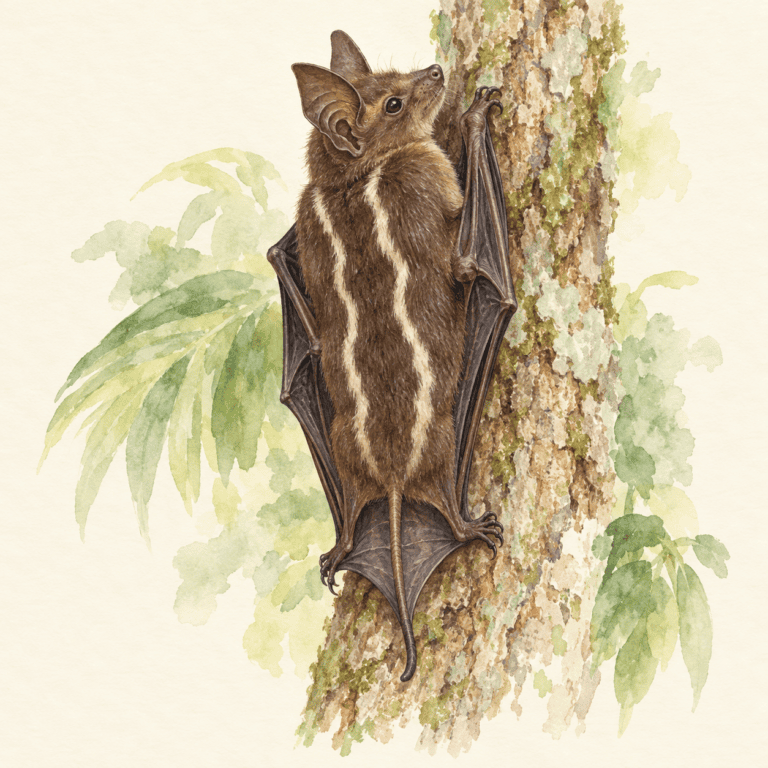
Greater Sac-winged Bat

Spanish name
Murciélago listado de sacos mayor
Scientific name
Saccopteryx bilineata

What Do Pico & Tati Think?

Two pale wavy stripes down a dark back are a starting clue for the greater sac-winged bat.

Identification

Key Features of the Greater Sac-winged Bat

  • Dark brown coat with two narrow pale wavy back stripes.

  • Small bat with pointed ears and dark membranous wings.

  • Similar species need expert comparison; never handle a bat to inspect wing sacs.

Habitat & range

Suitable tropical wooded habitat with undisturbed roosting surfaces.

Conservation & care

Observe bats from a distance with an adult or guide. Do not touch, feed or handle any bat, including one found on the ground. Leave roosts undisturbed, avoid direct flash and ask local wildlife professionals for help if an animal appears injured.

View full profile →

Nature Field Guide

Hoffmann’s Two-toed Sloth

Spanish name
Perezoso de dos dedos
Scientific name
Choloepus hoffmanni

What Do Pico & Tati Think?

Pico: “Is this the same kind of sloth?”

Tati: “We need more than its color to tell.”

Identification

Key Features of the Hoffmann’s Two-toed Sloth

  • Two long claws on each forelimb.

  • Long shaggy fur and a prominent rounded snout.

  • Identify with a guide; color alone is unreliable.

Habitat & range

The studied FINMAC cacao and riverside-forest landscape at Pueblo Nuevo / Villa Francia, Limón.

Seasonal Calendar

Births across the year

FINMAC cacao landscape, Pueblo Nuevo / Villa Francia

Year-round

Study births were spread across months; none was recorded in August. This is asynchronous reproduction, not an August exclusion rule.

Event source ↗

Conservation & care

Keep a respectful distance and leave an open route for the animal. Stay on authorized paths, secure food and rubbish, and observe without feeding, touching, baiting or chasing.

Threats & pressures

Deforestation removes feeding trees and canopy routes. Sloth research emphasizes connected habitat and avoiding removal of wild animals.

View full profile →

Nature Field Guide

Honduran White Bat

Spanish name
Murciélago blanco
Scientific name
Ectophylla alba

What Do Pico & Tati Think?

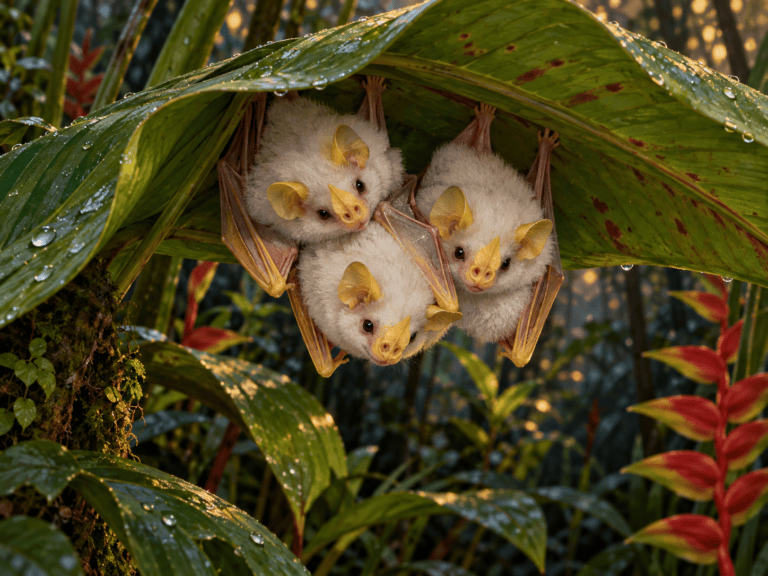
Pico: “Those white shapes are bats under a leaf!”

Tati: “Their leaf tent is a home we leave untouched.”

Identification

Key Features of the Honduran White Bat

  • Tiny pale or white-furred bat.

  • Yellowish ears and nose.

  • May rest in groups beneath a leaf tent.

Habitat & range

Tirimbina Biological Reserve at La Virgen de Sarapiquí, Heredia.

Conservation & care

Leave leaf tents and surrounding vegetation untouched. Follow a guide’s viewing distance and light guidance; never handle bats or expose a resting group for a photograph.

View full profile →

Nature Field Guide

Humpback Whale

Spanish name
Ballena jorobada
Scientific name
Megaptera novaeangliae

What Do Pico & Tati Think?

A humpback whale is a mammal that breathes air through blowholes and nurses its young with milk.

Identification

Key Features of the Humpback Whale

  • Very long pectoral flippers and bumps on the head.

  • Small dorsal fin on a raised hump.

  • Broad tail flukes with variable underside patterns.

Habitat & range

Costa Rican marine waters; arrange viewing with a responsible operator using current local knowledge.

Conservation & care

Use a responsible local wildlife operator and follow site rules. Give aquatic mammals room to feed, rest and travel. Do not feed, touch, chase or enter the water to approach them. Keep waste and fishing line out of waterways.

View full profile →

Nature Field Guide

Jaguar

Spanish name
Jaguar / Tigre
Scientific name
Panthera onca

What Do Pico & Tati Think?

Pico: “A forest can hide a very large cat!”

Tati: “A camera-trap record helps us learn without approaching it.”

Identification

Key Features of the Jaguar

  • Broad head and muscular body.

  • Rosettes often contain smaller dark spots.

  • Relatively thick limbs and shorter tail than a puma.

Habitat & range

Tortuguero National Park’s protected forest landscape; ACG camera traps also document the species in Pitilla.

Conservation & care

Keep a respectful distance and leave an open route for the animal. Stay on authorized paths, secure food and rubbish, and observe without feeding, touching, baiting or chasing.

Threats & pressures

Forest loss, hunting of prey and retaliatory killing after livestock conflict are documented pressures.

Protection & recovery

Costa Rica’s government wildlife guide explicitly identifies this species as protected nationally. This legal designation is separate from its global IUCN category.

Conservation assessment

Global IUCN category as reported by the linked source, checked 7 October 2026. The source does not give an assessment year here. National legal protection and local abundance are separate questions.

View full profile →

Nature Field Guide

Jaguarundi

Spanish name
Yaguarundí / León breñero
Scientific name
Herpailurus yagouaroundi

What Do Pico & Tati Think?

Pico: “That outline is different from the spotted cats!”

Tati: “A brief view still needs careful identification.”

What does Least Concern mean?

In the linked conservation assessment, this species does not qualify as threatened or near threatened with extinction. It still needs care: local populations and habitats can face problems even when the species has a lower extinction risk overall.

This label describes conservation status. It does not tell us whether a plant is safe for children or pets. Select the status button to read the assessment.

Identification

Key Features of the Jaguarundi

  • Long low body and short legs.

  • Plain gray-brown or reddish coat, not rosettes.

  • Small rounded ears and long tail.

Habitat & range

Reserva Sierra Zapote in Las Juntas district, Abangares, Guanacaste.

Conservation & care

Keep a respectful distance and leave an open route for the animal. Stay on authorized paths, secure food and rubbish, and observe without feeding, touching, baiting or chasing.

Threats & pressures

Loss of suitable habitat and prey is a documented concern even where the global species category is Least Concern.

Protection & recovery

Costa Rica’s government wildlife guide explicitly identifies this species as protected nationally. This legal designation is separate from its global IUCN category.

Conservation assessment

Global IUCN category as reported by the linked source, checked 7 October 2026. The source does not give an assessment year here. National legal protection and local abundance are separate questions.

View full profile →

Nature Field Guide

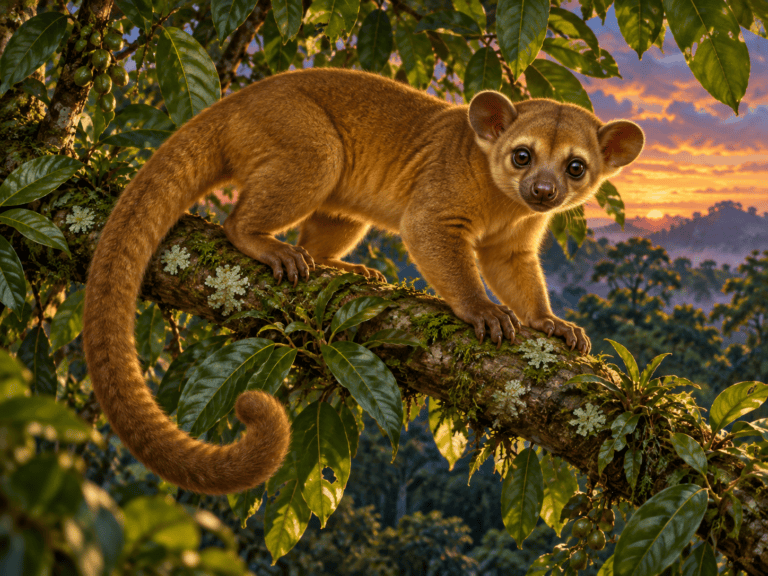
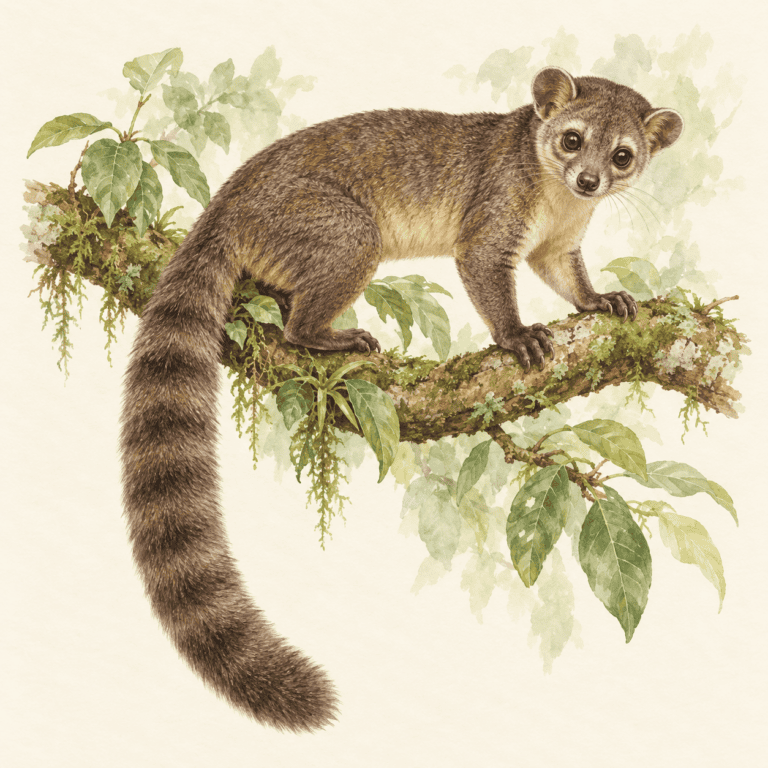
Kinkajou

Spanish name
Martilla / Mico de noche
Scientific name
Potos flavus

What Do Pico & Tati Think?

Pico: “It looks a little like a monkey!”

Tati: “It is actually related to coatis and raccoons.”

What does Least Concern mean?

In the linked conservation assessment, this species does not qualify as threatened or near threatened with extinction. It still needs care: local populations and habitats can face problems even when the species has a lower extinction risk overall.

This label describes conservation status. It does not tell us whether a plant is safe for children or pets. Select the status button to read the assessment.

Identification

Key Features of the Kinkajou

  • Golden-brown coat and rounded ears.

  • Long grasping tail without a raccoon’s bold rings.

  • Tree-dwelling mammal, not a monkey.

Habitat & range

Wooded South Pacific landscapes; a documented wildlife rescue occurred beside the Río Abrojo near Abrojo.

Conservation & care

Keep a respectful distance and leave an open route for the animal. Stay on authorized paths, secure food and rubbish, and observe without feeding, touching, baiting or chasing.

Threats & pressures

Forest gaps can interrupt treetop travel. A Costa Rican rescue record also documents injuries associated with dogs.

Protection & recovery

Costa Rica’s government wildlife guide explicitly identifies this species as protected nationally. This legal designation is separate from its global IUCN category.

Conservation assessment

Global IUCN category as reported by the linked source, checked 7 October 2026. The source does not give an assessment year here. National legal protection and local abundance are separate questions.

View full profile →

Nature Field Guide

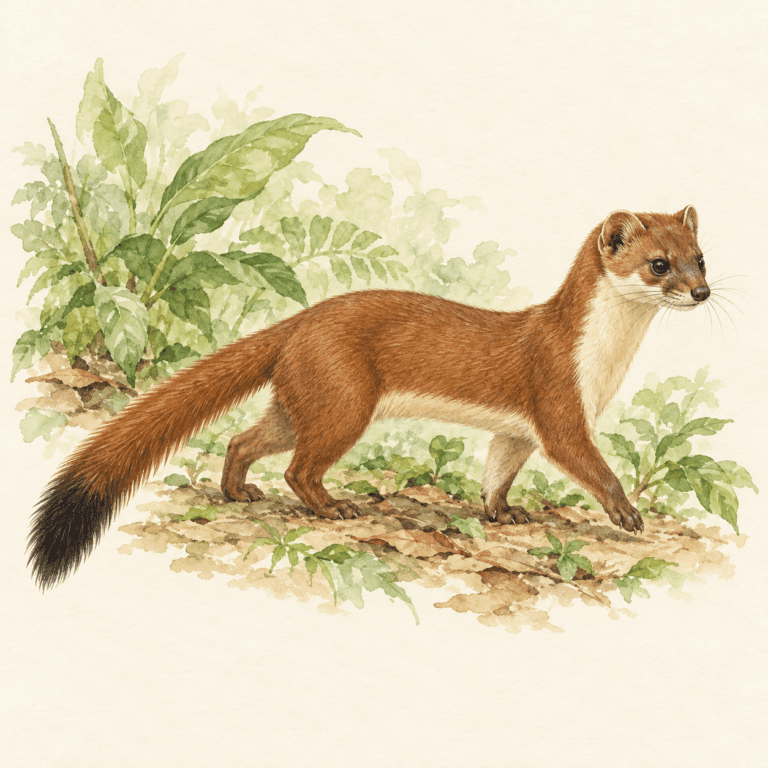
Long-tailed Weasel

Spanish name
Comadreja de cola larga
Scientific name
Neogale frenata

What Do Pico & Tati Think?

A long-tailed weasel has a narrow flexible body that helps it move through cover and investigate small spaces.

Identification

Key Features of the Long-tailed Weasel

  • Very slender body with short legs and a small head.

  • Brown upper coat and pale underside.

  • Long tail with a black tip.

Habitat & range

Wooded edges, scrub and other suitable partly open landscapes.

Conservation & care

Explore with an adult or local guide. Observe quietly from a distance, stay on established trails and leave shelter undisturbed. Do not feed, touch, capture or corner wildlife. Keep pets away.

View full profile →

Nature Field Guide

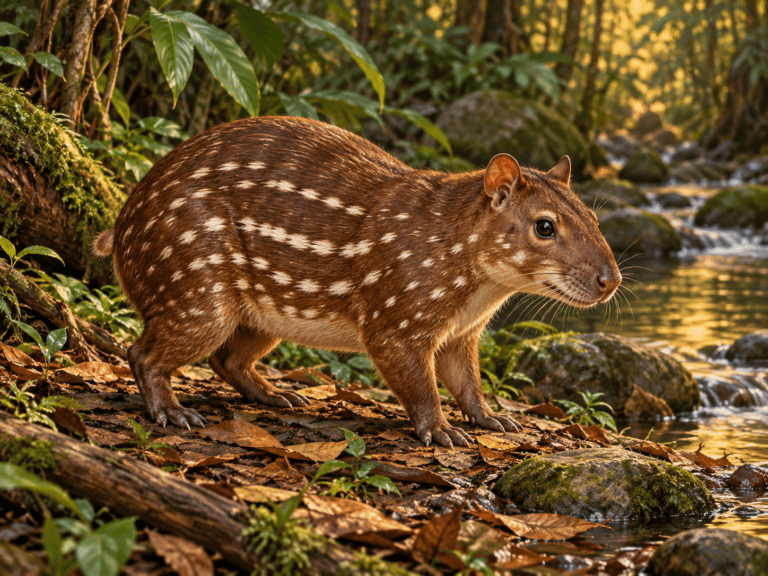
Lowland Paca

Spanish name
Tepezcuintle
Scientific name
Cuniculus paca

What Do Pico & Tati Think?

Pico: “Its white spots make neat rows!”

Tati: “A burrow is someone’s home; we leave it alone.”

Identification

Key Features of the Lowland Paca

  • Stocky brown body with rows of pale side spots.

  • Short legs and almost no visible tail.

  • Large rounded head and cheeks.

Habitat & range

La Amistad’s forest landscape, accessed from Biolley; ACG also has Quica, Pitilla camera-trap records.

Seasonal Calendar

Breeding possible

Costa Rica; broad natural-history account

Year-round

ACG describes reproduction through the year, not a fixed local birth season.

Event source ↗

Conservation & care

Keep a respectful distance and leave an open route for the animal. Stay on authorized paths, secure food and rubbish, and observe without feeding, touching, baiting or chasing.

Threats & pressures

Hunting, habitat destruction and conflict over crops are documented pressures.

View full profile →

Nature Field Guide

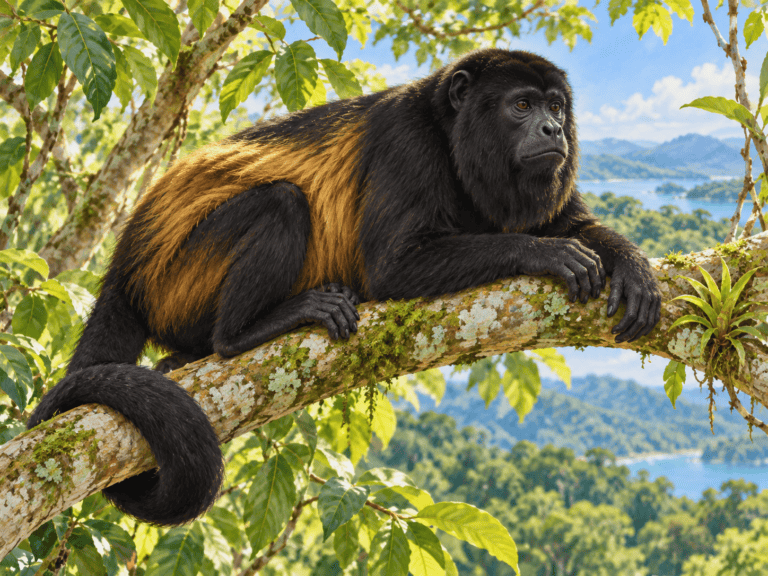
Mantled Howler Monkey

Spanish name
Mono congo / Mono aullador
Scientific name
Alouatta palliata

What Do Pico & Tati Think?

Pico: “We heard the monkeys before we could see them!”

Tati: “Let’s stay quiet and see what they’re doing in the branches.”

Identification

Key Features of the Mantled Howler Monkey

  • A mostly dark coat with a lighter mantle along the sides.

  • A long, grasping tail used while moving through trees.

  • Deep calls that may carry beyond the visible group.

Habitat & range

Tropical forest canopy and wooded corridors. Around the estuary, observe canopy habitat from a guided route rather than following animals into the forest.

Seasonal Calendar

Breeding

General species biology; local schedule unverified

Year-round

Mantled howlers breed throughout the year. Species-level biology, not a schedule of births in a particular troop.

Event source ↗

Conservation & care

Never offer food or try to touch a monkey. Avoid playback and shouting, and give groups space to move through the canopy.

View full profile →

Nature Field Guide

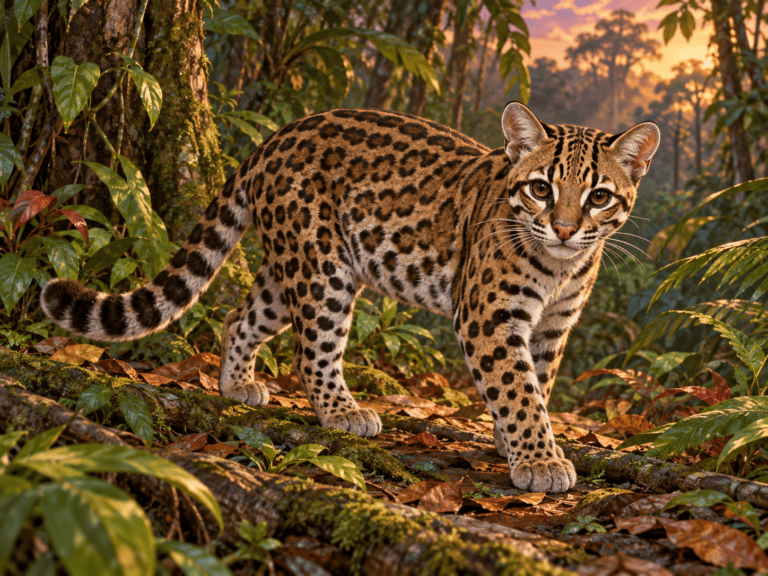
Margay

Spanish name
Caucel / Tigrillo
Scientific name
Leopardus wiedii

What Do Pico & Tati Think?

Pico: “Could a cat move down a tree like that?”

Tati: “Its climbing adaptations belong in a connected forest.”

Identification

Key Features of the Margay

  • Small spotted cat with a relatively long tail.

  • Large eyes and rounded ears.

  • Agile climbing; verify identity with a guide.

Habitat & range

Forested habitat in Corcovado National Park and other suitable connected landscapes.

Conservation & care

Keep a respectful distance and leave an open route for the animal. Stay on authorized paths, secure food and rubbish, and observe without feeding, touching, baiting or chasing.

Threats & pressures

Forest destruction and fragmentation threaten habitat. Illegal hunting has also affected the species.

Protection & recovery

Costa Rica’s government wildlife guide explicitly identifies this species as protected nationally. This legal designation is separate from its global IUCN category.

Conservation assessment

Global IUCN category as reported by the linked source, checked 7 October 2026. The source does not give an assessment year here. National legal protection and local abundance are separate questions.

View full profile →

Nature Field Guide

Mexican Hairy Porcupine

Spanish name
Puercoespín
Scientific name
Coendou mexicanus

What Do Pico & Tati Think?

This tree-dwelling porcupine has dark coarse hair that can hide many of its protective quills.

What does Least Concern mean?

In the linked conservation assessment, this species does not qualify as threatened or near threatened with extinction. It still needs care: local populations and habitats can face problems even when the species has a lower extinction risk overall.

This label describes conservation status. It does not tell us whether a plant is safe for children or pets. Select the status button to read the assessment.

Identification

Key Features of the Mexican Hairy Porcupine

  • Dark coarse fur with protective quills beneath or among the hairs.

  • Rounded body and a long gripping tail.

  • Usually encountered in trees rather than on the ground.

Habitat & range

Lowland forest, including Guanacaste's tropical dry forest.

Conservation & care

Explore with an adult or local guide. Observe quietly from a distance, stay on established trails and leave shelter undisturbed. Do not feed, touch, capture or corner wildlife. Keep pets away.

Conservation assessment

Global IUCN category reported by the linked specialist or Mammal Diversity Database account, checked October 2026. Least Concern does not mean there are no threats or that every local population is secure.

View full profile →

Nature Field Guide

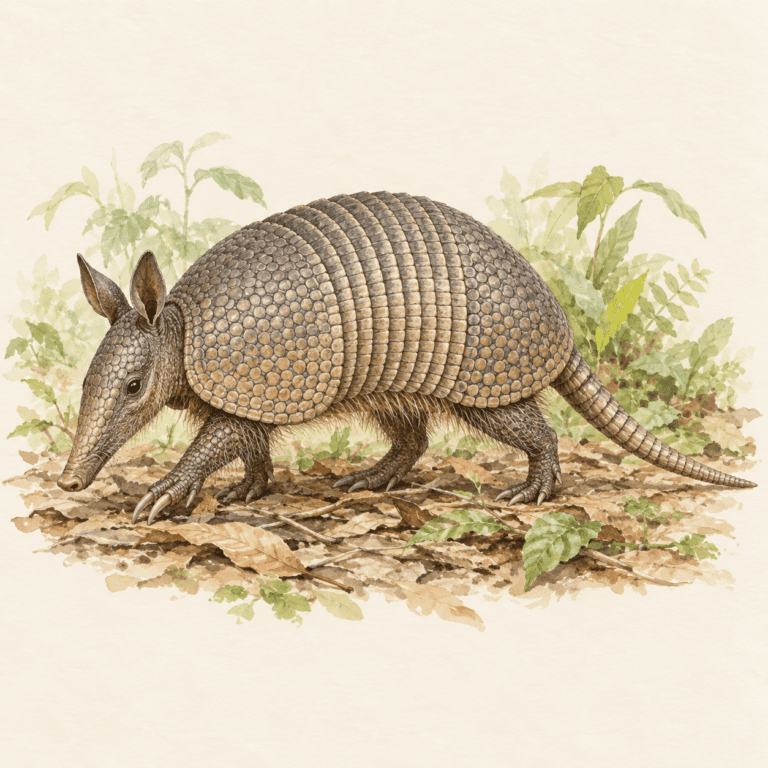
Mexican Long-nosed Armadillo

Spanish name
Armadillo de nueve bandas mexicano
Scientific name
Dasypus mexicanus

What Do Pico & Tati Think?

This armadillo wears a covering of bony plates, with flexible bands across its middle so it can bend while walking.

Identification

Key Features of the Mexican Long-nosed Armadillo

  • Long tapered snout and upright ears.

  • Flexible bands across the middle of the armored back.

  • Long tail covered with armor; this alone does not confirm the species.

Habitat & range

Forests, forest edges and other suitable wooded landscapes in Costa Rica.

Conservation & care

Explore with an adult or local guide. Observe quietly from a distance, stay on established trails and leave shelter undisturbed. Do not feed, touch, capture or corner wildlife. Keep pets away.

Conservation assessment

The Mammal Diversity Database lists this recently separated species as Not Evaluated, checked October 2026. An older assessment for Dasypus novemcinctus should not be applied automatically.

View full profile →

Nature Field Guide

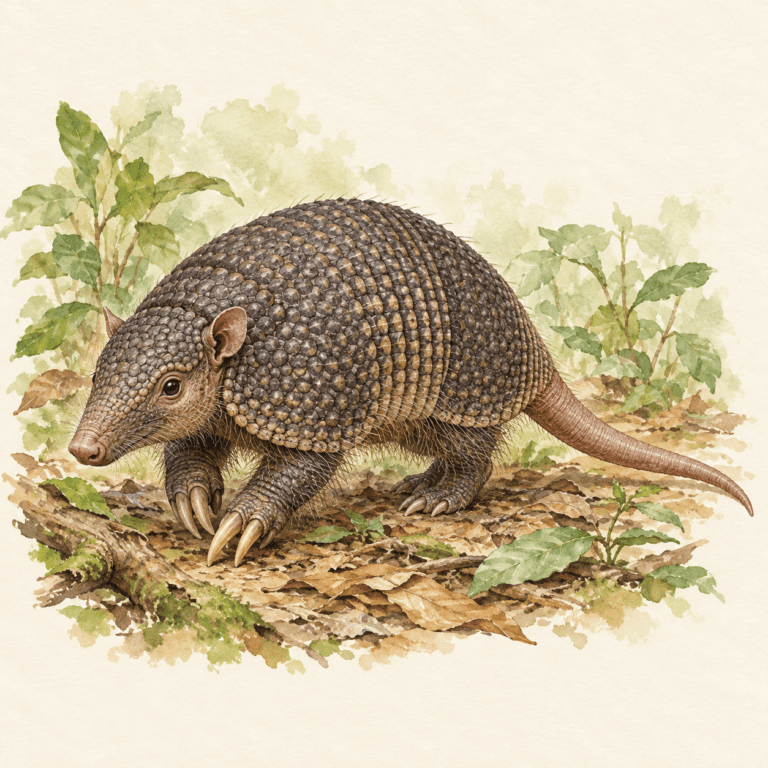
Northern Naked-tailed Armadillo

Spanish name
Armadillo de cola desnuda
Scientific name
Cabassous centralis

What Do Pico & Tati Think?

The northern naked-tailed armadillo is a digging specialist.

What does Least Concern mean?

In the linked conservation assessment, this species does not qualify as threatened or near threatened with extinction. It still needs care: local populations and habitats can face problems even when the species has a lower extinction risk overall.

This label describes conservation status. It does not tell us whether a plant is safe for children or pets. Select the status button to read the assessment.

Identification

Key Features of the Northern Naked-tailed Armadillo

  • Dark armored body with flexible bands.

  • Mostly unarmored tail with thin, widely spaced plates.

  • Large digging claws and a relatively broad head.

Habitat & range

Forests and wooded edges, including documented Costa Rican secondary-forest sites.

Conservation & care

Explore with an adult or local guide. Observe quietly from a distance, stay on established trails and leave shelter undisturbed. Do not feed, touch, capture or corner wildlife. Keep pets away.

Conservation assessment

IUCN specialist-group account reports Least Concern; checked October 2026. The account stresses limited population knowledge. Least Concern does not mean the animal faces no threats.

View full profile →

Nature Field Guide

Northern Neotropical River Otter

Spanish name
Nutria mesoamericana
Scientific name
Lontra annectens

What Do Pico & Tati Think?

This river otter is a water-adapted member of the weasel family.

Identification

Key Features of the Northern Neotropical River Otter

  • Brown streamlined body with a paler throat.

  • Small rounded ears, whiskered muzzle and webbed feet.

  • Long thick tail tapering toward its tip.

Habitat & range

Rivers, streams and wetlands; documented study areas include Tortuguero and the Sarapiquí basin.

Conservation & care

Explore with an adult or local guide. Observe quietly from a distance, stay on established trails and leave shelter undisturbed. Do not feed, touch, capture or corner wildlife. Keep pets away. Stay clear of slippery or unstable banks; do not enter water to follow an animal.

Conservation assessment

Mammal Diversity Database lists this recently separated species as Not Evaluated, checked October 2026. Do not transfer the older Lontra longicaudis assessment automatically.

View full profile →

Nature Field Guide

Northern Olingo

Spanish name
Olingo norteño
Scientific name
Bassaricyon gabbii

What Do Pico & Tati Think?

The northern olingo is a forest mammal that moves among branches and eats fruit, with nectar also reported in its diet.

Identification

Key Features of the Northern Olingo

  • Gray-brown fur, rounded ears and a fairly pointed muzzle.

  • Long bushy tail that is not prehensile.

  • Compare several features with a kinkajou; a quick glimpse may be inconclusive.

Habitat & range

Forested canopies, including documented Monteverde sites.

Conservation & care

Explore with an adult or local guide. Observe quietly from a distance, stay on established trails and leave shelter undisturbed. Do not feed, touch, capture or corner wildlife. Keep pets away.

View full profile →

Nature Field Guide

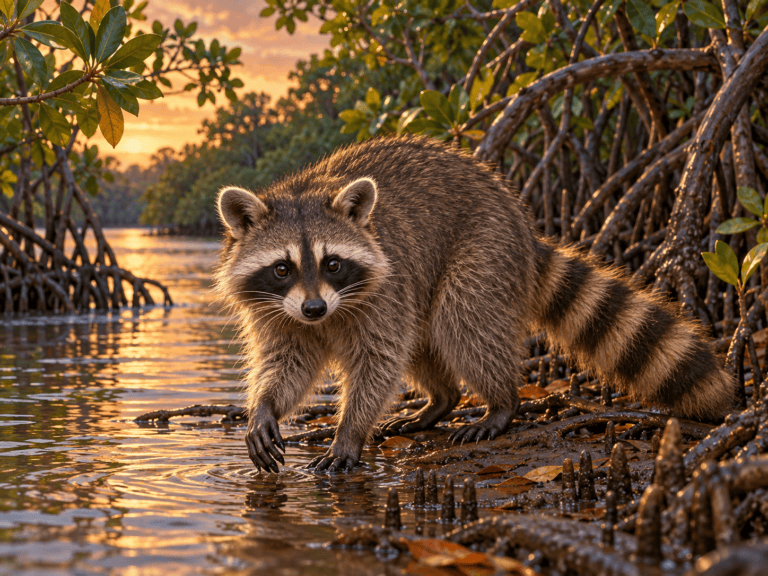
Northern Raccoon

Spanish name
Mapache
Scientific name
Procyon lotor

What Do Pico & Tati Think?

Pico: “The rings on its tail are easy to notice!”

Tati: “We keep the rubbish closed so it finds natural food.”

Identification

Key Features of the Northern Raccoon

  • Dark mask across the face.

  • Bold rings along the tail.

  • Rounded ears with pale edges.

Habitat & range

Reserva Sierra Zapote, Las Juntas / Abangares, and other suitable wooded water-edge habitats.

Conservation & care

Keep a respectful distance and leave an open route for the animal. Stay on authorized paths, secure food and rubbish, and observe without feeding, touching, baiting or chasing.

View full profile →

Nature Field Guide

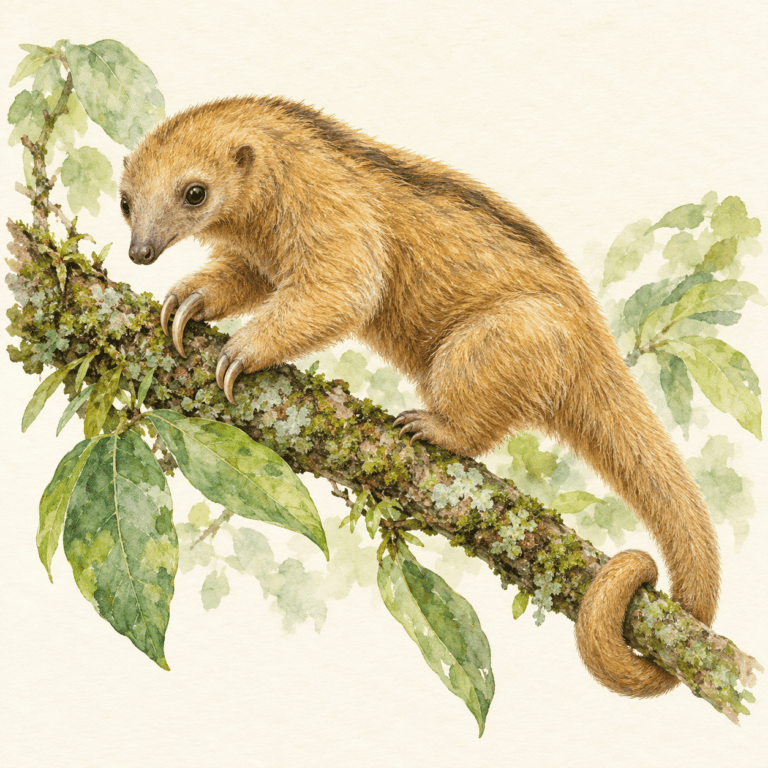
Northern Silky Anteater

Spanish name
Hormiguero sedoso norteño
Scientific name
Cyclopes dorsalis

What Do Pico & Tati Think?

The northern silky anteater is tiny compared with the northern tamandua already in your guide.

Identification

Key Features of the Northern Silky Anteater

  • Tiny body with soft golden or yellowish fur.

  • Short tapered snout and strong curved foreclaws.

  • Long gripping tail; much smaller than a tamandua.

Habitat & range

Suitable forest canopy, including documented Sarapiquí habitat.

Conservation & care

Explore with an adult or local guide. Observe quietly from a distance, stay on established trails and leave shelter undisturbed. Do not feed, touch, capture or corner wildlife. Keep pets away.

View full profile →

Nature Field Guide

Northern Tamandua

Spanish name
Oso hormiguero / Oso colmenero
Scientific name
Tamandua mexicana

What Do Pico & Tati Think?

Pico: “Its fur looks like a little vest!”

Tati: “Those claws are tools, so we give it space.”

Identification

Key Features of the Northern Tamandua

  • Pale coat with a dark vest-like pattern.

  • Long narrow snout and strong curved foreclaws.

  • Long grasping tail.

Habitat & range

Corcovado’s forest landscape and other suitable dry or humid woodland.

Seasonal Calendar

Breeding possible

Costa Rica; broad natural-history account

Year-round

ACG describes reproduction possible in any season; no local birth peak is assigned.

Event source ↗

Conservation & care

Keep a respectful distance and leave an open route for the animal. Stay on authorized paths, secure food and rubbish, and observe without feeding, touching, baiting or chasing.

Threats & pressures

Road collisions, dog attacks and habitat loss are documented pressures.

View full profile →

Nature Field Guide

Ocelot

Spanish name
Manigordo / Ocelote
Scientific name
Leopardus pardalis

What Do Pico & Tati Think?

Pico: “Those spots form long patterns!”

Tati: “We can learn from photographs without disturbing a hidden cat.”

What does Least Concern mean?

In the linked conservation assessment, this species does not qualify as threatened or near threatened with extinction. It still needs care: local populations and habitats can face problems even when the species has a lower extinction risk overall.

This label describes conservation status. It does not tell us whether a plant is safe for children or pets. Select the status button to read the assessment.

Identification

Key Features of the Ocelot

  • Dark spots and elongated patterned markings.

  • Rounded ears and large eyes.

  • More robust body than a margay.

Habitat & range

Corcovado forest habitat; ACG also documents Ocelot at Quica, Pitilla.

Conservation & care

Keep a respectful distance and leave an open route for the animal. Stay on authorized paths, secure food and rubbish, and observe without feeding, touching, baiting or chasing.

Threats & pressures

Forest loss, depleted prey, road collisions and illegal hunting are documented pressures.

Protection & recovery

Costa Rica’s government wildlife guide explicitly identifies this species as protected nationally. This legal designation is separate from its global IUCN category.

Conservation assessment

Global IUCN category as reported by the linked source, checked 7 October 2026. The source does not give an assessment year here. National legal protection and local abundance are separate questions.

View full profile →

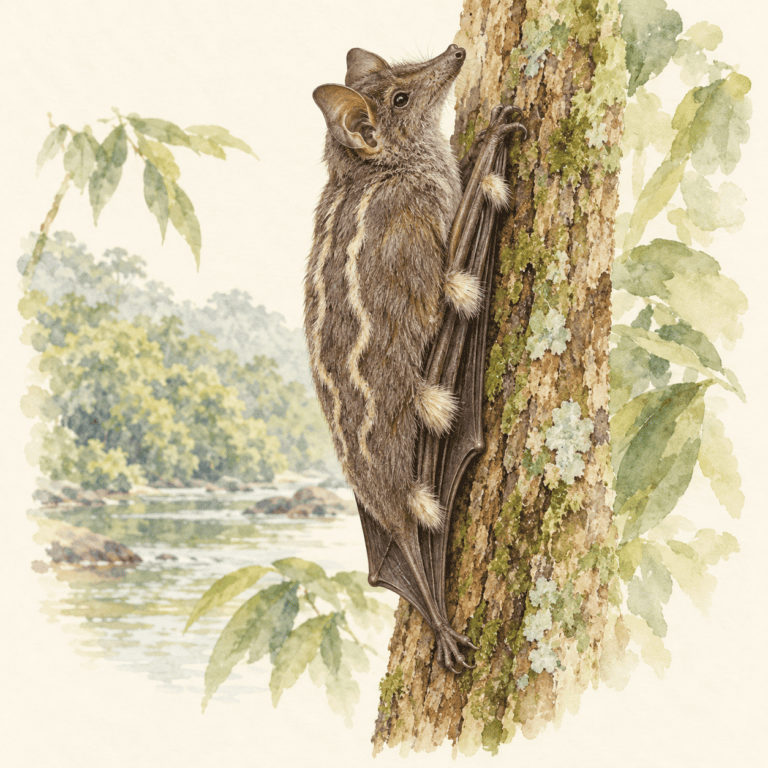
Nature Field Guide

Proboscis Bat

Spanish name
Murciélago narigón
Scientific name
Rhynchonycteris naso

What Do Pico & Tati Think?

The proboscis bat is a tiny insect-eating bat with an elongated muzzle.

Identification

Key Features of the Proboscis Bat

  • Small grizzled gray-brown bat with a long muzzle.

  • Two faint pale back stripes.

  • Pale tufts spaced along the forearms; similar bats require expert comparison.

Habitat & range

Freshwater-associated habitats with suitable exposed roosting surfaces.

Conservation & care

Observe bats from a distance with an adult or guide. Do not touch, feed or handle any bat, including one found on the ground. Leave roosts undisturbed, avoid direct flash and ask local wildlife professionals for help if an animal appears injured.

View full profile →

Nature Field Guide

Puma

Spanish name
Puma / León de montaña
Scientific name
Puma concolor

What Do Pico & Tati Think?

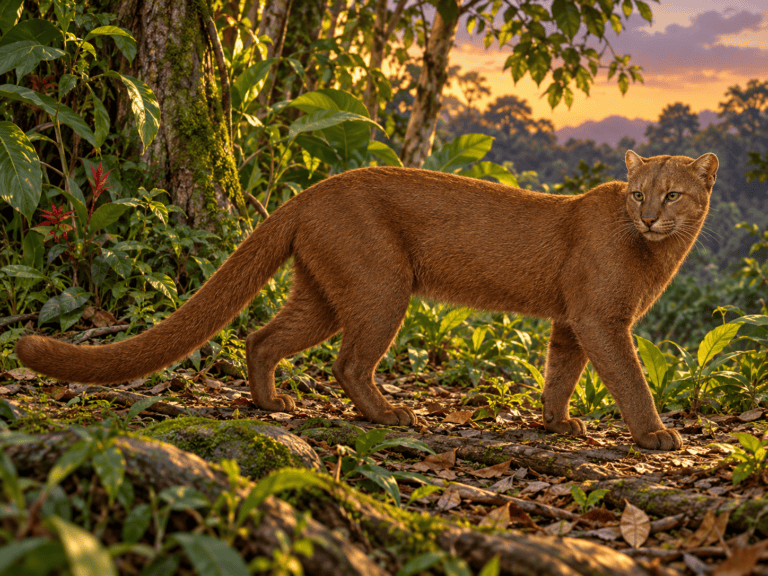
Pico: “This cat has no rosettes!”

Tati: “Its shape helps us tell it apart from a jaguar.”

Identification

Key Features of the Puma

  • Uniform tawny adult coat, without jaguar rosettes.

  • Long tail with a darker tip.

  • Relatively small head and long legs.

Habitat & range

Reserva Sierra Zapote, Las Juntas district, Abangares, and suitable forests elsewhere in Costa Rica.

Conservation & care

Keep a respectful distance and leave an open route for the animal. Stay on authorized paths, secure food and rubbish, and observe without feeding, touching, baiting or chasing.

Threats & pressures

Forest fragmentation and loss of prey are habitat-level pressures relevant to wide-ranging predators.

View full profile →

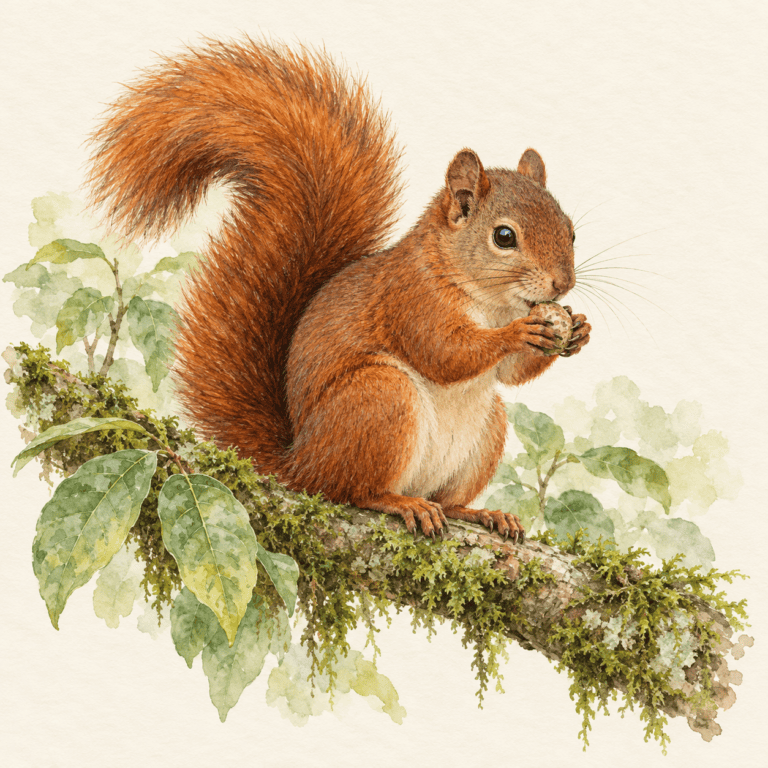
Nature Field Guide

Red-tailed Squirrel

Spanish name
Ardilla de cola roja
Scientific name
Sciurus granatensis

What Do Pico & Tati Think?

Red-tailed squirrels are active during the day and move readily through trees.

What does Least Concern mean?

In the linked conservation assessment, this species does not qualify as threatened or near threatened with extinction. It still needs care: local populations and habitats can face problems even when the species has a lower extinction risk overall.

This label describes conservation status. It does not tell us whether a plant is safe for children or pets. Select the status button to read the assessment.

Identification

Key Features of the Red-tailed Squirrel

  • Bushy tail and a typical tree-squirrel body shape.

  • Coat and tail may have reddish, brown or darker tones.

  • Color varies; compare locality and multiple features with other squirrels.

Habitat & range

Forests and other suitably wooded habitats.

Conservation & care

Explore with an adult or local guide. Observe quietly from a distance, stay on established trails and leave shelter undisturbed. Do not feed, touch, capture or corner wildlife. Keep pets away.

Conservation assessment

Global IUCN category reported by the linked specialist or Mammal Diversity Database account, checked October 2026. Least Concern does not mean there are no threats or that every local population is secure.

View full profile →

Nature Field Guide

Southern Spotted Skunk

Spanish name
Zorro hediondo manchado
Scientific name
Spilogale angustifrons

What Do Pico & Tati Think?

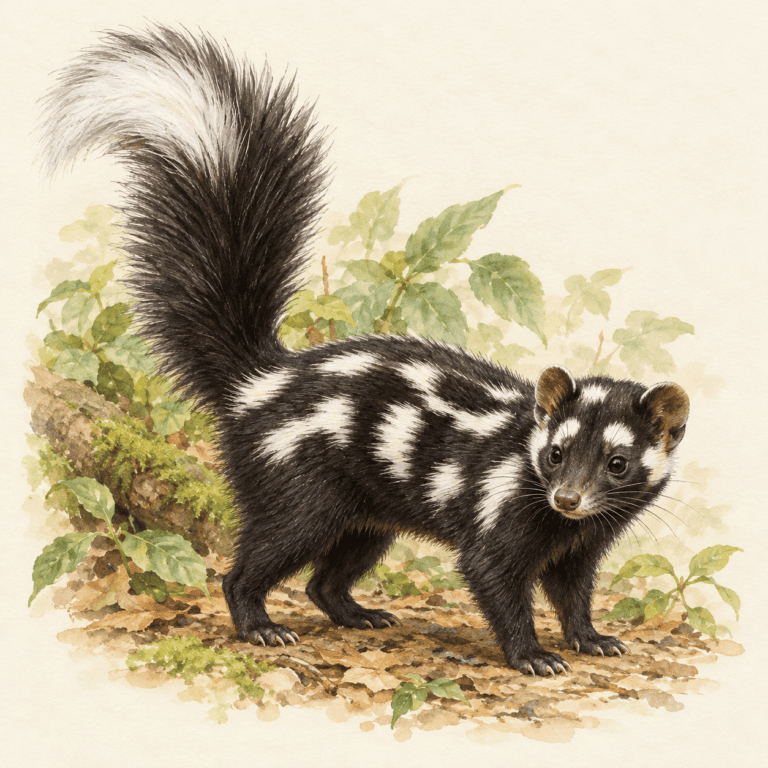
This small skunk has a dark coat patterned with broken pale stripes and patches.

What does Least Concern mean?

In the linked conservation assessment, this species does not qualify as threatened or near threatened with extinction. It still needs care: local populations and habitats can face problems even when the species has a lower extinction risk overall.

This label describes conservation status. It does not tell us whether a plant is safe for children or pets. Select the status button to read the assessment.

Identification

Key Features of the Southern Spotted Skunk

  • Small slender skunk with contrasting black-and-white markings.

  • Broken pale stripes and patches rather than just two broad back stripes.

  • Bushy tail; markings can vary among individuals.

Habitat & range

Suitable dry-forest and edge habitats, with research records in Guanacaste.

Conservation & care

Explore with an adult or local guide. Observe quietly from a distance, stay on established trails and leave shelter undisturbed. Do not feed, touch, capture or corner wildlife. Keep pets away. If a skunk notices you, give it room and calmly move away.

Conservation assessment

Global IUCN category reported by Mammal Diversity Database, checked October 2026. A global Least Concern category does not replace Costa Rican national threat classifications.

View full profile →

Nature Field Guide

Spinner Dolphin

Spanish name
Delfín tornillo
Scientific name
Stenella longirostris

What Do Pico & Tati Think?

Spinner dolphins are slender dolphins with long narrow beaks.

Identification

Key Features of the Spinner Dolphin

  • Slender body and a noticeably long narrow beak.

  • Dorsal fin often triangular; shape varies with regional form.

  • Spinning leaps can occur, but behavior alone does not confirm species.

Habitat & range

Costa Rican Pacific marine waters, with locally variable distribution.

Conservation & care

Use a responsible local wildlife operator and follow site rules. Give aquatic mammals room to feed, rest and travel. Do not feed, touch, chase or enter the water to approach them. Keep waste and fishing line out of waterways.

View full profile →

Nature Field Guide

Striped Hog-nosed Skunk

Spanish name
Zorro hediondo de nariz de cerdo
Scientific name
Conepatus semistriatus

What Do Pico & Tati Think?

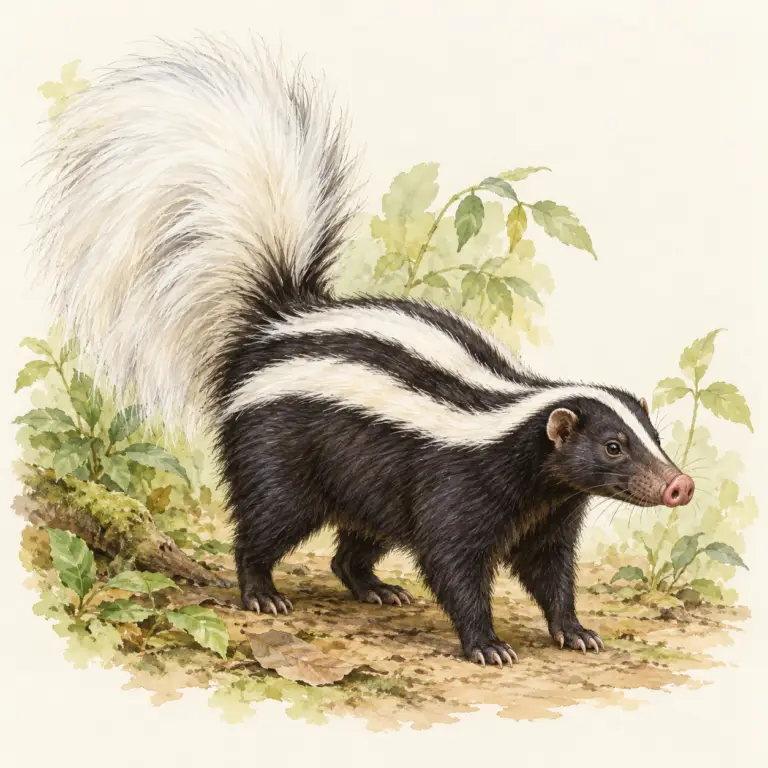
The striped hog-nosed skunk has a broad bare nose that helps distinguish it from other skunks.

Identification

Key Features of the Striped Hog-nosed Skunk

  • Broad bare hog-like nose on an extended muzzle.

  • Dark body with two broad pale back stripes.

  • Bushy tail, often mostly white.

Habitat & range

Seasonally dry forests, shrublands and suitable open woodland landscapes.

Conservation & care

Explore with an adult or local guide. Observe quietly from a distance, stay on established trails and leave shelter undisturbed. Do not feed, touch, capture or corner wildlife. Keep pets away. If a skunk notices you, give it room and calmly move away.

View full profile →

Nature Field Guide

Tayra

Spanish name
Tolomuco
Scientific name
Eira barbara

What Do Pico & Tati Think?

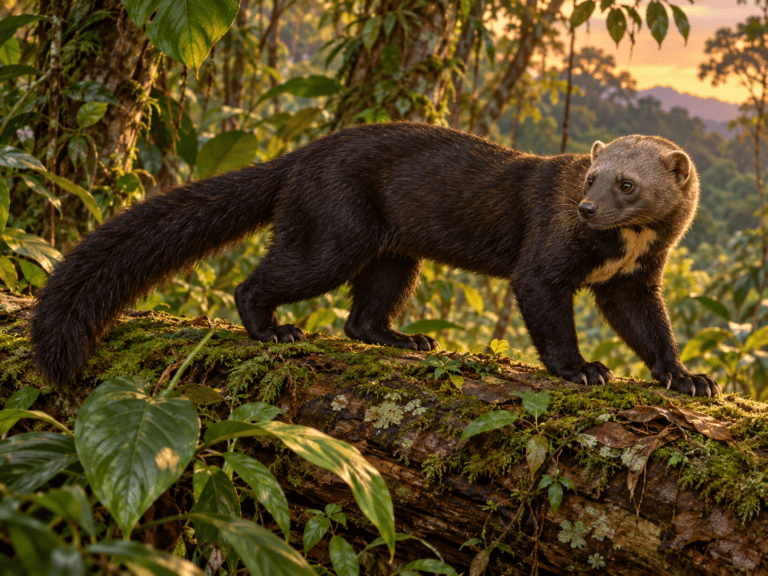
Pico: “That animal moves quickly on the ground and in trees!”

Tati: “Let’s watch without trying to keep up.”

Identification

Key Features of the Tayra

  • Long dark body with short legs.

  • Often a paler gray head.

  • Long bushy tail and agile climbing.

Habitat & range

Tortuguero’s Caño Chiquero–Mora aquatic route and surrounding rainforest.

Seasonal Calendar

Breeding possible

Costa Rica; broad natural-history account

Year-round

ACG describes reproduction throughout the year; no fixed Tortuguero birth months are established.

Event source ↗

Conservation & care

Keep a respectful distance and leave an open route for the animal. Stay on authorized paths, secure food and rubbish, and observe without feeding, touching, baiting or chasing.

Threats & pressures

Deforestation, forest fires and persecution around poultry or small farm animals are documented pressures.

View full profile →

Nature Field Guide

Variegated Squirrel

Spanish name
Ardilla variada
Scientific name
Sciurus variegatoides

What Do Pico & Tati Think?

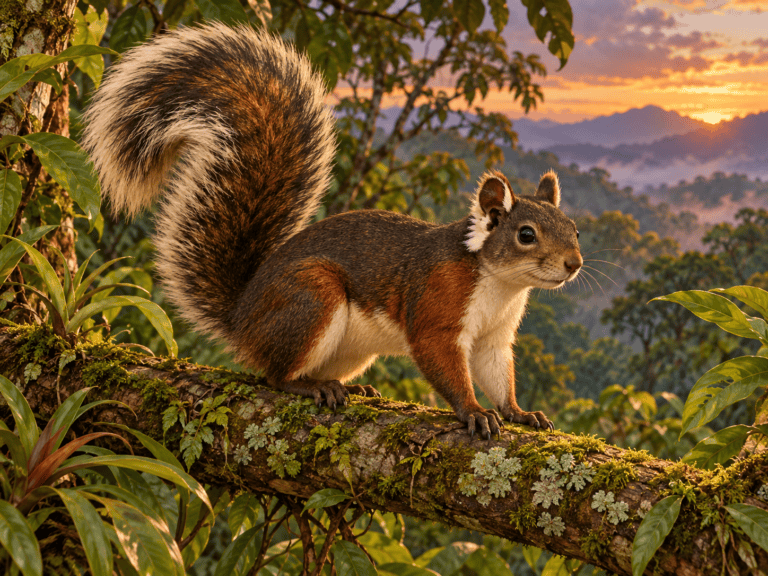
Pico: “This squirrel’s colors are different from the last one!”

Tati: “We should compare shape and tail markings too.”

What does Least Concern mean?

In the linked conservation assessment, this species does not qualify as threatened or near threatened with extinction. It still needs care: local populations and habitats can face problems even when the species has a lower extinction risk overall.

This label describes conservation status. It does not tell us whether a plant is safe for children or pets. Select the status button to read the assessment.

Identification

Key Features of the Variegated Squirrel

  • Long bushy tail, often with pale edging.

  • Contrasting ear patches and variable coat color.

  • Tree-dwelling daytime activity.

Habitat & range

The Arenal / La Fortuna landscape, including a documented photograph at Arenal Volcano Lodge.

Conservation & care

Keep a respectful distance and leave an open route for the animal. Stay on authorized paths, secure food and rubbish, and observe without feeding, touching, baiting or chasing.

Conservation assessment

Global IUCN category as reported by the linked source, checked 7 October 2026. The source does not give an assessment year here. National legal protection and local abundance are separate questions.

View full profile →

Nature Field Guide

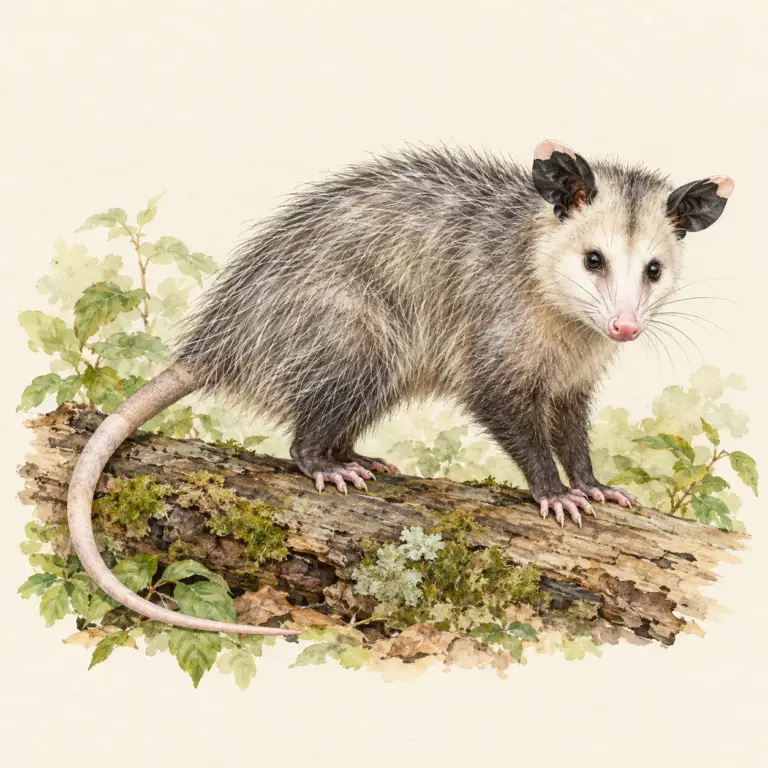
Virginia Opossum

Spanish name
Zorro pelón de Virginia
Scientific name
Didelphis virginiana

What Do Pico & Tati Think?

Despite its name, the Virginia opossum's native range reaches Costa Rica.

Identification

Key Features of the Virginia Opossum

  • Gray coat, pale face and pink nose.

  • Largely hairless ears, sometimes with pale tips.

  • Long bare tail; ear color alone is not a reliable species test.

Habitat & range

Suitable wooded and edge habitats within Costa Rica; local occurrence varies.

Conservation & care

Explore with an adult or local guide. Observe quietly from a distance, stay on established trails and leave shelter undisturbed. Do not feed, touch, capture or corner wildlife. Keep pets away.

View full profile →

Nature Field Guide

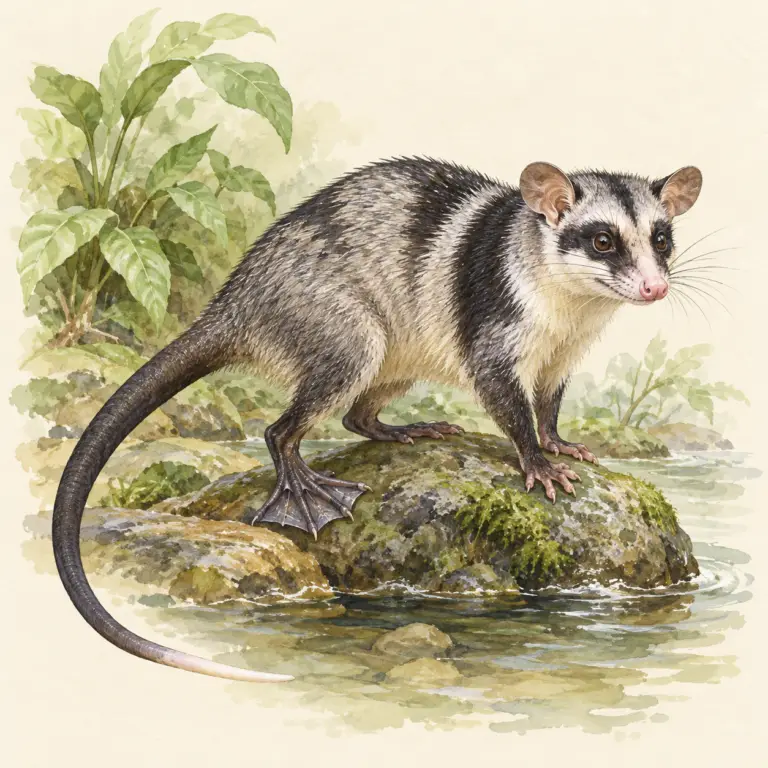
Water Opossum

Spanish name
Zorro de agua
Scientific name
Chironectes minimus

What Do Pico & Tati Think?

The water opossum, also called the yapok, is a marsupial adapted to life beside freshwater.

Identification

Key Features of the Water Opossum

  • Silvery gray coat crossed by broad dark markings.

  • Dark facial mask and a long mostly bare tail.

  • Webbed hind feet, best studied in reference photographs.

Habitat & range

Forested freshwater streams and associated riverbanks.

Conservation & care

Explore with an adult or local guide. Observe quietly from a distance, stay on established trails and leave shelter undisturbed. Do not feed, touch, capture or corner wildlife. Keep pets away. Stay clear of slippery or unstable banks; do not enter water to follow an animal.

View full profile →

Nature Field Guide

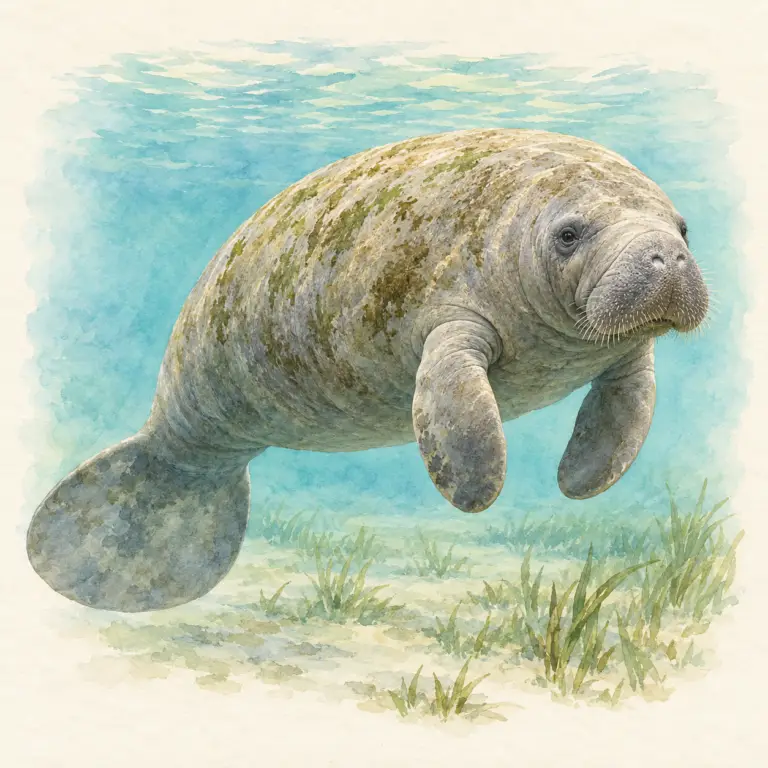
West Indian Manatee

Spanish name
Manatí del Caribe
Scientific name
Trichechus manatus

What Do Pico & Tati Think?

The West Indian manatee is a large aquatic mammal with a rounded paddle-shaped tail and a whiskered muzzle.

Identification

Key Features of the West Indian Manatee

  • Large rounded body with gray skin.

  • Blunt whiskered muzzle and two front flippers.

  • Broad rounded paddle tail, without a dolphin's split flukes or dorsal fin.

Habitat & range

Caribbean waterways and wetlands, including Tortuguero.

Conservation & care

Use a responsible local wildlife operator and follow site rules. Give aquatic mammals room to feed, rest and travel. Do not feed, touch, chase or enter the water to approach them. Keep waste and fishing line out of waterways.

Conservation assessment

Global species-level IUCN category reported by Mammal Diversity Database, checked October 2026. Subspecies and national categories can differ.

View full profile →

Nature Field Guide

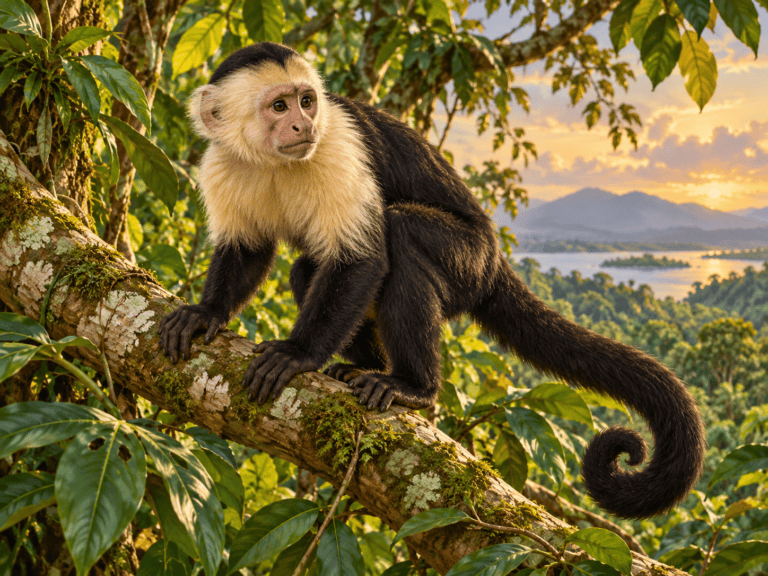
White-faced Capuchin

Spanish name
Mono carablanca
Scientific name
Cebus imitator

What Do Pico & Tati Think?

Pico: “That troop is searching so many branches!”

Tati: “Our snacks are for us, not for the monkeys.”

Identification

Key Features of the White-faced Capuchin

  • Pale face, chest and shoulders on a dark body.

  • Pinkish bare facial skin.

  • Long grasping tail, often curled at the tip.

Habitat & range

Manuel Antonio National Park near Quepos, in forest habitat rather than food stalls or rubbish areas.

Conservation & care

Keep a respectful distance and leave an open route for the animal. Stay on authorized paths, secure food and rubbish, and observe without feeding, touching, baiting or chasing.

Threats & pressures

Loss of forest affects habitat. Feeding wild troops can encourage dependence on visitor food and conflict around belongings.

Protection & recovery

Costa Rica’s government wildlife guide explicitly identifies this species as protected nationally. This legal designation is separate from its global IUCN category.

Conservation assessment

Global IUCN category as reported by the linked source, checked 7 October 2026. The source does not give an assessment year here. National legal protection and local abundance are separate questions.

View full profile →

Nature Field Guide

White-lipped Peccary

Spanish name
Chancho de monte / Saíno labiblanco
Scientific name
Tayassu pecari

What Do Pico & Tati Think?

Pico: “There may be more animals behind the ones we see!”

Tati: “We keep far away and let the herd pass.”

Identification

Key Features of the White-lipped Peccary

  • Pale lips and chin on a dark body.

  • No clear neck collar like a Collared Peccary.

  • Can travel in large, closely associated herds.

Habitat & range

Documented ACG rainforest sectors and Caño Negro Wildlife Refuge’s surrounding habitat.

Seasonal Calendar

Breeding possible

Costa Rica; broad natural-history account

Year-round

ACG describes year-round reproduction; local timing and herd movements vary.

Event source ↗

Conservation & care

Keep a respectful distance and leave an open route for the animal. Stay on authorized paths, secure food and rubbish, and observe without feeding, touching, baiting or chasing.

Threats & pressures

Clearing and fragmentation for farming and livestock, plus illegal hunting, threaten herds and their habitat.

Documented impact

A 2016 UNED paper reported that the species’ distribution in Costa Rica had contracted by 89%. This is a historical change in occupied range, not an 89% population count or a 2026 census.

Protection & recovery

Costa Rica’s government wildlife guide explicitly identifies this species as protected nationally. This legal designation is separate from its global IUCN category.

Conservation assessment

Global IUCN category as reported by the linked source, checked 7 October 2026. The source does not give an assessment year here. National legal protection and local abundance are separate questions.

View full profile →

Nature Field Guide

White-nosed Coati

Spanish name
Pizote
Scientific name
Nasua narica

What Do Pico & Tati Think?

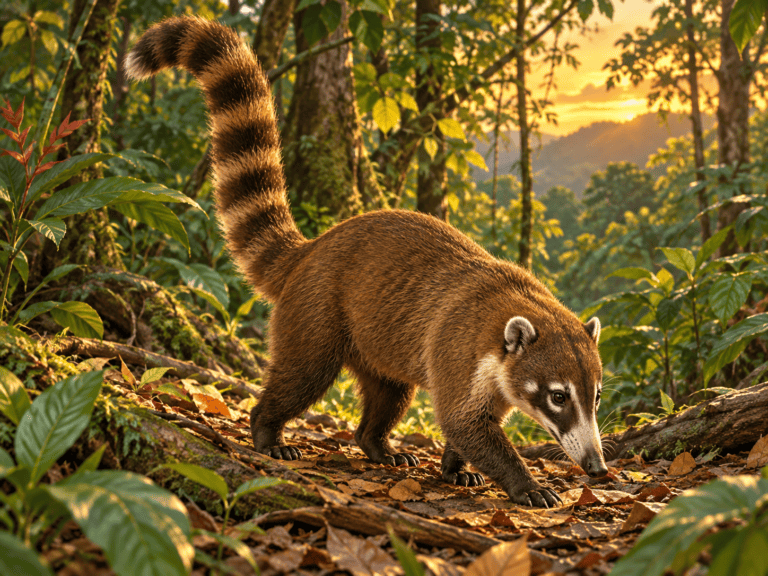
Pico: “Those tails are pointing above the leaves!”

Tati: “Let’s let the group pass without offering food.”

Identification

Key Features of the White-nosed Coati

  • Long pointed, flexible snout.

  • Long tail often held upright.

  • Strong claws and brown-to-gray fur.

Habitat & range

Reserva Sierra Zapote, Las Juntas / Abangares; ACG also records coatis at Quica, Pitilla.

Conservation & care

Keep a respectful distance and leave an open route for the animal. Stay on authorized paths, secure food and rubbish, and observe without feeding, touching, baiting or chasing.

View full profile →

Nature Field Guide

White-tailed Deer

Spanish name
Venado cola blanca
Scientific name
Odocoileus virginianus

What Do Pico & Tati Think?

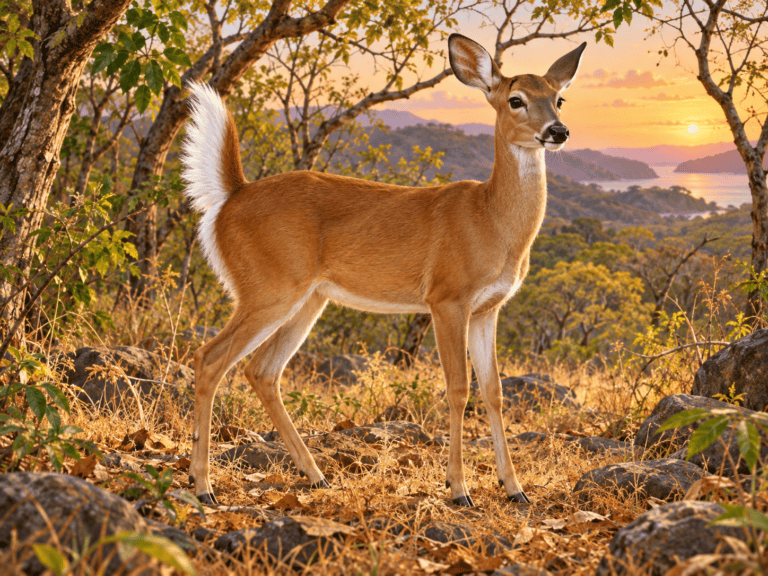
Pico: “I noticed the white tail before the whole deer!”

Tati: “Let’s stay quiet so it can keep browsing.”

Identification

Key Features of the White-tailed Deer

  • White underside of the tail, visible when naturally raised.

  • Large ears and slender legs.

  • Adult males may have antlers; fawns have pale spots.

Habitat & range

ACG dry-forest habitat, including Horizontes near Liberia.

Seasonal Calendar

Reproduction

Costa Rican seasonally dry forest

Year-round

Camera-trap data from 2011–2017 support reproduction throughout the year, with seasonal peaks rather than one exclusive window.

Event source ↗

Conservation & care

Keep a respectful distance and leave an open route for the animal. Stay on authorized paths, secure food and rubbish, and observe without feeding, touching, baiting or chasing.

Threats & pressures

Hunting and human-caused forest fires are locally documented concerns.

View full profile →

My Tico Explorer Experience

Save nature, towns, discoveries and learning adventures for your next experience.

Your list stays in this browser on this device.