Tico Explorers

Nature Field Guide

Coastal Life

Explore wildlife, plants and trees. Learn what to look for and where to find them.

All Nature

25 profiles

Nature Field Guide

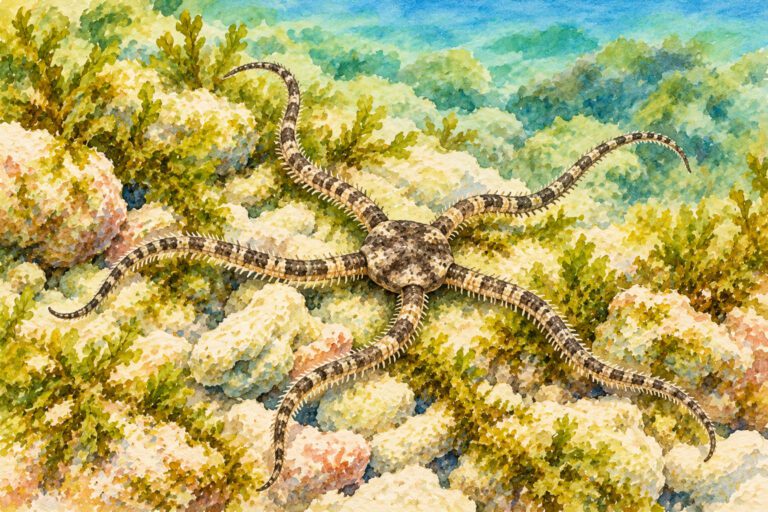
Alexander’s Spiny Brittle Star

Spanish name
Ofiura espinosa de Alexander
Scientific name
Ophiocomella alexandri

What Do Pico & Tati Think?

Pico and Tati discover that a brittle star’s scientific name can change as scientists learn more about its relatives.

Identification

Key Features of the Alexander’s Spiny Brittle Star

  • A clearly defined central disc

  • Long flexible arms

  • Check both current and older scientific names when reading a reference

Habitat & range

Suitable underwater coastal habitat. Use a permitted guided snorkeling or viewing activity appropriate to your family; do not enter the sea just to find this animal.

Conservation & care

Watch without touching, lifting, feeding or collecting. Keep fingers and equipment away from spines and other surface structures. Leave the animal submerged and its habitat undisturbed.

View full profile →

Nature Field Guide

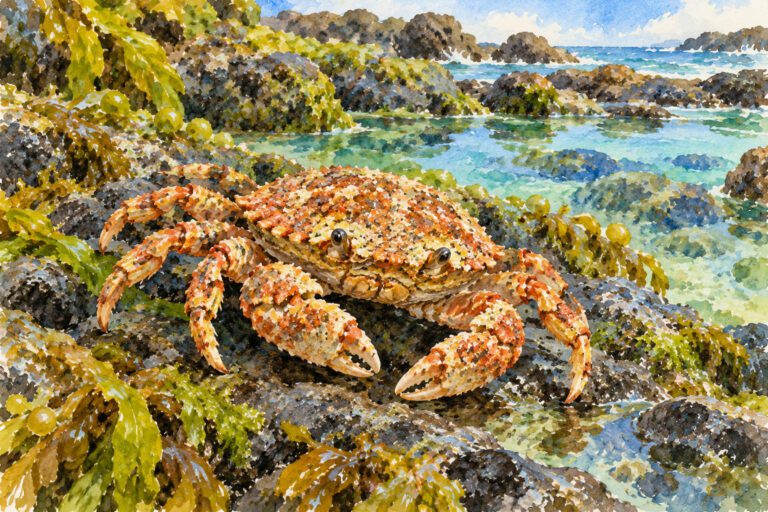
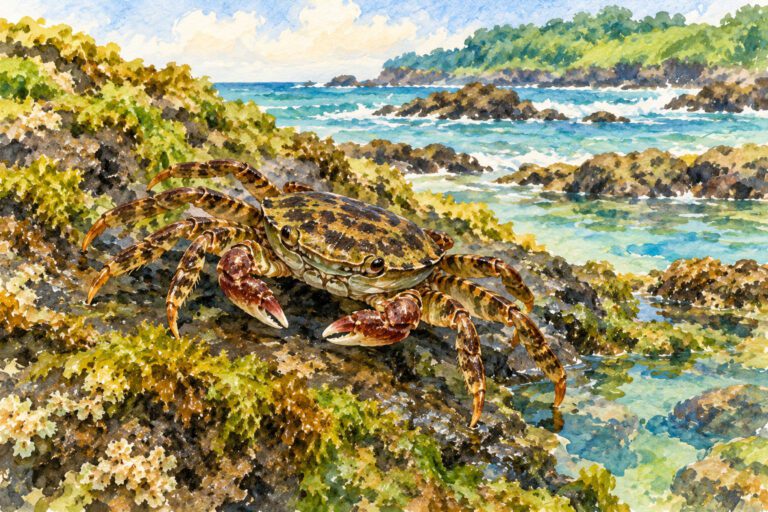
American Pebble Crab

Spanish name
Cangrejo piedra americano
Scientific name
Daira americana

What Do Pico & Tati Think?

A crab can blend into a rocky neighborhood. Pico watches patiently while Tati compares the outline with the stones around it.

Identification

Key Features of the American Pebble Crab

  • A compact crab body

  • A textured carapace

  • Confirm the identification from a detailed photograph

Habitat & range

Rocky shore and naturally visible tidal habitat. Choose a permitted observation point with an adult; do not turn rocks or reach into holes.

Conservation & care

Give claws and burrow entrances space. Do not handle, feed, chase or collect crabs. Leave rocks and shells where they are, and follow your adult’s route and local signs.

View full profile →

Nature Field Guide

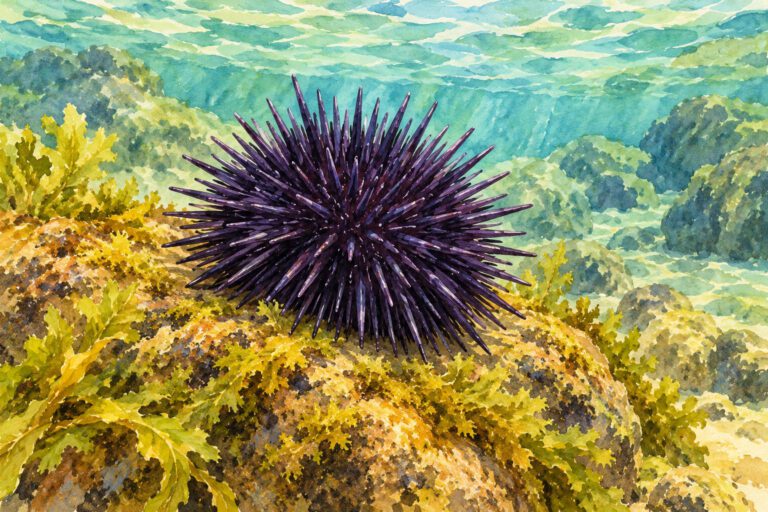
Arbacia Sea Urchin

Spanish name
Erizo Arbacia
Scientific name
Arbacia stellata

What Do Pico & Tati Think?

Pico sees a spiny shape. Tati asks how many different kinds of urchin might share a coast.

Identification

Key Features of the Arbacia Sea Urchin

  • A rounded body covered with spines

  • Observe the proportions of the body and spines

  • Use a species reference to compare similar urchins

Habitat & range

Suitable underwater coastal habitat. Use a permitted guided snorkeling or viewing activity appropriate to your family; do not enter the sea just to find this animal.

Conservation & care

Watch without touching, lifting, feeding or collecting. Keep fingers and equipment away from spines and other surface structures. Leave the animal submerged and its habitat undisturbed.

View full profile →

Nature Field Guide

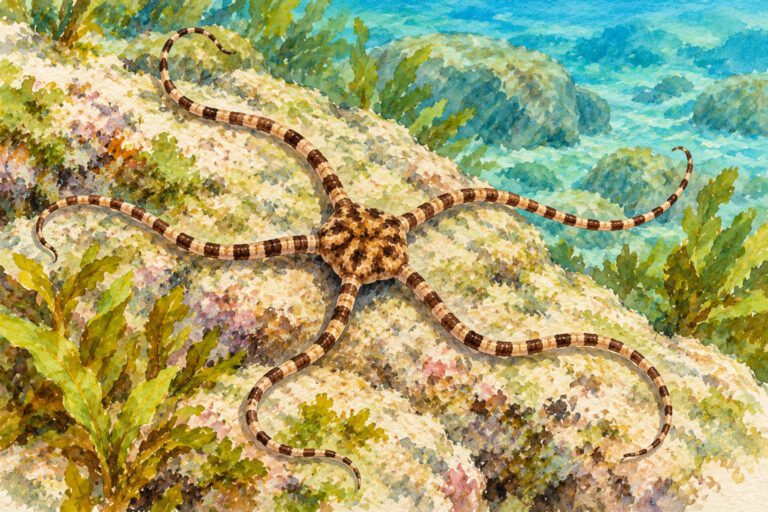
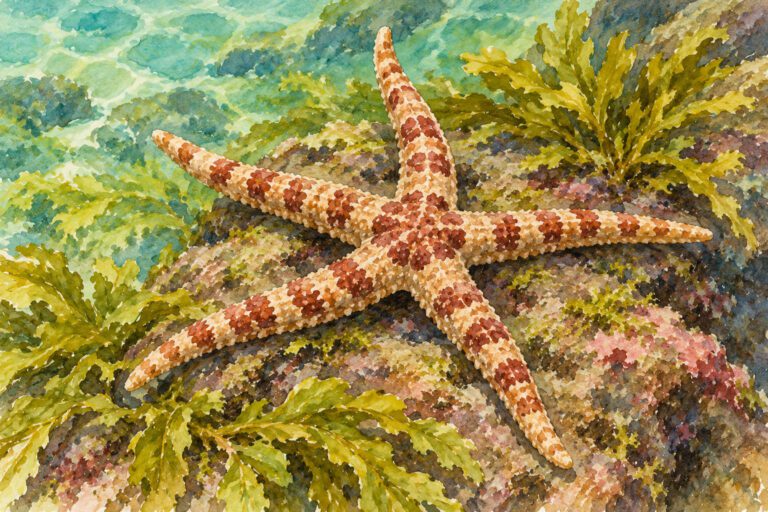
Banded Serpent Brittle Star

Spanish name
Ofiura de brazos anillados
Scientific name
Ophionereis annulata

What Do Pico & Tati Think?

Patterns help Tati remember a discovery. Pico sketches the bands he can see along a slender arm.

Identification

Key Features of the Banded Serpent Brittle Star

  • A small central disc

  • Long flexible arms

  • Darker bands along the arms

Habitat & range

Suitable underwater coastal habitat. Use a permitted guided snorkeling or viewing activity appropriate to your family; do not enter the sea just to find this animal.

Conservation & care

Watch without touching, lifting, feeding or collecting. Keep fingers and equipment away from spines and other surface structures. Leave the animal submerged and its habitat undisturbed.

View full profile →

Nature Field Guide

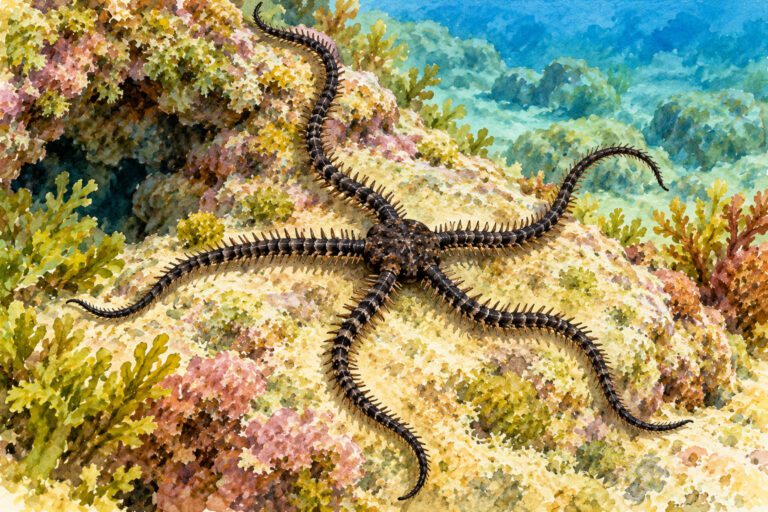
Black Spiny Brittle Star

Spanish name
Ofiura negra espinosa
Scientific name
Ophiocoma aethiops

What Do Pico & Tati Think?

A thin arm at the edge of a shelter can be an entire discovery. Pico waits quietly; Tati draws only what is visible.

Identification

Key Features of the Black Spiny Brittle Star

  • A central disc distinct from the arms

  • Long slender arms with visible spines

  • Only part of the animal may be visible naturally

Habitat & range

Suitable underwater coastal habitat. Use a permitted guided snorkeling or viewing activity appropriate to your family; do not enter the sea just to find this animal.

Conservation & care

Watch without touching, lifting, feeding or collecting. Keep fingers and equipment away from spines and other surface structures. Leave the animal submerged and its habitat undisturbed.

View full profile →

Nature Field Guide

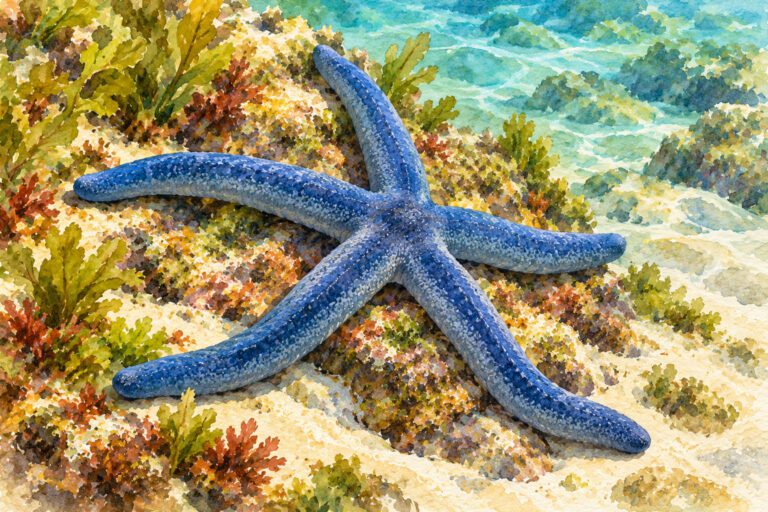
Blue Sea Star

Spanish name
Estrella azul
Scientific name
Phataria unifascialis

What Do Pico & Tati Think?

An ocean star can turn a quiet look underwater into a new question. What details would help you recognize it again?

Identification

Key Features of the Blue Sea Star

  • A central body with spreading arms

  • Record the visible color and pattern

  • Confirm the species using several features together

Habitat & range

Suitable underwater coastal habitat. Use a permitted guided snorkeling or viewing activity appropriate to your family; do not enter the sea just to find this animal.

Conservation & care

Watch without touching, lifting, feeding or collecting. Keep fingers and equipment away from spines and other surface structures. Leave the animal submerged and its habitat undisturbed.

View full profile →

Nature Field Guide

Bradley’s Sea Star

Spanish name
Estrella de mar de Bradley
Scientific name
Mithrodia bradleyi

What Do Pico & Tati Think?

A sea star can look still while its place in the reef is full of life. Pico wants to sketch its outline; Tati wants to compare its arms.

Identification

Key Features of the Bradley’s Sea Star

  • Arms radiating from a central body

  • A textured upper surface

  • Compare the whole outline with a verified species photograph

Habitat & range

Suitable underwater coastal habitat. Use a permitted guided snorkeling or viewing activity appropriate to your family; do not enter the sea just to find this animal.

Conservation & care

Watch without touching, lifting, feeding or collecting. Keep fingers and equipment away from spines and other surface structures. Leave the animal submerged and its habitat undisturbed.

View full profile →

Nature Field Guide

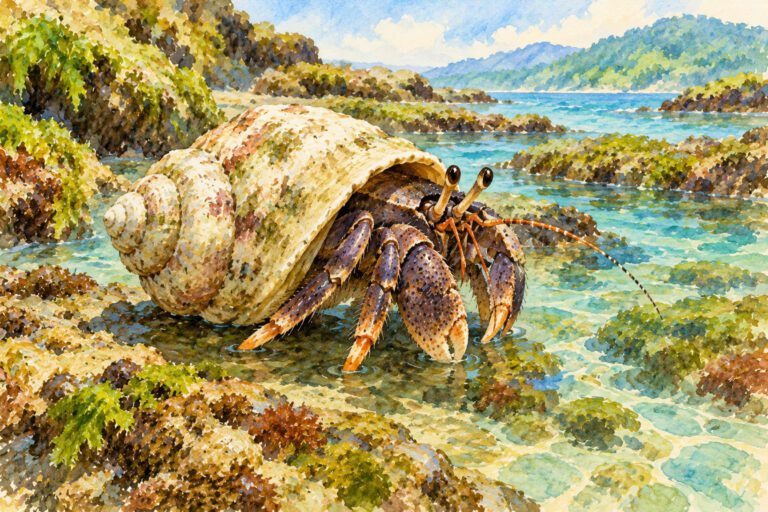
Calcinus Hermit Crab

Spanish name
Cangrejo ermitaño Calcinus
Scientific name
Calcinus obscurus

What Do Pico & Tati Think?

Pico thinks a shell has moved. Tati waits until a small leg appears before writing down what she has seen.

Identification

Key Features of the Calcinus Hermit Crab

  • A marine hermit crab in a borrowed shell

  • Visible legs and claws at the shell opening

  • The shell species and crab species are separate identifications

Habitat & range

Rocky shore and naturally visible tidal habitat. Choose a permitted observation point with an adult; do not turn rocks or reach into holes.

Conservation & care

Give claws and burrow entrances space. Do not handle, feed, chase or collect crabs. Leave rocks and shells where they are, and follow your adult’s route and local signs.

View full profile →

Nature Field Guide

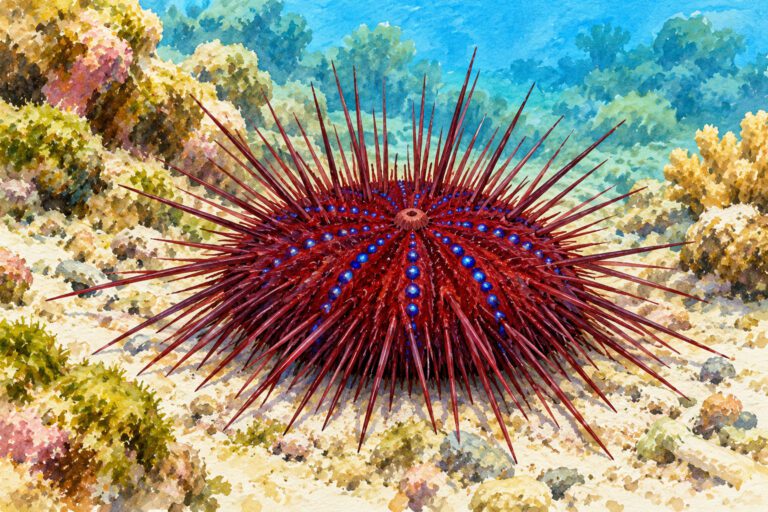
Crown Sea Urchin

Spanish name
Erizo corona
Scientific name
Astropyga pulvinata

What Do Pico & Tati Think?

One spiny animal is interesting. A gathering of them raises even more questions. Pico and Tati watch without moving closer.

Identification

Key Features of the Crown Sea Urchin

  • Long slender spines

  • Small bright blue body spots may be visible

  • Observe without approaching the spines

Habitat & range

Suitable underwater coastal habitat. Use a permitted guided snorkeling or viewing activity appropriate to your family; do not enter the sea just to find this animal.

Conservation & care

Watch without touching, lifting, feeding or collecting. Keep fingers and equipment away from spines and other surface structures. Leave the animal submerged and its habitat undisturbed.

View full profile →

Nature Field Guide

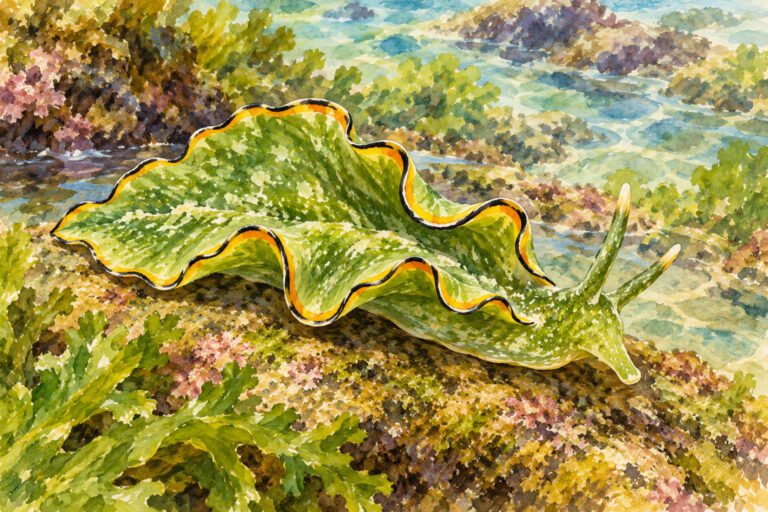
Diomedea Leaf Sea Slug

Spanish name
Babosa marina de hoja
Scientific name
Elysia diomedea

What Do Pico & Tati Think?

Pico spots a leafy-looking shape. Tati asks how an animal can blend into the algae around it.

Identification

Key Features of the Diomedea Leaf Sea Slug

  • A small soft body with folded sides

  • Greenish coloring with contrasting lines

  • Tentacle-like rhinophores on the head

Habitat & range

Suitable underwater coastal habitat. Use a permitted guided snorkeling or viewing activity appropriate to your family; do not enter the sea just to find this animal.

Conservation & care

Watch without touching, lifting, feeding or collecting. Keep fingers and equipment away from spines and other surface structures. Leave the animal submerged and its habitat undisturbed.

View full profile →

Nature Field Guide

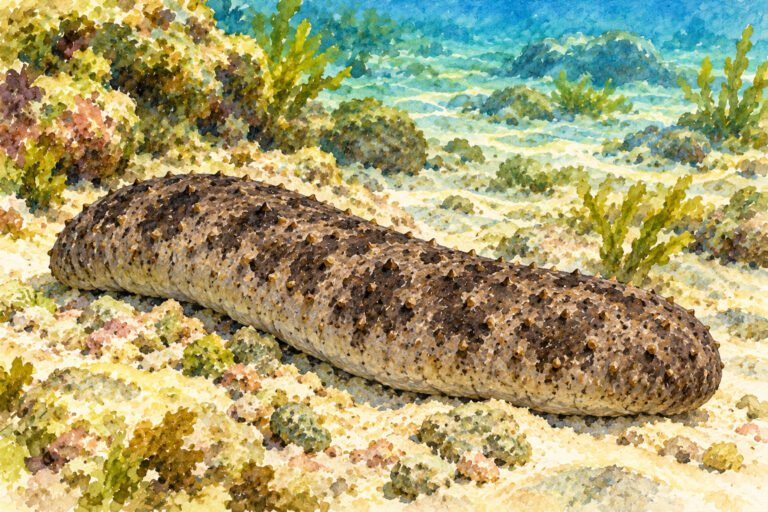
Dusky Sea Cucumber

Spanish name
Pepino de mar
Scientific name
Holothuria fuscocinerea

What Do Pico & Tati Think?

It does not need a star-shaped outline to be related to sea stars. Pico and Tati meet a different kind of echinoderm.

Identification

Key Features of the Dusky Sea Cucumber

  • An elongated body resting on the seabed

  • No radiating arms like a sea star

  • Photograph the animal in place for expert comparison

Habitat & range

Suitable underwater coastal habitat. Use a permitted guided snorkeling or viewing activity appropriate to your family; do not enter the sea just to find this animal.

Conservation & care

Watch without touching, lifting, feeding or collecting. Keep fingers and equipment away from spines and other surface structures. Leave the animal submerged and its habitat undisturbed.

View full profile →

Nature Field Guide

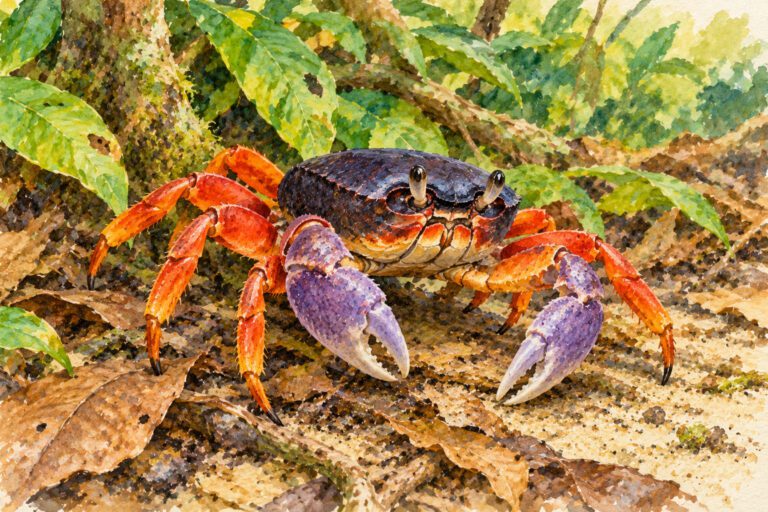
Halloween Land Crab

Spanish name
Cangrejo arlequín
Scientific name
Gecarcinus quadratus

What Do Pico & Tati Think?

Not every coastal crab lives underwater. Pico and Tati look at the ground beside the path without leaving it.

Identification

Key Features of the Halloween Land Crab

  • A crab walking on land near coastal vegetation

  • Burrows may be present in suitable ground

  • Confirm the species from the whole animal, not a burrow alone

Habitat & range

Coastal vegetation and adjacent ground. Stay on established routes and do not search inside burrows.

Conservation & care

Give claws and burrow entrances space. Do not handle, feed, chase or collect crabs. Leave rocks and shells where they are, and follow your adult’s route and local signs.

View full profile →

Nature Field Guide

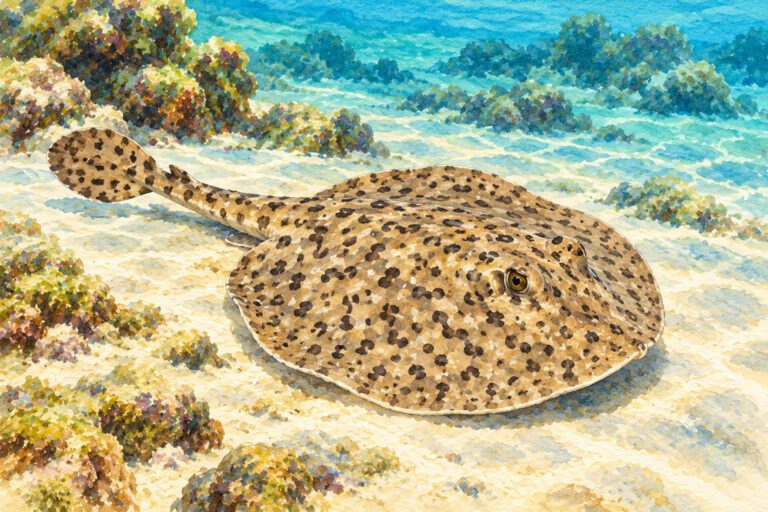
Leopard Roundray

Spanish name
Raya redonda leopardo
Scientific name
Urobatis pardalis

What Do Pico & Tati Think?

A quiet shape on the seabed might be easy to miss. Pico and Tati give rays space and let a marine guide help them observe.

Identification

Key Features of the Leopard Roundray

  • A rounded disc

  • Small dark spots and short wavy markings on a pale brown upper surface

  • A relatively short tail with a rounded fin

Habitat & range

Suitable underwater coastal habitat. Use a permitted guided snorkeling or viewing activity appropriate to your family; do not enter the sea just to find this animal.

Conservation & care

Observe rays without approaching, touching, feeding, cornering or following them. Stay with a qualified local guide and follow their instructions about entering and moving in the water.

View full profile →

Nature Field Guide

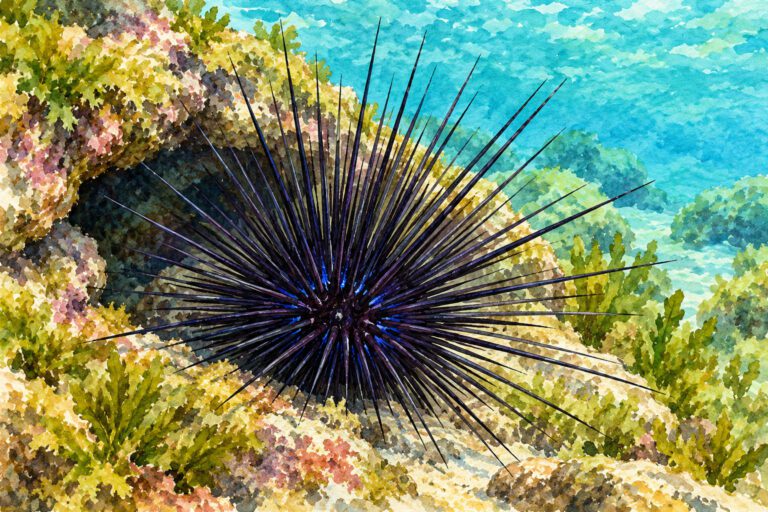
Mexican Long-spined Sea Urchin

Spanish name
Erizo de espinas largas
Scientific name
Diadema mexicanum

What Do Pico & Tati Think?

Long spines make a striking silhouette. Pico draws the shape from a distance while Tati notices the shelter around it.

Identification

Key Features of the Mexican Long-spined Sea Urchin

  • Long thin spines extending beyond the body

  • A shelter or opening among rocks may be nearby

  • A silhouette is a clue, not a complete species identification

Habitat & range

Suitable underwater coastal habitat. Use a permitted guided snorkeling or viewing activity appropriate to your family; do not enter the sea just to find this animal.

Conservation & care

Watch without touching, lifting, feeding or collecting. Keep fingers and equipment away from spines and other surface structures. Leave the animal submerged and its habitat undisturbed.

View full profile →

Nature Field Guide

Mottled Shore Crab

Spanish name
Cangrejo costero moteado
Scientific name
Pachygrapsus transversus

What Do Pico & Tati Think?

Pico waits for a small movement between rocks. Tati records the difference between a hiding place and a feeding place.

Identification

Key Features of the Mottled Shore Crab

  • A small crab on rocky shore

  • Look for movement near existing crevices

  • Use a verified photograph to compare markings and body proportions

Habitat & range

Rocky shore and naturally visible tidal habitat. Choose a permitted observation point with an adult; do not turn rocks or reach into holes.

Conservation & care

Give claws and burrow entrances space. Do not handle, feed, chase or collect crabs. Leave rocks and shells where they are, and follow your adult’s route and local signs.

View full profile →

Nature Field Guide

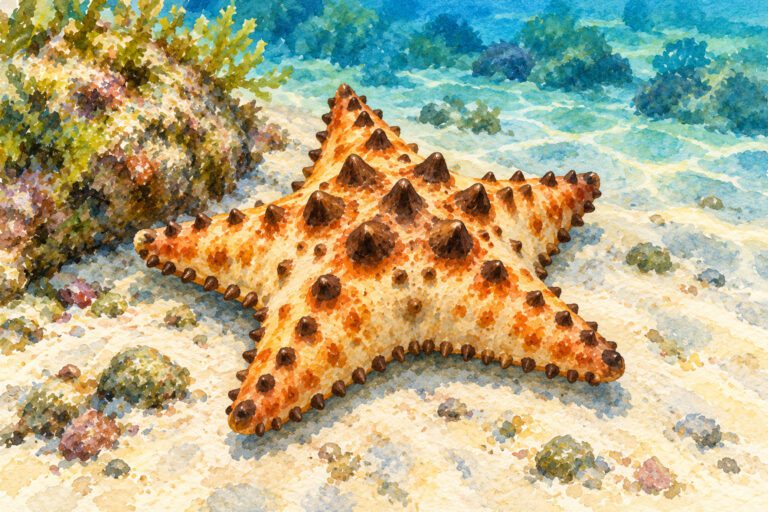
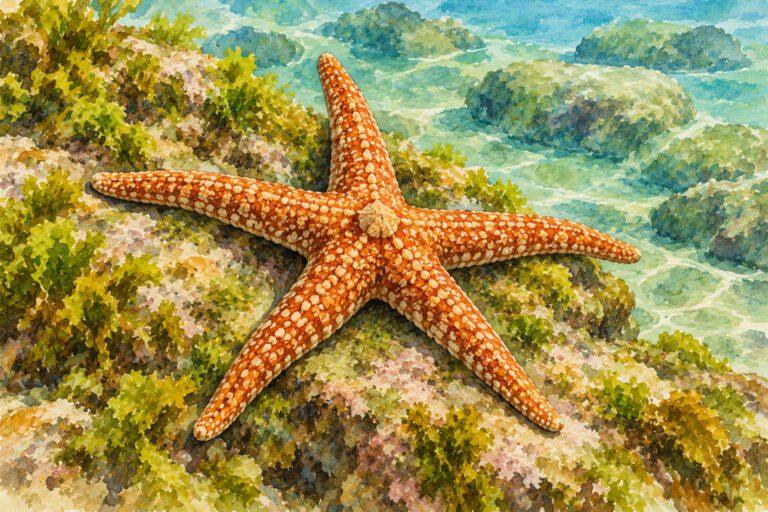
Pacific Chocolate Chip Sea Star

Spanish name
Estrella chocolate del Pacífico
Scientific name
Nidorellia armata

What Do Pico & Tati Think?

Those bumps might remind Pico of chocolate chips, but this star is a living animal. Tati’s rule is simple: look closely and leave it in the water.

Identification

Key Features of the Pacific Chocolate Chip Sea Star

  • A broad star-shaped outline

  • Conspicuous raised knobs on the upper surface

  • Check Nidorellia armata rather than relying on the common name alone

Habitat & range

Suitable underwater coastal habitat. Use a permitted guided snorkeling or viewing activity appropriate to your family; do not enter the sea just to find this animal.

Conservation & care

Watch without touching, lifting, feeding or collecting. Keep fingers and equipment away from spines and other surface structures. Leave the animal submerged and its habitat undisturbed.

View full profile →

Nature Field Guide

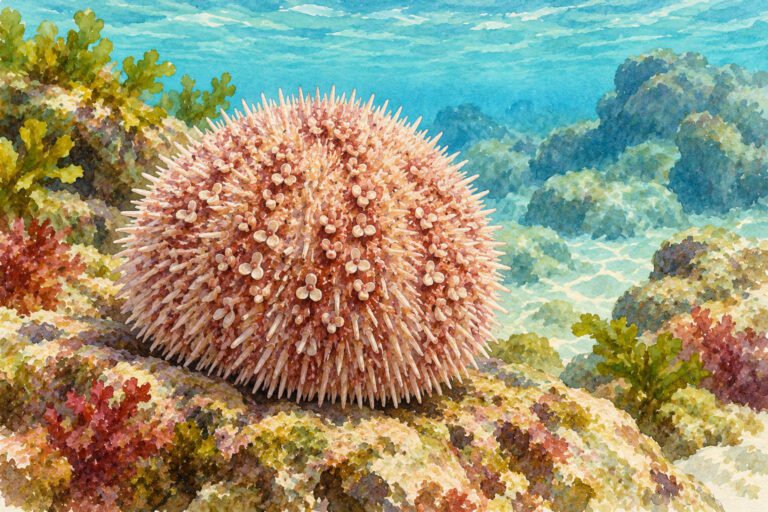
Pacific Flower Sea Urchin

Spanish name
Erizo de flor del Pacífico
Scientific name
Toxopneustes roseus

What Do Pico & Tati Think?

A name can sound delicate even when an animal needs plenty of space. Pico and Tati admire this urchin without touching it.

Identification

Key Features of the Pacific Flower Sea Urchin

  • A rounded urchin body

  • Flower-like surface structures may be visible in a verified photograph

  • Observe the complete animal without contact

Habitat & range

Suitable underwater coastal habitat. Use a permitted guided snorkeling or viewing activity appropriate to your family; do not enter the sea just to find this animal.

Conservation & care

Watch without touching, lifting, feeding or collecting. Keep fingers and equipment away from spines and other surface structures. Leave the animal submerged and its habitat undisturbed.

View full profile →

Nature Field Guide

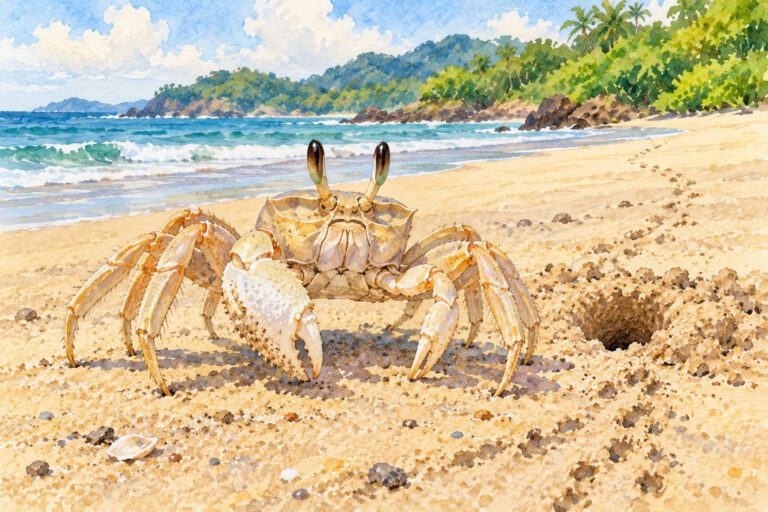
Pacific Ghost Crab

Spanish name
Cangrejo fantasma del Pacífico
Scientific name
Ocypode gaudichaudii

What Do Pico & Tati Think?

A tiny trail across the sand gives Pico a clue. Tati wonders whether the animal is nearby or hidden below.

Identification

Key Features of the Pacific Ghost Crab

  • A crab moving over beach sand

  • Eyes carried above the body on stalks

  • Tracks and burrows are clues but not proof of species

Habitat & range

Sandy beach above the wash of the waves. Observe tracks and any naturally visible crabs from a distance.

Conservation & care

Give claws and burrow entrances space. Do not handle, feed, chase or collect crabs. Leave rocks and shells where they are, and follow your adult’s route and local signs.

View full profile →

Nature Field Guide

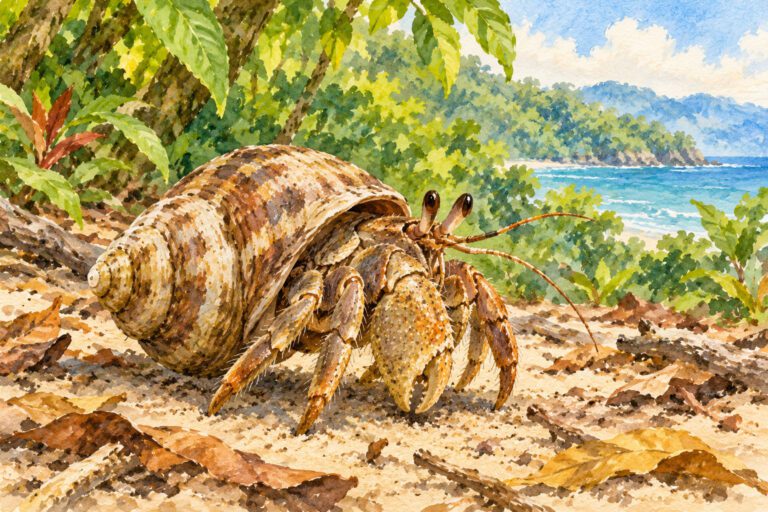
Pacific Land Hermit Crab

Spanish name
Cangrejo ermitaño terrestre del Pacífico
Scientific name
Coenobita compressus

What Do Pico & Tati Think?

Pico calls it a traveling home. Tati remembers that an apparently empty shell may already belong to a crab.

Identification

Key Features of the Pacific Land Hermit Crab

  • A hermit crab walking on land

  • A shell carried over the abdomen

  • Visible legs and claws can retreat inside the opening

Habitat & range

Coastal vegetation and adjacent ground. Stay on established routes and do not search inside burrows.

Conservation & care

Adults are adapted to life on land. Do not place the crab in water, remove its shell, collect it or keep it as a pet. Leave coastal shelters undisturbed.

View full profile →

Nature Field Guide

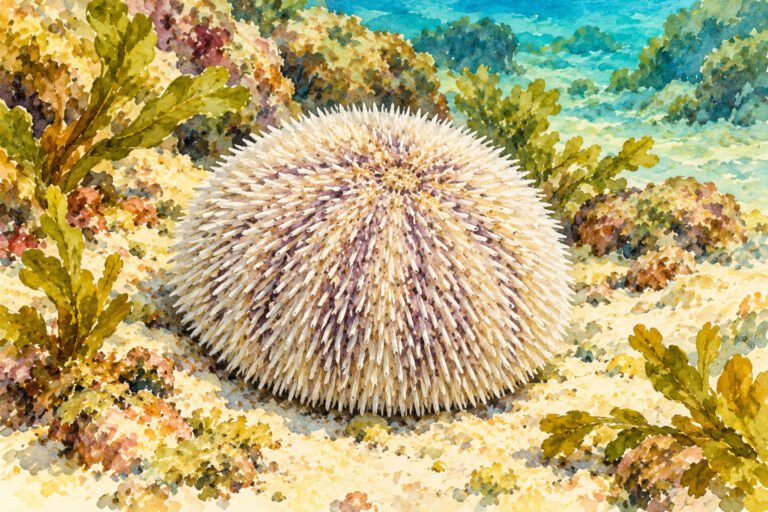
Pacific White Sea Urchin

Spanish name
Erizo blanco del Pacífico
Scientific name
Tripneustes depressus

What Do Pico & Tati Think?

Pico notices a rounded shape on the seabed. Tati wants to compare its small details with other urchins.

Identification

Key Features of the Pacific White Sea Urchin

  • A rounded body

  • Relatively short spines

  • Confirm the species with a correctly labeled reference image

Habitat & range

Suitable underwater coastal habitat. Use a permitted guided snorkeling or viewing activity appropriate to your family; do not enter the sea just to find this animal.

Conservation & care

Watch without touching, lifting, feeding or collecting. Keep fingers and equipment away from spines and other surface structures. Leave the animal submerged and its habitat undisturbed.

View full profile →

Nature Field Guide

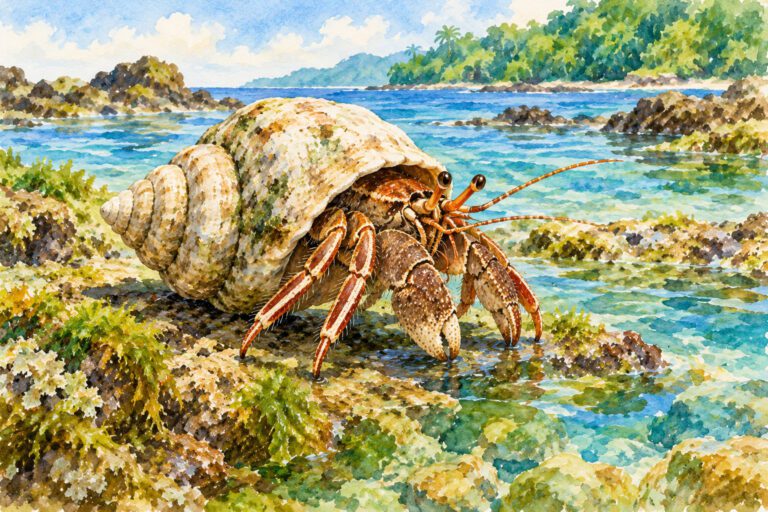
Panama Hermit Crab

Spanish name
Cangrejo ermitaño panameño
Scientific name
Clibanarius panamensis

What Do Pico & Tati Think?

A shell can be both a clue and a hiding place. Pico and Tati practice patience while its resident decides whether to appear.

Identification

Key Features of the Panama Hermit Crab

  • Legs or claws extending from a shell

  • An animal carrying the shell as it moves

  • Check the crab’s features with a specialist reference

Habitat & range

Rocky shore and naturally visible tidal habitat. Choose a permitted observation point with an adult; do not turn rocks or reach into holes.

Conservation & care

Give claws and burrow entrances space. Do not handle, feed, chase or collect crabs. Leave rocks and shells where they are, and follow your adult’s route and local signs.

View full profile →

Nature Field Guide

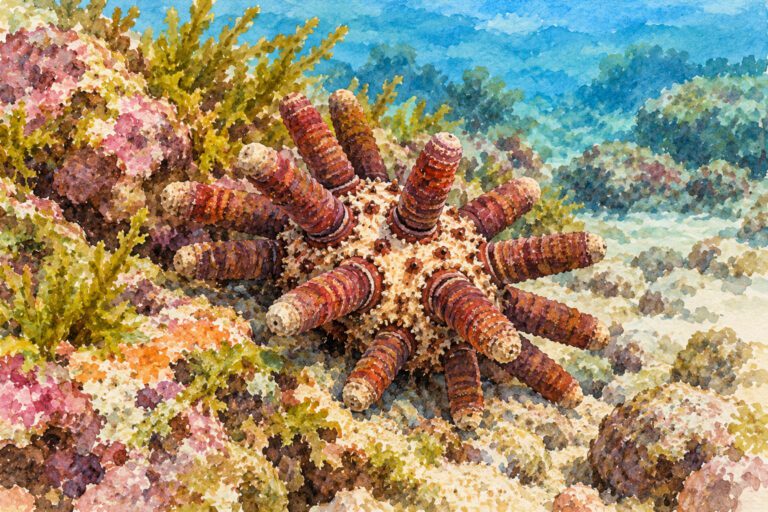
Pencil Sea Urchin

Spanish name
Erizo lapicero
Scientific name
Eucidaris thouarsii

What Do Pico & Tati Think?

Why do some spines look more like pencils than needles? Pico and Tati compare photographs before trying to name an urchin.

Identification

Key Features of the Pencil Sea Urchin

  • Thick pencil-like primary spines

  • A compact body among the spines

  • Compare with Eucidaris thouarsii, not an unlabeled aquarium photograph

Habitat & range

Suitable underwater coastal habitat. Use a permitted guided snorkeling or viewing activity appropriate to your family; do not enter the sea just to find this animal.

Conservation & care

Watch without touching, lifting, feeding or collecting. Keep fingers and equipment away from spines and other surface structures. Leave the animal submerged and its habitat undisturbed.

View full profile →

Nature Field Guide

Pyramid Sea Star

Spanish name
Estrella pirámide
Scientific name
Pharia pyramidata

What Do Pico & Tati Think?

How would you draw a star that belongs to the ocean? Pico starts with the outline. Tati adds the small details she notices.

Identification

Key Features of the Pyramid Sea Star

  • A star-shaped body

  • Arms extending from the center

  • Surface details best recorded with a close photograph taken without disturbance

Habitat & range

Suitable underwater coastal habitat. Use a permitted guided snorkeling or viewing activity appropriate to your family; do not enter the sea just to find this animal.

Conservation & care

Watch without touching, lifting, feeding or collecting. Keep fingers and equipment away from spines and other surface structures. Leave the animal submerged and its habitat undisturbed.

View full profile →

Nature Field Guide

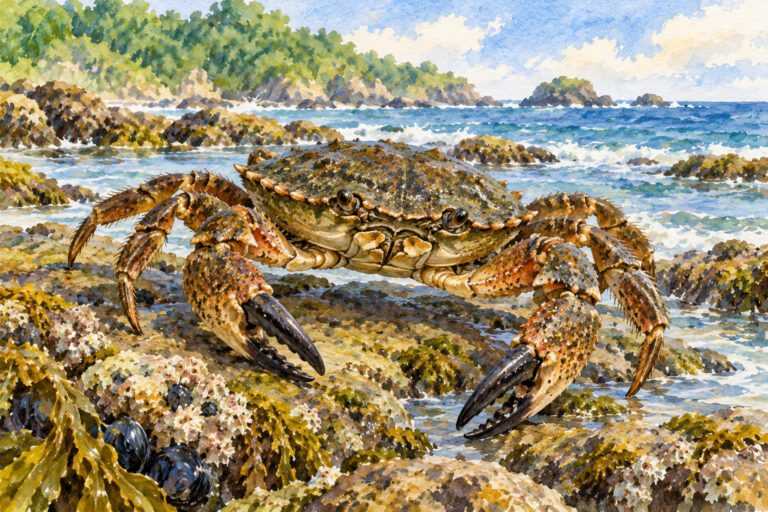
Rough-clawed Rock Crab

Spanish name
Cangrejo de roca de pinzas rugosas
Scientific name
Eriphia squamata

What Do Pico & Tati Think?

Pico notices the claws first. Tati checks the rest of the body before deciding what to write in the journal.

Identification

Key Features of the Rough-clawed Rock Crab

  • A broad carapace

  • Bumpy or rough-looking claw surfaces

  • Several features must agree for a confident identification

Habitat & range

Rocky shore and naturally visible tidal habitat. Choose a permitted observation point with an adult; do not turn rocks or reach into holes.

Conservation & care

Give claws and burrow entrances space. Do not handle, feed, chase or collect crabs. Leave rocks and shells where they are, and follow your adult’s route and local signs.

View full profile →

Nature Field Guide

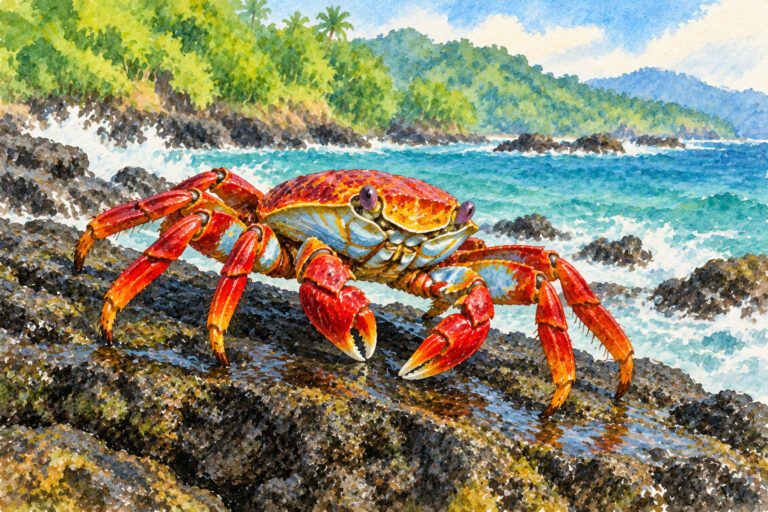
Sally Lightfoot Crab

Spanish name
Cangrejo zayapa
Scientific name
Grapsus grapsus

What Do Pico & Tati Think?

A shore crab’s careful steps can make a rocky coast feel like a busy neighborhood. Pico and Tati watch from stable ground.

Identification

Key Features of the Sally Lightfoot Crab

  • A crab on coastal rocks

  • A broad low body with legs extending sideways

  • Compare color, outline and other details together

Habitat & range

Rocky shore and naturally visible tidal habitat. Choose a permitted observation point with an adult; do not turn rocks or reach into holes.

Conservation & care

Give claws and burrow entrances space. Do not handle, feed, chase or collect crabs. Leave rocks and shells where they are, and follow your adult’s route and local signs.

View full profile →

My Tico Explorer Experience

Save nature, towns, discoveries and learning adventures for your next experience.

Your list stays in this browser on this device.