

Nature Field Guide
Neotropic Cormorant
- Spanish name
- Cormorán neotropical
- Scientific name
- Nannopterum brasilianum
What Do Pico & Tati Think?
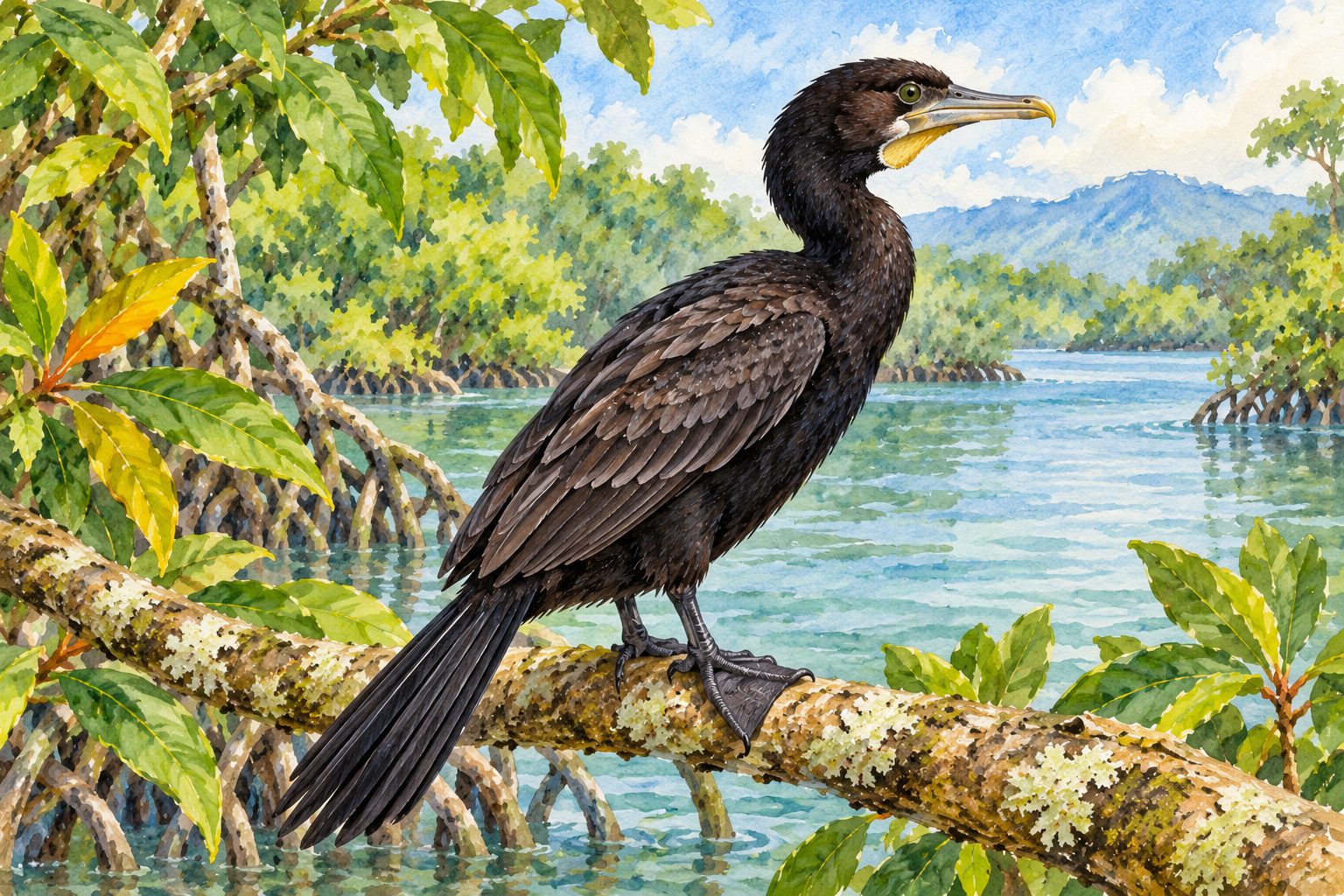
Pico watches a dark swimmer vanish below the surface. Tati looks for its hooked bill when it returns.
Species overview
About the Neotropic Cormorant
This dark waterbird catches fish by diving and swimming underwater. Its long tail, slender neck and bill with a hooked tip help distinguish it from an Anhinga. Cormorants may rest with their wings spread. They use both inland and coastal waters, so seeing a diving bird near a river does not mean it is far from suitable habitat.
Identification
Key Features of the Neotropic Cormorant
Dark body and long tail
Slender neck
Bill with a hooked tip
Often dives from the water surface
Habitat & range
Look across sheltered wetlands, lagoons and river margins from permitted trails or a responsible guided boat trip.
Local observations
Coasts and larger lowland rivers on both slopes, especially Tempisque, the Gulf of Nicoya, Rio Frio-Caño Negro and Lake Arenal. Central Valley records are rare or wandering; Lake Arenal belongs to the Northern Plains browsing region here.
When to observe
Resident populations occur in suitable habitat. Look during permitted daylight visiting hours; feeding, resting and visibility depend on the site, weather and water levels.
Conservation & care
Give feeding and resting birds space. If a bird stops feeding, repeatedly looks at you or moves away, increase your distance. Keep dogs away from flocks, avoid playback and feeding, and leave nests and natural shoreline debris undisturbed.
Observation activity
Time a naturally occurring dive from a safe viewpoint. Record one observation without turning it into a contest.
Explore by location
Caribbean · Central Pacific · Central Valley · Guanacaste · Northern Plains · Puntarenas & the Gulf Islands · South Pacific