

Nature Field Guide
Bull Shark
- Spanish name
- Tiburón toro
- Scientific name
- Carcharhinus leucas
What Do Pico & Tati Think?
Pico: “That shark looks strong and stocky!”
Tati: “It can move between salt water and fresh water.”
Species overview
About the Bull Shark
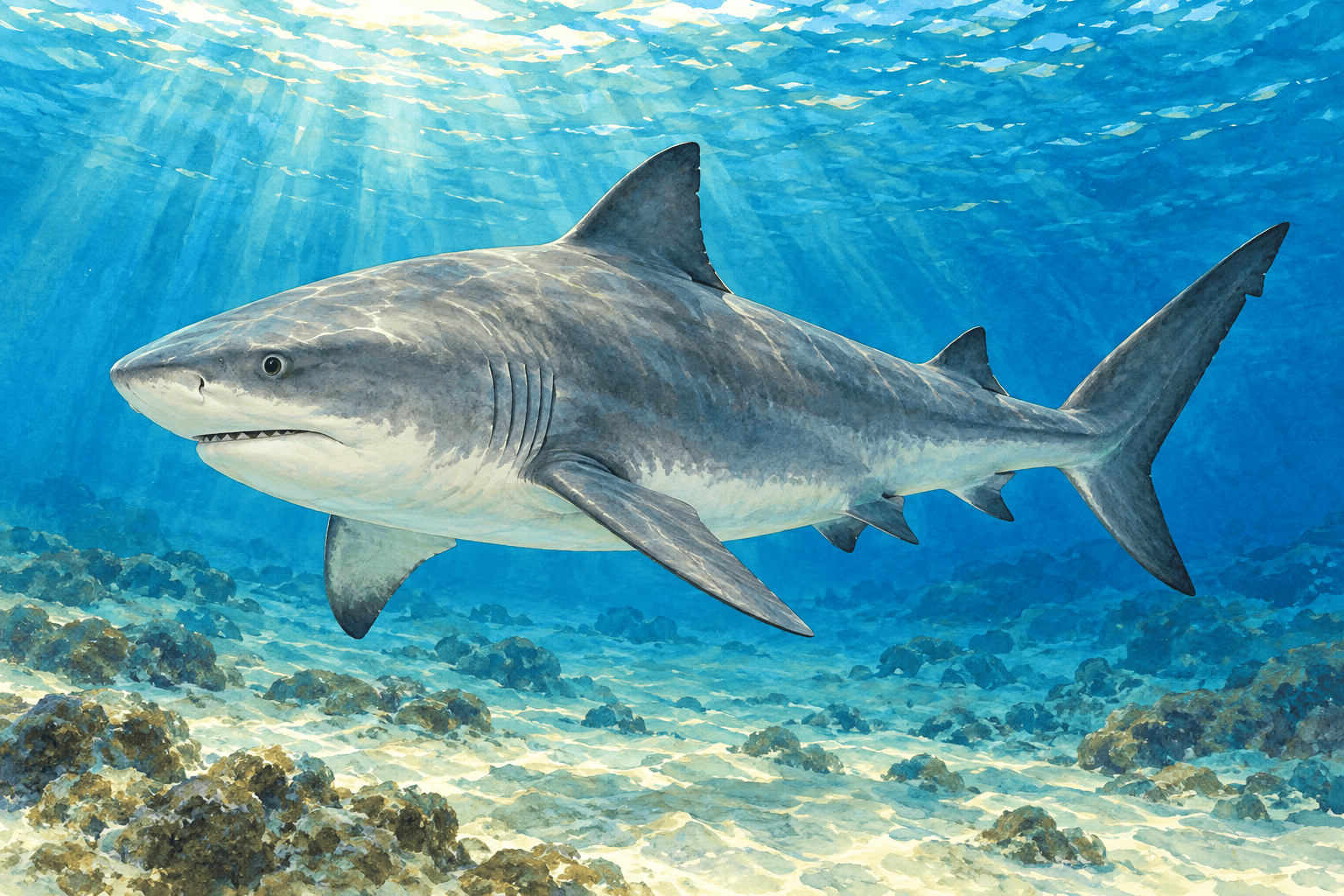
The bull shark has a sturdy gray body, a short rounded snout and relatively small eyes. Its large first dorsal fin and smaller second dorsal fin help distinguish its outline from other coastal sharks.
An unusual ability to tolerate different salt levels lets it use the sea, estuaries and some freshwater rivers. Shallow coastal areas can serve as nurseries for young sharks. It feeds mainly on fish and smaller sharks, with other prey taken when available.
This connection between coastal water and river systems makes habitat care important throughout a watershed. A record from one estuary does not establish its presence in another. We can learn about the animal through verified photographs and research without seeking a close encounter.
Identification
Key Features of the Bull Shark
A stocky gray body with a pale belly.
A short, broad rounded snout and small eyes.
A large triangular first dorsal fin.
Habitat & range
Tropical and subtropical coastal waters, estuaries and some freshwater systems.
Local observations
This profile describes the species’ general habitat. A source-backed Tamarindo occurrence record has not been established for this import; no town tag is assigned.
When to observe
Ocean conditions, prey and animal movements affect occurrence. No guaranteed sighting or fixed local viewing season is established here.
Conservation & care
Observe marine wildlife without feeding, touching or chasing it. Keep litter and discarded fishing line out of waterways. Follow qualified guides and current local rules.
Threats & pressures
Capture in fisheries affects bull sharks. Coastal development and damage to estuarine nursery habitats can put young animals under additional pressure.
Observation activity
Compare a reference photograph of the Bull Shark with another marine species. Sketch three differences in body shape, fins or markings.