Tico Explorers

Nature Field Guide

Other Plants

Explore wildlife, plants and trees. Learn what to look for and where to find them.

All Nature

17 profiles

Nature Field Guide

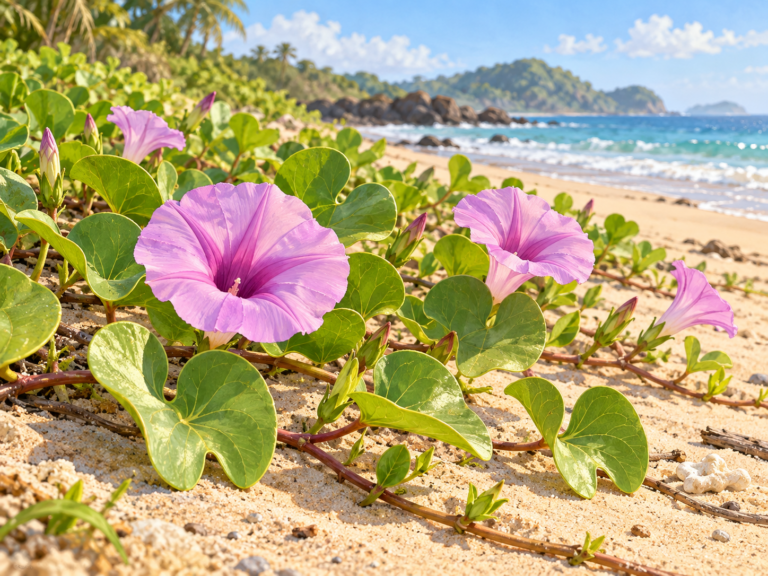
Beach Morning Glory

Spanish name
Churristate de playa / Pudre oreja
Scientific name
Ipomoea pes-caprae

What Do Pico & Tati Think?

Pico: “These flowers grow right across the sand!”

Tati: “Let’s look at the shape of the leaves without stepping on the vine.”

Identification

Key Features of the Beach Morning Glory

  • Creeping stems extending across beach sand.

  • Simple leaves with a notch giving a goat’s-hoof appearance.

  • Pink-purple flowers with a joined, funnel-like corolla.

Habitat & range

Upper sandy beaches in tropical coastal habitats. Observe vegetation from established access routes rather than stepping across vines.

Seasonal Calendar

Main flowering window

Costa Rican coastal populations

Jul, Aug, Sep, Oct, Nov

ACG reports abundant flowers July–November and seed maturation December–April on Costa Rican coasts. Typical seasonal windows, not exact dates.

Event source ↗

Seed maturation

Costa Rican coastal populations

Jan, Feb, Mar, Apr, Dec

ACG reports abundant flowers July–November and seed maturation December–April on Costa Rican coasts. Typical seasonal windows, not exact dates.

Event source ↗

Conservation & care

Do not uproot vines, pick flowers or taste plant parts. Use existing beach paths and avoid trampling coastal vegetation.

View full profile →

Nature Field Guide

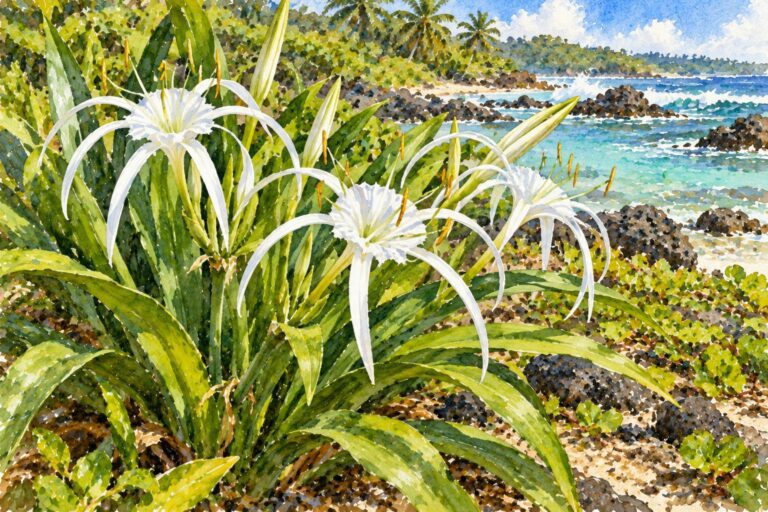
Beach Spider Lily

Spanish name
Lirio araña
Scientific name
Hymenocallis littoralis

What Do Pico & Tati Think?

Pico wants to sketch the plant’s shapes. Tati suggests looking for three clues before guessing its name. What would you notice first?

Identification

Key Features of the Beach Spider Lily

  • Long strap-shaped leaves

  • Six narrow spreading white flower segments

  • A white central cup

Habitat & range

Coastal vegetation and planted gardens.

Conservation & care

Observe from paths and leave leaves, bark, flowers and fruits attached. Do not taste wild plants or offer them to pets. Ask a knowledgeable guide to confirm the species.

View full profile →

Nature Field Guide

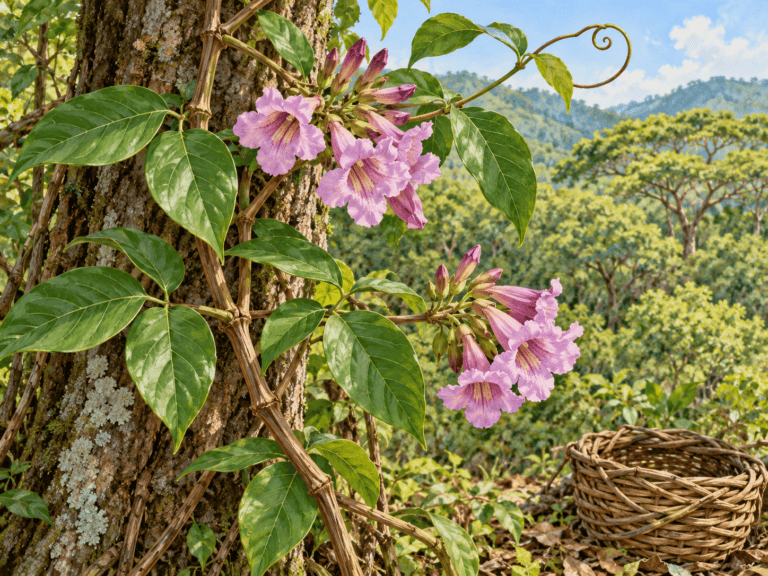
Bejuco Cucharilla

Spanish name
Bejuco cucharilla
Scientific name
Bignonia diversifolia

What Do Pico & Tati Think?

Meet the plant behind Abu’s basket. Bejuco cucharilla is a woody climbing vine, also called a liana. It grows with the support of other plants. Its leafy shoots and lilac tubular flowers offer clues to its identity.

Costa Rican craft references document cucharilla as a material for woven baskets. Woody vine material can become more flexible when moistened, allowing a skilled maker to shape and weave it. A basket begins with a plant and takes form through patient work.

In our story, Abu learned to weave from her mother. Now she invites Pico and Tati to learn too. Her family history is fictional, while the connection between this vine and Costa Rican basket making is documented.

Scientific name note: Kew accepts Bignonia diversifolia. Many Costa Rican botanical and craft sources use the synonym Cydista diversifolia.

Identification

Key Features of the Bejuco Cucharilla

  • A woody climbing stem rather than a self-supporting tree trunk.

  • Opposite compound leaves, typically with two leaflets and sometimes a simple tendril.

  • Smooth-edged leaflets with pointed tips and a rounded or somewhat heart-shaped base.

  • Lilac to pinkish tubular flowers; young branches have a distinctly angular, four-sided form.

Habitat & range

Documented in Costa Rica’s lowland forests, including deciduous and semideciduous forest in Guanacaste. Botanical collections include Nandayure and Barra Honda on the Nicoya Peninsula.

Conservation & care

Observe and photograph vines without cutting or pulling them. Leave wild plants and flowers in place. Learn about materials from a knowledgeable artisan and use paper or responsibly sourced craft materials for your own weaving.

View full profile →

Nature Field Guide

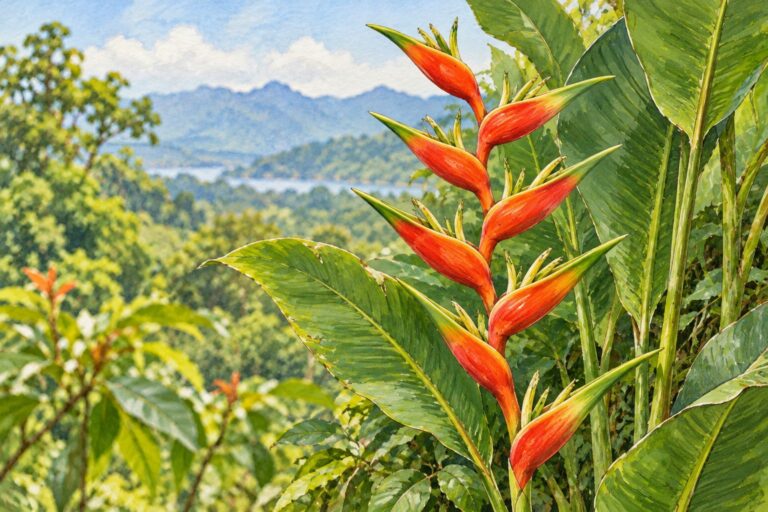
Expanded Lobster Claw

Spanish name
Platanilla / Caliguate
Scientific name
Heliconia latispatha

What Do Pico & Tati Think?

Pico: “An upright open arrangement of colorful bracts rises among broad green leaves.”

Tati: “Let’s notice the leaves, flowers and habitat without disturbing the plant.”

Identification

Key Features of the Expanded Lobster Claw

  • Broad banana-like leaves

  • Upright open inflorescence

  • Separated orange-to-red bracts holding small flowers

Habitat & range

Both slopes, including Guanacaste, the Northern Plains, Caribbean, Central Pacific and Osa; also cultivated in gardens.

Conservation & care

Explore with an adult on permitted paths. Observe and photograph without picking leaves, flowers or fruits. Do not taste plants or let pets chew them. Avoid climbing trees and disturbing roots, seedlings or visiting wildlife.

Threats & pressures

Protect suitable habitat, mature trees and natural regeneration. Avoid trampling, unauthorized clearing and collection.

View full profile →

Nature Field Guide

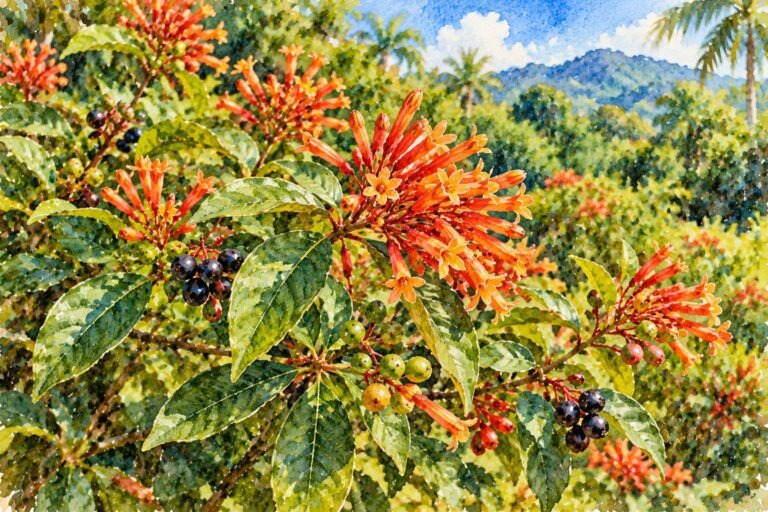
Firebush

Spanish name
Coralillo
Scientific name
Hamelia patens

What Do Pico & Tati Think?

Pico wants to sketch the plant’s shapes. Tati suggests looking for three clues before guessing its name. What would you notice first?

Identification

Key Features of the Firebush

  • Narrow orange-red tubular flowers

  • Simple leaves often arranged in whorls

  • Small rounded fruits that darken with age

Habitat & range

Clearings, roadsides, forest edges and gardens.

Conservation & care

Observe from paths and leave leaves, bark, flowers and fruits attached. Do not taste wild plants or offer them to pets. Ask a knowledgeable guide to confirm the species.

View full profile →

Nature Field Guide

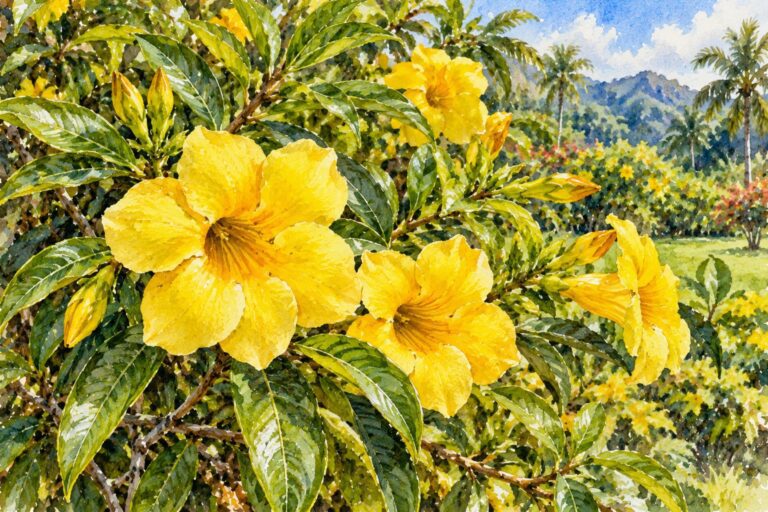
Golden Trumpet

Spanish name
Campana amarilla
Scientific name
Allamanda cathartica

What Do Pico & Tati Think?

Pico wants to sketch the plant’s shapes. Tati suggests looking for three clues before guessing its name. What would you notice first?

Identification

Key Features of the Golden Trumpet

  • Large yellow funnel-shaped flowers

  • Glossy leaves in whorls

  • Climbing or sprawling woody stems

Habitat & range

Gardens and disturbed moist to seasonally dry sites.

Conservation & care

Observe from paths and leave leaves, bark, flowers and fruits attached. Do not taste wild plants or offer them to pets. Ask a knowledgeable guide to confirm the species. Avoid contact with milky sap.

View full profile →

Nature Field Guide

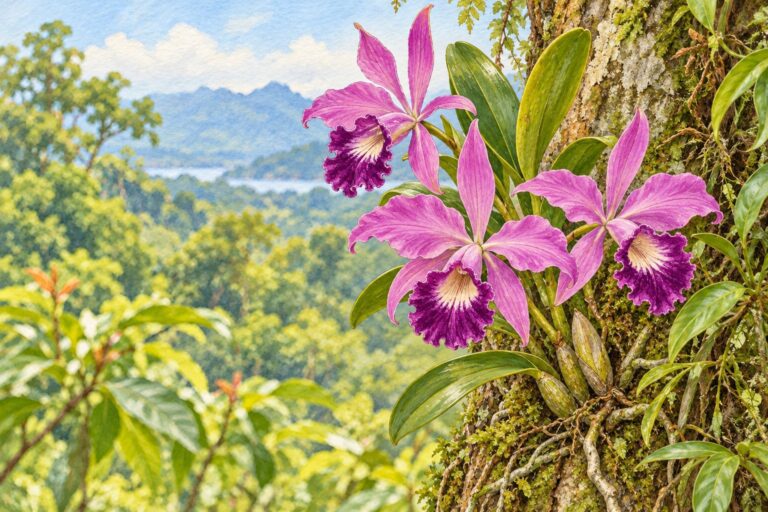
Guaria Morada Orchid

Spanish name
Guaria morada
Scientific name
Guarianthe skinneri

What Do Pico & Tati Think?

Pico: “Costa Rica’s national flower carries pink-purple blossoms above fleshy leaves.”

Tati: “Let’s notice the leaves, flowers and habitat without disturbing the plant.”

Identification

Key Features of the Guaria Morada Orchid

  • Pink-purple orchid flowers with a shaped lip

  • Fleshy oblong leaves

  • Thickened stem bases and roots on a support

Habitat & range

Native Central American orchid, also cultivated in Costa Rican homes and gardens. The Greater Metropolitan Area supports both native flora records and a strong garden tradition.

Conservation & care

Do not collect wild orchids, remove roots or climb supporting trees. Observe with an adult from the ground. Any garden plant should come from a documented lawful nursery source.

Threats & pressures

Wild collection and habitat loss are conservation concerns. Leave forest plants in place and support protection of their habitat.

View full profile →

Nature Field Guide

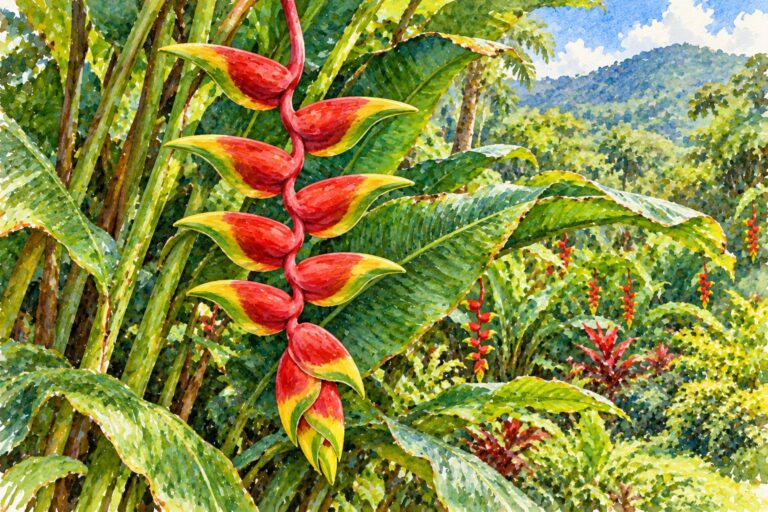
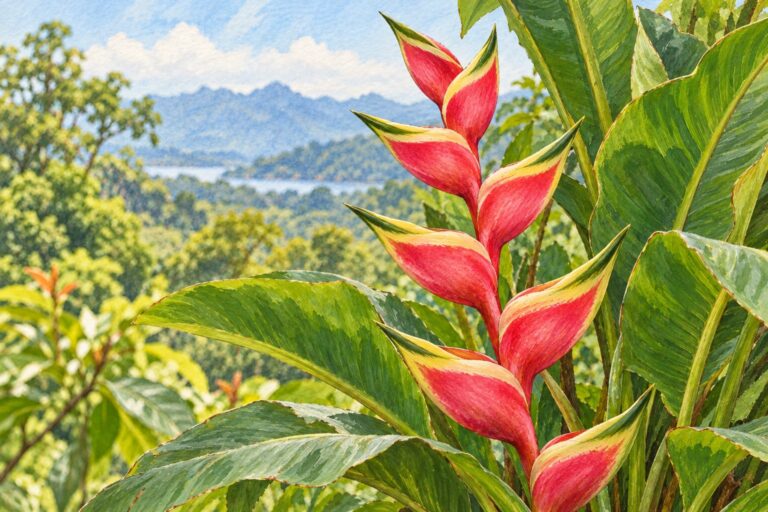
Hanging Lobster Claw

Spanish name
Platanillo colgante
Scientific name
Heliconia rostrata

What Do Pico & Tati Think?

Pico wants to sketch the plant’s shapes. Tati suggests looking for three clues before guessing its name. What would you notice first?

Identification

Key Features of the Hanging Lobster Claw

  • Hanging zigzag inflorescence

  • Red bracts with yellow-green tips

  • Broad banana-like leaves

Habitat & range

Planted tropical gardens.

Conservation & care

Observe from paths and leave leaves, bark, flowers and fruits attached. Do not taste wild plants or offer them to pets. Ask a knowledgeable guide to confirm the species.

View full profile →

Nature Field Guide

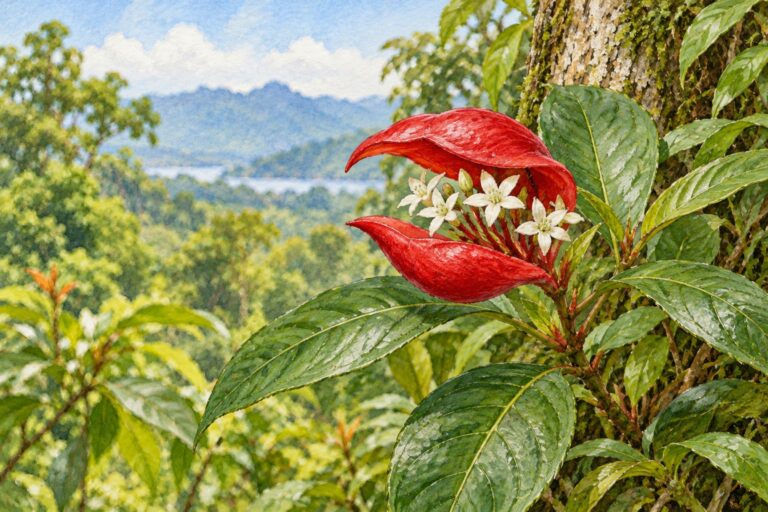
Hot Lips Plant

Spanish name
Labios ardientes / Botón rojo
Scientific name
Palicourea elata

What Do Pico & Tati Think?

Pico: “Two bright red bracts surround tiny pale flowers in the forest understory.”

Tati: “Let’s notice the leaves, flowers and habitat without disturbing the plant.”

Identification

Key Features of the Hot Lips Plant

  • Two conspicuous red floral bracts

  • Small white or creamy flowers

  • Opposite glossy leaves

Habitat & range

Humid understory and forest edges on both slopes, with records from Guanacaste, Sarapiquí, Talamanca, Cartago and Osa.

Conservation & care

Explore with an adult on permitted paths. Observe and photograph without picking leaves, flowers or fruits. Do not taste plants or let pets chew them. Avoid climbing trees and disturbing roots, seedlings or visiting wildlife.

Threats & pressures

Protect suitable habitat, mature trees and natural regeneration. Avoid trampling, unauthorized clearing and collection.

View full profile →

Nature Field Guide

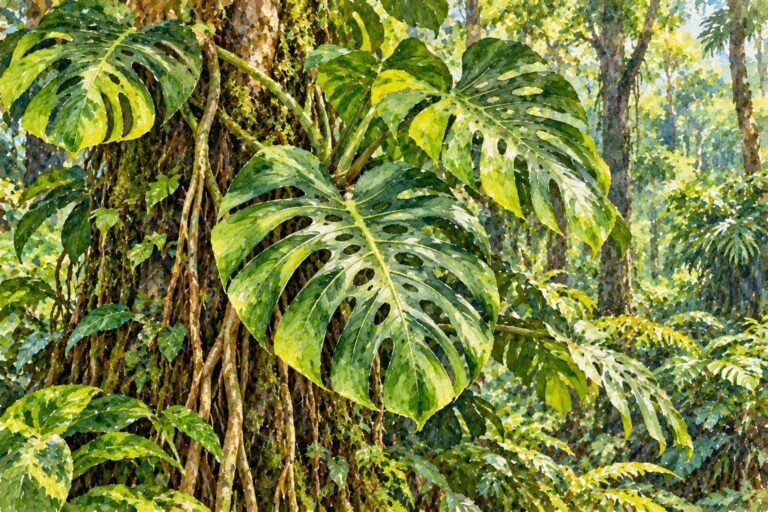
Monstera

Spanish name
Costilla de Adán
Scientific name
Monstera deliciosa

What Do Pico & Tati Think?

Pico: “Large split leaves with natural holes make this cultivated climber easy to notice.”

Tati: “Let’s notice the leaves, flowers and habitat without disturbing the plant.”

Identification

Key Features of the Monstera

  • Large heart-shaped mature leaves

  • Natural holes and deep splits

  • Climbing stem with aerial roots

Habitat & range

Cultivated gardens and collections, including plants documented at the University of Costa Rica campus in San José.

Conservation & care

Observe without handling. Do not chew or taste leaves, stems or unripe fruit. Keep children and pets from mouthing plant parts. Ask the garden owner before approaching a planted specimen.

Threats & pressures

Protect suitable habitat, mature trees and natural regeneration. Avoid trampling, unauthorized clearing and collection.

View full profile →

Nature Field Guide

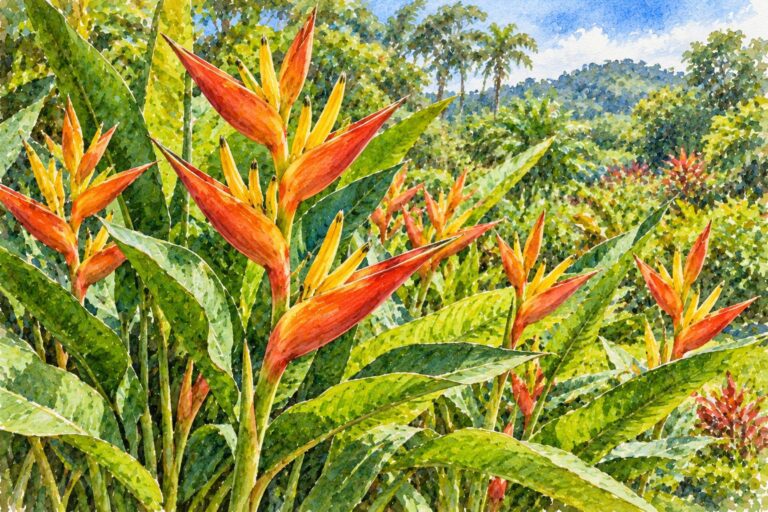
Parrot’s Beak Heliconia

Spanish name
Platanillo
Scientific name
Heliconia psittacorum

What Do Pico & Tati Think?

Pico wants to sketch the plant’s shapes. Tati suggests looking for three clues before guessing its name. What would you notice first?

Identification

Key Features of the Parrot’s Beak Heliconia

  • Upright slender flower clusters

  • Pointed orange to red bracts

  • Narrow lance-shaped leaves

Habitat & range

Planted tropical gardens and garden borders.

Conservation & care

Observe from paths and leave leaves, bark, flowers and fruits attached. Do not taste wild plants or offer them to pets. Ask a knowledgeable guide to confirm the species.

View full profile →

Nature Field Guide

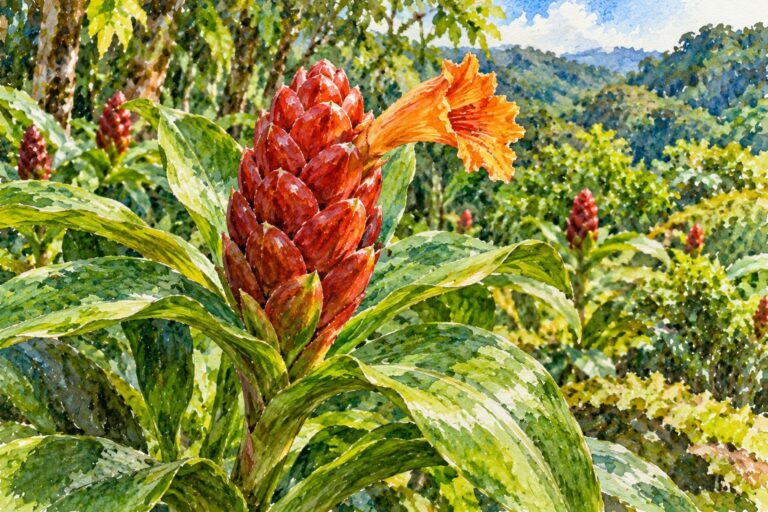
Red Button Ginger

Spanish name
Caña agria roja
Scientific name
Costus woodsonii

What Do Pico & Tati Think?

Pico wants to sketch the plant’s shapes. Tati suggests looking for three clues before guessing its name. What would you notice first?

Identification

Key Features of the Red Button Ginger

  • Shiny red terminal cone

  • Small flowers emerging between bracts

  • Leaves spiraling along the stem

Habitat & range

Coastal scrub, beach margins and gardens.

Conservation & care

Observe from paths and leave leaves, bark, flowers and fruits attached. Do not taste wild plants or offer them to pets. Ask a knowledgeable guide to confirm the species.

View full profile →

Nature Field Guide

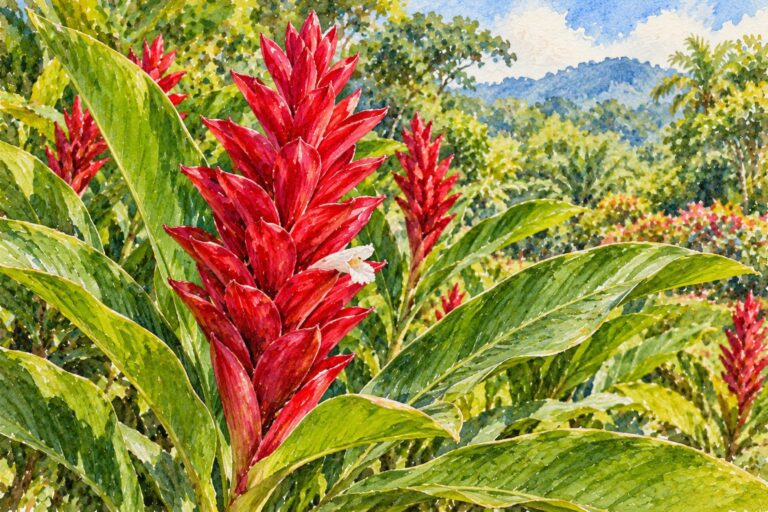
Red Ginger

Spanish name
Jengibre rojo
Scientific name
Alpinia purpurata

What Do Pico & Tati Think?

Pico wants to sketch the plant’s shapes. Tati suggests looking for three clues before guessing its name. What would you notice first?

Identification

Key Features of the Red Ginger

  • Upright red or pink bract spike

  • Small pale true flowers

  • Long simple leaves on leafy stems

Habitat & range

Moist planted gardens.

Conservation & care

Observe from paths and leave leaves, bark, flowers and fruits attached. Do not taste wild plants or offer them to pets. Ask a knowledgeable guide to confirm the species.

View full profile →

Nature Field Guide

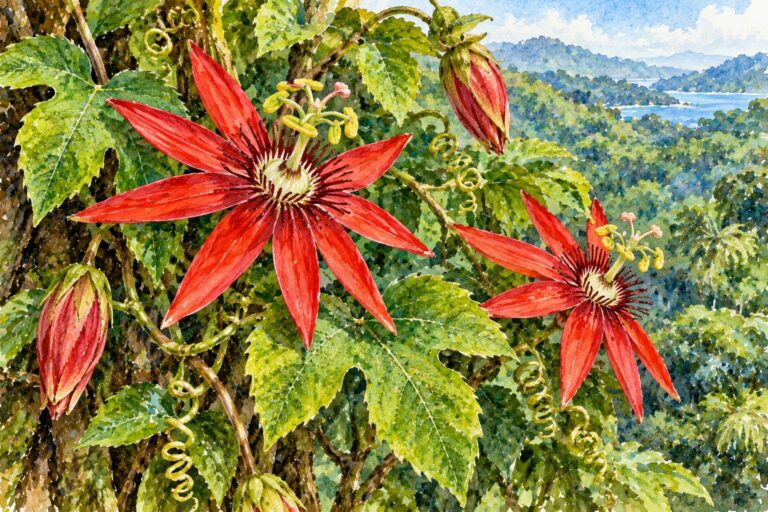
Scarlet Passionflower

Spanish name
Pasiflora roja
Scientific name
Passiflora vitifolia

What Do Pico & Tati Think?

Pico wants to sketch the plant’s shapes. Tati suggests looking for three clues before guessing its name. What would you notice first?

Identification

Key Features of the Scarlet Passionflower

  • Vivid red flowers

  • Three-lobed leaves

  • Curling tendrils on climbing stems

Habitat & range

Moist forest edges and secondary vegetation.

Conservation & care

Observe from paths and leave leaves, bark, flowers and fruits attached. Do not taste wild plants or offer them to pets. Ask a knowledgeable guide to confirm the species.

View full profile →

Nature Field Guide

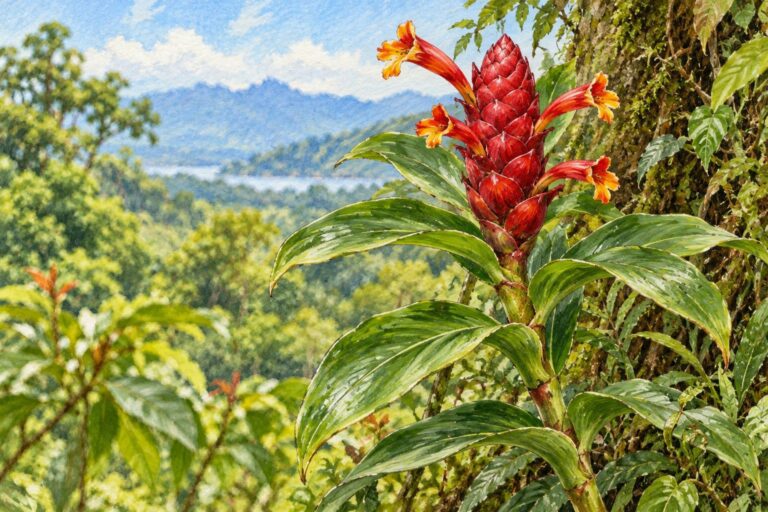
Spiral Ginger

Spanish name
Caña agria / Costus
Scientific name
Costus pulverulentus

What Do Pico & Tati Think?

Pico: “Spiraling leaves lead the eye to a red-orange cone of bracts.”

Tati: “Let’s notice the leaves, flowers and habitat without disturbing the plant.”

Identification

Key Features of the Spiral Ginger

  • Leaves spiraling around a cane-like stem

  • Elongated red-orange bract cone

  • Narrow tubular flowers

Habitat & range

Humid Caribbean and northern forests, Guanacaste foothills, the Central Pacific and Osa.

Conservation & care

Explore with an adult on permitted paths. Observe and photograph without picking leaves, flowers or fruits. Do not taste plants or let pets chew them. Avoid climbing trees and disturbing roots, seedlings or visiting wildlife.

Threats & pressures

Protect suitable habitat, mature trees and natural regeneration. Avoid trampling, unauthorized clearing and collection.

View full profile →

Nature Field Guide

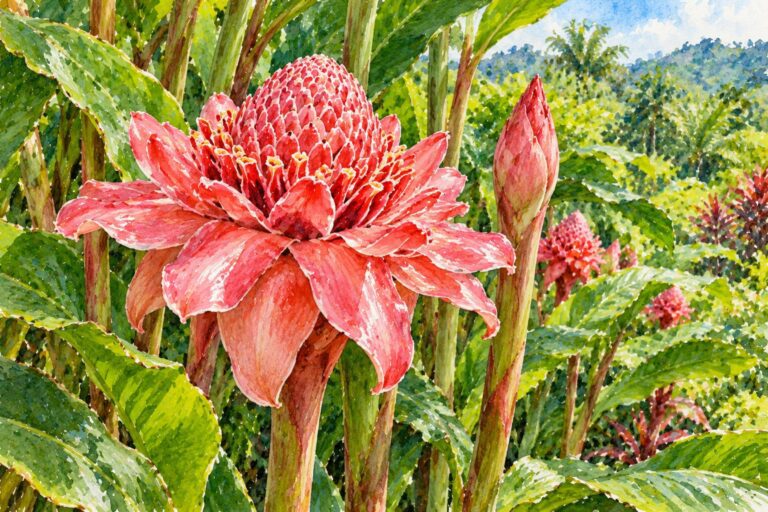
Torch Ginger

Spanish name
Bastón de emperador
Scientific name
Etlingera elatior

What Do Pico & Tati Think?

Pico: “A pink torch-shaped display rises on a stalk separate from the leafy canes.”

Tati: “Let’s notice the leaves, flowers and habitat without disturbing the plant.”

Identification

Key Features of the Torch Ginger

  • Tall ginger-like leafy canes

  • Separate leafless flowering stalk

  • Pink torch-shaped bracts

Habitat & range

Cultivated tropical gardens, including a documented example near Las Horquetas in Sarapiquí, Heredia.

Conservation & care

Explore with an adult on permitted paths. Observe and photograph without picking leaves, flowers or fruits. Do not taste plants or let pets chew them. Avoid climbing trees and disturbing roots, seedlings or visiting wildlife.

Threats & pressures

Protect suitable habitat, mature trees and natural regeneration. Avoid trampling, unauthorized clearing and collection.

View full profile →

Nature Field Guide

Wagner Heliconia

Spanish name
Platanilla
Scientific name
Heliconia wagneriana

What Do Pico & Tati Think?

Pico: “Broad pink-and-cream bracts form a colorful upright flower display.”

Tati: “Let’s notice the leaves, flowers and habitat without disturbing the plant.”

Identification

Key Features of the Wagner Heliconia

  • Large paddle-shaped leaves

  • Upright inflorescence

  • Broad pink-red bracts with pale margins and green tips

Habitat & range

Humid Caribbean lowlands and Northern Plains, the Central Pacific and Osa, as well as cultivated gardens.

Conservation & care

Explore with an adult on permitted paths. Observe and photograph without picking leaves, flowers or fruits. Do not taste plants or let pets chew them. Avoid climbing trees and disturbing roots, seedlings or visiting wildlife.

Threats & pressures

Protect suitable habitat, mature trees and natural regeneration. Avoid trampling, unauthorized clearing and collection.

View full profile →

My Tico Explorer Experience

Save nature, towns, discoveries and learning adventures for your next experience.

Your list stays in this browser on this device.