

Nature Field Guide
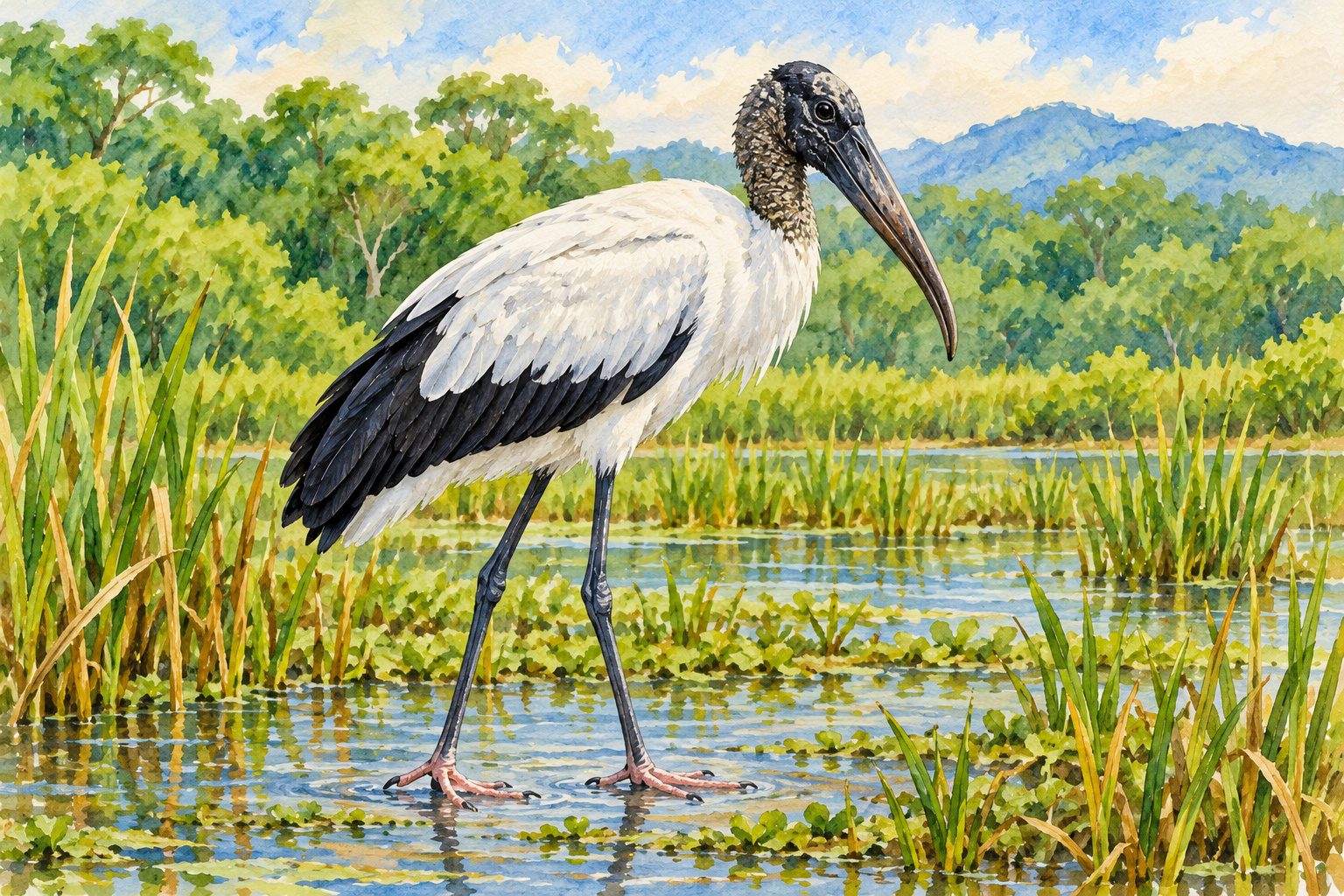
Wood Stork
- Spanish name
- Cigüeñón
- Scientific name
- Mycteria americana
What Do Pico & Tati Think?
Pico spots a tall white bird with a very different head. Tati checks its heavy bill before comparing it with the egrets.
Species overview
About the Wood Stork
The Wood Stork is a large white wader with black flight feathers and a mostly bare dark adult head. It searches shallow water with an open bill, snapping it shut when prey touches it. Its heavy curved bill differs from an egret’s straight spear-like bill. In flight, storks hold the neck extended rather than folded back.
Identification
Key Features of the Wood Stork
White body with black flight feathers
Bare dark adult head
Heavy slightly curved bill
Long legs
Habitat & range
Look across sheltered wetlands, lagoons and river margins from permitted trails or a responsible guided boat trip.
Local observations
Strongest in Guanacaste, the Gulf of Nicoya and Rio Frio-Caño Negro. Central Pacific, South Pacific, Caribbean and Central Valley matches reflect sparse, erratic wandering records, not equally common or reliable populations.
When to observe
Numbers and locations can change with water levels, feeding opportunities and seasonal movement. Check recent local observations; a regional record does not promise a bird on a particular visit.
Conservation & care
Give feeding and resting birds space. If a bird stops feeding, repeatedly looks at you or moves away, increase your distance. Keep dogs away from flocks, avoid playback and feeding, and leave nests and natural shoreline debris undisturbed.
Observation activity
Compare a stork and heron in a drawing of flight. Mark the difference between an extended and tucked neck.
Explore by location
Caribbean · Central Pacific · Central Valley · Guanacaste · Northern Plains · Puntarenas & the Gulf Islands · South Pacific