

Nature Field Guide
Tiger Shark
- Spanish name
- Tiburón tigre
- Scientific name
- Galeocerdo cuvier
What Do Pico & Tati Think?
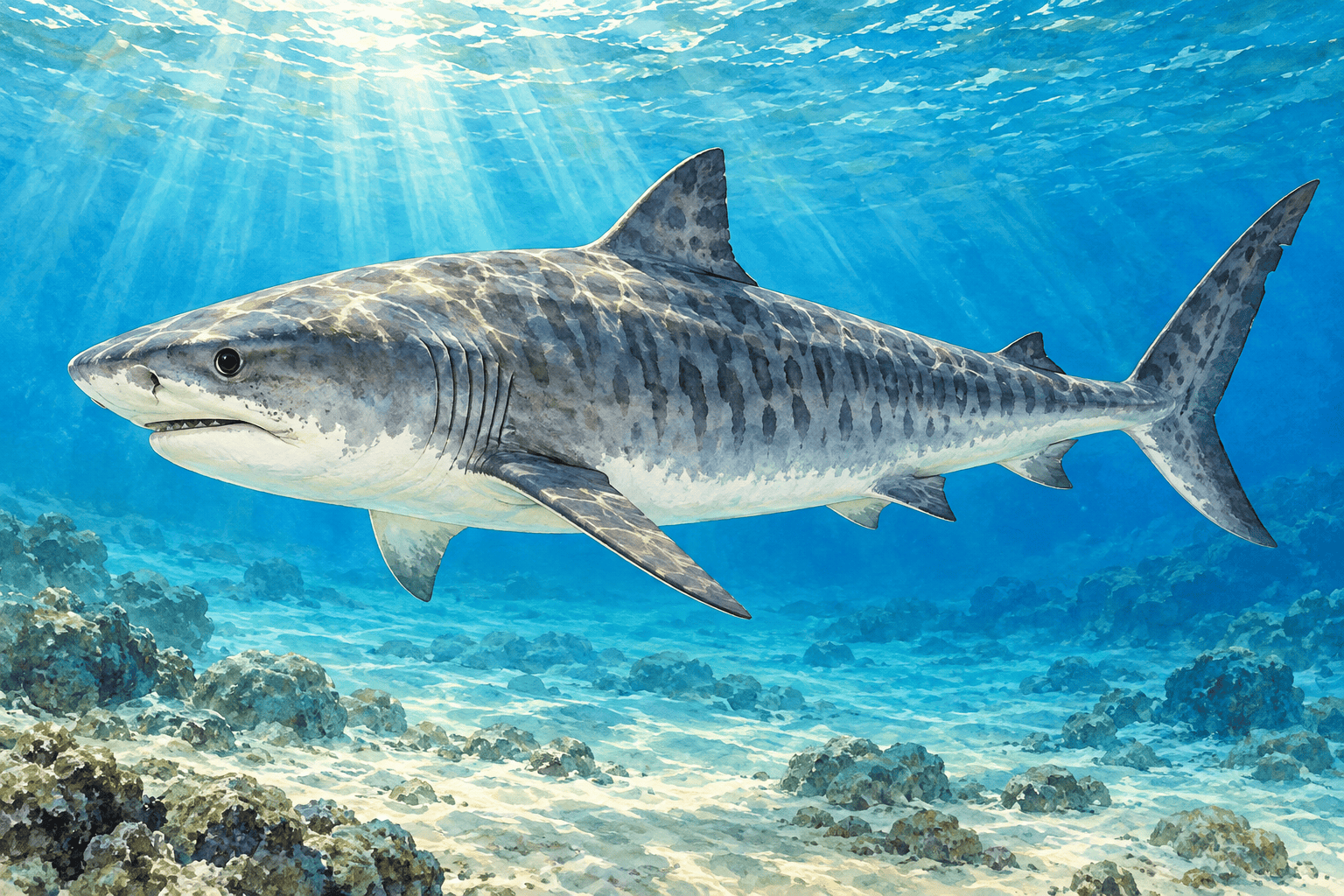
Pico: “Those stripes explain its name!”
Tati: “They can fade as the shark grows, so shape matters too.”
Species overview
About the Tiger Shark
The tiger shark is a large ocean predator with a broad, blunt head and a gray body. Dark bars and spots are most noticeable in young animals and become less distinct with age. Its pale underside contrasts with its darker back.
It eats a wide range of prey, including fish, turtles and other marine animals. Rather than cruising at top speed all the time, it can use short bursts to capture food. Its varied diet connects it with several parts of a marine food web.
Tiger sharks use warm coastal and offshore waters. A species’ broad range does not tell us how many live near a particular beach. Observations are most useful when supported by a clear photograph, date and location.
Identification
Key Features of the Tiger Shark
Dark bars or spots, clearest in younger sharks.
A broad, blunt snout.
A large gray body with a pale underside.
Habitat & range
Warm coastal and offshore seas.
Local observations
This profile describes the species’ general habitat. A source-backed Tamarindo occurrence record has not been established for this import; no town tag is assigned.
When to observe
Ocean conditions, prey and animal movements affect occurrence. No guaranteed sighting or fixed local viewing season is established here.
Conservation & care
Observe marine wildlife without feeding, touching or chasing it. Keep litter and discarded fishing line out of waterways. Follow qualified guides and current local rules.
Threats & pressures
Fishing and incidental capture can affect tiger sharks. Marine litter also matters because this predator may swallow floating rubbish.
Observation activity
Compare a reference photograph of the Tiger Shark with another marine species. Sketch three differences in body shape, fins or markings.