

Nature Field Guide
Green Sea Turtle
- Spanish name
- Tortuga verde / Tortuga negra
- Scientific name
- Chelonia mydas
What Do Pico & Tati Think?
Pico: “What clues help us recognize this reptile?”
Tati: “Let’s notice its shape, markings and habitat from a respectful distance.”
Species overview
About the Green Sea Turtle
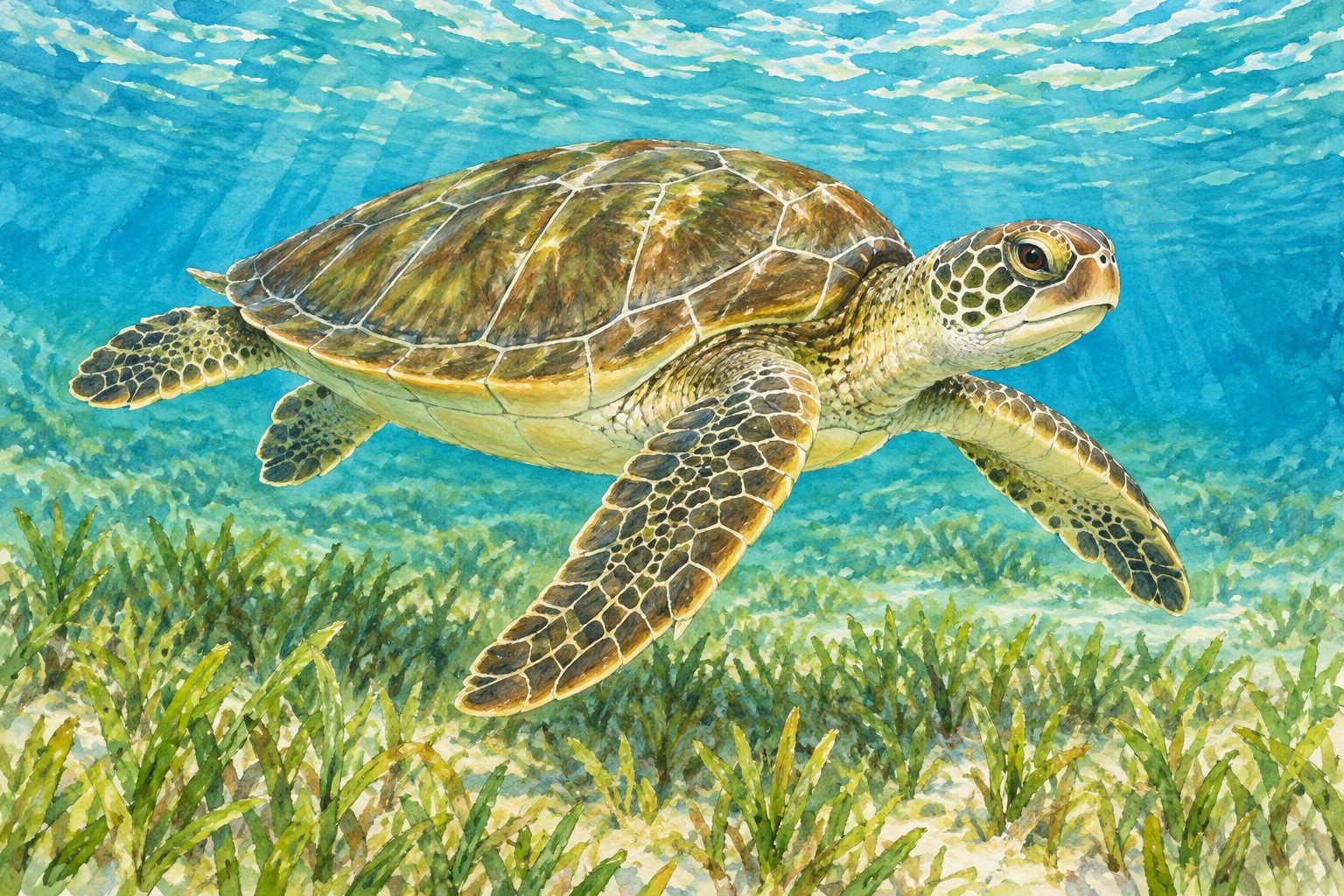
Green sea turtles have a relatively smooth oval shell and a rounded head. The shell can be brown, olive or patterned; the common name does not mean every turtle looks bright green. Pacific animals in Costa Rica are also often called tortuga negra.
They use coastal waters and return to suitable beaches to nest. Tortuguero is a major Costa Rican nesting location. Watch in the water without touching or pursuing turtles, and visit nesting beaches only under local rules and guidance.
Identification
Key Features of the Green Sea Turtle
Smooth oval carapace
Rounded rather than sharply hooked head
Four pairs of lateral shell scutes
Habitat & range
Pacific and Caribbean coastal waters; Tortuguero and Cahuita are documented Caribbean examples.
Local observations
Native reptile recorded in Costa Rica. Presence varies with suitable habitat and locality.
When to observe
Nesting visits depend on the beach, season and current rules. Use an authorized local guide and ask about current conditions.
Conservation & care
Never touch, chase, ride or feed a sea turtle. Keep clear of nesting females, eggs and hatchlings. Follow local beach rules and authorized guides; avoid lights and flash photography during nesting observations. Leave shells and wildlife products out of your purchases.
Threats & pressures
Protect nesting beaches and marine habitats. Reduce plastic waste, avoid disturbing wildlife and do not buy turtle products.
Observation activity
Compare the head shape with a hawksbill turtle using photographs. Record which clue needs a clear view.
Explore by location
Caribbean · Central Pacific · Guanacaste · Puntarenas & the Gulf Islands · South Pacific · Guanacaste · Limón · Puntarenas · Cahuita · Tortuguero