

Nature Field Guide
Sally Lightfoot Crab
- Spanish name
- Cangrejo zayapa
- Scientific name
- Grapsus grapsus
What Do Pico & Tati Think?
A shore crab’s careful steps can make a rocky coast feel like a busy neighborhood. Pico and Tati watch from stable ground.
Species overview
About the Sally Lightfoot Crab
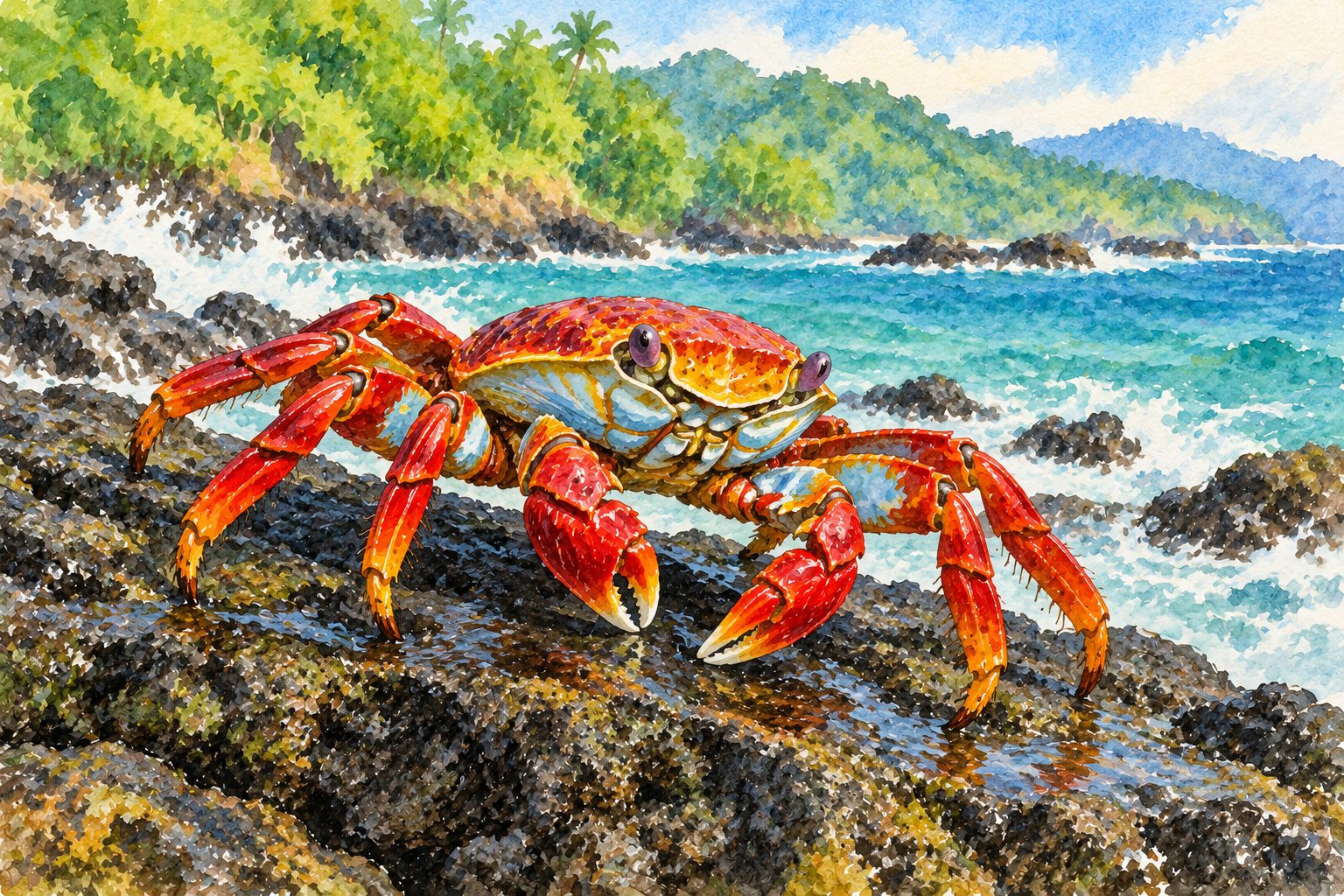
Grapsus grapsus is a crab associated with rocky shores. Its legs spread to the sides of a flattened-looking body, creating an outline worth sketching. Photographs often show striking colors, but age and appearance vary. Use the scientific name to check the reference you choose.
Identification
Key Features of the Sally Lightfoot Crab
A crab on coastal rocks
A broad low body with legs extending sideways
Compare color, outline and other details together
Habitat & range
Rocky shore and naturally visible tidal habitat. Choose a permitted observation point with an adult; do not turn rocks or reach into holes.
Local observations
Documented in Guanacaste. Also included in the published Isla del Coco decapod checklist. Region tags represent documented locations, not an exhaustive range or a promise of occurrence at every beach. Additional regional assignments require locality evidence.
When to observe
Visibility depends on the site, conditions and the animal. Ask a local guide about an appropriate visit; no fixed encounter season is promised.
Conservation & care
Give claws and burrow entrances space. Do not handle, feed, chase or collect crabs. Leave rocks and shells where they are, and follow your adult’s route and local signs.
Observation activity
Sketch the crab’s position on a rock. Draw the sea at a distance and mark the safe place from which you watched.