

Nature Field Guide
Rough-clawed Rock Crab
- Spanish name
- Cangrejo de roca de pinzas rugosas
- Scientific name
- Eriphia squamata
What Do Pico & Tati Think?
Pico notices the claws first. Tati checks the rest of the body before deciding what to write in the journal.
Species overview
About the Rough-clawed Rock Crab
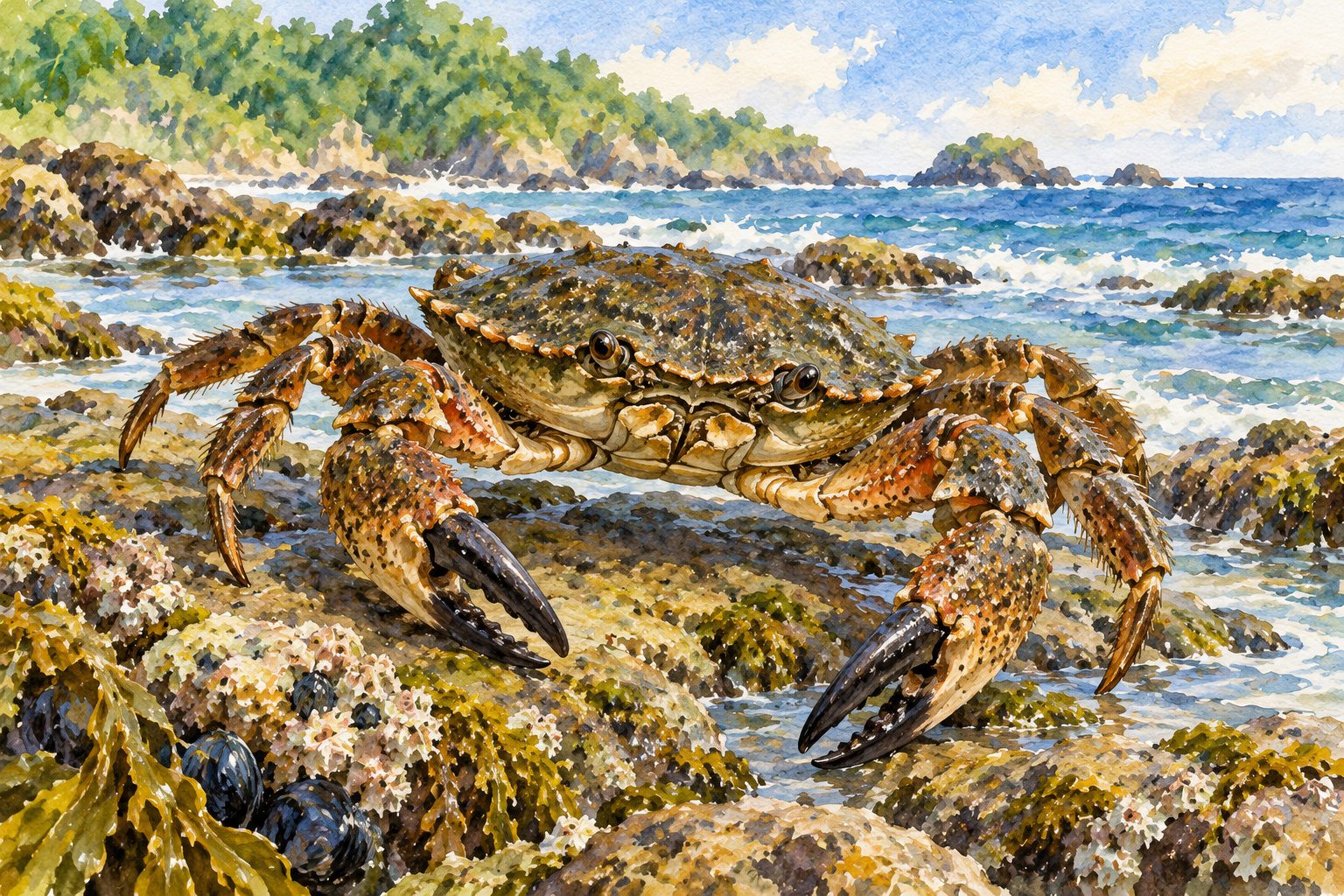
Eriphia squamata is a shore crab with a broad, roughly hexagonal carapace and conspicuously textured claws. Small spines and bumps form part of the features specialists use to recognize it. You can appreciate those details in a photograph without trying to catch a living crab.
Identification
Key Features of the Rough-clawed Rock Crab
A broad carapace
Bumpy or rough-looking claw surfaces
Several features must agree for a confident identification
Habitat & range
Rocky shore and naturally visible tidal habitat. Choose a permitted observation point with an adult; do not turn rocks or reach into holes.
Local observations
Documented in Guanacaste. Region tags represent documented locations, not an exhaustive range or a promise of occurrence at every beach. Additional regional assignments require locality evidence.
When to observe
Visibility depends on the site, conditions and the animal. Ask a local guide about an appropriate visit; no fixed encounter season is promised.
Conservation & care
Give claws and burrow entrances space. Do not handle, feed, chase or collect crabs. Leave rocks and shells where they are, and follow your adult’s route and local signs.
Observation activity
Compare a crab’s claw and walking leg in a labeled photograph. Describe how their shapes differ.