

Nature Field Guide
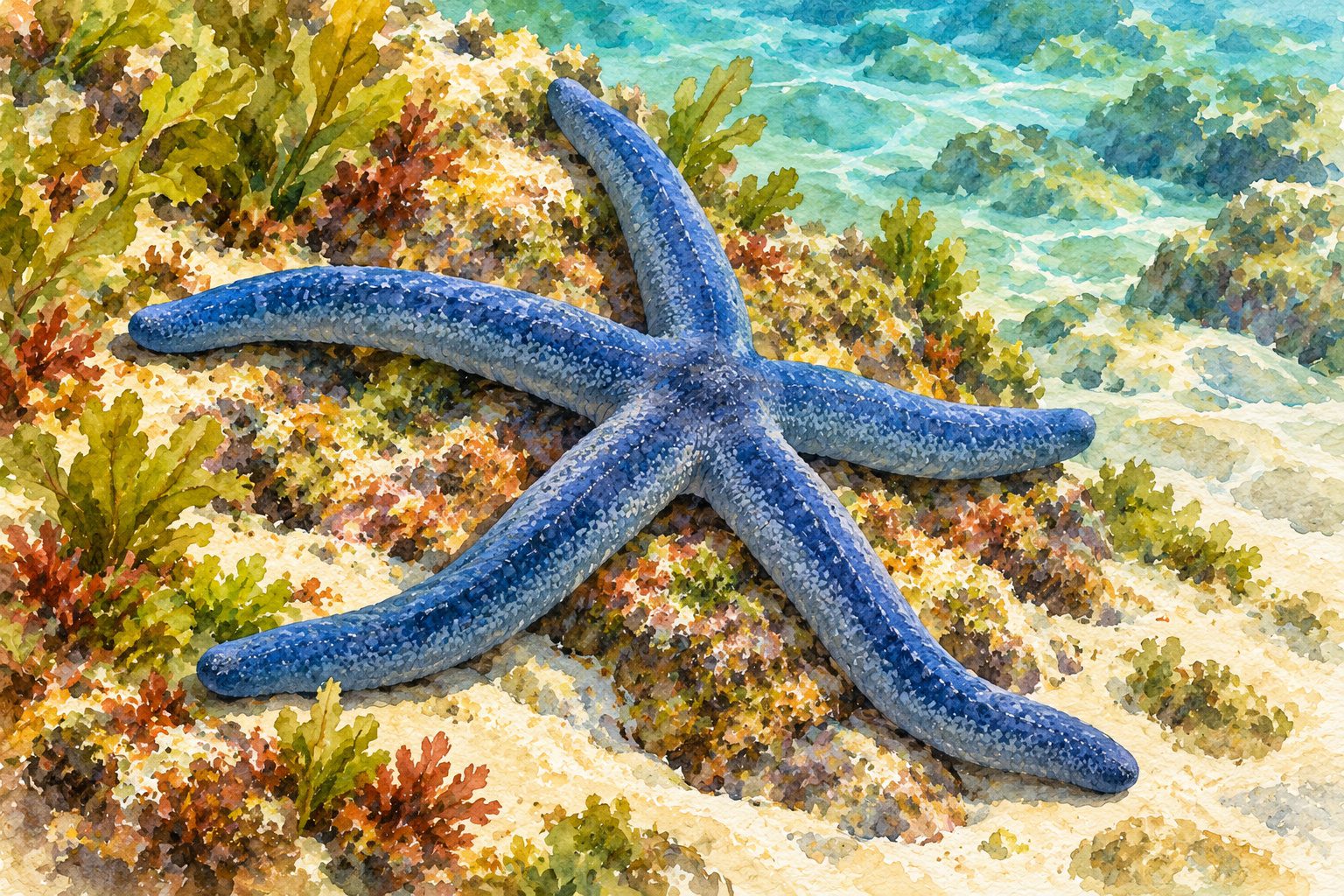
Blue Sea Star
- Spanish name
- Estrella azul
- Scientific name
- Phataria unifascialis
What Do Pico & Tati Think?
An ocean star can turn a quiet look underwater into a new question. What details would help you recognize it again?
Species overview
About the Blue Sea Star
Phataria unifascialis is an eastern Pacific sea star known as the blue sea star. Its common name is a starting point for learning, not a complete identification test. Record the body outline and the pattern you can actually see rather than assuming that every blue star is this species.
Identification
Key Features of the Blue Sea Star
A central body with spreading arms
Record the visible color and pattern
Confirm the species using several features together
Habitat & range
Suitable underwater coastal habitat. Use a permitted guided snorkeling or viewing activity appropriate to your family; do not enter the sea just to find this animal.
Local observations
Documented in Guanacaste. Also documented at Nicuesa, Golfo Dulce. Region tags represent documented locations, not an exhaustive range or a promise of occurrence at every beach. Additional regional assignments require locality evidence.
When to observe
Visibility depends on the site, conditions and the animal. Ask a local guide about an appropriate visit; no fixed encounter season is promised.
Conservation & care
Watch without touching, lifting, feeding or collecting. Keep fingers and equipment away from spines and other surface structures. Leave the animal submerged and its habitat undisturbed.
Observation activity
Make an observation note with three parts: shape, color and one unanswered question.