

Nature Field Guide
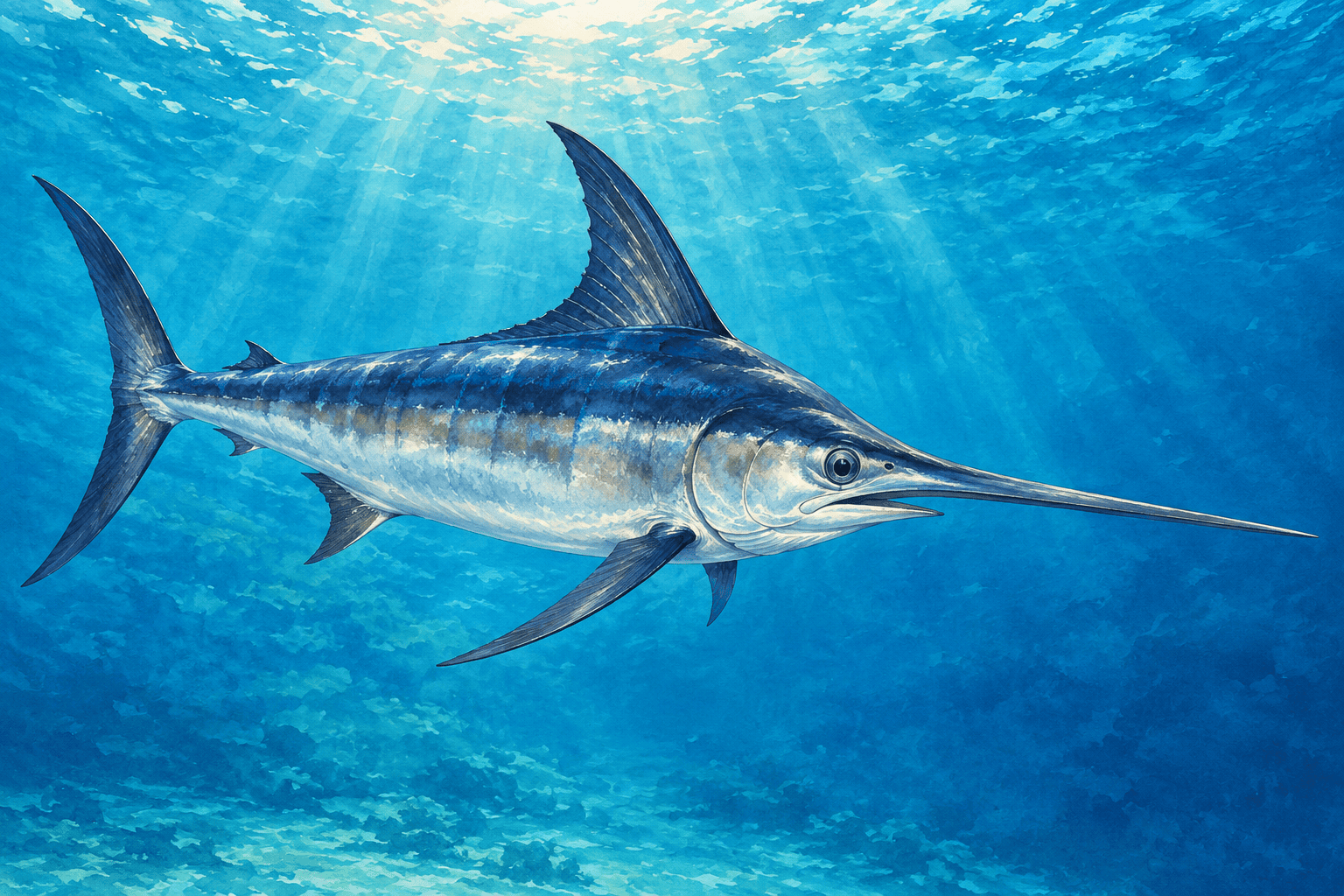
Swordfish
- Spanish name
- Pez espada
- Scientific name
- Xiphias gladius
What Do Pico & Tati Think?
Pico: “Its bill looks like a sword!”
Tati: “It is flatter and broader than a marlin’s bill.”
Species overview
About the Swordfish
The swordfish is a powerful ocean predator named for its long, flattened upper-jaw bill. It is a billfish, but belongs to a different family from marlin and sailfish. Its streamlined body helps it travel through open water.
It feeds on fish and squid and uses sweeping movements of the bill to stun or injure prey. Adaptations associated with its eyes help it hunt in deeper, colder water. These movements connect sunlit surface habitats with the ocean below.
Swordfish occur in tropical and temperate seas. Learning about this species means looking beyond familiar reef habitats: much of its life takes place where a beach visitor cannot see it. Regional records and fishery research can tell us more than a single sighting.
Identification
Key Features of the Swordfish
A long broad, flattened sword-like bill.
A dark upper body and lighter underside.
A streamlined body with a crescent-shaped tail.
Habitat & range
Open-ocean surface and deeper waters.
Local observations
FECOP reports swordfish in Costa Rican waters. No verified Tamarindo-specific record is assigned here.
When to observe
Ocean conditions, prey and animal movements affect occurrence. No guaranteed sighting or fixed local viewing season is established here.
Conservation & care
Observe marine wildlife without feeding, touching or chasing it. Keep litter and discarded fishing line out of waterways. Follow qualified guides and current local rules.
Threats & pressures
Commercial and recreational fishing affect swordfish. Managing this migratory species requires international cooperation; assessments vary by stock.
Observation activity
Compare a reference photograph of the Swordfish with another marine species. Sketch three differences in body shape, fins or markings.