

Nature Field Guide
Brown Pelican
- Spanish name
- Pelícano pardo
- Scientific name
- Pelecanus occidentalis
What Do Pico & Tati Think?
Pico: “Look at that enormous bill!”
Tati: “Let’s compare its shape with the other birds by the water.”
Species overview
About the Brown Pelican
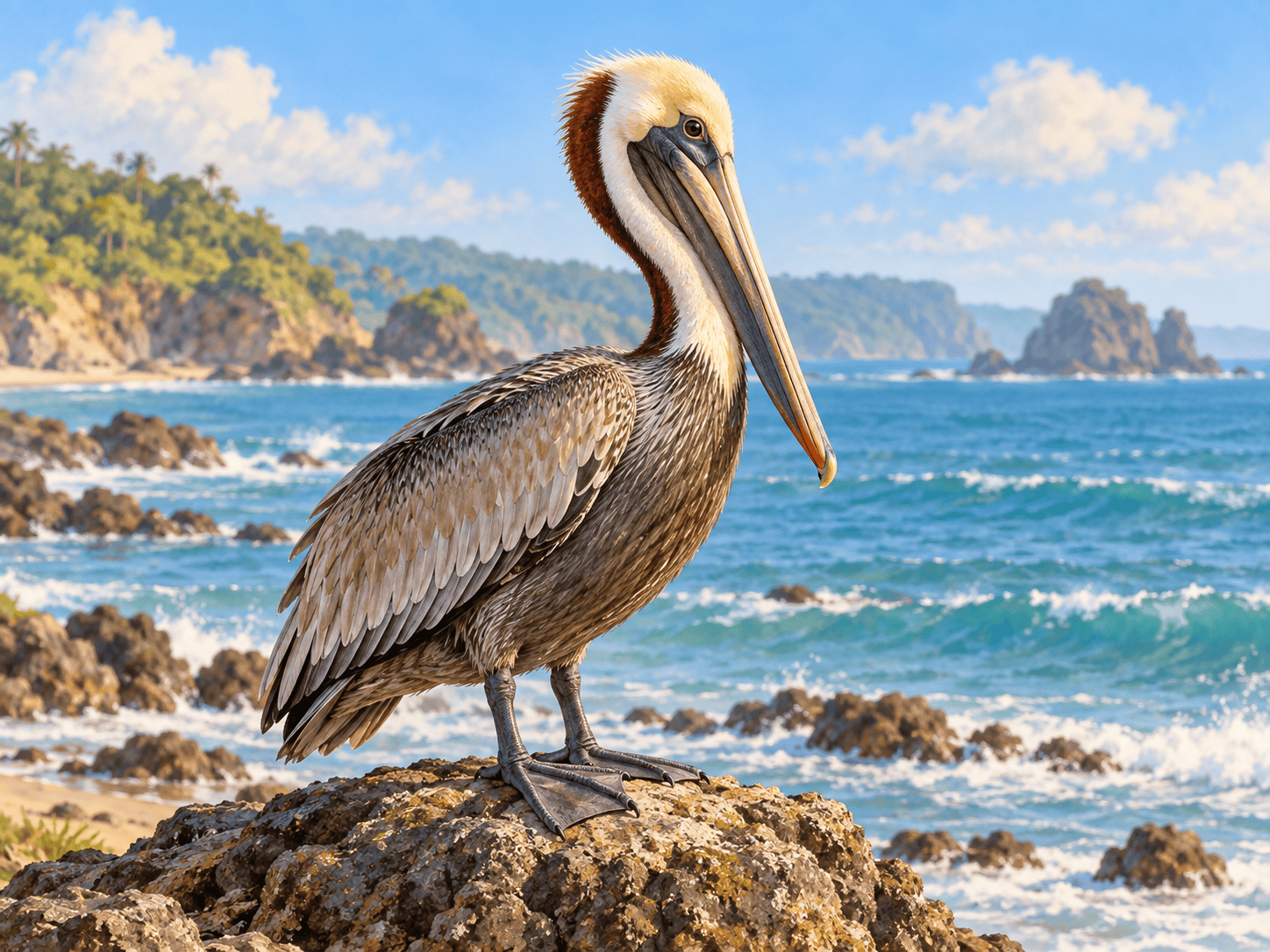
The brown pelican is a large coastal bird with a long bill and a pouch beneath it. Its substantial body and broad wings make it recognizable beside the sea.
Adult birds are mostly gray-brown with lighter areas on the head and neck. Younger birds have a different pattern, so color alone is not enough for identification. Compare the bill, body shape and plumage together.
Age and breeding condition affect the head and neck pattern. An immature bird may look different from the adult illustrated in a guide. A useful observation record describes these differences instead of assuming that every bird of the species looks identical.
The long bill and throat pouch are more useful identification clues than the background scenery. In a coastal field guide, record the bird’s shape, plumage and location separately. Its inclusion on a park checklist establishes a record for that area, while the number seen on a particular visit remains a separate observation.
Identification
Key Features of the Brown Pelican
A long bill with a pouch beneath the lower jaw.
A large gray-brown body and broad wings.
Head and neck colors change with age and breeding condition.
Habitat & range
Coastal waters along the Pacific, with less frequent nonbreeding visitors on the Caribbean coast. Regional tags refer to coastal habitat, not inland towns.
Local observations
Birds Canada’s Avibase checklist includes brown pelican for Marino Las Baulas National Park. This supports park-level occurrence, not a fixed observation point or a claim that it is abundant everywhere around Tamarindo.
When to observe
Daylight offers opportunities to compare plumage and shape. Sightings depend on the birds’ movements and local conditions.
Seasonal Calendar
Resident presence
Isla San Lucas, Costa Rica
Year-round
SINAC lists Brown Pelican as a resident at Isla San Lucas on Costa Rica’s Pacific coast. This regional pattern does not guarantee a Tamarindo sighting or establish a local breeding calendar.
Event source ↗Conservation & care
Do not feed birds or approach resting groups. Dispose of fishing line responsibly and leave nests undisturbed.
Observation activity
Watch from a distance and sketch the outline of the bill and body. Compare the appearance of two birds if both are visible.
Explore by location
Caribbean · Central Pacific · Guanacaste · Puntarenas & the Gulf Islands · South Pacific · Tamarindo