

Nature Field Guide
Heavy-footed Anole
- Spanish name
- Anolis de patas robustas
- Scientific name
- Anolis pachypus
What Do Pico & Tati Think?
Pico: “What can we learn from this reptile’s shape?”
Tati: “Let’s notice its markings and habitat while leaving it plenty of space.”
Species overview
About the Heavy-footed Anole
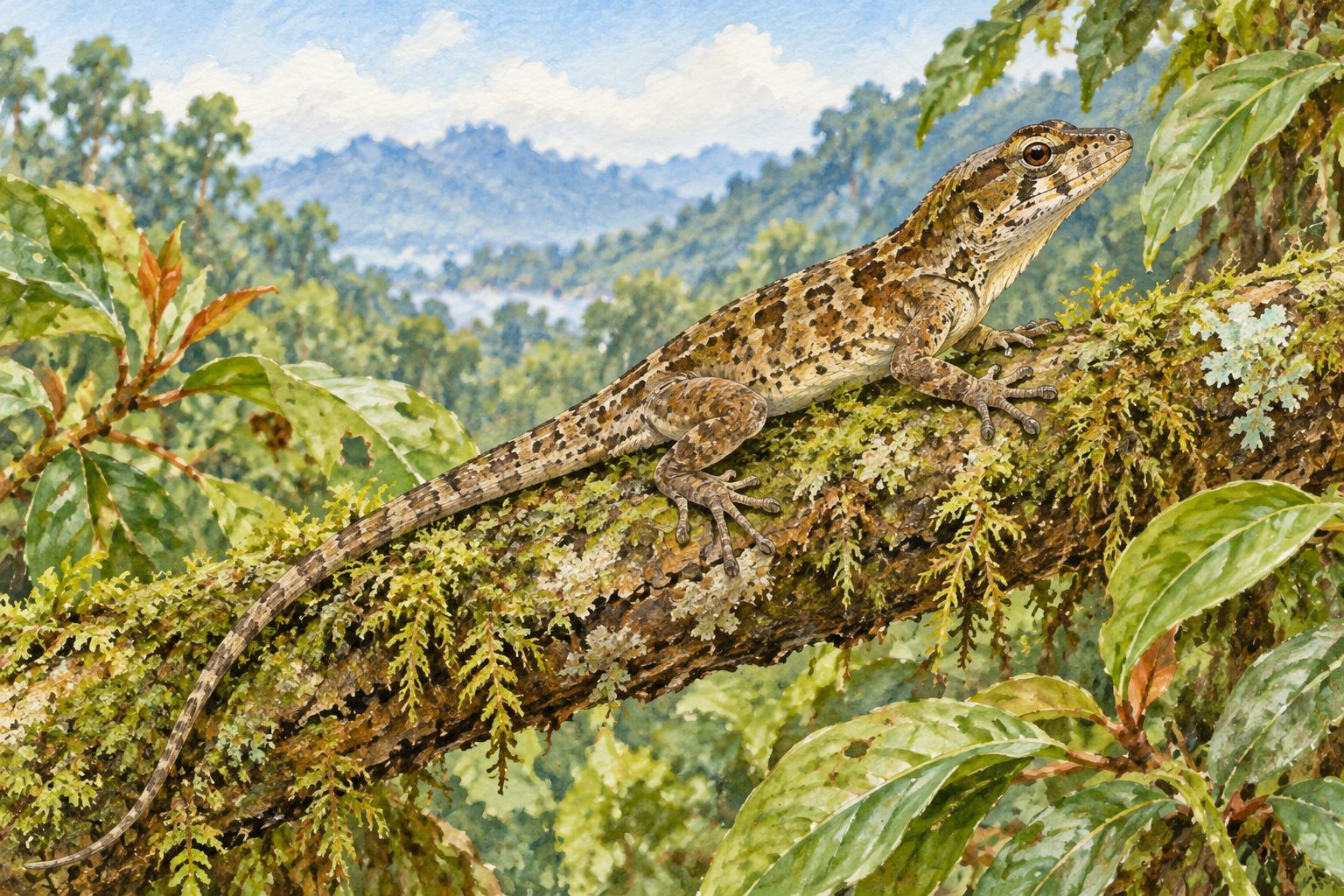
The heavy-footed anole has a compact build and stout-looking feet. Brown markings help it merge with damp twigs, moss and fallen leaves. Its scientific name refers to the feet, offering a clue about what early researchers noticed.
This mountain anole can resemble other brown highland species. Locality, proportions and careful expert comparisons matter more than a quick color match. Explore from a permitted trail and notice how different the air and vegetation feel from the warm coast. Costa Rica’s mountain habitats support their own reptile communities.
Identification
Key Features of the Heavy-footed Anole
Compact brown mountain anole
Stout-looking feet
Camouflaged body and long tapering tail
Habitat & range
Middle and upper elevations of the Talamanca mountain system in southern Costa Rica.
Local observations
Native reptile recorded in Costa Rica. Presence depends on suitable habitat and locality.
When to observe
Observe on permitted paths with an adult or qualified guide. Activity varies by species, place and weather; never disturb a hiding or resting animal.
Conservation & care
Observe from permitted paths with an adult. Do not touch, chase, catch or feed reptiles. Leave bark, stones, logs and leaf litter in place. Keep pets away and give animals an open escape route.
Threats & pressures
Protect natural shelters and connected habitat. Avoid collection, unnecessary clearing and deliberate killing. Leave wildlife in its habitat and support responsible observation.
Observation activity
Compare the feet and body proportions of this anole with a slender anole using illustrations only.
Explore by location
Caribbean · Central Highlands · South Pacific · Cartago · Limón · Puntarenas · San José