

Nature Field Guide
Costa Rican Oak
- Spanish name
- Roble / Encino
- Scientific name
- Quercus costaricensis
What Do Pico & Tati Think?
Pico: “Acorns and leathery leaves belong to this mountain-forest oak.”
Tati: “Let’s notice the leaves, flowers and habitat without disturbing the plant.”
Species overview
About the Costa Rican Oak
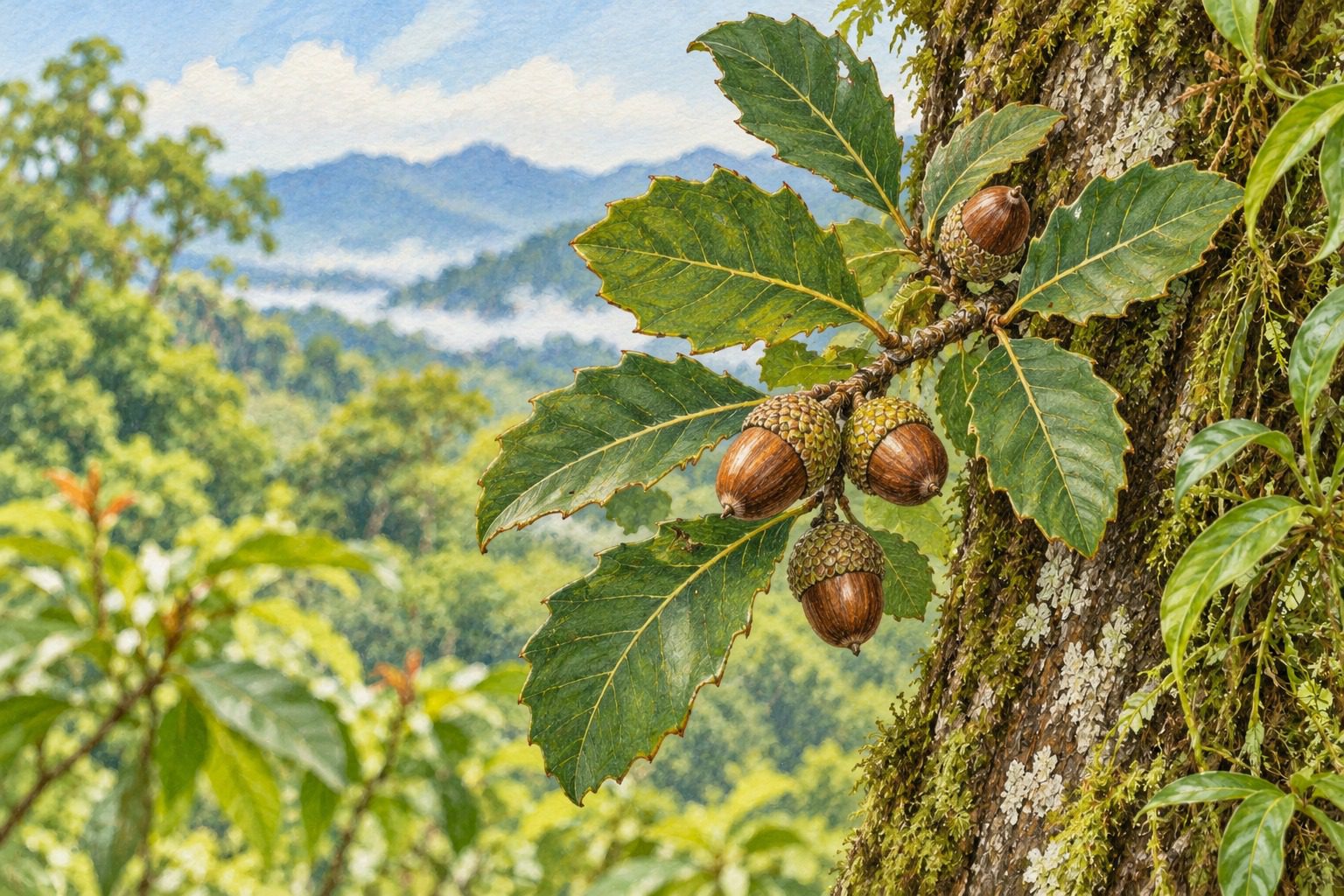
Costa Rican oak is a true oak, unlike the unrelated roble de sabana. Look for simple leathery leaves and acorns seated in cups. Large trunks and mossy branches contribute to the character of highland forests.
This species belongs in mountain habitats rather than hot coastal woodland. Altitude and forest type are important clues. Several oaks can grow together, so keep an uncertain observation labeled Quercus species until a reliable reference or expert confirms it.
Identification
Key Features of the Costa Rican Oak
Acorns in scaly cups
Simple leathery leaves
Mountain-forest habitat
Habitat & range
Highland forests of the Talamanca range, including Dota, Chirripó and adjoining mountain slopes.
Local observations
Native to Costa Rica. Local presence and abundance depend on suitable habitat and growing conditions.
When to observe
Leaves and tree form can be observed throughout the year; acorn availability varies. Mountain weather can change quickly.
Conservation & care
Explore with an adult on permitted paths. Observe and photograph without picking leaves, flowers or fruits. Do not taste plants or let pets chew them. Avoid climbing trees and disturbing roots, seedlings or visiting wildlife.
Threats & pressures
Protect suitable habitat, mature trees and natural regeneration. Avoid trampling, unauthorized clearing and collection.
Observation activity
Compare an acorn with a trumpet-tree seed capsule. Which feature belongs to a true oak?
Explore by location
Caribbean · Central Highlands · South Pacific · Cartago · Limón · Puntarenas · San José