

Nature Field Guide
Guacimo
- Spanish name
- Guácimo / Guácimo ternero
- Scientific name
- Guazuma ulmifolia
What Do Pico & Tati Think?
Pico: “Bumpy dark fruits and toothed leaves offer clues to a familiar Pacific-slope tree.”
Tati: “Let’s notice the leaves, flowers and habitat without disturbing the plant.”
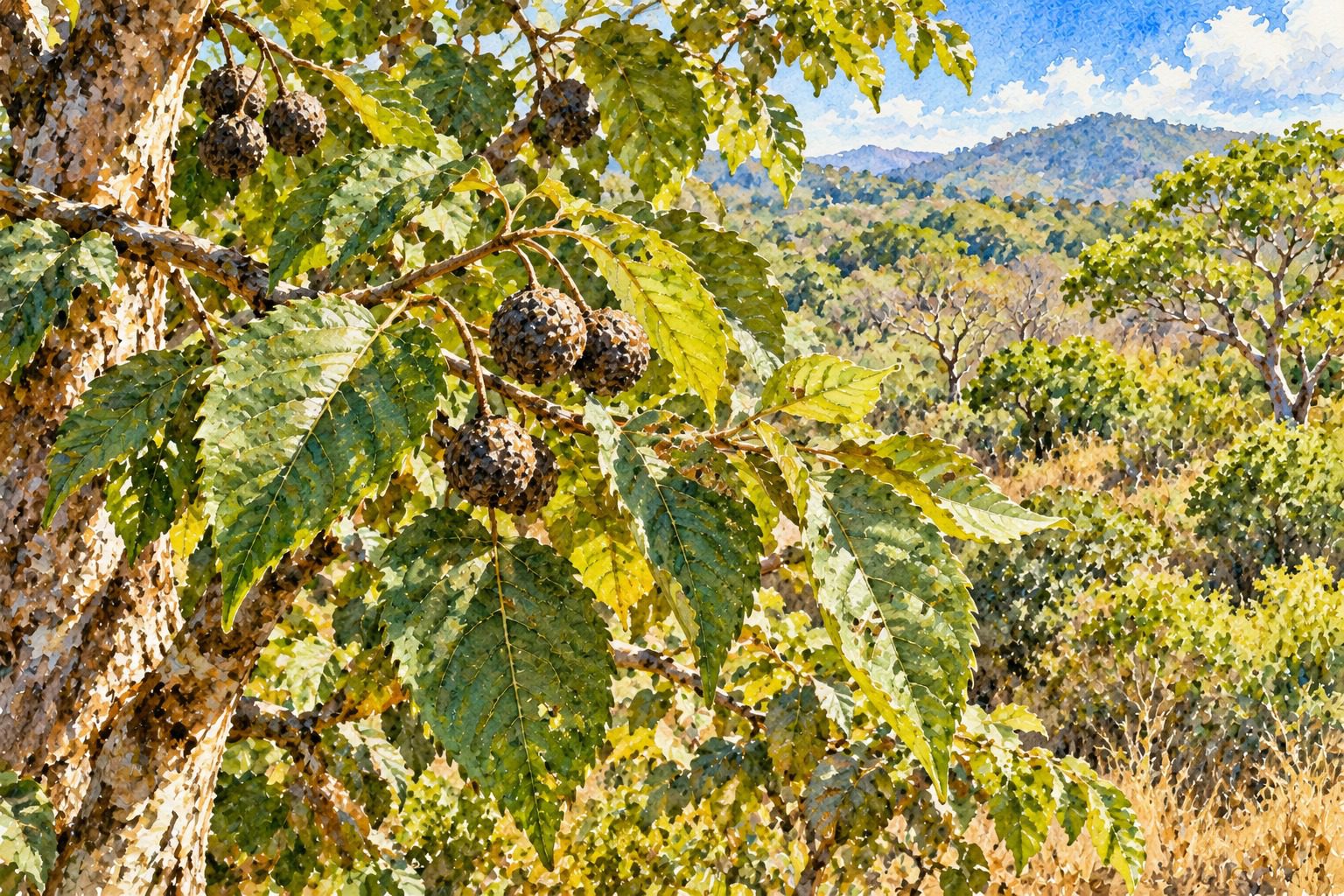
Species overview
About the Guacimo
Guácimo has simple alternate leaves with toothed edges and small pale flowers. Its hard, dark fruits have a rough, knobbly surface that is easy to recognize in a good photograph.
This tree often grows in disturbed woodland, pastures and living fences in the Pacific lowlands. Wildlife uses its fruits, linking an ordinary-looking roadside tree with the surrounding food web. Leave fallen fruit for the animals rather than collecting it.
Identification
Key Features of the Guacimo
Simple alternate leaves with toothed edges
Dark round-to-oval woody fruits
Fruit surface covered in bumps
Habitat & range
Pacific-slope woodland, pastures and living fences, with strong documentation in Guanacaste and the northern Puntarenas area.
Local observations
Native to Costa Rica. Local presence and abundance depend on suitable habitat and growing conditions.
When to observe
Leaves and growth form can be observed whenever the plant is accessible. Flowering and fruiting vary with location, weather and the individual plant; ask a local guide about current conditions.
Conservation & care
Explore with an adult on permitted paths. Observe and photograph without picking leaves, flowers or fruits. Do not taste plants or let pets chew them. Avoid climbing trees and disturbing roots, seedlings or visiting wildlife.
Threats & pressures
Protect suitable habitat, mature trees and natural regeneration. Avoid trampling, unauthorized clearing and collection.
Observation activity
Sketch a fruit from a photograph. Use dots or small circles to show its bumpy surface.
Explore by location
Central Pacific · Guanacaste · Puntarenas & the Gulf Islands · Guanacaste · Puntarenas