

Nature Field Guide
Cenizaro Rain Tree
- Spanish name
- Cenízaro
- Scientific name
- Samanea saman
What Do Pico & Tati Think?
Pico: “An umbrella-shaped crown shelters a world beneath its branches.”
Tati: “Let’s notice the leaves, flowers and habitat without disturbing the plant.”
Species overview
About the Cenizaro Rain Tree
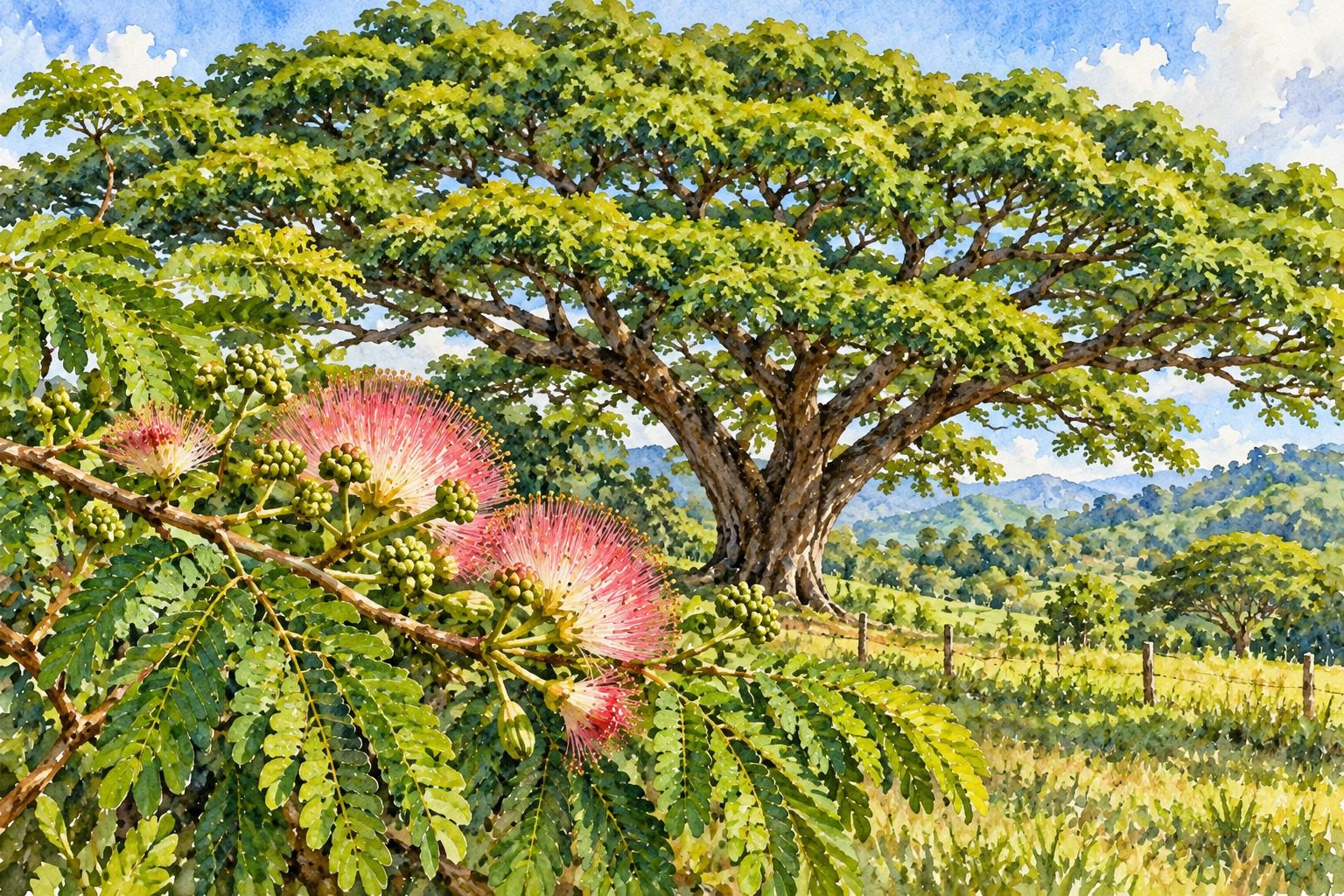
Cenízaro is known for a broad, spreading crown that can be wider than the tree is tall. Its twice-divided leaves create a fine texture, and its flowers look like little brushes of pale and pink stamens.
Look for dark elongated pods as another clue. A large tree can carry orchids and other plants on its branches, making it a place where many forms of life meet. Admire the canopy from the ground and leave branches and bark undisturbed.
Identification
Key Features of the Cenizaro Rain Tree
Broad umbrella-shaped crown
Twice-divided compound leaves
Pink-and-white brushlike flowers and dark pods
Habitat & range
Pacific lowlands and open landscapes, also documented in the Northern Plains and around San Ramón.
Local observations
Native to Costa Rica. Local presence and abundance depend on suitable habitat and growing conditions.
When to observe
Leaves and growth form can be observed whenever the plant is accessible. Flowering and fruiting vary with location, weather and the individual plant; ask a local guide about current conditions.
Conservation & care
Explore with an adult on permitted paths. Observe and photograph without picking leaves, flowers or fruits. Do not taste plants or let pets chew them. Avoid climbing trees and disturbing roots, seedlings or visiting wildlife.
Threats & pressures
Protect suitable habitat, mature trees and natural regeneration. Avoid trampling, unauthorized clearing and collection.
Observation activity
Draw the outline of the crown. Compare its width with the height of the trunk in your sketch.
Explore by location
Central Pacific · Guanacaste · Northern Plains · Puntarenas & the Gulf Islands · South Pacific · Alajuela · Guanacaste · Puntarenas · San José