

Nature Field Guide
Cortez Amarillo
- Spanish name
- Cortés amarillo / Cortez amarillo
- Scientific name
- Handroanthus ochraceus
What Do Pico & Tati Think?
Pico: “Golden trumpet flowers can brighten the branches of an almost leafless tree.”
Tati: “Let’s notice the leaves, flowers and habitat without disturbing the plant.”
Species overview
About the Cortez Amarillo
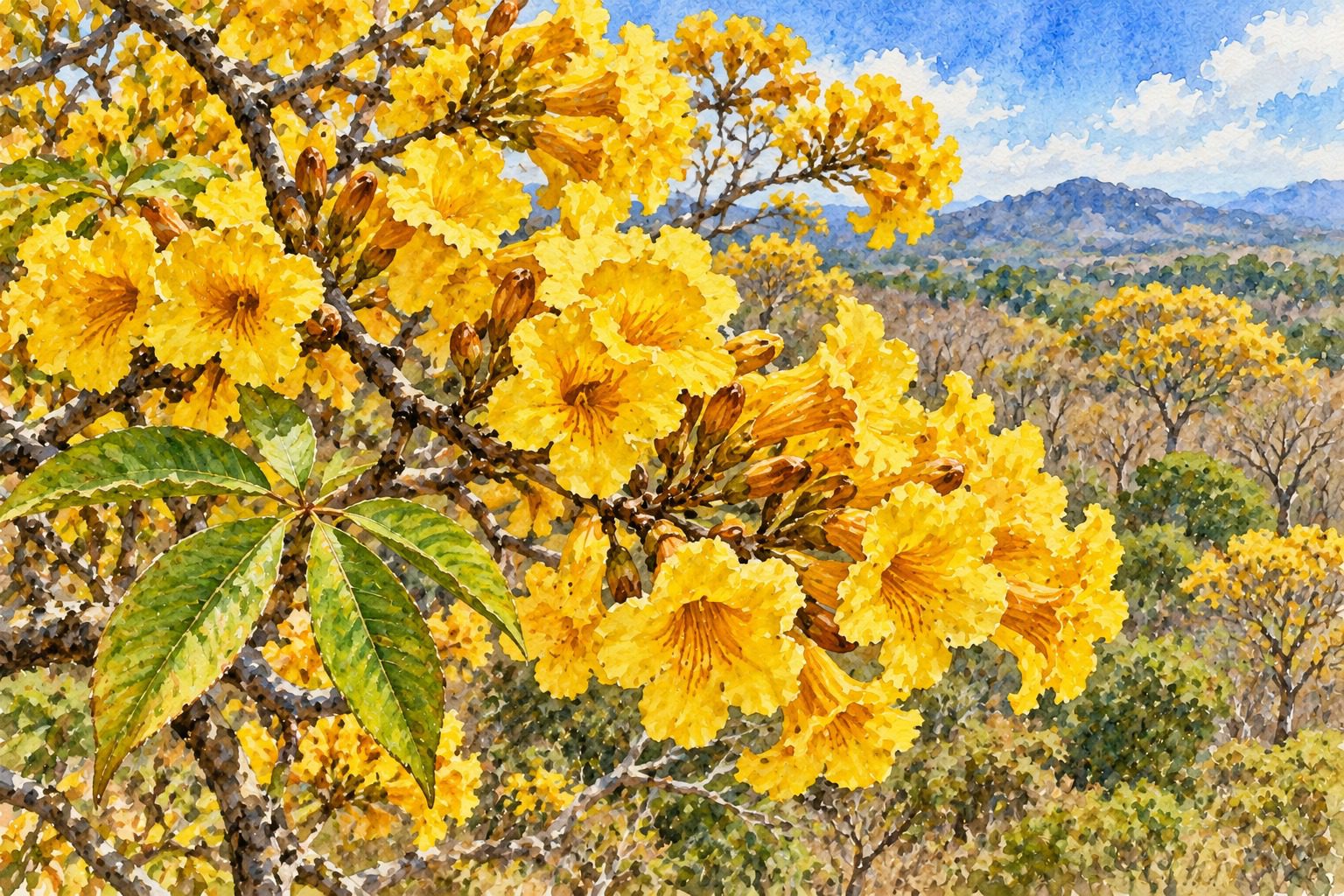
Cortez amarillo is a native flowering tree with yellow trumpet-shaped blossoms. Its leaves are divided into leaflets that spread from one point, like fingers on a hand. Older sources may call it Tabebuia ochracea.
In seasonally dry places, the flowering crown can stand out while many leaves are absent. Rainfall can help trigger a short flowering display, so a tree that looked bare on one visit may look very different on the next.
Identification
Key Features of the Cortez Amarillo
Yellow trumpet-shaped flowers
Palmately compound leaves
Flowering branches may be nearly leafless
Habitat & range
Seasonally dry Pacific forests and wooded edges, including Guanacaste, the Central Pacific and the Térraba valley.
Local observations
Native to Costa Rica. Local presence and abundance depend on suitable habitat and growing conditions.
When to observe
Flowering can be brief and related to dry-season weather and rain. Ask locally rather than relying on one fixed national flowering month.
Conservation & care
Explore with an adult on permitted paths. Observe and photograph without picking leaves, flowers or fruits. Do not taste plants or let pets chew them. Avoid climbing trees and disturbing roots, seedlings or visiting wildlife.
Threats & pressures
Protect suitable habitat, mature trees and natural regeneration. Avoid trampling, unauthorized clearing and collection.
Observation activity
Draw the same tree before and during flowering. Record the date and whether leaves are present.
Explore by location
Central Pacific · Central Valley · Guanacaste · South Pacific · Guanacaste · Puntarenas · San José