

Nature Field Guide
Spotted Sandpiper
- Spanish name
- Andarríos maculado
- Scientific name
- Actitis macularius
What Do Pico & Tati Think?
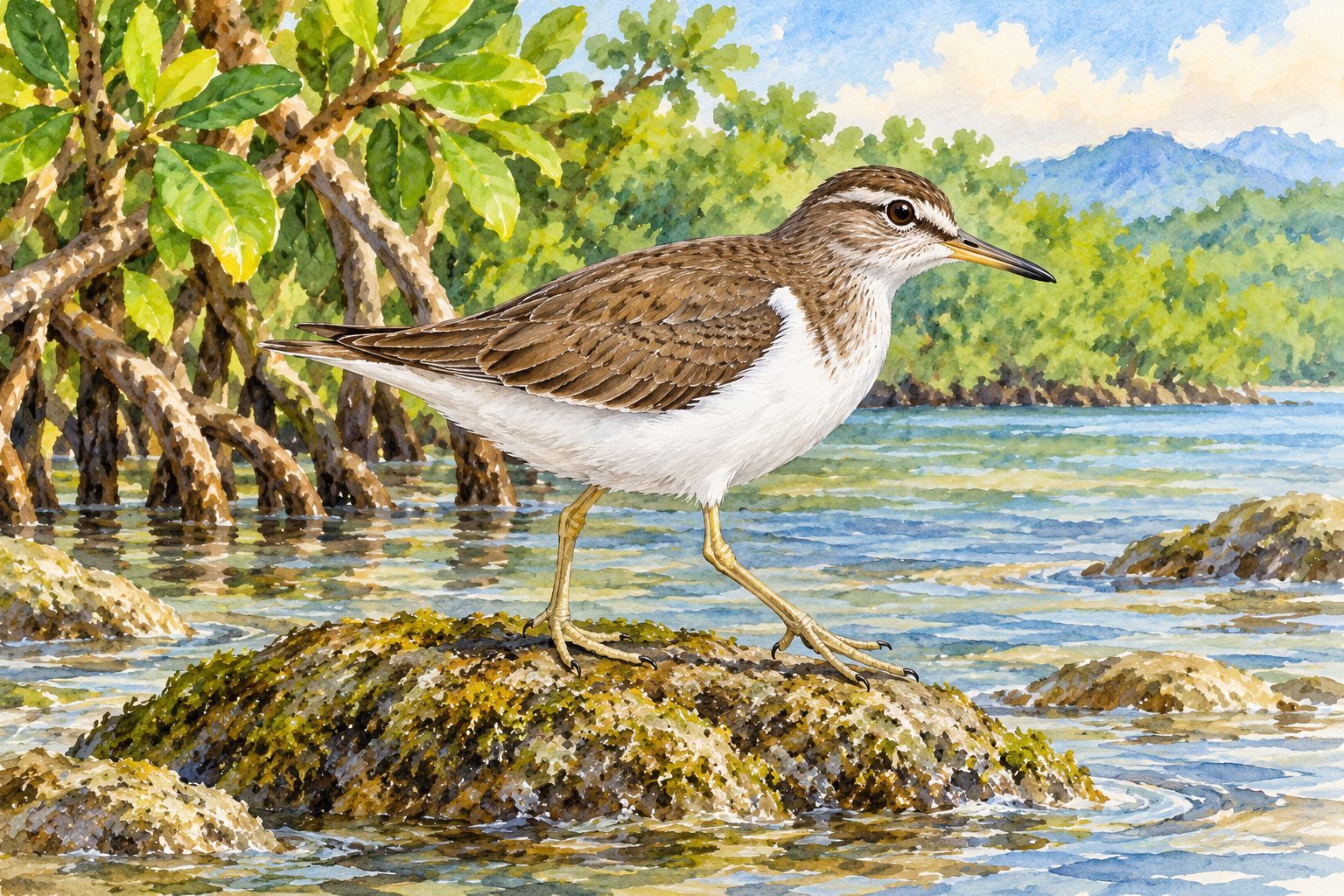
Pico looks for spots but finds a plain white belly. Tati learns that the name does not describe every season.
Species overview
About the Spotted Sandpiper
Spotted Sandpipers often bob their tails while walking along water edges. The familiar belly spots belong to breeding plumage; many birds seen outside breeding have plain white underparts. They use rivers and lake margins as well as the coast. A small size, brown back and teetering posture can be more useful than searching for spots that are not present.
Identification
Key Features of the Spotted Sandpiper
Brown back and white underparts
Frequent tail bobbing
Short straight bill
Belly spots may be absent outside breeding
Habitat & range
Scan exposed shoreline feeding areas and nearby resting places with binoculars. The tide changes which flats are available; remain on a safe established route.
Local observations
Widespread around coastal and inland water from sea level to about 1850 m. Central Highlands refers to suitable foothill and middle-elevation waterways. Seasonal visitors occur far beyond beaches, including the Central Valley and Northern Plains. Oceanic Pacific: casual visitor in the official Isla del Coco checklist, rather than ordinary year-round habitat.
When to observe
For migratory shorebirds, November–March is the broad nonbreeding observation window in Costa Rica, with southbound passage mainly August–October and northbound passage April–May. Individual species and sites vary; some birds remain outside these months. Check current local observations and the tide.
Conservation & care
Give feeding and resting birds space. If a bird stops feeding, repeatedly looks at you or moves away, increase your distance. Keep dogs away from flocks, avoid playback and feeding, and leave nests and natural shoreline debris undisturbed.
Observation activity
Watch for thirty seconds without following the bird. Record whether tail bobbing helped you notice it.
Explore by location
Caribbean · Central Highlands · Central Pacific · Central Valley · Guanacaste · Northern Plains · Oceanic Pacific · Puntarenas & the Gulf Islands · South Pacific