

Nature Field Guide
Pacific Ghost Crab
- Spanish name
- Cangrejo fantasma del Pacífico
- Scientific name
- Ocypode gaudichaudii
What Do Pico & Tati Think?
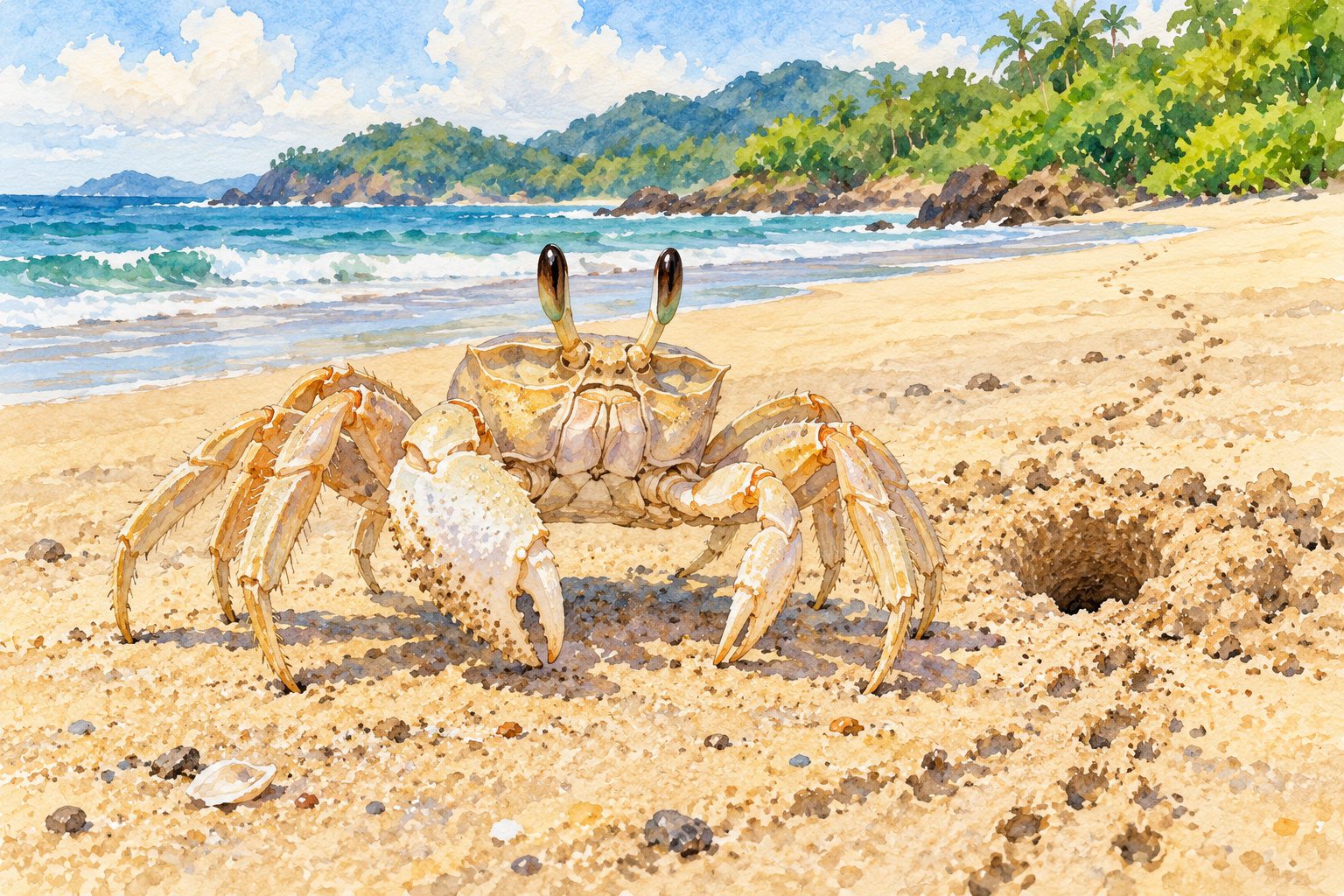
A tiny trail across the sand gives Pico a clue. Tati wonders whether the animal is nearby or hidden below.
Species overview
About the Pacific Ghost Crab
Ocypode gaudichaudii is a Pacific ghost crab associated with sandy beaches. Its burrows and tracks can draw attention even when the crab itself is out of sight. A hole alone does not establish the species. Stay outside the entrance and let any hidden animal remain undisturbed.
Identification
Key Features of the Pacific Ghost Crab
A crab moving over beach sand
Eyes carried above the body on stalks
Tracks and burrows are clues but not proof of species
Habitat & range
Sandy beach above the wash of the waves. Observe tracks and any naturally visible crabs from a distance.
Local observations
Documented in Guanacaste. Also included in the published Isla del Coco decapod checklist. Region tags represent documented locations, not an exhaustive range or a promise of occurrence at every beach. Additional regional assignments require locality evidence.
When to observe
Visibility depends on the site, conditions and the animal. Ask a local guide about an appropriate visit; no fixed encounter season is promised.
Conservation & care
Give claws and burrow entrances space. Do not handle, feed, chase or collect crabs. Leave rocks and shells where they are, and follow your adult’s route and local signs.
Observation activity
Draw one trail exactly as you find it. Add a question about what might have made it; leave the sand and burrow unchanged.