

Nature Field Guide
Common Squirrel-Cuckoo
- Spanish name
- Cuco ardilla
- Scientific name
- Piaya cayana
What Do Pico & Tati Think?
Pico: “That tail is longer than I expected!”
Tati: “Follow its movement through the branches without chasing it.”
Species overview
About the Common Squirrel-Cuckoo
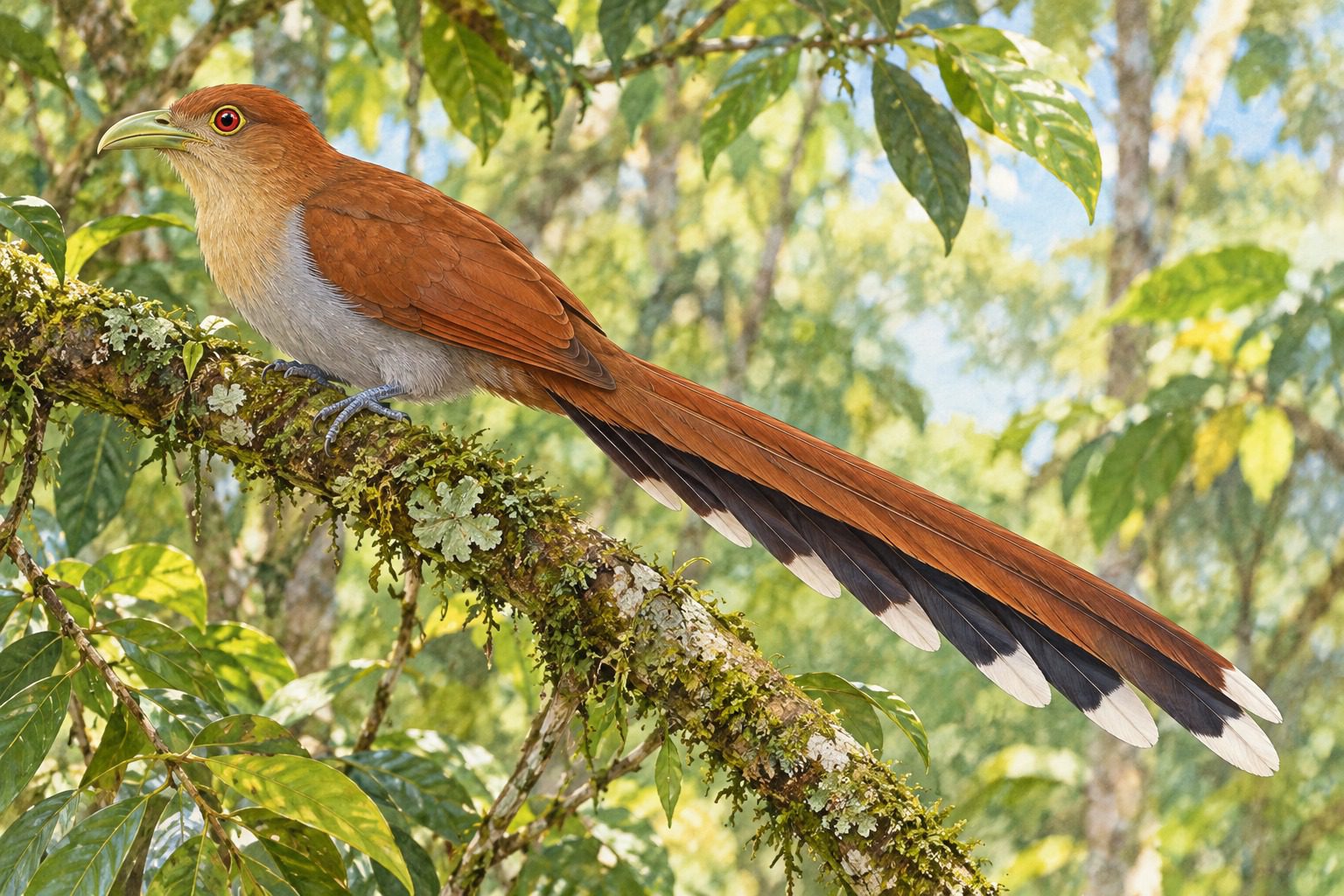
The common squirrel-cuckoo has cinnamon-rust upperparts, a paler throat and grayish underparts. The long graduated tail has white tips; Central American birds show dark undersides to much of the tail.
It moves through trees while looking for insects and can be surprisingly hidden despite its size. Its movement and long tail help explain the squirrel comparison. Current naming separates it from the Mexican squirrel-cuckoo.
Identification
Key Features of the Common Squirrel-Cuckoo
Rusty upperparts
Very long graduated white-tipped tail
Greenish-yellow bill
Habitat & range
Widespread in wooded habitats on both slopes, including forest canopy, secondary growth, plantations and tree-rich gardens. It can occur well above the lowlands where trees remain.
Local observations
Costa Rica: resident.
When to observe
A resident bird; suitable habitat matters throughout the year. Quiet morning observation is a useful starting point, with activity varying by weather and location.
Conservation & care
Observe quietly from trails or established viewing areas. Give nests, roosts and feeding birds space. Do not handle, chase or lure birds with playback. Keep pets away from wildlife.
Threats & pressures
Protect native vegetation, reduce collision hazards around glass and keep cats away from birds. These are practical prevention priorities, not a claim of a measured decline at a specific Costa Rican site.
Observation activity
Draw the body and tail separately, then compare their lengths.
Explore by location
Caribbean · Central Highlands · Central Pacific · Central Valley · Guanacaste · Northern Plains · Puntarenas & the Gulf Islands · South Pacific · Outdoor Adventures · Wildlife & Animals