

Nature Field Guide
Chameleon Wrasse
- Spanish name
- Señorita camaleón
- Scientific name
- Halichoeres dispilus
What Do Pico & Tati Think?
Pico: “This wrasse has so many colors!”
Tati: “Start with the shoulder blotch, then check its other markings.”
Species overview
About the Chameleon Wrasse
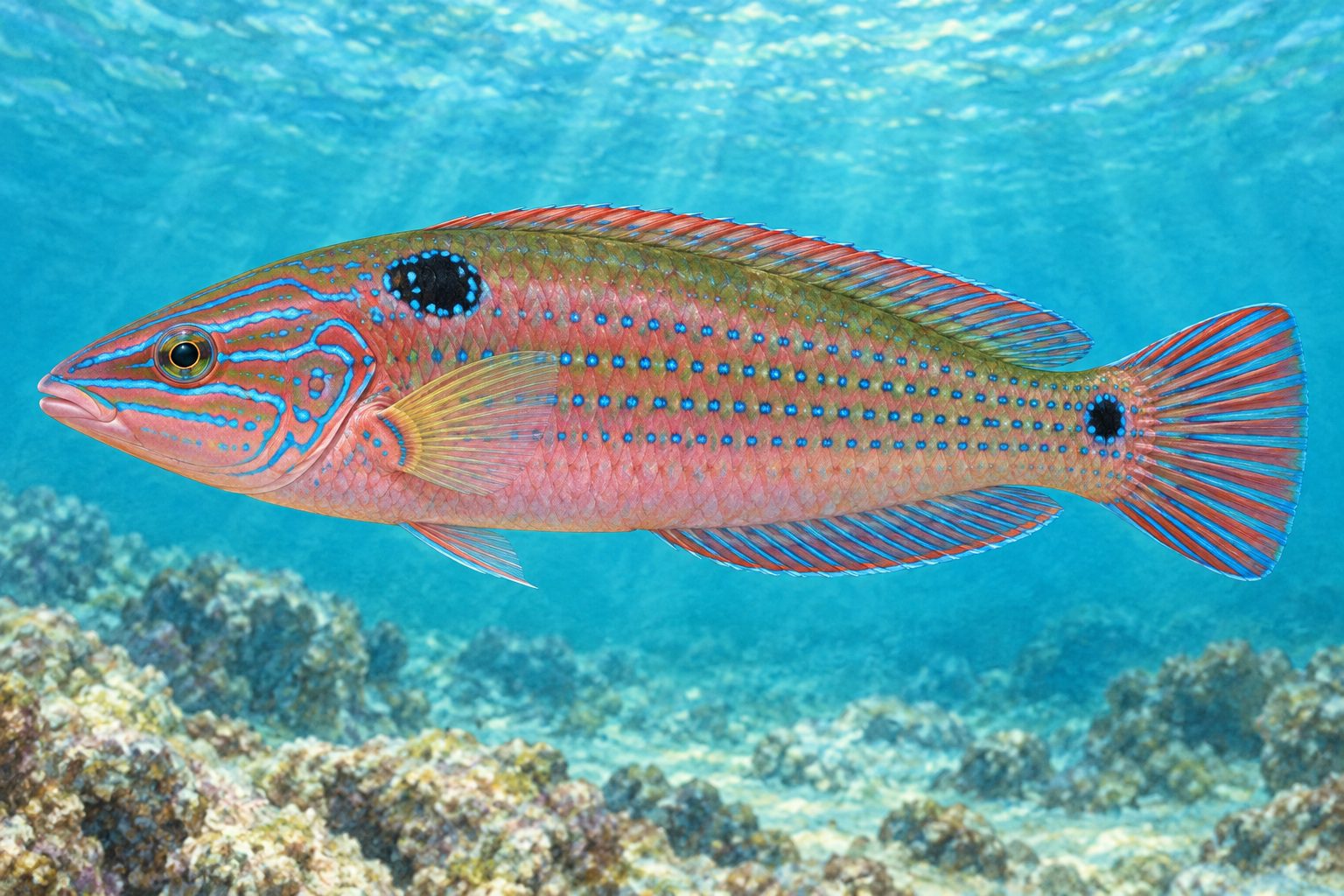
Adults can show pinkish or greenish colors with blue head lines and blue side spots. A dark shoulder blotch is an important clue. Young fish can have a pale lengthwise stripe.
This slender fish searches coastal bottom habitats for food. Life phase affects its pattern, so several markings should be checked together rather than using color as a single test.
Identification
Key Features of the Chameleon Wrasse
Slender wrasse body
Dark shoulder blotch
Blue markings in colorful adults
Habitat & range
Pacific rocky reefs and nearby coastal marine habitats. Check the linked species reference for its wider range.
Local observations
Recorded at Cabo Blanco.
When to observe
Visibility depends on water clarity, currents, depth and conditions. No fixed local viewing or migration season is assigned.
Conservation & care
Observe with a qualified guide. Do not feed, chase or handle fish. Keep fins off the reef and take all litter home.
Threats & pressures
Habitat damage and degraded water quality are pressures to prevent in coastal fish habitats. This profile does not quantify a local decline.
Observation activity
Find the shoulder blotch and tail-base mark in a photograph before adding the blue patterns.
Explore by location
Guanacaste · Puntarenas & the Gulf Islands · South Pacific · Ocean & Coastal Life