

Nature Field Guide
Elephant Beetle
- Spanish name
- Escarabajo elefante
- Scientific name
- Megasoma elephas
What Do Pico & Tati Think?
Pico: “Let's look closely at the elephant beetle!”
Tati: “We can compare its shape and markings without touching it.”
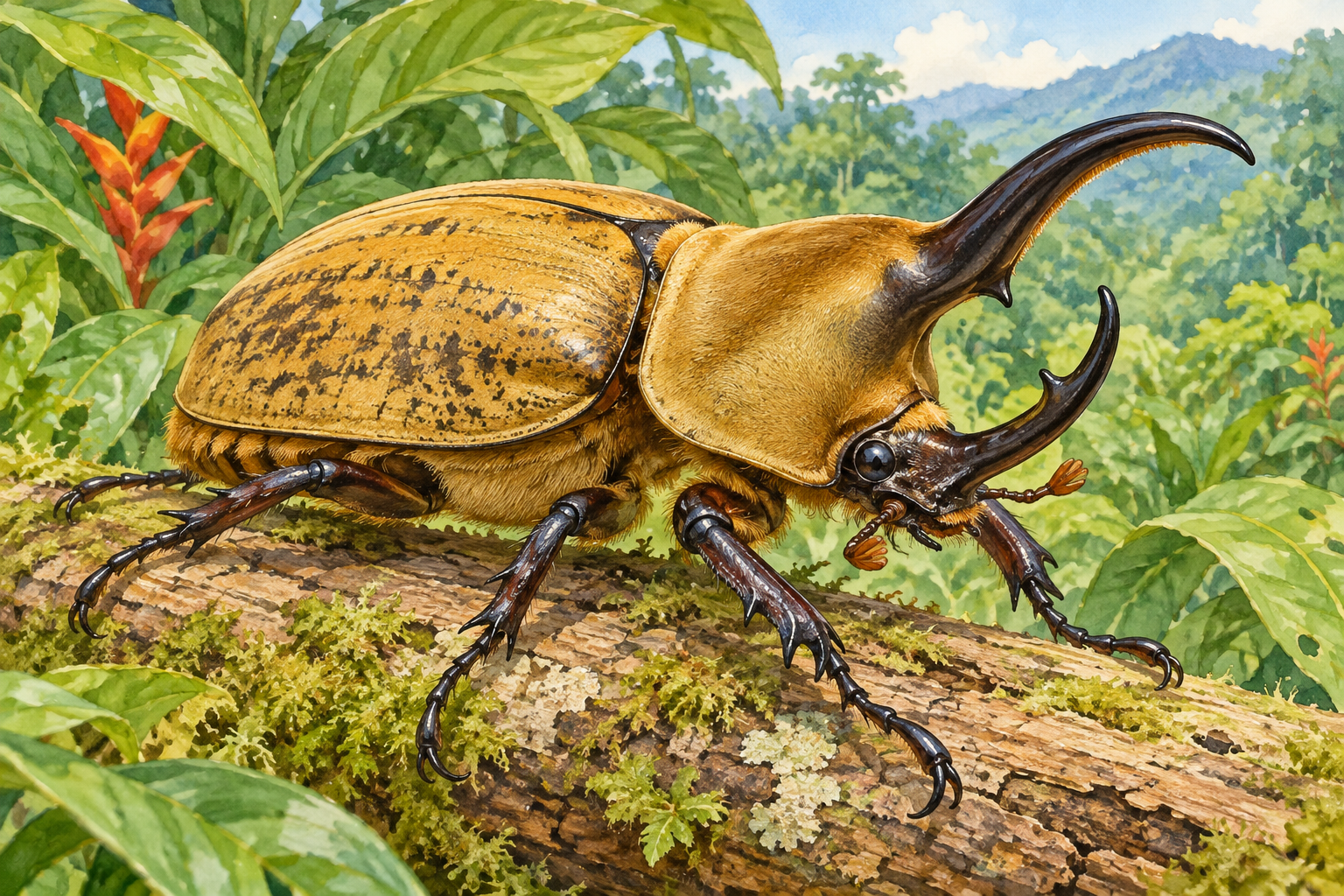
Species overview
About the Elephant Beetle
Males have horns; females lack the large male horn. Fine hairs can give the body a golden appearance.
Identification
Key Features of the Elephant Beetle
Large rounded beetle
fine golden body hairs
males have a forward horn
Habitat & range
Most often associated with lowland wooded habitats; larvae develop in decaying wood and damp plant material. A documented Tortuguero record supports Caribbean rainforest habitat. A Costa Rican specialist account places most records below 500 m, with some to 1,500 m. Existing broad region tags require further locality checks and should not be read as presence throughout the highlands.
Local observations
Costa Rican occurrence is documented; regional tags are habitat-based suggestions, not confirmed records for each locality.
When to observe
Look during suitable weather. Activity and visibility vary by locality and species.
Conservation & care
Observe without collecting, handling or disturbing insects or nests. Stay on permitted paths. Leave caterpillars and their food plants in place.
Observation activity
Record the date, location and two visible clues. Compare your observation with a verified photograph before naming a species.
Explore by location
Caribbean · Central Highlands · Central Pacific · Central Valley · Guanacaste · Northern Plains · Puntarenas & the Gulf Islands · South Pacific