

Nature Field Guide
West Indian Manatee
- Spanish name
- Manatí del Caribe
- Scientific name
- Trichechus manatus
What Do Pico & Tati Think?
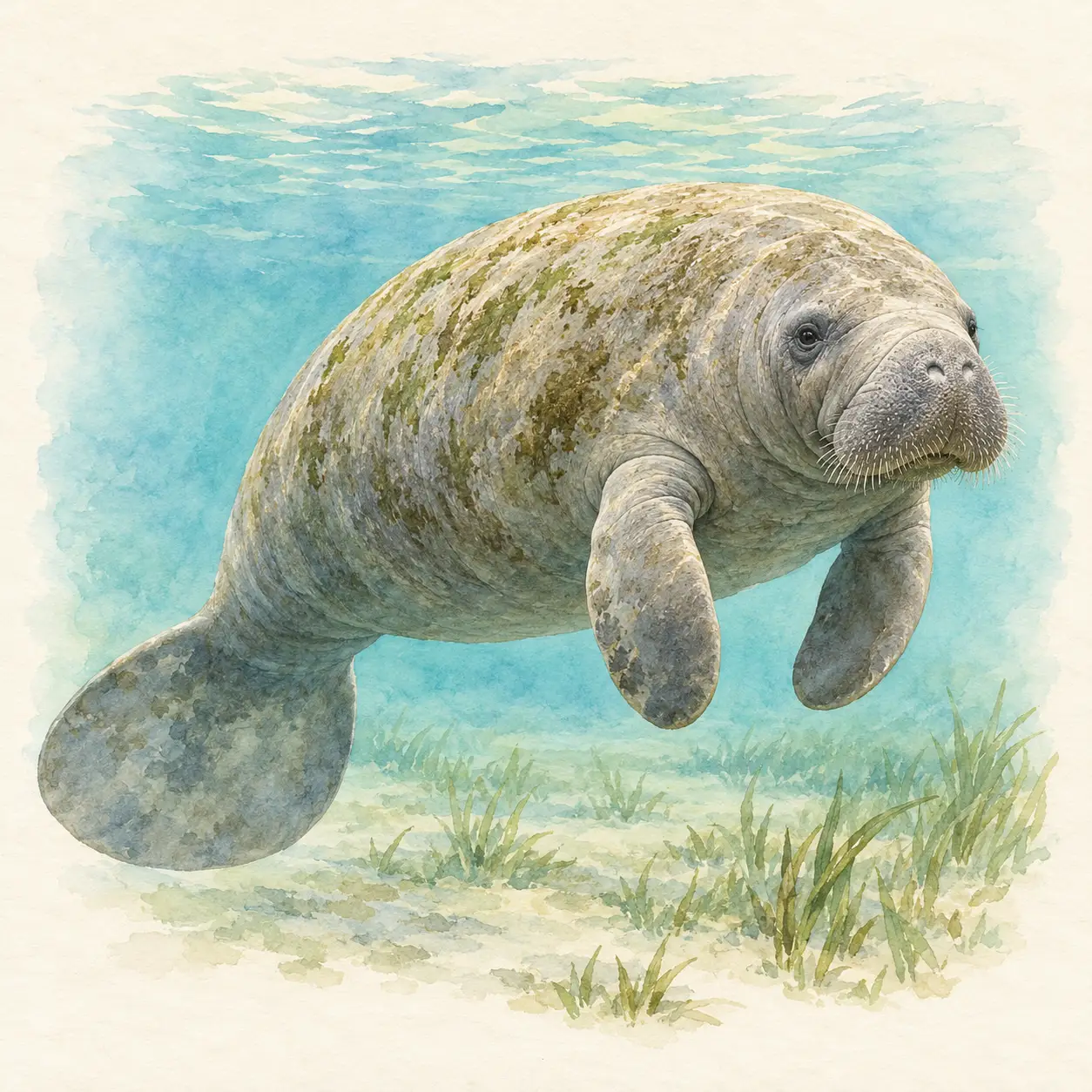
The West Indian manatee is a large aquatic mammal with a rounded paddle-shaped tail and a whiskered muzzle.
Species overview
About the West Indian Manatee
The West Indian manatee is a large aquatic mammal with a rounded paddle-shaped tail and a whiskered muzzle. Unlike dolphins, it eats plants. Costa Rican studies in Tortuguero document its use of aquatic vegetation, including grasses. It must surface to breathe, but much of its body may remain hidden under the water. Protecting quiet waterways and plant habitat helps this animal live and feed. A manatee can be difficult to see even in suitable habitat, so patient observation and careful boat operation matter more than trying to approach.
Explorer activity: Build a paper wetland map with plants, quiet refuge areas and a boat route. Explain how the route avoids disturbing feeding animals.
Your discovery notes: Record the date, place and habitat. Add a sketch or a photograph taken from a distance. Write what you observed and one question you would like to investigate. If the species is uncertain, keep that uncertainty in your notes.
Identification
Key Features of the West Indian Manatee
Large rounded body with gray skin.
Blunt whiskered muzzle and two front flippers.
Broad rounded paddle tail, without a dolphin's split flukes or dorsal fin.
Habitat & range
Caribbean waterways and wetlands, including Tortuguero.
Local observations
Documented in Caribbean Costa Rican waterways, including Tortuguero. This does not establish Pacific-coast or Tamarindo occurrence.
When to observe
Ask a local guide about safe observation; murky water often limits visibility.
Conservation & care
Use a responsible local wildlife operator and follow site rules. Give aquatic mammals room to feed, rest and travel. Do not feed, touch, chase or enter the water to approach them. Keep waste and fishing line out of waterways.
Conservation assessment
Global species-level IUCN category reported by Mammal Diversity Database, checked October 2026. Subspecies and national categories can differ.
Observation activity
Build a paper wetland map with plants, quiet refuge areas and a boat route. Explain how the route avoids disturbing feeding animals.