

Nature Field Guide
Virginia Opossum
- Spanish name
- Zorro pelón de Virginia
- Scientific name
- Didelphis virginiana
What Do Pico & Tati Think?
Despite its name, the Virginia opossum's native range reaches Costa Rica.
Species overview
About the Virginia Opossum
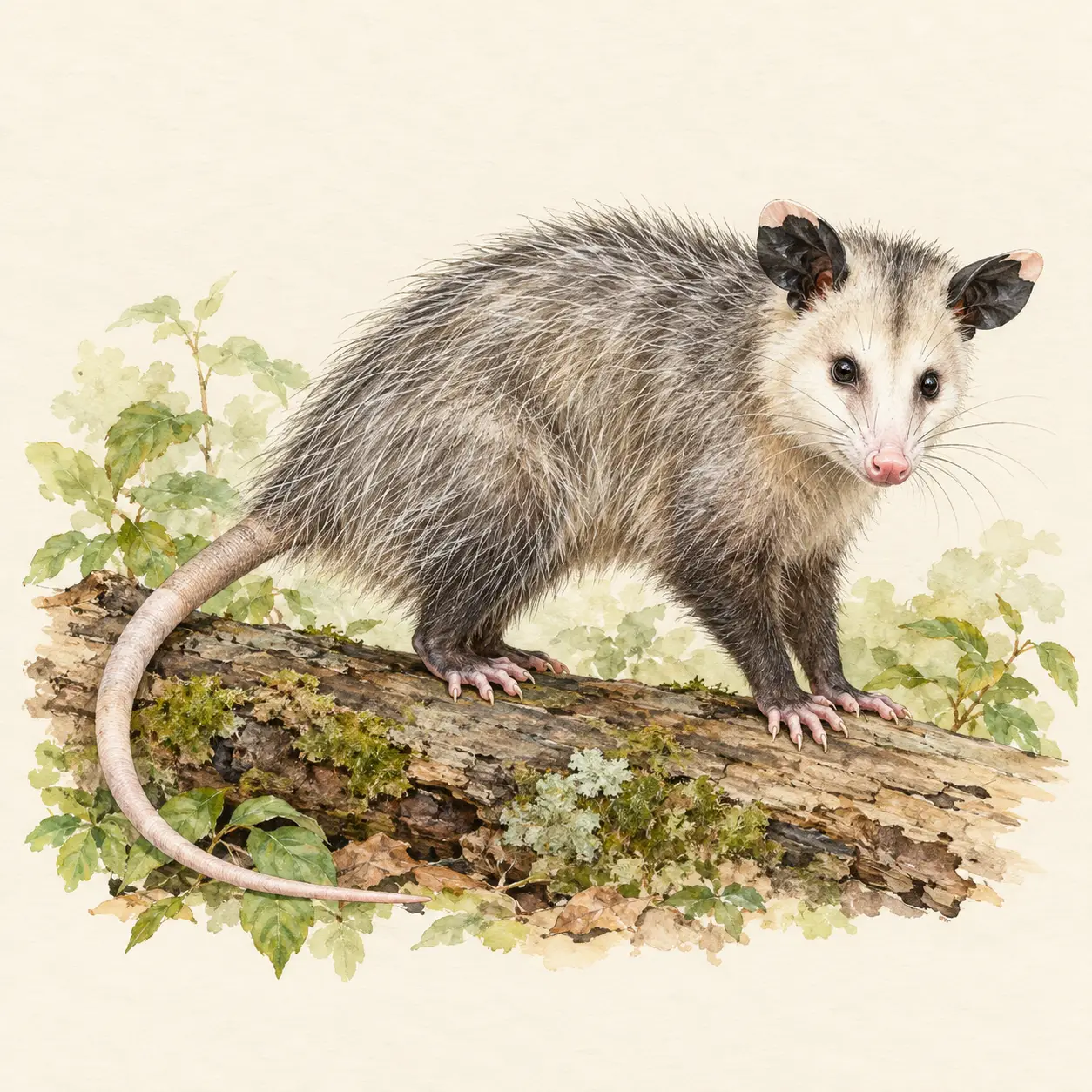
Despite its name, the Virginia opossum's native range reaches Costa Rica. It is a marsupial with gray fur, a pale pointed face and a long mostly bare tail. It finds a variety of foods, including insects and fruit, and uses wooded habitats as well as some developed areas. It is mainly nocturnal and can climb, although much of its activity takes place on the ground. The common opossum can look very similar. A clear photograph, location and local expertise are more useful than guessing from one color feature.
Explorer activity: Compare the two Didelphis cards. List what a photograph shows clearly and what extra information an expert might need.
Your discovery notes: Record the date, place and habitat. Add a sketch or a photograph taken from a distance. Write what you observed and one question you would like to investigate. If the species is uncertain, keep that uncertainty in your notes.
Identification
Key Features of the Virginia Opossum
Gray coat, pale face and pink nose.
Largely hairless ears, sometimes with pale tips.
Long bare tail; ear color alone is not a reliable species test.
Habitat & range
Suitable wooded and edge habitats within Costa Rica; local occurrence varies.
Local observations
Recorded in Costa Rica. This is a country-level profile; it does not establish occurrence in every province, town or nature site.
When to observe
Mostly at night, with occasional daytime observations.
Conservation & care
Explore with an adult or local guide. Observe quietly from a distance, stay on established trails and leave shelter undisturbed. Do not feed, touch, capture or corner wildlife. Keep pets away.
Observation activity
Compare the two Didelphis cards. List what a photograph shows clearly and what extra information an expert might need.