

Nature Field Guide
Pacific Spiny Oyster
- Spanish name
- Ostión vaca
- Scientific name
- Spondylus limbatus
What Do Pico & Tati Think?
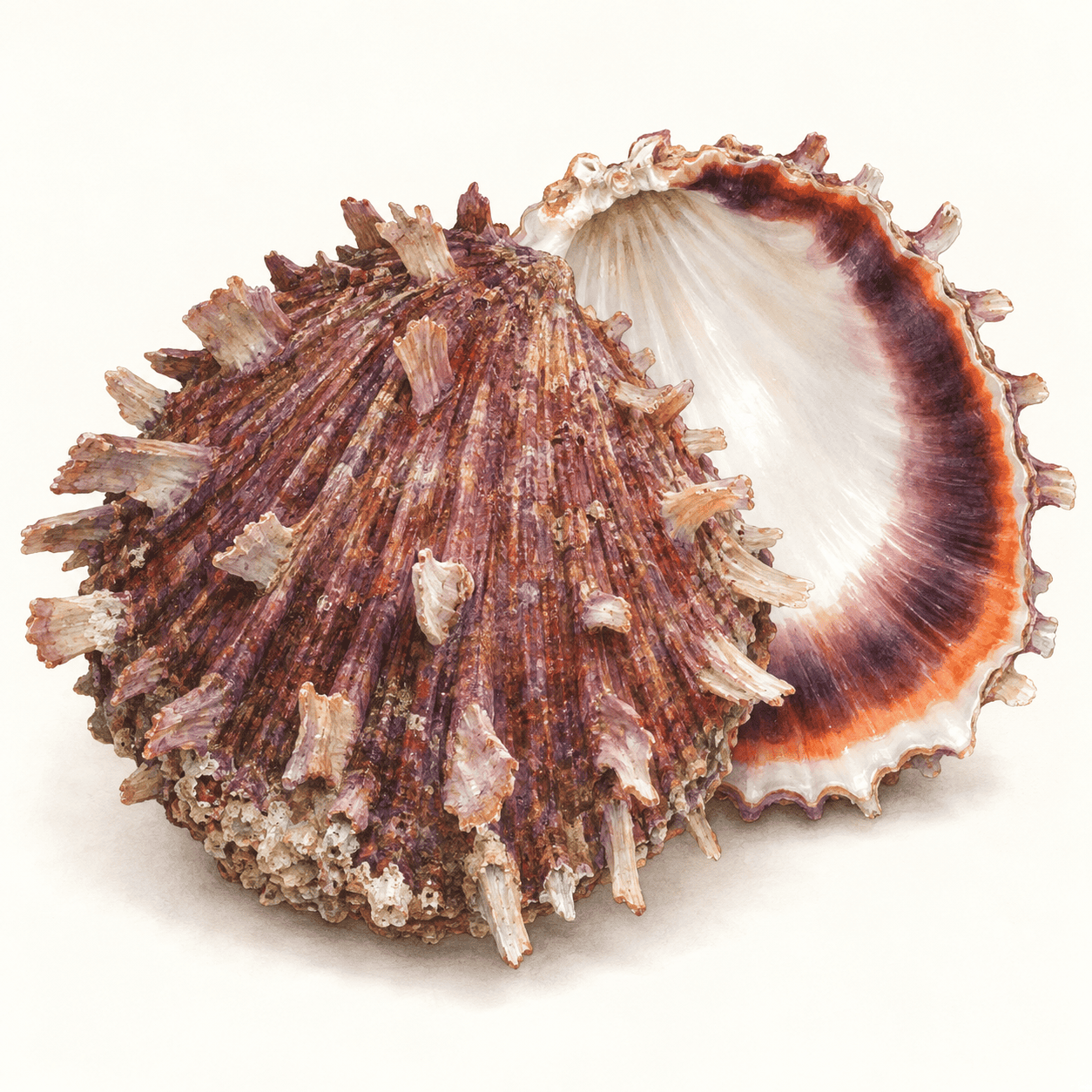
Ribs, spines and an irregular outline help this shell stand out.
Species overview
About the Pacific Spiny Oyster
This bivalve attaches to hard surfaces. Its shell shape and colors vary, and spines may wear down. Recent records include several Costa Rican sites, so one color alone is not a reliable species test.
Explorer activity: Compare two source photographs. List three differences between them and two features they share. Why might a worn shell be harder to identify?
Your discovery notes: Record the date, place and habitat, then add a sketch or photograph. If you cannot confirm the species, label it “unidentified shell” and keep your observations.
Identification
Key Features of the Pacific Spiny Oyster
Irregular rounded shell with strong radial ribs.
Spines may be short, worn or missing.
Compare the hinge, inner margin and attachment area in reference photographs.
Habitat & range
Shallow marine hard substrates, especially rocks.
Local observations
Pacific Costa Rica: records include Cuajiniquil, Bahía Culebra and Ocotal. This supports regional inclusion, not a confirmed Tamarindo Beach sighting.
When to observe
Tides and conditions affect visibility. Let an adult or local guide choose a safe observation time; this card does not promise a seasonal sighting.
Conservation & care
Observe and photograph shells where they are. Leave living animals, occupied shells and empty shells in place. Do not pry animals from rocks, dig in mangroves or put fingers into shell openings. Explore with an adult or guide, follow site rules and stay clear of surf and slippery rocks.
Observation activity
Compare two source photographs. List three differences between them and two features they share. Why might a worn shell be harder to identify?