

Nature Field Guide
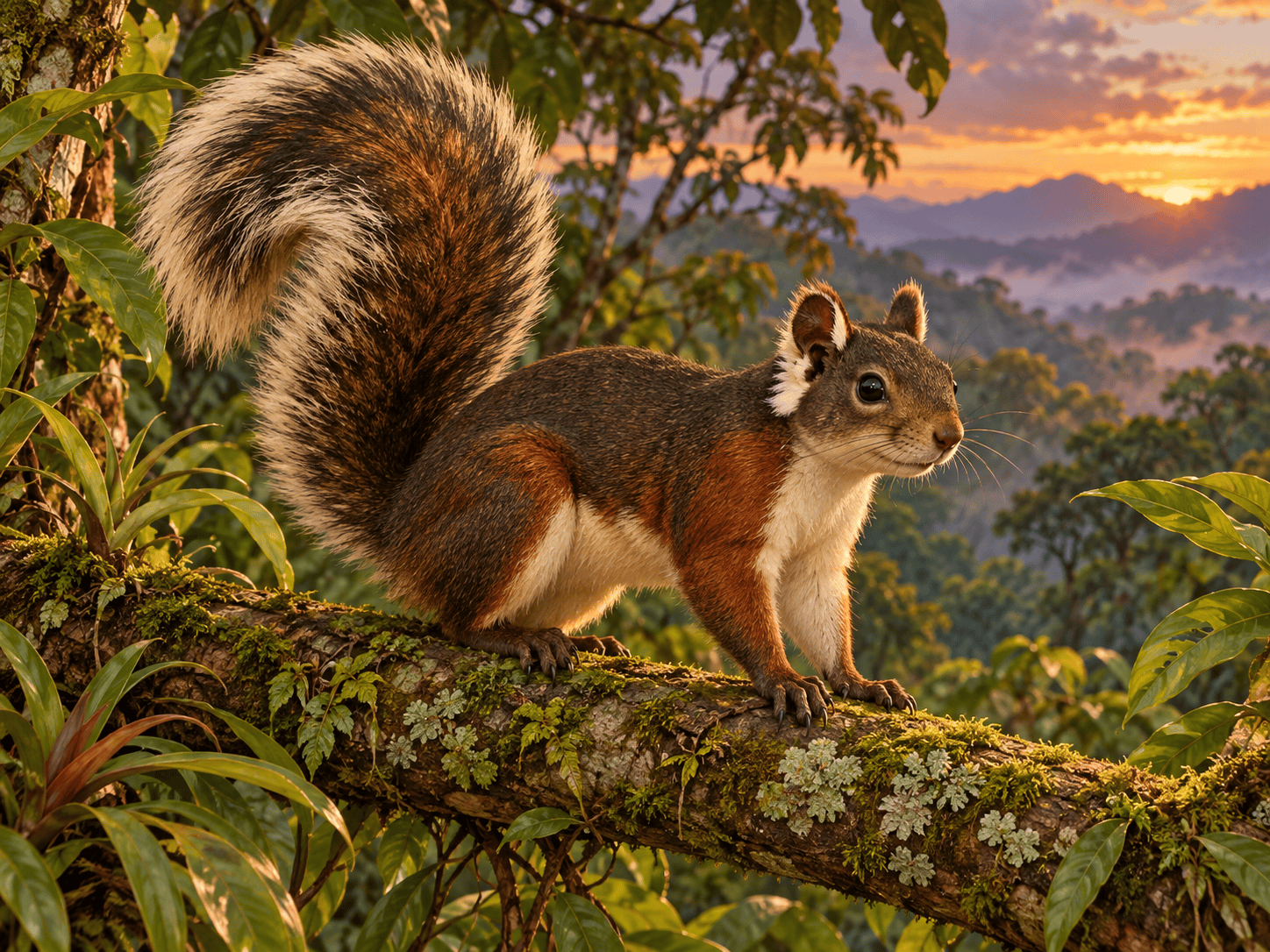
Variegated Squirrel
- Spanish name
- Ardilla variada
- Scientific name
- Sciurus variegatoides
What Do Pico & Tati Think?
Pico: “This squirrel’s colors are different from the last one!”
Tati: “We should compare shape and tail markings too.”
What does Least Concern mean?
In the linked conservation assessment, this species does not qualify as threatened or near threatened with extinction. It still needs care: local populations and habitats can face problems even when the species has a lower extinction risk overall.
This label describes conservation status. It does not tell us whether a plant is safe for children or pets. Select the status button to read the assessment.
Species overview
About the Variegated Squirrel
The Variegated Squirrel is an arboreal rodent whose coat colors differ between individuals and populations. Pale edging on the tail and contrasting ear patches can be useful clues, but color alone is not a dependable identification method.
It is active during the day and feeds on fruit, nuts and seeds. Tree cavities and leafy nests provide shelter, while wooded gardens, coffee plantations and forests can offer habitat. The Mammal Diversity Database retains the name Sciurus variegatoides while noting the proposed genus Echinosciurus. That naming variation refers to classification, not a different animal that visitors should try to identify from coat color.
Identification
Key Features of the Variegated Squirrel
Long bushy tail, often with pale edging.
Contrasting ear patches and variable coat color.
Tree-dwelling daytime activity.
Habitat & range
The Arenal / La Fortuna landscape, including a documented photograph at Arenal Volcano Lodge.
Local observations
Mammal Diversity Database’s image record identifies Arenal Volcano Lodge, Alajuela, on 5 January 2017. La Fortuna is a regional gateway tag, not the exact photograph location.
When to observe
Observe from authorized routes with a local guide. Activity, weather and food availability change encounters; a documented location is not a promise of a sighting.
Conservation & care
Keep a respectful distance and leave an open route for the animal. Stay on authorized paths, secure food and rubbish, and observe without feeding, touching, baiting or chasing.
Conservation assessment
Global IUCN category as reported by the linked source, checked 7 October 2026. The source does not give an assessment year here. National legal protection and local abundance are separate questions.
Observation activity
Draw the visible tail edge and ear patches. Compare with a local field guide and keep the identification tentative if key features are hidden.
Explore by location
Guanacaste · Northern Plains · Alajuela · Guanacaste · Heredia · La Fortuna