

Nature Field Guide
White-tailed Deer
- Spanish name
- Venado cola blanca
- Scientific name
- Odocoileus virginianus
What Do Pico & Tati Think?
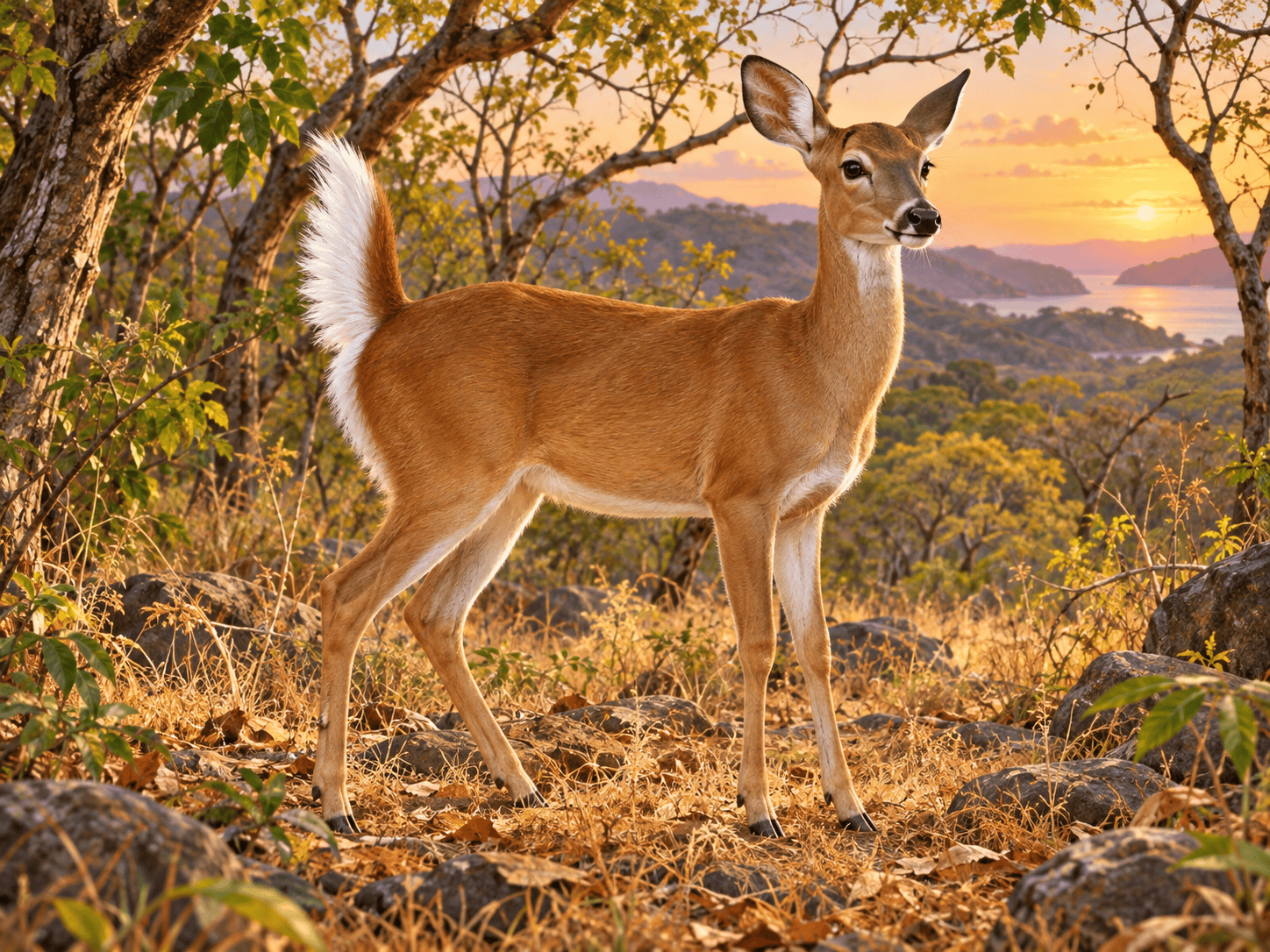
Pico: “I noticed the white tail before the whole deer!”
Tati: “Let’s stay quiet so it can keep browsing.”
Species overview
About the White-tailed Deer
The White-tailed Deer has a slender hoofed body, large ears and a tail with a bright white underside. Adult males grow antlers, while young fawns have pale spots. A raised tail is a useful clue, but observers should not startle a deer to make it display.
Deer browse a variety of plants and use forest, wooded savanna and regenerating areas. In Costa Rican dry forest, camera-trap research found reproduction throughout the year rather than a single narrow season. Rainfall and food availability can still influence local peaks. This makes a North American autumn rut calendar a poor substitute for evidence from Costa Rica’s tropical populations.
Identification
Key Features of the White-tailed Deer
White underside of the tail, visible when naturally raised.
Large ears and slender legs.
Adult males may have antlers; fawns have pale spots.
Habitat & range
ACG dry-forest habitat, including Horizontes near Liberia.
Local observations
ACG lists White-tailed Deer at Horizontes. Liberia is a regional gateway; the reproduction study concerns dry-forest populations rather than urban deer.
When to observe
Observe from authorized routes with a local guide. Activity, weather and food availability change encounters; a documented location is not a promise of a sighting.
Seasonal Calendar
Reproduction
Costa Rican seasonally dry forest
Year-round
Camera-trap data from 2011–2017 support reproduction throughout the year, with seasonal peaks rather than one exclusive window.
Event source ↗Conservation & care
Keep a respectful distance and leave an open route for the animal. Stay on authorized paths, secure food and rubbish, and observe without feeding, touching, baiting or chasing.
Threats & pressures
Hunting and human-caused forest fires are locally documented concerns.
Observation activity
Draw the natural tail position and browsing posture. Do not approach a resting fawn, which may be waiting for its mother.
Explore by location
Guanacaste · Northern Plains · Guanacaste · Heredia · Liberia