

Nature Field Guide
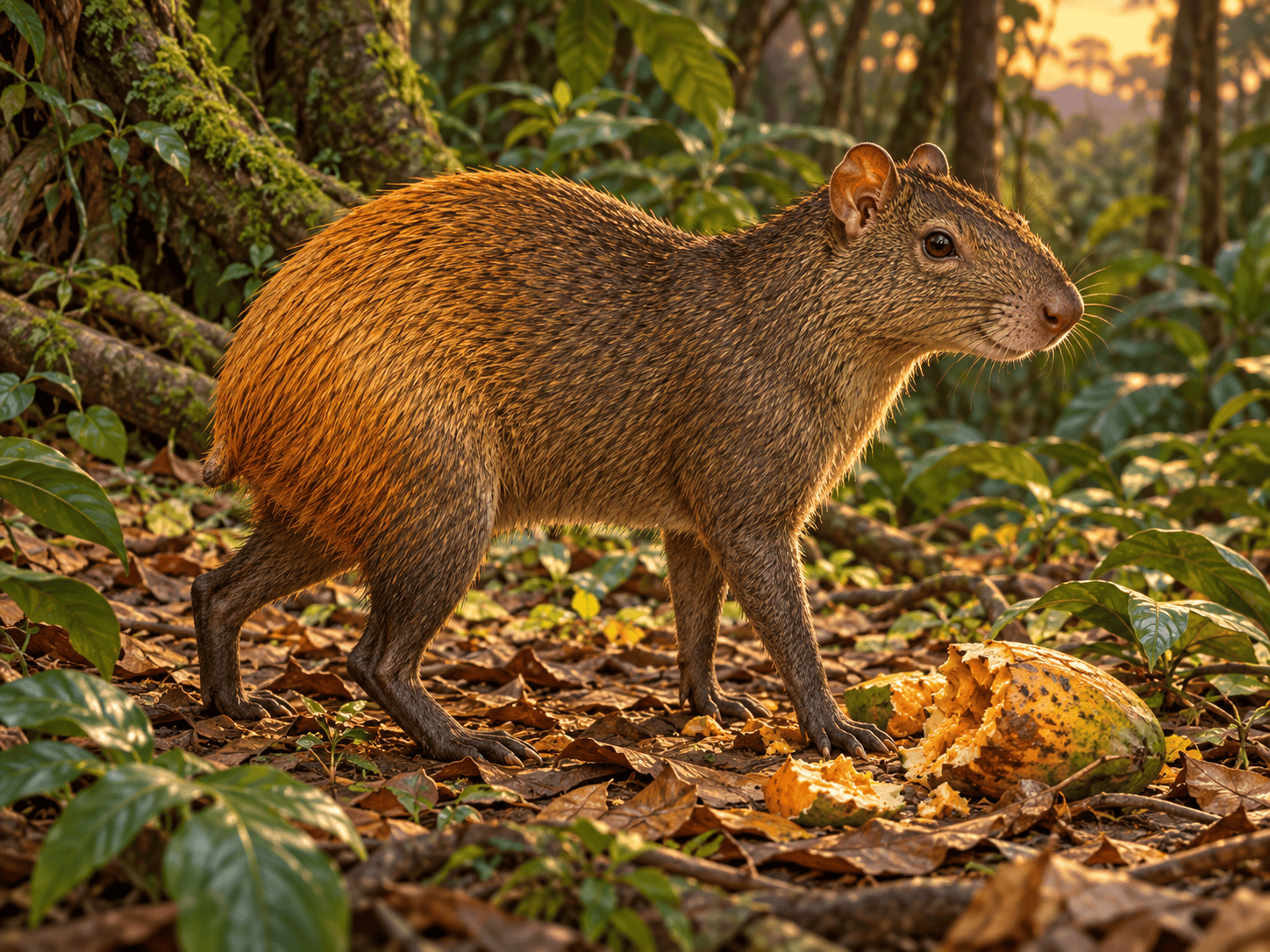
Central American Agouti
- Spanish name
- Guatusa / Guatuza
- Scientific name
- Dasyprocta punctata
What Do Pico & Tati Think?
Pico: “It is carrying something from the forest floor!”
Tati: “A stored seed might become a tree.”
Species overview
About the Central American Agouti
The Central American Agouti is a medium-sized rodent with long legs, a rounded back and a very short tail. Its coat can vary from warm orange tones to darker brown, so shape and movement are useful clues alongside color.
Agoutis are mainly active during the day and eat fruits, nuts, seeds and other foods. They bury seeds to recover later, linking their food storage to the movement of seeds through the forest. Fallen trunks, rocks and ground shelters offer protection. Watching one handle a seed can reveal an important forest interaction, but observers should not dig up caches or supply food to encourage a demonstration.
Identification
Key Features of the Central American Agouti
Rounded back, long legs and almost invisible tail.
Warm orange-brown to dark brown fur.
Often handles food with the forepaws.
Habitat & range
Sierra Zapote’s forest floor in Las Juntas district, Abangares; dry and humid forests can both provide habitat.
Local observations
The Sierra Zapote study documents Agouti and mainly daytime activity. The Las Juntas tag links the district where the reserve is located.
When to observe
Observe from authorized routes with a local guide. Activity, weather and food availability change encounters; a documented location is not a promise of a sighting.
Conservation & care
Keep a respectful distance and leave an open route for the animal. Stay on authorized paths, secure food and rubbish, and observe without feeding, touching, baiting or chasing.
Observation activity
If seed carrying occurs naturally, mark the route in your sketch. Leave buried seeds and leaf litter untouched.
Explore by location
Guanacaste · Northern Plains · Guanacaste · Heredia · Las Juntas