

Nature Field Guide
Puma
- Spanish name
- Puma / León de montaña
- Scientific name
- Puma concolor
What Do Pico & Tati Think?
Pico: “This cat has no rosettes!”
Tati: “Its shape helps us tell it apart from a jaguar.”
Species overview
About the Puma
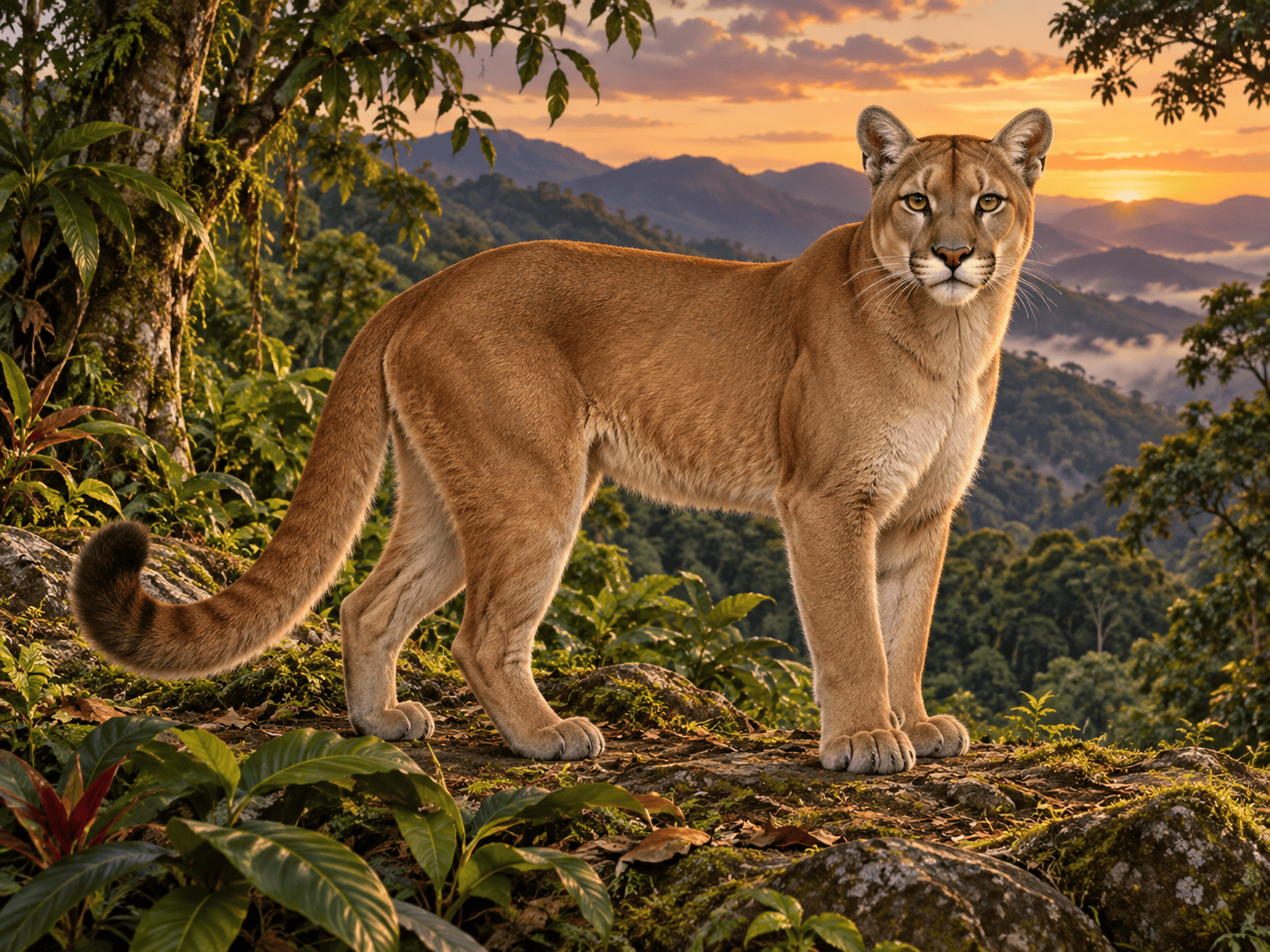
The adult Puma has a mostly uniform tawny coat, a pale underside and a long tail with a darker tip. Its head is relatively small compared with its body, and long legs create a different outline from the heavier Jaguar.
Pumas are solitary predators that feed on birds and mammals. They use dry, humid and cloud forests as well as other covered habitats, and their activity can occur by day or night. Resting places include sheltered vegetation and rocky sites. The presence of a puma in a restored forest shows how habitat recovery can support a food web, but one record does not establish a large or growing population.
Identification
Key Features of the Puma
Uniform tawny adult coat, without jaguar rosettes.
Long tail with a darker tip.
Relatively small head and long legs.
Habitat & range
Reserva Sierra Zapote, Las Juntas district, Abangares, and suitable forests elsewhere in Costa Rica.
Local observations
A 2020–2021 camera-trap study documents Puma at Sierra Zapote. Las Juntas is the district/gateway tag; observations were inside the reserve.
When to observe
Observe from authorized routes with a local guide. Activity, weather and food availability change encounters; a documented location is not a promise of a sighting.
Conservation & care
Keep a respectful distance and leave an open route for the animal. Stay on authorized paths, secure food and rubbish, and observe without feeding, touching, baiting or chasing.
Threats & pressures
Forest fragmentation and loss of prey are habitat-level pressures relevant to wide-ranging predators.
Observation activity
Compare a puma and jaguar photograph. Mark differences in head width, tail length and coat pattern rather than trying to approach either animal.
Explore by location
Central Highlands · Central Pacific · Central Valley · Guanacaste · Northern Plains · South Pacific · Guanacaste · Heredia · Las Juntas