

Nature Field Guide
Orange-fronted Parakeet
- Spanish name
- Perico frentinaranja / Catano
- Scientific name
- Eupsittula canicularis
What Do Pico & Tati Think?
Pico: “That little flock turns so quickly!”
Tati: “Let’s look for orange above the bill when one lands.”
Species overview
About the Orange-fronted Parakeet
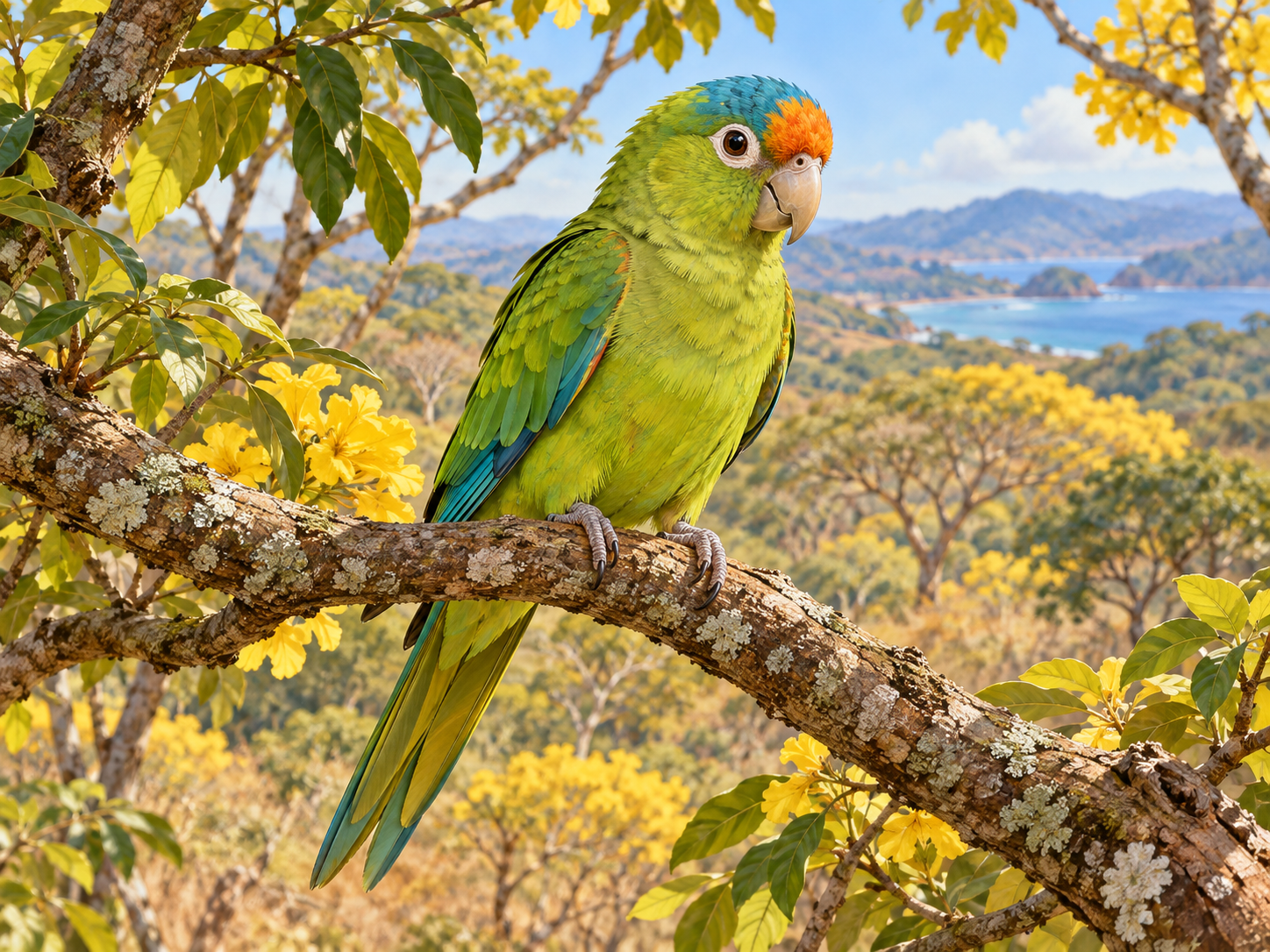
The Orange-fronted Parakeet is a green parrot with an orange patch above the bill and a pale yellow eye ring. Its long pointed tail and quick turns distinguish it from several shorter-tailed parrots in Guanacaste. Older accounts use the scientific name Aratinga canicularis.
It feeds on flowers, seeds and fruit as seasonal supplies change. Pairs, families and small flocks form different associations during the year. Nesting can take place in a termite nest, and parents continue feeding young after they leave it. Protecting wild parakeets includes preserving habitat and preventing the capture of nestlings for pets.
Identification
Key Features of the Orange-fronted Parakeet
Orange forehead above the bill.
Pale yellow eye ring and green body.
Long pointed tail; agile flock flight.
Habitat & range
Northern Pacific lowlands, Tilaran and Nicoya hills. Occurs locally in the western Central Valley. Regional tags do not imply abundance in every town.
Local observations
ACG describes Orange-fronted Parakeets around Santa Rosa’s administrative area in nearly any season. Historical source name Aratinga canicularis refers to this species.
When to observe
Plan a quiet observation with a local guide. Weather, food availability and the chosen habitat affect what you may see; a location record does not guarantee a sighting.
Seasonal Calendar
Year-round presence
Santa Rosa, ACG
Year-round
Source describes presence in nearly any season; La Cruz is the gateway, not the observation site.
Event source ↗Fledgling family activity
Santa Rosa / lowland ACG
May, Jun
Source describes begging fledglings in May and June; not a fixed date for every nest.
Event source ↗Conservation & care
Stay on authorized trails or viewing routes. Give birds space, keep voices low and leave nests undisturbed. Observe without bait, feeding or recorded calls.
Threats & pressures
ACG documents capture of nestlings for the pet trade outside the protected area. Habitat and safe nesting sites also matter.
Observation activity
Record three features you actually observe: shape, movement and habitat. Draw the bird from a respectful distance and compare your notes with a field guide.
Explore by location
Central Valley · Guanacaste · Puntarenas & the Gulf Islands · Guanacaste · La Cruz